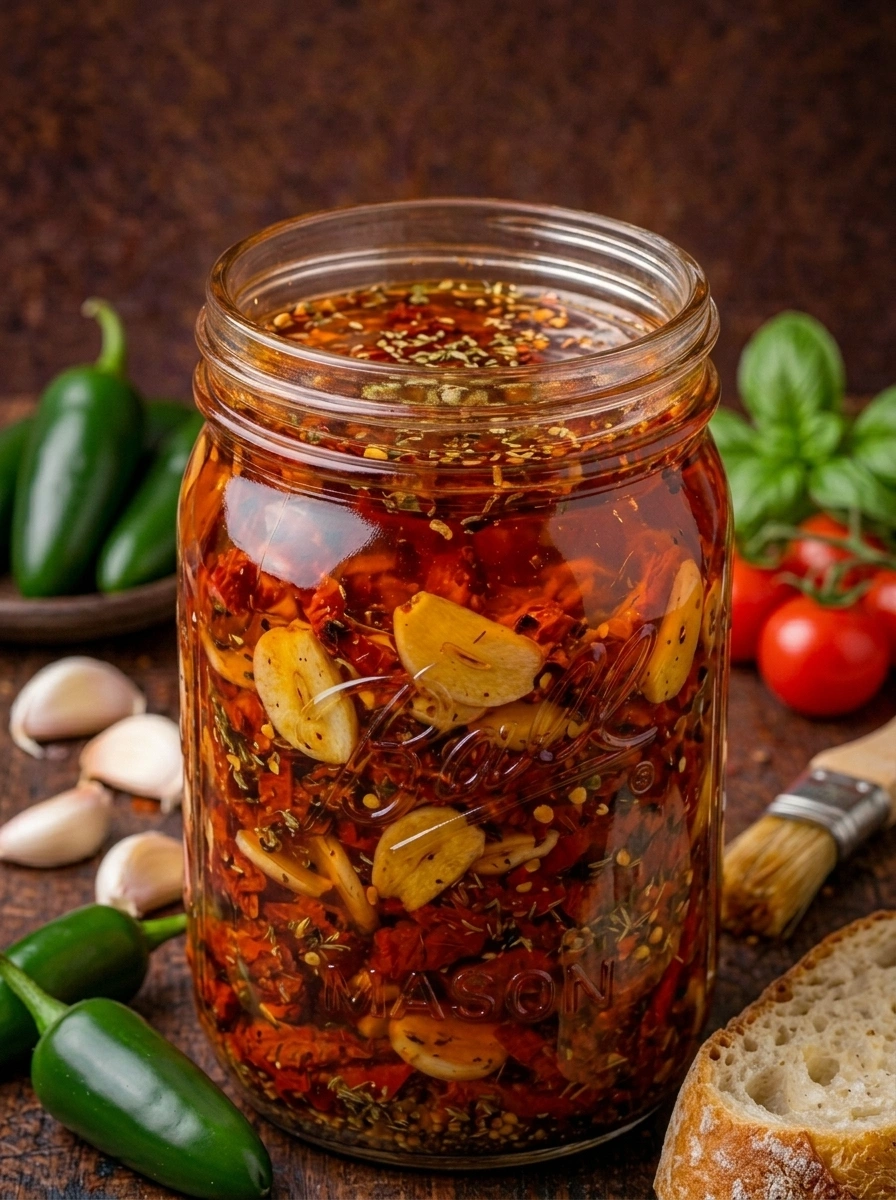
Spicy Tomato Garlic Oil: Bold, Aromatic, and Impossible to Stop Dipping Into
Every kitchen needs a secret weapon — that one thing you can pull from the refrigerator that instantly makes everything better. Spicy Tomato Garlic Oil is exactly that. Rich, deeply aromatic, packed with slow-bloomed garlic and concentrated sun-dried tomato flavor, and finished with a spicy kick that keeps you coming back for more, this is the kind of condiment that earns permanent real estate in your fridge. Drizzle it on pasta and dinner goes from weeknight to restaurant-worthy. Serve it alongside crusty bread and it becomes the thing everyone circles back to all evening. Spread it on a sandwich and every other sandwich you’ve made suddenly feels inadequate.
The best part is how quickly it comes together. Twenty minutes of active cooking — most of which involves very little effort beyond watching and stirring — produces something so complex and intensely flavored that people routinely assume it took much longer. Once you have a jar, you’ll understand the obsession immediately. And you’ll start keeping the ingredients on hand specifically so you can make more the moment it runs out.
This guide walks you through everything: the tradition of infused oils and why this version is in a category of its own, a full breakdown of every ingredient and the role it plays, step-by-step instructions with technique tips, food safety guidance for infused oils, and every possible use for this extraordinary condiment.
What Is Infused Oil — And Why Is This Version So Special?
Infused oils are among the oldest condiments in culinary history. The technique of gently heating oil with aromatics — herbs, spices, garlic, chili — to extract and preserve their flavors dates back thousands of years across Mediterranean, Middle Eastern, and Asian cooking traditions. The result is an oil that carries the essence of everything cooked in it: fat-soluble flavor compounds that dissolve into the oil and remain suspended there, ready to bloom again every time the oil is used.
Most infused oils are simple: olive oil and garlic, or olive oil and chili, or olive oil and rosemary. They’re excellent. This Spicy Tomato Garlic Oil is something more ambitious — a full flavor composition that layers sun-dried tomato concentrate, slow-cooked garlic, tomato paste, smoked paprika, Italian seasoning, oregano, fresh basil, and lemon juice into an olive oil base. It’s less of an infused oil and more of a sauce that happens to be oil-based — thick enough to cling to pasta, spreadable enough to work on bread, pourable enough to drizzle over everything.
What makes it genuinely special is the technique: low and slow. Cooking garlic in olive oil over gentle heat for several minutes before anything else is added allows the garlic to surrender all of its aromatic compounds into the oil without burning. Burned garlic is one of the most unpleasant flavors in cooking — bitter, acrid, and dominant enough to ruin everything it touches. But garlic that’s been slowly coaxed to pale golden in good olive oil is one of the most beautiful flavors in the world: sweet, nutty, savory, and penetrating in the best possible way. This recipe is built around getting that step exactly right.
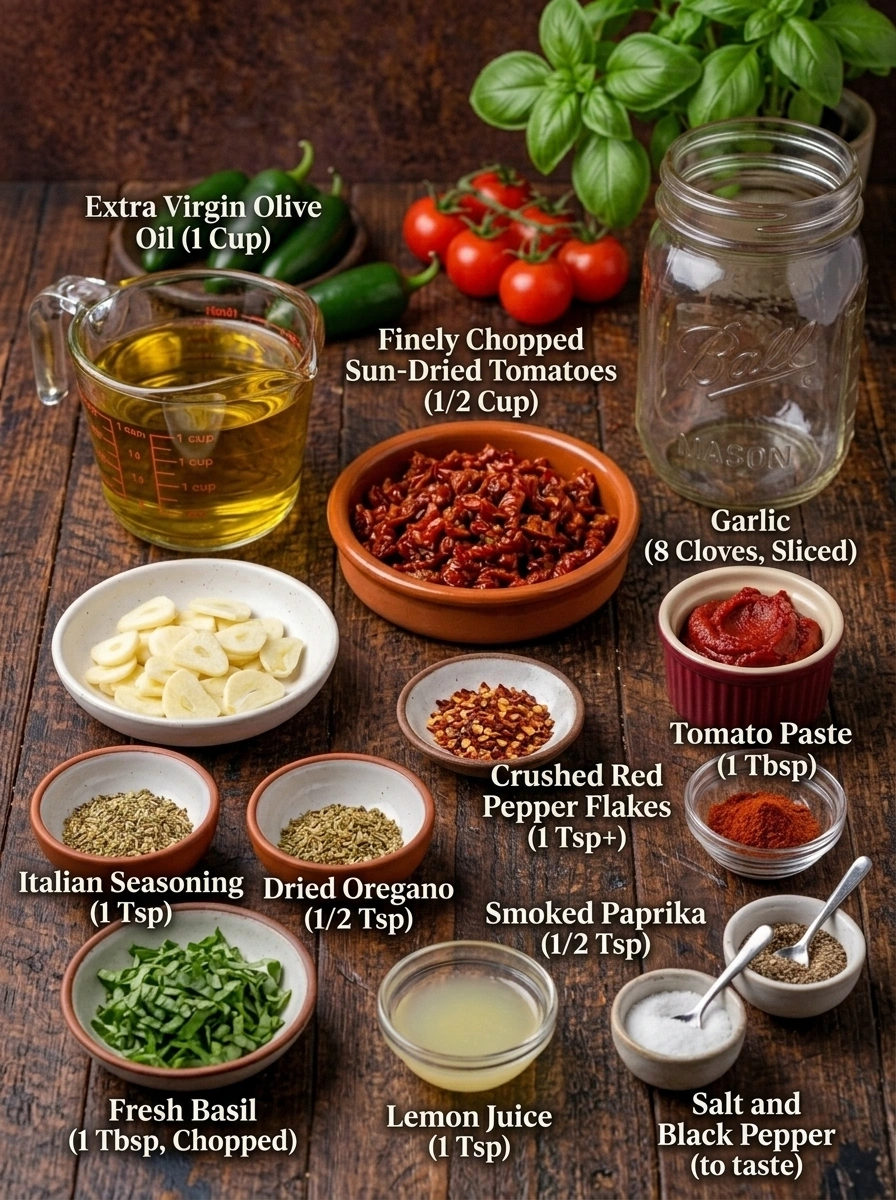
The Star Ingredients and Why They Matter
Extra Virgin Olive Oil (1 cup)
The foundation of everything. A full cup of extra virgin olive oil isn’t just a cooking medium here — it’s the primary ingredient, the canvas on which every other flavor is painted. The quality of the oil matters significantly. Extra virgin olive oil is the highest grade, cold-pressed from olives without chemical treatment, and it retains the fullest flavor and the most beneficial compounds. A good extra virgin olive oil has its own flavor — grassy, peppery, sometimes fruity — which becomes part of the finished condiment.
Don’t substitute light olive oil or vegetable oil. The neutral flavor of refined oils produces a thinner, less interesting result. The richness and character of extra virgin olive oil is what makes this condiment so luxurious.
One practical note: extra virgin olive oil solidifies in the refrigerator. This is completely normal — it’s a sign of quality. A jar stored in the fridge will turn opaque and semi-solid when cold. Let it come to room temperature for 15 to 20 minutes before serving and it will return to its liquid, pourable state.
Garlic (8 cloves, thinly sliced)
Eight cloves of garlic is not a typo. It’s the entire point. Thinly sliced rather than minced because slices release their flavor more gradually into the oil, producing a sweeter, more nuanced garlic infusion rather than the sharp, pungent hit of crushed or minced garlic. As the garlic cooks slowly in the oil, it softens, sweetens, and turns from raw and aggressive to something mellow, golden, and deeply savory. The slices themselves become tender and flavorful — little pieces of garlic confit suspended in the oil that you’ll find yourself specifically seeking out with your bread.
Sun-Dried Tomatoes (½ cup, finely chopped)
Sun-dried tomatoes are the concentrated soul of this recipe. Fresh tomatoes are mostly water — they’re mild and bright, but their flavor is diffuse. Sun-dried tomatoes have had virtually all of that water removed, which concentrates their flavor to an extraordinary intensity. What you get is something almost meaty in richness: deeply sweet, slightly acidic, with an umami depth that fresh tomatoes can’t approach. Finely chopped, they distribute throughout the oil and cook down further during the simmering step, releasing even more of their concentrated flavor into the base.
Use oil-packed sun-dried tomatoes rather than dry ones if possible. Oil-packed tomatoes are already softened and more flavorful, and they blend more seamlessly into the oil.
Tomato Paste (1 tbsp)
Tomato paste is the most concentrated form of tomato flavor available in a jar, and a single tablespoon makes a dramatic difference. It adds depth, color, and an almost savory-sweet richness that amplifies the sun-dried tomatoes and ties the whole composition together. When it’s stirred into hot oil with the sun-dried tomatoes, it blooms and darkens slightly, developing an even deeper, more complex flavor through a process similar to caramelization.
Crushed Red Pepper Flakes (1 tsp, or more to taste)
The heat that makes this oil genuinely spicy rather than just flavorful. One teaspoon delivers a consistent, building warmth that sits comfortably in the background of every bite. More than that and the heat becomes a foreground element — excellent if that’s what you’re after. The fat-soluble capsaicin in the red pepper dissolves completely into the olive oil during the simmer, which means the heat is distributed absolutely evenly throughout the finished condiment rather than concentrated in individual flakes.
Italian Seasoning (1 tsp) and Dried Oregano (½ tsp)
Together these form the herbal backbone of the recipe. Italian seasoning is a blend of dried basil, thyme, rosemary, marjoram, and sometimes sage — a combination that evokes the aromatic herb gardens of the Italian countryside. The additional dried oregano reinforces the Mediterranean character and adds a slightly more assertive, earthy herbal note that fresh oregano alone doesn’t provide. Both are added to the hot oil during the simmering step, which blooms their volatile oils and extracts maximum flavor.
Smoked Paprika (½ tsp)
A quiet but crucial ingredient. Smoked paprika contributes warmth, a faint smokiness, and a gorgeous deep red color that gives the finished oil its rich, burnished appearance. It complements the concentrated tomato flavor and adds a dimension of depth that makes the oil taste more complex than a simple ingredient list might suggest.
Fresh Basil or Parsley (1 tbsp, chopped)
Added off heat at the very end, fresh herbs contribute brightness and color that dried herbs can’t provide. The heat of the oil wilts them gently without destroying their fresh flavor, and they add an aromatic lift that keeps the finished condiment from tasting entirely cooked. Basil leans the flavor profile more Italian and floral; parsley adds a cleaner, more neutral herbal brightness. Both are excellent — choose based on what you have and what you’re serving the oil with.
Lemon Juice (1 tsp)
The finishing acid. A single teaspoon of lemon juice, added off heat alongside the fresh herbs, brightens the entire composition and prevents the oil from tasting heavy or flat. It’s the same principle as adding a squeeze of lemon to almost any savory dish — acid makes flavors pop and brings them into focus. You won’t taste lemon in the finished oil, but you’d notice its absence.
How to Make Spicy Tomato Garlic Oil: Step-by-Step
Step 1: Set Up for Low and Slow
Pour the olive oil into a small saucepan and set it over the lowest heat your burner will comfortably hold. The most important rule of this recipe is that the oil should never get hot enough to fry, sizzle aggressively, or smoke. You want a gentle, barely-there warmth — oil that shimmers slightly but doesn’t bubble.
If you have a thermometer, aim for 150 to 175°F. If not, the visual cues are your guide: the oil should look slightly fluid and move easily when the pan is tilted. You should hear nothing, or at most a very faint whisper when the garlic goes in.
Step 2: Bloom the Garlic
Add the thinly sliced garlic to the warm oil. Stir gently and let the garlic cook low and slow for 3 to 4 minutes. You’re looking for the garlic to turn from white and raw to slightly translucent and just barely kissed with gold at the edges. The kitchen will smell extraordinary.
This is the most critical step in the recipe. Stay present. Don’t walk away. Don’t increase the heat. If the garlic starts to brown quickly or you see small bubbles forming around the slices, pull the pan off the heat for 30 seconds and let it cool slightly before continuing. Perfectly cooked garlic in this recipe is pale golden and sweet. Overcooked garlic is brown and bitter, and there is no recovering from it.
Step 3: Add the Tomatoes and Paste
Stir in the finely chopped sun-dried tomatoes and the tablespoon of tomato paste. The mixture will thicken immediately and turn a deep, rich red-orange. Stir everything together until the tomato paste is fully incorporated and there are no visible streaks.
Step 4: Add the Spices
Add the crushed red pepper flakes, Italian seasoning, dried oregano, smoked paprika, salt, and black pepper. Stir to combine. The oil will take on a deep, complex aroma almost immediately as the dried spices hit the heat and begin to bloom.
Step 5: Simmer and Infuse
Let the mixture simmer over low heat for 5 to 7 minutes, stirring occasionally. During this time, the spices are releasing their fat-soluble flavor compounds into the oil, the tomatoes are continuing to cook down and concentrate, and everything is slowly melding into a unified, cohesive composition. The oil should bubble gently if at all — this is a simmer, not a fry.
Step 6: Finish With Fresh Herbs and Lemon
Remove the pan from the heat. Stir in the chopped fresh basil or parsley and the teaspoon of lemon juice. The herbs will wilt beautifully from the residual heat. Taste and adjust seasoning — a little more salt, a pinch more red pepper, another drop of lemon if you want more brightness.
Step 7: Cool Completely Before Jarring
Let the oil cool to room temperature in the pan before transferring to a clean glass jar. This is an important food safety step as well as a practical one — pouring hot oil into a jar can crack glass, and transferring it before it’s fully cooled traps steam that can compromise the freshness of the oil.
A Note on Food Safety for Garlic-Infused Oils
This is important and worth taking seriously. Raw garlic stored in oil at room temperature creates ideal conditions for Clostridium botulinum — the bacterium responsible for botulism — to produce its dangerous toxin. This is not a theoretical risk; there have been documented cases of botulism from improperly stored garlic-in-oil preparations.
The good news is that this recipe mitigates the risk significantly through cooking: the garlic is gently cooked in the oil rather than stored raw. Cooking disrupts the conditions that allow botulism toxin production. However, to be safe, always follow these guidelines:
Refrigerate immediately and always. This oil should never be stored at room temperature. Transfer to the refrigerator as soon as it cools.
Use within one week. The one-week refrigerator storage window is the safe window for this style of preparation. Don’t stretch it.
Never store homemade garlic oil at room temperature. Not on the counter, not as a gift on a shelf, not in a basket at room temperature. Always refrigerated, always within one week.
When in doubt, throw it out. If the oil smells off, looks unusual, or is past the one-week window, discard it. The risk is not worth taking.
Every Way to Use Spicy Tomato Garlic Oil
With crusty bread. The most instinctive and perfect use. A bowl of this oil alongside a torn sourdough loaf or a sliced baguette is one of the simplest and most satisfying things you can serve. Pour it into a wide, shallow dish so every dipper gets tomato, garlic, and herbs in every dunk.
Tossed with pasta. Cook your pasta, reserve a splash of pasta water, drain, and toss immediately with several generous spoonfuls of Spicy Tomato Garlic Oil. The starchy pasta water helps emulsify the oil into a silky coating sauce. Finish with parmesan and fresh basil. This is a ten-minute dinner that tastes like something from a trattoria.
On pizza. Brush it over the dough before adding toppings, or drizzle generously over a finished pizza. It adds a layer of flavor that ordinary olive oil can’t match and makes the crust taste extraordinary.
On roasted vegetables. Toss roasted broccoli, cauliflower, asparagus, or zucchini with a spoonful while still hot from the oven. The oil coats the vegetables and adds an Italian-inflected richness that makes any vegetable more appealing.
As a sandwich and flatbread spread. Use in place of butter, mayo, or plain olive oil on sandwiches, wraps, paninis, and flatbreads. It adds so much flavor that simple sandwiches become genuinely exciting.
Drizzled over grilled meats. Spoon over grilled chicken breasts, steak, lamb chops, or shrimp immediately after they come off the grill. The oil melts into the meat and adds a Mediterranean richness.
On eggs. A drizzle of this oil over fried or scrambled eggs, with a piece of toasted sourdough, is a breakfast that feels luxurious without any real effort.
Stirred into soups. A spoonful swirled into tomato soup, minestrone, or white bean soup right before serving adds depth and richness. It acts as a finishing oil and a flavoring agent simultaneously.
On charcuterie boards. Pour into a small dish alongside cured meats, burrata, olives, and crackers. It becomes the anchor of the board — the thing that ties every other element together.
Over burrata or fresh mozzarella. Pour generously over a ball of burrata or sliced fresh mozzarella with a handful of fresh basil. This is one of the most effortless and impressive appetizers imaginable.
Variations to Try
Calabrian Chili Version: Replace the crushed red pepper flakes with two tablespoons of chopped Calabrian chilies in oil. These Southern Italian chilies are fruity, spicy, and complex in a way that pepper flakes can’t fully replicate — the result is a more sophisticated, more authentically Italian heat.
Anchovy Depth: Add three or four oil-packed anchovy fillets along with the garlic. They’ll dissolve completely into the oil during cooking and won’t taste fishy — they’ll just make everything taste more savory, more complex, and more like something a professional cook made.
Herb-Forward Version: Double the fresh herbs and add a sprig of fresh rosemary and thyme along with the garlic during the infusion step (remove the sprigs before jarring). For people who want the oil to lean more herbaceous than spicy.
Lemon-Forward Version: Increase the lemon juice to one tablespoon and add the zest of one lemon along with the juice off heat. Brightens the whole composition and makes it especially good on fish, seafood, and lighter vegetables.
Extra Smoky: Increase the smoked paprika to one full teaspoon and add a pinch of chipotle powder. The result is an oil with a deep, wood-fire smokiness that’s extraordinary on grilled meats and roasted potatoes.
Frequently Asked Questions
Why did my garlic turn bitter? It browned or burned. This is the most common mistake with this recipe. Garlic goes from perfectly golden to bitter and overcooked quickly over heat that’s even slightly too high. Use the lowest setting on your burner, stay at the pan, and pull it off the heat the moment you see golden edges rather than waiting for full browning.
Can I use garlic powder instead of fresh garlic? You can, but the result will be significantly less interesting. The entire point of the low-and-slow garlic infusion step is to coax the fresh garlic’s complex aromatic compounds into the oil. Garlic powder adds flavor but lacks the depth, sweetness, and textural interest of properly cooked fresh garlic slices.
My oil solidified in the fridge. Is it still good? Yes, completely normal. Extra virgin olive oil solidifies at refrigerator temperatures. Let it sit at room temperature for 15 to 20 minutes and it will return to its liquid state. The quality and safety are not affected.
Can I use dried basil instead of fresh? Dried basil can be added with the other dried spices in step 4, but it won’t provide the same bright, fresh flavor as basil stirred in off heat. If fresh basil isn’t available, fresh parsley is an excellent substitute that’s more widely accessible year-round.
Can I make this without the spice? Absolutely. Omit the red pepper flakes entirely for a mild tomato garlic oil that’s all about richness and depth without heat. Still exceptional, just in a gentler register.
Recipe at a Glance
| Detail | Info |
|---|---|
| Prep Time | 10 minutes |
| Cook Time | 10 minutes |
| Total Time | 20 minutes |
| Servings | 12 |
| Calories | ~120 per serving |
| Storage | Up to 1 week refrigerated |
Final Thoughts
Spicy Tomato Garlic Oil is the kind of recipe that changes the way you think about condiments. It proves that with good ingredients, the right technique, and twenty minutes of focused attention, you can produce something from scratch that outperforms anything on a store shelf in every possible way.
Keep a jar in your fridge. Use it on everything. Make another jar when it runs out — and it will run out faster than you expect.
Your pasta, your bread, your pizza, and your sandwiches have been waiting for this.
Print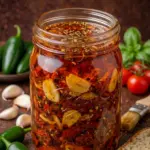
Spicy Tomato Garlic Oil: Bold, Aromatic, and Impossible to Stop Dipping Into
- Total Time: 20 minutes
Ingredients
Extra Virgin Olive Oil (1 cup)
The foundation of everything. A full cup of extra virgin olive oil isn’t just a cooking medium here — it’s the primary ingredient, the canvas on which every other flavor is painted. The quality of the oil matters significantly. Extra virgin olive oil is the highest grade, cold-pressed from olives without chemical treatment, and it retains the fullest flavor and the most beneficial compounds. A good extra virgin olive oil has its own flavor — grassy, peppery, sometimes fruity — which becomes part of the finished condiment.
Don’t substitute light olive oil or vegetable oil. The neutral flavor of refined oils produces a thinner, less interesting result. The richness and character of extra virgin olive oil is what makes this condiment so luxurious.
One practical note: extra virgin olive oil solidifies in the refrigerator. This is completely normal — it’s a sign of quality. A jar stored in the fridge will turn opaque and semi-solid when cold. Let it come to room temperature for 15 to 20 minutes before serving and it will return to its liquid, pourable state.
Garlic (8 cloves, thinly sliced)
Eight cloves of garlic is not a typo. It’s the entire point. Thinly sliced rather than minced because slices release their flavor more gradually into the oil, producing a sweeter, more nuanced garlic infusion rather than the sharp, pungent hit of crushed or minced garlic. As the garlic cooks slowly in the oil, it softens, sweetens, and turns from raw and aggressive to something mellow, golden, and deeply savory. The slices themselves become tender and flavorful — little pieces of garlic confit suspended in the oil that you’ll find yourself specifically seeking out with your bread.
Sun-Dried Tomatoes (½ cup, finely chopped)
Sun-dried tomatoes are the concentrated soul of this recipe. Fresh tomatoes are mostly water — they’re mild and bright, but their flavor is diffuse. Sun-dried tomatoes have had virtually all of that water removed, which concentrates their flavor to an extraordinary intensity. What you get is something almost meaty in richness: deeply sweet, slightly acidic, with an umami depth that fresh tomatoes can’t approach. Finely chopped, they distribute throughout the oil and cook down further during the simmering step, releasing even more of their concentrated flavor into the base.
Use oil-packed sun-dried tomatoes rather than dry ones if possible. Oil-packed tomatoes are already softened and more flavorful, and they blend more seamlessly into the oil.
Tomato Paste (1 tbsp)
Tomato paste is the most concentrated form of tomato flavor available in a jar, and a single tablespoon makes a dramatic difference. It adds depth, color, and an almost savory-sweet richness that amplifies the sun-dried tomatoes and ties the whole composition together. When it’s stirred into hot oil with the sun-dried tomatoes, it blooms and darkens slightly, developing an even deeper, more complex flavor through a process similar to caramelization.
Crushed Red Pepper Flakes (1 tsp, or more to taste)
The heat that makes this oil genuinely spicy rather than just flavorful. One teaspoon delivers a consistent, building warmth that sits comfortably in the background of every bite. More than that and the heat becomes a foreground element — excellent if that’s what you’re after. The fat-soluble capsaicin in the red pepper dissolves completely into the olive oil during the simmer, which means the heat is distributed absolutely evenly throughout the finished condiment rather than concentrated in individual flakes.
Italian Seasoning (1 tsp) and Dried Oregano (½ tsp)
Together these form the herbal backbone of the recipe. Italian seasoning is a blend of dried basil, thyme, rosemary, marjoram, and sometimes sage — a combination that evokes the aromatic herb gardens of the Italian countryside. The additional dried oregano reinforces the Mediterranean character and adds a slightly more assertive, earthy herbal note that fresh oregano alone doesn’t provide. Both are added to the hot oil during the simmering step, which blooms their volatile oils and extracts maximum flavor.
Smoked Paprika (½ tsp)
A quiet but crucial ingredient. Smoked paprika contributes warmth, a faint smokiness, and a gorgeous deep red color that gives the finished oil its rich, burnished appearance. It complements the concentrated tomato flavor and adds a dimension of depth that makes the oil taste more complex than a simple ingredient list might suggest.
Fresh Basil or Parsley (1 tbsp, chopped)
Added off heat at the very end, fresh herbs contribute brightness and color that dried herbs can’t provide. The heat of the oil wilts them gently without destroying their fresh flavor, and they add an aromatic lift that keeps the finished condiment from tasting entirely cooked. Basil leans the flavor profile more Italian and floral; parsley adds a cleaner, more neutral herbal brightness. Both are excellent — choose based on what you have and what you’re serving the oil with.
Lemon Juice (1 tsp)
The finishing acid. A single teaspoon of lemon juice, added off heat alongside the fresh herbs, brightens the entire composition and prevents the oil from tasting heavy or flat. It’s the same principle as adding a squeeze of lemon to almost any savory dish — acid makes flavors pop and brings them into focus. You won’t taste lemon in the finished oil, but you’d notice its absence.
Instructions
Step 1: Set Up for Low and Slow
Pour the olive oil into a small saucepan and set it over the lowest heat your burner will comfortably hold. The most important rule of this recipe is that the oil should never get hot enough to fry, sizzle aggressively, or smoke. You want a gentle, barely-there warmth — oil that shimmers slightly but doesn’t bubble.
If you have a thermometer, aim for 150 to 175°F. If not, the visual cues are your guide: the oil should look slightly fluid and move easily when the pan is tilted. You should hear nothing, or at most a very faint whisper when the garlic goes in.
Step 2: Bloom the Garlic
Add the thinly sliced garlic to the warm oil. Stir gently and let the garlic cook low and slow for 3 to 4 minutes. You’re looking for the garlic to turn from white and raw to slightly translucent and just barely kissed with gold at the edges. The kitchen will smell extraordinary.
This is the most critical step in the recipe. Stay present. Don’t walk away. Don’t increase the heat. If the garlic starts to brown quickly or you see small bubbles forming around the slices, pull the pan off the heat for 30 seconds and let it cool slightly before continuing. Perfectly cooked garlic in this recipe is pale golden and sweet. Overcooked garlic is brown and bitter, and there is no recovering from it.
Step 3: Add the Tomatoes and Paste
Stir in the finely chopped sun-dried tomatoes and the tablespoon of tomato paste. The mixture will thicken immediately and turn a deep, rich red-orange. Stir everything together until the tomato paste is fully incorporated and there are no visible streaks.
Step 4: Add the Spices
Add the crushed red pepper flakes, Italian seasoning, dried oregano, smoked paprika, salt, and black pepper. Stir to combine. The oil will take on a deep, complex aroma almost immediately as the dried spices hit the heat and begin to bloom.
Step 5: Simmer and Infuse
Let the mixture simmer over low heat for 5 to 7 minutes, stirring occasionally. During this time, the spices are releasing their fat-soluble flavor compounds into the oil, the tomatoes are continuing to cook down and concentrate, and everything is slowly melding into a unified, cohesive composition. The oil should bubble gently if at all — this is a simmer, not a fry.
Step 6: Finish With Fresh Herbs and Lemon
Remove the pan from the heat. Stir in the chopped fresh basil or parsley and the teaspoon of lemon juice. The herbs will wilt beautifully from the residual heat. Taste and adjust seasoning — a little more salt, a pinch more red pepper, another drop of lemon if you want more brightness.
Step 7: Cool Completely Before Jarring
Let the oil cool to room temperature in the pan before transferring to a clean glass jar. This is an important food safety step as well as a practical one — pouring hot oil into a jar can crack glass, and transferring it before it’s fully cooled traps steam that can compromise the freshness of the oil.
- Prep Time: 10 minutes
- Cook Time: 10 minutes
Nutrition
- Serving Size: 12
- Calories: 120 per serving