
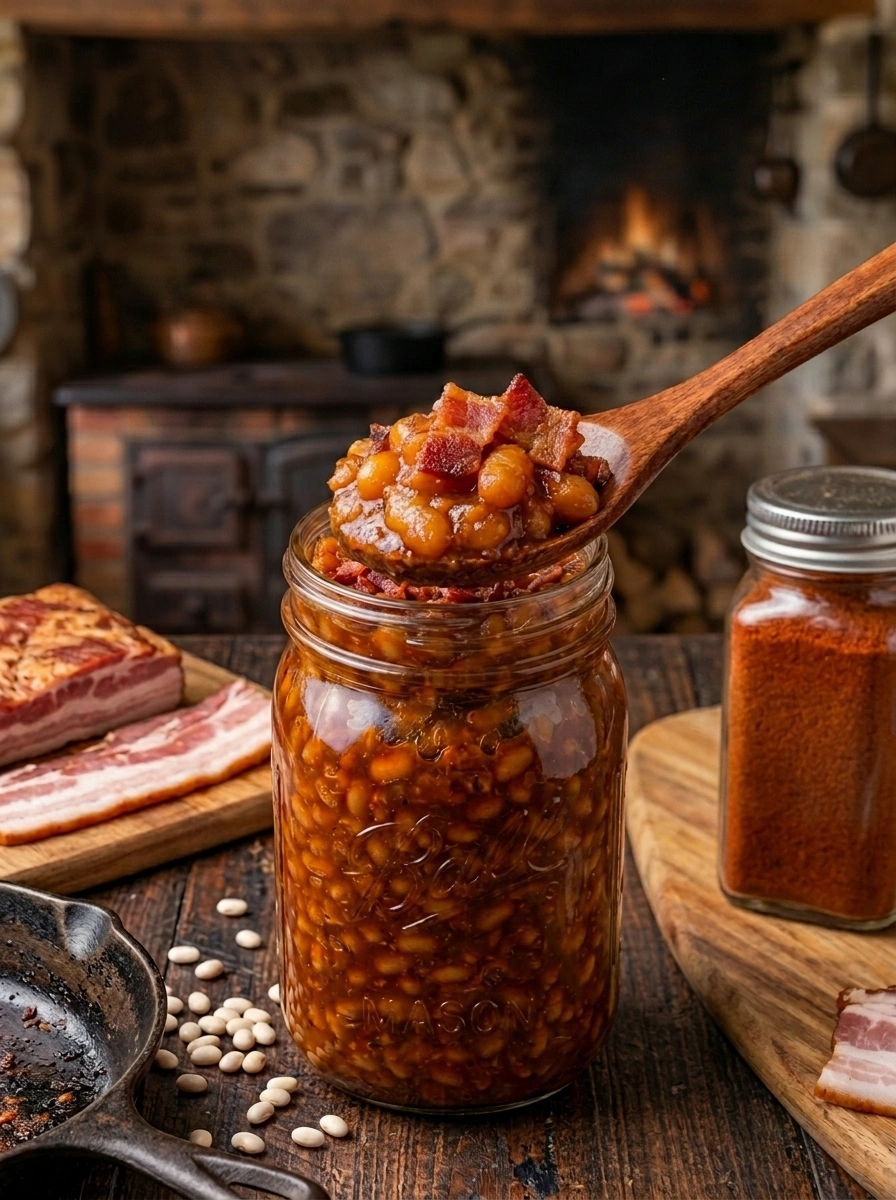
There is a version of baked beans that comes from a can, and there is this version. Both are called baked beans, but they are not the same thing. Not even close. These homemade baked beans are everything the canned version wishes it could be: rich with bacon drippings, deeply sweet from molasses and brown sugar, tangy from apple cider vinegar and yellow mustard, and layered with a smoky complexity from smoked paprika and Worcestershire sauce that builds slowly over nearly two hours in the oven. The sauce thickens and caramelizes around the beans until it coats every single one in something glossy, sticky, and extraordinary.
One spoonful and you’ll understand immediately why people make this recipe on repeat. They become the dish everyone requests at cookouts, the side that disappears before the main course, the thing people ask for the recipe for before they’ve even finished eating. And once you realize how easy they are — a few pantry staples, one Dutch oven, and the oven doing most of the work — you’ll wonder why you ever settled for the can.
This guide covers everything: the history of baked beans and why slow cooking makes all the difference, a complete breakdown of every ingredient and what it contributes, step-by-step instructions for a perfect batch, tips for the best texture and flavor, and every possible way to serve and store them.
The History of Baked Beans: An American Classic With Deep Roots
Baked beans are one of the oldest dishes in American culinary history — and one of the most enduring. The story begins with Native Americans, who slow-cooked beans with bear fat and maple syrup in earthenware pots buried in pits of hot coals. European colonists in New England encountered this technique and adapted it using the ingredients they had: salt pork instead of bear fat, and eventually molasses — a byproduct of the Caribbean sugar trade that flooded New England ports in the 17th and 18th centuries — in place of maple syrup.
Boston became so associated with molasses-sweetened baked beans that the city earned the nickname “Beantown,” and the dish became a Saturday tradition across New England. Pots of beans were set to cook overnight on Saturday to be ready for Sunday — the Puritan Sabbath, on which cooking was forbidden. Cold leftover beans were a common Monday breakfast.
The dish traveled west with settlers and evolved regionally — sweeter in some areas, smokier in others, with bacon and brown sugar becoming standard additions as the recipe spread through American home kitchens. By the time canned baked beans hit shelves in the late 19th century, the dish was already an American institution.
What the can has never been able to replicate is what happens over a long, slow oven cook: the sauce reduces and deepens, the beans absorb the surrounding flavors completely, and the caramelization that occurs at low heat over an extended period produces a complexity and richness that simply cannot be rushed or manufactured. That’s what this recipe gives you — the real thing.
Why Low and Slow Makes All the Difference
The most important thing to understand about this recipe is that the 1½ to 2 hours in a 325°F oven isn’t just cooking time — it’s transformation time. Several things happen during that long, slow bake that can’t be replicated by cooking faster at higher heat.
The sauce reduces and concentrates. Baking uncovered allows moisture to evaporate steadily. The sauce starts thin and becomes thick, glossy, and intensely flavored as it reduces. This is why the beans you pull from the oven look and taste nothing like what you put in.
Caramelization occurs. At 325°F over an extended period, the sugars in the molasses, brown sugar, and ketchup caramelize slowly. This is the source of the deep, complex sweetness that makes these beans taste roasted and rich rather than just sweet.
The beans absorb everything. Navy beans are porous and absorbent, and given enough time in a flavorful sauce, they take on the flavor of everything around them. A bean eaten at the 30-minute mark tastes like a bean with sauce on it. A bean eaten at the 2-hour mark tastes like the sauce itself.
The bacon fat integrates. The reserved bacon drippings in the pan aren’t just there for flavor — the fat slowly emulsifies into the sauce during the long bake, enriching every element and giving the finished dish a silky, cohesive texture that leaner versions lack.
You can shortcut many recipes. This is not one of them. Trust the low, slow process.
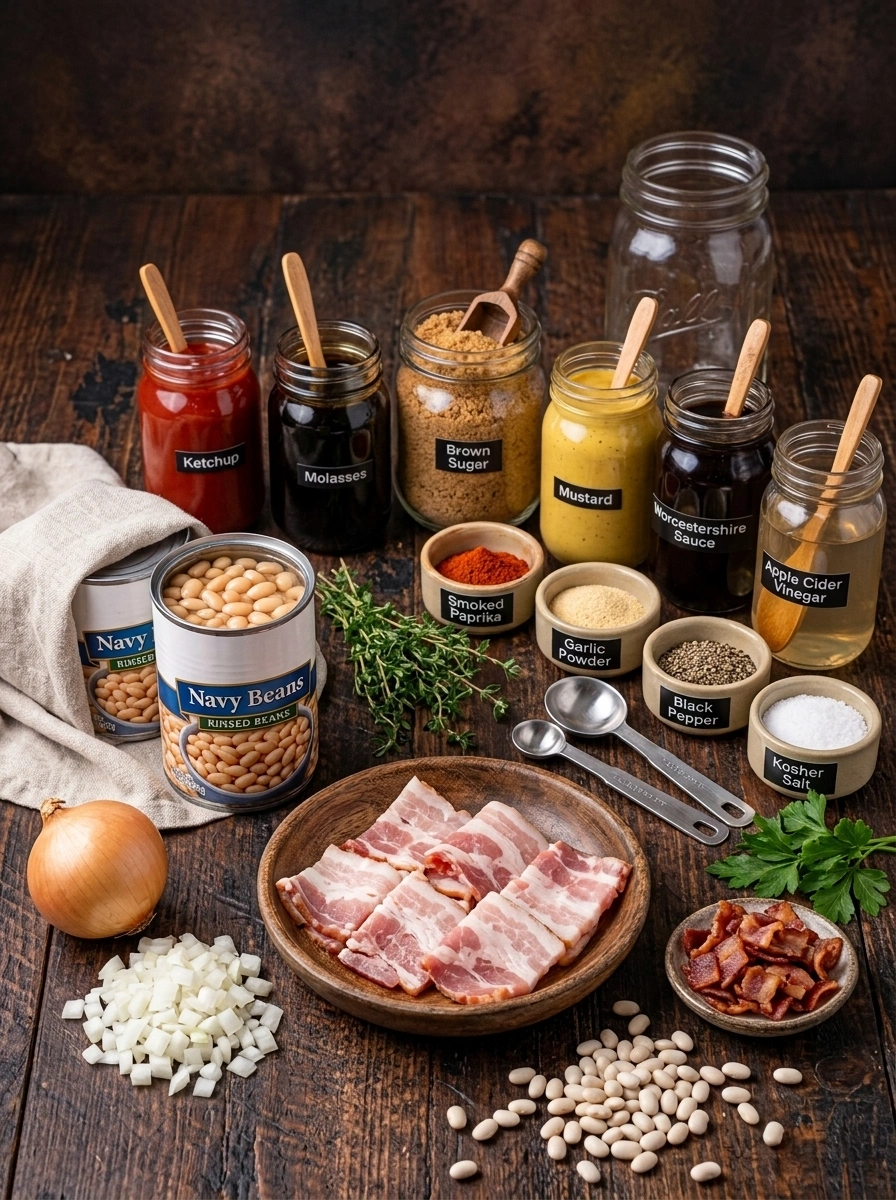
Ingredient Breakdown: What Every Element Does
Bacon (6 slices, chopped)
Bacon does double duty in this recipe. The rendered fat stays in the pan and becomes the cooking medium for the onions and the flavor base for the sauce — it contributes a savory, smoky richness to every bite. The crisped bacon itself is reserved and scattered over the top before baking, where it adds texture and concentrated pork flavor. Use thick-cut bacon if you can find it — it renders more fat, crisps more satisfyingly, and provides a more substantial presence in the finished dish.
Onion (1 small, diced)
Cooked in bacon fat until softened, the onion melts into the sauce during the long bake, contributing a sweet, savory depth that you won’t be able to identify as “onion” in the finished dish but would absolutely notice the absence of. It’s the aromatic backbone that ties the sauce together.
Navy Beans (2 cans, 15 oz each, drained and rinsed)
Navy beans are the traditional choice for baked beans, and for good reason. They’re small, creamy, and have a mildly earthy flavor that absorbs brine and sauce beautifully without becoming mushy during the long bake. Their thin skin allows the sauce to penetrate while their dense interior holds its shape. Rinsing canned beans removes the starchy canning liquid, which would make the sauce cloudy and slightly slimy — always rinse before using.
Can you use dried beans? Yes, and it’s worth doing if you have time and want the absolute best result. Soak 1 pound of dried navy beans overnight, drain, and simmer in fresh water until just tender before proceeding with the recipe. The texture is noticeably better — firmer and more cohesive — and the beans absorb flavor even more effectively than canned. The total time commitment is considerably longer, but the result is exceptional.
Ketchup (½ cup)
More than just a filler, ketchup contributes tomato richness, sweetness, vinegar, and body to the sauce. It’s one of those ingredients that seems too humble for serious cooking but produces a depth in slow-cooked applications that’s hard to replicate with fresh tomato. It also helps bind the sauce and gives it that characteristic glossy, coating consistency.
Molasses (¼ cup)
Molasses is the defining ingredient in classic New England-style baked beans — the one that places this recipe squarely in the American culinary tradition. It’s thick, dark, slightly bitter, and intensely sweet with a complexity that plain sugar can’t touch. It contributes iron-rich, caramel-adjacent depth that becomes the dominant sweetness note in the finished dish. Use unsulphured molasses for the cleanest, most complex flavor. Blackstrap molasses is more intensely bitter and mineral — it can be used but will produce a noticeably darker, more assertive result.
Brown Sugar (¼ cup)
Works alongside the molasses to build a layered sweetness with notes of caramel and toffee. While molasses contributes depth, brown sugar adds brightness and a more straightforward sweetness that balances the acidity of the ketchup and apple cider vinegar. Together they produce a sauce that’s sweet without being cloying.
Yellow Mustard (2 tbsp)
Yellow mustard in baked beans is a classic American addition — it adds a sharp, tangy, acidic note that cuts through the richness of the bacon fat and molasses and prevents the sauce from tasting heavy or one-dimensional. It also contributes a subtle spiced warmth from the ground mustard seeds it contains. Don’t substitute Dijon or whole-grain here; yellow mustard has a specific flavor and consistency that’s right for this application.
Worcestershire Sauce (1 tbsp)
One of the great depth-of-flavor ingredients in savory cooking. Worcestershire is a fermented condiment made from anchovies, tamarind, vinegar, molasses, and spices — and its combination of umami, acidity, and sweetness adds a savory complexity to the sauce that’s genuinely difficult to replicate. You won’t taste Worcestershire in the finished beans. You’ll taste something richer and more complete than the sauce would be without it.
Apple Cider Vinegar (1 tbsp)
The acid brightener. Baked beans without any vinegar can taste flat and overly sweet — a spoonful of acid lifts the whole dish and makes the flavors snap into focus. Apple cider vinegar is the right choice here; it has a mild, slightly fruity tang that complements the molasses and brown sugar without the sharpness of white vinegar.
Smoked Paprika (1 tsp)
This is the modern addition that makes homemade baked beans taste even more complex than traditional versions. Smoked paprika contributes a deep, wood-fire smokiness and a gorgeous red-orange color that reinforces the bacon’s smokiness and makes every bite taste like it came from a real smoke pit. It’s the reason people take a bite of these beans and say they taste like BBQ.
Garlic Powder (½ tsp)
A quiet supporting player that adds savory depth without the sharp edge of fresh garlic. In a long-cooked sauce, garlic powder integrates completely and becomes part of the background flavor rather than a foreground note.
Black Pepper (½ tsp)
Adds gentle heat and a faint spiced warmth. Black pepper in slow-cooked dishes mellows significantly but contributes an aromatic complexity that white pepper or omitting it entirely can’t replicate.
Salt (to taste)
Always add salt gradually and taste before the dish goes into the oven, then taste again when you stir at the halfway mark. The bacon and Worcestershire sauce both contribute salt, so the amount you need will vary. Season thoughtfully.
How to Make Homemade Baked Beans: Step-by-Step
Step 1: Preheat and Prep
Preheat the oven to 325°F (165°C). This low temperature is intentional — it’s what enables the long, slow caramelization that makes these beans extraordinary. Don’t be tempted to increase the heat to speed things up; higher heat evaporates moisture too quickly and can scorch the sauce before it properly develops.
Step 2: Cook the Bacon
In a large oven-safe skillet or Dutch oven over medium heat, cook the chopped bacon until crispy, stirring occasionally. Remove approximately half the cooked bacon with a slotted spoon and set aside on a paper towel — this becomes the garnish. Leave all the bacon drippings in the pan along with the remaining half of the cooked bacon. Those drippings are liquid gold. Don’t drain them.
Step 3: Soften the Onion
Add the diced onion to the bacon drippings in the pan. Cook over medium heat, stirring occasionally, for 4 to 5 minutes until the onion is translucent and softened. The onion will absorb some of the bacon fat as it cooks, which is exactly what you want.
Step 4: Build the Sauce
Add the ketchup, molasses, brown sugar, yellow mustard, Worcestershire sauce, apple cider vinegar, smoked paprika, garlic powder, black pepper, and salt to the pan. Stir everything together thoroughly. The sauce will look rich, dark, and complex immediately — taste it now and adjust the seasoning. It should taste bold and slightly intense at this point; it will mellow and deepen significantly during the bake.
Step 5: Add the Beans
Add the drained, rinsed navy beans to the pan and stir until every bean is coated in the sauce. The mixture will look like a lot of sauce relative to beans right now — that’s correct. Much of it will reduce during baking.
Step 6: Top With Reserved Bacon and Bake
Scatter the reserved crispy bacon over the top of the beans. Transfer the pan to the oven, uncovered, and bake for 1½ to 2 hours. At the halfway point — about 45 minutes to an hour in — stir once to make sure the beans aren’t sticking to the bottom and to recoat any that have risen above the sauce. Then leave them alone.
The beans are done when the sauce is thick, glossy, and reduced to a coating consistency that clings to the beans rather than pooling in the pan. The top will have a beautiful, slightly caramelized surface.
Step 7: Rest Before Serving
Remove from the oven and let the beans rest for 10 minutes before serving. The sauce will thicken slightly more as it cools and the flavors will settle and integrate. This rest period is worth taking.
Tips for the Best Baked Beans
Use a Dutch oven if you have one. Cast iron distributes heat evenly and retains it beautifully, which produces more consistent caramelization and a better finished texture than a thin skillet.
Don’t cover the pan. Baking uncovered is essential for the sauce to reduce and concentrate. Covering traps steam and produces a thinner, more watery sauce.
Taste the sauce before it goes in the oven. This is your last easy opportunity to adjust seasoning. Once it’s baked, adjusting is more difficult.
Stir only once. The single halfway stir is all you need. Stirring more frequently disrupts the caramelization that’s developing on the surface of the beans and at the bottom edges of the pan.
Add a splash of water if the sauce gets too thick. If the beans look like they’re drying out before the full bake time is up, add two to three tablespoons of water and stir gently. This usually happens when the oven runs hot.
Let them rest. Ten minutes off heat makes a noticeable difference in consistency and flavor.
Every Way to Serve Homemade Baked Beans
At a summer cookout. Baked beans are a backyard BBQ institution. Serve them alongside burgers, hot dogs, grilled chicken, ribs, and corn on the cob. They hold perfectly in a Dutch oven kept warm on the grill’s side burner.
With pulled pork. The sweet-smoky richness of these beans is a natural match for slow-cooked pulled pork. Serve them on the side or spoon them directly onto the pulled pork sandwich.
At a potluck or picnic. Baked beans travel beautifully, serve a crowd, and taste equally good warm or at room temperature. They’re one of the best potluck dishes in existence.
As a hearty breakfast side. Beans on toast is a beloved British breakfast staple for very good reason. Spoon these over thick-cut buttered toast, top with a fried egg, and you have a breakfast that will sustain you for hours.
With cornbread. Warm cornbread and a bowl of smoky baked beans is one of those combinations that feels deeply right — the sweetness of the cornbread against the savory-sweet beans, the crumble against the thick sauce.
Alongside grilled sausages or bratwurst. Sausages and baked beans are a classic pairing across multiple food cultures. The richness of the beans complements the fatty, savory sausage beautifully.
As a topping for baked potatoes. Split a large baked potato, spoon a generous helping of beans over it, and top with shredded cheddar and sour cream for a loaded baked potato that doubles as a complete meal.
Alongside coleslaw and potato salad. The trio of baked beans, coleslaw, and potato salad is the complete summer side spread — three dishes with different textures and flavor profiles that complement each other perfectly.
Variations to Try
Spicy Baked Beans: Add one or two chopped jalapeños along with the onion, increase the smoked paprika to 1½ teaspoons, and stir in a tablespoon of hot sauce with the other sauce ingredients.
Bourbon Baked Beans: Add two tablespoons of bourbon to the sauce before it goes in the oven. The alcohol cooks off, leaving behind a rich, oaky, slightly caramel depth that makes these genuinely extraordinary.
Vegetarian Baked Beans: Omit the bacon and substitute two tablespoons of olive oil for the drippings. Add one teaspoon of liquid smoke to the sauce for smokiness, and increase the smoked paprika to 1½ teaspoons. Deeply flavorful and completely meat-free.
Double Bacon: Reserve no bacon — use all six slices as a topping and add two more chopped slices directly into the bean mixture before baking. For dedicated bacon devotees.
BBQ Baked Beans: Replace the ketchup with ¼ cup of your favorite BBQ sauce and reduce the molasses to 2 tablespoons. The result is a more BBQ-forward flavor profile with a smoky-sweet sauce character.
Frequently Asked Questions
Can I make these in a slow cooker? Yes. After cooking the bacon and onion on the stovetop, transfer everything to a slow cooker. Cook on low for 6 to 8 hours or high for 3 to 4 hours. The texture will be slightly different — softer beans, less caramelization — but the flavor is excellent and the hands-off cooking is a real advantage.
Can I use different types of beans? Yes. Great northern beans work almost identically to navy beans. Pinto beans produce a slightly earthier, creamier result. Cannellini beans are larger and hold their shape well but absorb flavor more slowly, so allow extra baking time.
Why are my beans still hard after 2 hours? If using canned beans, this shouldn’t happen — they’re already cooked. If you used dried beans and didn’t fully cook them before baking, the acid in the sauce (from ketchup, vinegar, and molasses) can prevent the beans from softening further in the oven. Always cook dried beans until tender before combining with the sauce.
Can I make these ahead? Absolutely — they actually improve overnight as the flavors continue to meld. Make them a day ahead, refrigerate, and reheat gently before serving.
How do I reheat leftovers? On the stovetop over low heat with a splash of water, stirring occasionally. In the microwave in 90-second intervals, stirring between each, with a splash of water. The sauce thickens considerably when cold and needs liquid to loosen back to its original consistency.
Recipe at a Glance
| Detail | Info |
|---|---|
| Prep Time | 15 minutes |
| Cook Time | 2 hours |
| Total Time | 2 hours 15 minutes |
| Servings | 8 |
| Calories | ~320 per serving |
| Storage | 5 days refrigerated, 3 months frozen |
Final Thoughts
Homemade baked beans are one of those dishes that rewards you far beyond the effort required. The oven does the heavy lifting. The time does the flavoring. All you have to do is assemble a handful of pantry staples, trust the process, and resist the urge to peek too often.
The result is something rich, smoky, sweet, and deeply satisfying — a dish with genuine history and flavor that no can on any grocery store shelf has ever been able to match.
Make a batch for your next cookout. Make one for a weeknight dinner. Make one just because it’s cold outside and your kitchen could use something slow-cooking and fragrant for the afternoon.
You’ll never go back to the can. And you won’t want to.
Print
Homemade Baked Beans: Rich, Smoky, Sweet, and Slow-Cooked to Perfection
- Total Time: 2 hours 15 minutes
Ingredients
Ingredient Breakdown: What Every Element Does
Bacon (6 slices, chopped)
Bacon does double duty in this recipe. The rendered fat stays in the pan and becomes the cooking medium for the onions and the flavor base for the sauce — it contributes a savory, smoky richness to every bite. The crisped bacon itself is reserved and scattered over the top before baking, where it adds texture and concentrated pork flavor. Use thick-cut bacon if you can find it — it renders more fat, crisps more satisfyingly, and provides a more substantial presence in the finished dish.
Onion (1 small, diced)
Cooked in bacon fat until softened, the onion melts into the sauce during the long bake, contributing a sweet, savory depth that you won’t be able to identify as “onion” in the finished dish but would absolutely notice the absence of. It’s the aromatic backbone that ties the sauce together.
Navy Beans (2 cans, 15 oz each, drained and rinsed)
Navy beans are the traditional choice for baked beans, and for good reason. They’re small, creamy, and have a mildly earthy flavor that absorbs brine and sauce beautifully without becoming mushy during the long bake. Their thin skin allows the sauce to penetrate while their dense interior holds its shape. Rinsing canned beans removes the starchy canning liquid, which would make the sauce cloudy and slightly slimy — always rinse before using.
Can you use dried beans? Yes, and it’s worth doing if you have time and want the absolute best result. Soak 1 pound of dried navy beans overnight, drain, and simmer in fresh water until just tender before proceeding with the recipe. The texture is noticeably better — firmer and more cohesive — and the beans absorb flavor even more effectively than canned. The total time commitment is considerably longer, but the result is exceptional.
Ketchup (½ cup)
More than just a filler, ketchup contributes tomato richness, sweetness, vinegar, and body to the sauce. It’s one of those ingredients that seems too humble for serious cooking but produces a depth in slow-cooked applications that’s hard to replicate with fresh tomato. It also helps bind the sauce and gives it that characteristic glossy, coating consistency.
Molasses (¼ cup)
Molasses is the defining ingredient in classic New England-style baked beans — the one that places this recipe squarely in the American culinary tradition. It’s thick, dark, slightly bitter, and intensely sweet with a complexity that plain sugar can’t touch. It contributes iron-rich, caramel-adjacent depth that becomes the dominant sweetness note in the finished dish. Use unsulphured molasses for the cleanest, most complex flavor. Blackstrap molasses is more intensely bitter and mineral — it can be used but will produce a noticeably darker, more assertive result.
Brown Sugar (¼ cup)
Works alongside the molasses to build a layered sweetness with notes of caramel and toffee. While molasses contributes depth, brown sugar adds brightness and a more straightforward sweetness that balances the acidity of the ketchup and apple cider vinegar. Together they produce a sauce that’s sweet without being cloying.
Yellow Mustard (2 tbsp)
Yellow mustard in baked beans is a classic American addition — it adds a sharp, tangy, acidic note that cuts through the richness of the bacon fat and molasses and prevents the sauce from tasting heavy or one-dimensional. It also contributes a subtle spiced warmth from the ground mustard seeds it contains. Don’t substitute Dijon or whole-grain here; yellow mustard has a specific flavor and consistency that’s right for this application.
Worcestershire Sauce (1 tbsp)
One of the great depth-of-flavor ingredients in savory cooking. Worcestershire is a fermented condiment made from anchovies, tamarind, vinegar, molasses, and spices — and its combination of umami, acidity, and sweetness adds a savory complexity to the sauce that’s genuinely difficult to replicate. You won’t taste Worcestershire in the finished beans. You’ll taste something richer and more complete than the sauce would be without it.
Apple Cider Vinegar (1 tbsp)
The acid brightener. Baked beans without any vinegar can taste flat and overly sweet — a spoonful of acid lifts the whole dish and makes the flavors snap into focus. Apple cider vinegar is the right choice here; it has a mild, slightly fruity tang that complements the molasses and brown sugar without the sharpness of white vinegar.
Smoked Paprika (1 tsp)
This is the modern addition that makes homemade baked beans taste even more complex than traditional versions. Smoked paprika contributes a deep, wood-fire smokiness and a gorgeous red-orange color that reinforces the bacon’s smokiness and makes every bite taste like it came from a real smoke pit. It’s the reason people take a bite of these beans and say they taste like BBQ.
Garlic Powder (½ tsp)
A quiet supporting player that adds savory depth without the sharp edge of fresh garlic. In a long-cooked sauce, garlic powder integrates completely and becomes part of the background flavor rather than a foreground note.
Black Pepper (½ tsp)
Adds gentle heat and a faint spiced warmth. Black pepper in slow-cooked dishes mellows significantly but contributes an aromatic complexity that white pepper or omitting it entirely can’t replicate.
Salt (to taste)
Always add salt gradually and taste before the dish goes into the oven, then taste again when you stir at the halfway mark. The bacon and Worcestershire sauce both contribute salt, so the amount you need will vary. Season thoughtfully.
Instructions
How to Make Homemade Baked Beans: Step-by-Step
Step 1: Preheat and Prep
Preheat the oven to 325°F (165°C). This low temperature is intentional — it’s what enables the long, slow caramelization that makes these beans extraordinary. Don’t be tempted to increase the heat to speed things up; higher heat evaporates moisture too quickly and can scorch the sauce before it properly develops.
Step 2: Cook the Bacon
In a large oven-safe skillet or Dutch oven over medium heat, cook the chopped bacon until crispy, stirring occasionally. Remove approximately half the cooked bacon with a slotted spoon and set aside on a paper towel — this becomes the garnish. Leave all the bacon drippings in the pan along with the remaining half of the cooked bacon. Those drippings are liquid gold. Don’t drain them.
Step 3: Soften the Onion
Add the diced onion to the bacon drippings in the pan. Cook over medium heat, stirring occasionally, for 4 to 5 minutes until the onion is translucent and softened. The onion will absorb some of the bacon fat as it cooks, which is exactly what you want.
Step 4: Build the Sauce
Add the ketchup, molasses, brown sugar, yellow mustard, Worcestershire sauce, apple cider vinegar, smoked paprika, garlic powder, black pepper, and salt to the pan. Stir everything together thoroughly. The sauce will look rich, dark, and complex immediately — taste it now and adjust the seasoning. It should taste bold and slightly intense at this point; it will mellow and deepen significantly during the bake.
Step 5: Add the Beans
Add the drained, rinsed navy beans to the pan and stir until every bean is coated in the sauce. The mixture will look like a lot of sauce relative to beans right now — that’s correct. Much of it will reduce during baking.
Step 6: Top With Reserved Bacon and Bake
Scatter the reserved crispy bacon over the top of the beans. Transfer the pan to the oven, uncovered, and bake for 1½ to 2 hours. At the halfway point — about 45 minutes to an hour in — stir once to make sure the beans aren’t sticking to the bottom and to recoat any that have risen above the sauce. Then leave them alone.
The beans are done when the sauce is thick, glossy, and reduced to a coating consistency that clings to the beans rather than pooling in the pan. The top will have a beautiful, slightly caramelized surface.
Step 7: Rest Before Serving
Remove from the oven and let the beans rest for 10 minutes before serving. The sauce will thicken slightly more as it cools and the flavors will settle and integrate. This rest period is worth taking.
- Prep Time: 15 minutes
- Cook Time: 2 hours
Nutrition
- Serving Size: 8
- Calories: 320 per serving