There are foods that exist in the comfortable center of popular opinion — things everyone agrees are good, that show up at every gathering without causing a second thought. And then there are foods with a devoted following so passionate it borders on obsessive: foods that people who grew up with them will defend to the death, and that people discovering them for the first time can’t believe they missed out on for so long. Pickled bologna is firmly in the second category.
If you know, you know. One jar of spicy pickled bologna in the refrigerator and suddenly it’s the thing you reach for first, the snack you think about at random moments during the day, the dish that empties before anything else at a party. Salty from the bologna itself, tangy from the vinegar brine, punchy from jalapeños and hot sauce and red pepper flakes, and deeply savory in the way that only cured meat in a well-spiced brine can be. One bite turns into another. Another turns into a handful. The jar disappears faster than you thought possible, and you immediately start thinking about making more.
This is that recipe. Made from scratch with a proper spiced brine, fresh jalapeños, sliced garlic, and hot sauce, this pickled bologna is everything the gas station jar version wants to be — and considerably more. Twenty minutes of prep, 48 hours of patience, and you’ll have the most addictive thing in your refrigerator.
This guide covers everything: the surprisingly rich cultural history of pickled bologna, what the pickling process does to cured meat, a complete breakdown of every ingredient, step-by-step instructions, tips for the best texture and flavor, and every possible way to eat it once the jar is ready.
Pickled Bologna: An American Roadside Classic With Serious Roots
Pickled bologna is one of those American foods that exists just below the mainstream radar — deeply beloved in certain regions and entirely unknown in others, which is part of what makes discovering it feel like uncovering a secret. Walk into the right gas station, general store, or small-town deli in Appalachia, the rural South, the Midwest, or the Mid-Atlantic states and you’ll find a large glass jar sitting on the counter, filled with red-tinted bologna in spiced vinegar brine. The person behind the counter will tell you it’s a dollar a stick, maybe two, and they’ll tell you they sell out regularly.
The roots of pickled bologna are intertwined with the broader American tradition of pickled and preserved meats — a tradition that predates refrigeration and reflects the practical necessity of extending the shelf life of protein in communities where fresh meat was seasonal and grocery stores were distant. Bologna itself — a highly processed, salt-cured sausage descended from Italian mortadella — was ideal for preservation because it was already cured, stable, and salty. Submerging it in vinegar brine extended its life further and added a tangy punch that complemented the meat’s richness.
In rural Appalachian communities particularly, pickled bologna became more than just a preservation technique — it became a cultural touchstone. It was bar food, convenience store food, hunting camp food, road trip food. The kind of thing you ate with crackers and hot sauce on a tailgate, or straight from the jar during a long drive. Generations of people grew up eating it, and their attachment to it is genuine and deep.
Making it at home — with fresh jalapeños, real garlic, quality hot sauce, and a properly balanced brine — elevates it from gas station snack to something genuinely worth seeking out. The cultural authenticity remains. The flavor is dramatically better.
What Pickling Does to Bologna — and Why It’s So Good
Bologna is already a cured, cooked product with a fully developed flavor profile when you buy it. The question people sometimes ask is: what does pickling actually add to something that’s already preserved? The answer is quite a lot.
The brine penetrates and transforms the fat. Bologna is high in fat — that’s a feature, not a flaw, and it’s central to what makes it taste good. Fat-soluble flavor compounds from the hot sauce, garlic, red pepper flakes, and other spices in the brine slowly infuse into the fatty bologna over the days it sits in the jar. A plain piece of bologna straight from the package and a piece that’s spent five days in this brine are simply not the same food. The pickled version is deeper, more complex, and considerably more interesting.
The acid brightens and cuts the richness. Bologna is rich and fatty and salt-cured — it can taste heavy if eaten in any quantity. Vinegar brine is acidic and bright. Together, the acid cuts through the richness of the meat the same way a good pickle cuts through a rich burger. Every bite of pickled bologna delivers richness and tang simultaneously, which is why it’s so compulsively edible.
The texture firms up. Bologna from the package is soft and somewhat spongy. Days in a vinegar brine tighten the outer surface of each piece and give it a more satisfying chew — less processed-feeling and more substantive in the mouth. This texture change is part of what makes pickled bologna feel like more of a real snack than sliced bologna straight from the package.
The color deepens. The hot sauce and red pepper flakes tint the brine a rich orange-red that stains the outer layer of the bologna. By day four or five, each cube has a vivid, deeply colored exterior that looks exactly as bold and spicy as it tastes.
Choosing Your Bologna
Not all bologna is created equal for pickling purposes, and the type you choose affects the finished result significantly.
Ring bologna is the traditional choice for pickled bologna in Appalachian and Midwestern food culture. Sold as a large, thick sausage ring rather than pre-sliced, ring bologna has a firmer texture, a more pronounced smoke flavor, and a more substantial chew than the thin-sliced deli variety. When cut into thick rounds or bite-sized cubes, it holds up beautifully in brine and develops an excellent texture over the pickling period. Look for it at specialty grocers, butcher shops, ethnic delis (particularly German or Polish-style), or well-stocked supermarkets in regions where it’s traditional.
Thick-cut deli bologna from the butcher counter is the next best option. Ask for it sliced ¼ to ½ inch thick rather than the standard thin slices. Thickness is everything for pickled bologna — thin slices become too soft and almost mushy in the brine, losing the textural integrity that makes pickled bologna satisfying to eat.
Pre-sliced packaged bologna works but is the least ideal choice. If you use it, opt for the thickest pre-sliced variety available (Oscar Mayer’s “thick cut” bologna, for example) and be aware that the finished texture will be softer than ring or thick-cut deli bologna.
Smoked varieties add an additional layer of flavor that complements the brine beautifully — the smokiness plays off the smoked paprika in the brine and creates a more complex, BBQ-adjacent flavor profile. Highly recommended if you can find smoked ring bologna.
Beef bologna vs. pork-and-chicken bologna: Traditional ring bologna is typically pork-based or a pork-beef blend with a more pronounced, meatier flavor. The standard American bologna is a blend of pork, chicken, and sometimes beef. Either works — the pork-heavy varieties tend to have more flavor and a better texture for pickling.
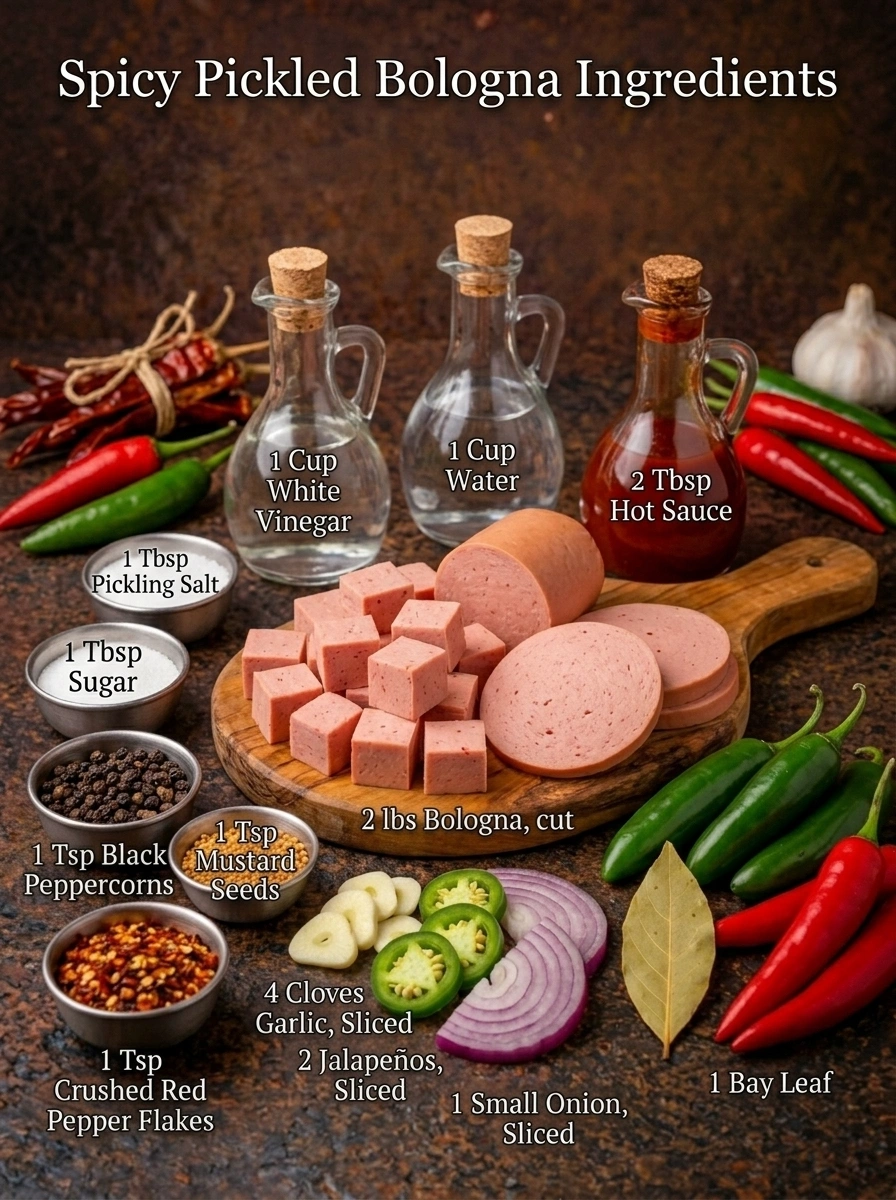
Ingredient Breakdown: Building the Perfect Brine for Cured Meat
Pickling brine for cured meat requires slightly different thinking than brine for vegetables. Bologna is already heavily seasoned and salty — the brine needs to complement and enhance rather than supply all the seasoning from scratch.
White Vinegar (1 cup)
The sharp, clean acid backbone. White vinegar penetrates the dense fat and protein matrix of bologna efficiently and delivers bright tang without adding competing flavors. The neutral color keeps the brine’s visual clarity, allowing the hot sauce and red pepper flakes to color it vividly without muddiness.
Water (1 cup)
Dilutes the vinegar to a balanced level and creates enough total liquid volume to fully submerge the bologna. The 1:1 ratio is the standard for quick brines — acidic enough to work, mild enough to eat.
Hot Sauce (2 tbsp)
The flavor multiplier. Hot sauce in a bologna brine does something remarkable: its fermented pepper complexity melds with the cured meat’s own savory notes to create a flavor that’s greater than either produces alone. The vinegar base of most hot sauces reinforces the brine’s acidity while adding a layer of fermented umami depth. For this recipe, a Louisiana-style hot sauce or Frank’s RedHot delivers the right balance of tang and heat. A habanero sauce pushes the heat considerably higher and adds fruity depth.
Pickling Salt or Kosher Salt (1 tbsp)
A relatively modest amount compared to vegetable pickle brines, because bologna is already heavily salted during its production. This tablespoon seasons the brine itself rather than the meat — the bologna provides its own salt contribution to the jar’s overall flavor. Using pickling or kosher salt (never iodized table salt) keeps the brine clear and clean-tasting.
Sugar (1 tbsp)
Balances the vinegar’s acidity and the bologna’s saltiness with a barely perceptible sweetness that rounds everything out. Bologna brine without sugar tastes sharp and one-note. With it, the overall experience has a balance and cohesion that makes it more complex and more craveable.
Garlic (4 cloves, sliced)
Sliced rather than smashed here because sliced garlic infuses the brine more gradually and produces a more controlled, even garlic flavor throughout the jar. Four cloves is a generous amount that produces a distinctly garlicky brine — exactly right for bologna, which is sturdy enough to carry bold garlic presence without being overwhelmed.
Onion (1 small, thinly sliced)
Onion is an ingredient that rarely appears in pickled egg or vegetable brines but is absolutely at home in pickled bologna. It softens slightly in the brine and contributes a sweet, savory depth that complements the garlic and hot sauce beautifully. The onion slices also become pickled alongside the bologna — they’re worth eating straight from the jar. By day four, pickled onion that’s been sitting in spiced bologna brine is one of the best things in the jar.
Jalapeños (2, thinly sliced)
Fresh jalapeño heat with a bright, vegetal character that cuts through the richness of the bologna. Two jalapeños provide building warmth that most people who enjoy spicy food will find satisfying without overwhelming. The jalapeño slices pickle in the brine alongside the bologna and become excellent pickled peppers in their own right — eat them with the bologna or separately.
Black Peppercorns (1 tsp)
Aromatic warmth that layers beneath the capsaicin heat. Whole peppercorns release piperine slowly into the brine during the infusion period, contributing a depth and complexity that makes the brine taste spiced rather than simply hot.
Mustard Seeds (1 tsp)
A classic pickling spice that signals a properly made brine and contributes mild, earthy depth. They look beautiful in the finished jar and add a gentle pop of warm, savory flavor when encountered in a bite.
Crushed Red Pepper Flakes (1 tsp)
A second, distinct layer of heat that builds slowly and sustains throughout the eating experience. Red pepper flakes infuse differently than fresh jalapeños — their heat is drier, more concentrated, and slower to develop. The combination of jalapeño and red pepper flakes creates a more complex, interesting heat than either provides alone.
Bay Leaf (1)
The herbal anchor. One bay leaf adds an almost imperceptible floral, herbal background note that rounds the brine and makes it taste complete. Remove before serving or leave in — either way, it has done its work during the infusion period.
How to Make Spicy Pickled Bologna: Step-by-Step
Step 1: Cut the Bologna
How you cut the bologna determines the texture and eating experience of the finished pickle. Two options:
Cubes (recommended for snacking): Cut the bologna into 1-inch cubes. Cubes have maximum surface area in contact with the brine, which means faster and more even flavor infusion. They’re also the most satisfying to eat — each cube is a self-contained bite of salty, tangy, spicy cured meat.
Thick rounds: Slice into ½-inch rounds for a presentation that looks closer to the classic gas station jar version. Rounds are slightly less efficient at absorbing brine than cubes due to less surface area, but they look classic and are excellent eaten on crackers.
Regardless of which cut you choose: thickness matters more than shape. Thin pieces will turn soft and lose their textural appeal within the brine. Keep everything at least ½ inch thick.
Step 2: Pack the Jar
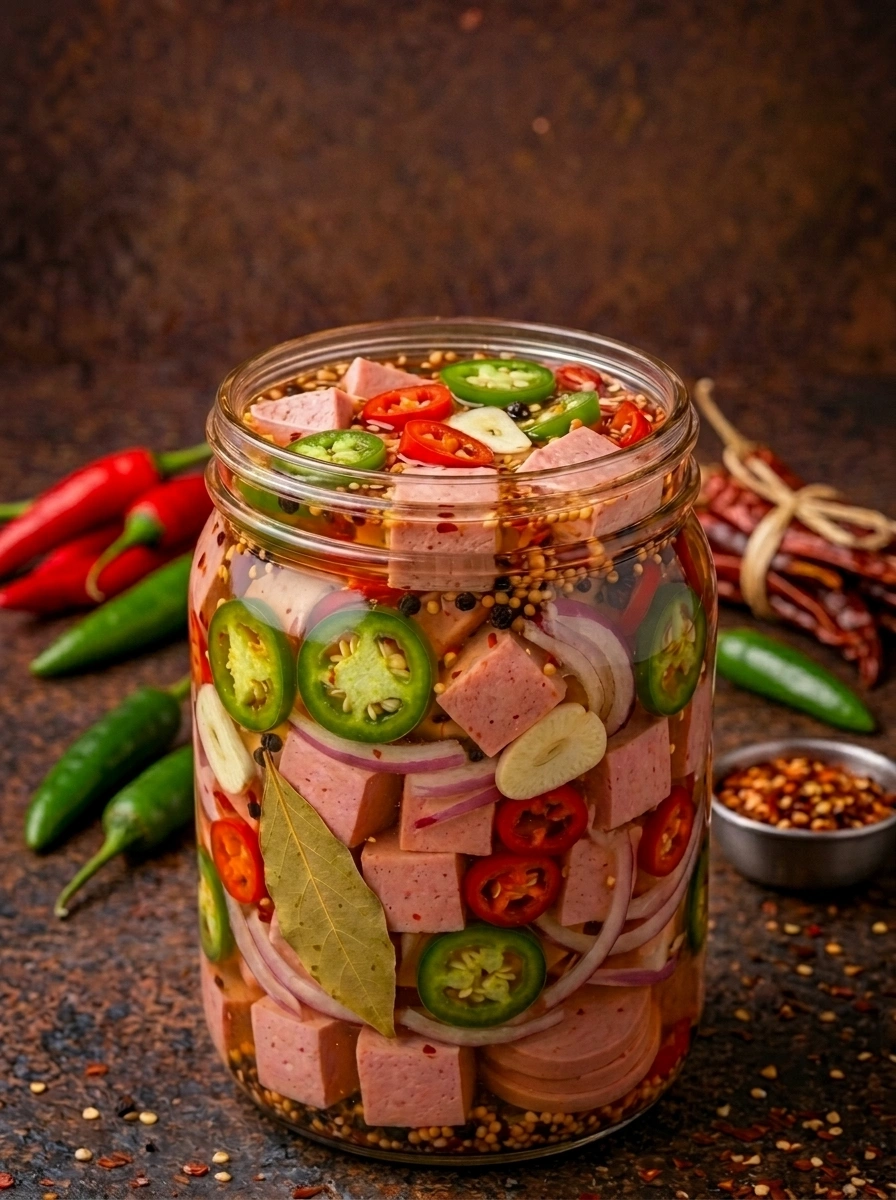
Use a wide-mouth quart jar or a large airtight container. Layer the bologna pieces, sliced onion, sliced garlic, and jalapeños, distributing everything evenly throughout. You want onion and pepper pieces in contact with every section of the jar so the brine flavors are consistent from top to bottom.
Tuck jalapeño slices along the visible wall of the jar — they look vivid and appetizing through the glass once the brine goes in and immediately communicate what kind of snack experience awaits.
Step 3: Make the Brine
Combine the white vinegar, water, hot sauce, salt, sugar, black peppercorns, mustard seeds, crushed red pepper flakes, and bay leaf in a small saucepan over medium heat. Stir occasionally until the sugar and salt dissolve completely — 3 to 4 minutes. The brine will turn orange-red from the hot sauce and pepper flakes. Don’t boil aggressively; a gentle simmer is sufficient.
Step 4: Pour the Brine
Pour the hot brine over the packed bologna, making sure every piece is fully submerged. Bologna is denser than most vegetables and will stay submerged easily. If any pieces float, press them gently down — once the brine cools and everything settles, they typically stay put.
Step 5: Cool, Seal, and Refrigerate
Allow the jar to cool uncovered at room temperature until comfortable to handle — about 30 to 45 minutes. Seal tightly and refrigerate.
Step 6: The Wait
48 hours: The minimum. The brine has penetrated the surface and the outer layer of each piece. The flavor is noticeably different from fresh bologna — tangy, lightly spiced, and garlicky. Worth eating, but not at full potential.
4 to 5 days: The sweet spot. The brine has infused deeply, the colors have developed, the fat has absorbed the spice compounds, and every bite delivers the full complex flavor of the brine alongside the cured meat’s saltiness. This is the target.
7 days and beyond: For those who want maximum tang and maximum flavor development. The bologna becomes increasingly pickled in character — bold, assertive, deeply tangy. The heat builds as the capsaicin continues to diffuse into the meat. Some people prefer this stage; it’s the most intensely pickled version.
How to Eat Spicy Pickled Bologna
Straight from the jar with a toothpick. The purist approach. Cold from the fridge, fork or toothpick, no accompaniment needed. This is how it gets eaten at 11pm standing in front of the open refrigerator, and it’s the correct way.
On crackers. The classic pairing. A cube or round of pickled bologna on a Ritz or saltine cracker, maybe with a thin smear of cream cheese or a dab of yellow mustard, is a perfect bite. This is bar snack food at its finest — salty, tangy, crunchy, and completely satisfying.
On a charcuterie board. Pile pickled bologna alongside pepper jack cheese, spicy pickles, jalapeño cream cheese, crackers, and pickled onions for a heat-forward charcuterie spread that will surprise people who’ve never encountered it and delight everyone who has.
In a sandwich. Thick slices of pickled bologna on white bread with yellow mustard, American cheese, and a handful of potato chips — this is a regional American sandwich tradition that deserves wider recognition. The tang of the pickled meat makes a sandwich that a plain bologna sandwich can’t approach.
Alongside deviled eggs. A classic Southern and Appalachian pairing at potlucks and family gatherings. The richness of the deviled egg and the tang of the pickled bologna balance each other perfectly.
With hot sauce and crackers as a party snack. Set out a jar on the counter at your next gathering with a box of crackers and a bottle of hot sauce. It will be the first thing gone and the most talked-about item on the table.
Chopped into potato salad. Dice pickled bologna finely and fold into potato salad in place of (or alongside) plain bologna. The tangy, spiced meat transforms the salad completely — adds salt, tang, and a spiced depth that plain bologna or standard pickles can’t replicate.
The pickled vegetables in the jar. The onions, jalapeños, and garlic that pickle alongside the bologna are excellent in their own right. They absorb the meaty richness of the brine while maintaining their pickled tang. Eat them with the bologna or as standalone pickled vegetables on a sandwich.
Variations to Try
Smoked Bologna Brine: Use smoked ring bologna and add ½ teaspoon of liquid smoke to the brine. The smokiness becomes a dominant flavor note that makes these taste almost like a BBQ-infused pickle — outstanding.
Sweet and Spicy: Increase the sugar to 3 tablespoons and add a tablespoon of honey to the brine. The sweetness rounds the heat beautifully and creates a more complex flavor profile — especially good on crackers with cream cheese.
Extra Garlic: Double the garlic to 8 cloves. After five days in the brine, the bologna will taste deeply, savagely garlicky — a version that garlic devotees will prefer above all others.
Dill Bologna: Add two generous sprigs of fresh dill and replace one tablespoon of the hot sauce with a tablespoon of dill pickle brine. The result leans more toward classic dill pickle territory with the bologna’s meaty richness underneath — outstanding on sandwiches.
Beer Brine: Replace the cup of water with a cup of your favorite lager or pale ale. The beer adds malt complexity and a subtle hop bitterness that pairs remarkably well with cured meat. Don’t use a heavily hopped IPA — the bitterness becomes too aggressive.
Frequently Asked Questions
Can I use turkey bologna or other varieties? Yes. Turkey bologna is leaner and will absorb brine slightly differently than pork bologna — the texture may be a bit softer. Beef bologna has a more pronounced, slightly gamier flavor that works well. Any bologna style you enjoy eating plain will produce a good pickled result.
Why 48 hours minimum and not less? Bologna is denser than vegetables and absorbs brine more slowly. At 24 hours, the brine has only penetrated the outermost layer. 48 hours produces a genuinely pickled result. Four to five days is the full transformation.
Can I reuse the brine? The brine develops a rich, meaty-spicy quality that’s excellent in other applications — add it to Bloody Marys, use as a marinade for chicken or pork, or drizzle over tacos. For a fresh batch of pickled bologna, make fresh brine.
Does the bologna get softer the longer it sits? Slightly, particularly the outer surface. The texture is most satisfying between day three and day seven — firm enough for a good bite but fully infused with brine flavor. Beyond two weeks, the texture continues to soften.
Is this safe to store at room temperature like commercial pickled bologna? No. Commercial pickled bologna is produced under controlled conditions with tested acidity levels and often heat-processed. This homemade version should always be refrigerated and eaten within two weeks.
Recipe at a Glance
| Detail | Info |
|---|---|
| Prep Time | 15 minutes |
| Cook Time | 5 minutes |
| Total Time | 20 minutes (plus 48 hours–5 days pickling) |
| Servings | 10 |
| Calories | ~180 per serving |
| Ready to eat | After 48 hours (best at 4–5 days) |
| Storage | Up to 2 weeks refrigerated |
Final Thoughts
Spicy Pickled Bologna is one of those foods that exists in a special category: deeply regional, fiercely beloved, genuinely misunderstood by anyone who hasn’t tried it, and absolutely impossible to stop eating once you have. It’s the snack that gas stations and general stores in the right parts of this country have been selling for generations because it is, simply, one of the best bites of food a dollar or two can buy.
Making it at home takes that tradition and gives it everything it deserves: real garlic, fresh jalapeños, quality hot sauce, a properly balanced brine, and the patience to let it develop fully over four to five days. The result is something that tastes both nostalgic and new — familiar and bold and completely addictive.
Make a jar. Wait five days. Try one cube with a cracker.
Then explain to yourself why the jar is already half empty.
Print
Spicy Pickled Bologna: Salty, Tangy, Bold, and Dangerously Addictive
- Total Time: 20 minutes (plus 48 hours–5 days pickling)
Ingredients
Pickling brine for cured meat requires slightly different thinking than brine for vegetables. Bologna is already heavily seasoned and salty — the brine needs to complement and enhance rather than supply all the seasoning from scratch.
White Vinegar (1 cup)
The sharp, clean acid backbone. White vinegar penetrates the dense fat and protein matrix of bologna efficiently and delivers bright tang without adding competing flavors. The neutral color keeps the brine’s visual clarity, allowing the hot sauce and red pepper flakes to color it vividly without muddiness.
Water (1 cup)
Dilutes the vinegar to a balanced level and creates enough total liquid volume to fully submerge the bologna. The 1:1 ratio is the standard for quick brines — acidic enough to work, mild enough to eat.
Hot Sauce (2 tbsp)
The flavor multiplier. Hot sauce in a bologna brine does something remarkable: its fermented pepper complexity melds with the cured meat’s own savory notes to create a flavor that’s greater than either produces alone. The vinegar base of most hot sauces reinforces the brine’s acidity while adding a layer of fermented umami depth. For this recipe, a Louisiana-style hot sauce or Frank’s RedHot delivers the right balance of tang and heat. A habanero sauce pushes the heat considerably higher and adds fruity depth.
Pickling Salt or Kosher Salt (1 tbsp)
A relatively modest amount compared to vegetable pickle brines, because bologna is already heavily salted during its production. This tablespoon seasons the brine itself rather than the meat — the bologna provides its own salt contribution to the jar’s overall flavor. Using pickling or kosher salt (never iodized table salt) keeps the brine clear and clean-tasting.
Sugar (1 tbsp)
Balances the vinegar’s acidity and the bologna’s saltiness with a barely perceptible sweetness that rounds everything out. Bologna brine without sugar tastes sharp and one-note. With it, the overall experience has a balance and cohesion that makes it more complex and more craveable.
Garlic (4 cloves, sliced)
Sliced rather than smashed here because sliced garlic infuses the brine more gradually and produces a more controlled, even garlic flavor throughout the jar. Four cloves is a generous amount that produces a distinctly garlicky brine — exactly right for bologna, which is sturdy enough to carry bold garlic presence without being overwhelmed.
Onion (1 small, thinly sliced)
Onion is an ingredient that rarely appears in pickled egg or vegetable brines but is absolutely at home in pickled bologna. It softens slightly in the brine and contributes a sweet, savory depth that complements the garlic and hot sauce beautifully. The onion slices also become pickled alongside the bologna — they’re worth eating straight from the jar. By day four, pickled onion that’s been sitting in spiced bologna brine is one of the best things in the jar.
Jalapeños (2, thinly sliced)
Fresh jalapeño heat with a bright, vegetal character that cuts through the richness of the bologna. Two jalapeños provide building warmth that most people who enjoy spicy food will find satisfying without overwhelming. The jalapeño slices pickle in the brine alongside the bologna and become excellent pickled peppers in their own right — eat them with the bologna or separately.
Black Peppercorns (1 tsp)
Aromatic warmth that layers beneath the capsaicin heat. Whole peppercorns release piperine slowly into the brine during the infusion period, contributing a depth and complexity that makes the brine taste spiced rather than simply hot.
Mustard Seeds (1 tsp)
A classic pickling spice that signals a properly made brine and contributes mild, earthy depth. They look beautiful in the finished jar and add a gentle pop of warm, savory flavor when encountered in a bite.
Crushed Red Pepper Flakes (1 tsp)
A second, distinct layer of heat that builds slowly and sustains throughout the eating experience. Red pepper flakes infuse differently than fresh jalapeños — their heat is drier, more concentrated, and slower to develop. The combination of jalapeño and red pepper flakes creates a more complex, interesting heat than either provides alone.
Bay Leaf (1)
The herbal anchor. One bay leaf adds an almost imperceptible floral, herbal background note that rounds the brine and makes it taste complete. Remove before serving or leave in — either way, it has done its work during the infusion period.
Instructions
Step 1: Cut the Bologna
How you cut the bologna determines the texture and eating experience of the finished pickle. Two options:
Cubes (recommended for snacking): Cut the bologna into 1-inch cubes. Cubes have maximum surface area in contact with the brine, which means faster and more even flavor infusion. They’re also the most satisfying to eat — each cube is a self-contained bite of salty, tangy, spicy cured meat.
Thick rounds: Slice into ½-inch rounds for a presentation that looks closer to the classic gas station jar version. Rounds are slightly less efficient at absorbing brine than cubes due to less surface area, but they look classic and are excellent eaten on crackers.
Regardless of which cut you choose: thickness matters more than shape. Thin pieces will turn soft and lose their textural appeal within the brine. Keep everything at least ½ inch thick.
Step 2: Pack the Jar
Use a wide-mouth quart jar or a large airtight container. Layer the bologna pieces, sliced onion, sliced garlic, and jalapeños, distributing everything evenly throughout. You want onion and pepper pieces in contact with every section of the jar so the brine flavors are consistent from top to bottom.
Tuck jalapeño slices along the visible wall of the jar — they look vivid and appetizing through the glass once the brine goes in and immediately communicate what kind of snack experience awaits.
Step 3: Make the Brine
Combine the white vinegar, water, hot sauce, salt, sugar, black peppercorns, mustard seeds, crushed red pepper flakes, and bay leaf in a small saucepan over medium heat. Stir occasionally until the sugar and salt dissolve completely — 3 to 4 minutes. The brine will turn orange-red from the hot sauce and pepper flakes. Don’t boil aggressively; a gentle simmer is sufficient.
Step 4: Pour the Brine
Pour the hot brine over the packed bologna, making sure every piece is fully submerged. Bologna is denser than most vegetables and will stay submerged easily. If any pieces float, press them gently down — once the brine cools and everything settles, they typically stay put.
Step 5: Cool, Seal, and Refrigerate
Allow the jar to cool uncovered at room temperature until comfortable to handle — about 30 to 45 minutes. Seal tightly and refrigerate.
Step 6: The Wait
48 hours: The minimum. The brine has penetrated the surface and the outer layer of each piece. The flavor is noticeably different from fresh bologna — tangy, lightly spiced, and garlicky. Worth eating, but not at full potential.
4 to 5 days: The sweet spot. The brine has infused deeply, the colors have developed, the fat has absorbed the spice compounds, and every bite delivers the full complex flavor of the brine alongside the cured meat’s saltiness. This is the target.
7 days and beyond: For those who want maximum tang and maximum flavor development. The bologna becomes increasingly pickled in character — bold, assertive, deeply tangy. The heat builds as the capsaicin continues to diffuse into the meat. Some people prefer this stage; it’s the most intensely pickled version.
- Prep Time: 5 minutes
- Cook Time: 15 minutes
Nutrition
- Serving Size: 10
- Calories: 180 per serving