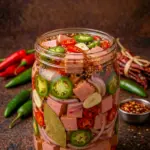
Ingredients
Pickling brine for cured meat requires slightly different thinking than brine for vegetables. Bologna is already heavily seasoned and salty — the brine needs to complement and enhance rather than supply all the seasoning from scratch.
White Vinegar (1 cup)
The sharp, clean acid backbone. White vinegar penetrates the dense fat and protein matrix of bologna efficiently and delivers bright tang without adding competing flavors. The neutral color keeps the brine’s visual clarity, allowing the hot sauce and red pepper flakes to color it vividly without muddiness.
Water (1 cup)
Dilutes the vinegar to a balanced level and creates enough total liquid volume to fully submerge the bologna. The 1:1 ratio is the standard for quick brines — acidic enough to work, mild enough to eat.
Hot Sauce (2 tbsp)
The flavor multiplier. Hot sauce in a bologna brine does something remarkable: its fermented pepper complexity melds with the cured meat’s own savory notes to create a flavor that’s greater than either produces alone. The vinegar base of most hot sauces reinforces the brine’s acidity while adding a layer of fermented umami depth. For this recipe, a Louisiana-style hot sauce or Frank’s RedHot delivers the right balance of tang and heat. A habanero sauce pushes the heat considerably higher and adds fruity depth.
Pickling Salt or Kosher Salt (1 tbsp)
A relatively modest amount compared to vegetable pickle brines, because bologna is already heavily salted during its production. This tablespoon seasons the brine itself rather than the meat — the bologna provides its own salt contribution to the jar’s overall flavor. Using pickling or kosher salt (never iodized table salt) keeps the brine clear and clean-tasting.
Sugar (1 tbsp)
Balances the vinegar’s acidity and the bologna’s saltiness with a barely perceptible sweetness that rounds everything out. Bologna brine without sugar tastes sharp and one-note. With it, the overall experience has a balance and cohesion that makes it more complex and more craveable.
Garlic (4 cloves, sliced)
Sliced rather than smashed here because sliced garlic infuses the brine more gradually and produces a more controlled, even garlic flavor throughout the jar. Four cloves is a generous amount that produces a distinctly garlicky brine — exactly right for bologna, which is sturdy enough to carry bold garlic presence without being overwhelmed.
Onion (1 small, thinly sliced)
Onion is an ingredient that rarely appears in pickled egg or vegetable brines but is absolutely at home in pickled bologna. It softens slightly in the brine and contributes a sweet, savory depth that complements the garlic and hot sauce beautifully. The onion slices also become pickled alongside the bologna — they’re worth eating straight from the jar. By day four, pickled onion that’s been sitting in spiced bologna brine is one of the best things in the jar.
Jalapeños (2, thinly sliced)
Fresh jalapeño heat with a bright, vegetal character that cuts through the richness of the bologna. Two jalapeños provide building warmth that most people who enjoy spicy food will find satisfying without overwhelming. The jalapeño slices pickle in the brine alongside the bologna and become excellent pickled peppers in their own right — eat them with the bologna or separately.
Black Peppercorns (1 tsp)
Aromatic warmth that layers beneath the capsaicin heat. Whole peppercorns release piperine slowly into the brine during the infusion period, contributing a depth and complexity that makes the brine taste spiced rather than simply hot.
Mustard Seeds (1 tsp)
A classic pickling spice that signals a properly made brine and contributes mild, earthy depth. They look beautiful in the finished jar and add a gentle pop of warm, savory flavor when encountered in a bite.
Crushed Red Pepper Flakes (1 tsp)
A second, distinct layer of heat that builds slowly and sustains throughout the eating experience. Red pepper flakes infuse differently than fresh jalapeños — their heat is drier, more concentrated, and slower to develop. The combination of jalapeño and red pepper flakes creates a more complex, interesting heat than either provides alone.
Bay Leaf (1)
The herbal anchor. One bay leaf adds an almost imperceptible floral, herbal background note that rounds the brine and makes it taste complete. Remove before serving or leave in — either way, it has done its work during the infusion period.
Instructions
Step 1: Cut the Bologna
How you cut the bologna determines the texture and eating experience of the finished pickle. Two options:
Cubes (recommended for snacking): Cut the bologna into 1-inch cubes. Cubes have maximum surface area in contact with the brine, which means faster and more even flavor infusion. They’re also the most satisfying to eat — each cube is a self-contained bite of salty, tangy, spicy cured meat.
Thick rounds: Slice into ½-inch rounds for a presentation that looks closer to the classic gas station jar version. Rounds are slightly less efficient at absorbing brine than cubes due to less surface area, but they look classic and are excellent eaten on crackers.
Regardless of which cut you choose: thickness matters more than shape. Thin pieces will turn soft and lose their textural appeal within the brine. Keep everything at least ½ inch thick.
Step 2: Pack the Jar
Use a wide-mouth quart jar or a large airtight container. Layer the bologna pieces, sliced onion, sliced garlic, and jalapeños, distributing everything evenly throughout. You want onion and pepper pieces in contact with every section of the jar so the brine flavors are consistent from top to bottom.
Tuck jalapeño slices along the visible wall of the jar — they look vivid and appetizing through the glass once the brine goes in and immediately communicate what kind of snack experience awaits.
Step 3: Make the Brine
Combine the white vinegar, water, hot sauce, salt, sugar, black peppercorns, mustard seeds, crushed red pepper flakes, and bay leaf in a small saucepan over medium heat. Stir occasionally until the sugar and salt dissolve completely — 3 to 4 minutes. The brine will turn orange-red from the hot sauce and pepper flakes. Don’t boil aggressively; a gentle simmer is sufficient.
Step 4: Pour the Brine
Pour the hot brine over the packed bologna, making sure every piece is fully submerged. Bologna is denser than most vegetables and will stay submerged easily. If any pieces float, press them gently down — once the brine cools and everything settles, they typically stay put.
Step 5: Cool, Seal, and Refrigerate
Allow the jar to cool uncovered at room temperature until comfortable to handle — about 30 to 45 minutes. Seal tightly and refrigerate.
Step 6: The Wait
48 hours: The minimum. The brine has penetrated the surface and the outer layer of each piece. The flavor is noticeably different from fresh bologna — tangy, lightly spiced, and garlicky. Worth eating, but not at full potential.
4 to 5 days: The sweet spot. The brine has infused deeply, the colors have developed, the fat has absorbed the spice compounds, and every bite delivers the full complex flavor of the brine alongside the cured meat’s saltiness. This is the target.
7 days and beyond: For those who want maximum tang and maximum flavor development. The bologna becomes increasingly pickled in character — bold, assertive, deeply tangy. The heat builds as the capsaicin continues to diffuse into the meat. Some people prefer this stage; it’s the most intensely pickled version.
- Prep Time: 5 minutes
- Cook Time: 15 minutes
Nutrition
- Serving Size: 10
- Calories: 180 per serving