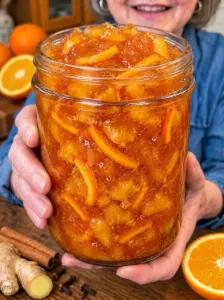
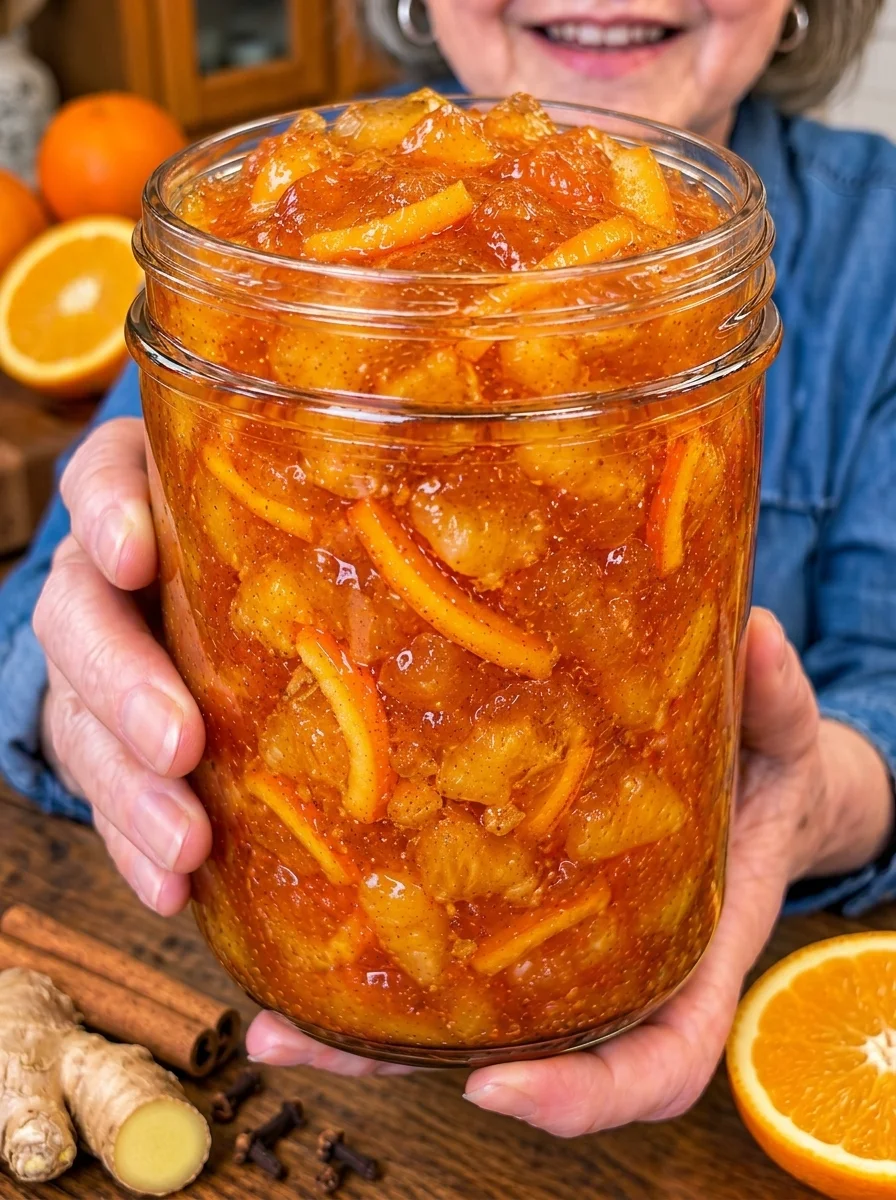
Winter Spiced Orange Jam combines bright orange flavor with cinnamon, cloves, and a little ginger. It is sweet, fragrant, and gently bitter from thin strips of peel, making it particularly good on buttered toast, biscuits, or a warm slice of homemade bread.
Because this version includes orange peel, its texture is closer to a soft marmalade-style spread than a completely smooth fruit jam. You can chop the peel finely for smaller pieces, but it remains part of the finished preserve’s character.
The method uses no added commercial pectin. The final set depends on the oranges, how much natural pectin remains in the prepared fruit, and how far the mixture reduces. Expect a spoonable refrigerator spread rather than a guaranteed firm gel.
This article expands the supplied recipe with preparation and texture guidance. It has not been independently kitchen-tested or validated for canning. Keep the finished jars refrigerated or freeze them; a tightly closed lid does not make this formula shelf-stable.
Recipe Overview
- Preparation: About 20–25 minutes
- Peel softening: About 15–30 minutes, depending on thickness
- Jam cooking: About 35–50 minutes, sometimes longer
- Total before cooling: Approximately 1 hour 10 minutes to 1 hour 45 minutes
- Expected yield: Roughly 2–3 cups, depending on fruit size and reduction
- Storage: Refrigerator or freezer only
The total includes a more flexible peel-softening stage than a quick five-minute blanch. Peel should be tender before it enters the sugar mixture, because it can remain unpleasantly chewy if added too firm.
Ingredients
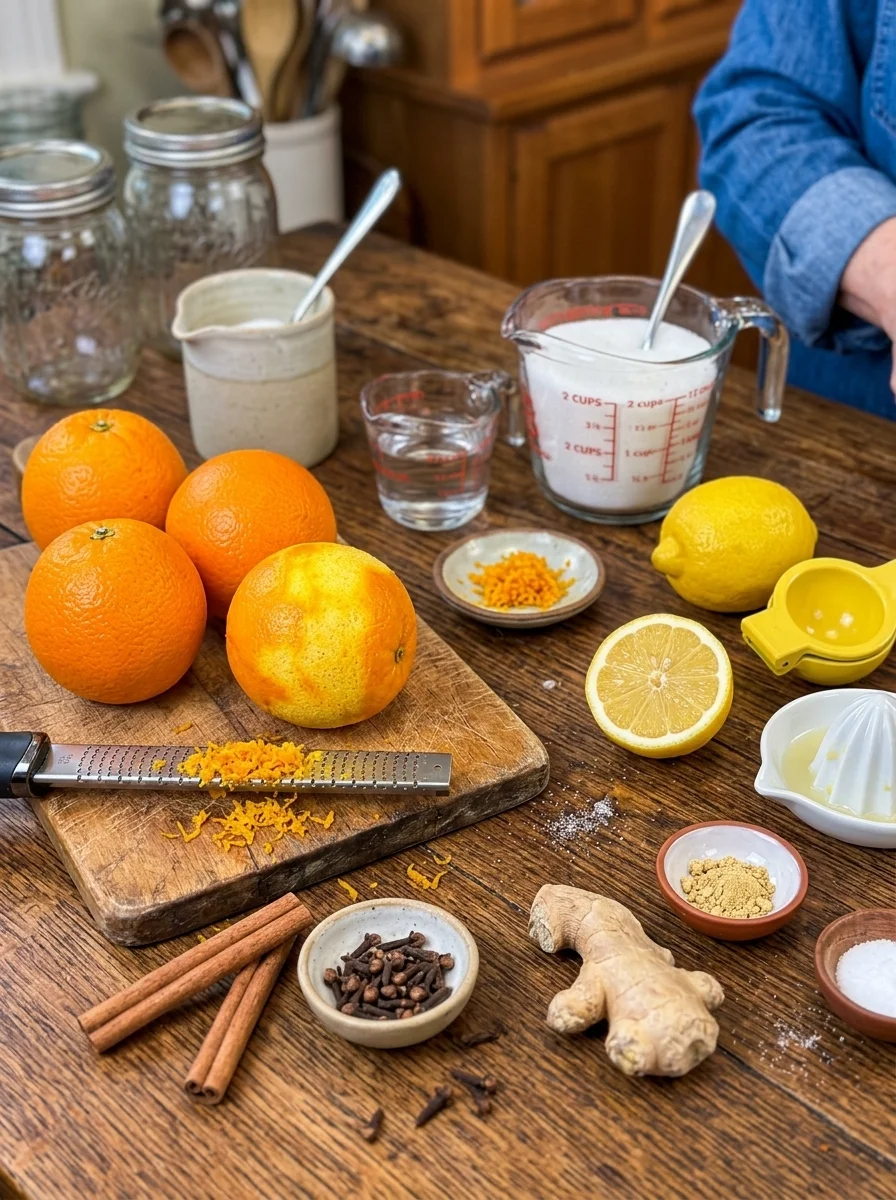
- 4 medium oranges, washed thoroughly
- Thinly sliced colored peel from up to 2 of the oranges, avoiding white pith as much as practical
- 2 tablespoons fresh lemon juice
- 2 cups granulated sugar
- ½ cup water, plus additional water for softening the peel
- 1 teaspoon finely grated orange zest, optional if already using plenty of peel
- 1 cinnamon stick
- 3 whole cloves
- ¼ teaspoon ground ginger
- A tiny pinch of salt
The water used to boil the peel is drained before the measured ½ cup is added to the jam. Keep those two water quantities separate.
If you want a less bitter spread, begin with peel from one orange rather than two. That is a flavor variation, not a validated change to a shelf-stable preserve, since this recipe is refrigerated throughout its storage life.
Choosing and Preparing the Oranges
Choose sound oranges with a good aroma and no mold or soft, spoiled areas. Thin-skinned fruit can be easier to prepare, but sweetness and bitterness still vary.
Wash under running water and scrub gently. Unwaxed oranges are convenient when using the peel, but the fruit still needs washing. Do not wash with household soap.
Use a sharp vegetable peeler or knife to remove thin pieces of colored peel from one or two oranges. Scrape away thick white pith and slice the peel into very narrow strips. Smaller strips soften more evenly and are easier to spread on toast.
Peel all four oranges, removing as much remaining white pith and tough membrane as practical. Discard seeds. Chop the flesh over a bowl or plate to catch the juice, which belongs in the saucepan with the fruit.
Four medium oranges do not provide an identical amount of pulp every time. Record your prepared fruit volume if you want to repeat a batch closely, but do not treat a successful batch as a tested canning formula.
Ingredient Notes
Sugar
Granulated sugar gives sweetness and body as the fruit cooks down. Reducing it substantially changes the thickness and storage behavior, so a low-sugar version needs its own formula rather than a casual reduction with the same expectations.
This is a sweet preserve, even though citrus makes the flavor seem bright. It is not a low-sugar condiment.
Lemon Juice
Fresh lemon juice adds flavor and acidity. It is not being used here as a validated acidification step for canning. Replacing fresh with bottled lemon juice does not automatically make the overall recipe suitable for pantry storage.
Whole Spices
A cinnamon stick gives a warm flavor without making the mixture as cloudy as a large amount of ground cinnamon. Whole cloves are potent; three are enough for a small batch.
Place the cloves in a food-safe spice bag or tied piece of cheesecloth so they are easy to remove. Count them if adding loose and remove every one before filling jars. The cinnamon stick can stay loose for easy retrieval.
Ginger and Zest
Ground ginger gives background warmth rather than a strong fresh-ginger bite. Stir it into the mixture evenly to avoid dry pockets.
Extra zest is optional when the recipe already contains peel. Use only the colored surface, since white pith can contribute bitterness.
Equipment
Use a heavy, nonreactive saucepan with plenty of headroom, a wooden spoon or heatproof spatula, a small saucepan for peel, a chilled plate, and clean heat-safe containers.
A wide pan encourages evaporation, while a narrow one can take longer. Jam bubbles can spit as the mixture thickens, so keep the pan stable and use a long-handled utensil.
A thermometer can help you understand concentration, but it does not validate this recipe’s set or storage safety. The chilled-plate test and the cooled consistency are practical texture cues.
Use freezer-safe containers if freezing. Do not fill a random narrow-necked glass jar and assume it can tolerate expansion in the freezer.
How to Make Winter Spiced Orange Jam
1. Prepare a Chilled Plate and Containers
Put a small plate in the freezer before cooking. Wash the containers and lids well and rinse thoroughly.
Have a heatproof surface ready for filling. Avoid pouring hot jam into cold glass or placing a hot jar on a wet surface.
2. Slice the Peel and Chop the Fruit
Prepare the thin peel strips and chopped orange flesh as described above, catching all usable juice. Remove seeds and large tough membrane pieces.
For a smoother spread, chop the pulp finely. Do not blend hot jam later in a sealed personal blender; if smoothing is desired, a potato masher is simpler during cooking.
3. Soften the Peel Before Adding Sugar
Place peel strips in the small saucepan and cover generously with water. Bring to a boil, reduce to a simmer, and cook until a strip is tender enough to bite comfortably.
Begin checking after about 10–15 minutes; thicker strips may need 20–30 minutes or more. A five-minute blanch can mellow some bitterness but may not fully soften the peel.
If the peel is particularly bitter, drain after an initial blanch and continue in fresh water. This can soften the flavor, but it will not remove every bitter note.
Drain thoroughly. Do not add the peel-cooking water to the jam unless you are deliberately changing the formula and accepting different flavor and reduction.
4. Combine the Jam Ingredients
Add chopped fruit and its juices, tender peel, sugar, measured ½ cup water, lemon juice, cinnamon stick, cloves in their spice bag, ginger, salt, and optional zest to the large saucepan.
Warm over medium heat, stirring until the sugar dissolves. Scrape the bottom so sugar does not sit in a concentrated layer.
5. Cook at a Controlled Boil
Bring to a lively but controlled simmer or gentle boil. Cook uncovered, stirring regularly, for about 35–50 minutes, adjusting heat to prevent scorching or excessive spitting.
As the mixture reduces, stir more often, especially at the bottom and corners. The fruit should soften and the liquid become glossy and thicker.
The exact time depends on fruit moisture and pan width. Do not keep the heat very low simply to match a longer time if almost no liquid is evaporating, and do not use a violent boil that sends hot jam out of the pan.
6. Check the Cooled Texture
Spoon a small amount onto the chilled plate and allow it to cool for a minute or two. Tilt the plate and gently push the sample after it is no longer hot.
If it moves slowly, holds a soft mound, or wrinkles slightly, it may be ready for a soft spread. If it runs like juice, continue cooking briefly and test again.
Without added pectin and with variable prepared fruit, a strong wrinkle is not guaranteed. Do not chase a rigid gel by cooking until the sugar darkens and the jam becomes sticky like candy.
A temperature near the usual sea-level jam concentration range can be informative, but this recipe has no validated temperature endpoint. Altitude affects boiling behavior, and temperature does not establish shelf stability.
7. Remove Spices and Adjust Flavor
Remove the cinnamon stick and spice bag, or retrieve all three cloves if added loose. Mash the pulp gently if you want fewer large pieces, taking care around hot splashes.
Taste only a cooled spoonful. If the spice is already strong, remove it rather than leaving whole spices in stored jars to continue infusing.
Avoid large late additions of water, juice, or fruit. They change the concentration and can undo the texture you just developed.
8. Fill and Refrigerate
Spoon into clean heat-safe containers, leaving a little room at the top. For freezing, follow the container manufacturer’s expansion guidance; do not fill to the rim.
Let stand only briefly for safe handling, cover, and refrigerate promptly. Do not leave the jars on the counter until the next morning. Use smaller containers to help the batch cool efficiently.
The spread will thicken as it cools. Assess its final texture after an overnight refrigerator rest before deciding it needs any correction.
Tips for Balanced Citrus Flavor
Tenderize peel before it meets sugar. This is the most useful step for avoiding a chewy marmalade-style texture.
Keep pith out where practical, but recognize that orange peel naturally brings some bitterness. A slightly bitter finish can balance the sugar; harsh bitterness usually points to too much pith, strong peel, or scorching.
Use spices modestly. Citrus should remain the main flavor, with cinnamon and clove in the background.
Test cooled samples rather than judging hot syrup in the pan. Hot jam looks much looser than it does once chilled.
Accept a soft set. This recipe is useful as a refrigerator spread even if it is not firm enough to hold a sharp spoon mark.
Troubleshooting
| Problem | Possible cause | Adjustment |
|---|---|---|
| Peel is chewy | Not softened before adding sugar | Simmer peel until tender in water first next time. |
| Spread is loose after chilling | Low natural pectin or insufficient reduction | Use as a sauce, or choose a tested pectin formula for a future batch. |
| Jam is very stiff | Excessive reduction | Warm only the serving portion with a little water if desired; refrigerate promptly. |
| Flavor is too bitter | Pith, strong peel, or scorching | Use less peel and remove pith carefully; burnt flavor is difficult to repair. |
| Clove dominates | Too much spice or extended infusion | Remove spices when flavor is sufficient. |
| Bottom catches | High heat or infrequent stirring | Stir more often as it thickens and use a heavy pan. |
| Sugar crystals appear | Undissolved sugar or concentrated residue | Dissolve thoroughly and avoid scraping dried pan-wall residue into finished jam. |
Flavor Variations
Cardamom Orange
Add a very small pinch of ground cardamom with the ginger. Start lightly because its aroma can dominate a small batch.
Ginger Pieces
A little finely chopped crystallized ginger adds texture and sweetness. It is an additional ingredient, and the nutrition estimate changes.
Less Peel
Use peel from only one orange for a gentler marmalade-style flavor. Expect the fruit’s natural pectin and final set to vary rather than assuming an identical result.
Smooth Orange Spread
Omit long peel strips and use only the measured zest for flavor. This creates a different texture and may set differently. It remains a refrigerated variation, not a canning formula.
Avoid adding other fruits or large amounts of juice while keeping the same cooking and storage claims. Those changes require reassessment.
Serving Ideas
Spread on toast, biscuits, English muffins, or croissants. Its citrus and spice are particularly pleasant with butter or cream cheese.
Stir a small spoonful into plain yogurt or serve over oatmeal after cooking. A soft batch also works as a spoonable topping for pancakes or a simple cake.
For a cheese board, place a small serving in a bowl beside mild cheese and crackers. Keep the remaining jar refrigerated and use a clean spoon.
It can also be warmed into a serving sauce, but it is not a substitute for a developed meat-glaze recipe with its own cooking instructions.
Refrigerated Gifts
Use clean containers and label each with the preparation date, ingredients, and a clear “Keep Refrigerated” instruction. Include a suggested use-by date and explain that this is not a pantry preserve.
Transport chilled with ice packs and hand over promptly. Decorative ribbon and a new lid do not change the storage requirements.
If a recipient needs a shelf-stable gift, use a tested canning recipe and follow its complete preparation, jar size, processing time, and altitude adjustments instead of adding a processing step to this formula.
Storage and Freezing
Keep covered at 40°F or below. Plan to use within about 2 weeks as a conservative household quality target for this custom refrigerator spread; this is not a validated shelf-life claim. Use clean utensils and follow an earlier limit if spoilage appears.
Refrigerate promptly after preparation and keep room-temperature handling within 2 hours, or 1 hour above 90°F. Do not assume that sugar and citrus permit unlimited counter storage.
Freeze in suitable containers for up to 3 months for best quality, leaving expansion space. Thaw in the refrigerator. A little separation can occur; stir gently after thawing.
Discard the entire contents of a container if mold develops rather than scraping off the top. Do not taste questionable jam to assess safety.
Nutrition Estimate
The batch contains approximately 1,700–1,900 calories, mainly from the 2 cups sugar, with some variation from the oranges and prepared fruit amount.
At a 2-cup yield, a tablespoon may contain roughly 55 calories. At a 3-cup yield, it may contain roughly 35–40 calories. Yield matters: reducing the same ingredients into less jam increases calories per spoonful.
These are illustrative estimates rather than a calculated nutrition label. Buttered toast, cheese, yogurt, and other serving foods are additional.
Frequently Asked Questions
Is this jam or marmalade?
With thin peel strips, it is marmalade-style. The title uses jam, but the peel gives a different texture from a smooth pulp-only spread.
Does it need commercial pectin?
The supplied recipe does not include it. Natural pectin and reduction may give a soft set, but firmness is variable. For a dependable pectin-set preserve, use a formula designed for the specific pectin product.
Can I reduce the sugar by half?
That changes concentration and set. Use a developed lower-sugar recipe rather than expecting the same result with the same instructions.
Can I leave spices in the jars?
Remove them before storage. Cloves can be unpleasant to bite, and prolonged infusion can overpower the orange flavor.
Does a vacuum-sealed lid make it safe in the pantry?
No. A lid can pull inward as hot contents cool without the product having undergone a validated canning process.
Why is my peel still tough?
A short blanch may not be enough. Soften it in plain water until tender before adding sugar and acid.
Can I double the recipe?
A larger volume reduces differently and may take much longer. Smaller batches are easier to control; do not simply double the pan contents and assume identical timing.
Recipe Card
Winter Spiced Orange Jam
A soft refrigerator orange spread with thin peel, cinnamon, cloves, and ginger.
Yield: Roughly 2–3 cups
Prep: 20–25 minutes
Peel softening: 15–30 minutes as needed
Jam cooking: 35–50 minutes or longer as needed
Total before cooling: About 1 hour 10 minutes to 1 hour 45 minutes
Ingredients
- 4 medium oranges
- Thin colored peel from up to 2 oranges, sliced very finely
- 2 tablespoons lemon juice
- 2 cups granulated sugar
- ½ cup water, plus separate water for softening peel
- 1 teaspoon orange zest, optional
- 1 cinnamon stick
- 3 whole cloves, preferably enclosed in a spice bag
- ¼ teaspoon ground ginger
- Tiny pinch of salt
Instructions
- Wash oranges. Prepare thin peel strips, avoiding white pith. Peel and chop all the flesh, saving juices and discarding seeds and tough membrane.
- Simmer peel in separate water until tender, checking from 10–15 minutes and allowing longer as needed. Drain.
- Combine fruit, juices, tender peel, sugar, measured water, lemon, spices, salt, and optional zest in a heavy saucepan.
- Stir over medium heat until sugar dissolves. Cook uncovered at a controlled boil or steady simmer for about 35–50 minutes, stirring increasingly often as it thickens.
- Test a cooled sample on a chilled plate. Stop when it forms a soft, slow-moving spread rather than chasing a guaranteed firm gel.
- Remove cinnamon and all cloves. Mash fruit if desired. Fill clean heat-safe containers, cool briefly for handling, cover, and refrigerate promptly.
Storage: Refrigerated only at 40°F or below; plan to use within about 2 weeks as a conservative quality target. Freeze up to 3 months in suitable containers. Not validated for canning or pantry storage.
Estimated nutrition: About 35–55 calories per tablespoon depending mainly on final yield.
Texture note: Peel makes this marmalade-style. Natural pectin varies, so a firm set is not guaranteed. Suggested expansion of the supplied recipe, not kitchen-tested.
Winter Spiced Orange Jam
Description
A soft refrigerator orange spread with thin peel, cinnamon, cloves, and ginger.
Yield: Roughly 2–3 cups
Prep: 20–25 minutes
Peel softening: 15–30 minutes as needed
Jam cooking: 35–50 minutes or longer as needed
Total before cooling: About 1 hour 10 minutes to 1 hour 45 minutes
Ingredients
- 4 medium oranges
- Thin colored peel from up to 2 oranges, sliced very finely
- 2 tablespoons lemon juice
- 2 cups granulated sugar
- ½ cup water, plus separate water for softening peel
- 1 teaspoon orange zest, optional
- 1 cinnamon stick
- 3 whole cloves, preferably enclosed in a spice bag
- ¼ teaspoon ground ginger
- Tiny pinch of salt
Instructions
- Wash oranges. Prepare thin peel strips, avoiding white pith. Peel and chop all the flesh, saving juices and discarding seeds and tough membrane.
- Simmer peel in separate water until tender, checking from 10–15 minutes and allowing longer as needed. Drain.
- Combine fruit, juices, tender peel, sugar, measured water, lemon, spices, salt, and optional zest in a heavy saucepan.
- Stir over medium heat until sugar dissolves. Cook uncovered at a controlled boil or steady simmer for about 35–50 minutes, stirring increasingly often as it thickens.
- Test a cooled sample on a chilled plate. Stop when it forms a soft, slow-moving spread rather than chasing a guaranteed firm gel.
- Remove cinnamon and all cloves. Mash fruit if desired. Fill clean heat-safe containers, cool briefly for handling, cover, and refrigerate promptly.
Storage: Refrigerated only at 40°F or below; plan to use within about 2 weeks as a conservative quality target. Freeze up to 3 months in suitable containers. Not validated for canning or pantry storage.
Estimated nutrition: About 35–55 calories per tablespoon depending mainly on final yield.
Texture note: Peel makes this marmalade-style. Natural pectin varies, so a firm set is not guaranteed. Suggested expansion of the supplied recipe, not kitchen-tested.