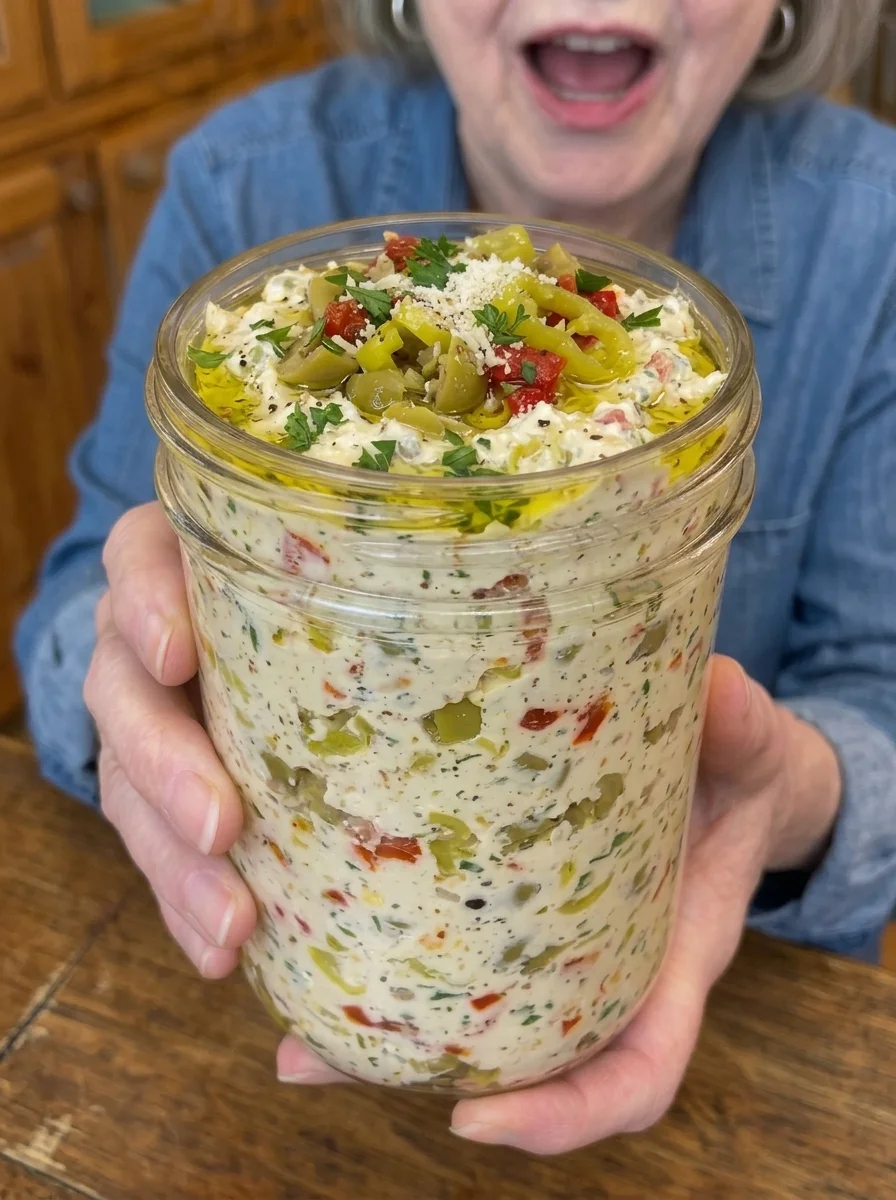
Italian Pepperoncini & Olive Cream Cheese Spread combines a smooth, creamy base with chopped green olives, tangy pickled peppers, roasted red peppers, Parmesan, and herbs. It is an easy no-cook appetizer with a savory, briny flavor and small pieces of vegetables throughout.
A short chill gives the garlic and herbs time to mingle with the cheese. Serve it with crackers, toasted baguette, or crisp vegetables, or use a modest amount to add flavor to sandwiches and wraps.
The most useful preparation step is draining the add-ins. Cream cheese can hold plenty of chopped ingredients, but excess pickle brine and pepper liquid can loosen the spread. Add the optional teaspoon of brine only after the other ingredients are mixed and tasted.
This is an Italian-inspired spread rather than a traditional regional recipe. The supplied formula has been expanded with texture and serving guidance; it has not been independently kitchen-tested for this article.
Recipe Overview
- Servings: 8 appetizer portions
- Yield: Roughly 1¾–2 cups, depending on chopping and mixing
- Active preparation: About 15 minutes
- Chilling: At least 30 minutes
- Total: About 45 minutes, plus time to soften the cream cheese if needed
- Cooking: None
- Texture: Thick and spreadable, with finely chopped add-ins
If starting with refrigerator-cold cream cheese, allow about 20–30 minutes for softening as needed. That time can overlap with chopping, but it is separate from the active preparation estimate.
Ingredients
Creamy Base
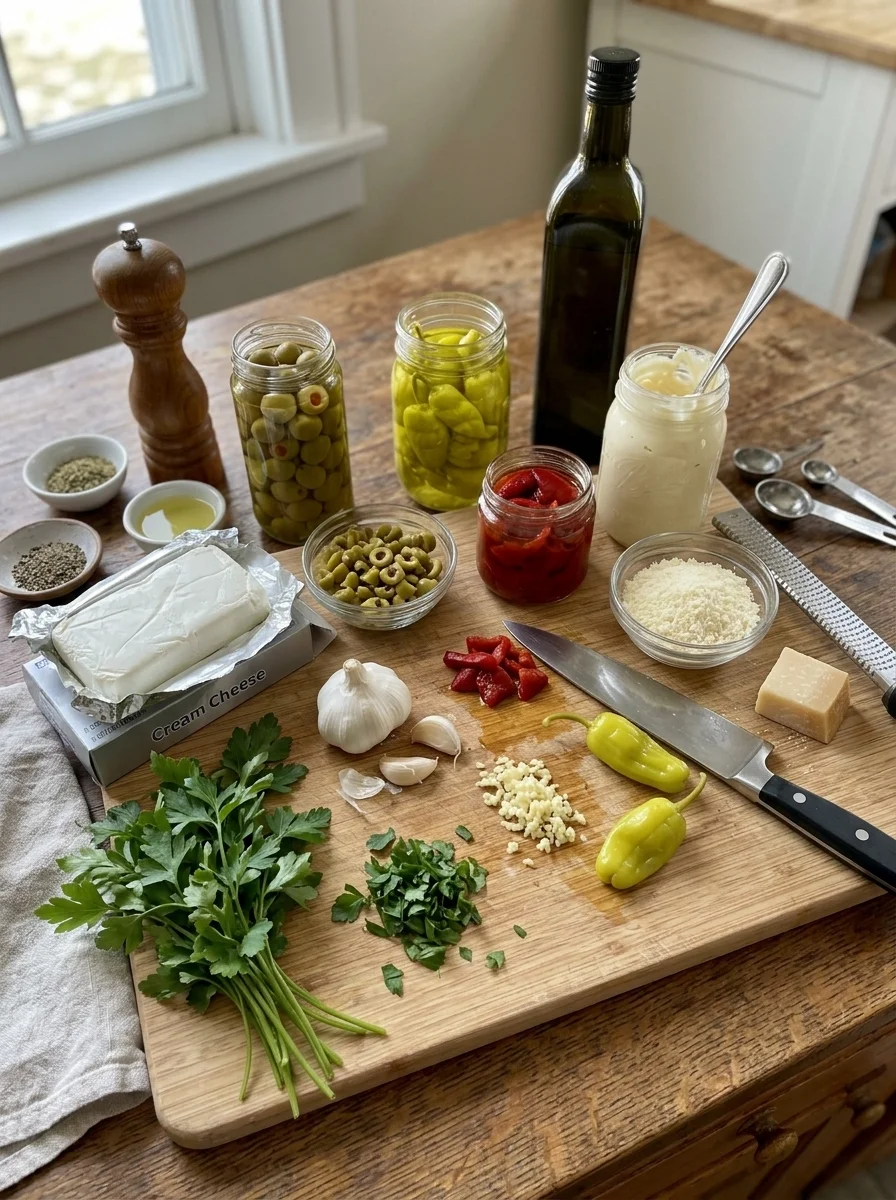
- 8 ounces block cream cheese, softened
- 1 tablespoon mayonnaise
- 2 tablespoons finely grated Parmesan
Peppers, Olives, and Herbs
- ½ cup chopped green olives, drained
- ⅓ cup chopped pepperoncini, drained and patted dry
- 2 tablespoons finely chopped roasted red peppers, drained and patted dry
- 1 small garlic clove, finely minced or grated
- 1 tablespoon chopped fresh parsley
- ½ teaspoon dried Italian seasoning
- ¼ teaspoon freshly ground black pepper
Optional Finish
- 1 teaspoon pepperoncini brine, only if needed
- Up to 1 tablespoon extra-virgin olive oil, for a light serving drizzle
- A little extra parsley or chopped olive, for garnish
No additional salt is required in the base ingredient list. Taste the assembled spread before deciding whether it needs any, since olives, pickled peppers, and Parmesan already contribute salt.
Ingredient Notes
Block Cream Cheese
Block cream cheese gives a thick starting point. Soft tub-style spreads and whipped products contain different amounts of moisture and air, so the final consistency may differ.
Soften until easy to beat, not melted. Cutting the block into small pieces helps it soften evenly. Avoid prolonged room-temperature holding while you prepare other dishes.
Reduced-fat block cream cheese can be tried as a variation, but may produce a less rich or slightly different texture. It should not be assumed to give the same result as full-fat cheese.
Green Olives
Choose pitted green olives and chop them finely enough to distribute through the spread. Check for occasional pit fragments even when the label says pitted.
Plain or pimiento-stuffed olives can work. Olives packed with strong fillings change the flavor, particularly garlic-stuffed or hot-pepper-stuffed varieties.
Drain before measuring the chopped amount. If they are very wet, blot lightly so brine does not collect in the mixing bowl.
Pepperoncini
Use pickled pepperoncini rather than raw peppers. Remove stems if using whole peppers, then drain, chop, and blot the pieces.
Mild products are a useful starting point, but heat varies by brand. Taste a small piece before adding the full amount if you are serving people who prefer little heat.
The optional brine adds both acidity and salt. It is a final adjustment, not an automatic extra spoonful.
Roasted Red Peppers
Jarred roasted peppers add sweetness and color. Pat them dry before chopping and avoid carrying a puddle of packing liquid into the cream cheese.
They are an accent rather than the main flavor, so the measured 2 tablespoons is enough to give little red pieces without turning this into a roasted pepper dip.
Parmesan and Mayonnaise
Finely grated Parmesan blends through the base more evenly than large shreds. Freshly grated cheese offers a slightly different texture from very dry shelf-stable products.
The tablespoon of mayonnaise loosens the cream cheese enough for easier spreading. Adding a large amount would make a softer dip and change the recipe’s balance.
Garlic and Herbs
One small raw garlic clove gives a noticeable flavor that develops during chilling. Start with less if the clove is large or you prefer a mild spread.
Fresh parsley brightens the rich base. Dried Italian seasoning gives a consistent herb background without adding much moisture. Check whether your seasoning blend contains salt before making any final seasoning adjustment.
Equipment
Use a mixing bowl, hand mixer or sturdy spoon, flexible spatula, knife, cutting board, and a covered storage container.
A hand mixer is convenient for smoothing the cream cheese. A food processor can make a more uniform spread, but it can also turn the olives and peppers into tiny flecks rather than distinct pieces.
For the intended chunky texture, beat the base first and fold the chopped ingredients in by hand.
How to Make the Spread
1. Soften the Cream Cheese
Set the cream cheese out briefly until it yields easily to a spoon, usually about 20–30 minutes depending on room temperature.
It should remain cool or gently softened rather than warm and oily. If the room is very warm, check sooner and keep preparation moving.
2. Drain and Chop
Drain olives, pepperoncini, and roasted red peppers. Pat peppers dry, then chop everything finely.
Place the chopped ingredients on a clean towel briefly if visible liquid remains. You do not need to squeeze them completely dry, but they should not drip when lifted.
Mince the garlic and chop the parsley. Set aside a little garnish only if desired.
3. Beat the Base
Beat cream cheese and mayonnaise until smooth, scraping the bowl to remove firm pieces. Add Parmesan and mix briefly to distribute.
This stage should remove cream cheese lumps before the chopped ingredients make them harder to see. The base can look slightly lighter after beating, but it is not a whipped cream mousse.
4. Fold in the Add-Ins
Add olives, pepperoncini, roasted red peppers, garlic, parsley, Italian seasoning, and black pepper.
Fold with a spatula until evenly distributed. Scrape from the bottom so every serving contains a mix of ingredients. Avoid vigorous mixing that crushes the peppers unnecessarily.
5. Adjust Carefully
Taste a small spoonful. If it needs more tang and can tolerate a little extra moisture, add up to 1 teaspoon pepperoncini brine.
If it is already sharp or salty, leave the brine out. More liquid is not a solution for cream cheese that was too cold to mix; softening and beating are the better corrections.
6. Chill
Cover and refrigerate at least 30 minutes. For a more developed garlic and herb flavor, prepare several hours ahead or the day before.
The spread becomes firmer when chilled. Do not thin it aggressively before giving it time to rest, because the serving texture may already be appropriate.
7. Garnish and Serve
Transfer the serving portion to a bowl. Let it stand briefly, about 10–15 minutes if needed, so it is easier to spread.
Add parsley, a few chopped olives, and an optional light olive oil drizzle. The drizzle is for flavor and appearance; it is not required to keep the spread moist.
Serve with a spreader so guests can portion it without breaking delicate crackers in a firm bowl of cheese.
Tips for a Thick, Creamy Result
Drain before chopping when possible, then blot the chopped peppers again if they release liquid. Smaller pieces expose more moisture, so both stages can be useful.
Beat the plain base thoroughly. Trying to remove cream cheese lumps after adding vegetables usually means unnecessary mixing and more damaged add-ins.
Use finely chopped ingredients. Large olive halves or long pepper strips can pull off a cracker with the first bite.
Add brine last and sparingly. The peppers already provide tang even when well drained.
Let a small serving portion soften briefly rather than leaving the whole batch out. This gives spreadability while keeping stored portions chilled.
Troubleshooting
| Problem | Possible cause | Adjustment |
|---|---|---|
| Spread is watery | Wet peppers, olives, or too much brine | Drain and blot well; add brine only if needed. |
| Cream cheese lumps remain | Base was too cold | Soften briefly and beat smooth before folding in add-ins. |
| Spread is very firm | Chilled block cream cheese | Let the serving portion stand briefly before serving. |
| Flavor is too salty | Olives, Parmesan, and added salt | Skip extra salt and use brine conservatively. |
| Garlic becomes strong overnight | Raw garlic develops during storage | Start with a small clove or less. |
| Crackers break in the bowl | Spread is firm or toppings are large | Offer a spreader and chop add-ins finely. |
| Appearance becomes muddled | Excessive processing | Blend the base only and fold vegetables by hand. |
Flavor Variations
Mixed Olive
Replace half the green olives with chopped Kalamata olives. Their flavor is stronger and the color darker, so taste before making additional changes.
Lemon Zest
Add about ½–1 teaspoon finely grated lemon zest for a citrus aroma. Zest adds less liquid than lemon juice and is useful when the spread is already tangy.
Spicy Pepperoncini
Use hot pepperoncini or a small pinch of red pepper flakes. Begin with one heat adjustment rather than adding several hot ingredients at once.
Roasted Garlic
Replace the raw garlic with a small amount of soft roasted garlic for a mellower flavor. The preparation gains a cooking step, and the storage window does not become longer.
Softer Dip
For a dip rather than a firm spread, mix in a little sour cream or plain Greek yogurt, one teaspoon at a time. This adds an ingredient and changes nutrition and texture. Do not add so much that the chopped vegetables sit in a loose sauce.
Extra Antipasto Flavor
A small amount of finely chopped, well-drained artichoke heart can be folded in. Avoid adding a large quantity of wet jarred ingredients without reassessing the consistency.
Serving Ideas
Spread on toasted baguette, crostini, or sturdy crackers. Bell pepper strips, cucumber rounds, celery, and carrot sticks give a fresh contrast.
For sandwiches, use a thin layer with turkey, roasted vegetables, or other fillings you enjoy. Keep assembled sandwiches refrigerated according to their perishable ingredients.
On an antipasto board, place the spread in a small bowl beside olives, cheese, bread, and vegetables. A separate bowl keeps the creamy mixture from spreading over dry crackers.
For a wrap, spread a small amount onto the tortilla before adding dry greens and the remaining filling. Excess wet vegetables can make a prepared wrap soggy even when the spread itself starts thick.
Make-Ahead Guidance
Prepare up to 24 hours ahead for convenience and developed flavor. Cover tightly and refrigerate promptly. Add garnish and the optional oil drizzle close to serving.
The flavor can become more garlicky and briny overnight. If serving to people who prefer mild flavors, use less garlic initially rather than trying to dilute the finished spread with a large amount of extra cheese.
For gatherings, portion some into a small serving bowl and replenish from the refrigerator. Do not keep topping up an old bowl without considering how long it has been out.
Label the preparation date. Adding fresh parsley or new garnish later does not reset the storage period.
Storage
Store in an airtight container at 40°F or below for up to 3–4 days, using fresh ingredients. Follow an earlier limit if a component was already near the end of its usable storage period.
Keep total room-temperature handling and serving within 2 hours, or 1 hour when temperatures exceed 90°F. Return remaining portions to the refrigerator promptly.
If a little liquid separates, stir gently before serving. Do not use stirring to hide mold, slime, or other unexpected spoilage signs; discard questionable food.
Freezing is not recommended for the intended texture. Cream cheese can become grainy or watery after thawing, and the chopped peppers may release additional moisture.
This is a fresh dairy appetizer, not a shelf-stable jarred preserve. The pickled ingredients do not make the whole mixture suitable for pantry storage or canning.
Nutrition Estimate
For eight portions, a broad estimate is approximately 125–155 calories per serving without the optional olive oil drizzle, depending on cream cheese, olives, and Parmesan.
A full tablespoon of olive oil divided evenly across eight servings adds about 15 calories per portion. Crackers, bread, vegetables, and extra toppings are additional.
The supplied 180–210-calorie estimate may be high for the stated spread quantities at eight servings unless portions are larger or extra oil and accompaniments are included. These are illustrative estimates rather than a calculated nutrition label.
The spread contains dairy and eggs if made with ordinary mayonnaise. Check Parmesan and other labels for vegetarian requirements, allergens, and dietary restrictions. Sodium may be substantial even without added salt.
Frequently Asked Questions
Can I make it without mayonnaise?
The small amount helps soften the base, but you can omit it for a firmer spread. A little sour cream or Greek yogurt is another suggested variation, with a different flavor and moisture level.
Can I use whipped cream cheese?
It will produce a different yield and texture. Block cream cheese is the intended ingredient, and an equal volume of whipped product is not necessarily an equal amount.
Do I need extra salt?
Usually not initially. Olives, pickled peppers, and Parmesan already provide salt. Taste the finished mixture first.
Can I use banana peppers?
Pickled banana peppers are a practical variation, though their sweetness and heat differ. Drain and chop them in the same careful way.
Why did it become runny?
Wet add-ins and too much brine are common causes. Drain thoroughly before mixing and avoid adding liquid merely to make cold cream cheese easier to beat.
Can I serve it warm?
The recipe is written as a chilled spread. A baked hot dip requires different timing and texture expectations, so warming it is not assumed to produce an identical result.
Can I double it?
Yes. Use a large bowl and beat the base until smooth before folding in the chopped ingredients. Taste before increasing any optional salt or brine.
Recipe Card
Italian Pepperoncini & Olive Cream Cheese Spread
A thick, savory cream cheese spread with olives, pickled peppers, Parmesan, garlic, and herbs.
Servings: 8
Yield: Roughly 1¾–2 cups
Prep: 15 minutes
Chill: At least 30 minutes
Total: About 45 minutes, plus softening if needed
Ingredients
- 8 ounces block cream cheese, softened
- ½ cup chopped drained green olives
- ⅓ cup chopped pepperoncini, drained and patted dry
- 2 tablespoons finely chopped roasted red peppers, drained and patted dry
- 2 tablespoons finely grated Parmesan
- 1 tablespoon mayonnaise
- 1 small garlic clove, minced
- 1 tablespoon chopped parsley
- ½ teaspoon Italian seasoning
- ¼ teaspoon black pepper
- Up to 1 teaspoon pepperoncini brine, optional
- Up to 1 tablespoon olive oil for a serving drizzle, optional
Instructions
- Soften cream cheese briefly until easy to mix. Drain, blot, and finely chop vegetables and olives.
- Beat cream cheese and mayonnaise until smooth. Mix in Parmesan.
- Fold in olives, pepperoncini, roasted peppers, garlic, parsley, Italian seasoning, and black pepper.
- Taste before adding optional brine or any extra salt. Use brine sparingly to protect the thick texture.
- Cover and refrigerate at least 30 minutes.
- Transfer a serving portion to a bowl, soften briefly if needed, and garnish with optional oil and herbs. Serve with crackers, bread, or vegetables.
Storage: Refrigerate at 40°F or below up to 3–4 days. Do not freeze for the intended texture. Keep room-temperature serving within 2 hours, or 1 hour above 90°F.
Estimated nutrition: About 125–155 calories per serving without the optional oil; a tablespoon divided over the batch adds about 15 calories per serving. Accompaniments are additional.
Texture note: Drain add-ins well, beat the base first, and add brine only after tasting.

Italian Pepperoncini & Olive Cream Cheese Spread
Description
- A thick, savory cream cheese spread with olives, pickled peppers, Parmesan, garlic, and herbs.
Servings: 8
Yield: Roughly 1¾–2 cups
Prep: 15 minutes
Chill: At least 30 minutes
Total: About 45 minutes, plus softening if needed
Ingredients
- 8 ounces block cream cheese, softened
- ½ cup chopped drained green olives
- ⅓ cup chopped pepperoncini, drained and patted dry
- 2 tablespoons finely chopped roasted red peppers, drained and patted dry
- 2 tablespoons finely grated Parmesan
- 1 tablespoon mayonnaise
- 1 small garlic clove, minced
- 1 tablespoon chopped parsley
- ½ teaspoon Italian seasoning
- ¼ teaspoon black pepper
- Up to 1 teaspoon pepperoncini brine, optional
- Up to 1 tablespoon olive oil for a serving drizzle, optional
Instructions
- Soften cream cheese briefly until easy to mix. Drain, blot, and finely chop vegetables and olives.
- Beat cream cheese and mayonnaise until smooth. Mix in Parmesan.
- Fold in olives, pepperoncini, roasted peppers, garlic, parsley, Italian seasoning, and black pepper.
- Taste before adding optional brine or any extra salt. Use brine sparingly to protect the thick texture.
- Cover and refrigerate at least 30 minutes.
- Transfer a serving portion to a bowl, soften briefly if needed, and garnish with optional oil and herbs. Serve with crackers, bread, or vegetables.
Storage: Refrigerate at 40°F or below up to 3–4 days. Do not freeze for the intended texture. Keep room-temperature serving within 2 hours, or 1 hour above 90°F.
Estimated nutrition: About 125–155 calories per serving without the optional oil; a tablespoon divided over the batch adds about 15 calories per serving. Accompaniments are additional.
Texture note: Drain add-ins well, beat the base first, and add brine only after tasting.