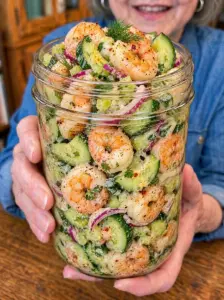
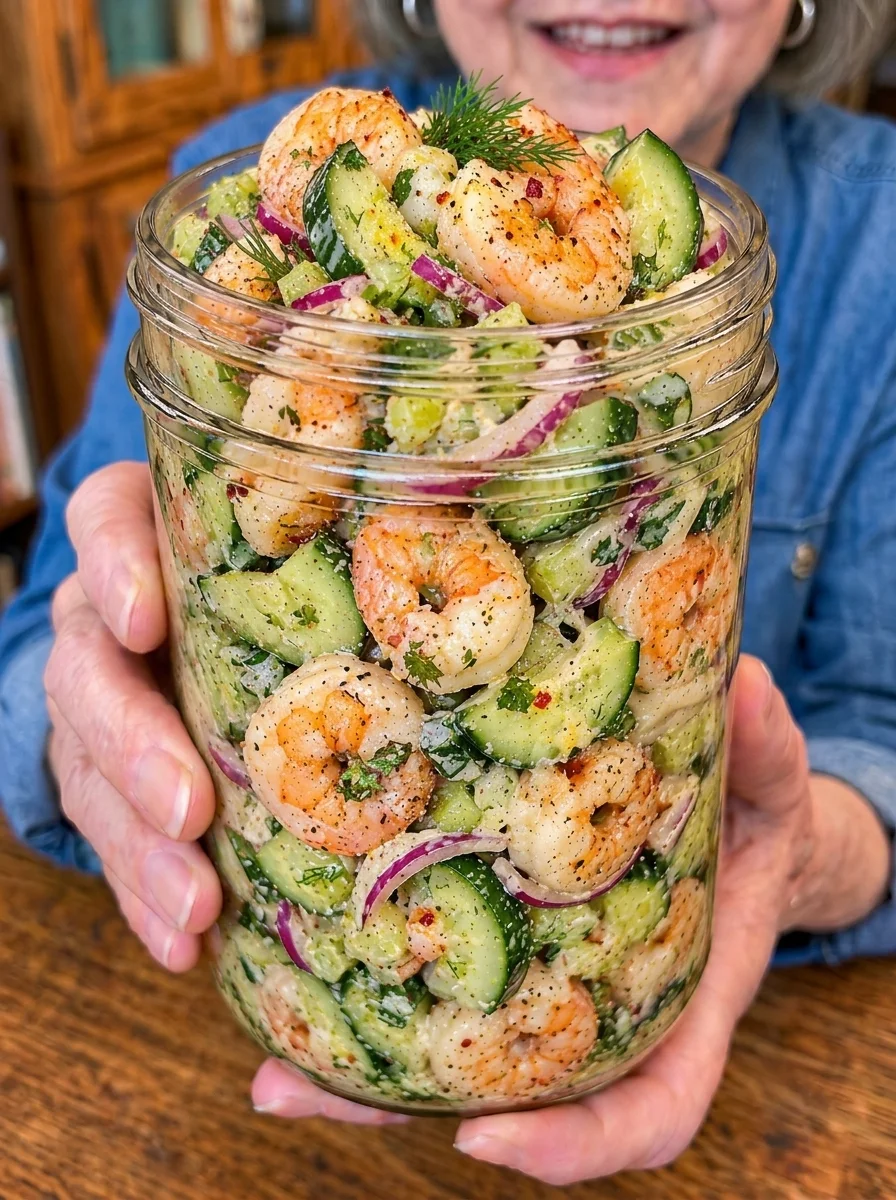
Cucumber Shrimp Salad combines chilled shrimp, crisp cucumber, celery, red onion, and fresh herbs in a creamy lemon dressing. Greek yogurt gives the dressing a tangy base, while a little mayonnaise rounds it out and helps it coat the shrimp and vegetables.
With cooked shrimp, there is no stovetop work. Dry the shrimp, chop the vegetables, whisk the dressing, and fold everything together. A brief chill lets the dill, garlic, and lemon flavors mingle before serving.
The salad is particularly good in lettuce cups or spooned over greens for lunch. It also works as a refreshing side for a summer meal, with bread or other accompaniments served separately.
The main challenge is moisture. Shrimp can carry thawing liquid, and cucumbers release water after dressing. Thorough draining and assembling close to serving keep the salad creamy rather than soupy.
Recipe Overview
- Servings: 4
- Active preparation: About 15–20 minutes
- Chilling: 15–20 minutes, optional but useful
- Total: About 30–40 minutes with thawed cooked shrimp
- Cooking: None when using cooked shrimp
- Best texture: The day it is assembled
Thawing frozen shrimp is additional time. This article expands the supplied recipe with ingredient and handling notes; it has not been independently kitchen-tested for this article. Cucumber size and dairy thickness affect yield and dressing consistency.
Ingredients
Salad
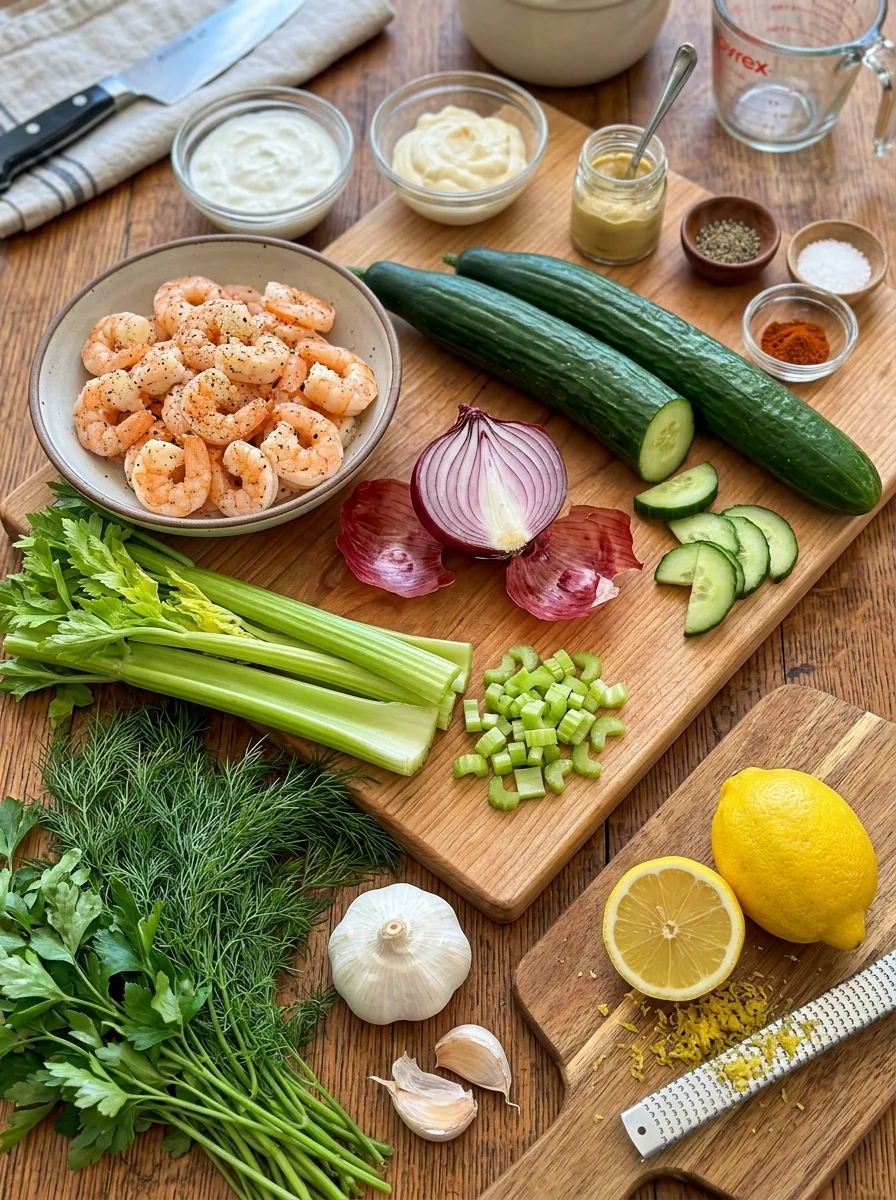
- 1 pound cooked shrimp, peeled, deveined, and tails removed
- 2 large English cucumbers, sliced into half-moons
- ½ small red onion, thinly sliced
- ½ cup diced celery
- ¼ cup chopped fresh dill
- 2 tablespoons chopped fresh parsley
Creamy Lemon Dressing
- ½ cup plain Greek yogurt
- 2 tablespoons mayonnaise
- 2 tablespoons fresh lemon juice, added gradually to taste
- 1 teaspoon Dijon mustard
- 1 small garlic clove, finely minced or grated
- Up to ½ teaspoon fine salt, to taste
- ¼ teaspoon black pepper
- ¼ teaspoon paprika
- 1 teaspoon finely grated lemon zest
Optional serving additions include lettuce leaves, mixed greens, avocado, lemon wedges, or bread. They are not included in the basic nutrition estimate.
Choosing the Shrimp
Use shrimp that are fully cooked and labeled ready to eat, or shrimp you have cooked and chilled properly. Their appearance alone does not establish whether a packaged product is raw or cooked.
The pound in this recipe refers to the prepared shrimp you will eat, without shells and tails. A pound purchased with shells weighs less after peeling, while an ice-glazed frozen package can also give a smaller drained yield.
Medium or large shrimp are convenient. Cut very large shrimp into bite-size pieces so a forkful can include cucumber, herbs, and dressing without an awkward whole piece.
Follow the package instructions for storage and thawing. Refrigerate frozen cooked shrimp to thaw, then drain and blot well. Keep them cold during preparation and do not thaw them on the counter.
If beginning with raw shrimp, that is a separate cooking step: cook thoroughly to 145°F, then chill promptly before assembling. Lemon juice in the dressing is for flavor and does not replace cooking.
Cucumber and Herb Notes
English Cucumbers
English cucumbers have relatively thin skins and smaller seeds, making them convenient for this salad. Wash well before slicing. Peeling is optional if the skin is tender.
Two large cucumbers can produce quite different volumes. Around 4–5 cups sliced cucumber is a useful starting guide, but do not force an unusually large quantity into the bowl if it overwhelms the shrimp and dressing.
Slice about ¼ inch thick for a firm bite. Paper-thin slices soften more quickly and can make the salad seem watery sooner.
Regular Cucumbers
Regular cucumbers can be used as a variation. Peel if the skin is tough, halve lengthwise, and scrape out the watery seed core before slicing.
Dry the pieces before adding. Removing the core limits some moisture but does not prevent all water release once salt and dressing are added.
Onion and Celery
Thin onion slices give flavor without large sharp bites. For a milder result, soak them briefly in cold water, then drain and dry thoroughly.
Celery adds a different crunch from cucumber. Dice finely enough to distribute rather than leaving pieces much larger than the shrimp.
Fresh Herbs
Dill is a defining flavor in this version. Use fresh dill for its delicate aroma. If substituting dried dill, start with much less, around 1–2 teaspoons, and expect a different flavor.
Parsley adds freshness without competing strongly with lemon. Chop herbs with a sharp knife rather than bruising them into a wet paste.
Dressing Notes
Thick Greek yogurt gives the best starting consistency. Nonfat, low-fat, or full-fat yogurt can work, with different richness and nutrition. Regular yogurt is thinner and is not an identical substitution.
Mayonnaise contributes richness even in a small amount. Replace it with extra Greek yogurt if you prefer a tangier dressing, but recognize that the result may taste sharper and have a different texture.
Begin with part of the lemon juice, then add more after tasting. Zest gives citrus aroma without much liquid, so it is useful when you want more lemon character but the dressing is already sharp.
Use a small garlic clove. Raw garlic becomes more noticeable during storage and can dominate the mild shrimp. Salt should also be added gradually, since cooked shrimp and Dijon may already contribute substantial sodium.
Equipment
Use a colander, paper towels or clean kitchen towels, a cutting board, a knife, a large mixing bowl, and a whisk or spoon.
A shallow covered container is useful for chilling. Keep the shrimp preparation area clean, and use separate tools for raw seafood if you are cooking shrimp from scratch.
For outdoor serving, have a cooler with ice packs and a serving bowl that can sit over ice. A cold-looking plate is not a substitute for maintaining refrigerator temperature.
How to Make Cucumber Shrimp Salad
1. Drain and Dry the Shrimp
Once thawed, let the cooked shrimp drain thoroughly in a colander. Blot with paper towels to remove surface moisture.
Check for shell or tail pieces and cut larger shrimp if desired. Return them to the refrigerator while preparing the vegetables if they will otherwise be sitting out.
2. Prepare the Vegetables
Wash and dry cucumbers, then halve lengthwise and slice into half-moons. If using particularly watery cucumbers, remove loose seed centers first.
Slice onion thinly and dice celery. Dry any onion that has been soaked to mellow its bite. Chop dill and parsley close to mixing time.
3. Whisk the Dressing
Combine Greek yogurt, mayonnaise, Dijon, garlic, lemon zest, paprika, black pepper, and about 1 tablespoon lemon juice. Add a small initial pinch of salt.
Whisk until smooth. Taste before adding the rest of the lemon juice or salt. The dressing should be creamy and spoonable, not a thin liquid.
A strongly tangy yogurt may need less juice than a mild one. Adjust for the actual ingredients rather than treating the full acid amount as mandatory.
4. Fold Together
Add shrimp, cucumber, onion, and celery. Fold gently until coated, scraping from the bottom so dressing reaches all the ingredients.
The salad may look lightly dressed rather than heavily coated. That is appropriate for crisp vegetables and shrimp; adding more sauce immediately can become excessive once cucumber juice emerges.
5. Add the Herbs
Fold in dill and parsley, reserving a little for garnish if desired. Taste a complete spoonful rather than only the dressing before making final adjustments.
Add more lemon or salt in small amounts if needed. Do not add extra liquid simply to make the salad easier to toss.
6. Chill Briefly
Cover and refrigerate for 15–20 minutes. This gives the flavors time to combine while keeping the vegetables relatively crisp.
The salad does not need hours on the counter or an overnight marinade. A long hold after dressing softens cucumber and draws out more water.
7. Serve
Fold gently once before serving. If a little liquid has collected at the bottom, use a slotted serving spoon rather than automatically mixing in more dressing.
Spoon into bowls or dry lettuce leaves and finish with reserved herbs. Keep optional lemon wedges at the table so each person can adjust their portion.
Tips for Avoiding Watery Salad
Dry thawed shrimp thoroughly. Ice glaze and thawing liquid can thin the dressing before cucumber moisture is even involved.
Use thick yogurt and dry vegetables. These choices matter more than making the dressing unusually thick with extra mayonnaise.
Slice cucumber moderately thick. Very fine slices lose structure more quickly once dressed.
Salt gradually and assemble close to serving. Salt and acid encourage moisture release, so meal prep works better with separate components.
Avoid adding ice to the salad bowl. If chilling for a gathering, place the bowl over an external ice bed so melting water does not enter the food.
Troubleshooting
| Problem | Likely cause | Adjustment |
|---|---|---|
| Dressing becomes watery | Wet shrimp or cucumber liquid | Drain and blot well; combine near serving. |
| Shrimp taste rubbery | Previously overcooked shrimp | Choose tender cooked shrimp; do not recook them for this cold salad. |
| Salad is too tangy | Sharp yogurt plus full lemon quantity | Add juice gradually next time. |
| Raw onion dominates | Thick slices or pungent onion | Slice finer or briefly soak and dry before adding. |
| Garlic becomes strong | Large clove or long holding | Use a small clove and taste after chilling. |
| Herbs look bruised | Rough chopping or repeated stirring | Chop with a sharp knife and fold gently. |
| Salad tastes salty | Seasoned shrimp plus dressing salt | Taste before adding the maximum salt. |
Variations
Avocado
Add diced ripe avocado just before serving. It adds creaminess and calories and can soften during storage, so do not fold it through the full meal-prep batch days ahead.
Spicy Lemon Dressing
Add a small pinch of cayenne or a few drops of hot sauce. Start modestly so the shrimp and dill remain noticeable.
All-Yogurt Dressing
Replace mayonnaise with an equal amount of thick Greek yogurt. The result is tangier and less rich. Do not assume it will taste identical simply because the volume is unchanged.
Lettuce Cups
Spoon the salad into chilled, dry lettuce leaves immediately before eating. Store lettuce separately so it does not wilt beneath the dressed cucumber.
Tomato Addition
Add a small amount of halved cherry tomato, leaving pooled juice behind. This contributes another fresh texture but also more potential liquid.
Herb Variation
Use a little chive in place of some parsley. Keep dill as the main herb if you want to preserve the recipe’s original character.
Serving Ideas
For lunch, serve over greens or in lettuce cups. Bread, crackers, or a small baked potato can make a more substantial meal, with nutrition counted separately.
For a gathering, serve chilled in a small bowl and replenish from the refrigerator. Keep the dressing light enough that guests can pick up shrimp and cucumber without a puddle of sauce.
The salad also works beside roasted vegetables or another simple main. Since shrimp already supplies protein, it does not require another seafood dish to make a complete plate.
Make-Ahead Guidance
Prepare the dressing up to a day ahead and refrigerate covered. Its garlic flavor will develop, so start conservatively if you prefer a mild result.
Wash, dry, and cut vegetables separately, keeping them chilled. Store cooked shrimp in its own covered container and combine close to serving.
For the freshest herbs, chop them shortly before mixing. If prepared ahead, keep them dry in a covered container and inspect before use.
The clock starts with the oldest prepared ingredient, not the moment you stir the salad. Mixing shrimp that has already been stored for several days with fresh dressing does not give it a new storage period.
Storage and Serving Safety
Store the assembled salad covered at 40°F or below and use within 1–2 days for best quality, subject to any earlier limit from the shrimp or other ingredients. Cucumbers will soften and release liquid even while properly refrigerated.
Refrigerate promptly. Keep total room-temperature preparation and serving within 2 hours, or 1 hour above 90°F. Discard food left out beyond those limits rather than returning it to the refrigerator for later.
For outdoor meals, transport in a cooler with ice packs and keep the serving bowl cold. Use clean utensils and do not return portions from individual plates to the stored salad.
Freezing is not recommended. Cucumber loses its crisp texture, and yogurt-based dressing can separate after thawing. Freeze suitable shrimp separately according to its package guidance before preparation rather than freezing the finished salad.
This salad is intended to be eaten cold. Do not warm the entire dressed mixture to refresh it; prepare a fresh portion instead if quality has declined.
Nutrition Estimate
At four servings, a broad estimate is approximately 210–260 calories and 27–32 grams of protein per serving, depending on the drained shrimp yield, yogurt, and mayonnaise.
These are illustrative estimates, not a calculated nutrition label. A pound of peeled, drained shrimp is different from a pound of shell-on or heavily ice-glazed product. Avocado, bread, and extra dressing add to the total.
The recipe contains shellfish and dairy, and ordinary mayonnaise usually contains egg. Dijon and packaged shrimp ingredients vary, so check labels for specific needs. It is not carbohydrate-free; cucumber, yogurt, and other vegetables contribute carbohydrates.
Frequently Asked Questions
Can I use raw shrimp?
Cook it fully first, then chill promptly before assembling. Lemon dressing does not replace cooking. The no-cook preparation time assumes ready-to-eat cooked shrimp.
Should I rinse cooked shrimp?
Follow the package instructions. Draining and blotting are the main preparation steps here; an extra rinse can add surface water that needs removing.
Can I use regular cucumbers?
Yes. Peel if the skin is tough and remove the watery seed core before slicing. Dry well.
Is the short chill required?
No. The salad can be served immediately with properly chilled ingredients. The short rest helps flavors mingle, but prolonged storage reduces crunch.
Can I use dried dill?
Use a much smaller amount, beginning with 1–2 teaspoons, and expect a different flavor. The original ¼ cup quantity is for fresh dill.
Can I make it dairy-free?
A suitable thick unsweetened dairy-free yogurt is a possible variation, but its flavor and stability differ. Check mayonnaise and all other ingredients for your requirements.
Can I double it?
Yes. Use a large bowl or mix in batches, keep ingredients cold, and dress close to serving. A larger batch still needs the same careful time and temperature control.
Recipe Card
Cucumber Shrimp Salad
Chilled shrimp and crisp cucumber in a creamy lemon-dill dressing.
Servings: 4
Prep: 15–20 minutes
Chill: 15–20 minutes
Total: 30–40 minutes, plus thawing if needed
Ingredients
Salad
- 1 pound fully cooked, peeled, deveined shrimp, tails removed
- 2 large English cucumbers, sliced into half-moons
- ½ small red onion, thinly sliced
- ½ cup diced celery
- ¼ cup chopped fresh dill
- 2 tablespoons chopped parsley
Dressing
- ½ cup thick plain Greek yogurt
- 2 tablespoons mayonnaise
- Up to 2 tablespoons lemon juice, to taste
- 1 teaspoon Dijon mustard
- 1 small garlic clove, minced
- Up to ½ teaspoon fine salt, to taste
- ¼ teaspoon black pepper
- ¼ teaspoon paprika
- 1 teaspoon lemon zest
Instructions
- Thaw cooked shrimp safely in the refrigerator if needed. Drain and blot thoroughly. Cut larger pieces if desired.
- Wash and dry vegetables. Slice cucumber and onion and dice celery. Chop herbs.
- Whisk yogurt, mayonnaise, Dijon, garlic, zest, paprika, pepper, 1 tablespoon lemon juice, and a small initial amount of salt.
- Fold in shrimp, cucumber, onion, and celery. Add herbs and taste. Adjust remaining lemon juice and salt gradually.
- Cover and refrigerate 15–20 minutes if desired. Stir gently and serve in bowls or freshly filled lettuce cups.
Storage: Refrigerate covered at 40°F or below and use within 1–2 days for quality, following any earlier ingredient limit. Keep serving within 2 hours, or 1 hour above 90°F. Do not freeze for the intended texture.
Estimated nutrition: About 210–260 calories and 27–32 grams protein per serving before accompaniments. Ingredients and drained yield vary.
Texture note: Dry shrimp and cucumbers well, use thick yogurt, and dress close to serving.
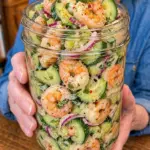
Cucumber Shrimp Salad
Description
Cucumber Shrimp Salad
Chilled shrimp and crisp cucumber in a creamy lemon-dill dressing.
Servings: 4
Prep: 15–20 minutes
Chill: 15–20 minutes
Total: 30–40 minutes, plus thawing if needed
Ingredients
Salad
- 1 pound fully cooked, peeled, deveined shrimp, tails removed
- 2 large English cucumbers, sliced into half-moons
- ½ small red onion, thinly sliced
- ½ cup diced celery
- ¼ cup chopped fresh dill
- 2 tablespoons chopped parsley
Dressing
- ½ cup thick plain Greek yogurt
- 2 tablespoons mayonnaise
- Up to 2 tablespoons lemon juice, to taste
- 1 teaspoon Dijon mustard
- 1 small garlic clove, minced
- Up to ½ teaspoon fine salt, to taste
- ¼ teaspoon black pepper
- ¼ teaspoon paprika
- 1 teaspoon lemon zest
Instructions
- Thaw cooked shrimp safely in the refrigerator if needed. Drain and blot thoroughly. Cut larger pieces if desired.
- Wash and dry vegetables. Slice cucumber and onion and dice celery. Chop herbs.
- Whisk yogurt, mayonnaise, Dijon, garlic, zest, paprika, pepper, 1 tablespoon lemon juice, and a small initial amount of salt.
- Fold in shrimp, cucumber, onion, and celery. Add herbs and taste. Adjust remaining lemon juice and salt gradually.
- Cover and refrigerate 15–20 minutes if desired. Stir gently and serve in bowls or freshly filled lettuce cups.
Storage: Refrigerate covered at 40°F or below and use within 1–2 days for quality, following any earlier ingredient limit. Keep serving within 2 hours, or 1 hour above 90°F. Do not freeze for the intended texture.
Estimated nutrition: About 210–260 calories and 27–32 grams protein per serving before accompaniments. Ingredients and drained yield vary.
Texture note: Dry shrimp and cucumbers well, use thick yogurt, and dress close to serving.