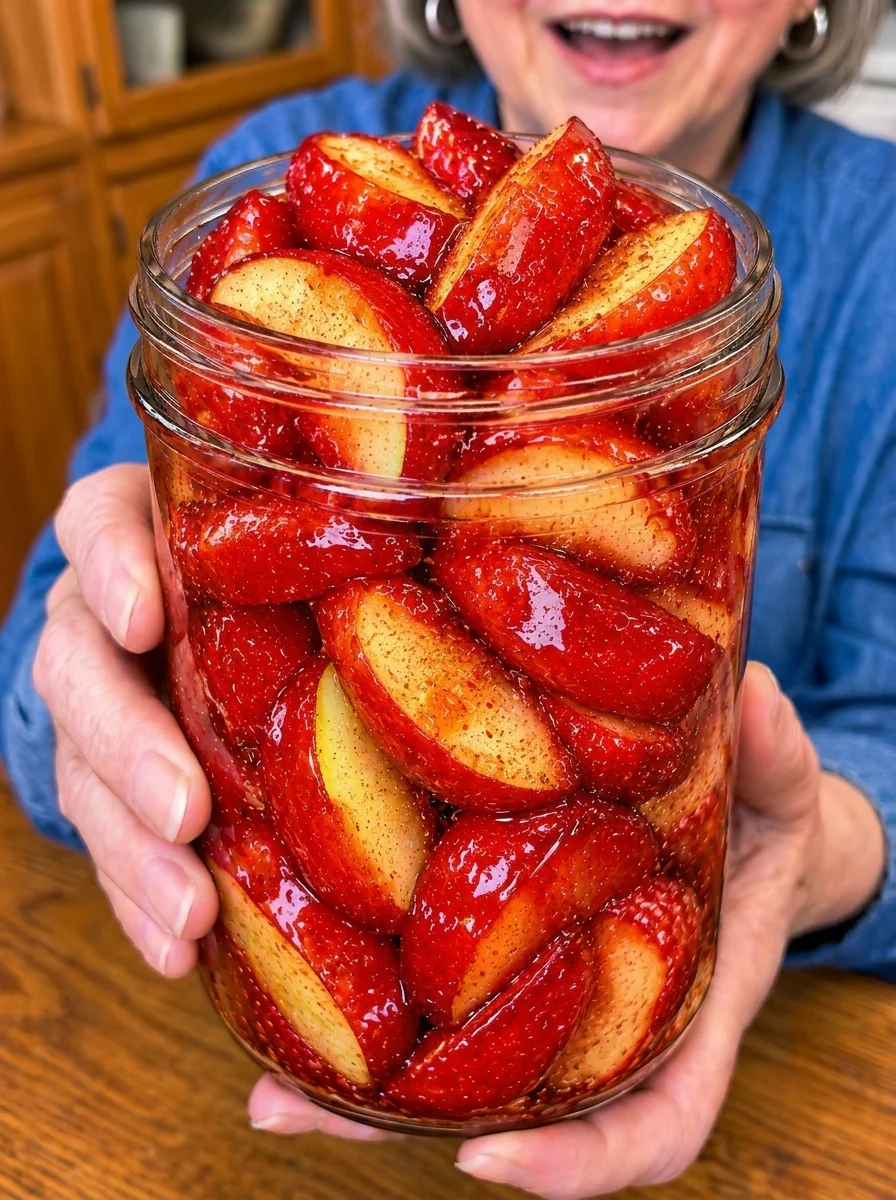
Red Hot Cinnamon Candy Apple Slices pair juicy apple wedges with a thin, red cinnamon-flavored candy shell. They have the nostalgic flavor of a candy apple in smaller portions, ready for a fall dessert plate or a colorful party tray.
The coating is made from sugar, light corn syrup, and water cooked to hard-crack stage. Cinnamon and red coloring provide the familiar flavor and appearance. No packaged cinnamon candies are required in this version; “red hot” describes the flavor style rather than an ingredient in the saucepan.
Cut apples make this a short-window treat. Their exposed flesh releases moisture, so the coating can become sticky, slide, or soften much sooner than it would on a whole, dry apple. Prepare a small batch close to serving and expect the best texture shortly after the shell sets.
This article expands the supplied recipe with equipment and handling details. The formula has not been independently kitchen-tested for this article. Candy making depends on temperature, altitude, humidity, apple moisture, and coating thickness, so the stated times are guides rather than guarantees.
Recipe Overview
- Yield: Approximately 18–24 thick wedges, depending on apple size
- Servings: About 6 small dessert portions
- Preparation: About 15 minutes
- Candy cooking: About 10–20 minutes
- Setting: About 10–20 minutes
- Total: Approximately 35–55 minutes
- Best texture: Soon after setting, the same day
Read the entire method before heating the syrup. Once it reaches temperature, you need the apples, tools, and cooling surface ready.
What to Expect
The candy should set into a thin, firm shell while the apple stays juicy. A thick layer is harder to bite and more likely to pull away from the wet cut surface, so let excess syrup drain off before placing each wedge down.
These are not cooked cinnamon apples, a soft glaze, or a long-storage candy. The apple flesh remains fresh. A glossy appearance does not mean the shell will remain crisp for hours.
Ground cinnamon creates small flecks rather than a perfectly clear coating. A food-grade cinnamon flavoring suitable for hard candy can give a smoother appearance, but its dose depends on the product.
Ingredients
Apples
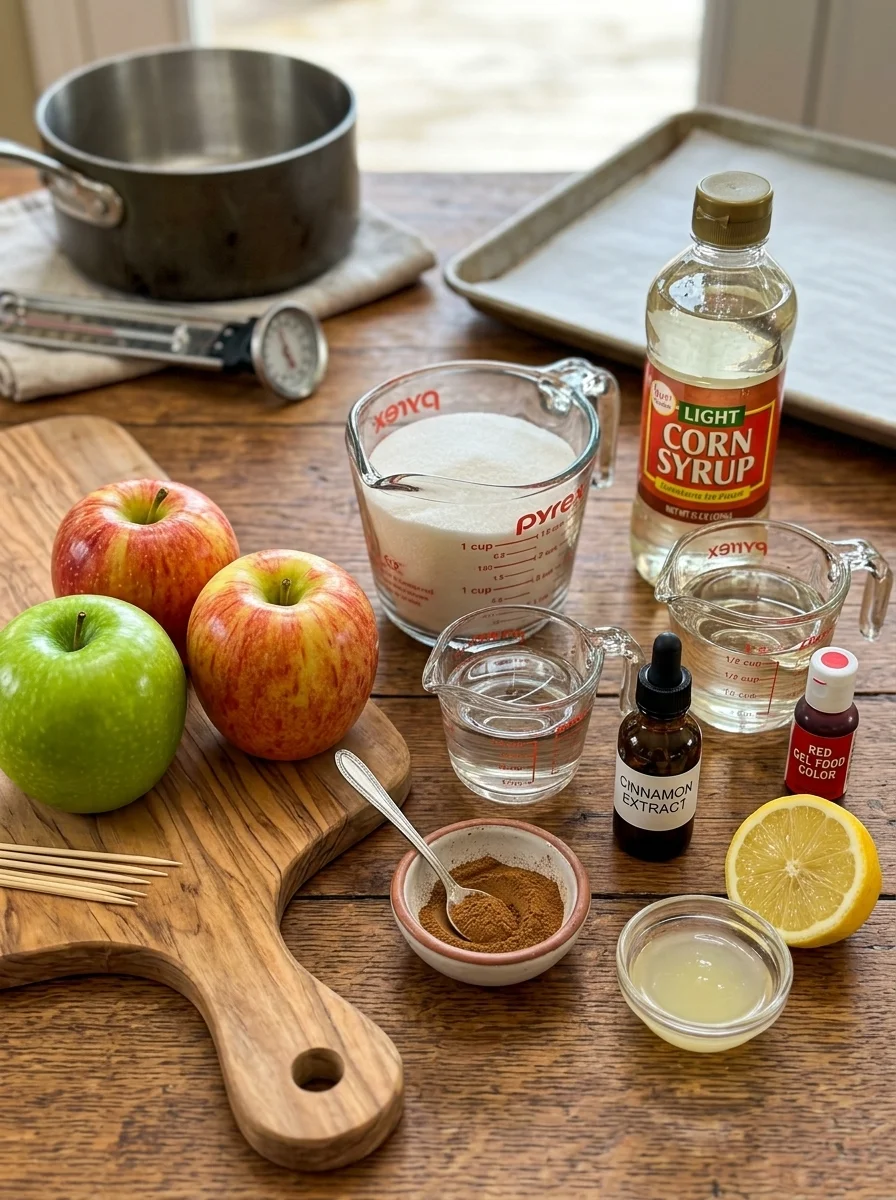
- 3 medium firm apples, such as Granny Smith or Honeycrisp
- 1 tablespoon lemon juice, optional, for a brief anti-browning treatment
Cinnamon Candy Coating
- 1 cup granulated sugar
- ½ cup light corn syrup
- ¼ cup water
- ½ teaspoon ground cinnamon
- Food-grade cinnamon flavoring suitable for hard candy, optional, according to its manufacturer’s directions
- Red food coloring suitable for high-temperature candy, as needed
If using a regular cinnamon extract, use it only if the manufacturer states it is suitable for hot candy and follow its addition instructions. Do not substitute concentrated cinnamon oil or non-food essential oil teaspoon for teaspoon. Flavoring strengths vary considerably.
No ice-water bath is needed for the finished apple slices. Do not dip hot coated fruit into water to set it.
Ingredient Notes
Choose Firm, Sound Apples
Granny Smith gives a tart contrast to the sweet shell, while Honeycrisp offers a sweeter, crisp bite. Choose firm apples without soft spots or damaged areas.
Cut thick wedges rather than very thin slices. Pieces about ½ inch thick are easier to handle, although a thin pick can still split them if forced. Discard the core and seeds.
Lemon Juice Is Optional
Lemon juice can slow browning, but it also wets the surface that needs to be dry for coating. If using it, apply lightly and blot thoroughly. Cutting just before dipping can reduce the need for an anti-browning treatment.
Drying removes surface droplets but does not stop juice from emerging later. That is why the coating remains a near-serving preparation rather than a dependable make-ahead item.
Light Corn Syrup
Light corn syrup helps control crystallization and is not the same as a thin pancake syrup. Honey and maple syrup have different water and sugar profiles and are not treated as equal substitutions here.
Cinnamon and Color
Ground cinnamon provides familiar flavor but remains suspended as tiny particles. More is not always better; a large amount can make the coating gritty.
Use food coloring labeled for the task and begin with a small quantity. Follow its instructions about when to add it rather than assuming every gel, liquid, and oil-based product behaves identically.
Equipment
Use a small heavy saucepan with plenty of headroom, an accurate candy thermometer, a heatproof utensil, and a silicone mat or parchment rated for the temperatures involved. A silicone candy mat is a practical release surface.
Use sturdy food-safe picks or suitable tongs that let you keep your hands away from syrup. Have a stable heatproof surface for the pan and a clear place for the coated apples.
Keep the workspace dry and free of children, pets, and distractions during cooking and dipping. Hot sugar sticks to skin and causes serious burns. Never taste hot syrup or test it with your fingers.
Before You Start
Check that the thermometer is functioning properly and position its sensing area in the syrup without touching the saucepan bottom. A very wide pan can leave this small batch too shallow for an accurate reading.
At approximately sea level, 300°F is the intended hard-crack target for the supplied formula. At higher elevations, candy targets need adjustment; use reliable altitude-specific candy guidance rather than automatically cooking every batch to the same number.
Arrange the prepared cooling sheet beside the stove, but away from any exposed flame or burner. Do not use wax paper, plastic wrap, or a surface that may melt beneath hot syrup.
How to Make the Candy Apple Slices
1. Prepare the Apples
Wash the apples under running water and dry. Core and cut into thick wedges close to the time you plan to dip them.
If using lemon juice, toss lightly, then blot every cut surface thoroughly with clean paper towels. Set the wedges on a fresh dry towel while preparing the syrup and blot again just before dipping.
Insert picks carefully if using them. Make sure each piece is secure before bringing it near hot candy. If a wedge splits, use it for another snack rather than risking it falling into the saucepan.
2. Prepare the Cooling Surface
Line a baking sheet with a suitable silicone mat or rated parchment. Keep enough space between finished pieces that their coating does not join as it sets.
Measure cinnamon and prepare the optional flavoring and color according to their labels. You do not want to search for a bottle while syrup is at its finishing temperature.
3. Dissolve the Sugar
Combine sugar, corn syrup, and water in the saucepan. Stir gently over medium heat until the sugar dissolves.
Once boiling, stop routine stirring. Avoid scraping dried sugar from the pan walls into the syrup, which can encourage crystallization. Keep the thermometer properly positioned.
4. Cook to the Appropriate Candy Temperature
Continue boiling until the syrup reaches 300°F at approximately sea level, or the appropriate adjusted target for your elevation. Rely on the thermometer rather than the elapsed minutes.
Watch closely as the temperature rises near the end. A small batch can move quickly from ready to scorched. Do not walk away or increase heat aggressively to rush it.
5. Add Flavor and Color Carefully
Remove the pan from the heat. Let the most vigorous bubbling subside briefly, then add ground cinnamon and suitable coloring carefully using a heatproof utensil.
Use optional flavoring only in accordance with its hard-candy instructions. Some products contain volatile ingredients and can bubble or give off strong vapors when added to hot syrup. Keep your face back and avoid leaning over the pan.
Do not add an improvised quantity of water to thin the hot candy. A wet utensil or liquid addition can create splattering.
6. Dip a Test Wedge
Blot one wedge dry again, then hold securely with a pick or suitable tongs. Dip to apply a thin coating, keeping your hands well away from the syrup.
Let excess drip into the pan, then place on the prepared surface. Do not touch the coating to check it while hot.
Observe the test piece as it sets. If the syrup slides off or collects beneath it, check for surface moisture and reduce the amount of coating on subsequent pieces. Some difficulty adhering to cut apple is an inherent limitation of this method.
7. Coat the Remaining Pieces
Work steadily without rushing. Coat each wedge thinly, drain briefly, and place separately on the sheet.
If syrup becomes too thick to use, stop dipping. It may be possible to warm it gently over very low heat, but avoid repeated reheating or scorching. Do not put the pan in a microwave or add water as a quick fix.
You may have leftover candy. The full saucepan amount is not necessarily consumed, and coating every piece heavily simply to use it all creates a less pleasant shell.
8. Let Set
Allow about 10–20 minutes for the coating to cool and become firm. Actual time varies with thickness and room conditions.
Do not dip into ice water. Set the pieces on the prepared dry surface, keeping them away from steam and humidity.
9. Serve Promptly
Transfer carefully to a platter once the coating is cool. Serve as soon as practical for the best contrast of crisp shell and juicy fruit.
Make guests aware of any picks and remove them for anyone who cannot safely manage them. A hard sugar shell can be difficult to bite, so portions should be thinly coated rather than encased in a thick candy layer.
Tips for a Better Coating
Prepare near serving time. There is no drying technique that permanently removes moisture from freshly cut fruit.
Use a thin shell. It is easier to bite and less likely to form a large puddle at the base.
Keep steam away from finished candy. A kettle, dishwasher, or simmering pot nearby adds humidity that can soften the shell.
Use the right temperature. A syrup stopped too early may remain tacky, while overcooked syrup can become bitter or overly dark.
Do not promise long-lasting crunch from a cut apple. If a sturdy shell for a later event is essential, a tested whole candy-apple recipe may be more suitable than adapting slices.
Troubleshooting
| Problem | Possible cause | Adjustment |
|---|---|---|
| Coating slides off | Wet cut surface or excessive coating | Blot again and dip thinly; serve promptly. |
| Shell becomes sticky | Apple moisture, humidity, or undercooked syrup | Check temperature and shorten the holding time. |
| Candy looks grainy | Crystallization or cinnamon particles | Avoid stirring boiling syrup; distinguish spice flecks from sugar crystals. |
| Shell is too thick | Syrup cooled before dipping | Work in a small batch and drain excess. |
| Candy tastes bitter | Sugar or cinnamon scorched | Do not scrape burned syrup onto the apples. |
| Color is darker than expected | Overcooking or unsuitable coloring | Monitor temperature and use a suitable candy color. |
| Pieces stick together | Touching during setting | Leave space on the cooling sheet. |
Variations and Presentation
For stronger cinnamon flavor, use a food-grade product intended for hard candy according to its directions. Do not simply increase a concentrated flavoring to match a regular extract measurement.
For a lighter appearance, use less coloring. The exact shade depends on the syrup and product, so add small amounts.
Arrange the slices on a dry platter with space between them. Avoid placing them on wet fruit or next to a steaming dessert, which can soften the shell.
Sprinkles or chopped nuts create additional ingredients and may not adhere once the shell hardens. If using them, apply carefully while the coating is tacky without handling hot syrup, and account for allergens.
Make-Ahead Planning
Measure the dry ingredients, prepare the equipment, and set up the cooling sheet ahead. Cut and coat the apples close to serving.
Do not describe fully cooked hard-crack syrup as a ready-to-pour sauce that can simply sit for hours. It hardens on cooling and needs controlled reheating if reused, with risks of scorching and crystallization.
If you need a dessert completed the day before, choose another preparation rather than expecting the sliced fruit to preserve a crisp shell overnight.
Storage
These slices are best eaten shortly after setting. Refrigeration is appropriate for cut fruit when it is not being served promptly, but condensation and apple moisture can soften the coating.
Keep total room-temperature handling within 2 hours, or 1 hour above 90°F, then refrigerate any remaining slices at 40°F or below. Do not leave them out to protect the candy texture at the expense of cut-fruit handling.
Store in a single layer in a covered container and use preferably within 24 hours for quality, expecting a sticky or softened shell. A cover limits refrigerator moisture exposure but cannot prevent the fruit from releasing juice.
Do not freeze for the intended texture. Thawing changes the apple flesh and can dissolve or crack the shell.
Nutrition Notes
A precise per-serving figure is difficult because some syrup remains in the pan and the coating thickness varies. If every bit of the measured sugar and corn syrup were consumed, the full recipe would contain roughly 1,500 calories before small variations in fruit and flavorings, or about 250 calories across six portions.
A thinner coating leaves more syrup behind and reduces the amount actually eaten. The supplied 180–240-calorie range may fit some batches, but it should not be presented as a verified calculation.
This is a sugar-based candy treat, not a low-sugar fruit snack. Optional toppings and extra coating add to the total.
Frequently Asked Questions
Does this use Red Hots candies?
No. This version makes a cinnamon-flavored sugar syrup from scratch. Using packaged candies requires a different formula rather than adding an arbitrary amount to this one.
Can I skip corn syrup?
It helps manage crystallization. Omitting it or replacing it with honey changes the formula and is not a tested equal substitution here.
Can I use cinnamon essential oil?
Do not use non-food essential oil. Even food-grade concentrated candy flavorings require their own manufacturer-specific dosing and handling instructions.
Why does the shell soften so quickly?
Cut apples continually release moisture. The exposed flesh makes this less stable than coating a whole dry apple.
Should I cool the slices in ice water?
No. Use a dry prepared surface. Water is unnecessary and can cause handling problems around hot candy.
Can I make them without a thermometer?
A functioning candy thermometer gives a clearer target for this recipe. The method is not written around an improvised visual-only test.
Can I double the batch?
A larger batch takes longer and is harder to dip before thickening. Small batches give better control, especially when working with cut fruit.
Recipe Card
Red Hot Cinnamon Candy Apple Slices
Fresh apple wedges with a thin cinnamon-flavored hard candy shell, intended for near-immediate serving.
Yield: About 18–24 wedges
Servings: 6
Prep: 15 minutes
Cook: 10–20 minutes
Set: 10–20 minutes
Ingredients
- 3 medium firm apples
- 1 tablespoon lemon juice, optional; blot thoroughly after using
- 1 cup granulated sugar
- ½ cup light corn syrup
- ¼ cup water
- ½ teaspoon ground cinnamon
- Suitable red candy food coloring, as needed
- Optional food-grade cinnamon candy flavoring, strictly according to its label
Instructions
- Prepare a dry cooling sheet with suitable silicone or rated parchment. Wash, core, and cut apples into thick wedges close to dipping time. If using lemon juice, apply lightly and blot completely dry. Secure picks if used.
- Heat sugar, corn syrup, and water in a roomy heavy saucepan, stirring until dissolved. Stop routine stirring once boiling.
- Cook with a properly positioned candy thermometer to 300°F at approximately sea level, adjusting appropriately for elevation.
- Remove from heat. Add cinnamon and suitable color carefully. Follow any optional flavoring’s hard-candy directions and keep your face away from vapors.
- Blot and dip one test wedge, drain excess, and set on the dry sheet. Coat remaining wedges thinly without touching hot syrup.
- Let cool and set 10–20 minutes. Do not use an ice-water bath. Serve promptly.
Storage: Best soon after setting. Refrigerate cut-fruit leftovers within 2 hours, or 1 hour above 90°F, at 40°F or below. Use preferably within 24 hours for quality; the shell may soften substantially.
Nutrition: Depends on coating consumed. About 250 calories per sixth of the full recipe if essentially all syrup is eaten; actual intake may be lower when syrup remains.
Recipe note: Cut apple moisture limits adhesion and crunch. Suggested expansion of the supplied formula, not kitchen-tested. Hot sugar requires careful handling.
Red Hot Cinnamon Candy Apple Slices
Description
Fresh apple wedges with a thin cinnamon-flavored hard candy shell, intended for near-immediate serving.
Yield: About 18–24 wedges
Servings: 6
Prep: 15 minutes
Cook: 10–20 minutes
Set: 10–20 minutes
Ingredients
- 3 medium firm apples
- 1 tablespoon lemon juice, optional; blot thoroughly after using
- 1 cup granulated sugar
- ½ cup light corn syrup
- ¼ cup water
- ½ teaspoon ground cinnamon
- Suitable red candy food coloring, as needed
- Optional food-grade cinnamon candy flavoring, strictly according to its label
Instructions
- Prepare a dry cooling sheet with suitable silicone or rated parchment. Wash, core, and cut apples into thick wedges close to dipping time. If using lemon juice, apply lightly and blot completely dry. Secure picks if used.
- Heat sugar, corn syrup, and water in a roomy heavy saucepan, stirring until dissolved. Stop routine stirring once boiling.
- Cook with a properly positioned candy thermometer to 300°F at approximately sea level, adjusting appropriately for elevation.
- Remove from heat. Add cinnamon and suitable color carefully. Follow any optional flavoring’s hard-candy directions and keep your face away from vapors.
- Blot and dip one test wedge, drain excess, and set on the dry sheet. Coat remaining wedges thinly without touching hot syrup.
- Let cool and set 10–20 minutes. Do not use an ice-water bath. Serve promptly.
Storage: Best soon after setting. Refrigerate cut-fruit leftovers within 2 hours, or 1 hour above 90°F, at 40°F or below. Use preferably within 24 hours for quality; the shell may soften substantially.
Nutrition: Depends on coating consumed. About 250 calories per sixth of the full recipe if essentially all syrup is eaten; actual intake may be lower when syrup remains.
Recipe note: Cut apple moisture limits adhesion and crunch. Suggested expansion of the supplied formula, not kitchen-tested. Hot sugar requires careful handling.