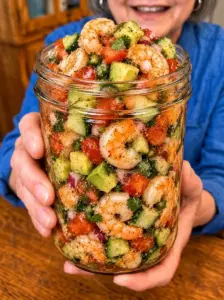
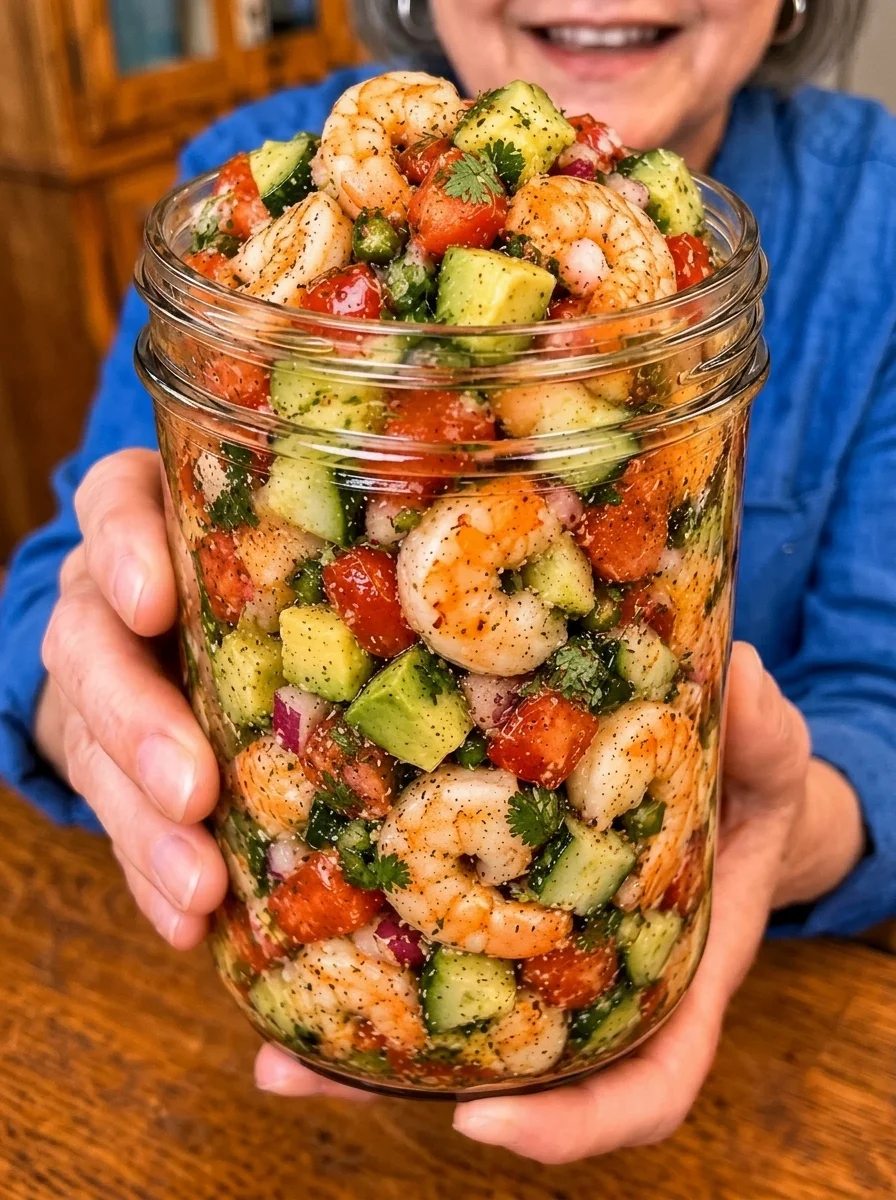
A Mexican Shrimp Ceviche Jar brings together tender shrimp, fresh tomatoes, crisp cucumber, red onion, jalapeño, and cilantro in a bright lime-and-lemon dressing. Avocado adds a creamy finish, while tostadas or tortilla chips provide crunch alongside the juicy vegetables. It is a colorful seafood dish that works as a light lunch, a refreshing appetizer, or a chilled addition to a summer table.
This version cooks the shrimp before adding the citrus. That keeps the preparation straightforward and avoids relying on lime juice to make raw seafood safe. The citrus then becomes a flavor ingredient: it adds tang and freshness to shrimp that have already been cooked and chilled.
Packing the mixture into jars makes individual portions convenient, but you can serve the same recipe in a bowl. The jar does not preserve the ceviche or make it safe to carry without refrigeration. Treat each portion as a chilled seafood meal, keep the avocado and chips separate until serving, and enjoy it while the vegetables still have their best texture.
Recipe note: This article expands the supplied recipe, which has not been kitchen-tested here. Cooking times, yield, and nutrition are estimates. Use a thermometer and the doneness checks below rather than relying on the clock alone.
What to Expect
This is a citrus-forward, cooked-shrimp ceviche-style preparation. The shrimp should be tender and easy to bite, the cucumber should remain crisp, and the tomatoes should contribute juice without turning the jar watery. The dressing is intentionally sharp, especially before avocado is added.
The jalapeño supplies adjustable heat. Removing the pale inner membranes makes the pepper milder, although heat still varies from pepper to pepper. Cilantro and red onion provide a fresh, savory contrast to the naturally sweet shrimp.
A brief chill lets the flavors mingle. Long storage is less helpful: the vegetables release water, the shrimp become firmer in the citrus, and the avocado softens. Prepare only as much as you expect to enjoy within a day or two.
Ingredients
For the Shrimp Ceviche
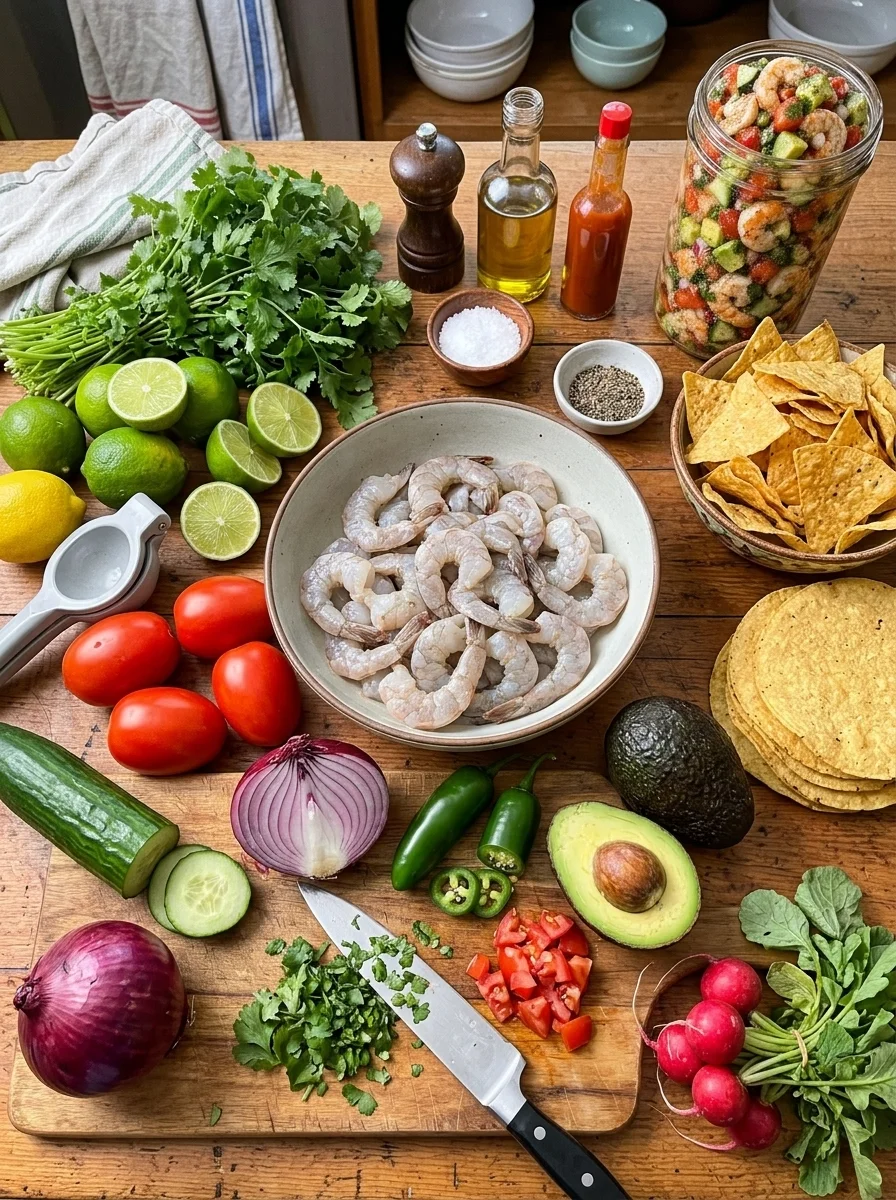
- 1 pound raw shrimp, peeled, deveined, and tails removed
- 1/2 cup fresh lime juice
- 1/4 cup fresh lemon juice
- 1 cup diced Roma tomatoes
- 1 cup diced English cucumber
- 1/2 cup finely diced red onion
- 1 small jalapeño, finely minced, with seeds and inner membranes removed for less heat
- 1/2 cup chopped fresh cilantro
- 1 avocado, diced just before serving
- 1/2 teaspoon salt, or to taste
- 1/4 teaspoon ground black pepper
- 1 tablespoon olive oil, optional
- 1/2 teaspoon hot sauce, optional
For Serving
- Tortilla chips or crisp corn tostadas
- Extra lime wedges
- Additional cilantro
- Thinly sliced radishes, optional
You will also need ice and clean water to chill the cooked shrimp. If you lightly salt the cooking water, that salt is separate from the measured seasoning in the dressing.
Ingredient Notes
Shrimp
Medium or large shrimp are easy to cook and chop into bite-sized pieces. Very small shrimp can be used whole, while larger ones may need two or three cuts. Package size descriptions vary, so focus on creating pieces that fit comfortably on a spoon or tostada.
Frozen raw shrimp are a practical option. Thaw them in the refrigerator, following the package instructions, then drain before cooking. Avoid leaving a bag on the counter to thaw. If the packaging gives special opening instructions before thawing, follow them.
Buy the pound measured as peeled, deveined shrimp for the most consistent yield. A pound of shell-on shrimp produces less edible shrimp after cleaning. Remove the tails so no one has to pick through a filled jar while eating.
Lime and Lemon Juice
Fresh citrus gives the dressing its lively flavor. Lime size and juiciness vary widely, so measure the juice rather than assuming a fixed number of fruits will always provide enough. Four to six limes may be enough for a half cup, but have an extra available.
The lemon juice broadens the citrus flavor. Together, the juices make a fairly generous dressing. Divide it evenly between the jars, but you do not need to fill every jar to the rim with liquid.
Citrus changes the texture and appearance of raw seafood, but that change is not equivalent to cooking it to a safe temperature. In this recipe, heat cooks the shrimp and the dressing seasons them afterward.
Tomatoes and Cucumber
Roma tomatoes are useful because they are relatively meaty. Remove excessively watery seed pockets if necessary, then dice the flesh into small pieces. Avoid squeezing out all the juice; a little tomato juice belongs in the mixture.
English cucumber has a thin skin and relatively small seeds, so peeling is optional. If using a regular cucumber, remove a tough or waxed peel and scoop out large watery seeds before measuring the diced cucumber.
Aim for pieces smaller than the shrimp. An even dice helps the vegetables mix throughout the jar instead of forming large pockets that are awkward to scoop.
Onion, Jalapeño, and Cilantro
Finely diced red onion gives a sharper bite than the other vegetables. If you prefer less intensity, rinse the diced onion briefly under cold running water, then drain and dry it well before measuring.
Jalapeño heat is unpredictable. Begin with less if needed, especially when serving children or guests with different preferences. Wear gloves when appropriate and wash your hands after handling the pepper.
Use the cilantro leaves and tender stems, chopping them finely enough to distribute. Thick, tough stems can be discarded. Cilantro is a prominent flavor here, but you can reduce the quantity to suit your taste.
Avocado and Optional Oil
Choose an avocado that yields slightly to gentle pressure without feeling mushy. Add it near serving time so it remains in recognizable pieces rather than becoming part of a creamy dressing.
Olive oil softens the sharpness of the citrus and adds richness. It is optional, especially when the avocado is generous. Hot sauce also varies in acidity and salt, so taste before adding more salt after using it.
Equipment and Jar Size
Have a pot for cooking shrimp, a bowl of ice water, a colander, a clean cutting board, a knife, a citrus juicer, measuring cups, a mixing bowl, and clean food-safe jars with lids ready.
Prepare the ready-to-eat vegetables on equipment that has not been contaminated by raw shrimp. Wash and sanitize tools and surfaces after handling the raw seafood, and use clean utensils for the cooked shrimp.
Jar capacity depends on the size of the shrimp pieces, avocado, and vegetables. Two 24-ounce jars or three roomy pint jars are sensible starting options, with an extra container available if needed. Do not compress the food or force the lids onto overflowing jars.
Wide-mouth jars are easier to fill, stir, and eat from. Leave room at the top to add avocado and gently mix the serving. The yield is determined by the recipe, not by filling every chosen jar completely.
How to Make Mexican Shrimp Ceviche Jars
1. Prepare the Ice Bath
Before cooking, fill a clean bowl with ice and cold water. Set it close to the stove along with a clean slotted spoon or strainer.
Having the ice bath ready matters because shrimp cook quickly. You should be able to transfer them promptly instead of leaving them in hot water while searching for a bowl.
2. Cook the Shrimp
Bring a pot of lightly salted water to a boil. Add the peeled, deveined shrimp and cook until opaque and firm, usually about 2 to 3 minutes depending on size and starting temperature.
Check that the shrimp reach 145°F with a suitable instant-read thermometer. For small pieces, insert a thin probe sideways into the thickest part of a larger shrimp. Color alone is an imperfect check, since some raw shrimp are naturally pink.
Do not continue cooking after they are done simply to reach a fixed number of minutes. Overcooking produces a tougher texture that citrus marinating will not reverse.
3. Chill and Drain
Transfer the cooked shrimp immediately to the prepared ice bath. Once chilled, drain thoroughly and pat away excess surface moisture with clean paper towels.
Do not leave them soaking for an extended period. The aim is rapid chilling, followed by draining so the dressing is not diluted.
Chop the cold shrimp into bite-sized pieces on a clean board. Refrigerate them while finishing the remaining preparation if needed.
4. Mix the Dressing
In a glass or stainless-steel bowl, whisk the lime juice, lemon juice, salt, and black pepper. Add the optional olive oil and hot sauce and whisk again.
Avoid reactive aluminum or copper containers, which can affect the flavor of acidic foods. A clean food-safe nonreactive bowl is all you need; no specialized ceviche equipment is required.
5. Briefly Marinate the Cooked Shrimp
Add the chilled shrimp to the citrus dressing, toss, cover, and refrigerate for 10 to 15 minutes while preparing the vegetables.
This step is for flavor. The shrimp are already cooked, so there is no need to wait for the juice to change their color or claim that the citrus has made them safe.
6. Dice the Vegetables
Cut the tomatoes and cucumber into small, even pieces. Finely dice the onion, mince the jalapeño, and chop the cilantro.
Drain noticeably wet vegetables before adding them. A little natural juice is welcome, but a puddle of water from washed cucumber or cilantro will weaken the dressing.
Keep the avocado whole until close to serving time. It is easier to preserve its texture by delaying the cut than by trying to protect diced pieces for many hours.
7. Combine and Taste
Fold the tomatoes, cucumber, onion, jalapeño, and cilantro into the chilled shrimp. Mix gently enough to avoid crushing the tomatoes.
Taste a spoonful containing both shrimp and vegetables. Dressing tasted alone will seem sharper than a complete bite. Adjust salt or hot sauce in small amounts, remembering that tortilla chips may already be salty.
If the citrus feels particularly strong, let the mixture chill and add the avocado before deciding on further changes. The creamy avocado naturally balances the dressing.
8. Divide Into Jars
Spoon the ceviche into the clean jars, distributing the shrimp and vegetables evenly. Add some dressing to each portion rather than pouring all the liquid into the final jar.
A fully mixed jar gives the most consistent flavor. If you prefer visible layers, arrange a few pieces against the glass while filling, but keep the shrimp and dressing distributed throughout.
Leave enough empty space to add avocado and stir later. Wipe the rims with a clean towel and secure the lids.
9. Chill and Finish
Refrigerate for another 15 to 30 minutes before serving, keeping the jars at 40°F or below. The first shrimp marinating period can overlap with vegetable preparation; allow extra time if the shrimp need longer to chill.
Just before eating, dice the avocado and fold it gently into each portion. Garnish with cilantro or radish slices if desired.
Serve cold with chips or tostadas on the side. Spoon the ceviche onto a tostada shortly before taking a bite rather than assembling many wet tostadas in advance.
Tips for the Best Texture
Cook the shrimp only until done. Extra boiling does not improve the recipe and can leave them rubbery.
Drain after chilling. Ice-bath water carried into the bowl makes the dressing taste weaker without adding useful flavor.
Use a consistent vegetable dice. Smaller pieces are easier to scoop and allow a little of every ingredient in each bite.
Add avocado last. This keeps it from smearing through the jar and makes the finished ceviche look fresher.
Keep the chips dry. Pack them separately so they stay crisp during transport and storage.
Plan a short make-ahead window. Several days in citrus will not make cooked shrimp more tender or vegetables crisper.
Make-Ahead and Transport
For the freshest result, cook and chill the shrimp, prepare the dressing, and dice the vegetables separately. Refrigerate each component in a clean covered container. Combine a few hours before serving and add avocado at the end.
Assembled jars are convenient for lunch the following day, but they still need refrigeration. Pack them in an insulated cooler or lunch bag with enough ice packs to maintain 40°F or below. Put them into a refrigerator on arrival when one is available.
A tight lid prevents leaks; it does not control temperature. Avoid leaving the jars in a parked car or on a picnic table while waiting to eat.
For a party, keep most portions refrigerated or in a properly iced cooler and set out only a small quantity. When serving from a bowl, nest it in ice and monitor the temperature rather than assuming the ice nearby is sufficient.
Storage
Store covered at 40°F or below and aim to enjoy the ceviche within 1 to 2 days for the best quality. That short window helps preserve the cucumber, tomatoes, and shrimp texture. It does not restart the age of shrimp that were cooked earlier; count from their original preparation and follow any earlier package limits.
Keep avocado separate until serving whenever possible. If it has already been mixed in, expect browning and a softer texture during storage.
Discard ceviche that has been left without proper cold holding for more than 2 hours, or more than 1 hour in temperatures above 90°F. Include preparation, travel, and serving time when considering time out of refrigeration; briefly putting food back in the refrigerator does not erase earlier warm exposure.
Do not rely on lime juice, smell, or appearance to prove that mishandled seafood is safe. If you are unsure how long a jar has been warm, discard it.
Freezing the assembled ceviche is not recommended. Cucumber and tomatoes release water after thawing, avocado changes texture, and the shrimp can become less pleasant. Freeze uncooked shrimp separately before preparation if you need to plan further ahead.
Variations
Tomato Cocktail Style
Add a small splash of tomato juice or a Clamato-style beverage for a looser, seafood-cocktail-inspired version. Begin with a tablespoon or two and taste before adding more salt. Check the beverage label for shellfish ingredients and other allergens.
Extra Spicy
Leave some jalapeño membrane in place or add a few drops of hot sauce. Increase heat gradually so it complements rather than hides the shrimp.
Milder Lunch Jars
Omit the jalapeño and offer hot sauce separately. Retain the lime, cilantro, cucumber, and tomato for a bright flavor without pepper heat.
More Vegetable Crunch
Serve with finely sliced radishes or add a little extra cucumber. Additional vegetables change the balance of dressing and portions, so taste again before packing.
No Cilantro
Use a smaller amount of flat-leaf parsley for a different herbal profile or omit the herbs you dislike. The result will taste different, but the shrimp and citrus remain the focus.
Serving Ideas
For appetizers, divide the batch into three generous portions or several smaller tasting cups. Offer tostadas and a slotted spoon so guests can choose how much dressing to add.
For lunch, split it between two larger jars and pack chips separately. An extra vegetable side or a small portion of rice can make the meal more substantial, depending on appetite.
For a shared table, use a chilled serving bowl instead of jars. Add avocado at the last minute and replenish small servings from the refrigerator rather than leaving the entire batch out.
The recipe contains shellfish. Chips, hot sauce, and cocktail-style additions may introduce other allergens, so check the products you use when serving guests.
Troubleshooting
The Shrimp Are Rubbery
They may have cooked too long or spent too much time in citrus. Cook just to the safe endpoint, chill promptly, and avoid extended marinating. Tough shrimp will not become tender by adding more lime.
The Jar Is Watery
The vegetables or shrimp may not have drained well. Some liquid release is normal. Stir gently before serving and use a slotted spoon for tostadas rather than adding more salt to compensate.
The Flavor Is Too Sour
Add the avocado before reassessing. Serve with plain tostadas and avoid an extra squeeze of lime. Next time, reserve a small amount of dressing for serving rather than committing every drop immediately; the shrimp still need their separate cooking step.
The Onion Dominates
Dice it more finely and rinse and dry it before combining in a future batch. You can also begin with less onion and add more after tasting.
The Avocado Turns Brown
Citrus may slow browning but will not prevent it indefinitely. Cut and add the avocado just before eating for the most reliable appearance.
Frequently Asked Questions
Can I Use Already Cooked Shrimp?
Yes. Use properly stored cooked shrimp, thaw in the refrigerator if frozen, drain, and pat dry. Skip the boiling step. The jar’s storage window must account for when those shrimp were originally cooked or opened.
Can Lime Juice Cook Raw Shrimp Safely?
Citrus changes proteins and can make shrimp look cooked, but it is not a reliable substitute for heat in this recipe. Cook the raw shrimp first, then chill and dress them.
Do the Ingredients Need to Be Submerged?
No. This is a dressed seafood dish, not a brine-preserved jar. Toss to distribute the citrus, cover, and refrigerate. Submerging the mixture does not make it shelf-stable.
Can I Prepare It Three or Four Days Ahead?
That is not the intended make-ahead window. For the best texture, prepare closer to serving and enjoy the assembled dish within 1 to 2 days, accounting for the age of every component.
Is a Jar Required?
No. A covered nonreactive bowl or food-safe container works equally well. Jars are for convenient portions and presentation.
Print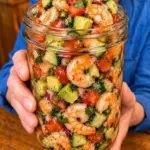
Mexican Shrimp Ceviche Jar
Description
Yield: 3 generous appetizer portions or 2 lunch portions
Prep time: Approximately 20 minutes
Cook time: Approximately 2–3 minutes, plus water-heating time
Final chill: 15–30 minutes
Total time: Approximately 40–55 minutes, with extra time if needed for water heating and chilling
Method: Cooked shrimp, chilled citrus dressing
Ingredients
For the Shrimp Ceviche
- 1 pound raw shrimp, peeled, deveined, and tails removed
- 1/2 cup fresh lime juice
- 1/4 cup fresh lemon juice
- 1 cup diced Roma tomatoes
- 1 cup diced English cucumber
- 1/2 cup finely diced red onion
- 1 small jalapeño, finely minced, with seeds and inner membranes removed for less heat
- 1/2 cup chopped fresh cilantro
- 1 avocado, diced just before serving
- 1/2 teaspoon salt, or to taste
- 1/4 teaspoon ground black pepper
- 1 tablespoon olive oil, optional
- 1/2 teaspoon hot sauce, optional
For Serving
- Tortilla chips or crisp corn tostadas
- Extra lime wedges
- Additional cilantro
- Thinly sliced radishes, optional
You will also need ice and clean water to chill the cooked shrimp. If you lightly salt the cooking water, that salt is separate from the measured seasoning in the dressing.
Instructions
- Cook 1 pound peeled raw shrimp in boiling water until opaque and 145°F, approximately 2–3 minutes depending on size.
- Transfer to ice water. Once chilled, drain thoroughly and chop on a clean board.
- Mix 1/2 cup lime juice, 1/4 cup lemon juice, 1/2 teaspoon salt, and 1/4 teaspoon pepper. Add optional oil and hot sauce.
- Toss the cooked shrimp with the dressing and refrigerate for 10–15 minutes while preparing the vegetables.
- Fold in 1 cup each diced tomato and cucumber, 1/2 cup diced red onion, 1 minced jalapeño, and 1/2 cup chopped cilantro.
- Divide between suitable clean jars, distributing the dressing evenly. Refrigerate for 15–30 minutes.
- Add 1 diced avocado just before serving. Enjoy cold with separately packed chips or tostadas.
Storage: Keep at 40°F or below and enjoy within 1–2 days for best quality. Maintain cold holding during transport. Do not freeze the assembled ceviche.
Nutrition: The supplied 250–320 calorie estimate should be treated as approximate for one-third of the batch, excluding chips and tostadas. Dividing into two lunch portions makes each serving about 50% larger than a three-way portion. Avocado size, optional oil, and shrimp labels affect the calculation; a verified estimate requires those specific quantities and products.