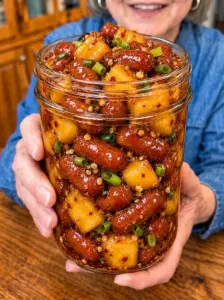
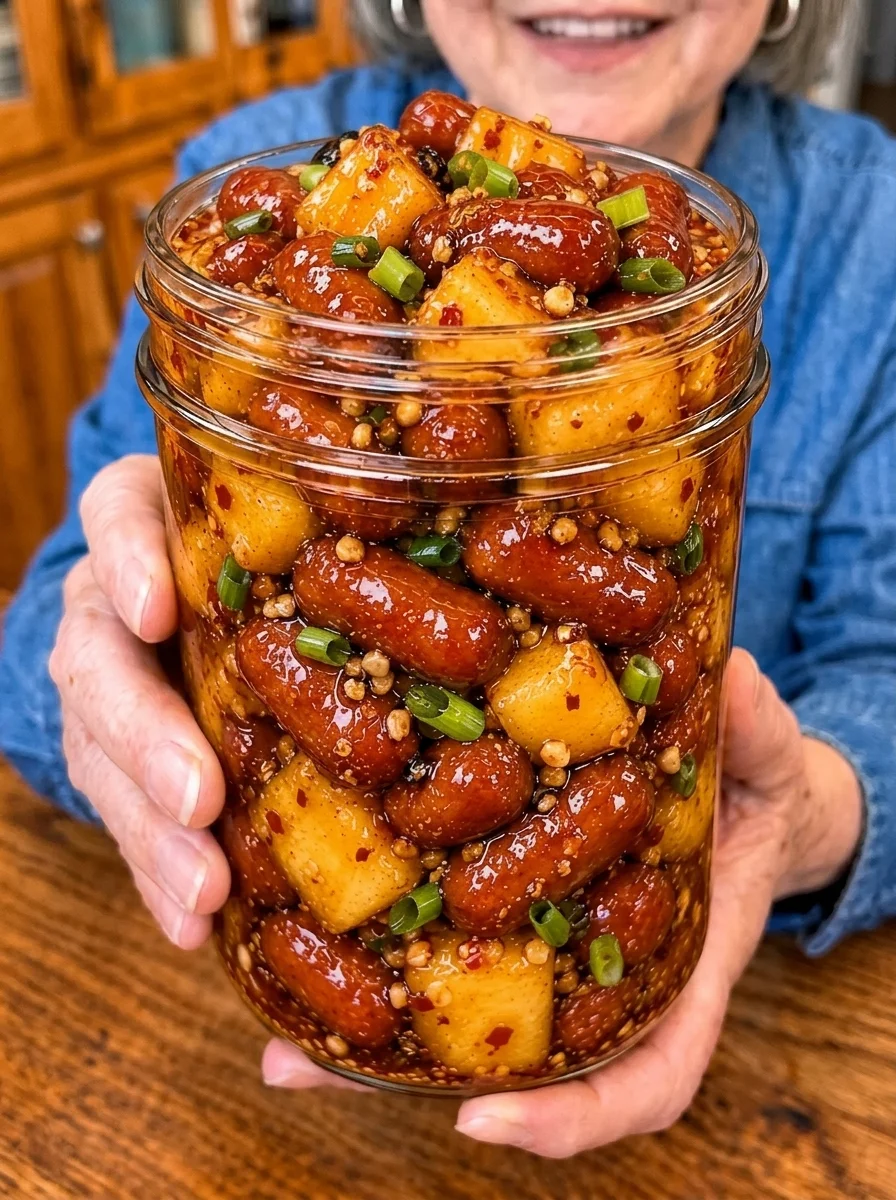
Honey Garlic Pineapple Lil’ Smokies combine savory cocktail sausages, juicy pineapple, and a glossy garlic sauce in an easy party appetizer. Honey supplies mellow sweetness, soy sauce brings a salty depth, and a little barbecue sauce adds tang and smoke. The pineapple keeps the glaze bright, so each bite has more going on than sweetness alone.
The stovetop version is convenient when you want the appetizer ready in about half an hour. A slow cooker offers a longer preparation window and an easy way to serve the finished sausages hot. Either way, the goal is the same: hot sausages and tender pineapple coated in a sauce that clings without becoming stiff or overly thick.
This article expands the supplied recipe and clarifies a few practical details, including how to handle the garlic without oil, when to add pineapple, and how to thicken a slow cooker sauce reliably. The recipe has not been kitchen-tested, so cooking times and yield are estimates. Follow the heating directions on your sausage package and use texture and temperature checks alongside the suggested timing.
The Flavor and Texture
These sausages have a sweet, savory glaze with a noticeable garlic flavor and a gentle smoky background. They are not spicy unless you add red pepper flakes or another hot ingredient. Dijon mustard and ketchup provide a little acidity, while pineapple juice gives the sauce a fruitier finish than a standard barbecue glaze.
The cornstarch helps turn the sauce glossy, but it does not need to become a heavy gravy. A thin coating is enough to carry the flavor. A large amount of thickener can overwhelm the fruit and make the sauce feel pasty as it cools.
Pineapple chunks should remain recognizable and easy to pick up with the sausages. On the stovetop, adding them near the end preserves their shape. In the slow cooker, canned chunks can go in at the beginning for convenience, though they will soften more during the longer cooking time.
Ingredients
For the Sausages and Sauce
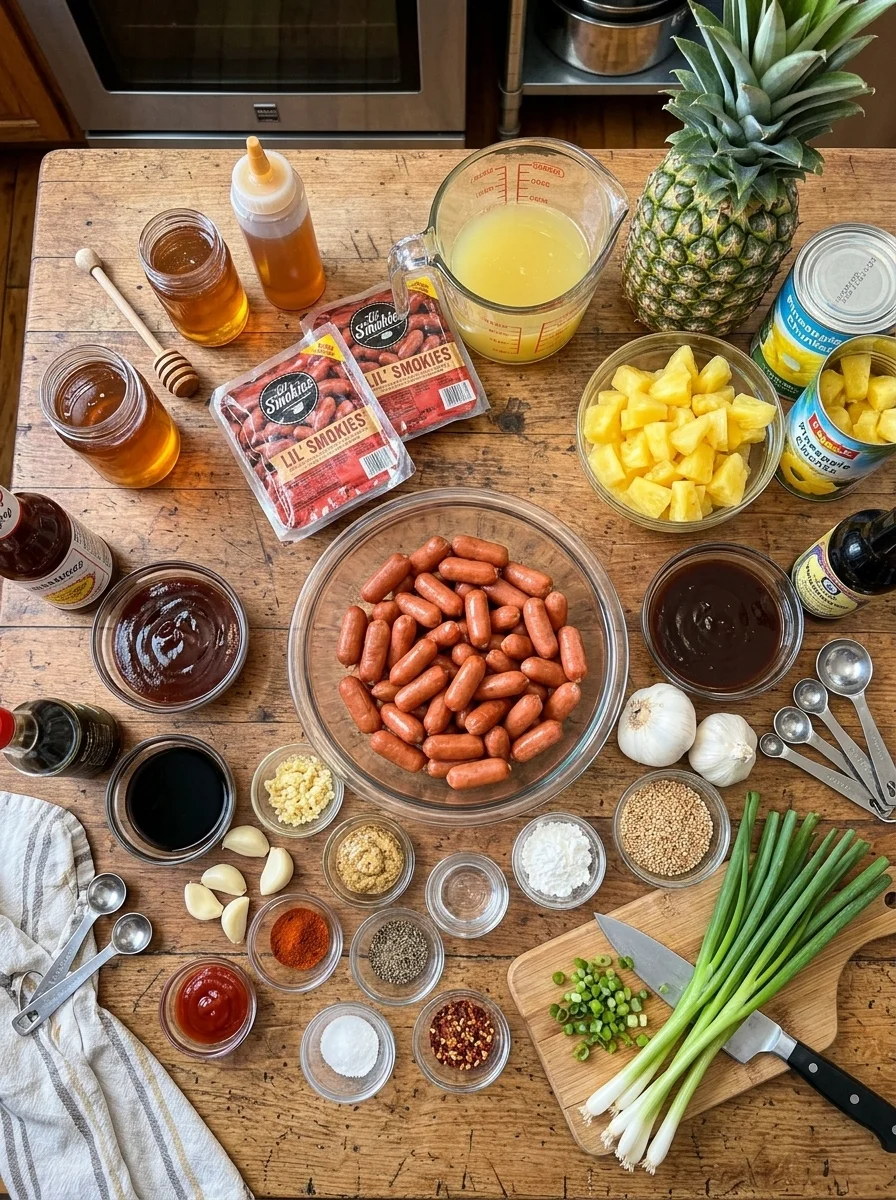
- 2 packages fully cooked Lil’ Smokies cocktail sausages, 14 ounces each
- 1 cup pineapple chunks, drained if canned
- 1/2 cup pineapple juice
- 1/3 cup honey
- 1/4 cup barbecue sauce
- 2 tablespoons soy sauce
- 4 garlic cloves, finely minced
- 1 tablespoon ketchup
- 1 teaspoon Dijon mustard
- 1/2 teaspoon smoked paprika
- 1/4 teaspoon ground black pepper
- 1 teaspoon cornstarch
- 1 tablespoon cold water
Optional Garnishes
- 2 tablespoons sliced green onions
- 1 tablespoon toasted sesame seeds
- A pinch of crushed red pepper flakes
- A few additional pineapple pieces
This recipe uses fully cooked cocktail sausages, not raw miniature sausages. Check the package before beginning; raw meat requires a different cooking approach and appropriate cooking-temperature guidance.
Ingredient Notes
Cocktail Sausages
Beef, pork, or a combination of meats can work, provided the product is fully cooked. Different brands vary in saltiness, smokiness, fat content, and the number of pieces per package. Those differences affect both the final flavor and the serving count.
Drain any packing liquid as needed. There is no need to rinse the sausages. If the surface is very wet, pat lightly with paper towels so you are not adding unnecessary liquid to the pan.
Keep the sausages refrigerated until preparation. If using a frozen package, thaw it in the refrigerator before starting, especially for the slow cooker method.
Pineapple Chunks
Canned pineapple packed in juice is a convenient choice because you can use some of the liquid for the sauce. Drain the chunks before measuring and reserve enough juice for the listed half cup.
Pineapple packed in heavy syrup adds more sweetness. If that is what you have, use separate unsweetened pineapple juice and expect a sweeter fruit component. Fresh pineapple also works as a flavor variation; choose ripe fruit and cut it into small, even chunks.
The chunks should be manageable beside a cocktail sausage. Very large pieces are awkward to serve with toothpicks and may dominate a bite.
Honey
A mild honey gives the sauce sweetness without covering the garlic and pineapple. Strongly flavored honey can be used if you enjoy its character, but it will be noticeable in a recipe with this relatively short ingredient list.
Honey is sticky, so scrape the measuring cup thoroughly with a small spatula. Do not assume the sauce needs more honey before the ingredients have heated and combined. Warm pineapple and commercial barbecue sauce both contribute sweetness.
Barbecue Sauce and Soy Sauce
Use a barbecue sauce you enjoy on its own. A smoky, moderately sweet sauce suits the pineapple well. A very sweet sauce can make the glaze feel more like candy, while a vinegar-forward sauce produces a sharper result.
Reduced-sodium soy sauce is useful because the sausages and barbecue sauce already contain salt. Start with the listed amount and avoid adding extra salt until the finished sauce has been tasted.
For a gluten-free variation, choose labeled gluten-free sausages, barbecue sauce, and tamari or another suitable soy sauce alternative. Checking only the soy sauce is not enough to establish that the whole dish is gluten-free.
Garlic and Seasonings
Finely minced fresh garlic distributes through the glaze and softens during simmering. Keep the pieces relatively even so you do not have large, sharply flavored chunks in an otherwise smooth sauce.
Smoked paprika reinforces the barbecue flavor without making the recipe especially hot. Black pepper adds mild warmth. Crushed red pepper flakes are an optional way to balance the sweetness with heat.
Cornstarch
Mix the cornstarch with cold water immediately before using it. Stir again if it has been standing, because the starch settles quickly.
The listed teaspoon makes a light slurry. How much thickening you need depends on the barbecue sauce, the water released by the pineapple, and how much the sauce reduces. Start with the recipe amount and judge the result after it simmers.
Equipment
For the stovetop method, use a large skillet with reasonably deep sides or a wide saucepan. A broad pan allows moisture to evaporate more readily than a small, deep pot.
Have a mixing bowl, whisk, small bowl for the slurry, spoon or silicone spatula, and an instant-read thermometer ready. For the slow cooker method, use an appliance sized appropriately for the quantity and follow its fill-level instructions. An oversized cooker may leave a shallow layer of sugary sauce that scorches around the edges.
A small saucepan is useful if the slow cooker sauce needs additional reduction. A serving spoon or tongs makes it easier to portion the pineapple along with the sausages.
Stovetop Instructions
1. Mix the Sauce
Whisk together the pineapple juice, honey, barbecue sauce, soy sauce, ketchup, Dijon mustard, smoked paprika, and black pepper. Stir until the honey is dispersed and there are no large pockets of mustard or ketchup.
Measure the pineapple and set it aside. Prepare the garlic before turning on the heat so you are not trying to mince it while the pan warms.
2. Add the Garlic Without Scorching It
Pour the prepared sauce into the skillet and stir in the minced garlic. Set the pan over medium heat and bring the mixture toward a gentle simmer, stirring frequently.
This replaces the supplied dry-pan sauté step. Garlic can stick and scorch in an empty pan, and there is no oil listed in the recipe. Letting it cook directly in the sauce avoids that problem while still distributing its flavor.
You do not need browned garlic here. A bitter, dark garlic flavor would compete with the honey and pineapple.
3. Add the Sausages
Stir in the fully cooked cocktail sausages and turn them through the sauce until coated. Once the mixture begins simmering, reduce the heat to medium-low.
Cook uncovered for about 10 to 15 minutes, stirring occasionally. Keep the simmer gentle: small bubbles are enough. A vigorous boil can reduce the sauce too quickly and increase the chance of scorching.
Follow the sausage package’s heating directions. The suggested time is an estimate, not a substitute for checking that the food is hot throughout.
4. Add the Pineapple
Fold in the drained pineapple chunks and simmer for another 3 to 5 minutes, or until the fruit is hot. Stir gently so the chunks retain their shape.
If the sauce has already become quite concentrated, add a small splash of pineapple juice before continuing. If it looks watery, allow a little more uncovered simmering before adding the slurry.
5. Thicken the Glaze
Whisk the cornstarch and cold water until smooth. Stir the slurry into the gently simmering sauce and cook for approximately 1 to 2 minutes, stirring so the thickener disperses evenly.
The sauce should become glossy and lightly coat a spoon. It will thicken further as it cools, so stop while it is still fluid enough to spoon over the sausages.
If it remains much too thin, make a second small slurry with 1/2 teaspoon cornstarch and a little cold water. Add it gradually and simmer again. Do not sprinkle dry cornstarch directly into the hot pan.
6. Taste and Finish
Taste a small cooled spoonful of sauce. Add a pinch of pepper flakes if desired. A little extra barbecue sauce can deepen the smoky tang, but remember that it may also add sugar and salt.
Avoid making several large adjustments at once. A sauce that seems slightly bold on its own often tastes balanced with the sausage and pineapple.
Transfer to a serving dish and garnish with green onions or sesame seeds just before serving. Offer toothpicks and a spoon so guests can take some pineapple and glaze with their portion.
Slow Cooker Instructions
Place the fully cooked, thawed sausages in the slow cooker. Whisk together the sauce ingredients, including the garlic, and pour them over the sausages. Add the pineapple chunks and stir gently.
Cover and cook on LOW for approximately 2 to 3 hours or HIGH for approximately 1 to 1 1/2 hours, until hot throughout and consistent with the package’s heating directions. Appliance performance varies, so use these times as planning ranges.
Do not start on WARM. That setting is intended to hold already hot food, not bring a cold batch up to temperature.
For a firmer pineapple texture, reserve the chunks and add them during the last 20 to 30 minutes, allowing enough time for the fruit and sauce to become hot again.
Mix the slurry and stir it in near the end. Set the cooker to HIGH if needed and allow about 15 to 20 minutes, until the sauce visibly thickens. Cornstarch needs sufficient heat to work, and some cookers do not produce a strong enough simmer quickly.
If the sauce stays thin, transfer it carefully to a saucepan, simmer, and thicken on the stove. Return the hot sauce to the sausages afterward. This is more reliable than repeatedly adding starch to a lukewarm sauce.
Once everything is fully heated, switch to WARM for serving and verify that the food stays at 140°F or above. Stir occasionally to distribute heat and keep the glaze from concentrating around the edges.
Tips for a Glossy, Balanced Sauce
Use gentle heat once the sauce begins simmering. Honey and barbecue sauce can scorch where they contact the bottom of a hot pan, even when there is plenty of liquid elsewhere.
Reduce before over-thickening. A little evaporation concentrates flavor; starch mainly changes texture. If the sauce tastes weak and watery, brief reduction can help more than a large dose of cornstarch.
Keep the pineapple drained. Excess packing liquid changes the amount of sauce and can delay thickening.
Stir from the bottom. Moving only the sausages on top will not prevent sauce from sticking underneath them.
Reserve garnishes for serving. Green onions look fresher and sesame seeds retain a better texture when added after cooking.
Expect some thickening during holding. Add a small splash of juice or water if the sauce becomes sticky and difficult to stir. Recheck the serving temperature after adding any cool liquid.
Flavor Variations
Sweet and Spicy
Add a teaspoon of sriracha or a small pinch of cayenne to the sauce. Start modestly, especially if your barbecue sauce already contains heat.
Smokier Barbecue
Choose a hickory-style sauce and retain the smoked paprika. Taste before adding more smoky seasoning, since too much can overshadow the fruit.
Ginger Garlic
Add about a teaspoon of finely grated fresh ginger with the garlic. It gives the pineapple sauce a brighter, more aromatic character and pairs especially well with a green onion garnish.
Tangier Finish
If the finished sauce tastes overly sweet, stir in a small amount of apple cider vinegar, starting with 1/2 teaspoon. Taste after each addition rather than pouring in a large splash.
Less Sweet
For a future batch, choose an unsweetened pineapple juice and a less sugary barbecue sauce. Reducing the honey also changes the amount and texture of the glaze, so expect to reassess the simmering and thickening steps.
Serving Ideas
Serve the sausages in a shallow dish for a small gathering or a properly heated slow cooker for a longer party. Arrange toothpicks nearby, but include a serving spoon so guests can collect pineapple without fishing through the dish.
For a game-day spread, pair them with crunchy vegetables, deviled eggs, crackers, and a cheese dip. The fresh and savory options balance the sweet glaze.
For a casual dinner, spoon the sausages and pineapple over rice with steamed broccoli or a simple cabbage slaw. The appetizer yield will feed fewer people when used as a main course.
Keep garnishes separate if you are serving people with different preferences or allergies. Sesame seeds are optional, and the sauce may contain soy or wheat depending on the products used.
For transport, use a secure food container and appropriate hot or cold holding. Do not assume a switched-off slow cooker will keep food safely hot during a long drive.
Make-Ahead and Storage
You can whisk the sauce a day ahead and keep it covered in the refrigerator. Store it separately from the sausages, then combine and cook when needed. Prepare the green onions shortly before serving for the freshest appearance.
Refrigerate leftovers promptly in shallow, covered containers within 2 hours, or within 1 hour when the surrounding temperature is above 90°F. Keep the refrigerator at 40°F or below and use refrigerated leftovers within 3 to 4 days.
Reheat the amount you need in a saucepan over medium-low heat, stirring often, until it reaches 165°F throughout. A splash of water or pineapple juice can loosen a sauce that has thickened during storage.
Do not use the slow cooker to reheat cold leftovers. Reheat them on the stove, in the microwave, or in the oven first, then transfer the hot food to a preheated slow cooker for holding at 140°F or above.
For longer storage, freeze cooled portions in airtight freezer-safe containers for up to 2 months for best quality. Leave some expansion space. Thaw overnight in the refrigerator before reheating. Pineapple may soften, and the glaze may need stirring and a small splash of liquid after thawing.
Troubleshooting
The Sauce Is Too Thin
It may need more evaporation or a hotter simmer to activate the starch. Let the initial slurry cook before adding more. For slow cooker batches, finish the sauce on the stove if necessary.
The Sauce Is Too Thick
Add liquid a tablespoon at a time and stir gently over low heat. Stop when it flows around the sausages rather than sitting in heavy clumps.
The Sauce Is Too Sweet
Serve it with plain rice or unsweetened side dishes, and use a small amount of vinegar for balance if needed. Next time, select a less sweet barbecue sauce before changing several ingredients at once.
The Garlic Tastes Bitter
It may have scorched. That is why this method cooks the garlic in the sauce rather than in a dry skillet. Burnt flavors cannot reliably be hidden with more honey.
The Pineapple Is Falling Apart
It may have simmered too long or been stirred vigorously. Add it later and fold gently in the next batch. Canned chunks generally hold up better than crushed pineapple when distinct fruit pieces are the goal.
Frequently Asked Questions
Can I Use Another Brand of Cocktail Sausage?
Yes, provided it is fully cooked. Follow the product’s heating directions and expect differences in saltiness, size, and servings.
Can I Leave Out the Cornstarch?
Yes, if you prefer a thinner sauce or can reduce it gently to your liking. A slow cooker retains moisture, so its sauce may stay looser without a separate stovetop reduction.
Can I Use Crushed Pineapple?
It will make a fruitier, more textured sauce rather than distinct bites of pineapple. Drain and measure carefully; it is a variation rather than an identical substitution in appearance and consistency.
How Many Sausages Are in a Serving?
Package counts vary. Divide the finished batch into 8 to 10 portions for appetizer servings rather than assuming a fixed number of pieces. Larger dinner portions will reduce the yield.
Can I Keep Them Warm All Afternoon?
Only use a suitable appliance that actually maintains the food at 140°F or above, checking with a thermometer. Extended holding can still reduce quality and make the glaze thick, so prepare a realistic serving quantity and monitor it.
Print
Honey Garlic Pineapple Lil’ Smokies
Description
Yield: 8–10 appetizer servings
Prep time: 10 minutes
Stovetop cook time: Approximately 20–25 minutes
Stovetop total: Approximately 30–35 minutes
Slow cooker: Approximately 2–3 hours on LOW or 1–1 1/2 hours on HIGH, plus any sauce-finishing time
Ingredients
For the Sausages and Sauce
- 2 packages fully cooked Lil’ Smokies cocktail sausages, 14 ounces each
- 1 cup pineapple chunks, drained if canned
- 1/2 cup pineapple juice
- 1/3 cup honey
- 1/4 cup barbecue sauce
- 2 tablespoons soy sauce
- 4 garlic cloves, finely minced
- 1 tablespoon ketchup
- 1 teaspoon Dijon mustard
- 1/2 teaspoon smoked paprika
- 1/4 teaspoon ground black pepper
- 1 teaspoon cornstarch
- 1 tablespoon cold water
Optional Garnishes
- 2 tablespoons sliced green onions
- 1 tablespoon toasted sesame seeds
- A pinch of crushed red pepper flakes
- A few additional pineapple pieces
This recipe uses fully cooked cocktail sausages, not raw miniature sausages. Check the package before beginning; raw meat requires a different cooking approach and appropriate cooking-temperature guidance.
Instructions
- Whisk 1/2 cup pineapple juice, 1/3 cup honey, 1/4 cup barbecue sauce, 2 tablespoons soy sauce, 1 tablespoon ketchup, 1 teaspoon Dijon, 1/2 teaspoon smoked paprika, and 1/4 teaspoon black pepper.
- Pour into a skillet with 4 minced garlic cloves and heat gently.
- Add two 14-ounce packages fully cooked cocktail sausages. Simmer gently for 10–15 minutes, following the package heating directions.
- Stir in 1 cup drained pineapple chunks and cook for another 3–5 minutes, until hot.
- Mix 1 teaspoon cornstarch with 1 tablespoon cold water. Stir into the simmering sauce and cook for 1–2 minutes, until glossy.
- Garnish and serve hot. For slow cooking, combine the ingredients without the slurry, heat thoroughly, then thicken near the end or finish the sauce on the stove.
Storage: Refrigerate promptly and use within 3–4 days. Reheat leftovers to 165°F. Hold hot food at 140°F or above.
Nutrition: The supplied estimate of 280–350 calories per serving is approximate and depends on whether the batch is divided into 8 or 10 portions, sausage brand, sauce, and garnish. A verified calculation requires the labels from the specific products used. Sodium can be substantial because both sausages and soy sauce contribute salt.