High-Protein Philly Cheesesteak Casserole: Rich, Cheesy, and Built for Serious Comfort
The Philly cheesesteak is one of the great American sandwiches — thinly sliced beef, sautéed onions and peppers, melted provolone or Cheez Whiz, all piled into a long hoagie roll with a structural integrity that rarely survives the first few bites. It’s messy and magnificent and deeply satisfying in the way that only a few dishes manage to be. The problem with the Philly cheesesteak as a weeknight meal is the production involved: the right cut of beef, the right roll, the exact sear, the right cheese application. It’s achievable but not exactly low-effort.
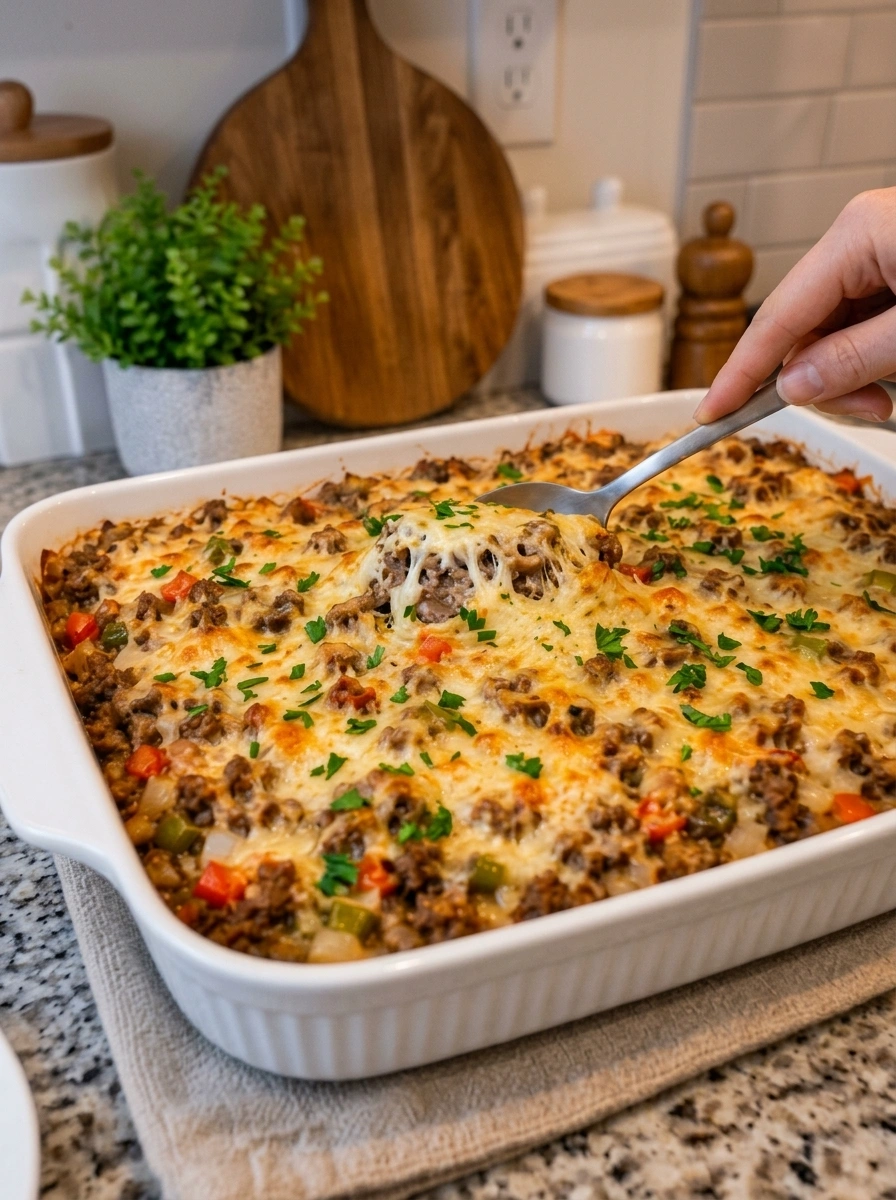
This High-Protein Philly Cheesesteak Casserole takes everything that makes the original great — the seasoned beef, the sautéed peppers and mushrooms and onion, the melted provolone — and transforms it into a baked casserole that’s not only easier to make but genuinely more protein-dense than the sandwich version. Lean ground beef. A creamy base of cottage cheese and Greek yogurt that adds protein instead of just fat. Two kinds of cheese melted on top. All of it layered into a 9×13-inch dish that feeds eight people, reheats beautifully for four days, and freezes for two months.
This is the kind of recipe that quietly reorganizes your meal prep priorities. One batch on Sunday means protein-packed lunches and dinners all week. And unlike some high-protein recipes that sacrifice flavor at the altar of macros, this casserole tastes like comfort food — because it is.
The Protein Story: What Makes This Different From a Standard Casserole
The phrase “high-protein” gets applied to a lot of recipes that don’t fully earn it. This one does, and it’s worth understanding exactly how — both because it explains why the recipe is built the way it is and because knowing the protein sources helps you make informed substitutions if needed.
Lean ground beef (2 lbs): The foundational protein source. At approximately 22 to 27 grams of protein per 3.5-ounce serving depending on fat percentage, ground beef is one of the most protein-dense and accessible meats available. The recipe specifies lean ground beef — 90/10 or 93/7 — which delivers the beef flavor and protein without the excess fat that higher-fat blends would add to a dish that’s already rich from the cheese and yogurt components. Two pounds across eight servings provides a substantial meat base before accounting for the dairy proteins.
Cottage cheese (1 cup, low-fat): The surprise protein powerhouse that health-conscious cooks have rediscovered enthusiastically over the last several years. One cup of low-fat cottage cheese contains approximately 25 to 28 grams of protein — comparable to a significant serving of chicken breast. In this casserole, it’s blended with Greek yogurt to create the creamy base that binds the filling, which means the protein is built into the structural component of the dish rather than added as a supplement. It also contributes almost no distinguishable flavor in the finished casserole — people who claim to dislike cottage cheese consistently can’t detect it in cooked applications like this one.
Greek yogurt (1 cup, plain): The second high-protein dairy component. One cup of plain Greek yogurt provides approximately 17 to 20 grams of protein, along with probiotics and a mild tang that brightens the overall flavor of the casserole. Like the cottage cheese, its flavor is subtle in the finished dish — it contributes creaminess and protein without announcing itself.
Provolone and mozzarella: Both are solid protein contributors in their own right — typically 7 grams per ounce for provolone and 6 grams for mozzarella — and in a casserole that uses nearly 3 cups of cheese across the filling and topping, the contribution is meaningful.
The cumulative result is a casserole that delivers an estimated 40 to 50 grams of protein per serving depending on the exact products used — the kind of number that makes this genuinely useful for anyone tracking protein intake, building muscle, or simply trying to eat more satisfying, longer-lasting meals.
Why Philly Cheesesteak? The Flavor Architecture of This Dish
The Philly cheesesteak’s flavor profile is built on a specific combination that this casserole faithfully replicates at every layer.
The beef: Original cheesesteaks use thinly sliced ribeye, which is tender and fatty and develops a beautiful sear on a flat-top griddle. Ground beef is a practical and protein-efficient substitute that, when properly browned in a hot skillet, develops its own Maillard reaction crust and savory depth. The key is not crowding the pan — brown the beef in batches if necessary and let it develop real color rather than steaming.
The trinity of vegetables: Green and red bell peppers, onion, and mushrooms are the classic Philly cheesesteak vegetable combination. Each contributes something distinct: green bell pepper adds a slightly bitter, vegetal freshness; red bell pepper adds sweetness and color; yellow onion, softened in the skillet, becomes sweet and savory; and mushrooms add umami depth and a meaty texture that stretches the filling’s substance.
The cheese: Provolone is one of the two traditional Philly cheesesteak cheeses (the other being Cheez Whiz, which has its own devoted following). Provolone melts into a smooth, slightly sharp, creamy layer that’s distinctly Italian-American in character. Mozzarella is added for its superior melt and stretch — that pull-apart quality when you cut a slice that signals cheese done right.
The Worcestershire: One teaspoon does an enormous amount of work here. Worcestershire sauce is a complex, fermented condiment that adds umami, saltiness, a faint sweetness, and a savory depth that makes beef taste more like beef. It’s the difference between a casserole that tastes good and one that tastes specifically like Philly cheesesteak.
The spice profile: Onion powder, garlic powder, smoked paprika, and Italian seasoning layer onto the Worcestershire to build a seasoning profile that’s savory, slightly smoky, and herbal — complementing and amplifying the natural flavors of the beef, peppers, and cheese rather than overpowering them.
The Cottage Cheese and Greek Yogurt Base: Addressing the Question Everyone Has
The most common reaction to seeing cottage cheese and Greek yogurt in a Philly cheesesteak casserole recipe is skepticism. Fair enough — these are ingredients that most people associate with breakfast parfaits or protein smoothies, not savory beef casseroles. Here’s why they work so well here and why you genuinely can’t taste them in the finished dish.
Cottage cheese becomes invisible when cooked. The curds that make cottage cheese texturally distinctive in cold applications break down completely when mixed, heated, and baked. By the time the casserole comes out of the oven, there is no visible or textural evidence of cottage cheese — only creaminess, richness, and protein. This is a well-established cooking technique used in high-protein versions of lasagna, stuffed shells, dips, and cheesecakes with exactly the same result.
The key is blending before using. Whisking the cottage cheese and Greek yogurt together until smooth before folding in the other ingredients eliminates the curds and creates a uniform, creamy mixture. Don’t skip this step — adding unblended cottage cheese directly to the beef mixture leaves visible curds that some people find off-putting, even if the flavor is identical.
Greek yogurt’s tang brightens rather than dominates. In a filling with Worcestershire sauce, smoked paprika, garlic, and two kinds of cheese, the mild tang of Greek yogurt is not detectable as “yogurt” — it reads as a pleasant brightness that prevents the filling from tasting flat or heavy. Think of it the way you’d think of a small amount of sour cream stirred into a sauce.
If you’re still skeptical: Make the recipe once as written and taste the filling before it goes into the baking dish. You’ll find it tastes like a cheesy, savory, slightly creamy beef and vegetable mixture — not like yogurt or cottage cheese.
Ingredient Selection: Getting Each Component Right
Ground Beef
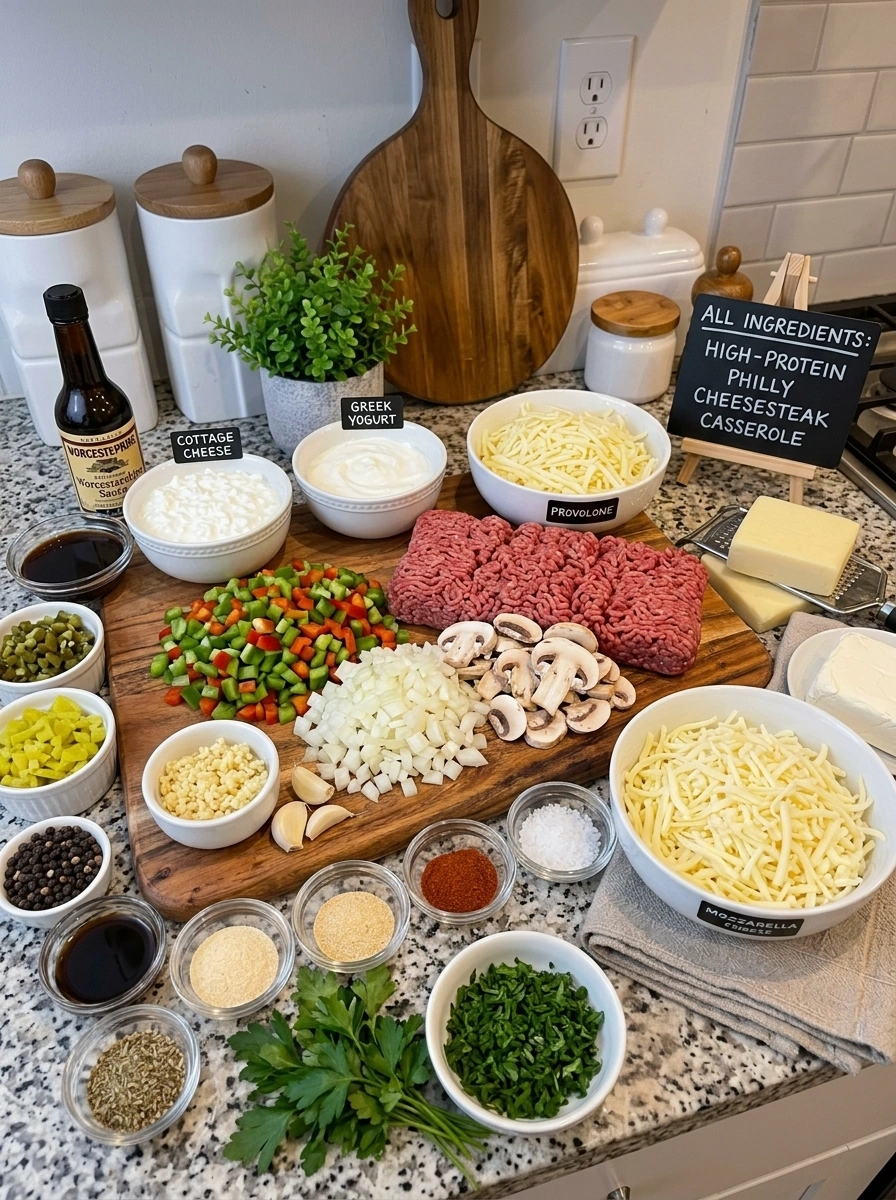
90/10 or 93/7 lean ground beef is the target. At these fat percentages, there’s enough fat to develop good browning and flavor without producing a pool of grease that needs to be drained excessively and makes the filling greasy.
If you prefer alternatives: ground turkey (94/6 or leaner) produces a slightly milder, lighter result with similar protein content. Ground chicken works similarly. Ground bison is an excellent choice — leaner than beef with a slightly richer, earthier flavor that works beautifully with the pepper and cheese profile.
Bell Peppers
The recipe uses one green and one red bell pepper for visual contrast and complementary flavor. Red bell peppers are sweeter and fruitier — fully ripened versions of the same pepper as the green, which are harvested earlier and have a sharper, more vegetal flavor. Together they provide balance. Yellow and orange bell peppers are equally appropriate substitutes or additions.
Mushrooms
White button or cremini mushrooms both work. Cremini (baby bella) mushrooms have a slightly deeper, earthier flavor that adds more complexity to the filling. Slice them approximately ¼ inch thick so they cook evenly and contribute satisfying texture rather than disappearing into the filling.
Don’t skip the mushrooms. They add umami depth that makes the overall dish taste more complex and satisfying, and they stretch the filling volume while adding minimal calories.
Cottage Cheese
Low-fat (2%) cottage cheese is specified and works best. Full-fat cottage cheese adds unnecessary richness to a dish that’s already rich from the beef and cheese. Fat-free cottage cheese can produce a slightly drier, grainier result. Small curd and large curd both blend to the same smooth consistency — use whichever you have.
Greek Yogurt
Plain, full-fat or 2% Greek yogurt is the right choice. Flavored yogurts are obvious non-starters. Fat-free Greek yogurt is acceptable but produces a slightly tangier, slightly drier result than 2%.
Provolone
Sharp provolone melts beautifully and has more flavor than mild provolone. If you can find it sliced from a deli block rather than pre-shredded, use it — the flavor and melt quality are both better. Shredded provolone works perfectly well.
How to Make High-Protein Philly Cheesesteak Casserole: Step-by-Step
Step 1: Preheat and Prep
Preheat the oven to 375°F (190°C). Grease a 9×13-inch baking dish with cooking spray or a thin coat of olive oil. Dice all the vegetables, slice the mushrooms, and mince the garlic before you start cooking — this casserole moves quickly once the skillet is hot.
Step 2: Brown the Beef
Heat a large skillet over medium-high heat. Add the ground beef and cook for 6 to 8 minutes, breaking it into crumbles with a wooden spoon or spatula. The goal is properly browned beef with some caramelized color on the exterior — not gray, steamed meat. If the pan looks crowded, let the beef cook undisturbed for 2 to 3 minutes before stirring to develop color.
Drain any accumulated fat. Lean ground beef typically produces minimal fat; fattier blends may require more thorough draining. Excess fat in the filling can prevent the casserole from setting properly.
Step 3: Cook the Vegetables
Add the diced onion, green bell pepper, red bell pepper, and sliced mushrooms to the skillet with the beef. Cook over medium-high heat for 5 to 6 minutes, stirring occasionally, until the vegetables are softened and any liquid the mushrooms release has mostly evaporated. Add the minced garlic and cook for 30 seconds, stirring constantly.
Add the Worcestershire sauce, onion powder, garlic powder, smoked paprika, Italian seasoning, salt, and black pepper. Stir to coat everything evenly. Taste at this point and adjust seasoning — the beef and vegetable mixture should taste well-seasoned and slightly salty, as the cheese and dairy will dilute the seasoning somewhat.
Remove from heat.
Step 4: Make the Cheese Base
In a large mixing bowl, whisk together the cottage cheese and Greek yogurt until the mixture is as smooth as possible — the curds won’t fully disappear through whisking alone, but breaking them down as much as possible produces the best final texture. For an entirely smooth base, blend briefly with an immersion blender or standard blender.
Stir in the 1½ cups of shredded provolone and 1 cup of shredded mozzarella. The mixture will be thick and cheesy.
Step 5: Combine and Transfer
Fold the beef and vegetable mixture into the cheese base until everything is evenly distributed — every spoonful should contain beef, vegetables, and cheese sauce in equal proportion. Transfer to the prepared baking dish and spread into an even layer with a spatula. The casserole should fill the dish generously.
Sprinkle the remaining ½ cup provolone and ¼ cup mozzarella evenly over the top.
Step 6: Bake
Bake uncovered at 375°F for 25 to 30 minutes, until the cheese topping is fully melted, bubbly, and beginning to turn golden at the edges. The center should be set — not liquid or jiggly when the pan is gently shaken.
For extra browning and a more caramelized cheese top: switch the oven to broil for 2 to 3 minutes after the bake time is complete. Watch carefully — cheese goes from perfectly golden to burned in under a minute under a broiler.
Step 7: Rest and Serve
Remove from the oven and let rest for 10 minutes. This rest period allows the casserole to firm up and the internal temperature to equalize — cutting immediately produces servings that fall apart and lose their shape on the plate. After 10 minutes, the casserole slices cleanly and holds together beautifully.
Garnish with chopped fresh parsley. Serve with a green salad, steamed broccoli, or roasted vegetables.
Meal Prep: Why This Casserole Is a Weekly Staple
This casserole was built for meal prep, and it delivers on every criterion that makes a recipe genuinely useful in that context.
It makes 8 generous servings. One cooking session on Sunday produces lunches and dinners for most of the week.
The protein content is exceptional. At 40 to 50 grams per serving, this is a meal prep option that satisfies in a way that lower-protein dishes can’t — you’re not hungry again an hour later.
It reheats better than most casseroles. The cottage cheese and Greek yogurt base creates a creamier, more stable filling that reheats without the separation and oiliness that cream-sauce casseroles sometimes develop. A reheated portion from day four is nearly as good as a fresh portion from day one.
It freezes efficiently. Individual portions in freezer-safe containers freeze for up to two months. Thaw overnight in the refrigerator and reheat in a 350°F oven for best texture, or microwave for convenience.
Label and date everything. When multiple meal-prep containers live in the refrigerator or freezer simultaneously, clear labeling is essential. Write the contents and the date on a piece of masking tape or a freezer label on each container.
Tips for the Best Result
Season in layers. Season the beef as it cooks, adjust after adding the vegetables, and taste again before folding into the cheese base. Each addition changes the overall seasoning balance.
Don’t skip the rest. Ten minutes off heat makes a genuine difference in how the casserole slices and holds together. The structural proteins are still setting during this time.
Grate your own cheese. Pre-shredded cheese contains cellulose and starch coatings that inhibit melting. Block provolone and mozzarella grated fresh melt into a noticeably creamier, more cohesive topping.
Broil at the end. The extra 2 to 3 minutes under the broiler creates a golden, slightly crispy cheese top that’s significantly more visually impressive and texturally satisfying than the paler result of baking alone.
Taste and adjust the filling. The beef and vegetable mixture should taste well-seasoned before it goes into the cheese base. Under-seasoning at this stage produces a finished casserole that tastes flat — the cheese and dairy dilute rather than amplify seasoning.
The Optional Add-Ins
Diced jalapeño: Add with the other vegetables in the skillet for heat that distributes evenly throughout the filling. One jalapeño seeded produces gentle warmth; unseeded produces real heat.
Crushed red pepper flakes: Stir into the beef mixture or sprinkle over the top before baking for a sustained, building heat in every bite.
Diced pepperoncini: A distinctly Philly-adjacent addition — pepperoncini are a common condiment at Philadelphia cheesesteak shops. Their tangy, mild heat adds a pickled brightness that cuts through the richness of the cheese beautifully.
Light cream cheese (4 oz): Fold into the cottage cheese and Greek yogurt base for an even creamier, richer filling. Adds fat and calories but significantly increases the indulgence factor.
Fresh chives: A more delicate, onion-forward garnish alternative to parsley that pairs particularly well with the yogurt and cottage cheese components.
Hot sauce for serving: Set out a bottle alongside the casserole for heat lovers. Cholula, Frank’s RedHot, and Tabasco all work well with the Philly cheesesteak flavor profile.
Variations to Try
Chicken Philly Casserole: Replace the ground beef with 2 pounds of ground or finely chopped chicken breast. Season more aggressively (chicken needs more seasoning than beef) and reduce cooking time slightly as chicken cooks faster. The protein content remains exceptional.
Low-Carb Version: This casserole is already naturally low in carbohydrates — there are no grains, pasta, or starchy additions. To emphasize the low-carb quality, confirm that your Worcestershire sauce is sugar-free and serve alongside non-starchy vegetables only.
Loaded Version: Add diced jalapeños, pepperoncini, and cream cheese to the filling, top with extra cheese, and broil until deeply caramelized. This is the version for special occasions when macro tracking is taking the day off.
White Sauce Version: Add 4 oz of light cream cheese to the base and replace the smoked paprika with a teaspoon of dried thyme. The result is a creamier, slightly more elegant casserole that’s excellent with chicken instead of beef.
Frequently Asked Questions
Can I taste the cottage cheese or Greek yogurt? No, and this is the most common concern about this recipe. When blended and baked into a filling with Worcestershire sauce, garlic, smoked paprika, and two kinds of melted cheese, neither ingredient is detectable. The casserole tastes cheesy, savory, and beefy — not dairy-forward.
Can I make this ahead? Yes. Assemble the casserole completely (through spreading into the baking dish and adding the cheese topping), cover tightly, and refrigerate for up to 24 hours. Add 5 to 10 minutes to the baking time to account for the casserole going in cold.
Can I use a different protein? Yes — ground turkey, ground chicken, ground bison, or even plant-based ground meat all work. Adjust seasoning based on the protein’s natural flavor (turkey and chicken need more; bison needs slightly less).
Why is there liquid in my casserole after baking? Excess liquid typically comes from mushrooms or peppers that weren’t cooked long enough — mushrooms especially release significant water. Cook the vegetables until any released liquid has evaporated before combining with the cheese base. Also ensure the beef was drained well.
Is this gluten-free? The ingredient list is naturally gluten-free, but Worcestershire sauce sometimes contains barley malt vinegar — check the label and use a certified gluten-free Worcestershire sauce (Lea & Perrins is gluten-free in the US formulation) if gluten is a concern.
Recipe at a Glance
| Detail | Info |
|---|---|
| Prep Time | 15 minutes |
| Cook Time | 30 minutes |
| Rest Time | 10 minutes |
| Total Time | 55 minutes |
| Servings | 8 |
| Calories | ~440 per serving |
| Protein | ~40–50g per serving |
| Refrigerator Storage | Up to 4 days |
| Freezer Storage | Up to 2 months |
Final Thoughts
High-Protein Philly Cheesesteak Casserole is the rare recipe that checks every box simultaneously: genuinely high protein, genuinely delicious, weeknight-practical, meal-prep ready, and deeply satisfying in the way that comfort food should be. It doesn’t taste like a compromise. It tastes like exactly what it is — all the flavors of a Philly cheesesteak in a baked casserole format that feeds your whole week.
Make it on Sunday. Pack it for lunch. Reheat it Thursday and find that it’s still excellent. Make it again the following Sunday because that’s what happens when a meal prep recipe actually delivers.
Your macros will thank you. More importantly, so will your taste buds.
Print
High-Protein Philly Cheesesteak Casserole
Ingredients
Ground Beef
90/10 or 93/7 lean ground beef is the target. At these fat percentages, there’s enough fat to develop good browning and flavor without producing a pool of grease that needs to be drained excessively and makes the filling greasy.
If you prefer alternatives: ground turkey (94/6 or leaner) produces a slightly milder, lighter result with similar protein content. Ground chicken works similarly. Ground bison is an excellent choice — leaner than beef with a slightly richer, earthier flavor that works beautifully with the pepper and cheese profile.
Bell Peppers
The recipe uses one green and one red bell pepper for visual contrast and complementary flavor. Red bell peppers are sweeter and fruitier — fully ripened versions of the same pepper as the green, which are harvested earlier and have a sharper, more vegetal flavor. Together they provide balance. Yellow and orange bell peppers are equally appropriate substitutes or additions.
Mushrooms
White button or cremini mushrooms both work. Cremini (baby bella) mushrooms have a slightly deeper, earthier flavor that adds more complexity to the filling. Slice them approximately ¼ inch thick so they cook evenly and contribute satisfying texture rather than disappearing into the filling.
Don’t skip the mushrooms. They add umami depth that makes the overall dish taste more complex and satisfying, and they stretch the filling volume while adding minimal calories.
Cottage Cheese
Low-fat (2%) cottage cheese is specified and works best. Full-fat cottage cheese adds unnecessary richness to a dish that’s already rich from the beef and cheese. Fat-free cottage cheese can produce a slightly drier, grainier result. Small curd and large curd both blend to the same smooth consistency — use whichever you have.
Greek Yogurt
Plain, full-fat or 2% Greek yogurt is the right choice. Flavored yogurts are obvious non-starters. Fat-free Greek yogurt is acceptable but produces a slightly tangier, slightly drier result than 2%.
Provolone
Sharp provolone melts beautifully and has more flavor than mild provolone. If you can find it sliced from a deli block rather than pre-shredded, use it — the flavor and melt quality are both better. Shredded provolone works perfectly well.
Instructions
Preheat the oven to 375°F (190°C). Grease a 9×13-inch baking dish with cooking spray or a thin coat of olive oil. Dice all the vegetables, slice the mushrooms, and mince the garlic before you start cooking — this casserole moves quickly once the skillet is hot.
Heat a large skillet over medium-high heat. Add the ground beef and cook for 6 to 8 minutes, breaking it into crumbles with a wooden spoon or spatula. The goal is properly browned beef with some caramelized color on the exterior — not gray, steamed meat. If the pan looks crowded, let the beef cook undisturbed for 2 to 3 minutes before stirring to develop color.
Drain any accumulated fat. Lean ground beef typically produces minimal fat; fattier blends may require more thorough draining. Excess fat in the filling can prevent the casserole from setting properly.
Add the diced onion, green bell pepper, red bell pepper, and sliced mushrooms to the skillet with the beef. Cook over medium-high heat for 5 to 6 minutes, stirring occasionally, until the vegetables are softened and any liquid the mushrooms release has mostly evaporated. Add the minced garlic and cook for 30 seconds, stirring constantly.
Add the Worcestershire sauce, onion powder, garlic powder, smoked paprika, Italian seasoning, salt, and black pepper. Stir to coat everything evenly. Taste at this point and adjust seasoning — the beef and vegetable mixture should taste well-seasoned and slightly salty, as the cheese and dairy will dilute the seasoning somewhat.
Remove from heat.
In a large mixing bowl, whisk together the cottage cheese and Greek yogurt until the mixture is as smooth as possible — the curds won’t fully disappear through whisking alone, but breaking them down as much as possible produces the best final texture. For an entirely smooth base, blend briefly with an immersion blender or standard blender.
Stir in the 1½ cups of shredded provolone and 1 cup of shredded mozzarella. The mixture will be thick and cheesy.
Fold the beef and vegetable mixture into the cheese base until everything is evenly distributed — every spoonful should contain beef, vegetables, and cheese sauce in equal proportion. Transfer to the prepared baking dish and spread into an even layer with a spatula. The casserole should fill the dish generously.
Sprinkle the remaining ½ cup provolone and ¼ cup mozzarella evenly over the top.
Bake uncovered at 375°F for 25 to 30 minutes, until the cheese topping is fully melted, bubbly, and beginning to turn golden at the edges. The center should be set — not liquid or jiggly when the pan is gently shaken.
For extra browning and a more caramelized cheese top: switch the oven to broil for 2 to 3 minutes after the bake time is complete. Watch carefully — cheese goes from perfectly golden to burned in under a minute under a broiler.
Remove from the oven and let rest for 10 minutes. This rest period allows the casserole to firm up and the internal temperature to equalize — cutting immediately produces servings that fall apart and lose their shape on the plate. After 10 minutes, the casserole slices cleanly and holds together beautifully.
Garnish with chopped fresh parsley. Serve with a green salad, steamed broccoli, or roasted vegetables.