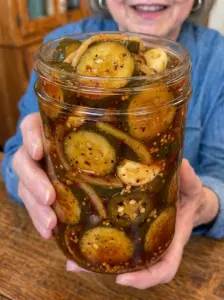
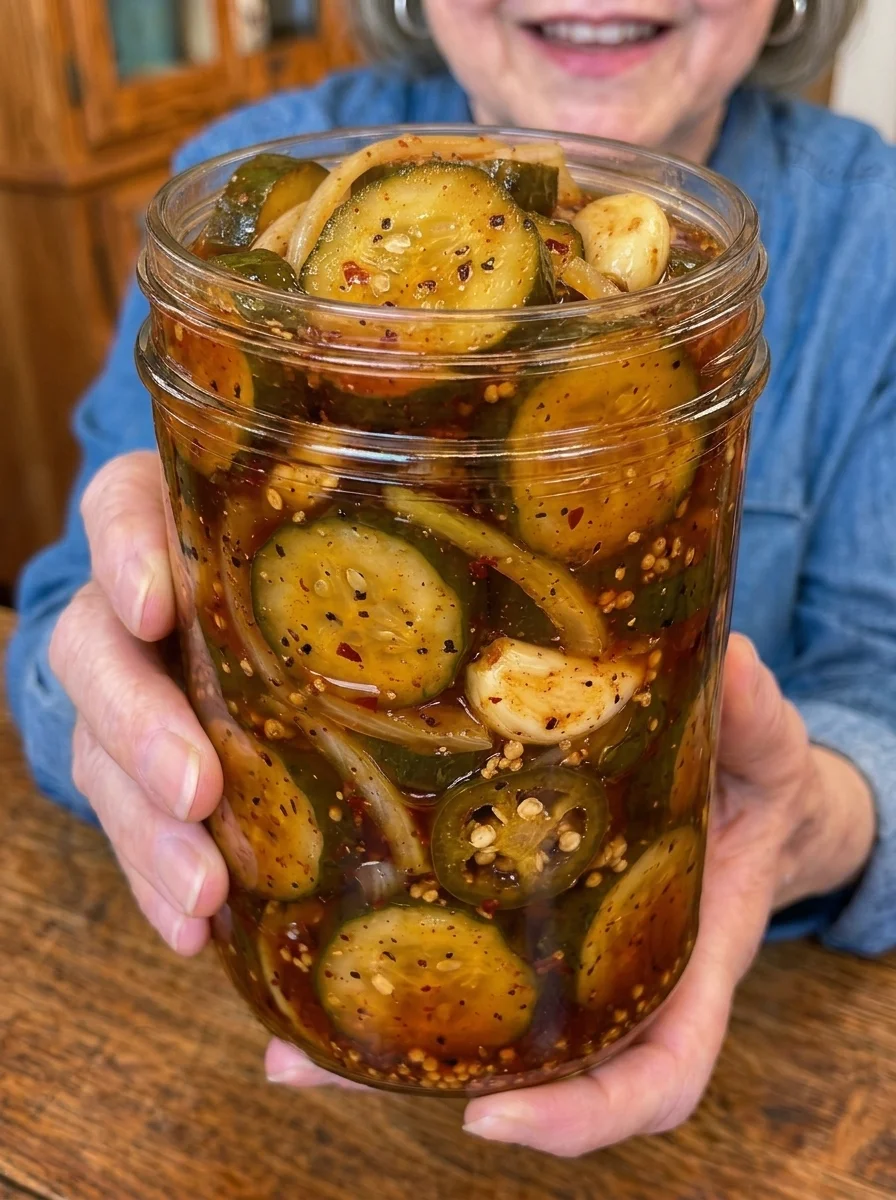
Texas-Style Garlic Pepper BBQ Pickles bring a smoky, savory twist to a familiar refrigerator side. Fresh cucumber slices meet apple cider vinegar, barbecue sauce, crushed garlic, and a generous amount of cracked black pepper. A little brown sugar rounds out the tang, while smoked paprika reinforces the barbecue flavor without turning the jar into a thick dipping sauce.
These pickles belong beside burgers, pulled pork, grilled chicken, and brisket sandwiches. Their cool crunch contrasts with hot, rich food, and the garlicky liquid coats the cucumber with more seasoning than a plain dill brine. A few chopped pieces can also give a sandwich spread or potato salad a peppery barbecue accent.
The name describes a Texas-inspired barbecue flavor combination rather than a traditional regional preservation recipe. This is a refrigerated condiment, and the sauce makes it different from a standard clear-brine pickle. Keep the jars cold and prepare a modest batch close to when you plan to serve it.
Recipe note: This article expands the supplied recipe, which has not been kitchen-tested or validated for preservation. The original two-pint yield is too small for two pounds of cucumbers plus onion and brine; prepare extra containers. A two-week storage life has not been established for this barbecue-sauce variation, so the instructions below use a shorter refrigerated use window rather than presenting that claim as verified.
What to Expect
The flavor is tangy first, followed by garlic, smoke, mild sweetness, and an assertive black-pepper finish. One tablespoon of coarsely cracked pepper is a substantial amount. If you enjoy a gentler seasoning, start with two teaspoons and omit the optional additional peppercorns.
The liquid will be reddish brown and somewhat opaque because of the barbecue sauce and paprika. It may separate or settle in the refrigerator. That is different from a clear dill pickle brine, and a gentle stir helps distribute the seasoning before serving.
The cucumbers should retain a fresh, firm bite, but their texture depends on freshness, thickness, temperature, and how long they sit. Do not expect an old or soft cucumber to become crisp simply because it has been placed in vinegar.
Ingredients
Cucumbers and Aromatics
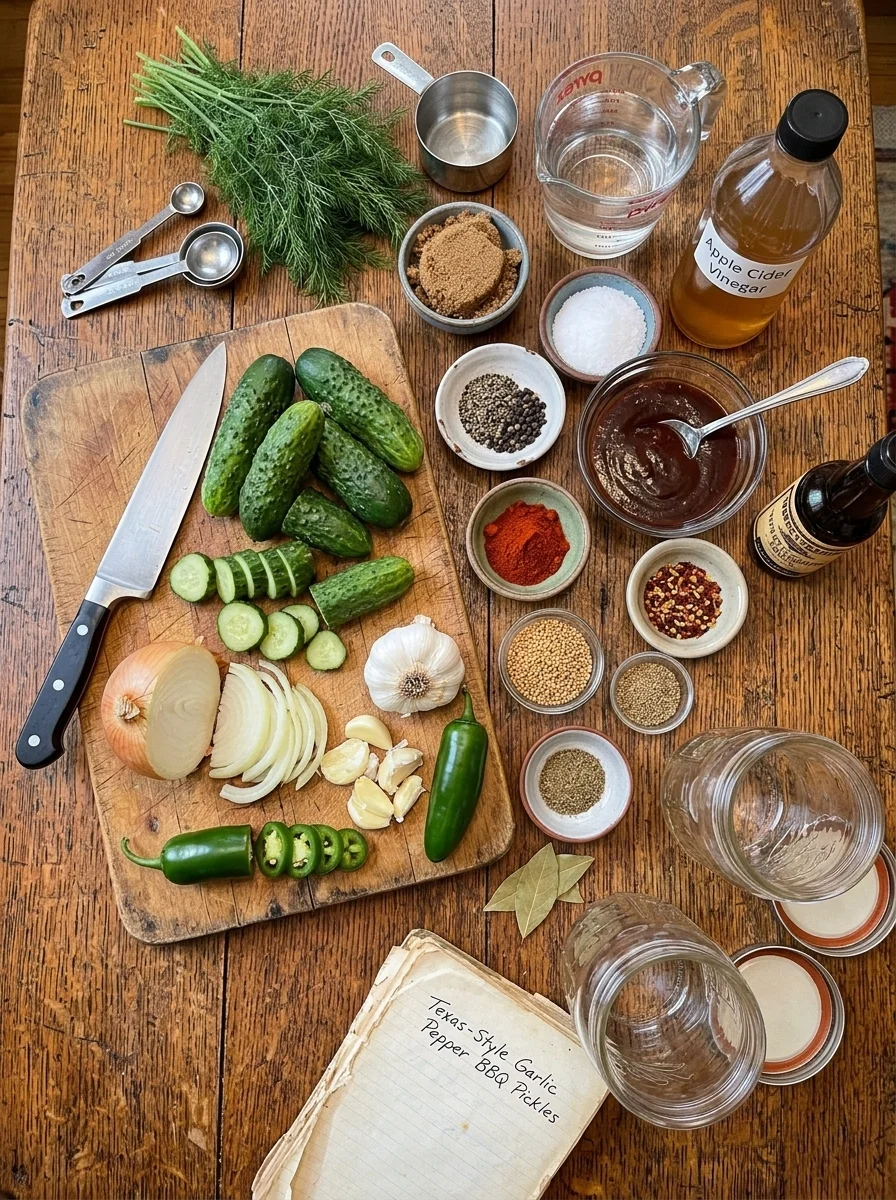
- 2 pounds small pickling cucumbers
- 1/2 small yellow onion, thinly sliced
- 6 garlic cloves, peeled and lightly crushed
Garlic Pepper BBQ Liquid
- 1 cup water
- 1 cup apple cider vinegar labeled 5% acidity
- 1/2 cup smoky barbecue sauce
- 2 tablespoons packed brown sugar
- 1 tablespoon kosher salt, noting the brand differences below
- 1 tablespoon coarsely cracked black pepper, or begin with 2 teaspoons for a milder batch
- 1 teaspoon smoked paprika
- 1 teaspoon mustard seeds
- 1/2 teaspoon crushed red pepper flakes, optional
- 1 bay leaf
Optional Flavor Additions
- 1 teaspoon Worcestershire sauce
- 1 small jalapeño, thinly sliced
- 1/2 teaspoon celery seeds
- 1 teaspoon whole black peppercorns, only if you want additional pepper
- 1 tablespoon chopped fresh dill
Use optional additions selectively. The base already has garlic, mustard, smoke, sweetness, and plenty of pepper, so every extra ingredient is not necessary for a flavorful jar.
Jar Capacity and Yield
Have two clean, heat-safe quart jars or several pint jars available. Expect roughly three to four pints of finished contents, depending on cucumber shape, packing, and how much liquid fits. This is a capacity estimate rather than a tested yield.
Two pint jars provide only one quart of total space. That is not enough for this quantity of cucumbers, onion, garlic, and liquid. Do not compensate by crushing the vegetables, eliminating the headspace, or leaving cucumbers above the liquid.
If your chosen pack needs more liquid, make additional liquid using the same ingredient proportions. Alternatively, reserve some cucumber for another use. Do not dilute the filled jars with plain water to stretch the recipe.
Choosing the Ingredients
Pickling Cucumbers
Choose small, firm cucumbers with thin skins and modest seeds. Pickling varieties generally hold their texture better than large, mature slicing cucumbers.
Avoid cucumbers with soft spots, wrinkled ends, or a spongy feel. Wash under running water and trim away the blossom end as well as the stem end. If you cannot identify the blossom end, trimming both ends is a practical approach.
Rounds are easy to add to burgers and absorb flavor more quickly than thick spears. Spears are convenient for snacking and serving beside sandwiches. Choose one main shape for a more consistent batch.
Apple Cider Vinegar
Use food-grade vinegar labeled 5% acidity. Its fruity tang suits the brown sugar and barbecue sauce. Do not use homemade vinegar of unknown strength, cleaning vinegar, or a lower-acidity product.
Keep the measured vinegar and water proportions. Barbecue sauce contains acid in many brands, but its ingredients and acidity vary. Do not count it as a standardized replacement for the measured vinegar or assume the combined liquid has a verified preservation acidity.
Barbecue Sauce
A smoky sauce with moderate sweetness is a good starting point. Very sweet sauces push the result toward sweet pickles, while highly peppery or spicy sauces increase the heat before you add the dry seasonings.
Use the same brand for repeat batches if you want a more consistent flavor. Sauce thickness also varies, so some jars will have a slightly heavier coating than others.
A commercial sauce’s own storage stability does not establish the shelf life of a homemade mixture containing fresh vegetables and added water.
Garlic and Onion
Crushed garlic gives the liquid a pronounced savory aroma while keeping the pieces easy to recognize. Six cloves make this a garlic-forward recipe, so wait for the first batch to develop before adding substantially more.
Slice the onion thinly so it fits between the cucumber pieces. Very thick wedges take up space and are less convenient to serve on sandwiches. Onion also contributes moisture, another reason not to treat this sauce variation as interchangeable with a published plain pickle recipe.
Pepper and Paprika
Coarsely cracked black pepper creates small bursts of pepper flavor and visible specks. Finely ground pepper disperses more heavily through the liquid and produces a different mouthfeel.
Freshly cracked pepper generally has a stronger aroma than pepper that has been sitting ground for a long time. The optional whole peppercorns are extra, not a required addition to the full tablespoon already listed.
Smoked paprika adds color and smoky flavor. Check whether yours is sweet or hot so you do not unintentionally double the heat alongside jalapeño and red pepper flakes.
Salt and Sugar
Kosher salt brands differ in crystal size and density. A tablespoon of a dense brand can contribute considerably more salt than a tablespoon of light flakes. Record the brand you use, and do not replace it automatically with the same volume of fine table salt.
Brown sugar softens the sharper flavors but does not make this a preservation method on its own. If your barbecue sauce is particularly sweet, begin with slightly less sugar for flavor preference, recognizing that this remains an unvalidated refrigerated preparation.
Equipment
You will need a cutting board, knife, measuring tools, saucepan, spoon or whisk, and suitable containers with lids. A wide-mouth jar makes packing and removing cucumber pieces easier.
Use glass rated for warm liquids and inspect it for cracks. Do not pour hot liquid into a cold ordinary glass container. Follow the container manufacturer’s temperature guidance to avoid thermal shock.
A clean food-safe pickling weight can help keep floating pieces covered. Do not use decorative stones, metal objects, or improvised materials that are not intended for food contact.
How to Make Garlic Pepper BBQ Pickles
1. Wash and Cut the Cucumbers
Wash your hands and clean the preparation surface. Rinse the cucumbers, trim the ends, and cut into rounds about 1/4 inch thick or into evenly sized spears.
Thin rounds develop flavor quickly but can soften sooner. Very thick pieces remain more cucumber-like at the center. Aim for a consistent thickness so you can judge the batch fairly.
If you want to chill the pieces in ice water for 20 to 30 minutes before packing, do so, then drain thoroughly. This is an optional chilling step, not a guarantee of extra crunch or a way to restore deteriorating cucumbers.
2. Prepare the Containers
Wash the jars and lids thoroughly and rinse well. Arrange enough containers to hold the vegetables without crowding them.
If the jars have been stored cold, let them come to a temperature appropriate for warm filling according to their instructions. Keep the work area stable and clear so you are not moving filled warm jars unnecessarily.
3. Pack the Vegetables
Divide the cucumber, sliced onion, and crushed garlic among the jars. Add optional fresh jalapeño and dill at this stage if using them.
Pack snugly but leave pathways for liquid to surround the pieces. Keep approximately 1/2 inch headspace and allow room for liquid above the vegetables.
For rounds, gently shake the jar to settle them rather than pressing down hard. For spears, stand them upright and fill gaps with shorter pieces as needed.
4. Mix the BBQ Liquid
In the saucepan, combine the water, vinegar, barbecue sauce, brown sugar, salt, cracked pepper, smoked paprika, mustard seeds, optional red pepper flakes, and bay leaf.
Add Worcestershire sauce, celery seeds, or extra peppercorns now if using them. Stir thoroughly so the barbecue sauce loosens into the vinegar and water rather than remaining in a thick layer at the bottom.
5. Heat Gently
Bring the mixture to a gentle simmer over medium heat, stirring frequently. Simmer for about 2 to 3 minutes, until the salt and sugar have dissolved.
Avoid a vigorous, prolonged boil. Reducing the liquid changes how much is available to cover the cucumber and can make the salty-sweet seasoning too concentrated.
Keep your face away from the steam; heated vinegar can be irritating. Remove the saucepan from the heat once everything is combined.
6. Fill the Jars
Carefully pour the warm mixture over the vegetables, dividing the spices between the containers. Stir the saucepan between pours because pepper and mustard seeds settle.
Leave about 1/2 inch headspace and keep the cucumber covered. Release trapped air gently with a clean nonmetallic utensil. Add more of the prepared liquid if the level falls after the bubbles escape.
A single bay leaf cannot be divided evenly among several jars unless you break it, and that is not necessary. Place it in one jar or remove it after heating if you prefer more uniform portions. Remove any bay leaf before serving.
7. Refrigerate Promptly
Cover using suitable clean lids and refrigerate promptly. Do not wait for every jar to become completely room temperature. Small amounts of warm food can be refrigerated in appropriate containers, and several smaller jars are easier to cool than one large vessel.
Protect the glass from thermal shock according to its instructions. If the containers are not suitable for warm filling, use appropriate heat-safe food containers rather than leaving the mixture on the counter for hours.
Label with the preparation date. Keep the refrigerator at 40°F or below.
8. Develop the Flavor
Refrigerate for at least 24 hours before serving. Around 48 hours gives the garlic and pepper more time to season thicker pieces.
Gently turn a tightly closed container or stir with a clean utensil to redistribute settled seasoning. Do not shake so vigorously that the vegetables break or the lid leaks.
The liquid may remain opaque and the paprika may settle. Stir before taking a portion so you are not serving only watery liquid from the top or all the pepper from the bottom.
9. Serve Cold
Remove the pickles with clean utensils and drain lightly. Serve beside barbecue or add a few rounds to a burger or sandwich.
Return the storage jars to the refrigerator promptly. Place only the serving amount on the table rather than leaving the entire batch warm while guests eat.
Storage: Keep This a Short-Term Refrigerated Condiment
This particular barbecue-sauce mixture has no established storage study or tested shelf life. The original two-week claim should not be presented as guaranteed. For a cautious home-kitchen approach, make a small batch, refrigerate promptly at 40°F or below, and plan to use it within 3 to 4 days of preparation.
That shorter window is a handling recommendation for an unvalidated preparation, not proof of acidification or preservation safety. For longer refrigerator storage, follow a published Extension refrigerator-pickle recipe as written and add barbecue seasoning to the portion you serve, rather than assuming every sauce variation inherits its storage instructions.
Keep vegetables covered by the liquid and use clean utensils. Do not add fresh cucumber to used liquid, and do not reuse the vegetable-exposed mixture for another batch.
Discard contents with mold, unexpected gas or bubbling, a swollen lid, sliminess, or an unusual odor. Do not taste questionable food to judge safety. Normal appearance or smell cannot establish that an improperly handled jar is safe.
These jars are not shelf-stable, fermented, or suitable for canning under the supplied instructions. A lid that draws down during cooling does not change that. Freezing is not recommended because it damages cucumber texture.
Serving Ideas
Add drained rounds to a cheeseburger with onion and a modest amount of extra barbecue sauce. Their acidity and pepper contrast with melted cheese and rich meat.
For a brisket sandwich, use a few spears or chopped pieces with thinly sliced onion. Avoid pouring a large amount of liquid onto the bread.
Serve a small bowl beside grilled chicken, pulled pork, or smoked sausages. Keep the main storage container refrigerated and replenish the serving bowl as needed.
Chop a few pickles into a mayonnaise-based sandwich spread shortly before serving. Taste before adding salt, since the pickles already contribute plenty of seasoning.
They also work as a small accent in potato salad. Begin with a spoonful rather than mixing in a large quantity at once; the smoky, peppery flavor can quickly become dominant.
Flavor Variations
Milder BBQ Pickles
Use two teaspoons cracked pepper, omit the red pepper flakes and jalapeño, and choose a mild barbecue sauce. The garlic and smoke still provide a bold flavor.
Hot Garlic Pepper
Include a few jalapeño slices and the red pepper flakes. Taste the chosen barbecue sauce first so you know whether it already contains significant heat.
Dill BBQ
Add the optional fresh dill for a more familiar pickle note. Keep it modest so the herb does not overwhelm the barbecue flavor.
Savory Steakhouse
Include the teaspoon of Worcestershire sauce. Check its label for fish and other allergens when serving guests.
These changes are for flavor in a short-term refrigerated preparation. They do not establish a longer storage period or validate a canning process.
Troubleshooting
The Pickles Are Soft
The cucumbers may have been old, thinly sliced, or exposed to too much heat. Start with firm pickling cucumbers, avoid cooking them in the saucepan, and use even slices.
The Liquid Is Too Thick
Barbecue sauce brands vary. Do not thin the jar with unmeasured water. Use the recipe proportions for the first batch and choose a lighter sauce next time if you prefer less coating.
The Flavor Is Too Salty
Salt density and sauce brands can both contribute. Serve a small drained portion with unsalted food rather than adding more salty condiments. Record the salt brand before repeating the batch.
The Pepper Is Overwhelming
Use the lower pepper option in the next batch and omit additional whole peppercorns. Pepper flavor can become more noticeable as it sits, so avoid escalating it immediately after mixing.
The Jars Will Not Hold Everything
Use additional suitable containers or reserve some cucumber. The listed two-pint yield was too small; crowding the jars does not solve that mismatch.
Frequently Asked Questions
Can I Use Store-Bought Dill Pickles Instead?
That would be a different recipe using already acidified cucumbers. Do not assume the same quantities, liquid, or storage guidance transfer directly. For a quick serving option, toss a drained portion of commercial pickles with a little BBQ seasoning and eat promptly.
Can I Skip the Sugar?
You can adjust it for flavor in this unvalidated refrigerator preparation, particularly with a very sweet barbecue sauce. That change does not make the recipe sugar-free, since the sauce may contain sugar.
Can I Store These in the Pantry?
No. The recipe does not provide a tested canning process. Follow a separately tested preservation recipe if pantry storage is your goal.
Can I Make Half a Batch?
Yes. Halve all ingredients and keep the same proportions. Smaller batches are especially practical with the short refrigerated use window.
Is the Smoky Flavor From Grilling?
No. The cucumbers are not grilled. Smoke flavor comes from the barbecue sauce and smoked paprika.
Print
Texas-Style Garlic Pepper BBQ Pickles
Description
Yield: Approximately 3–4 pints, depending on packing; have extra jar space available
Servings: Approximately 12 condiment portions
Prep time: 15 minutes, plus optional cucumber chilling
Brine heating time: About 5 minutes
Chill time: 24–48 hours
Minimum total: About 24 hours 20 minutes
Method: Warm-seasoned liquid, refrigerated storage
Ingredients
Cucumbers and Aromatics
- 2 pounds small pickling cucumbers
- 1/2 small yellow onion, thinly sliced
- 6 garlic cloves, peeled and lightly crushed
Garlic Pepper BBQ Liquid
- 1 cup water
- 1 cup apple cider vinegar labeled 5% acidity
- 1/2 cup smoky barbecue sauce
- 2 tablespoons packed brown sugar
- 1 tablespoon kosher salt, noting the brand differences below
- 1 tablespoon coarsely cracked black pepper, or begin with 2 teaspoons for a milder batch
- 1 teaspoon smoked paprika
- 1 teaspoon mustard seeds
- 1/2 teaspoon crushed red pepper flakes, optional
- 1 bay leaf
Optional Flavor Additions
- 1 teaspoon Worcestershire sauce
- 1 small jalapeño, thinly sliced
- 1/2 teaspoon celery seeds
- 1 teaspoon whole black peppercorns, only if you want additional pepper
- 1 tablespoon chopped fresh dill
Use optional additions selectively. The base already has garlic, mustard, smoke, sweetness, and plenty of pepper, so every extra ingredient is not necessary for a flavorful jar.
Instructions
- Wash and trim 2 pounds pickling cucumbers. Cut into even rounds or spears.
- Pack suitable clean heat-safe containers with cucumber, 1/2 small sliced onion, and 6 crushed garlic cloves.
- Combine 1 cup each water and 5%-acidity apple cider vinegar, 1/2 cup barbecue sauce, 2 tablespoons brown sugar, 1 tablespoon kosher salt, 2 teaspoons to 1 tablespoon cracked pepper, 1 teaspoon each smoked paprika and mustard seeds, optional pepper flakes, and 1 bay leaf.
- Bring to a gentle simmer, stirring until dissolved, and simmer 2–3 minutes.
- Pour warm liquid over the vegetables, distributing spices and leaving about 1/2 inch headspace. Keep vegetables covered.
- Cover appropriately and refrigerate promptly. Chill 24–48 hours and serve cold with clean utensils.
Storage: Keep at 40°F or below and plan to use within 3–4 days of preparation for this unvalidated variation. This is not a canning recipe.
Nutrition: The supplied estimate of approximately 45 calories per one-twelfth serving is unverified and depends substantially on barbecue sauce and how much liquid is consumed. A serving of drained cucumber and a serving with several spoonfuls of sauce will not have identical nutrition. Sodium also depends on salt brand, sauce, and portion size.