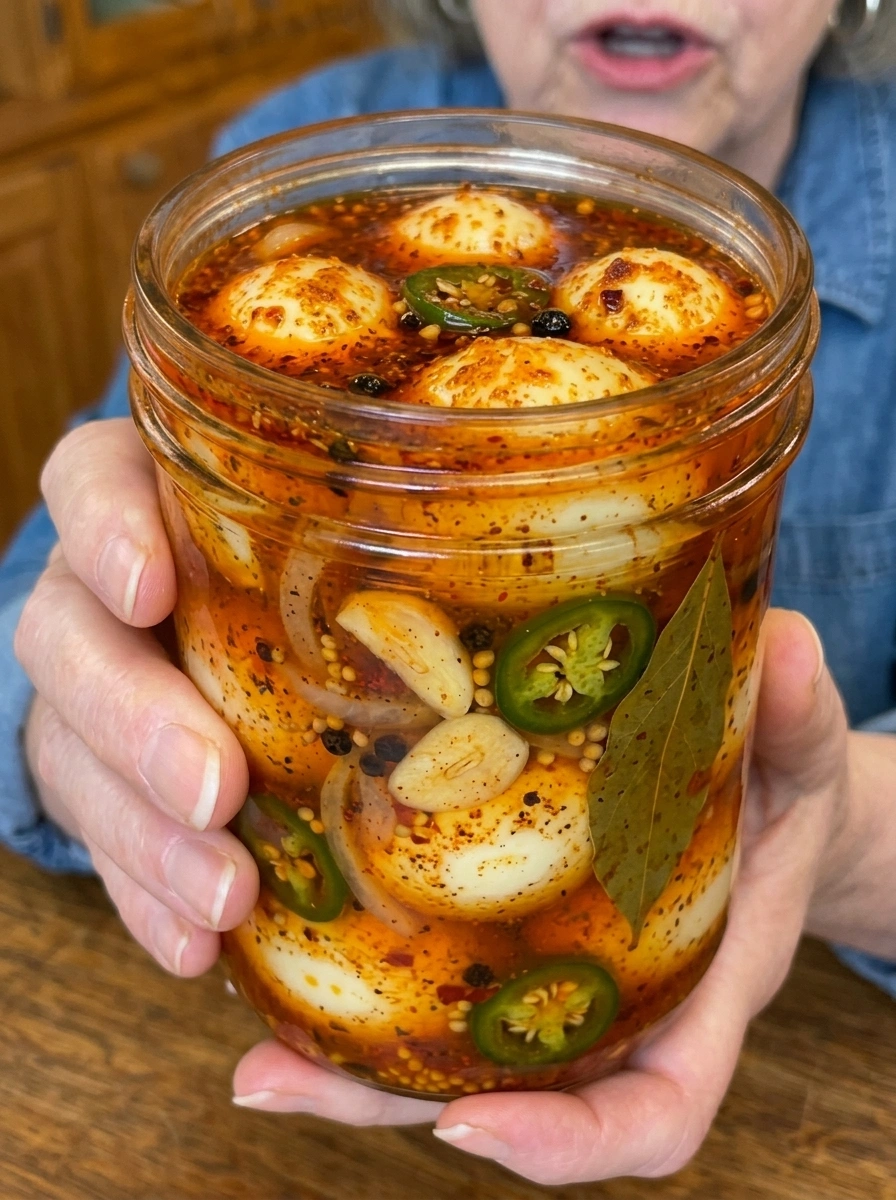
There’s something magical about the way Cajun flavor transforms a simple ingredient into something unforgettable, and Cajun Pickled Eggs are proof of exactly that. Bold, spicy, tangy, and packed with the deep, zesty seasoning that Louisiana cooking is famous for, this recipe takes the humble hard-boiled egg and turns it into a full-flavor Southern snack that’s impossible to stop eating.
Every bite delivers tang from the vinegar brine, warmth from garlic and onion, and just the right amount of heat from Cajun seasoning, smoked paprika, and jalapeño. It’s a snack that feels indulgent yet is incredibly simple to make, and once you have a jar of these sitting in your refrigerator, you’ll find yourself reaching for them constantly — as a quick protein boost, a party appetizer, or a spicy addition to just about any meal.
This complete guide will walk you through everything you need to know to make perfect Cajun Pickled Eggs at home: the full ingredient breakdown, detailed step-by-step instructions, expert tips for the best texture and flavor, creative variations, serving suggestions, storage guidelines, and answers to the most common questions people have about pickling eggs. By the end, you’ll be ready to make a batch that rivals anything you’d find at a Louisiana roadside market.
What Are Cajun Pickled Eggs?
Cajun Pickled Eggs are hard-boiled eggs that are cured in a spicy, tangy vinegar brine seasoned with classic Cajun spices, garlic, onion, and jalapeño. Unlike plain pickled eggs, which tend to be simple and one-dimensional, this version leans into the bold, layered flavor profile associated with Cajun and Creole cooking — a combination of heat, smokiness, garlic, and savory depth.
The eggs sit in the brine for several days, allowing the seasoning to fully penetrate the egg white and slowly work its way toward the yolk. The longer they sit, the more intense and well-rounded the flavor becomes, which is why patience is such an important part of this recipe.
The result is a snack that’s briny, spicy, garlicky, and just a little sweet, with a gorgeous golden-orange tint from the paprika and Cajun seasoning that makes them as visually appealing as they are delicious.
Why This Recipe Works
There are a few key reasons Cajun Pickled Eggs have become such a beloved Southern staple, and understanding them will help you get the best results every time you make a batch.
The brine strikes the perfect balance. Vinegar and water form the acidic backbone, pickling salt enhances every other ingredient in the jar, and brown sugar softens the sharp edges of the vinegar so the final flavor is tangy rather than harsh.
Cajun seasoning brings authentic depth. A good Cajun seasoning blend typically includes paprika, garlic powder, onion powder, cayenne, black pepper, and herbs like thyme and oregano, all working together to create a complex, layered flavor that’s far more interesting than a single spice could achieve on its own.
Fresh aromatics make all the difference. Garlic, onion, and jalapeño aren’t just background flavor here — they infuse the brine and eventually the eggs themselves with a fresh, pungent quality that dried spices can’t fully replicate.
Time transforms the eggs. Much like the Nashville hot version of this recipe, patience pays off. A few days in the fridge gives you a lightly seasoned egg, but a full 5 to 7 days delivers a deeply flavored, restaurant-quality result.
Ingredients You’ll Need
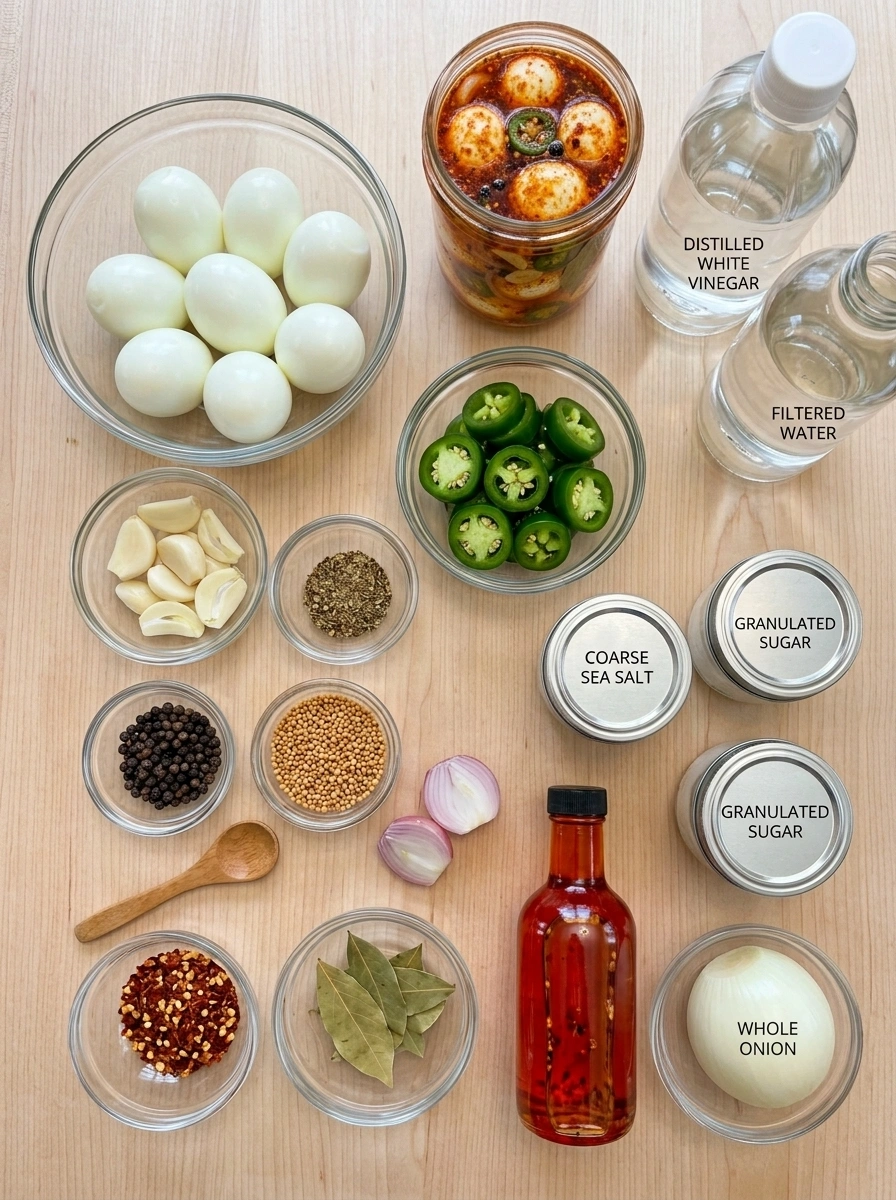
Here’s everything required to make a full batch of 12 Cajun Pickled Eggs.
For the eggs:
- 12 hard-boiled eggs, peeled
For the brine:
- 1 cup white vinegar
- 1 cup water
- 1 tablespoon pickling salt
- 1 tablespoon brown sugar
Aromatics and spices:
- 4 garlic cloves, sliced
- 1 small onion, thinly sliced
- 1 jalapeño, sliced
- 2 teaspoons Cajun seasoning
- 1 teaspoon smoked paprika
- 1 teaspoon crushed red pepper flakes
- 1 teaspoon black peppercorns
- 1 teaspoon mustard seeds
- 2 bay leaves
A Closer Look at the Key Ingredients
White vinegar provides the sharp, clean acidity needed to safely pickle the eggs while giving them that classic tangy bite. Its neutral flavor also allows the Cajun seasoning and aromatics to shine without competing flavors getting in the way.
Pickling salt is preferred here over table salt because it dissolves cleanly without clouding the brine or adding unwanted additives. If you don’t have pickling salt on hand, kosher salt makes a solid substitute.
Brown sugar softens the vinegar’s sharpness and adds a subtle caramel note that balances beautifully against the heat and saltiness of the seasoning blend.
Garlic cloves infuse the brine with a pungent, savory quality that mellows slightly as it pickles, leaving behind a rich, roasted-garlic-like flavor that permeates the eggs.
Onion adds sweetness and texture, softening in the brine over the pickling period and contributing its own layer of savory depth.
Jalapeño brings fresh, bright heat that’s noticeably different from the dried spice heat in the seasoning blend, giving the finished eggs a more complex, multidimensional spiciness.
Cajun seasoning is the star of this recipe. This blend typically layers paprika, garlic and onion powder, black and cayenne pepper, and dried herbs, giving the eggs that unmistakable Louisiana-inspired flavor in every bite.
Smoked paprika deepens the color and adds a subtle smokiness that complements the Cajun seasoning without overwhelming it.
Crushed red pepper flakes, black peppercorns, and mustard seeds add texture and pops of flavor throughout the brine, while the bay leaves contribute a subtle herbal backbone that rounds out the overall taste.
Step-by-Step Instructions
Making Cajun Pickled Eggs is a simple process, but a few careful details will make sure your finished eggs turn out perfectly every time.
Step 1: Prep Your Eggs and Jar
Begin with 12 hard-boiled eggs that are fully cooled and peeled. Place them into a clean, sterilized glass jar — a wide-mouth quart-sized jar works well for a batch this size. Nestle the eggs in snugly, but avoid packing them so tightly that they crack or crush.
Step 2: Add the Aromatics
Tuck the sliced garlic, onion, and jalapeño around and between the eggs. Spreading them throughout the jar, rather than piling them in one area, ensures the flavor infuses evenly across every egg.
Step 3: Build the Brine
In a medium saucepan, combine the white vinegar, water, pickling salt, brown sugar, Cajun seasoning, smoked paprika, crushed red pepper flakes, black peppercorns, mustard seeds, and bay leaves. Whisk everything together so the salt and sugar begin to dissolve.
Step 4: Heat Gently
Warm the mixture over medium heat just until the salt and brown sugar have fully dissolved. This usually takes just a few minutes. Avoid letting the brine come to a full boil — a gentle heat is enough to dissolve the solids and release the aromatic oils from the spices without cooking off any delicate flavor notes.
Step 5: Pour Over the Eggs
Carefully pour the hot brine over the eggs, making sure they’re completely submerged. If any eggs are peeking above the liquid, gently press them down or top off the jar with a small amount of extra water and vinegar in equal parts.
Step 6: Cool to Room Temperature
Allow the jar to cool on the counter, loosely covered, until it reaches room temperature. This step prevents pressure buildup inside the sealed jar and helps preserve the brightness of the spices.
Step 7: Seal and Refrigerate
Once cooled, seal the jar tightly with its lid and place it in the refrigerator.
Step 8: Let Them Pickle
Give the eggs at least 3 days to develop flavor before tasting. For the richest, most well-rounded Cajun flavor, wait 5 to 7 days. This extended time allows the brine to work its way deep into the egg, seasoning both the white and the yolk.
Tips for the Best Cajun Pickled Eggs
Choose eggs that are a few days old before boiling. Very fresh eggs are notoriously hard to peel cleanly. Eggs that are five to ten days old will peel much more smoothly, giving you a better-looking finished product.
Don’t rush the cooling step. Sealing a jar of hot brine immediately can trap steam and create unwanted pressure. Letting it cool naturally on the counter is a simple, important safety measure.
Keep the eggs fully submerged. Any part of an egg exposed above the brine line is more vulnerable to spoilage and won’t pick up the seasoning evenly. If your eggs tend to float, place a small, clean, food-safe weight on top to keep them under the liquid.
Taste your Cajun seasoning blend first. Cajun seasoning blends vary quite a bit between brands, with some being much saltier or spicier than others. If your blend is on the salty side, consider slightly reducing the pickling salt in the recipe to keep the overall flavor balanced.
Slice before serving for the best presentation. While delicious whole, slicing the eggs in half right before serving reveals the beautiful golden-orange ring the brine creates around the edge of the egg white, making for a much more appetizing presentation.
Save the leftover brine. Once the eggs are gone, don’t pour that flavorful brine down the drain. It makes an excellent marinade for chicken, a zesty addition to potato salad dressing, or a spicy splash in a Bloody Mary.
Flavor Variations to Try
Once you’ve made the classic version, here are a few ways to put your own spin on Cajun Pickled Eggs.
Extra Spicy Version: Add a second jalapeño with the seeds left in, or swap in a spicier pepper like serrano for an extra kick that stays true to Cajun cooking’s love of heat.
Andouille-Infused Version: Add a few thin slices of cooked andouille sausage to the jar alongside the eggs for a smoky, meaty addition that pairs beautifully with the spicy brine.
Creole-Style Twist: Add a splash of Worcestershire sauce and a pinch of celery seed to the brine for a flavor profile that leans more toward Creole cooking’s tomato-and-herb-forward style.
Extra Garlicky Version: Double the garlic cloves and add a teaspoon of garlic powder to the brine for those who can’t get enough of that pungent, savory depth.
How to Serve Cajun Pickled Eggs
These eggs are as versatile as they are flavorful, making them a great addition to all kinds of meals and gatherings.
- As a stand-alone snack: Straight from the jar, these eggs are satisfying, protein-packed, and endlessly craveable.
- On a Southern-style snack board: Sliced in half and arranged alongside boiled shrimp, pickled okra, and crackers for an authentic Louisiana-inspired spread.
- Chopped into potato or pasta salad: Diced and mixed in, they add instant tang and heat to classic side dishes.
- As a po’boy topping: Sliced thin and added to a po’boy sandwich for extra flavor and a spicy punch.
- Turned into Cajun deviled eggs: Use the pickled eggs as a base for deviled eggs, mixing the yolks with mayonnaise, a touch of Creole mustard, and a splash of the leftover brine.
- Paired with a cold beer: These eggs make a fantastic bar snack, especially alongside an ice-cold beer or a spicy Bloody Mary that can stand up to the bold seasoning.
Storage Information
Proper storage keeps your Cajun Pickled Eggs both safe to eat and full of flavor. Follow these guidelines closely.
- Refrigerate at all times. Store the jar in the refrigerator, never on the counter or in the pantry. Never leave pickled eggs at room temperature, as this can allow harmful bacteria to develop.
- Keep eggs fully submerged. The brine is what preserves the eggs, so anything poking above the liquid line is more susceptible to spoilage.
- Use within two weeks. For the best quality, flavor, and food safety, plan to finish your jar of Cajun Pickled Eggs within 2 weeks of making them.
- Use clean utensils when serving. Always remove eggs with a clean fork or spoon rather than your fingers to help prevent contamination and extend freshness.
- Watch for signs of spoilage. If you notice an off smell, sliminess, unusual discoloration, or a bulging jar lid, discard the eggs immediately.
Recipe Overview
- Prep Time: 15 minutes
- Cook Time: 5 minutes
- Total Time: 20 minutes (plus 3–7 days pickling time)
- Servings: 12 eggs
- Calories: Approximately 80 calories per egg
Frequently Asked Questions
How long do Cajun Pickled Eggs need to sit before eating them? At a minimum, let the eggs pickle for 3 days so the brine has time to penetrate the egg white. For the richest, most developed Cajun flavor, wait a full 5 to 7 days before serving.
Can I make these less spicy? Yes. Choose a milder Cajun seasoning blend, reduce or omit the crushed red pepper flakes, and remove the jalapeño seeds before slicing. The garlic, onion, and smoked paprika will still deliver plenty of flavor without intense heat.
Do I need to boil the brine? No. You only need to heat the brine gently, just until the salt and brown sugar dissolve completely. A rolling boil isn’t necessary and can dull some of the fresher, brighter notes in the seasoning.
Why is it important to cool the jar before sealing? Sealing a jar while the brine is still hot can trap steam and create pressure inside the jar, which isn’t ideal for food safety or for the jar’s seal. Letting it cool to room temperature first is a simple but important precaution.
Can I reuse the brine for a second batch of eggs? It’s best to make a fresh batch of brine for each new batch of eggs. Reusing brine dilutes its acidity and seasoning strength over time, which can affect both flavor and food safety.
How long do Cajun Pickled Eggs last in the refrigerator? When stored properly, fully submerged in brine and kept refrigerated at all times, these eggs will stay fresh for up to 2 weeks.
Can I freeze pickled eggs? Freezing isn’t recommended. The texture of hard-boiled egg whites becomes rubbery and unappealing once frozen and thawed, so refrigeration is the only recommended storage method.
What’s the best way to peel the eggs cleanly? Using eggs that are a few days old rather than very fresh makes peeling much easier. After boiling, transfer the eggs immediately to an ice bath, then peel them under cool running water to help the shells release cleanly.
What kind of Cajun seasoning should I use? Any good-quality store-bought Cajun seasoning blend works well in this recipe. If you prefer to make your own, a simple blend of paprika, garlic powder, onion powder, cayenne, black pepper, and dried thyme and oregano will give you an authentic result.
Final Thoughts
Cajun Pickled Eggs bring bold Southern flavor to one of the simplest ingredients in your kitchen. With a perfectly balanced tangy brine, a punch of authentic Cajun seasoning, and fresh aromatics like garlic, onion, and jalapeño, these eggs turn into something truly special after just a few days in the refrigerator. They’re easy to make, endlessly versatile, and guaranteed to disappear fast once people get a taste.
Once you make your first jar, don’t be surprised if it becomes a permanent fixture in your fridge. Gather your ingredients, stir up that spicy brine, and get ready to fall in love with your new favorite Southern-inspired snack.
Print
Cajun Pickled Eggs: The Zesty Southern Snack You’ll Want in Your Fridge All Year
- Total Time: 20 minutes (plus 3–7 days pickling time)
Ingredients
Here’s everything required to make a full batch of 12 Cajun Pickled Eggs.
For the eggs:
- 12 hard-boiled eggs, peeled
For the brine:
- 1 cup white vinegar
- 1 cup water
- 1 tablespoon pickling salt
- 1 tablespoon brown sugar
Aromatics and spices:
- 4 garlic cloves, sliced
- 1 small onion, thinly sliced
- 1 jalapeño, sliced
- 2 teaspoons Cajun seasoning
- 1 teaspoon smoked paprika
- 1 teaspoon crushed red pepper flakes
- 1 teaspoon black peppercorns
- 1 teaspoon mustard seeds
- 2 bay leaves
Instructions
Making Cajun Pickled Eggs is a simple process, but a few careful details will make sure your finished eggs turn out perfectly every time.
Step 1: Prep Your Eggs and Jar
Begin with 12 hard-boiled eggs that are fully cooled and peeled. Place them into a clean, sterilized glass jar — a wide-mouth quart-sized jar works well for a batch this size. Nestle the eggs in snugly, but avoid packing them so tightly that they crack or crush.
Step 2: Add the Aromatics
Tuck the sliced garlic, onion, and jalapeño around and between the eggs. Spreading them throughout the jar, rather than piling them in one area, ensures the flavor infuses evenly across every egg.
Step 3: Build the Brine
In a medium saucepan, combine the white vinegar, water, pickling salt, brown sugar, Cajun seasoning, smoked paprika, crushed red pepper flakes, black peppercorns, mustard seeds, and bay leaves. Whisk everything together so the salt and sugar begin to dissolve.
Step 4: Heat Gently
Warm the mixture over medium heat just until the salt and brown sugar have fully dissolved. This usually takes just a few minutes. Avoid letting the brine come to a full boil — a gentle heat is enough to dissolve the solids and release the aromatic oils from the spices without cooking off any delicate flavor notes.
Step 5: Pour Over the Eggs
Carefully pour the hot brine over the eggs, making sure they’re completely submerged. If any eggs are peeking above the liquid, gently press them down or top off the jar with a small amount of extra water and vinegar in equal parts.
Step 6: Cool to Room Temperature
Allow the jar to cool on the counter, loosely covered, until it reaches room temperature. This step prevents pressure buildup inside the sealed jar and helps preserve the brightness of the spices.
Step 7: Seal and Refrigerate
Once cooled, seal the jar tightly with its lid and place it in the refrigerator.
Step 8: Let Them Pickle
Give the eggs at least 3 days to develop flavor before tasting. For the richest, most well-rounded Cajun flavor, wait 5 to 7 days. This extended time allows the brine to work its way deep into the egg, seasoning both the white and the yolk.
- Prep Time: 15 minutes
- Cook Time: 5 minutes
Nutrition
- Serving Size: 12 eggs
- Calories: Approximately 80 calories per egg