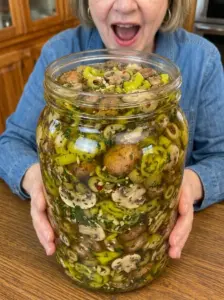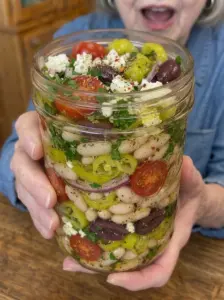
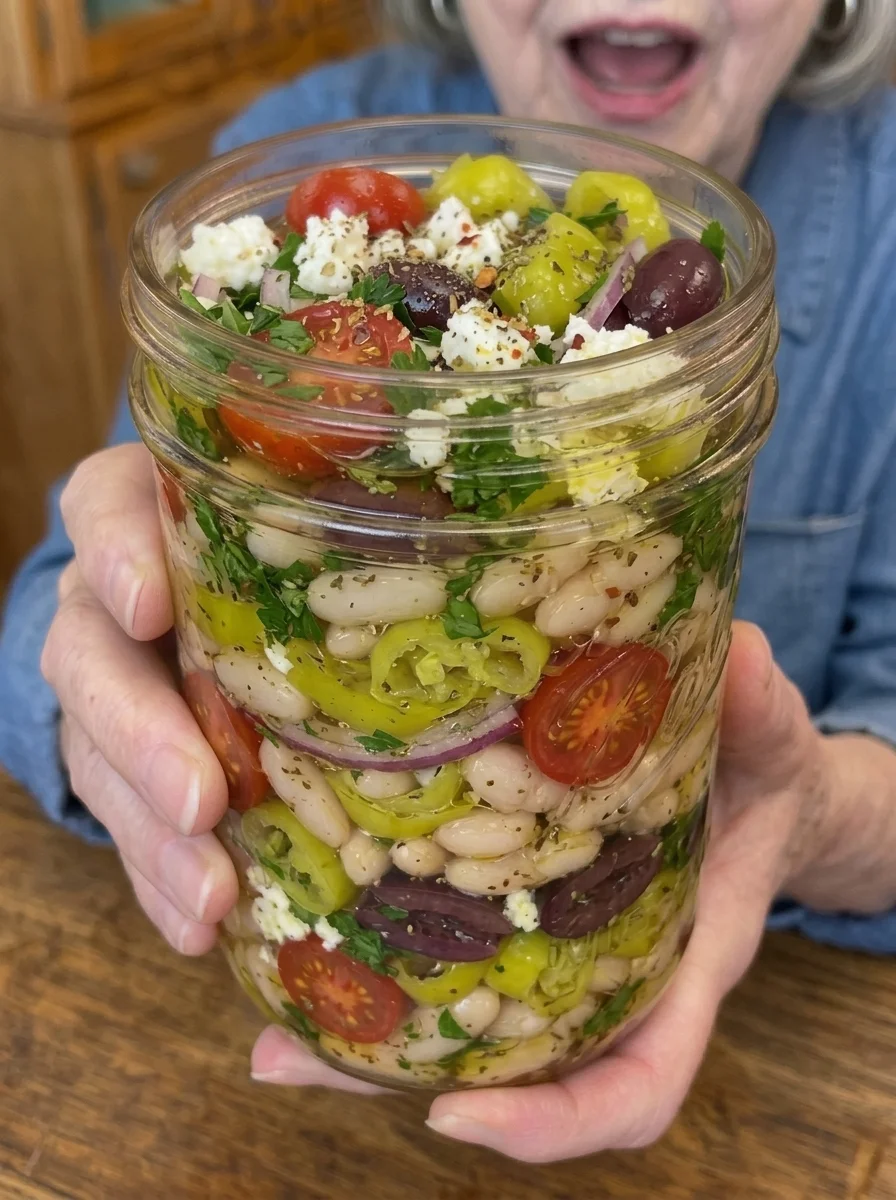
Zesty Italian Pepperoncini & White Bean Salad combines creamy cannellini beans, tangy pickled peppers, juicy tomatoes, olives, and fresh parsley in a garlic-lemon dressing. It is a colorful side dish with enough substance to serve as part of a simple lunch, and there is no cooking when you start with canned beans.
The beans soak up some dressing as the salad chills, while pepperoncini and olives bring briny flavor to each bite. Red onion adds crunch, and optional feta gives a salty, creamy finish. A short refrigerator rest helps the flavors come together without requiring hours of preparation.
Serve it beside grilled chicken or fish, spoon it over greens, or add it to an antipasto-style spread. It is especially convenient when you want a salad that does not depend on delicate lettuce staying crisp.
The main technique is gentle handling. Drain the ingredients well, dress the beans without crushing them, and taste before adding extra salt or acidity. Pepperoncini, olives, lemon, vinegar, and feta already bring plenty of intensity.
Recipe Overview
- Servings: 6 side portions
- Prep time: About 15 minutes
- Cooking: None with canned beans
- Chilling: 20–30 minutes, optional but useful
- Total: About 35–45 minutes including the short chill
- Best texture: The day it is made or the next day
- Storage: Refrigerated in a covered container
This article expands the supplied recipe with ingredient notes and make-ahead guidance. It has not been independently kitchen-tested for this article. Canned bean yields, pepperoncini saltiness, and tomato moisture affect the final volume and flavor.
What to Expect
The salad is bright and tangy, with creamy beans and crisp bits of onion. Pepperoncini are pickled peppers, so their vinegar flavor is as important as their heat. Choose mild peppers if you want a gentler result.
The dressing uses equal volumes of oil and acidic ingredients, giving it a sharper profile than some classic vinaigrettes. You can begin with part of the measured lemon juice and add the rest after tasting.
This is Italian- and Mediterranean-inspired rather than a claim that the feta version is a traditional Italian salad. The feta is optional, and leaving it out keeps the base salad dairy-free.
Ingredients
White Bean Salad
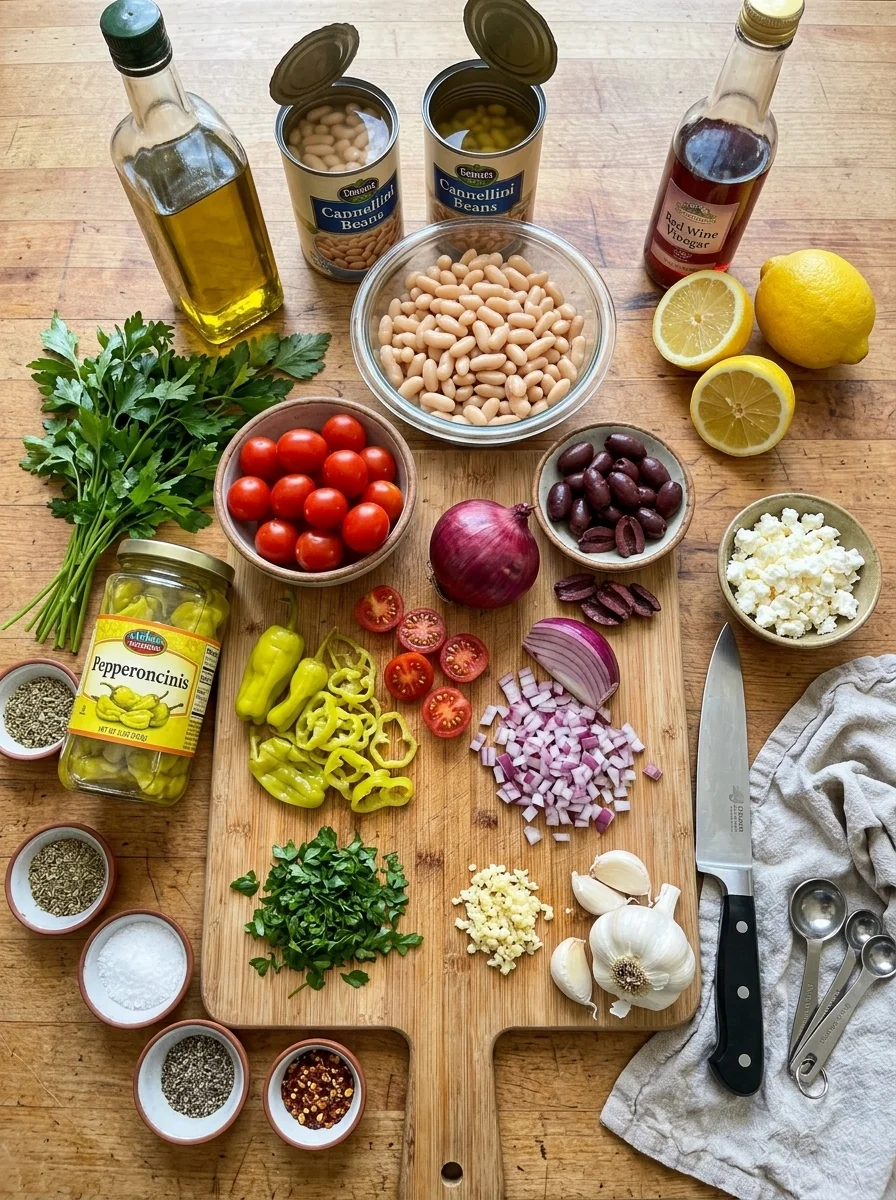
- 2 cans cannellini or Great Northern beans, 15 ounces each, drained and rinsed
- ¾ cup sliced pepperoncini, drained
- 1 cup cherry tomatoes, halved
- ¼ small red onion, finely diced, about ¼ cup depending on size
- ¼ cup sliced Kalamata olives, drained
- ¼ cup chopped fresh parsley
- ⅓ cup crumbled feta, optional
Zesty Dressing
- ¼ cup extra-virgin olive oil
- Up to 3 tablespoons fresh lemon juice, to taste
- 1 tablespoon red wine vinegar
- 2 small garlic cloves, finely minced or grated
- 1 teaspoon dried oregano
- ½ teaspoon Italian seasoning
- ¼ teaspoon black pepper
- Up to ¼ teaspoon fine salt, to taste
- ¼ teaspoon red pepper flakes, optional
Optional Adjustment
- 1–2 teaspoons pepperoncini brine, used in place of some lemon juice or vinegar if desired
The pepper brine is an optional flavor adjustment, not a required addition to an already-tangy dressing. Taste first and substitute a small amount rather than automatically adding every acidic ingredient at its maximum.
Ingredient Notes
Cannellini and Great Northern Beans
Cannellini beans are relatively large and creamy, making them a good match for the chopped vegetables. Great Northern beans are a little smaller but work well in the same style of salad.
The can’s labeled weight includes packing liquid. After draining, the actual bean quantity is smaller, and brands differ. Two cans generally give enough for six side portions, but do not assume the full 30 ounces are solid beans.
Rinse gently in a strainer and allow several minutes to drain. Shaking aggressively or stirring repeatedly can break the skins. If a can contains many already-split beans, use particularly gentle folding when dressing.
Pepperoncini
Use sliced pickled pepperoncini, drained before measuring. If starting with whole peppers, remove stems and slice into bite-size rings or strips. Remove loose seeds if you prefer the appearance without them.
Pepperoncini and banana peppers are different peppers, though pickled banana peppers can be a practical flavor variation. Their heat and sweetness may differ.
Keep a little brine if you want to adjust the dressing, but do not pour it in automatically. It adds salt as well as acidity.
Tomatoes
Cherry or grape tomatoes hold their shape better than very soft large tomatoes. Halve larger ones or quarter them if they would be awkward in a spoonful.
Leave pooled cutting-board juice behind if the tomatoes are especially juicy. You do not need to squeeze them dry, but excess liquid can dilute the dressing.
Red Onion
Finely diced onion gives crunch without dominating each bite. If the onion tastes very sharp, soak the diced pieces briefly in cold water, then drain and dry thoroughly before adding.
That step changes the flavor more than simply adding extra dressing to cover the onion’s bite. Do not add the soaking water to the salad.
Olives and Feta
Kalamata olives bring a pronounced briny flavor. Slice them so they distribute evenly. Check for occasional pits even in products labeled pitted.
Feta is optional and should go in last to preserve some distinct pieces. Because olives, peppers, and feta all contribute salt, the additional ¼ teaspoon may not be needed.
Garlic and Herbs
Two small cloves give a noticeable raw garlic flavor that becomes stronger as the salad sits. Start with one if your cloves are large or you prefer a mild dressing.
Fresh parsley brightens the salad. Italian seasoning and oregano overlap in flavor, so you can reduce one if your blend is already oregano-heavy. Fresh basil is a suggested optional addition, best folded in close to serving.
Equipment
Use a strainer, cutting board, knife, large mixing bowl, small dressing bowl or lidded jar, and a broad spoon or flexible spatula.
Choose a bowl with enough room to fold from the bottom without compressing the beans. A shallow container is convenient for chilling and meal prep.
No preservation equipment is needed. This is a fresh refrigerated salad, not a shelf-stable marinated jar or canning recipe.
How to Make the Salad
1. Drain the Beans
Pour the beans into a strainer and rinse gently under cool running water. Let drain thoroughly while you prepare the other ingredients.
If water remains pooled beneath them, allow another minute or two. Dressing clings better to drained beans than to beans covered in rinse water.
2. Prepare the Vegetables
Drain and slice the pepperoncini and olives. Halve the tomatoes, dice the onion finely, and chop the parsley.
Keep pieces small enough that a forkful can include several ingredients. Very long pepper strips or large onion pieces make the salad less balanced to eat.
3. Whisk the Dressing
Whisk olive oil, 2 tablespoons of the measured lemon juice, vinegar, garlic, oregano, Italian seasoning, black pepper, and optional flakes. Hold back the remaining lemon juice and most or all of the salt initially.
The dressing may separate as it stands, which is normal for a simple vinaigrette. Whisk or shake again immediately before pouring.
Taste a small amount, but remember that it will be diluted across the beans and vegetables. A slightly sharp dressing can taste balanced once the salad is assembled.
4. Combine Gently
Place beans, peppers, tomatoes, onion, olives, and parsley in the large bowl. Pour over about three-quarters of the dressing and fold gently from the bottom.
Add the remainder if needed to coat everything. You may not need all of it immediately, especially if the bean yield is small. Keep any unused dressing refrigerated and separate from the salad.
Avoid vigorous tossing, which breaks the beans and turns their creamy interior into a thick coating.
5. Fold in Feta
If using feta, add it after the first toss and fold only once or twice. Keeping some larger crumbles gives a more interesting texture than stirring until the cheese disappears.
Taste a spoonful containing beans, pepper, and olive before adding salt. That gives a more useful impression than tasting only a bean or only the dressing.
6. Chill Briefly
Cover and refrigerate for 20–30 minutes. The beans absorb flavor, and the garlic and herbs become more noticeable.
The salad can be served immediately, but the short rest improves integration. Do not leave it on the counter to marinate as a substitute for refrigeration.
7. Adjust Before Serving
Fold gently once more. Taste and add the reserved lemon juice, a little salt, or black pepper only if needed.
If using pepper brine, begin with 1 teaspoon and consider it a substitute for some reserved acidity. If the salad is already sharp, extra brine is unlikely to improve balance.
Add fresh parsley if desired. An additional oil drizzle is optional rather than necessary, since the dressing already contains ¼ cup.
Tips for the Best Flavor and Texture
Drain every brined ingredient. Beans, peppers, and olives can bring enough liquid to dilute the dressing if added straight from their containers.
Keep the beans intact. A broad spoon and slow folds are more useful than tongs or vigorous shaking.
Use acidity in stages. Different lemons and pickled peppers can make the same measured recipe taste noticeably sharper from one batch to another.
Taste after the short chill. The first spoonful immediately after mixing is not always the final flavor, particularly with raw garlic and dried oregano.
Reserve delicate herbs for a final refresh if making the salad ahead. Parsley holds reasonably well, while basil bruises and darkens more readily.
Troubleshooting
| Problem | Possible cause | What to change |
|---|---|---|
| Salad is watery | Poorly drained beans or juicy tomatoes | Drain thoroughly and leave pooled tomato juice behind. |
| Beans turn mushy | Fragile beans or vigorous mixing | Fold gently and choose intact beans when possible. |
| Dressing is too sharp | Full lemon amount plus vinegar and brine | Add acidity gradually and avoid automatic brine additions. |
| Salad tastes salty | Peppers, olives, feta, and added salt | Hold back salt until tasting the assembled salad. |
| Raw garlic dominates | Large cloves or long storage | Start with one small clove for a milder batch. |
| Salad seems dry after chilling | Beans absorbed dressing | Fold in a little reserved dressing before adding more oil. |
| Oil looks cloudy when cold | Olive oil chilled | Let only the serving portion stand briefly, then stir. |
Cloudy oil alone can be normal, but it should not be used to dismiss mold, slime, or other unexpected spoilage signs. Storage time and temperature still matter.
Variations
Roasted Red Pepper
Fold in about ½ cup chopped, well-drained roasted red pepper. It adds sweetness and color without the sharp bite of raw pepper.
Artichoke Antipasto Style
Add a small amount of chopped marinated artichoke hearts, drained well. Their marinade can add salt and acidity, so adjust the dressing conservatively.
Fresh Basil
Replace some parsley with fresh basil or add a small handful just before serving. This changes the herb character and is especially pleasant with ripe tomatoes.
Chicken or Tuna Lunch
Add safely cooked diced chicken or drained canned tuna for a more substantial meal. These additions change serving size, protein, allergens, and nutrition. Keep the salad chilled and follow the earliest applicable storage limit for all ingredients.
Dairy-Free Version
Omit optional feta. The beans, peppers, olives, and dressing already provide plenty of flavor. Check packaged ingredients if a strict dietary requirement applies.
Extra Crunch
Add diced cucumber close to serving. Pat it dry and avoid adding a large amount of watery center if meal prepping. Fresh additions can shorten the period of best texture.
Serving Ideas
Serve beside grilled chicken, fish, steak, or roasted vegetables. It also fits well on an antipasto-inspired table with bread, olives, and other salads.
For lunch, spoon it over washed, dried greens just before eating. Pack the greens separately for meal prep so the dressing does not wilt them in storage.
A little crusty bread is useful for the dressing left in the bowl. Bread and other accompaniments are additional to the recipe’s estimated nutrition.
For a potluck, transport in a cooler with ice packs and serve a small portion at a time. A lemon-vinegar dressing does not make the beans and vegetables safe for indefinite room-temperature storage.
Make-Ahead Guidance
Prepare the salad a few hours ahead or the evening before. For the neatest presentation, reserve some parsley and the optional feta to fold in before serving.
For several days of meal prep, you can store the dressed beans, peppers, onion, and olives together while keeping tomatoes and delicate herbs separate. Combine each portion when ready to eat. This is a texture strategy rather than an extension of the storage window.
Keep any extra dressing refrigerated in a separate covered container. Stir or shake before using because oil and acid separate naturally.
Do not repeatedly add fresh ingredients to an older batch and treat it as newly prepared. Label the original preparation date and use the earliest storage limit among added ingredients.
Storage
Store covered at 40°F or below for up to 3–4 days, using fresh ingredients. The salad is generally at its best the first day or two, before tomatoes soften and herbs lose freshness.
Refrigerate promptly and keep room-temperature serving within 2 hours, or 1 hour when temperatures exceed 90°F. Return the stored portion to the refrigerator rather than leaving the full batch on the table.
Use clean utensils and do not return food from individual plates to the container. Stir gently before serving and add only the seasoning the portion needs.
Freezing is not recommended for this finished salad. Tomatoes and herbs lose texture, and the thawed mixture can become watery. Use canned beans to make a fresh small batch instead.
Nutrition Estimate
For six side servings, a broad estimate is approximately 200–250 calories and 6–8 grams of protein per serving without feta. The optional ⅓ cup feta adds roughly 20–30 calories per serving, depending on the product and how it is measured.
These are illustrative estimates rather than a calculated nutrition label. Bean brands, drained yield, oil left in the bowl, feta quantity, and portions affect the totals.
Beans contribute fiber and carbohydrates as well as protein. This is not a low-carbohydrate salad simply because it has no pasta. Sodium varies substantially with peppers, olives, feta, and canned ingredients.
The feta version contains dairy. Check packaged ingredient labels if you need gluten-free or other dietary suitability.
Frequently Asked Questions
Can I use dried beans?
Yes, if they are fully cooked and cooled before assembling. Use roughly 3 cups cooked, well-drained beans as a starting substitute for two drained cans. Actual canned yields vary.
Can I add dry beans directly?
No. This no-cook salad requires fully cooked beans. Dry beans need their own proper cooking process before use.
Are pepperoncini very hot?
Many pickled pepperoncini are mild, but brands and products differ. Check the label and taste a pepper before adding the full amount.
Can I replace the olives?
Green olives can work as a variation, or you can omit olives for a less briny salad. Taste before adjusting salt or dressing.
Is all the lemon juice required?
No. Start with 2 tablespoons and add the remaining tablespoon after tasting. The supplied full amount gives a bright, tart profile, but pepper brine and vinegar also contribute acidity.
Can I make it vegan?
Omit feta and verify the packaged ingredients meet your requirements. The base dressing contains no honey or other required animal ingredient.
Does the dressing preserve the salad?
No shelf-stable preservation is established by this recipe. It is a fresh refrigerated dish, not a canning formula.
Can I double it?
Yes. Use a large bowl and fold gently, or mix in two batches. Add salt and the final portion of lemon juice after tasting rather than multiplying every adjustment automatically.
Recipe Card
Zesty Italian Pepperoncini & White Bean Salad
Creamy white beans with pickled peppers, tomatoes, olives, and a garlic-lemon dressing.
Servings: 6 side portions
Prep: 15 minutes
Chill: 20–30 minutes, optional
Total: 35–45 minutes with chilling
Ingredients
Salad
- 2 cans cannellini or Great Northern beans, 15 ounces each, drained and rinsed
- ¾ cup sliced drained pepperoncini
- 1 cup halved cherry tomatoes
- ¼ small red onion, finely diced
- ¼ cup sliced drained Kalamata olives
- ¼ cup chopped parsley
- ⅓ cup crumbled feta, optional
Dressing
- ¼ cup extra-virgin olive oil
- Up to 3 tablespoons lemon juice, to taste
- 1 tablespoon red wine vinegar
- 2 small garlic cloves, minced, or less for a milder result
- 1 teaspoon dried oregano
- ½ teaspoon Italian seasoning
- ¼ teaspoon black pepper
- Up to ¼ teaspoon fine salt, to taste
- ¼ teaspoon red pepper flakes, optional
Instructions
- Rinse beans gently and drain thoroughly. Drain peppers and olives, halve tomatoes, and dice onion.
- Whisk oil, 2 tablespoons lemon juice, vinegar, garlic, oregano, Italian seasoning, black pepper, and optional flakes. Hold back most salt and the remaining lemon initially.
- Combine beans, vegetables, olives, and parsley. Add about three-quarters of the dressing and fold gently. Add the remainder as needed.
- Fold in optional feta. Cover and refrigerate 20–30 minutes.
- Stir gently, taste, and add remaining lemon or salt only if needed. Optional pepperoncini brine can replace a little of the reserved acidity rather than being added automatically.
- Serve chilled or let the serving portion stand briefly to take off the strongest refrigerator chill.
Storage: Refrigerate covered at 40°F or below up to 3–4 days. Best texture is generally within 1–2 days. Do not freeze for the intended fresh texture.
Estimated nutrition: About 200–250 calories per serving without feta; feta adds roughly 20–30 calories per serving. Brands and portions vary.
Texture note: Drain well and fold gently to keep the beans intact. Taste before adding salt or extra brine.
Print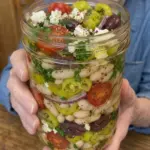
Zesty Italian Pepperoncini & White Bean Salad
Description
Creamy white beans with pickled peppers, tomatoes, olives, and a garlic-lemon dressing.
Servings: 6 side portions
Prep: 15 minutes
Chill: 20–30 minutes, optional
Total: 35–45 minutes with chilling
Ingredients
Salad
- 2 cans cannellini or Great Northern beans, 15 ounces each, drained and rinsed
- ¾ cup sliced drained pepperoncini
- 1 cup halved cherry tomatoes
- ¼ small red onion, finely diced
- ¼ cup sliced drained Kalamata olives
- ¼ cup chopped parsley
- ⅓ cup crumbled feta, optional
Dressing
- ¼ cup extra-virgin olive oil
- Up to 3 tablespoons lemon juice, to taste
- 1 tablespoon red wine vinegar
- 2 small garlic cloves, minced, or less for a milder result
- 1 teaspoon dried oregano
- ½ teaspoon Italian seasoning
- ¼ teaspoon black pepper
- Up to ¼ teaspoon fine salt, to taste
- ¼ teaspoon red pepper flakes, optional
Instructions
- Rinse beans gently and drain thoroughly. Drain peppers and olives, halve tomatoes, and dice onion.
- Whisk oil, 2 tablespoons lemon juice, vinegar, garlic, oregano, Italian seasoning, black pepper, and optional flakes. Hold back most salt and the remaining lemon initially.
- Combine beans, vegetables, olives, and parsley. Add about three-quarters of the dressing and fold gently. Add the remainder as needed.
- Fold in optional feta. Cover and refrigerate 20–30 minutes.
- Stir gently, taste, and add remaining lemon or salt only if needed. Optional pepperoncini brine can replace a little of the reserved acidity rather than being added automatically.
- Serve chilled or let the serving portion stand briefly to take off the strongest refrigerator chill.
Storage: Refrigerate covered at 40°F or below up to 3–4 days. Best texture is generally within 1–2 days. Do not freeze for the intended fresh texture.
Estimated nutrition: About 200–250 calories per serving without feta; feta adds roughly 20–30 calories per serving. Brands and portions vary.
Texture note: Drain well and fold gently to keep the beans intact. Taste before adding salt or extra brine.