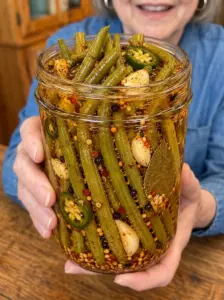
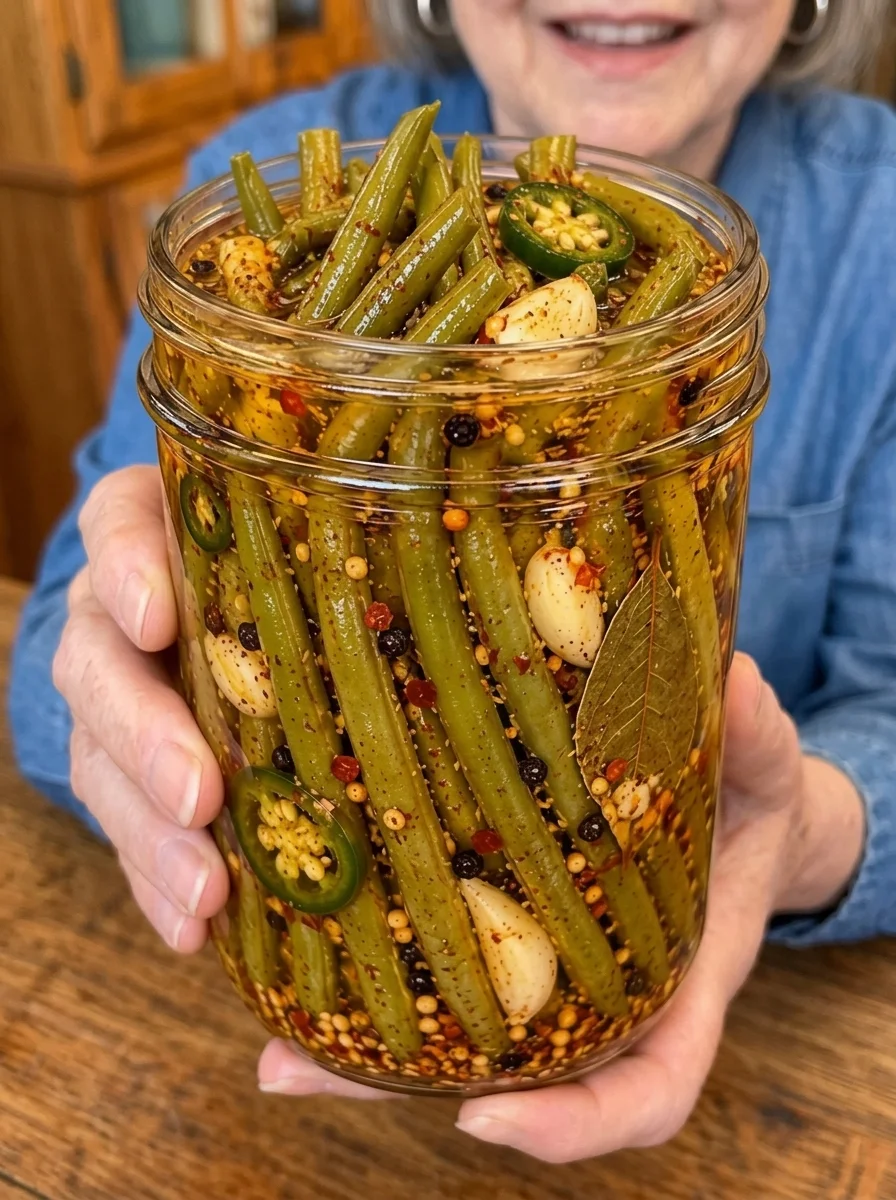
These Sweet & Spicy Cajun Pickled Green Beans combine a crisp bite with tangy vinegar, a little sugar, fresh garlic, and peppery Cajun seasoning. They are an easy refrigerator condiment for burgers, sandwiches, barbecue plates, and snack boards, with enough flavor to enjoy a few straight from the jar.
The sweetness takes the sharp edge off the vinegar without making the beans taste candied. Mustard seeds and peppercorns give the brine a classic pickle flavor, while smoked paprika adds a gentle smoky note. Red pepper flakes and optional jalapeño let you choose how much heat you want.
Preparation takes about 20–25 minutes, followed by at least a day in the refrigerator. After two or three days, the flavor becomes more rounded and the garlic and spices are more noticeable. These are quick vinegar pickles, so there is no fermentation period on the counter.
The supplied recipe has been expanded here with a corrected container estimate and clearer instructions. Plan on approximately two pint jars or one quart jar rather than trying to fit a pound of beans and all the liquid into one pint. Actual capacity depends on bean size and how they are arranged.
Recipe Overview
- Preparation: About 15 minutes
- Stovetop time: About 5–10 minutes
- Chilling: At least 24 hours; preferably 48–72 hours for fuller flavor
- Total: About 24 hours 20–25 minutes with the minimum chilling time
- Yield: About two pint jars or one quart jar, with possible extra brine
- Servings: About 8 small condiment portions
- Storage: Refrigerated only
This is a custom refrigerator-pickle variation, not a laboratory-tested canning formula. The two-week use-by target below is a cautious household storage plan, not a validated shelf-life claim for this particular seasoning combination.
What They Taste Like
Expect a vinegar-forward pickle with a small amount of sweetness and a savory, peppery finish. Cajun blends differ widely: some emphasize paprika and garlic, some contain more cayenne, and others are quite salty. The brand you choose will have a noticeable effect on the final flavor.
The beans should remain firm enough to pick up with your fingers. Brief blanching produces a more tender-crisp bite than leaving them raw, while long cooking makes them softer. Their bright green color may become more muted as they sit in the acidic brine; that change alone does not mean the method failed.
The garlic seasons the jar, but whole garlic cloves can remain much sharper than the beans. Treat them as aromatics rather than assuming they will become mellow after one day.
Ingredients
Green Beans and Seasonings
- 1 pound fresh green beans, trimmed
- 3 garlic cloves, peeled and lightly crushed
- 1½ teaspoons salt-free Cajun seasoning, or a salted blend with the salt adjustment below
- ½ teaspoon red pepper flakes, or less for a milder pickle
- ½ teaspoon mustard seeds
- ½ teaspoon whole black peppercorns
- ¼ teaspoon smoked paprika
- 1 small dried bay leaf
- 2–4 thin jalapeño slices, optional
Sweet Vinegar Brine
- 1 cup distilled white vinegar labeled 5% acidity
- 1 cup water
- 2 tablespoons granulated sugar
- 1 tablespoon kosher salt, with brand differences noted below
For greasing or finishing, no oil is needed. Keep the jar as a vinegar-brined refrigerator pickle rather than adding an oil layer.
Ingredient Notes
Choose Young, Firm Beans
Look for beans that feel firm and snap readily. Avoid limp beans, heavily wrinkled pods, and oversized beans with prominent seeds. Pickling can add flavor, but it cannot restore the crunch of old produce.
Beans of similar thickness give a more consistent result. If you have a mixture of very thin and thick beans, blanch them separately so the thin ones do not soften while you wait for the larger ones.
Use Vinegar with a Labeled Acidity
Use commercially produced distilled white vinegar labeled 5% acidity. Do not substitute an unlabeled homemade vinegar or dilute the mixture further to make it taste milder.
If the finished pickle tastes too sharp, serve a smaller portion with a rich meal or add a little more sugar to the next batch. Sugar changes the perception of sourness without requiring more water.
Check Your Cajun Blend
A salt-free blend makes it easier to control the salt in the brine. If using a salted blend, begin with about 2 teaspoons kosher salt rather than the full tablespoon. Keep the vinegar and water quantities unchanged.
Kosher salt brands differ in density. A tablespoon of one brand can taste much saltier than the same volume of another. Record the brand and amount you use if you want to repeat a batch you particularly enjoy. This salt adjustment applies to this refrigerated vinegar pickle, not to fermented pickles or a canning formula.
Sugar Is for Balance
Two tablespoons create a lightly sweet brine. For a sweeter version, increase to 3 tablespoons. The beans will still taste tangy, and much of the sugar remains in the liquid rather than being eaten directly.
Whole Spices and Ground Spices Behave Differently
Whole mustard seeds and peppercorns are easy to distribute between jars. Ground Cajun seasoning and paprika can settle, cling to the beans, or make the brine look cloudy. Some sediment is expected with these ingredients, so stir the brine before dividing it.
Sediment should not be used to explain away new bubbling, mold, slime, or other unexpected changes during storage.
Equipment and Jar Size
Have two clean, heat-safe pint jars or a clean quart jar ready, along with fitted lids. You will also need a saucepan, tongs, a colander, a bowl of ice water, and a clean utensil for releasing trapped air.
Wash jars and lids well and rinse thoroughly. Use containers suited to hot liquids and avoid pouring hot brine into cold glass. A wide mouth makes packing and removing the beans easier.
The jars are containers for refrigerated food. A lid that pulls inward as the contents cool does not turn this recipe into a pantry-safe preserve.
If the beans do not fit, use an additional clean container rather than forcing them into a jar. Leaving a little room helps the brine circulate and keeps the contents from overflowing.
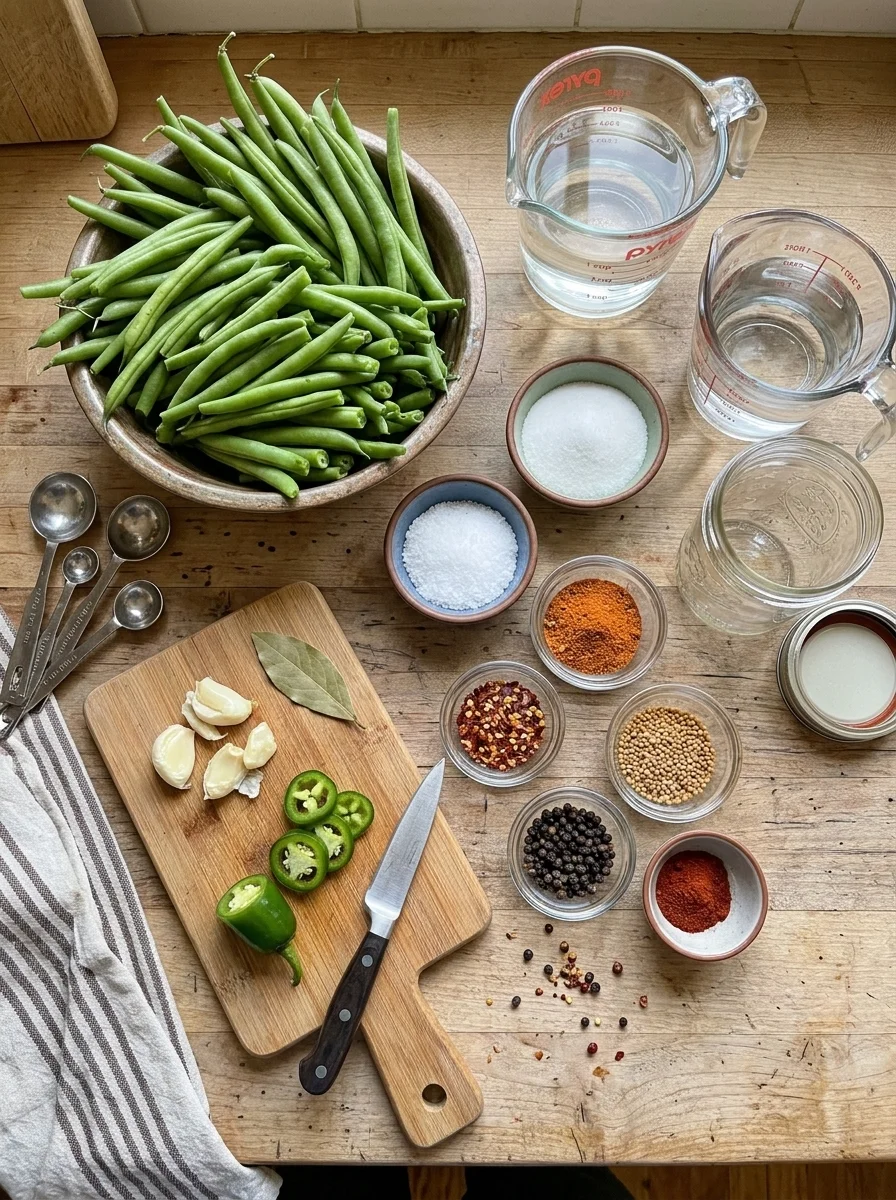
How to Make Cajun Pickled Green Beans
1. Wash and Trim
Wash your hands, then rinse the beans under running water. Trim the stem ends and remove any damaged portions. Cut the beans short enough to sit below the jar’s shoulder with about ½ inch of space at the top once the brine is added.
Try one bean against the jar before trimming the entire batch. If the beans are too long for upright packing, cut them into shorter pieces and pack them loosely. Their flavor does not depend on standing perfectly straight.
2. Blanch Briefly
Bring a pot of water to a boil and prepare a bowl of ice water. Add the beans and blanch for about 1–2 minutes, just until they begin to lose their raw toughness. Thin beans may need only the shorter end of the range.
Immediately transfer them to the ice bath to stop further cooking, then drain thoroughly. Do not leave them soaking in water while you prepare the rest of the recipe.
Brief blanching followed by ice-water cooling is an approach described in Oregon State University Extension’s refrigerator-vegetable guidance. This article’s Cajun seasonings and storage target are separate recipe choices, not an endorsement of this exact formula by that source.
3. Divide the Seasonings
Divide the garlic, mustard seeds, peppercorns, red pepper flakes, and optional jalapeño between the jars. Break the bay leaf in half if using two jars.
Add the Cajun seasoning and paprika to the brine in the next step so they can be stirred and distributed more evenly. This avoids putting most of the ground seasoning in one jar.
4. Pack the Beans
Arrange the drained beans in the jars, keeping them snug but not crushed. Leave enough room for the liquid to surround them. A few shorter pieces can fill gaps near the bottom.
Do not push the beans so tightly that they split or that liquid cannot move between them. If the batch needs an extra jar, use one.
5. Heat the Brine
Combine the vinegar, water, sugar, and salt in a nonreactive saucepan. Heat to a simmer, stirring until the sugar and salt dissolve. Stir in the Cajun seasoning and smoked paprika, then remove from the heat.
There is no need to boil the liquid for a long time. Prolonged boiling reduces the amount of brine and makes the final quantity less predictable. Work with good ventilation if the warm vinegar aroma is strong.
6. Cover the Beans
Carefully pour the hot brine over the beans, stirring the saucepan between jars so the ground seasonings are distributed. Cover the beans completely while leaving about ½ inch of room at the top.
Use a clean utensil to release trapped air and gently settle the beans. Add a little more brine if the liquid level drops. Discard unused brine that has contacted the vegetables rather than saving it for another batch.
If you run short, make a small additional batch using equal amounts of 5% vinegar and water, with proportional sugar and salt. Do not top off the jar with plain water.
7. Refrigerate Promptly
Let the jars stand only briefly so you can handle them safely, close with clean lids, and refrigerate promptly. You do not need to wait until they are completely cold on the counter. Keep the refrigerator at 40°F or below.
Use a heat-safe surface under the jars and avoid sudden temperature shock. Keep total room-temperature handling within 2 hours, or 1 hour in temperatures above 90°F.
8. Wait for the Flavor to Develop
Refrigerate for at least 24 hours before tasting. For a more developed flavor, wait 48–72 hours. Thick beans can remain milder in the center than very thin ones.
Taste a bean with a clean fork. Adjust heat at serving with a little extra pepper if desired, rather than repeatedly adding fresh ingredients to an aging jar.
9. Serve Cold
Remove a small portion and return the jar to the refrigerator. These beans work well on a relish tray, beside a sandwich, or as a garnish for a nonalcoholic tomato drink.
The pickling liquid is strongly flavored and salty, so let excess brine drip off before adding beans to a sandwich or snack board.
Tips for the Best Texture
Freshness matters more than tightly packing the jar. Start with crisp beans and keep the blanch brief. A long boil followed by hot brine will give a softer result than intended.
Drain after the ice bath. Excess water clinging to the beans adds unmeasured liquid to the jar and can weaken the flavor.
Cut beans to fit below the brine level. Long ends sticking out of the liquid are awkward to keep submerged. If needed, use a clean food-safe pickle weight designed to fit the container, without crowding the lid.
Keep the batch cold during flavor development. Time on the counter is not a shortcut to a more flavorful refrigerator pickle.
Troubleshooting
| Issue | Possible reason | What to do |
|---|---|---|
| Beans are too soft | Old beans or excessive blanching | Use fresher beans and shorten blanching next time. |
| Beans are still tough | Thick or mature pods | Give the refrigerated batch more flavoring time; choose younger beans next time. |
| Pickles taste too salty | Salted Cajun blend or dense kosher salt | Serve a small drained portion; reduce added salt in the next refrigerated batch. Do not dilute the stored jar. |
| Flavor is weak after one day | Beans are thick or need more time | Refrigerate another day or two. |
| Brine does not cover the beans | Jar is crowded or beans are too long | Move some beans to another jar and add freshly prepared proportional brine. |
| Spices settle at the bottom | Ground seasoning naturally separates | Gently rotate the closed, chilled jar to redistribute. |
| Color is less bright | Acid changes the appearance of green vegetables | Expect some muted color; also assess storage history and any spoilage signs. |
Discard a batch with mold, slime, unexplained gas production, a bulging lid, or an unusual odor. Do not taste questionable food. The absence of visible spoilage is not a reason to ignore refrigeration or extend the use-by plan.
Flavor Variations
Milder: Omit the jalapeño and reduce red pepper flakes to ¼ teaspoon. Choose a mild Cajun blend, since reducing flakes alone will not remove cayenne already present in the seasoning.
Sweeter: Use 3 tablespoons sugar instead of 2. Keep vinegar and water unchanged.
Smokier: Add another small pinch of smoked paprika. Start modestly because too much ground spice can give the brine a dusty taste.
More peppery: Lightly crack a few peppercorns before adding them. Crushed pepper gives a more immediate pepper flavor than whole peppercorns.
Garlic-forward serving: Finely chop a little of the prepared pickled bean mixture and serve with a garlicky dip. Avoid continuously adding new raw garlic to an older jar, which makes its preparation date less meaningful.
Make planned variations at the start of a batch and label the jar. The flavor options do not make the recipe suitable for canning.
Serving Ideas
Pair these beans with pulled pork sandwiches, grilled chicken, burgers, or a barbecue plate. Their acidity cuts through rich sauces and creamy sides.
For a snack board, serve a drained portion beside sharp cheddar, crackers, cucumber slices, and olives. Keep the pickle portion in a small bowl so the brine does not soak the crackers.
Chop a few beans into potato salad or a chilled pasta salad just before serving. Their salty, tangy flavor means you may need less added salt in the finished dish.
For a nonalcoholic tomato drink, use a bean or two as a garnish with a celery stick and lemon wedge. Prepare the drink separately rather than adding juice or other ingredients to the storage jar.
Storage and Make-Ahead Guidance
Store the covered jars at 40°F or below and aim to use the beans within 2 weeks of preparation. Label each jar with its preparation date and planned use-by date. This short storage plan does not establish a tested shelf life for the custom recipe.
Keep the beans submerged and remove portions with clean utensils. Do not return beans from a serving platter to the storage jar, and do not add a fresh batch of vegetables to old brine.
For entertaining, make the beans two or three days ahead. Put out a small serving and replenish it from a refrigerated jar as needed. Return perishable food promptly; discard portions left out beyond 2 hours, or 1 hour above 90°F.
Freezing is not recommended for a crisp result. Thawed beans can become soft and watery, so a smaller refrigerated batch is a better choice if you will not use a full pound.
These jars must not be stored in a pantry. For shelf-stable pickled green beans, choose a tested canning recipe and follow its vegetable quantities, acidity, jar size, processing time, and altitude adjustments exactly. Do not add a water-bath processing time to this formula and assume it has become a tested preserve.
Nutrition Notes
Dividing the pound of beans into 8 small portions gives approximately 20 calories per portion from the beans themselves. Sugar and seasonings add to that amount, but the quantity absorbed and consumed depends on how thoroughly you drain each serving.
A broad estimate of about 25–40 calories per small portion is useful for planning, not a precise nutrition label. Sodium can be substantial because both the brine and Cajun seasoning may contain salt. This is a condiment rather than a high-protein dish.
For more accurate tracking, use the labels on your ingredients and record the weight or volume of the portion you actually eat. Counting all the brine as consumed will overstate some nutrients when most of it remains in the jars.
Frequently Asked Questions
Do I have to blanch the beans?
This method recommends a brief blanch for a tender-crisp result. The original raw-pack option gives a firmer, more raw-tasting bean. Do not extend blanching until the beans are fully cooked if crunch is your goal.
Why does the recipe need more than one pint jar?
A pint holds 2 cups total, including both vegetables and liquid. A pound of beans plus approximately 2 cups of brine cannot reliably fit into that space. Prepare two pint jars or a quart jar, with another container available if needed.
Can I use frozen green beans?
Fresh beans are preferable for this texture. Frozen beans have already undergone processing and often soften more after thawing. This article does not provide a tested frozen-bean variation.
Can I use canned green beans?
Canned beans are already soft and are not a good substitute for the crisp refrigerator pickle described here.
Can I use apple cider vinegar?
Commercial apple cider vinegar labeled 5% acidity can give a fruitier flavor and darker appearance. Keep the measured quantity the same. Do not use a lower-acidity or homemade vinegar.
Can I leave out the sugar?
Sugar provides flavor balance in this vinegar-based refrigerated recipe. Omitting it makes the result sharper and changes the intended sweet-and-spicy profile. It does not remove the requirement to refrigerate.
Can I reuse the brine?
Do not use the stored brine to pickle another batch. Vegetables and repeated handling change it, and the original ingredient proportions no longer describe the liquid. Make fresh brine for fresh beans.
Does a sealed lid mean the jar is shelf-stable?
No. A vacuum can form as a hot jar cools without making the contents a safely canned product. Keep these beans refrigerated regardless of how the lid looks.
Recipe Card
Sweet & Spicy Cajun Pickled Green Beans
Crisp, garlicky refrigerator green beans with a lightly sweet vinegar brine and Cajun pepper heat.
Yield: Approximately two pint jars or one quart jar
Servings: About 8 small portions
Prep: 15 minutes
Stovetop: 5–10 minutes
Chill: 24–72 hours
Minimum total: About 24 hours 20–25 minutes
Ingredients
- 1 pound fresh green beans, trimmed
- 1 cup distilled white vinegar, 5% acidity
- 1 cup water
- 2 tablespoons granulated sugar
- 1 tablespoon kosher salt; begin with 2 teaspoons if using salted Cajun seasoning
- 3 garlic cloves, lightly crushed
- 1½ teaspoons Cajun seasoning, preferably salt-free
- ½ teaspoon red pepper flakes, or less to taste
- ½ teaspoon mustard seeds
- ½ teaspoon whole black peppercorns
- ¼ teaspoon smoked paprika
- 1 small bay leaf
- 2–4 thin jalapeño slices, optional
Instructions
- Wash the beans and trim them to fit the jars, leaving room for brine above them.
- Blanch in boiling water for 1–2 minutes. Immediately cool in ice water and drain thoroughly.
- Divide garlic, mustard seeds, peppercorns, red pepper flakes, bay leaf, and optional jalapeño between clean heat-safe jars. Pack in the beans without crushing them.
- Heat vinegar, water, sugar, and salt in a saucepan until simmering and dissolved. Stir in Cajun seasoning and paprika, then remove from the heat.
- Pour over the beans to cover, leaving about ½ inch of headspace. Release trapped air with a clean utensil and add brine as needed. Never top off with plain water.
- Cool only briefly for safe handling, close, and refrigerate promptly at 40°F or below. Do not wait for complete cooling on the counter.
- Chill at least 24 hours; allow 48–72 hours for fuller flavor. Serve drained portions cold using clean utensils.
Storage: Keep refrigerated and submerged. Plan to use within 2 weeks. Do not reuse the brine for a new batch. Not suitable for pantry storage or canning.
Nutrition: Approximately 25–40 calories per small serving, depending on portion size and brine consumed. Sodium varies substantially.
Print
Sweet & Spicy Cajun Pickled Green Beans
Description
Crisp, garlicky refrigerator green beans with a lightly sweet vinegar brine and Cajun pepper heat.
Yield: Approximately two pint jars or one quart jar
Servings: About 8 small portions
Prep: 15 minutes
Stovetop: 5–10 minutes
Chill: 24–72 hours
Minimum total: About 24 hours 20–25 minutes
Ingredients
- 1 pound fresh green beans, trimmed
- 1 cup distilled white vinegar, 5% acidity
- 1 cup water
- 2 tablespoons granulated sugar
- 1 tablespoon kosher salt; begin with 2 teaspoons if using salted Cajun seasoning
- 3 garlic cloves, lightly crushed
- 1½ teaspoons Cajun seasoning, preferably salt-free
- ½ teaspoon red pepper flakes, or less to taste
- ½ teaspoon mustard seeds
- ½ teaspoon whole black peppercorns
- ¼ teaspoon smoked paprika
- 1 small bay leaf
- 2–4 thin jalapeño slices, optional
Instructions
- Wash the beans and trim them to fit the jars, leaving room for brine above them.
- Blanch in boiling water for 1–2 minutes. Immediately cool in ice water and drain thoroughly.
- Divide garlic, mustard seeds, peppercorns, red pepper flakes, bay leaf, and optional jalapeño between clean heat-safe jars. Pack in the beans without crushing them.
- Heat vinegar, water, sugar, and salt in a saucepan until simmering and dissolved. Stir in Cajun seasoning and paprika, then remove from the heat.
- Pour over the beans to cover, leaving about ½ inch of headspace. Release trapped air with a clean utensil and add brine as needed. Never top off with plain water.
- Cool only briefly for safe handling, close, and refrigerate promptly at 40°F or below. Do not wait for complete cooling on the counter.
- Chill at least 24 hours; allow 48–72 hours for fuller flavor. Serve drained portions cold using clean utensils.
Storage: Keep refrigerated and submerged. Plan to use within 2 weeks. Do not reuse the brine for a new batch. Not suitable for pantry storage or canning.
Nutrition: Approximately 25–40 calories per small serving, depending on portion size and brine consumed. Sodium varies substantially.