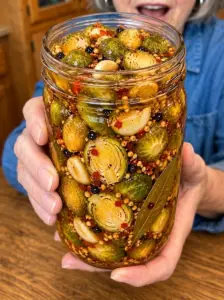
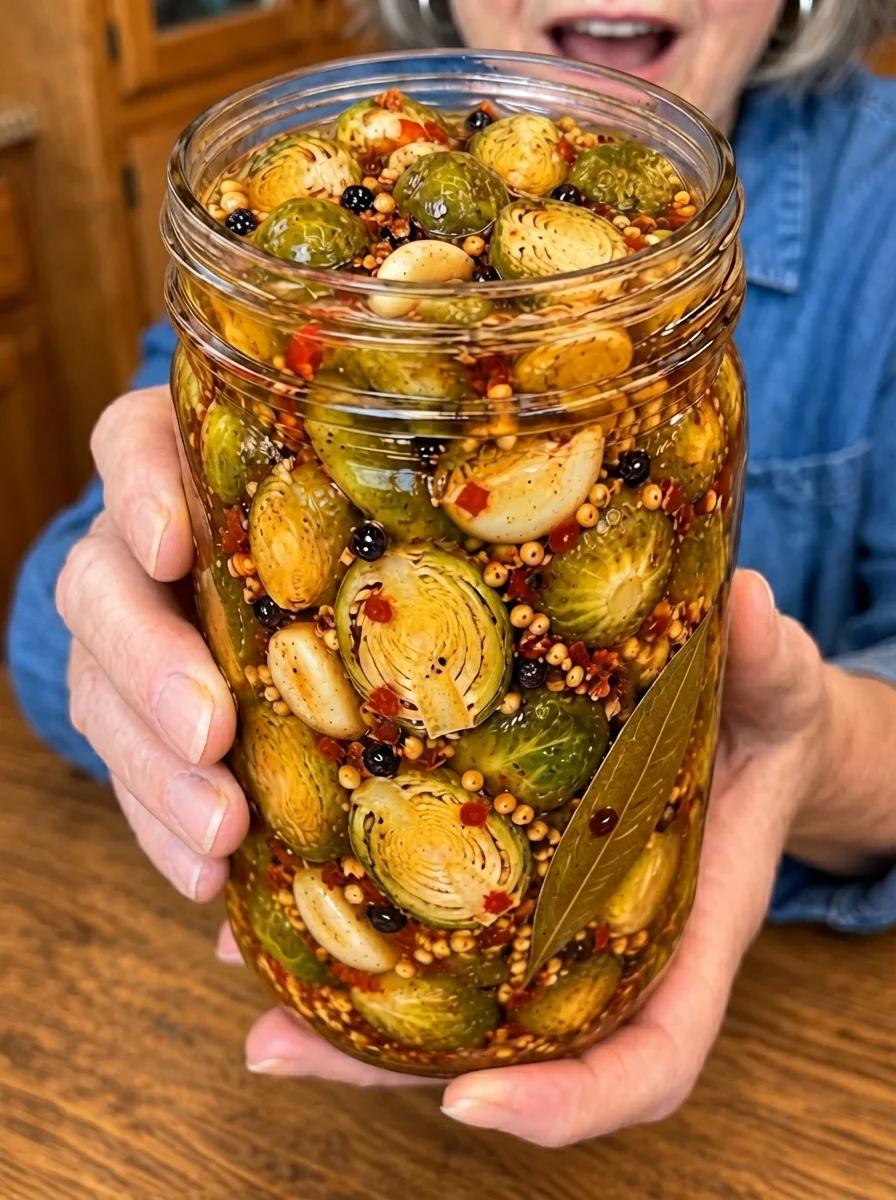
Brussels sprouts take on a different personality when served cold in a tangy, sweet-and-spicy brine. These Hot Honey Garlic Pickled Brussels Sprouts combine firm, briefly blanched vegetables with vinegar, honey, garlic, mustard seeds, and red pepper flakes. The result is a savory refrigerator pickle with a little sweetness and a noticeable pepper kick.
Serve a few halves beside sharp cheddar, add chopped pieces to a sandwich, or offer them with burgers and grilled chicken. Their earthy cabbage flavor remains part of the appeal; the brine adds contrast rather than making the sprouts taste like cucumber pickles.
The preparation is simple. Trim and halve the sprouts, blanch them briefly, cool and drain, then cover with a hot honey brine. Refrigeration gives the flavors time to develop. There is no fermentation or canning step.
Keep the finished jars refrigerated. This is a small-batch refrigerator preparation, not a shelf-stable preserve, and the flavor-development period does not replace cold storage.
Recipe at a Glance
- Preparation: About 15 minutes
- Cooking and brine preparation: About 10 minutes, plus time to bring blanching water to a boil
- Flavor development: At least 48 hours refrigerated
- Total: About 48 hours 25 minutes, plus water-heating time
- Yield: Approximately one quart-size jar or two pint jars, depending on packing
- Suggested portions: 8 small side or condiment servings
- Texture: Firm-tender, with a crisp bite rather than raw-cabbage hardness
Jar capacity is a planning estimate. Have a second clean container available and make additional brine in the same proportions if the vegetables cannot be fully covered.
Why These Flavors Work
Honey softens the sharp edge of vinegar without turning the brine into a thick syrup. Red pepper flakes supply the heat, while garlic and mustard seeds contribute savory flavor.
Smoked paprika gives the liquid a subtle smoky note and a reddish tint. It can settle at the bottom, which is normal for a ground spice. Black peppercorns and a bay leaf add background seasoning without requiring a long list of fresh herbs.
Brussels sprouts are denser than thinly sliced onions or cucumbers. Halving them exposes their layers, and brief blanching takes the raw edge off while leaving structure. Overcooking at this stage would make the finished pickle soft, so the texture check matters more than cooking for the longest possible time.
Ingredients
Vegetables and Seasonings
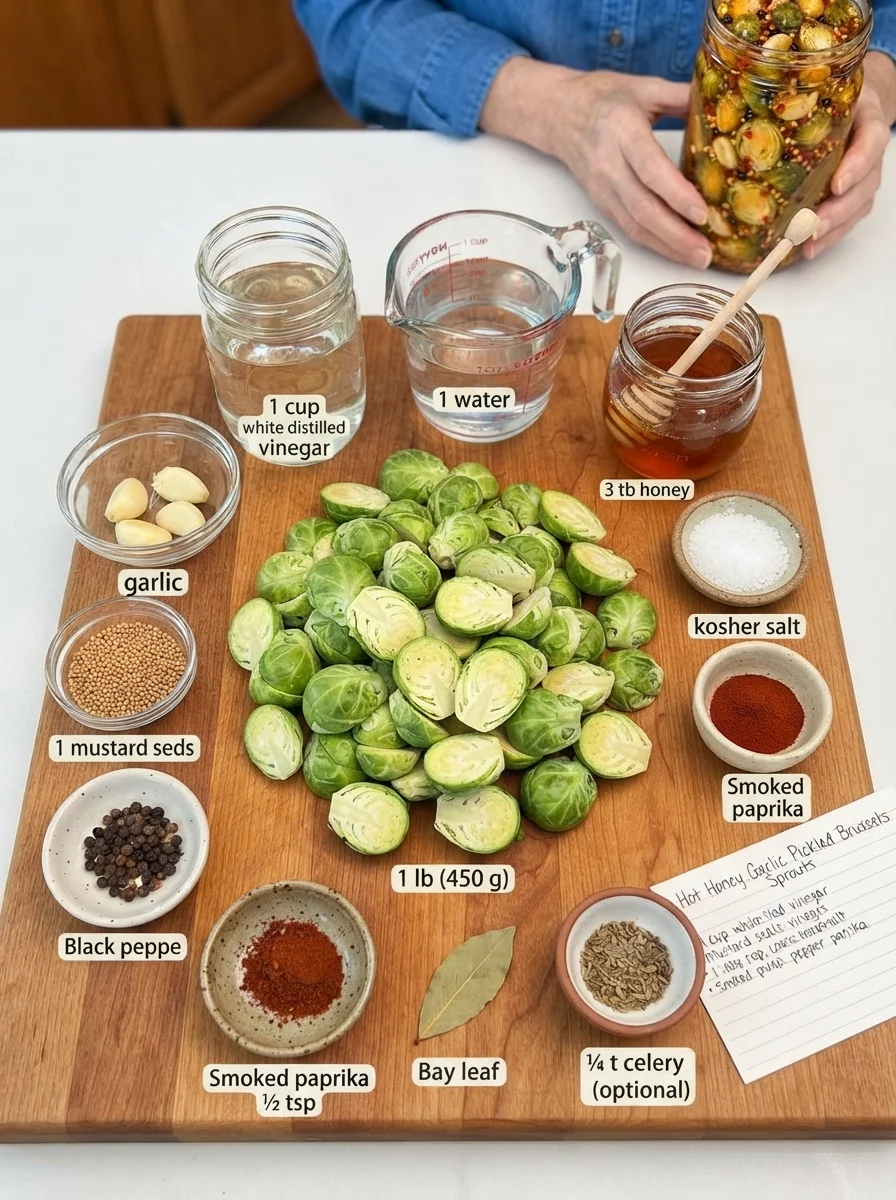
- 1 pound small Brussels sprouts, trimmed and halved
- 4 garlic cloves, peeled and lightly crushed
- 1 teaspoon mustard seeds
- ½ teaspoon whole black peppercorns
- ½–1 teaspoon red pepper flakes, to taste
- ½ teaspoon smoked paprika
- 1 small dried bay leaf
- ¼ teaspoon celery seeds, optional
Hot Honey Brine
- 1 cup distilled white vinegar labeled 5% acidity
- 1 cup water
- 3 tablespoons honey
- 1 tablespoon kosher salt, with brand-dependent saltiness
For Blanching
- Water for the pot
- Ice and cold water for an ice bath
The blanching water is drained and is not part of the brine. Do not use it to top up the jar.
Ingredient Notes
Choose Similar-Size Sprouts
Look for firm Brussels sprouts with tightly packed leaves and no soft spots. Small ones are convenient for a snack plate, but consistency is more useful than choosing the tiniest sprouts available.
Trim only the dry stem end, leaving enough base to hold the leaves together. Remove yellowed or damaged outer leaves. Halve all the sprouts for this method; quarter any especially large ones so the pieces are reasonably similar in thickness.
Frozen Brussels sprouts are not the preferred starting point. They have already undergone processing and may become softer after thawing and brining.
Garlic Is a Seasoning Here
The four lightly crushed cloves flavor the vegetable jar. This is different from a container packed primarily with whole garlic cloves, which has a different ingredient balance.
Choose sound cloves and remove the skins. A light crush releases flavor without dispersing many tiny pieces throughout the brine.
Do not add oil to the storage jar. If you want olive oil as a serving finish, drizzle a little over a drained portion just before eating.
Use Labeled Commercial Vinegar
Use distilled white vinegar labeled 5% acidity. Do not substitute cleaning vinegar or homemade vinegar of unknown strength.
Apple cider vinegar with the same labeled acidity changes the flavor and color. White vinegar keeps the taste sharper and the appearance cleaner.
Keep the vinegar-to-water ratio intact. For a less sharp bite, drain the portion you are serving rather than diluting the storage liquid with extra water.
Honey and Pepper Heat
The recipe uses ordinary honey and red pepper flakes to create a hot honey flavor. You do not need a separate bottle of prepared hot honey.
Start with ½ teaspoon flakes for a gentler batch. Pepper strength varies, and the vegetables will absorb flavor during refrigeration. Add extra heat to individual servings if you are unsure what your guests prefer.
Honey contains sugar. The fact that it is used instead of granulated sugar does not make the recipe sugar-free.
Kosher Salt
Kosher salt brands differ considerably in density. A tablespoon from one brand may taste saltier than a tablespoon from another.
The supplied recipe uses a tablespoon of kosher salt. Do not automatically substitute a tablespoon of fine table salt, which can be substantially heavier by volume. Pickling salt can be used with an appropriate product-specific conversion rather than a casual equal-volume swap.
Whole and Ground Spices
Mustard seeds and peppercorns add flavor but are not intended to be eaten by the spoonful. Remove the bay leaf before serving if it comes out with the vegetables.
Celery seeds are optional and strong enough that the small measured amount is useful. Smoked paprika may make the brine cloudy or leave sediment; ground spice settling alone is different from fuzzy growth or spoilage.
Equipment
Use a pot for blanching, a bowl for the ice bath, a colander, small saucepan, and clean heat-safe food-storage jars or containers. A slotted spoon helps transfer the sprouts quickly.
A quart-size jar may hold the batch, but vegetable size and packing influence capacity. Two pint jars are another option and can make serving portions easier to manage.
Use glass intended to tolerate hot food, and avoid pouring hot brine into a cold jar straight from the refrigerator. A clean food-safe pickling weight can help keep vegetables beneath the liquid if needed.
How to Make the Pickled Brussels Sprouts
1. Trim and Halve
Rinse the sprouts under running water. Trim dry stem ends and remove damaged outer leaves.
Cut through the stem so each half keeps some base attached. This helps the leaves remain together during blanching and handling.
2. Prepare the Ice Bath
Fill a bowl with ice and cold water before the sprouts enter the boiling pot. Having it ready lets you stop cooking promptly.
Bring a pot of water to a boil. Use enough water that the vegetables can move freely instead of sitting in a crowded mass.
3. Blanch Briefly
Add the sprouts and begin checking small halves after about 2 minutes. They may need roughly 2–4 minutes, depending on size and how quickly the water returns to temperature.
The goal is to take off the raw edge while leaving a firm center. They should hold their shape and resist a fork slightly, rather than becoming fully soft like a cooked dinner side dish.
Transfer promptly to the ice bath. Prolonged blanching followed by hot brine can produce a softer pickle than intended.
4. Cool and Drain Thoroughly
Once the sprouts are cool, drain well. Let water escape from the cut layers, then blot if necessary.
Excess water left between the leaves can dilute the brine. Do not transfer a bowlful of ice water into the jar along with the vegetables.
5. Pack the Jar
Add garlic, mustard seeds, peppercorns, red pepper flakes, smoked paprika, bay leaf, and optional celery seeds to the clean container.
Pack in the sprouts without crushing them. Leave room for liquid to circulate and approximately ½ inch space beneath the top of the jar.
If using two jars, divide both vegetables and seasonings reasonably evenly.
6. Heat the Brine
Combine vinegar, water, honey, and kosher salt in the saucepan. Bring to a gentle simmer, stirring until the honey and salt dissolve.
There is no need for a prolonged rolling boil. Remove from the heat once the mixture is evenly combined.
7. Cover the Vegetables
Pour the hot brine carefully over the sprouts until covered. Use a clean utensil to release trapped air and settle the pieces.
If you run short, make another small portion of brine using the same vinegar-to-water ratio and proportional seasonings. Do not stretch the batch with plain water.
Keep vegetables beneath the surface with a suitable food-safe weight if necessary. Avoid an improvised object that is not designed for food contact.
8. Refrigerate Promptly
Allow heavy steam to dissipate briefly, close the containers, and refrigerate promptly. Do not leave a large warm jar on the counter for hours while waiting for it to become completely cold.
Keep the refrigerator at 40°F or below. Label the container with the preparation date so you do not have to guess later.
9. Let the Flavors Develop
Wait at least 48 hours before serving for the intended flavor. A 3–5-day rest can give a more integrated taste, but the sprouts may gradually lose some firmness.
Flavor development is not a test of preservation safety. Keep the jars refrigerated throughout and do not treat a tangy taste as evidence that room-temperature storage is acceptable.
10. Serve a Small Portion
Remove sprouts with a clean utensil. Drain the serving portion and return the main jar to the refrigerator.
Serve cold or briefly take the chill off the portion you are eating. Keep the storage batch cold rather than leaving it out through an entire gathering.
Texture Tips
Halve consistently. Similar thickness helps the pieces blanch at a similar rate.
Check early. Small halves can soften faster than whole sprouts, so do not automatically cook for the longest time.
Cool immediately. The ice bath stops residual cooking before the hot-brine step.
Drain thoroughly. Water trapped between leaves is easy to overlook.
Expect firm-tender sprouts. The recipe is not intended to produce either raw-hard vegetables or meltingly soft cooked cabbage.
Serve smaller pieces if needed. A chopped serving can be more pleasant on sandwiches than a whole large half.
Troubleshooting
| Issue | Possible cause | Helpful adjustment |
|---|---|---|
| Sprouts are too soft | Overblanching or extended storage | Check small halves earlier next time and serve the batch sooner. |
| Centers taste very raw | Large pieces or very short blanching | Use smaller, evenly cut pieces and check tenderness during blanching. |
| Flavor seems weak | Insufficient chilling or diluted brine | Allow the planned rest and drain sprouts thoroughly before packing. |
| Brine tastes too sharp | Personal preference for less acidity | Drain the serving portion and pair with creamy food; do not dilute the storage jar. |
| Ground spices settle | Paprika naturally separates | Gently redistribute before serving; distinguish sediment from suspicious growth. |
| Vegetables float | Packing and trapped air | Settle with a clean utensil and use an appropriate food-safe weight. |
Serving Ideas
Cheese and Snack Boards
Serve a few halves beside sharp cheddar, crackers, and fresh apple slices. The tang contrasts with rich cheese and cured meats.
Burgers and Sandwiches
Chop the sprouts and use a small spoonful as a topping. Drain first so the brine does not soak the bread.
Grilled Chicken and Pork
Serve as a cold side condiment rather than mixing the entire storage jar with meat juices. Put a portion in a separate bowl and keep reserve pickles chilled.
Salads and Grain Bowls
Quarter or chop a few halves and add after the bowl is assembled. Begin with a small amount because the brine is assertive.
Game-Day Plates
Offer alongside chicken bites, cheese, and a separate ranch or blue cheese dip. Replenish small bowls from the refrigerator as needed.
Flavor Variations
Add a little extra smoked paprika for a more barbecue-like note, or use a pinch of cayenne in place of some flakes for a different heat profile.
A small extra teaspoon of honey can sweeten the brine, but avoid turning adjustments into large changes in ingredient balance. Alternatively, drizzle a little honey over a drained serving portion.
Keep fresh oil, dairy dips, and cooked meat separate from the storage jar. Serve those accompaniments on the plate rather than adding them to the pickle liquid.
These are refrigerator variations, not adaptations for canning. No adjustment described here creates a shelf-stable preserve.
Storage and Handling
Store covered at 40°F or below with the sprouts beneath the brine. Use clean utensils every time, and avoid returning served food to the jar.
For this custom Brussels sprout and honey variation, treat the supplied two-week period as a conservative use target rather than a laboratory-validated shelf life. Label the batch and plan to enjoy it within that window, considering ingredient freshness and refrigeration throughout.
Discard the batch if you see mold, unexpected active bubbling, slime, or an objectionable odor. Do not taste suspicious food to evaluate it. Normal appearance is not proof that mishandled food is safe, so storage history matters too.
Limit room-temperature exposure to 2 hours total, or 1 hour above 90°F. A jar that was left out too long should not simply be returned to the refrigerator for extended keeping.
Freezing is not recommended for the intended firm texture. Sprouts may soften and release water after thawing.
This is not a water-bath canning formula. For pantry storage, use a current research-tested preservation recipe and follow its ingredients and process exactly rather than borrowing instructions from a different pickle.
Nutrition Notes
If the batch is divided into eight portions, allow roughly 35–55 calories per portion, depending on how much sweetened brine is consumed. A calculation that includes every drop of honey and brine will differ from one for well-drained vegetables.
Garlic, Brussels sprouts, and honey all contribute carbohydrate. This is not a sugar-free recipe, and honey is not nutritionally equivalent to a zero-calorie sweetener.
Salt intake depends heavily on the salt brand, brine uptake, and how well each portion is drained. Avoid assigning an exact sodium value without measuring the ingredients and accounting for the liquid actually eaten.
Frequently Asked Questions
Do I need prepared hot honey?
No. The recipe combines ordinary honey with red pepper flakes to create the sweet-heat flavor.
Can I skip blanching?
Raw sprouts will have a harder texture and stronger cabbage character. The supplied method includes blanching for a more approachable bite; omitting it produces a different result.
Can I use frozen sprouts?
Fresh is preferable for this texture. Frozen sprouts tend to soften more and may release additional water.
Why does the jar smell like cabbage?
Brussels sprouts naturally have a cabbage aroma, especially after heating. That alone is not necessarily spoilage, but an abnormal, offensive odor together with poor storage or other changes is a reason to discard. Do not rely on smell as a safety test.
Can I add oil?
Keep oil out of the storage jar. A small drizzle over the drained serving portion is a separate finishing step.
Can I use less honey?
A small reduction changes sweetness more than texture in this refrigerator preparation. Keep the vinegar and water amounts unchanged, and do not interpret the variation as a tested preservation formula.
Can I double the batch?
Yes, but prepare multiple manageable jars rather than one very large container that cools slowly. Keep the ingredient proportions consistent and refrigerate promptly.
Can I store it in the pantry if the lid seals?
No. A lid pulling down as a jar cools does not make this a properly processed, shelf-stable product.
Recipe Card
Hot Honey Garlic Pickled Brussels Sprouts
Firm-tender Brussels sprouts in a garlic, honey, and chile refrigerator brine.
Prep: 15 minutes | Cook: About 10 minutes, plus water-heating time | Chill: At least 48 hours
Yield: Approximately 1 quart or 2 pints | Suggested portions: 8
Ingredients
- 1 pound small Brussels sprouts, trimmed and halved
- 1 cup distilled white vinegar, 5% acidity
- 1 cup water
- 3 tablespoons honey
- 1 tablespoon kosher salt, noting brand-dependent density
- 4 garlic cloves, peeled and lightly crushed
- 1 teaspoon mustard seeds
- ½ teaspoon black peppercorns
- ½–1 teaspoon red pepper flakes
- ½ teaspoon smoked paprika
- 1 small dried bay leaf
- ¼ teaspoon celery seeds, optional
- Water and ice for blanching and cooling
Instructions
- Wash, trim, and halve the sprouts, quartering unusually large ones.
- Blanch in boiling water, checking after 2 minutes and allowing roughly 2–4 minutes as needed for a firm-tender texture.
- Transfer to an ice bath, then drain thoroughly.
- Put garlic and spices in clean heat-safe jars. Pack in the sprouts without crushing.
- Simmer the measured vinegar, water, honey, and salt just until dissolved.
- Pour over the sprouts to cover. Release trapped air with a clean utensil. Make extra proportional brine if needed; do not top up with plain water.
- Close and refrigerate promptly at 40°F or below. Keep sprouts submerged.
- Allow at least 48 hours before serving. Use clean utensils and keep the main jar refrigerated.
Storage: Plan to enjoy within 2 weeks as a conservative target for this custom refrigerator preparation. Not for shelf-stable canning. Freezing is not recommended for texture.
Estimated calories: Approximately 35–55 per serving when divided into eight, depending on brine consumption.
Print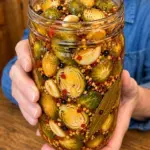
Hot Honey Garlic Pickled Brussels Sprouts
Description
Firm-tender Brussels sprouts in a garlic, honey, and chile refrigerator brine.
Prep: 15 minutes | Cook: About 10 minutes, plus water-heating time | Chill: At least 48 hours
Yield: Approximately 1 quart or 2 pints | Suggested portions: 8
Ingredients
- 1 pound small Brussels sprouts, trimmed and halved
- 1 cup distilled white vinegar, 5% acidity
- 1 cup water
- 3 tablespoons honey
- 1 tablespoon kosher salt, noting brand-dependent density
- 4 garlic cloves, peeled and lightly crushed
- 1 teaspoon mustard seeds
- ½ teaspoon black peppercorns
- ½–1 teaspoon red pepper flakes
- ½ teaspoon smoked paprika
- 1 small dried bay leaf
- ¼ teaspoon celery seeds, optional
- Water and ice for blanching and cooling
Instructions
- Wash, trim, and halve the sprouts, quartering unusually large ones.
- Blanch in boiling water, checking after 2 minutes and allowing roughly 2–4 minutes as needed for a firm-tender texture.
- Transfer to an ice bath, then drain thoroughly.
- Put garlic and spices in clean heat-safe jars. Pack in the sprouts without crushing.
- Simmer the measured vinegar, water, honey, and salt just until dissolved.
- Pour over the sprouts to cover. Release trapped air with a clean utensil. Make extra proportional brine if needed; do not top up with plain water.
- Close and refrigerate promptly at 40°F or below. Keep sprouts submerged.
- Allow at least 48 hours before serving. Use clean utensils and keep the main jar refrigerated.
Storage: Plan to enjoy within 2 weeks as a conservative target for this custom refrigerator preparation. Not for shelf-stable canning. Freezing is not recommended for texture.
Estimated calories: Approximately 35–55 per serving when divided into eight, depending on brine consumption.