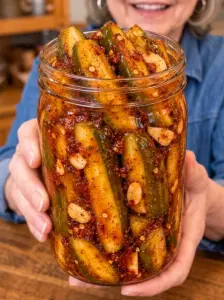
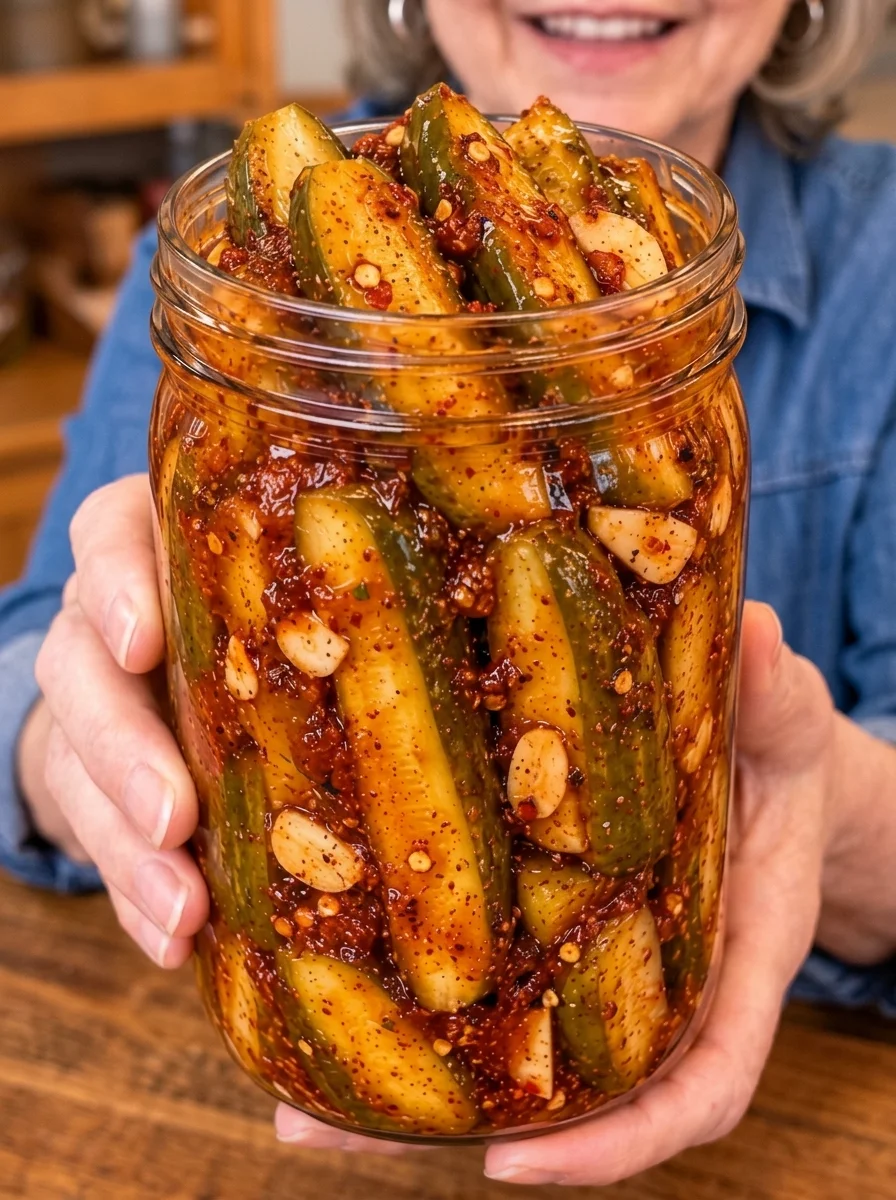
Texas A1 BBQ Pickles combine crisp dill pickles with a thick, tangy coating of steak sauce, barbecue sauce, garlic, and smoky seasonings. Brown sugar rounds out the sharp flavors, while smoked paprika and optional red pepper flakes add warmth. The result is a bold refrigerator snack that fits right beside burgers, barbecue sandwiches, and grilled sausages.
This is an easy way to dress up store-bought pickles. There is no need to prepare a fresh pickling brine or cook cucumbers: the pickles are already pickled, and the sauce adds another layer of flavor. Mix the marinade, coat the pickles, and refrigerate until the garlic and seasonings have had time to mingle.
The recipe is Texas-inspired rather than a traditional regional preserve, and it is not affiliated with A1. Its appeal is the combination of familiar steakhouse sauce, smoky barbecue flavor, and the cool crunch of a dill pickle.
Recipe note: This recipe has not been independently tested. Pickle size, drained weight, sauce thickness, and brand seasoning will affect the result. This is a refrigerated marinated condiment, not a tested shelf-stable canning recipe.
Why You’ll Love These Pickles
- They start with a jar of prepared dill pickles.
- The marinade mixes in a bowl without cooking.
- Steak sauce and barbecue sauce give the pickles a savory, tangy coating.
- You can adjust the sweetness and heat to suit the sauces you use.
- They work as a snack, burger topping, or barbecue side.
Recipe at a Glance
- Prep time: 10 minutes
- Marinating time: At least 12 hours; 24–48 hours for a more developed flavor
- Cook time: None
- Yield: The drained pickles from one 32-ounce jar
- Servings: Approximately 8–10
- Category: Condiment, snack, barbecue side
- Cuisine: Texas-inspired American
Ingredients
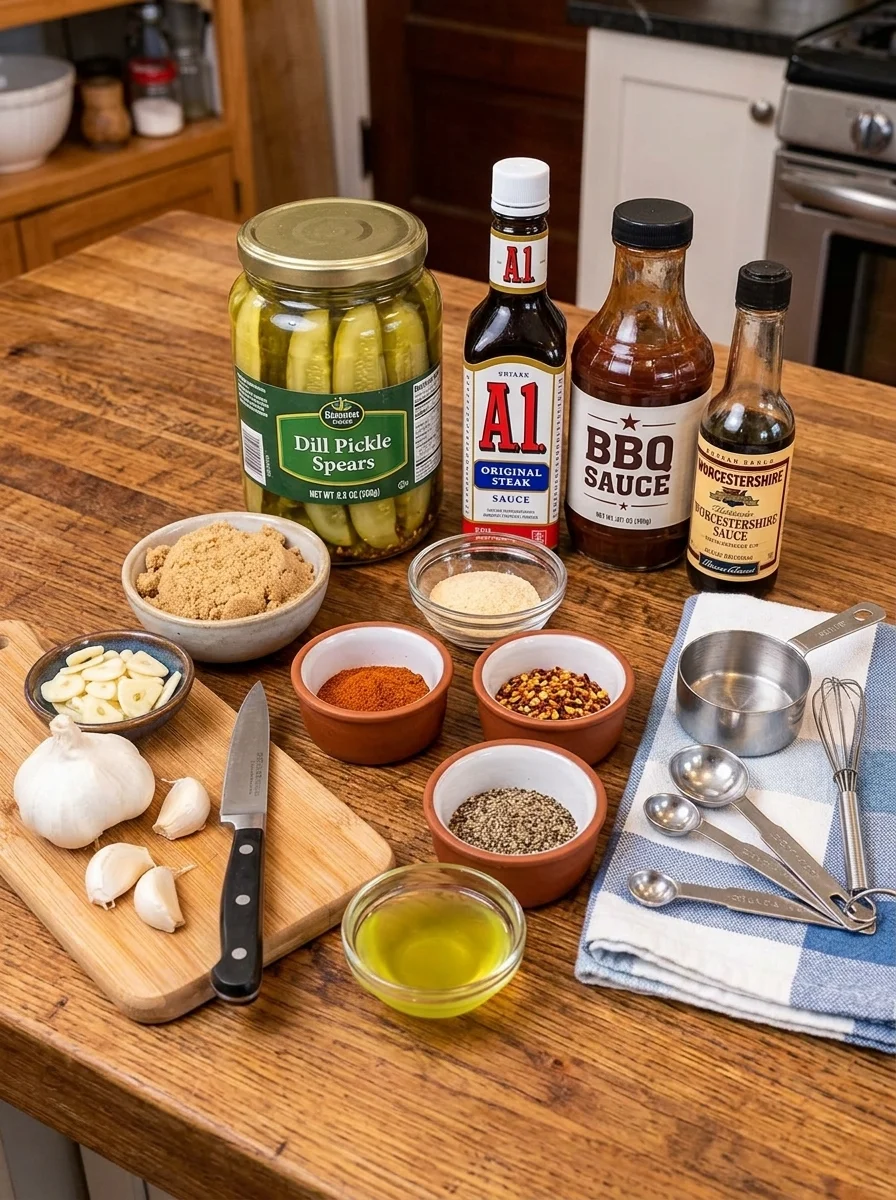
- 1 jar (32 ounces) whole dill pickles or pickle spears
- 1/2 cup A1 Original Steak Sauce
- 1/4 cup barbecue sauce
- 2 tablespoons brown sugar
- 2 garlic cloves, thinly sliced
- 1 teaspoon smoked paprika
- 1/2 teaspoon crushed red pepper flakes, optional
- 1/2 teaspoon onion powder
- 1/4 teaspoon freshly ground black pepper
- 2 tablespoons reserved pickle juice
- 1 teaspoon Worcestershire sauce, optional
Ingredient Notes
Dill Pickles
Choose a pickle you enjoy eating on its own. The marinade adds flavor, but it will not restore crunch to a soft pickle. Firm dill spears are convenient because they can go straight into the container. Whole pickles give you the choice of cutting spears, thick rounds, or sandwich slices.
A 32-ounce jar includes both pickles and brine, so the drained amount varies by brand. That means the sauce-to-pickle ratio will also vary. Start with the listed jar size, coat the pickles, and use a container that allows you to turn them gently during chilling.
Drain rather than rinse the pickles. Their existing dill flavor and tang are part of the recipe. Pat away excess surface brine lightly, without squeezing or drying them aggressively.
A1 Original Steak Sauce
Steak sauce brings a strong tangy, savory flavor and forms the main part of the coating. Because it is assertive, taste the marinade before adding optional Worcestershire or extra seasoning. Another steak sauce can work, but the balance of sweetness, acidity, and spice may differ.
Barbecue Sauce
A smoky, moderately sweet barbecue sauce complements the steak sauce well. If you choose a very sweet sauce, start with less brown sugar. If your sauce is already spicy, reduce the red pepper flakes until you have tasted the finished mixture.
The marinade is meant to cling to the pickles rather than act as a large volume of thin brine. Thick barbecue sauce helps give that coated texture.
Brown Sugar
Brown sugar softens the sharpness of the pickle juice and steak sauce. Use light or dark brown sugar, breaking up any lumps before whisking. It may take a little stirring to dissolve in the cold marinade. Any tiny remaining grains usually become less noticeable as the pickles chill.
Garlic
Thinly sliced garlic adds a fresh, savory bite. Cut the slices evenly so they distribute through the container. The raw garlic flavor can be quite noticeable, especially after a day of marinating. Use one clove instead of two if you prefer a milder result.
Smoked Paprika and Onion Powder
Smoked paprika supplies smoky flavor without a grill or smoker. Onion powder blends smoothly into the sauce. Avoid substituting onion salt in the same quantity because steak sauce, barbecue sauce, and pickles already contribute plenty of salt.
Reserved Pickle Juice
Two tablespoons of the original brine loosen the marinade and reinforce the dill-pickle tang. Do not add all the brine from the jar; that would dilute the coating considerably. Reserve more separately only if you want a small amount available for adjusting the texture.
Optional Heat and Worcestershire
Red pepper flakes add warmth as the sauce sits. Worcestershire contributes another savory note, but it is optional because the steak sauce is already bold. Many Worcestershire sauces contain anchovies, so check the label if that matters for your dietary needs.
How to Make Texas A1 BBQ Pickles
1. Drain and Cut the Pickles
Remove the pickles from the jar, reserving 2 tablespoons of brine. If using whole pickles, cut them into spears or thick rounds. Keep the pieces a similar size for even coating and easy serving.
Pat them lightly with paper towels to remove excess surface liquid. There is no need to squeeze them. Set them aside while you mix the sauce.
2. Whisk the Marinade
In a medium bowl, combine the steak sauce, barbecue sauce, brown sugar, reserved pickle juice, smoked paprika, onion powder, black pepper, optional red pepper flakes, and optional Worcestershire sauce. Whisk until smooth and the sugar is mostly dissolved.
Taste a small amount with a clean spoon. It should be tangy, savory, smoky, and slightly sweet. Remember that the pickles will bring additional acidity and salt. If the sauce tastes overwhelmingly sweet, add a little more pickle juice; if it is too sharp for you, add a small amount of brown sugar.
3. Add the Garlic
Stir the sliced garlic into the marinade. Separate any slices that stick together so they are distributed throughout the sauce.
4. Coat the Pickles
Place the drained pickles in a clean glass jar or food-safe container. Pour the marinade over them and gently turn with a clean utensil until coated. A wide container can be easier than a narrow jar if the sauce is particularly thick.
The sauce may not cover every pickle completely like the original brine did. That is expected for a coating-style marinade. Do not pack the container so tightly that you cannot turn the pickles. If needed, divide the batch between two containers.
5. Refrigerate
Cover and refrigerate immediately at 40°F or below. Allow at least 12 hours before serving; 24–48 hours gives the garlic, sauces, and seasonings more time to blend. Turn the pickles gently once or twice during this period with a clean utensil, or carefully invert a securely sealed, leakproof container.
Longer marinating does not mean deeper flavor throughout every piece. Much of the sauce remains on the surface, which is part of the appeal. Thin rounds will have more coated surface area than thick spears.
6. Serve Chilled
Stir gently before serving. Lift out a few pickles with a clean fork and serve with a little of the sauce. For sandwiches, let excess marinade drip off so the bread does not become soggy.
Keep the main batch refrigerated and set out smaller portions as needed. These are especially enjoyable cold alongside hot grilled foods.
Choosing the Best Pickle Shape
Spears
Spears are a convenient snack and look appealing on a barbecue platter. Their thicker centers retain a familiar dill flavor while the outside carries the barbecue coating. Use a fork or tongs for serving rather than reaching into the container.
Thick Rounds
Rounds have more exposed surface area and distribute easily over burgers. Slice them thick enough to keep a satisfying crunch. Very thin slices can become heavily coated and may be harder to lift neatly.
Sandwich Slices
Long slices work well on pulled pork, brisket-style sandwiches, and grilled chicken sandwiches. Drain them briefly before adding to the bread. They are also easy to chop into a relish-style topping.
Tips for the Best Flavor and Crunch
Start With Firm Pickles
The marinade does not create crispness. Use a brand and texture you like, and avoid a jar whose pickles are already soft. Keep them cold throughout preparation and marinating.
Taste Before Adding More Sugar
Some barbecue sauces are much sweeter than others. For a less sweet result, start with 1 tablespoon brown sugar and add the rest only if needed. You can increase sweetness later, but it is difficult to remove it once mixed.
Keep the Marinade Concentrated
The listed 2 tablespoons of pickle juice are enough to loosen the sauce without turning it watery. Add more only a teaspoon at a time if necessary. Excess liquid from poorly drained pickles can also thin the coating as it sits.
Turn Rather Than Shake Vigorously
Gentle turning coats the pickles without breaking them. If using a jar, make sure the lid is securely closed before moving it. A clean spoon or tongs is often the simplest option.
Don’t Expect Canning-Brine Behavior
This is a seasoned coating for already pickled cucumbers. It is not a new preservation method and does not inherit the original unopened jar’s shelf life. Refrigeration and clean handling remain important after mixing.
Serving Ideas
Serve these pickles beside burgers, grilled sausages, pulled pork, or smoked meats. Their cold tang provides contrast to rich barbecue dishes. They also work on a snack board with cheese, crackers, and fresh vegetables.
For a burger topping, use thick rounds or chopped spears. Add them with cheddar and grilled onions, allowing excess sauce to drain first. On a sandwich, a few slices can provide both pickle crunch and some of the flavor normally supplied by a separate barbecue sauce.
Chop a small portion and spoon it over a baked potato or into a cheeseburger bowl. You can also serve them with chicken tenders or potato wedges. Since the sauce is bold, start with a little and add more to taste.
If taking them to a cookout, transport them chilled in an insulated cooler. Put out a small serving bowl and replenish it from the cold container rather than leaving the entire batch on the table.
Flavor Variations
Spicy Texas BBQ Pickles
Increase the red pepper flakes slightly or add a few thin jalapeño slices. Start with a small amount and taste after chilling. Heat varies considerably between peppers, and a spicy barbecue sauce may already provide enough warmth.
Less Sweet
Use a less sweet barbecue sauce and begin with only 1 tablespoon brown sugar. The steak sauce and pickles will be more prominent. Adjust after tasting rather than adding extra sugar automatically.
Extra Smoky
Add a small pinch of additional smoked paprika. Too much can make the sauce taste dusty or overpower the pickle flavor, so increase it gradually. A smoky barbecue sauce may make extra paprika unnecessary.
Milder Garlic
Use one garlic clove instead of two. The sauce will still have savory character from the steak sauce and onion powder. Garlic powder can produce a different, more evenly distributed flavor, but avoid adding it freely on top of the existing seasonings.
Burger Relish
Chop a few finished pickles and spoon off excess sauce. Use the chopped mixture immediately as a burger or hot-dog topping. Keep the remaining pickles intact in their chilled container.
Peppery Steakhouse
Add a small amount of coarsely cracked black pepper after tasting the marinade. This emphasizes the steakhouse-style flavor without adding fresh chile heat. Let it chill before deciding whether it needs more.
Make-Ahead and Storage
Prepare the pickles a day before serving for a convenient make-ahead side. Keep the container covered and refrigerated at 40°F or below throughout marinating and storage. Label it with the preparation date.
The supplied recipe suggests up to 1 week for quality. Because the modified mixture contains fresh garlic and has not been tested for a validated shelf life, a conservative approach is to make a small batch and use it within 3–4 days. Do not assume the original pickle jar’s longer storage guidance applies after adding fresh ingredients and other sauces.
Use clean utensils every time you remove a portion. Do not return pickles from a serving plate to the main container. Discard portions that have become contaminated by raw meat, a basting brush, or used utensils.
Freezing is not recommended for the best texture because thawed pickles can soften and the sauce may separate. This is a refrigerator recipe only. Do not water-bath can, pressure can, or store the mixture in the pantry without a specifically tested preservation recipe.
Troubleshooting
Why Is the Sauce Watery?
The pickles may have carried extra brine into the container, or the sauces may be naturally thin. Drain and lightly pat the pickles before mixing next time. For the current batch, turn them gently before serving and lift out the pickles with a fork rather than pouring all the liquid onto the plate.
Why Is the Marinade Too Sweet?
The barbecue sauce may contain enough sugar without the full amount of added brown sugar. Add a small splash of reserved pickle juice to balance a serving, or use less sugar in the next batch. Large adjustments can make the marinade too thin.
Why Is the Flavor So Salty?
Pickles, steak sauce, barbecue sauce, and Worcestershire all contribute salt. There is no added salt in the base recipe for that reason. Use the optional Worcestershire sparingly and choose less salty sauces if you prefer a milder result.
Why Are the Pickles Still Mostly Dill-Flavored Inside?
That is normal. They are already pickled, and the thick marinade primarily coats and seasons the surface. Cutting into rounds or smaller pieces increases the amount of coated surface per bite.
Why Is the Garlic Strong?
Raw sliced garlic can be assertive, especially after the mixture sits. Use one clove next time or remove some garlic slices before serving. More marinating time does not always make raw garlic taste milder.
Frequently Asked Questions
Do I Need to Cook the Sauce?
No. This recipe mixes prepared sauces into a cold marinade. Whisk until the brown sugar is mostly dissolved, then refrigerate the coated pickles. Avoid warming the pickles, which can affect their texture.
Can I Use Fresh Cucumbers?
Not as a direct replacement. The recipe depends on already pickled cucumbers for acidity, flavor, and texture. Fresh cucumbers would require a different recipe and would release more water into the coating.
Can I Use Another Steak Sauce?
Yes, though the flavor may change. Taste before adding optional Worcestershire, sugar, or extra spice. Different steak sauces vary in tang, sweetness, and salt.
Can I Use Sweet Pickles?
You can experiment, but the result will be much sweeter and different from the intended dill-pickle version. Reduce or omit the brown sugar at first and taste before adding any more.
Are These Pickles Spicy?
They can be mild if you omit the red pepper flakes and use a mild barbecue sauce. For heat, add flakes or jalapeño gradually. Taste after chilling before adding another round of spicy ingredients.
Can I Put Them Back in the Original Jar?
Yes, if the jar and lid are clean, in good condition, and large enough to hold the mixture with room to turn it. The added sauce may make the original jar too full, so use a larger food-safe container or divide the batch if needed.
How Many Calories Are in a Serving?
The original estimate is 45–70 calories per serving, but it depends on whether you divide the batch into eight or ten portions and how much sauce is eaten. Since some marinade usually stays in the container, a precise number requires measuring your portions and using the actual product labels. Treat the range as an estimate, not verified nutrition data.
Print
Texas A1 BBQ Pickles
Description
Prep time: 10 minutes
Marinating time: 12–48 hours
Cook time: None
Servings: Approximately 8–10
Ingredients
- 1 jar (32 ounces) whole dill pickles or pickle spears
- 1/2 cup A1 Original Steak Sauce
- 1/4 cup barbecue sauce
- 2 tablespoons brown sugar, or less to taste
- 2 garlic cloves, thinly sliced
- 1 teaspoon smoked paprika
- 1/2 teaspoon crushed red pepper flakes, optional
- 1/2 teaspoon onion powder
- 1/4 teaspoon black pepper
- 2 tablespoons reserved pickle juice
- 1 teaspoon Worcestershire sauce, optional
Instructions
- Drain the pickles, reserving 2 tablespoons brine. Cut whole pickles into spears or thick rounds. Pat lightly to remove excess surface liquid.
- Whisk the steak sauce, barbecue sauce, brown sugar, reserved brine, paprika, onion powder, black pepper, optional pepper flakes, and optional Worcestershire until smooth.
- Stir in the garlic. Place the pickles in a clean food-safe container and gently turn with the marinade until coated.
- Cover and refrigerate immediately for at least 12 hours, preferably 24–48 hours. Turn gently once or twice during chilling.
- Stir before serving. Lift out with a clean utensil and let excess sauce drain if using on sandwiches.
Storage: Keep covered at 40°F or below. For a conservative storage period for this untested mixture, use within 3–4 days of preparation. This is not a shelf-stable canning recipe. Use clean utensils and keep separate from raw meat and contaminated basting tools.