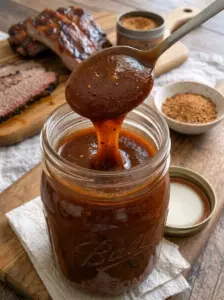
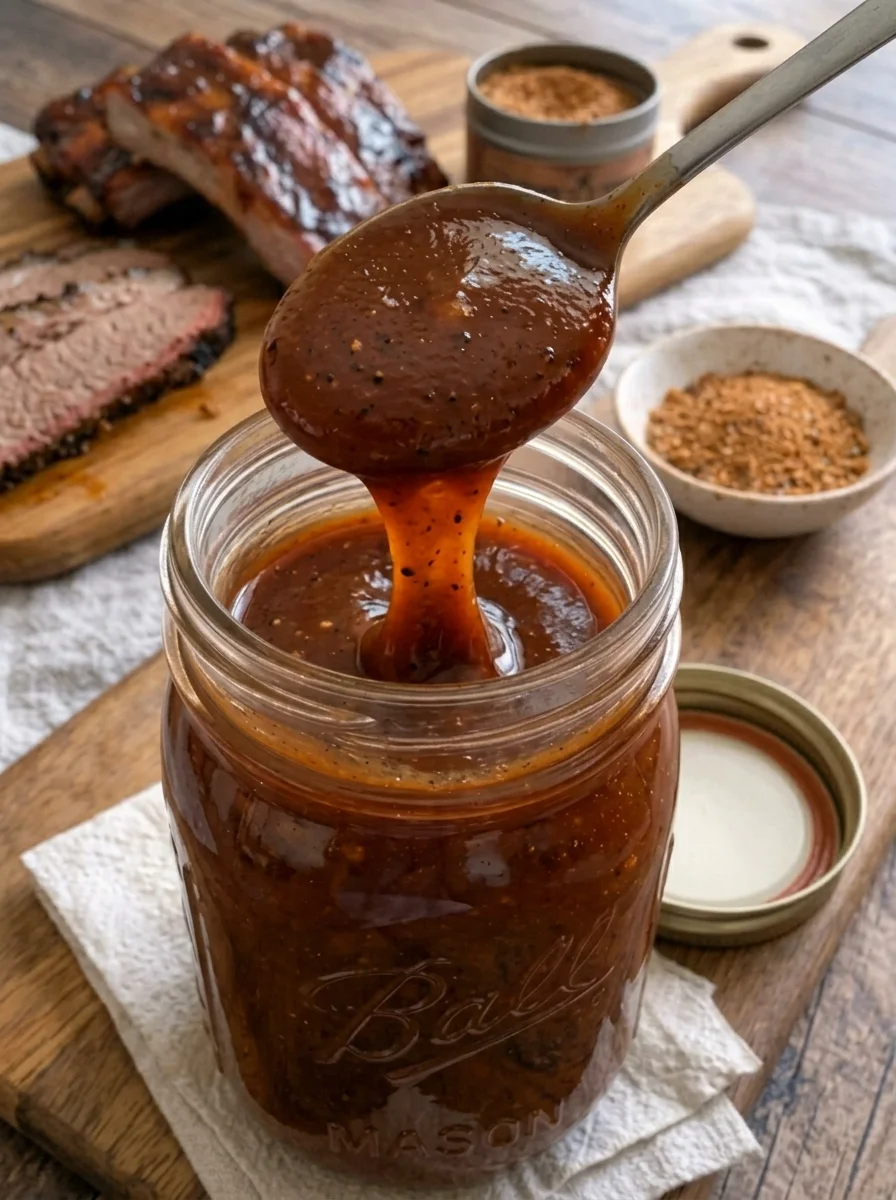
Kansas City Sweet BBQ Sauce is thick, glossy, and full of the sweet-and-tangy flavor that makes a platter of barbecue hard to resist. This homemade version combines a tomato base with brown sugar, molasses, apple cider vinegar, and a blend of savory spices. A gentle simmer brings everything together into a sauce you can brush over chicken, spoon onto pulled pork, or serve alongside a pile of crispy fries.
The sweetness is balanced with vinegar and mustard, while smoked paprika brings a subtle smoky note without requiring a smoker. You can keep the sauce mild for a family cookout or add a little cayenne for a sweet heat. Best of all, it is made from everyday pantry ingredients and can be prepared ahead of time.
Recipe note: This original recipe has not been independently tested. Simmering time and finished yield may vary depending on the pan, heat level, and thickness of the ingredients. Use the visual cues below and adjust the seasonings to your taste.
What Is Kansas City-Style BBQ Sauce?
Kansas City-style barbecue sauce is commonly associated with a thick tomato base, noticeable sweetness, tangy vinegar, and seasonings that complement smoked or grilled meats. Recipes vary widely, but brown sugar and molasses are familiar ingredients that give many versions their deep color and rounded sweetness.
This recipe is a Kansas City-inspired home version. It is designed as an everyday sauce for basting, dipping, and serving, with a sweet profile that still has enough acidity to keep the flavor lively. It is not intended to copy a particular restaurant’s sauce.
Why You’ll Love This Recipe
- Sweet and tangy: Brown sugar and molasses balance apple cider vinegar and mustard.
- Simple pantry ingredients: No special equipment or hard-to-find ingredients are required.
- Versatile: Use it on ribs, chicken, burgers, sandwiches, or roasted vegetables.
- Easy to customize: Add more heat, adjust the sweetness, or thin it with a little water.
- Make-ahead friendly: The sauce can be cooked before the cookout and chilled until needed.
Recipe at a Glance
- Prep time: 10 minutes
- Cook time: 20–25 minutes
- Total time: 30–35 minutes
- Yield: About 2 1/2 cups, depending on simmering time
- Servings: About 20 servings of 2 tablespoons each
- Difficulty: Easy
- Category: Sauce, condiment
- Cuisine: American, Kansas City-inspired
Ingredients
- 2 cups ketchup
- 1/2 cup packed brown sugar
- 1/4 cup apple cider vinegar
- 1/4 cup unsulfured molasses
- 1 tablespoon Worcestershire sauce
- 1 tablespoon yellow mustard
- 1 teaspoon smoked paprika
- 1 teaspoon garlic powder
- 1/2 teaspoon onion powder
- 1/2 teaspoon freshly ground black pepper
- 1/4 teaspoon cayenne pepper, optional
- 1/4 cup water, plus more as needed
- Salt, to taste, if needed
Ingredient Notes
Ketchup
Ketchup forms the tomato base and contributes sweetness, acidity, and salt. Different brands taste different, so sample the finished sauce before adding extra sugar or salt. If your ketchup is particularly sweet, start with a little less brown sugar and adjust at the end.
Brown Sugar
Brown sugar gives the sauce its familiar sweetness and helps it become glossy as it simmers. Either light or dark brown sugar works. Dark brown sugar has a stronger molasses flavor, while light brown sugar makes the sauce slightly milder. Pack it gently into the measuring cup for a consistent amount.
Molasses
Unsulfured molasses adds a deeper, slightly bittersweet flavor and dark color. Regular or mild molasses is a good starting point. Blackstrap molasses is much more intense and bitter, so it can change the balance considerably. If that is all you have, use less and taste carefully.
Apple Cider Vinegar
Vinegar cuts through the sweetness and adds the tang that makes barbecue sauce so versatile. If you prefer a less tangy sauce, begin with a little less and adjust after simmering. An extra small splash can brighten the sauce if it tastes overly sweet.
Worcestershire Sauce and Mustard
Worcestershire adds savory depth, while yellow mustard provides a little sharpness. Many Worcestershire sauces contain anchovies, so check the label if you need a vegetarian sauce. Use a vegetarian Worcestershire alternative when appropriate.
Spices
Smoked paprika gives the sauce a gentle smoky character. Garlic powder and onion powder add savoriness without the need to chop or strain fresh aromatics. Cayenne is optional; 1/4 teaspoon gives a modest kick, but you can use a pinch or leave it out.
Water
The water helps the ingredients combine and gives the sauce room to reduce without becoming too thick too quickly. After simmering, you can add another tablespoon at a time if you prefer a thinner consistency.
How to Make Kansas City Sweet BBQ Sauce
1. Combine the Ingredients
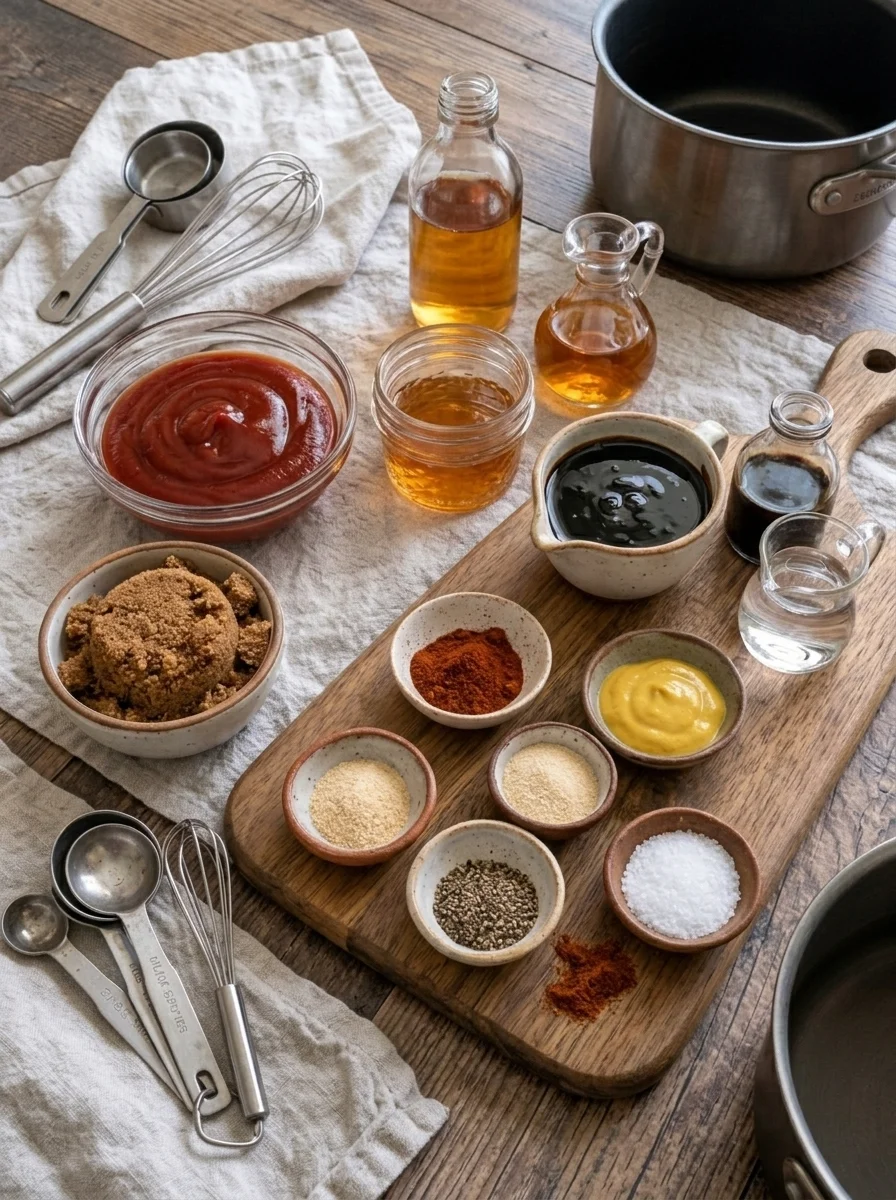
Add the ketchup, brown sugar, apple cider vinegar, molasses, Worcestershire sauce, mustard, smoked paprika, garlic powder, onion powder, black pepper, optional cayenne, and water to a medium saucepan. Whisk until the molasses and brown sugar are evenly distributed and the mixture looks smooth.
A medium saucepan gives the sauce enough room to bubble without splashing as much. If your brown sugar has hard lumps, break them up with the back of a spoon before whisking.
2. Bring to a Gentle Simmer
Place the saucepan over medium heat. Stir frequently until the sugar dissolves and the sauce begins to bubble gently around the edges. Reduce the heat to low once it starts simmering.
Tomato-based sauces can splatter as they thicken, so use a long spoon and keep the heat gentle. A splatter screen can help if you have one.
3. Simmer Until Thick and Glossy
Simmer uncovered for 20–25 minutes, stirring often, especially around the bottom and edges of the pan. The sauce should become slightly darker, smooth, and thick enough to coat the back of a spoon. It will thicken a little more as it cools.
If the sauce starts sticking or bubbling vigorously, lower the heat. If it gets thicker than you like, stir in water one tablespoon at a time. If it seems too thin, let it simmer a few more minutes while stirring.
4. Taste and Adjust
Remove the saucepan from the heat and let a small spoonful cool enough to taste. Add a little more vinegar for tang, a pinch of cayenne for heat, or a small amount of brown sugar for sweetness. Add salt only if needed; ketchup and Worcestershire sauce already contain salt.
Keep adjustments small. The sauce can taste more concentrated after cooling, and different foods will change how salty or sweet it seems in the finished meal.
5. Serve or Store
Serve warm, or transfer the sauce to clean, shallow containers and refrigerate promptly. Use it as a dipping sauce, sandwich topping, or finishing glaze. Reserve a clean portion before brushing it onto raw or partially cooked meat.
Tips for the Best Sweet BBQ Sauce
Simmer Gently
Sugar and tomato can stick and scorch over high heat. A low, steady simmer lets the flavors blend while reducing the chance of a burnt taste. Stir more often as the sauce thickens.
Taste After Simmering
The ingredients taste different once they have cooked together. Wait until the sauce has simmered before deciding whether it needs more vinegar, spice, or sweetness. Always let the sample cool first.
Consider the Food You’re Serving
A sweet sauce can be especially good with salty smoked meat or a tangy coleslaw. For a mild dish such as grilled chicken, a little extra vinegar or black pepper may give the finished plate more balance.
Brush It on Near the End
Because this sauce contains sugar, it can burn over direct high heat. Brush it onto grilled meat during the last few minutes of cooking, turning and watching closely. For longer cooking, use indirect heat and apply thin coats. Serve additional sauce on the side.
Keep Serving Sauce Separate
Before cooking, pour the amount needed for basting into a separate bowl. Discard any sauce that has come into contact with raw meat, raw juices, or a contaminated brush. Keep the clean reserved sauce in a separate container for the table.
Ways to Use Kansas City Sweet BBQ Sauce
On Ribs
Brush thin layers over cooked or nearly cooked ribs during the final stage of grilling or baking. Give the sauce a few minutes to set between coats, watching closely so the sugars do not scorch. Serve a little extra sauce alongside for dipping.
With Pulled Pork
Toss warm shredded pork with a modest amount of sauce, adding more as desired. Pile it onto buns and finish with crunchy coleslaw or pickles. Keeping some sauce on the side allows everyone to choose how saucy they like their sandwich.
On Chicken
Use the sauce to finish grilled, baked, or air-fried chicken. Brush it on toward the end of cooking and check that the thickest part of the chicken reaches 165°F. The sauce adds flavor, but a thermometer is the best way to check doneness.
For Burgers and Sandwiches
Spread a spoonful on a burger bun or add it to a chicken sandwich with cheddar and crisp lettuce. It also pairs nicely with grilled onions, pickles, and a little mustard.
As a Dip
Serve a small bowl with chicken tenders, potato wedges, sweet potato fries, or roasted vegetables. For a creamy dip, mix a little clean, chilled sauce with mayonnaise just before serving and refrigerate leftovers promptly.
In Meatloaf or Meatballs
Brush a thin coating over meatloaf near the end of baking, or toss cooked meatballs with warmed sauce. Check the meat for the appropriate safe internal temperature; the sauce itself does not indicate doneness.
Flavor Variations
Sweet and Spicy
Add a little extra cayenne, a few dashes of hot sauce, or a pinch of crushed red pepper. Start small, simmer, and taste. The heat tends to become more noticeable as the sauce sits on the tongue.
Extra Tangy
Stir in an additional teaspoon or two of apple cider vinegar after simmering. Taste between additions. A small amount goes a long way, especially if the ketchup already has a sharp flavor.
Smokier Sauce
Add an extra pinch of smoked paprika. If using liquid smoke, add only a drop or two at a time and taste; different brands vary in strength. Too much can overwhelm the sauce.
Honey BBQ Sauce
Replace a portion of the brown sugar with honey. Add it with the other ingredients and simmer as directed. Honey has a distinct flavor and may change the final thickness slightly.
Less Sweet
Start with 1/4 cup brown sugar instead of 1/2 cup, keeping in mind that ketchup and molasses also contain sugar. Taste after simmering and add more sugar if needed. The sauce will be tangier and may have a different consistency.
Vegetarian-Friendly
Use a Worcestershire sauce labeled vegetarian or vegan, because traditional versions commonly contain anchovies. Check the labels on the remaining packaged ingredients to match your needs.
Make-Ahead and Storage
Make ahead: Prepare the sauce a day before serving if convenient. Once cooked, transfer it to shallow, clean containers and refrigerate promptly. The spices have more time to mingle as the sauce chills.
Refrigerator: Keep the sauce in an airtight container at 40°F or below. As a conservative guideline for this untested homemade recipe, use within 3–4 days. Use a clean spoon each time you remove a portion.
Freezer: Freeze cooled sauce in small freezer-safe containers for up to 3 months for best quality. Leave room for expansion. Thaw in the refrigerator, then stir well and warm gently if desired.
Serving: Keep the main batch refrigerated until needed. Refrigerate perishable leftovers within 2 hours, or within 1 hour when the temperature is above 90°F. Discard sauce that has been contaminated by raw meat or a used basting brush.
Canning: This recipe has not been tested for shelf-stable canning. Keep it refrigerated or frozen; do not assume that hot-filling jars makes it safe for pantry storage. For shelf-stable sauce, use a tested canning recipe and follow its processing instructions. Cornell Cooperative Extension explains why a home recipe needs tested acidity and processing before canning.
Troubleshooting
My Sauce Is Too Thick
Whisk in warm water, one tablespoon at a time, until it reaches the consistency you want. Sauce thickens as it cools, so consider how you plan to use it: a thicker sauce is useful for glazing, while a slightly thinner sauce is easier to drizzle.
My Sauce Is Too Thin
Return it to a gentle simmer and cook uncovered for a few more minutes, stirring frequently. Use a wider saucepan if the mixture is reducing very slowly. Remember that the sauce will thicken somewhat as it cools.
My Sauce Tastes Too Sweet
Add a small splash of apple cider vinegar and taste again. A little mustard or black pepper can also help balance the flavor. For the next batch, reduce the brown sugar at the start and add more only if needed.
My Sauce Tastes Too Tangy
Add a small amount of brown sugar and stir until dissolved. Let the sauce simmer briefly and taste again. A little extra ketchup may also soften the tang, although it will change the yield and sweetness.
My Sauce Tastes Burnt
A scorched flavor is difficult to remove. If the bottom has just begun to catch, do not scrape the burnt layer into the sauce. Transfer the unscorched portion to a clean pan and taste it. If the burnt flavor has spread throughout, starting over is the best option.
Frequently Asked Questions
Is Kansas City BBQ sauce sweet?
Many Kansas City-style sauces are known for a sweet tomato base, often balanced with vinegar and spices. Recipes differ, so some versions are sweeter, tangier, or spicier than others.
Can I make this sauce without molasses?
Yes. Replace the molasses with a smaller amount of additional brown sugar or honey, then taste and adjust. The finished sauce will have a lighter, less complex molasses flavor. The texture and yield may also change.
Can I use white vinegar instead of apple cider vinegar?
Yes. White distilled vinegar has a sharper flavor, so start with a little less and adjust after simmering. This recipe is intended for refrigerated or frozen storage; ingredient substitutions do not make it safe for pantry canning.
Is this sauce spicy?
It is mild if you omit the cayenne. The optional 1/4 teaspoon adds some warmth, though the perceived heat varies. For a hotter sauce, increase the cayenne gradually or serve hot sauce at the table.
Can I make it ahead for a party?
Yes. Prepare it a day or two ahead and refrigerate in a covered container. Set out only the amount needed for serving, and keep a separate portion for basting raw meat. Refrigerate remaining clean sauce promptly.
Is it gluten-free?
It may be, depending on the products used. Check the labels on the Worcestershire sauce, ketchup, mustard, and other packaged ingredients, especially if you need to avoid gluten for medical reasons.
How much sauce does this recipe make?
Expect approximately 2 1/2 cups, or about twenty 2-tablespoon servings. Actual yield depends on the saucepan and how long you simmer. Measure the finished sauce if you need an exact number of portions.
How many calories are in a serving?
The exact amount depends on the ketchup, brown sugar, and molasses used, as well as the final yield. A 2-tablespoon serving is likely to be roughly 45–60 calories, but this is an estimate rather than a lab-tested value. Calculate from your ingredient labels and measured yield for a more precise figure.
Print
Kansas City Sweet BBQ Sauce
Description
Prep time: 10 minutes
Cook time: 20–25 minutes
Total time: 30–35 minutes
Yield: About 2 1/2 cups
Serving size: 2 tablespoons
Ingredients
- 2 cups ketchup
- 1/2 cup packed brown sugar
- 1/4 cup apple cider vinegar
- 1/4 cup unsulfured molasses
- 1 tablespoon Worcestershire sauce
- 1 tablespoon yellow mustard
- 1 teaspoon smoked paprika
- 1 teaspoon garlic powder
- 1/2 teaspoon onion powder
- 1/2 teaspoon black pepper
- 1/4 teaspoon cayenne pepper, optional
- 1/4 cup water, plus more as needed
- Salt, to taste, if needed
Instructions
- Whisk all ingredients except the optional salt together in a medium saucepan.
- Heat over medium, stirring frequently, until the sauce begins to bubble gently and the sugar dissolves. Reduce the heat to low.
- Simmer uncovered for 20–25 minutes, stirring often, until glossy and thick enough to coat a spoon. Add water a tablespoon at a time if needed.
- Remove from the heat. Let a small sample cool, then taste and adjust the vinegar, sweetness, heat, or salt.
- Serve warm or transfer to clean, shallow containers and refrigerate promptly.
Storage: Refrigerate at 40°F or below and use within 3–4 days, or freeze for up to 3 months for best quality. This recipe is not tested for shelf-stable canning. Reserve a clean portion before basting meat and discard any sauce exposed to raw meat or its juices.