Sweet & Spicy Pickles: Crunchy, Garlicky, and Gone Before You Know It
Some recipes earn a permanent spot in your kitchen. Sweet and spicy pickles are one of them. Crunchy, bright, garlicky, kissed with honey, and finished with a slow-building heat from jalapeños and red pepper flakes — these pickles are the kind of thing you make once and then immediately regret not making a bigger batch. One bite straight from the jar and you’ll understand why people talk about them the way they do. They disappear faster than you can make them. Every single time.
The best part is how absurdly simple they are. Fifteen minutes of active work. No special equipment. No canning experience required. Just fresh cucumbers, a handful of pantry staples, and a little patience while they chill in the fridge. Within 24 hours you’ll have pickles that are genuinely better than anything you’ve ever bought from a store — and within 2 to 3 days, they’ll be absolutely extraordinary.
This guide covers everything: why this recipe works, a deep dive into every ingredient, step-by-step instructions, tips for the crunchiest possible pickles, all the ways to use them beyond eating them straight from the jar, and answers to every question you might have along the way.
Why Sweet and Spicy Pickles Are Completely Addictive
There’s a reason this flavor combination shows up everywhere — in hot sauces, in condiments, in cocktails, in candy. Sweet and spicy is one of the most deeply satisfying flavor contrasts the human palate can experience. The sweetness opens your appetite and makes you want more, while the heat creates a gentle excitement that keeps each bite interesting. They play off each other endlessly, which is why it’s so hard to stop eating things that hit both notes at once.
In a pickle, that dynamic is even more pronounced because you also have acidity and crunch layered on top. The vinegar cuts through the sweetness and keeps the flavor bright. The crunch of the cucumber makes every bite satisfying in a tactile way that soft foods simply can’t match. Add garlic for savory depth and fresh dill for an herbal lift, and you have a pickle that covers nearly every flavor note simultaneously.
These aren’t the pale, soft, overly salty pickles that come in a grocery store jar. They’re vivid, complex, and alive with flavor — the kind of pickle that turns a regular sandwich into something you look forward to all day.
Choosing the Right Cucumbers
The cucumber you choose is the single most important factor in whether your pickles turn out crunchy or soft. Not all cucumbers are suitable for pickling, and using the wrong variety is the most common reason homemade pickles disappoint.
Pickling cucumbers are the gold standard. Varieties like Kirby cucumbers are specifically bred for pickling. They’re shorter and stubbier than slicing cucumbers, with thinner skins, drier flesh, and smaller seed cavities. All of these qualities mean they stay firmer longer in brine and develop a better texture than larger varieties. Look for them at farmers markets, specialty grocery stores, or well-stocked supermarkets.
Persian cucumbers are an excellent substitute. Thin-skinned, seedless, and consistently crisp, Persian cucumbers are available year-round in most grocery stores. They’re slightly smaller than Kirby cucumbers but behave similarly in brine and produce a wonderful pickle.
English cucumbers work in a pinch but have a higher water content and softer flesh, which can result in a less crunchy final product. If English cucumbers are all you can find, slice them thicker than you normally would and expect a softer texture.
Avoid standard slicing cucumbers (the large, dark green ones with waxy skin). Their high water content, large seeds, and thick skin make for a mushy, bland pickle that no amount of brine can fully rescue.
Buy fresh and firm. Whatever variety you choose, pick cucumbers that are firm all the way through with no soft spots or wrinkling. Older cucumbers that have started to lose moisture will turn mushy in the brine even if the variety is right.
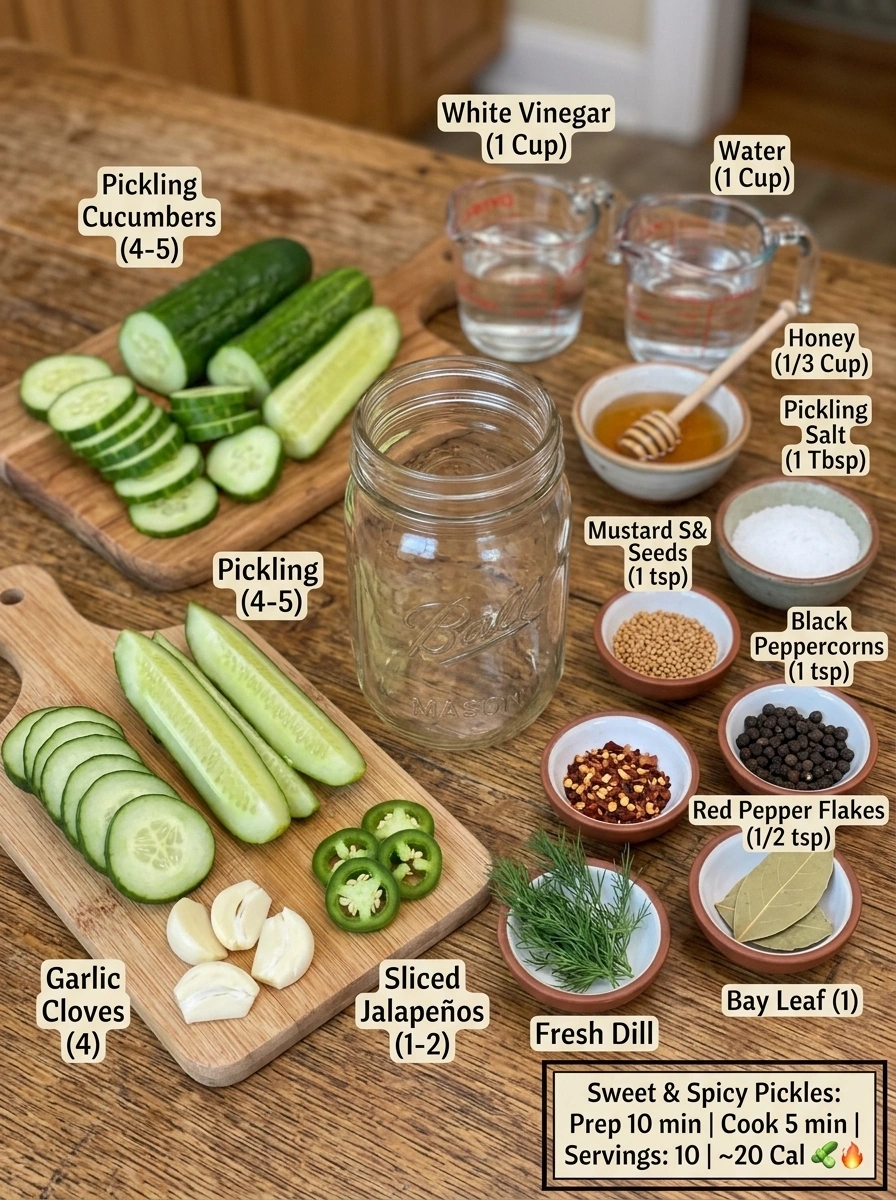
Ingredient Breakdown: What Everything Does
White Vinegar (1 cup)
The primary acidic component of the brine. White vinegar has a clean, sharp flavor that lets the other ingredients — honey, garlic, dill, jalapeño — come through clearly without competition. It’s also colorless, which means your pickles and brine will stay bright and vibrant rather than taking on the amber tone of apple cider or wine vinegars.
Water (1 cup)
Dilutes the vinegar to a balanced, approachable tang. A 1:1 ratio of vinegar to water is the sweet spot for quick refrigerator pickles — acidic enough to work as a preservative and flavor agent, mild enough to eat without puckering.
Honey or Granulated Sugar (⅓ cup)
This is the sweet in sweet and spicy. Honey is the more interesting choice — it adds a floral, complex sweetness with subtle caramel and fruity notes that white sugar simply can’t replicate. The type of honey matters more than you might expect: a mild clover honey lets the other flavors lead, while a darker wildflower or buckwheat honey adds its own personality to the brine. Granulated sugar works beautifully if that’s what you have and produces a cleaner, more neutral sweetness.
Pickling Salt or Kosher Salt (1 tbsp)
Salt seasons the brine and draws moisture from the cucumbers, which is part of what maintains their crunch. Pickling salt is finely ground and completely pure — no anti-caking agents or iodine, both of which can make pickle brine cloudy and affect flavor. Kosher salt is a fine substitute. Avoid table salt, which will make the brine cloudy and can leave a slightly metallic taste.
Garlic (4 cloves, sliced)
Sliced garlic infuses the brine with savory, pungent depth that’s essential to the overall character of these pickles. Slicing rather than mincing or crushing gives a more controlled, gradual infusion — enough to be clearly present in every bite without being overwhelming. As the pickles sit in the refrigerator, the garlic mellows and sweetens while continuing to deepen the brine.
Jalapeños (1–2, thinly sliced)
The heat engine of the recipe. One jalapeño gives you a noticeable warmth that builds gently. Two jalapeños delivers a genuine kick that earns the “spicy” label. For less heat, remove the seeds and white membrane before slicing — most of the capsaicin lives there. For more heat, leave everything intact and add an extra pepper.
Mustard Seeds (1 tsp)
A classic pickling spice that contributes a mild, earthy bite and a pop of texture. Whole mustard seeds look beautiful suspended in the brine and slowly release their flavor over the days the pickles rest in the fridge.
Black Peppercorns (1 tsp)
Add a quiet warmth and complexity that works alongside the jalapeño heat rather than competing with it. Their flavor is more aromatic and subtle than red pepper, making them a supporting player that rounds out the spice profile.
Red Pepper Flakes (½ tsp)
A second layer of heat, distinct from the jalapeño. While jalapeños add fresh, vegetal heat, red pepper flakes bring a drier, smokier, more concentrated spice. Together they create a more complex heat than either would produce alone.
Fresh Dill (2 sprigs) or Dried Dill (1 tsp)
Dill is the herbal note that makes these unmistakably pickle-adjacent. Fresh dill fronds have a bright, grassy, anise-like character that dried dill approximates but can’t fully match. If you can get fresh dill, use it. If not, dried dill works perfectly well — just use slightly less than you think you need, as it can become stronger over time in the brine.
Bay Leaf (1)
Subtle, aromatic, and quietly essential. A bay leaf adds an almost imperceptible herbal background note that makes the brine taste more complete and complex. It’s one of those ingredients that you notice the absence of more than the presence — the pickles are just slightly better with it in there.
How to Make Sweet and Spicy Pickles: Step-by-Step
Step 1: Slice Your Cucumbers
Decide whether you want spears or rounds. Spears are dramatic, satisfying to eat as a snack, and perfect alongside sandwiches and burgers. Rounds are ideal for burgers, sandwiches, and charcuterie boards where you want full coverage in every bite. Rounds also absorb the brine more quickly because more surface area is exposed.
Aim for consistent thickness — about ¼ inch for rounds, or quarters lengthwise for spears. Consistency matters for even pickling and texture.
Step 2: Pack the Jar
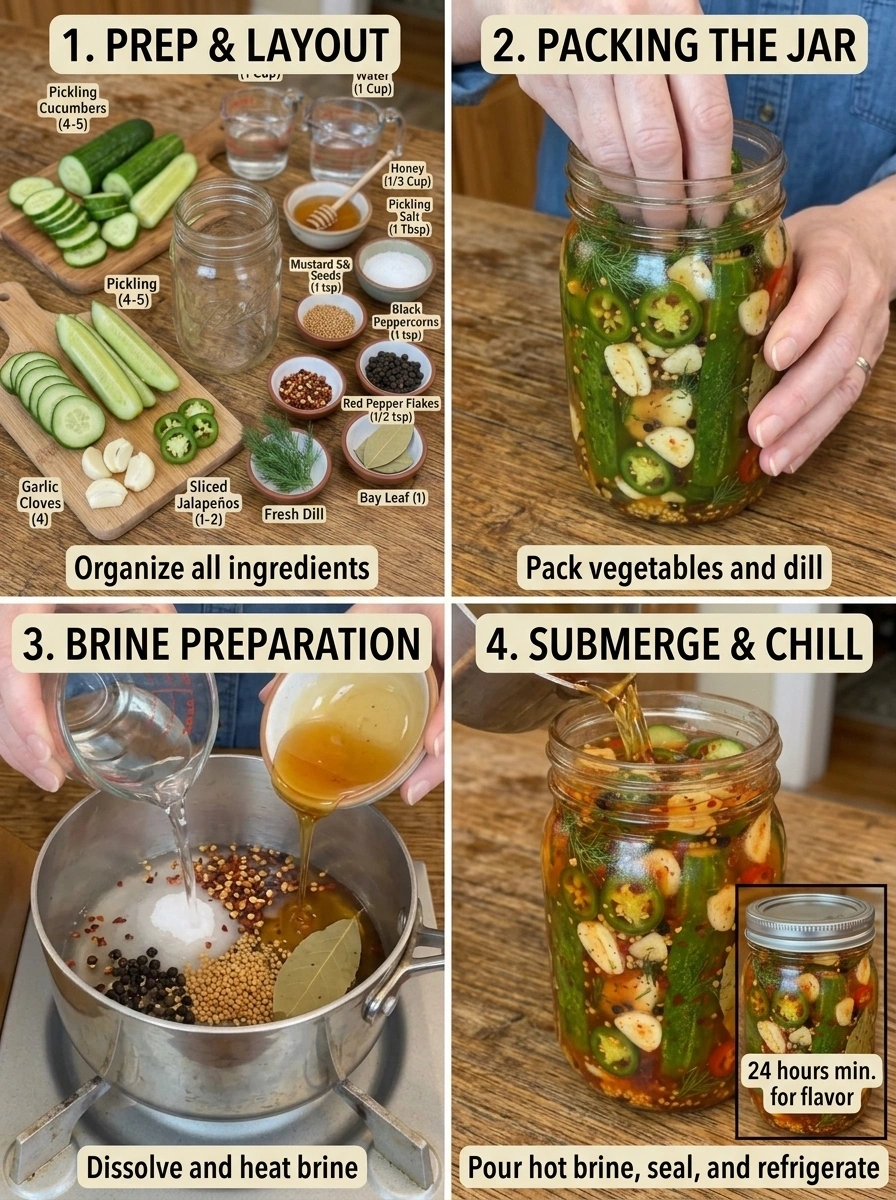
Place the sliced garlic, jalapeños, and dill into the bottom of a clean, dry quart-sized glass jar. Pack the cucumbers in tightly on top. You want them snug — loosely packed cucumbers float around in the brine, which can affect how evenly they pickle. Don’t crush them, but do pack firmly.
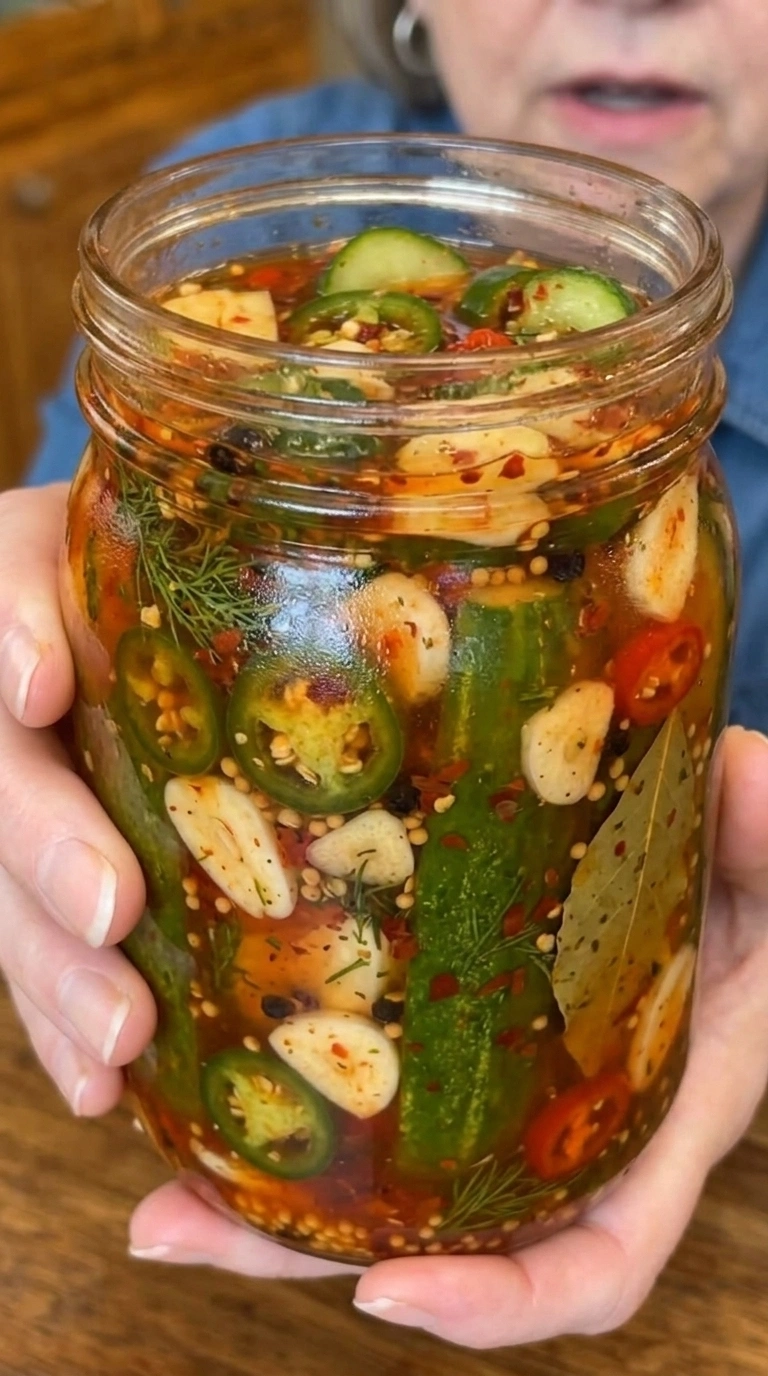
Pro tip for visual impact: Tuck jalapeño slices and dill sprigs along the visible side of the jar as you pack. When the finished jar sits on your counter or in your fridge, it will look gorgeous — all those vivid green and red colors visible through the glass.
Step 3: Make the Brine
Combine the white vinegar, water, honey (or sugar), salt, mustard seeds, black peppercorns, red pepper flakes, and bay leaf in a small saucepan. Heat over medium heat, stirring occasionally, until the honey and salt are fully dissolved. This typically takes 3 to 4 minutes — you don’t need a full boil, just enough heat to dissolve everything completely.
Step 4: Pour the Hot Brine
Carefully pour the hot brine over the packed cucumbers. Pour slowly to avoid cracking the jar if it’s cold. Make sure every cucumber is fully submerged — exposed cucumbers above the brine line won’t pickle properly and will deteriorate faster. If necessary, gently press the cucumbers down or wedge in a few more slices to keep everything below the brine.
Step 5: Cool, Seal, and Refrigerate
Let the jar sit open on the counter until it reaches room temperature — about 30 to 45 minutes. Then seal tightly and transfer to the refrigerator.
Step 6: Wait
The pickles are good after 24 hours — tangy, with the flavors starting to develop. After 2 to 3 days they are genuinely exceptional: the sweetness and spice have fully infused the cucumbers, the garlic has mellowed into savory richness, and the dill has given the brine a beautiful herbal depth. If you can make it to day three before opening the jar, you’ll be rewarded.
The Secret to Maximum Crunch
Crunchy pickles don’t happen by accident. Here’s what makes the difference:
Start with the freshest cucumbers possible. The fresher the cucumber, the more moisture it retains, and the crunchier the final pickle. Cucumbers that have been sitting in the fridge for a week before pickling will be softer than ones used the day you bought them.
Keep the blossom end trimmed. The blossom end of the cucumber (opposite the stem) contains enzymes that accelerate softening. Trim a thin slice off that end before packing your jar.
Don’t skip the ice bath trick. For extra-crunchy pickles, place your sliced cucumbers in a bowl of ice water for 30 minutes before packing them into the jar. This firms up the flesh and dramatically improves the final texture.
Keep the brine hot but not boiling. A rolling boil can start cooking the cucumbers before they even go into the jar. Heat the brine to a gentle simmer — just enough to dissolve the sugar and salt.
Keep cucumbers submerged. Any part of the cucumber not covered by brine will soften unevenly. Make sure the brine covers everything.
Don’t wait too long to eat them. Even in the best conditions, refrigerator pickles soften over time. They’re at their absolute crunchiest in the first one to two weeks.
Every Way to Use Sweet and Spicy Pickles
Straight from the jar. This is how they get eaten most often, and for good reason. Cold, crunchy, sweet, and spicy — they’re one of the most satisfying snacks you can pull from a fridge.
On burgers. Forget standard dill pickles on your next burger. A few rounds of sweet and spicy pickles add crunch, tang, sweetness, and heat all at once. Pair with sharp cheddar and a smoky sauce for an exceptional combination.
On sandwiches and subs. Layer pickle rounds generously into turkey, roast beef, pulled pork, or grilled chicken sandwiches. The sweetness balances savory fillings and the heat cuts through richness.
Alongside fried chicken. The acidity and sweetness of these pickles is a perfect counterpoint to the richness of fried chicken — whether boneless strips, a whole piece, or a chicken sandwich. Nashville hot chicken with sweet pickles is a legendary combination.
On a charcuterie board. Add a small dish or a pile of pickle spears to your next charcuterie or snack board. They pair beautifully with cured meats, creamy cheeses, and crackers, and they disappear faster than almost anything else on the board.
Chopped into egg salad, chicken salad, or tuna salad. Finely chop a handful of pickles and fold them into your favorite salad. They add crunch, brightness, and a flavor depth that store-bought relish can’t match.
As a Bloody Mary garnish. Spear a pickle round or a small spear on a cocktail pick for a Bloody Mary garnish that makes the whole drink better. The sweet-spicy flavor is a natural match for tomato juice and vodka.
On tacos. Add pickle rounds to fish tacos, pulled pork tacos, or crispy chicken tacos. The pickles act as the perfect acidic, crunchy contrast to rich fillings.
Alongside grilled meats. Serve as a condiment alongside grilled pork chops, burgers, brats, or ribs. The sweetness and acidity cut through the char and fat beautifully.
Variations to Try
Extra Spicy: Add an extra jalapeño and increase the red pepper flakes to one full teaspoon. For serious heat, add a few slices of serrano or habanero pepper.
Bread and Butter Style: Increase the honey or sugar to ½ cup and add ¼ teaspoon of turmeric and a pinch of celery seed for a sweet, golden bread-and-butter variation.
Garlic Lover’s: Double the garlic to 8 cloves. These become intensely savory and garlicky over time — perfect for garlic obsessives.
Apple Cider Vinegar Version: Swap white vinegar for apple cider vinegar for a fruitier, slightly earthier brine with more complexity. The color will be slightly amber rather than crystal clear.
No-Heat Version: Omit the jalapeños and red pepper flakes entirely for a sweet garlic dill pickle that kids and spice-averse eaters will love.
Bread and Butter with a Kick: Combine the sweetness of the bread-and-butter variation with one or two jalapeños for a tangy, sweet, and spicy pickle that hits every note at once.
Frequently Asked Questions
Why aren’t my pickles crunchy? The most common culprits are cucumbers that are too old or too large, skipping the blossom-end trim, or packing the jar loosely so cucumbers move around. Use fresh pickling cucumbers, trim both ends, and pack the jar firmly.
Can I use English cucumbers? Yes, but expect a softer texture. English cucumbers have higher water content and will be less crunchy than pickling cucumbers. Slice them thicker to compensate.
How long until the pickles are ready? They’re edible after 24 hours and genuinely excellent after 2 to 3 days. The flavor continues to develop up to about a week in.
Can I reuse the brine? You can top off the brine with a little extra vinegar and water as the level drops, but the flavor will weaken over time. For a new batch of pickles, fresh brine is always best.
Why is my brine cloudy? Some cloudiness from starch or spices is completely normal and safe. If you notice an off smell alongside cloudiness, discard the batch. Otherwise, slightly cloudy brine is nothing to worry about.
Can I make these shelf-stable? This recipe is for refrigerator pickles only. For shelf-stable canning, you’d need to follow USDA-tested canning guidelines with specific ratios and processing times.
Recipe at a Glance
| Detail | Info |
|---|---|
| Prep Time | 10 minutes |
| Cook Time | 5 minutes |
| Total Time | 15 minutes |
| Servings | 10 |
| Calories | ~20 per serving |
| Ready to eat | After 24 hours (best at 2–3 days) |
| Storage | Up to 3 weeks refrigerated |
Final Thoughts
Sweet and spicy pickles are proof that the best things in life don’t require much effort — just good ingredients and a little patience. Fifteen minutes of work yields something that elevates every meal it touches, satisfies every craving it meets, and gets requested by everyone who tries them. You’ll make one jar and immediately wish you’d made three.
So grab your cucumbers, heat your brine, and get pickling. The jar won’t last long — but you already knew that.
Print
Sweet & Spicy Pickles: Crunchy, Garlicky, and Gone Before You Know It
- Total Time: 15 minutes
Ingredients
White Vinegar (1 cup)
The primary acidic component of the brine. White vinegar has a clean, sharp flavor that lets the other ingredients — honey, garlic, dill, jalapeño — come through clearly without competition. It’s also colorless, which means your pickles and brine will stay bright and vibrant rather than taking on the amber tone of apple cider or wine vinegars.
Water (1 cup)
Dilutes the vinegar to a balanced, approachable tang. A 1:1 ratio of vinegar to water is the sweet spot for quick refrigerator pickles — acidic enough to work as a preservative and flavor agent, mild enough to eat without puckering.
Honey or Granulated Sugar (⅓ cup)
This is the sweet in sweet and spicy. Honey is the more interesting choice — it adds a floral, complex sweetness with subtle caramel and fruity notes that white sugar simply can’t replicate. The type of honey matters more than you might expect: a mild clover honey lets the other flavors lead, while a darker wildflower or buckwheat honey adds its own personality to the brine. Granulated sugar works beautifully if that’s what you have and produces a cleaner, more neutral sweetness.
Pickling Salt or Kosher Salt (1 tbsp)
Salt seasons the brine and draws moisture from the cucumbers, which is part of what maintains their crunch. Pickling salt is finely ground and completely pure — no anti-caking agents or iodine, both of which can make pickle brine cloudy and affect flavor. Kosher salt is a fine substitute. Avoid table salt, which will make the brine cloudy and can leave a slightly metallic taste.
Garlic (4 cloves, sliced)
Sliced garlic infuses the brine with savory, pungent depth that’s essential to the overall character of these pickles. Slicing rather than mincing or crushing gives a more controlled, gradual infusion — enough to be clearly present in every bite without being overwhelming. As the pickles sit in the refrigerator, the garlic mellows and sweetens while continuing to deepen the brine.
Jalapeños (1–2, thinly sliced)
The heat engine of the recipe. One jalapeño gives you a noticeable warmth that builds gently. Two jalapeños delivers a genuine kick that earns the “spicy” label. For less heat, remove the seeds and white membrane before slicing — most of the capsaicin lives there. For more heat, leave everything intact and add an extra pepper.
Mustard Seeds (1 tsp)
A classic pickling spice that contributes a mild, earthy bite and a pop of texture. Whole mustard seeds look beautiful suspended in the brine and slowly release their flavor over the days the pickles rest in the fridge.
Black Peppercorns (1 tsp)
Add a quiet warmth and complexity that works alongside the jalapeño heat rather than competing with it. Their flavor is more aromatic and subtle than red pepper, making them a supporting player that rounds out the spice profile.
Red Pepper Flakes (½ tsp)
A second layer of heat, distinct from the jalapeño. While jalapeños add fresh, vegetal heat, red pepper flakes bring a drier, smokier, more concentrated spice. Together they create a more complex heat than either would produce alone.
Fresh Dill (2 sprigs) or Dried Dill (1 tsp)
Dill is the herbal note that makes these unmistakably pickle-adjacent. Fresh dill fronds have a bright, grassy, anise-like character that dried dill approximates but can’t fully match. If you can get fresh dill, use it. If not, dried dill works perfectly well — just use slightly less than you think you need, as it can become stronger over time in the brine.
Bay Leaf (1)
Subtle, aromatic, and quietly essential. A bay leaf adds an almost imperceptible herbal background note that makes the brine taste more complete and complex. It’s one of those ingredients that you notice the absence of more than the presence — the pickles are just slightly better with it in there.
Instructions
Step 1: Slice Your Cucumbers
Decide whether you want spears or rounds. Spears are dramatic, satisfying to eat as a snack, and perfect alongside sandwiches and burgers. Rounds are ideal for burgers, sandwiches, and charcuterie boards where you want full coverage in every bite. Rounds also absorb the brine more quickly because more surface area is exposed.
Aim for consistent thickness — about ¼ inch for rounds, or quarters lengthwise for spears. Consistency matters for even pickling and texture.
Step 2: Pack the Jar
Place the sliced garlic, jalapeños, and dill into the bottom of a clean, dry quart-sized glass jar. Pack the cucumbers in tightly on top. You want them snug — loosely packed cucumbers float around in the brine, which can affect how evenly they pickle. Don’t crush them, but do pack firmly.
Pro tip for visual impact: Tuck jalapeño slices and dill sprigs along the visible side of the jar as you pack. When the finished jar sits on your counter or in your fridge, it will look gorgeous — all those vivid green and red colors visible through the glass.
Step 3: Make the Brine
Combine the white vinegar, water, honey (or sugar), salt, mustard seeds, black peppercorns, red pepper flakes, and bay leaf in a small saucepan. Heat over medium heat, stirring occasionally, until the honey and salt are fully dissolved. This typically takes 3 to 4 minutes — you don’t need a full boil, just enough heat to dissolve everything completely.
Step 4: Pour the Hot Brine
Carefully pour the hot brine over the packed cucumbers. Pour slowly to avoid cracking the jar if it’s cold. Make sure every cucumber is fully submerged — exposed cucumbers above the brine line won’t pickle properly and will deteriorate faster. If necessary, gently press the cucumbers down or wedge in a few more slices to keep everything below the brine.
Step 5: Cool, Seal, and Refrigerate
Let the jar sit open on the counter until it reaches room temperature — about 30 to 45 minutes. Then seal tightly and transfer to the refrigerator.
Step 6: Wait
The pickles are good after 24 hours — tangy, with the flavors starting to develop. After 2 to 3 days they are genuinely exceptional: the sweetness and spice have fully infused the cucumbers, the garlic has mellowed into savory richness, and the dill has given the brine a beautiful herbal depth. If you can make it to day three before opening the jar, you’ll be rewarded.
- Prep Time: 10 minutes
- Cook Time: 5 minutes
Nutrition
- Serving Size: 10
- Calories: 20 per serving