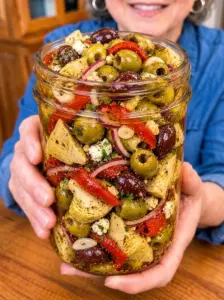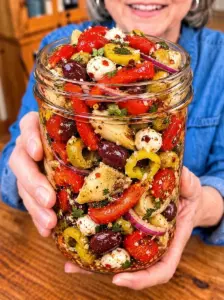
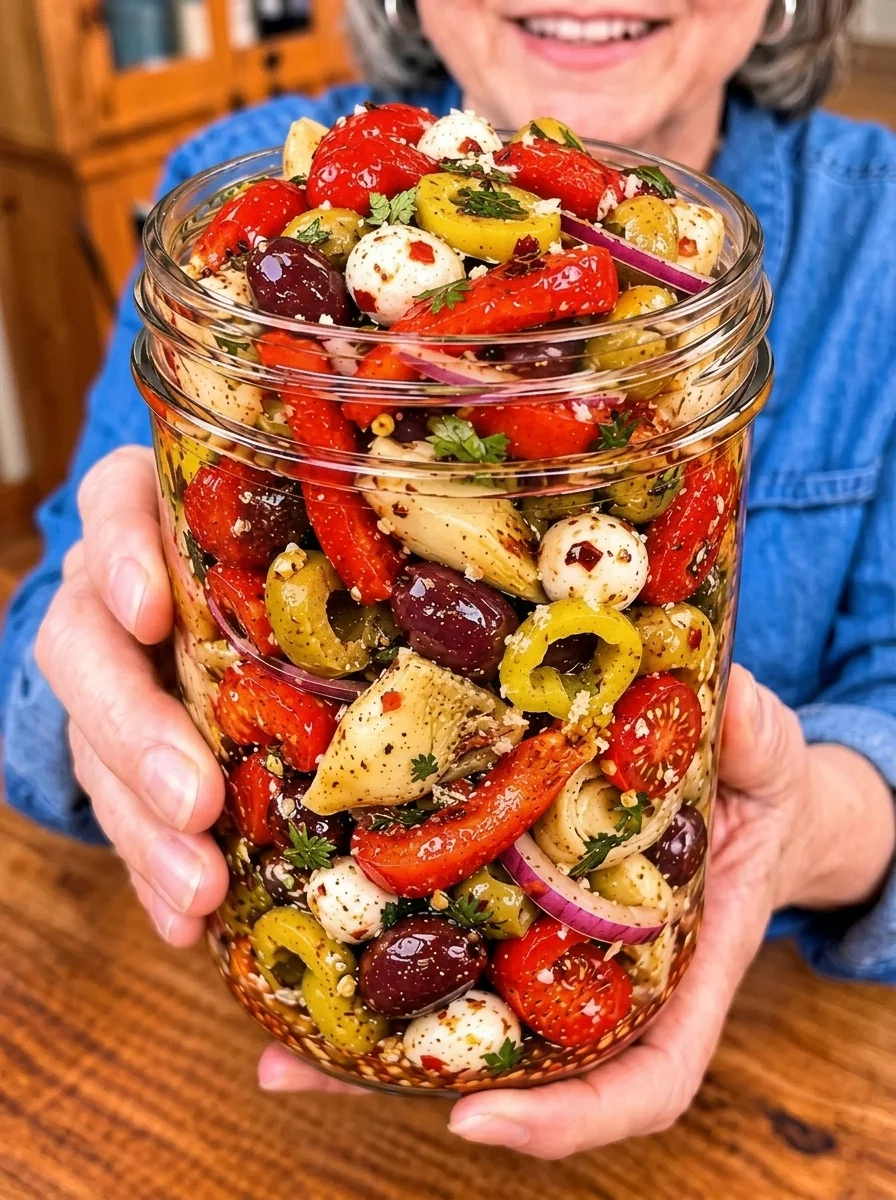
Roasted Red Pepper & Olive Antipasto Salad brings together sweet roasted peppers, briny olives, marinated artichokes, fresh mozzarella, and tangy pepperoncini in a garlic herb dressing. Parsley, basil, lemon, and red wine vinegar brighten the rich ingredients, while Parmesan adds a savory finish. It is a colorful no-cook appetizer or side that fits easily beside bread, grilled foods, or a cheese board.
The roasted peppers are the main vegetable here, with twice the volume used in many mixed antipasto salads. Their sweetness balances the olives and pickled peppers, and their tender texture contrasts with the onion and firm olive pieces. The dressing coats everything lightly rather than turning the bowl into a pool of oil.
Most of the preparation involves opening, draining, and slicing ingredients. A short refrigerator rest brings the flavors together, but careful draining and gentle mixing matter more than a long marinade. Serve with toasted baguette slices or crackers, or spoon a small portion beside dinner.
Recipe note: This article expands the supplied recipe with practical preparation guidance. It has not been independently kitchen-tested. Jarred ingredients, mozzarella moisture, olive saltiness, and optional additions affect the yield, seasoning, and nutrition.
Recipe at a Glance
- Prep time: About 20 minutes
- Cook time: None when using prepared roasted peppers
- Chilling: 30–60 minutes
- Total time: About 50–80 minutes
- Servings: 8 appetizer or side portions
- Method: No-cook mixing and refrigerated marinating
- Storage: Up to 3 days refrigerated, subject to ingredient freshness
Allow additional time if roasting peppers yourself. The stated preparation time assumes commercially roasted peppers and prepared marinated artichoke hearts.
What Makes This Salad Different
This is a chunky antipasto salad, not a leafy green salad. It has concentrated flavors, a substantial amount of olives, and two kinds of cheese. A moderate scoop can provide plenty of flavor alongside a mild main course or a slice of bread.
Roasted red peppers bring sweetness and a little roasted character, although jarred peppers are not always strongly smoky. Kalamata olives add a pronounced briny note, while green olives provide a different texture and flavor. Pepperoncini contribute vinegar tang and mild heat.
Fresh mozzarella softens the overall impression, and the herbs keep the mixture from feeling too heavy. The Parmesan dissolves partly into the dressing and partly clings to the vegetables. That means you may need little or no added salt after everything is combined.
Ingredients
For the Antipasto Salad
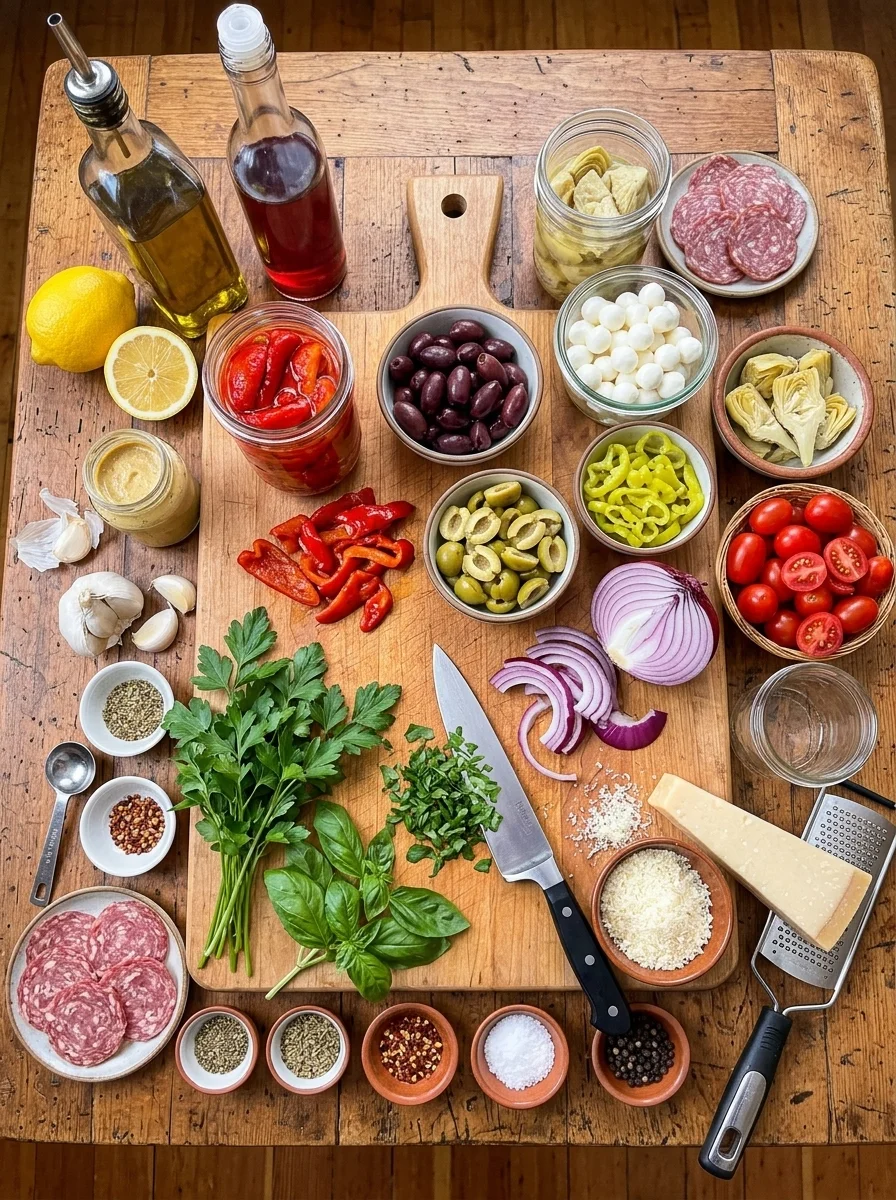
- 2 cups roasted red peppers, drained and sliced
- 1 cup pitted Kalamata olives, drained
- 1 cup pitted green olives, drained and halved if large
- 1 cup marinated artichoke hearts, drained and quartered
- 1 cup fresh mozzarella pearls or bite-sized cubes, drained
- ½ cup sliced pepperoncini, drained
- ½ cup cherry tomatoes, halved
- ¼ small red onion, thinly sliced
- ¼ cup chopped fresh parsley
- 2 tablespoons chopped fresh basil
- ¼ cup finely grated Parmesan cheese
For the Garlic Herb Dressing
- ⅓ cup extra-virgin olive oil
- 2 tablespoons red wine vinegar
- 1 tablespoon fresh lemon juice
- 1 teaspoon Dijon mustard
- 2 garlic cloves, finely minced
- 1 teaspoon dried Italian seasoning
- ½ teaspoon dried oregano
- ¼ teaspoon crushed red pepper flakes, or less to taste
- ¼ teaspoon freshly ground black pepper
- Salt, only if needed after tasting
Optional Additions
- ½ cup sliced ready-to-eat salami or pepperoni
- ¼ cup drained and chopped oil-packed sun-dried tomatoes
- 2 tablespoons drained capers
The optional additions are separate from the base recipe. You do not need all three, and adding capers or cured meat usually reduces the need for extra salt. Their calories and sodium also change the nutrition of the finished salad.
Choosing the Roasted Peppers
Use roasted red bell peppers, not hot red peppers. Water-packed and oil-packed products both work if drained thoroughly. Taste a small piece before mixing; some brands contain more vinegar or salt than others.
Drain in a colander, then lay the peppers on clean paper towels and blot gently. Avoid squeezing them firmly, which can break the tender flesh into small fragments. Cut into short, bite-sized strips rather than leaving long ribbons that are difficult to serve.
Measure two cups after draining and slicing. Counting whole peppers is less reliable because size varies. If using home-roasted peppers, peel, seed, cool completely, and drain before measuring. Do not add warm peppers to a salad containing chilled cheese.
Olives, Artichokes, and Pepperoncini
Olives
A mixture of Kalamata and green olives gives more variation than one type alone. Castelvetrano olives have a buttery character, while other green olives may be firmer or more sharply brined. Choose pitted products, but still check for occasional pit fragments.
Halve large olives so they distribute through the bowl. Small olives can remain whole if that suits your serving style. If a particular variety tastes excessively salty, rinse it briefly and drain well before adding; there is no need to rinse every ingredient automatically.
Artichoke Hearts
Marinated artichokes supply their own oil, acid, and herbs. Let excess marinade drain away so it does not compete unpredictably with the measured dressing. Quarter large hearts and remove any unusually tough pieces.
Plain canned artichokes are a possible substitute, but they bring less seasoning. Use the same drained volume and adjust the finished salad after chilling. Do not add the packing liquid to compensate.
Pepperoncini
Use pickled pepperoncini for the stated tangy flavor. Drain and slice if needed, removing stems and tough pieces. Their heat varies, so taste before deciding whether to use the full amount of crushed red pepper in the dressing.
Pepperoncini brine is not required in this formulation because the dressing already contains vinegar and lemon juice. Adding a little at the end is a flavor adjustment, not a necessary ingredient or a preservation step.
Cheese, Tomatoes, and Fresh Herbs
Drain mozzarella pearls well. If they are visibly wet, blot gently so loose whey does not dilute the dressing. Fresh mozzarella should stay tender; vigorous stirring can tear the pieces and make the salad look muddled.
Finely grated Parmesan distributes easily through the dressing. It is salty, so add it before making the final salt decision. If you want a vegetarian version, check the cheese labels for the type of rennet used rather than assuming every Parmesan-style cheese is vegetarian.
Firm cherry tomatoes hold up better than very soft, overripe ones. Halve small tomatoes or quarter large ones for manageable bites. For the freshest presentation, add them and the mozzarella shortly before serving when preparing the other ingredients well ahead.
Parsley can go in before the short chill. Basil is more delicate and may darken after extended contact with the dressing, so reserving it until near serving is useful for a make-ahead batch.
Equipment and Serving Container
Gather a colander, paper towels or a clean kitchen towel, cutting board, knife, measuring tools, small dressing bowl, whisk, and large mixing bowl. Two broad spoons make gentle tossing easier than squeezing everything with tongs.
The batch contains more than six cups of major ingredients before dressing and herbs. Use a generously sized bowl so you can fold rather than compress the mixture. A covered food-safe container is suitable for chilling.
If presenting in jars, use enough containers for the actual volume and leave room to stir. A single quart jar will not hold the full recipe. The jar is a serving or refrigerator container, not a canning method.
Step-by-Step Instructions
1. Drain the Peppers
Place the roasted peppers in a colander and let loose liquid run off. Blot gently, slice into short strips, and measure two cups. Transfer to a large bowl.
This step keeps the measured dressing from being diluted by packing liquid. You do not need to dry the peppers completely; the goal is to remove excess moisture without damaging them.
2. Prepare the Olives and Artichokes
Drain both olive varieties and the artichokes. Check the olives for pits and halve any large pieces. Quarter the artichoke hearts into bite-sized sections.
Add them to the peppers, handling the artichokes carefully. Reserve any exceptionally tough outer pieces rather than forcing them into the salad.
3. Prepare the Remaining Vegetables
Drain and slice the pepperoncini, halve the tomatoes, and thinly slice the red onion. Add to the bowl. Keep the onion pieces small enough that one bite does not contain a large raw wedge.
If you prefer milder onion, rinse the slices briefly under cold water and dry thoroughly. This is optional; do not add wet onion directly from the rinse to the dressing.
4. Whisk the Dressing
Combine olive oil, red wine vinegar, lemon juice, Dijon, garlic, Italian seasoning, oregano, crushed red pepper, and black pepper. Whisk until temporarily blended.
Hold back added salt initially. Olives, artichokes, pepperoncini, and Parmesan already contribute plenty. The mustard helps the oil and acid combine, but some separation during storage is normal.
5. Add Cheese and Optional Ingredients
Add drained mozzarella and Parmesan to the vegetable mixture. If using salami, sun-dried tomatoes, or capers, add them now in the stated batch quantities.
Use ready-to-eat cured meat appropriate for serving without cooking. A raw sausage product is not interchangeable with sliced salami or pepperoni intended to be eaten as packaged.
6. Dress Gradually
Pour about two-thirds of the dressing over the salad and fold gently with broad spoons. Add more as needed until the ingredients are evenly coated.
Depending on residual oil from the artichokes and peppers, you may prefer not to use every drop. Refrigerate unused fresh-garlic dressing promptly and use within the same short storage period as the salad. Do not leave it on the counter.
7. Fold in Herbs
Add parsley and basil, or reserve basil for serving if making the salad well ahead. Fold gently until evenly distributed. Taste a combined spoonful rather than tasting only an olive or only the dressing.
Add a small pinch of salt only if necessary. If the mixture needs brightness, try a few drops of vinegar or lemon juice before adding more oil or seasoning.
8. Chill
Cover and refrigerate at 40°F or below for thirty to sixty minutes. This gives the dressing time to mingle with the ingredients while keeping the vegetables and cheese fresh.
A short chill is enough for serving. A longer refrigerated rest is possible, but it does not guarantee better texture indefinitely. Tomatoes soften and herbs darken as the salad sits.
9. Toss and Serve
Stir gently before serving to redistribute the dressing. Add reserved basil and a little extra parsley if desired. Serve in a shallow bowl or on a platter with bread or crackers alongside.
If cold olive oil has thickened, allow the serving portion a brief few minutes to loosen and stir again. Keep the rest refrigerated rather than warming the whole batch for an extended period.
Balancing the Dressing
The olive oil, two tablespoons vinegar, and tablespoon of lemon juice create a relatively bold vinaigrette. That acidity works well with cheese and olives, but jarred ingredients contribute their own tang. Taste after the short chill before making large adjustments.
If the salad tastes too sharp, toss thoroughly first because acid can collect beneath the oil. Serve with bread or a mild accompaniment. A small additional drizzle of oil can soften the impression of acidity, but too much makes the salad heavy.
If it tastes flat, add a little lemon or vinegar and fresh herbs. Salt is not always the missing ingredient. A salad containing several brined components can need brightness even when it already has plenty of sodium.
Make-Ahead Planning
For next-day serving, drain and cut the peppers, olives, artichokes, pepperoncini, and onion. Store covered in the refrigerator. Prepare the dressing separately and refrigerate promptly because it contains fresh garlic.
Combine a few hours before serving, adding mozzarella, tomatoes, and fresh herbs closer to the meal if you want their freshest texture. The fully assembled salad can also be made earlier, but expect softer vegetables and darker basil.
Preparing components on different days does not create a new storage clock when they are mixed. Respect the earliest preparation date and any shorter opened-storage instructions on the ingredients. For a small household, a half batch may be more useful than a large bowl intended to last beyond three days.
Serving Ideas
Appetizer Platter
Serve small spoonfuls with toasted baguette, crackers, or focaccia. Keep extra cheese and cured meat alongside so guests can choose what they want. The salad itself already provides substantial briny flavor.
With Grilled or Roasted Foods
A moderate scoop pairs with chicken, fish, steak, or roasted vegetables. Plain potatoes, rice, or bread provide a mild contrast. The salad acts as a flavorful side rather than needing another heavily seasoned sauce on the plate.
In Sandwiches
Chop a portion slightly finer and drain before adding to a sandwich. It works with mozzarella, cooked chicken, or deli-style fillings. Keep wet dressing away from the bread as much as practical to prevent sogginess.
With Pasta
Fold a serving into cooked, cooled pasta and add only enough dressing to coat. This creates a separate pasta salad and changes portion size and nutrition. Keep refrigerated and use promptly; adding pasta does not reset the age of the antipasto ingredients.
Variations
Milder salad: Omit red pepper flakes and use mild pepperoncini. Reduce garlic to one clove if serving guests who prefer a gentler raw-garlic flavor.
More pepper-focused: Add another small amount of drained roasted peppers if you want a less olive-dense serving. You may need some reserved dressing, but taste before adding more salt.
Cheese variation: Use small cubes of provolone for a firmer, saltier alternative to mozzarella. This changes the creamy character and may reduce the need for Parmesan.
Herb variation: Use all parsley if basil is unavailable. Add a little fresh oregano sparingly if desired; its flavor can be stronger than parsley or basil.
With meat: Add the optional ready-to-eat salami or pepperoni. Cut into small pieces so it distributes rather than dominating a few servings.
With sun-dried tomatoes or capers: Start with one addition and taste. Both intensify the salad, and capers in particular add more salt and tang.
Troubleshooting
The Salad Is Watery
Drain jarred ingredients and mozzarella more thoroughly next time. For the current bowl, use a slotted spoon to transfer the solids to a clean serving dish, then spoon back only enough dressing to coat. Do not compensate automatically with more oil.
It Is Too Salty
Omit added salt and extra Parmesan. A serving with plain bread or another mild food can taste more balanced, but vinegar does not remove sodium. For future batches, rinse especially salty olives briefly and limit capers or cured meat.
The Peppers Break Apart
They may be exceptionally soft, sliced too finely, or mixed too vigorously. Use broad spoons and fold rather than stir rapidly. Some tender fragments are normal, but keeping strips moderately wide helps the presentation.
The Basil Turns Dark
Acid, handling, and storage can affect basil’s appearance. Add it closer to serving and avoid crushing it. Darkened basil does not automatically indicate spoilage, but assess the whole salad’s storage and freshness rather than judging by herb color alone.
The Dressing Looks Separated
Oil and vinegar naturally separate. Toss gently before serving. Dijon helps them combine temporarily but does not make a permanently stable dressing in every batch.
Storage and Transport
Keep covered at 40°F or below and use within three days, or sooner if ingredient freshness or package instructions require it. Store in a clean food-safe container and use clean utensils for serving.
Do not leave perishable salad out for more than two hours, or one hour above 90°F. For longer gatherings, set out a smaller portion and replenish from the refrigerator. Transport with ice packs in an insulated cooler.
Fresh garlic in oil-based dressing requires refrigeration; the vinegar in this recipe is not a validated preservation process. This salad is not shelf-stable and should not be canned or stored in the pantry simply because it is packed in a sealed jar.
Freezing is not recommended for the best texture. Fresh mozzarella, tomatoes, and roasted peppers can release moisture and become less appealing after thawing. General leftover handling guidance is available from the USDA Food Safety and Inspection Service.
Nutrition and Dietary Notes
Approximately 250 calories per serving is the supplied estimate for eight servings. Actual values depend on the olives, mozzarella, retained artichoke oil, amount of dressing consumed, and optional additions. Bread and crackers are separate.
The salad contains dairy from mozzarella and Parmesan. Mustard and other ingredients may be relevant to particular allergies, so check product labels. It is not automatically vegetarian because some cheeses use animal rennet, and optional salami or pepperoni adds meat.
If precise nutrition is important, calculate using your actual products and serving weights. Dividing the bowl into eight equal servings is more consistent than estimating by a loosely filled spoonful.
Frequently Asked Questions
Can I use fresh bell peppers?
Raw peppers give a different texture and flavor. Roast, peel, seed, cool, and drain them first if you want to follow the intended recipe. The stated preparation time does not include roasting from scratch.
Can I leave out the cheese?
Yes, but the balance becomes more intensely briny and tangy without the mild mozzarella. Taste after dressing and consider a smaller amount of vinaigrette initially. The nutritional profile also changes.
Can it marinate overnight?
Yes, refrigerated, but tomatoes, basil, and mozzarella look freshest when added closer to serving. An overnight rest is a scheduling option rather than a requirement for good flavor.
Does everything need to be submerged?
No. This is a dressed salad, not a vegetable preserve. Coat the ingredients, stir before serving, and keep refrigerated. Adding enough oil to cover the entire batch would substantially change the recipe.
Can I halve the recipe?
Yes. Halve the ingredients and use a smaller bowl or container. Add salt only after tasting, just as with the full batch. A half batch is convenient when you are unlikely to finish eight servings within the storage window.
Quick Recipe Reference
Drain and slice two cups roasted red peppers, one cup each Kalamata olives, green olives, artichokes, and mozzarella, plus pepperoncini, tomatoes, and onion. Whisk olive oil with red wine vinegar, lemon juice, Dijon, garlic, and seasonings. Add Parmesan and optional ingredients, then fold in dressing gradually. Add parsley and basil, refrigerate thirty to sixty minutes, and toss gently before serving. Keep covered and refrigerated and use within three days.
Roasted Red Pepper & Olive Antipasto Salad
Description
- Prep time: About 20 minutes
- Cook time: None when using prepared roasted peppers
- Chilling: 30–60 minutes
- Total time: About 50–80 minutes
- Servings: 8 appetizer or side portions
- Method: No-cook mixing and refrigerated marinating
- Storage: Up to 3 days refrigerated, subject to ingredient freshness
Allow additional time if roasting peppers yourself. The stated preparation time assumes commercially roasted peppers and prepared marinated artichoke hearts.
Ingredients
For the Antipasto Salad
- 2 cups roasted red peppers, drained and sliced
- 1 cup pitted Kalamata olives, drained
- 1 cup pitted green olives, drained and halved if large
- 1 cup marinated artichoke hearts, drained and quartered
- 1 cup fresh mozzarella pearls or bite-sized cubes, drained
- ½ cup sliced pepperoncini, drained
- ½ cup cherry tomatoes, halved
- ¼ small red onion, thinly sliced
- ¼ cup chopped fresh parsley
- 2 tablespoons chopped fresh basil
- ¼ cup finely grated Parmesan cheese
For the Garlic Herb Dressing
- ⅓ cup extra-virgin olive oil
- 2 tablespoons red wine vinegar
- 1 tablespoon fresh lemon juice
- 1 teaspoon Dijon mustard
- 2 garlic cloves, finely minced
- 1 teaspoon dried Italian seasoning
- ½ teaspoon dried oregano
- ¼ teaspoon crushed red pepper flakes, or less to taste
- ¼ teaspoon freshly ground black pepper
- Salt, only if needed after tasting
Optional Additions
- ½ cup sliced ready-to-eat salami or pepperoni
- ¼ cup drained and chopped oil-packed sun-dried tomatoes
- 2 tablespoons drained capers
The optional additions are separate from the base recipe. You do not need all three, and adding capers or cured meat usually reduces the need for extra salt. Their calories and sodium also change the nutrition of the finished salad.
Instructions
1. Drain the Peppers
Place the roasted peppers in a colander and let loose liquid run off. Blot gently, slice into short strips, and measure two cups. Transfer to a large bowl.
This step keeps the measured dressing from being diluted by packing liquid. You do not need to dry the peppers completely; the goal is to remove excess moisture without damaging them.
2. Prepare the Olives and Artichokes
Drain both olive varieties and the artichokes. Check the olives for pits and halve any large pieces. Quarter the artichoke hearts into bite-sized sections.
Add them to the peppers, handling the artichokes carefully. Reserve any exceptionally tough outer pieces rather than forcing them into the salad.
3. Prepare the Remaining Vegetables
Drain and slice the pepperoncini, halve the tomatoes, and thinly slice the red onion. Add to the bowl. Keep the onion pieces small enough that one bite does not contain a large raw wedge.
If you prefer milder onion, rinse the slices briefly under cold water and dry thoroughly. This is optional; do not add wet onion directly from the rinse to the dressing.
4. Whisk the Dressing
Combine olive oil, red wine vinegar, lemon juice, Dijon, garlic, Italian seasoning, oregano, crushed red pepper, and black pepper. Whisk until temporarily blended.
Hold back added salt initially. Olives, artichokes, pepperoncini, and Parmesan already contribute plenty. The mustard helps the oil and acid combine, but some separation during storage is normal.
5. Add Cheese and Optional Ingredients
Add drained mozzarella and Parmesan to the vegetable mixture. If using salami, sun-dried tomatoes, or capers, add them now in the stated batch quantities.
Use ready-to-eat cured meat appropriate for serving without cooking. A raw sausage product is not interchangeable with sliced salami or pepperoni intended to be eaten as packaged.
6. Dress Gradually
Pour about two-thirds of the dressing over the salad and fold gently with broad spoons. Add more as needed until the ingredients are evenly coated.
Depending on residual oil from the artichokes and peppers, you may prefer not to use every drop. Refrigerate unused fresh-garlic dressing promptly and use within the same short storage period as the salad. Do not leave it on the counter.
7. Fold in Herbs
Add parsley and basil, or reserve basil for serving if making the salad well ahead. Fold gently until evenly distributed. Taste a combined spoonful rather than tasting only an olive or only the dressing.
Add a small pinch of salt only if necessary. If the mixture needs brightness, try a few drops of vinegar or lemon juice before adding more oil or seasoning.
8. Chill
Cover and refrigerate at 40°F or below for thirty to sixty minutes. This gives the dressing time to mingle with the ingredients while keeping the vegetables and cheese fresh.
A short chill is enough for serving. A longer refrigerated rest is possible, but it does not guarantee better texture indefinitely. Tomatoes soften and herbs darken as the salad sits.
9. Toss and Serve
Stir gently before serving to redistribute the dressing. Add reserved basil and a little extra parsley if desired. Serve in a shallow bowl or on a platter with bread or crackers alongside.
If cold olive oil has thickened, allow the serving portion a brief few minutes to loosen and stir again. Keep the rest refrigerated rather than warming the whole batch for an extended period.