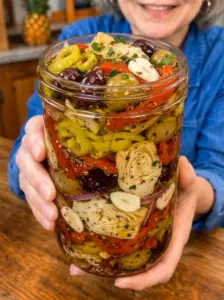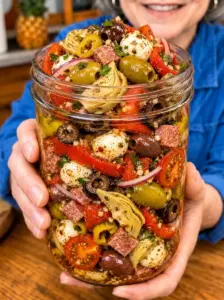
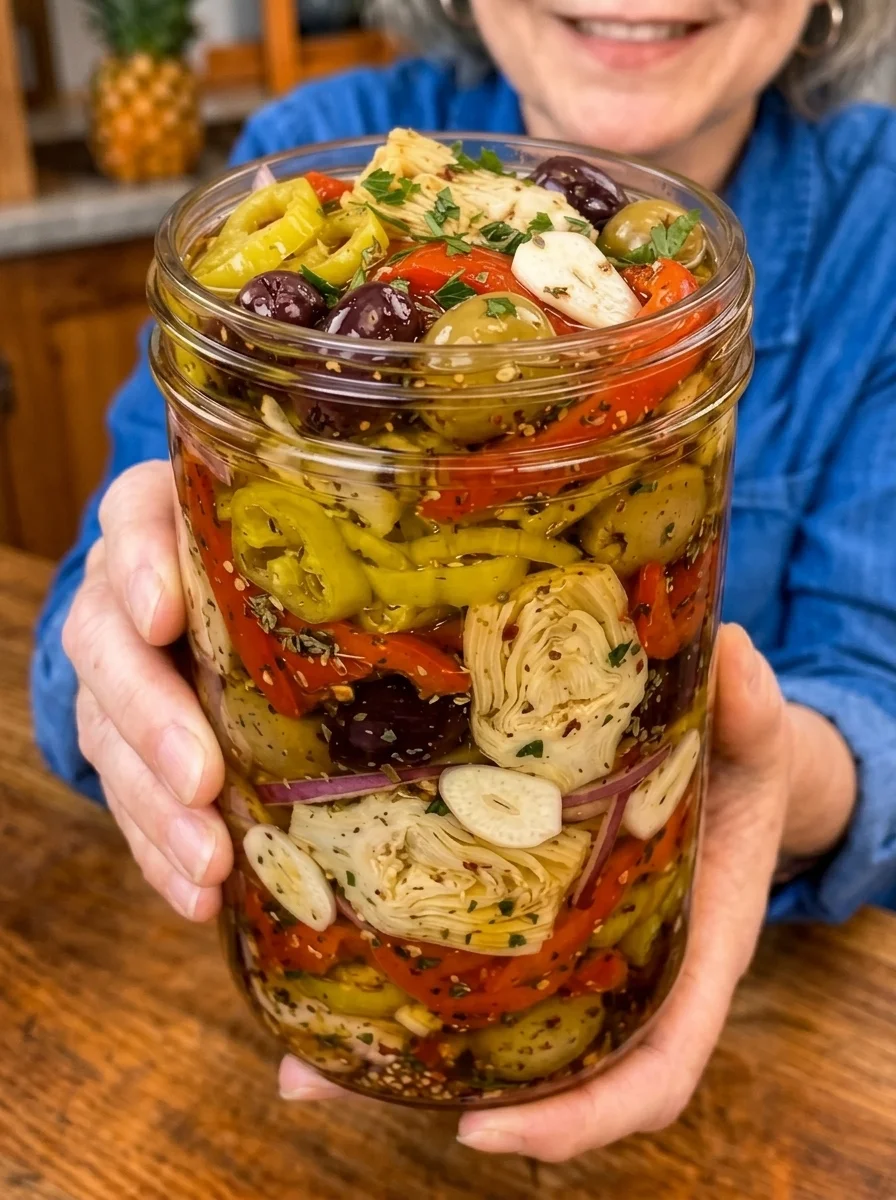
Sweet roasted peppers, tangy pepperoncini, two kinds of olives, and tender artichoke hearts make this antipasto jar a colorful addition to an appetizer spread. Red onion brings a little crunch, while sliced garlic, parsley, oregano, and a red wine vinaigrette give the mixture a savory finish. There is no cooking involved: drain, slice, dress, and refrigerate until the flavors come together.
This is a generous condiment or small side rather than a leafy salad. Spoon it beside grilled chicken, pile it onto a sandwich, or serve it with bread that can catch the garlicky dressing. The peppers contribute sweetness without added sugar, the olives provide richness, and the pepperoncini supply a bright vinegar tang with gentle heat.
The recipe works especially well when prepared the evening before a gathering. A few hours in the refrigerator mellow the onion and spread the garlic flavor through the vegetables. It remains a fresh, refrigerated dish, however, even when presented in a tightly closed jar.
Recipe note: This article expands the supplied recipe with practical preparation guidance. The formulation has not been independently kitchen-tested; ingredient brands and drained volumes will affect the finished balance and yield.
What to Expect
Expect a chunky, well-dressed mixture with distinct pieces of vegetables and olives. Roasted peppers and artichokes are already tender, while pepperoncini and raw onion offer a firmer bite. This is not a crunchy fresh-cucumber pickle, and the vegetables do not need to sit under an inch of oil.
The marinade has a simple oil-and-vinegar foundation with pepperoncini brine for extra flavor. Dijon helps the liquids combine temporarily, but some separation is normal. A gentle stir before serving redistributes the dressing and herbs.
Four hours gives the mixture time to develop, and an overnight rest makes the garlic more noticeable. Because most of the vegetables arrive already seasoned, the most useful finishing adjustment is often a little more vinegar or parsley rather than extra salt.
Recipe at a Glance
- Prep time: About 20 minutes
- Cook time: None
- Marinating time: At least 4 hours, or overnight
- Total time: About 4 hours 20 minutes with minimum marinating
- Servings: 8 small appetizer or side portions
- Method: No-cook, refrigerated marinating
- Flavor: Briny, tangy, garlicky, mildly spicy
Allow extra time if you need to pit olives or roast fresh peppers. The stated preparation time assumes commercially roasted peppers and prepared marinated artichokes.
Ingredients
For the Antipasto
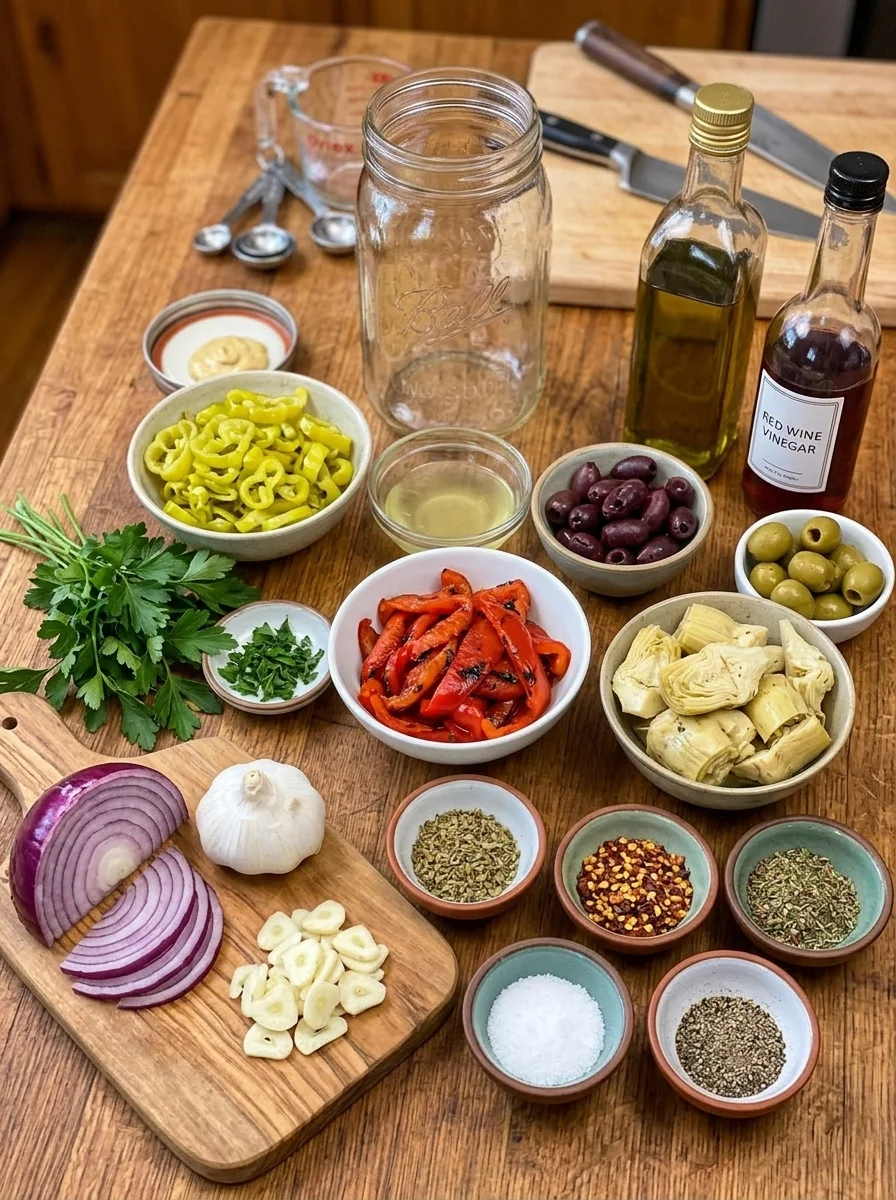
- 1 cup sliced pepperoncini peppers, drained
- 1 cup roasted red peppers, drained and sliced
- ¾ cup pitted Kalamata olives, drained
- ¾ cup pitted green olives, drained
- 1 cup marinated artichoke hearts, drained and quartered
- ½ cup thinly sliced red onion
- 4 garlic cloves, peeled and thinly sliced
- 2 tablespoons chopped fresh parsley
- 1 teaspoon dried oregano
- ½ teaspoon crushed red pepper flakes, or less to taste
- ½ teaspoon freshly ground black pepper
For the Garlic Herb Marinade
- ½ cup extra-virgin olive oil
- ¼ cup red wine vinegar
- 2 tablespoons pepperoncini brine
- 1 teaspoon Dijon mustard
- ½ teaspoon dried Italian seasoning
- Up to ¼ teaspoon salt, only if needed
Reserve the pepperoncini brine before draining the peppers. The black pepper appears once in the ingredient list and goes into the marinade; there is no second half-teaspoon addition.
Choosing the Ingredients
Pepperoncini
Use pickled pepperoncini from a jar. Their vinegar brine and soft crunch are central to this recipe. Fresh peppers will not produce the same result. Mild pepperoncini make an approachable starting point, especially because red pepper flakes add a separate layer of heat.
If using whole pickled peppers, remove the stems and slice into rings. Let excess brine drain away before measuring. A few seeds are fine, but remove tough stem pieces. Taste a pepper before deciding whether to use the full amount of crushed red pepper.
Roasted Red Peppers
Jarred roasted red bell peppers are convenient and consistent with the no-cook method. Drain them and blot gently so water does not dilute the dressing. Cut into short strips that can fit on bread without dragging the whole mixture along.
Home-roasted peppers also work if peeled, seeded, completely cooled, and drained. Their moisture and sweetness vary, so taste the finished mixture before adjusting vinegar. Do not put warm roasted vegetables into the jar with cold ingredients.
Olives
Kalamata olives contribute a firm texture and pronounced briny flavor. Green olives offer contrast; Castelvetrano olives are a buttery option, while other varieties can be sharper or more intensely salted.
Buy pitted olives, but still check for stray pits or fragments. Halve very large olives for easier serving. If one variety tastes exceptionally salty, a quick rinse followed by thorough draining can soften its impact. Avoid rinsing everything automatically, since some briny character is desirable.
Artichoke Hearts
Marinated artichokes bring their own seasoning and a little residual oil. Drain them well without squeezing or tearing the tender leaves. Quarter large pieces, and trim any unusually tough sections.
Plain canned artichokes can be substituted, but the salad may need more seasoning. Taste after chilling rather than immediately increasing every herb and spice. The garlic and vinegar will become more apparent as the mixture rests.
Garlic, Onion, and Herbs
Slice the garlic thinly enough to distribute it, but do not shave it into fragile, nearly transparent pieces. Four cloves make a distinctly garlicky jar. Use two or three if serving guests who prefer a milder raw-garlic flavor.
Thin red onion slices soften during marinating. For less sharpness, rinse the sliced onion briefly under cold water and dry thoroughly before adding. Fresh parsley brings brightness, while dried oregano and Italian seasoning provide an herb background.
Olive Oil and Vinegar
Choose an olive oil you enjoy in salad dressing. A strongly bitter oil can dominate this mixture, so a balanced, fruity bottle is useful. Red wine vinegar adds a rounded acidity; pepperoncini brine contributes salt as well as tang.
Do not replace the vinegar with additional oil when trying to soften the flavor. Start with a little less dressing on the vegetables, then adjust after chilling. This recipe is a dressed antipasto, not an oil-preserved product.
Equipment and Jar Size
You need a cutting board, sharp knife, colander, measuring cups and spoons, small bowl, whisk, and a large mixing bowl. A clean container with a tight-fitting lid completes the setup.
The vegetables alone measure roughly five cups before settling. One standard quart jar holds only four cups, so it is unlikely to fit the whole batch comfortably with dressing and stirring room. Use a wide-mouth two-quart jar, divide the mixture between smaller containers, or refrigerate it in a covered bowl.
Do not force the ingredients into a narrow jar. Crushing the artichokes and peppers makes serving messier and does not improve marinating. Leave enough room to fold the mixture gently with a spoon. Since nothing is heated, a heat-safe jar is not specifically necessary; clean, food-safe glass or another suitable refrigerator container is sufficient.
How to Make the Antipasto Jar
1. Drain the Prepared Vegetables
Reserve two tablespoons of pepperoncini brine, then drain the peppers, roasted red peppers, olives, and artichokes. Measure the drained ingredients. Let visibly wet items sit in the colander briefly and blot the roasted peppers as needed.
Good draining helps the vinaigrette stay flavorful. The goal is to remove loose packing liquid, not dry the vegetables until they become leathery. Handle artichokes carefully to preserve their shape.
2. Cut into Serving Pieces
Slice the roasted peppers into short strips and quarter the artichokes. Halve oversized olives. Thinly slice the red onion and garlic, then chop the parsley.
Keep the pieces large enough to recognize but small enough to spoon onto a cracker or baguette slice. A mixture of long pepper strips and whole oversized olives can be awkward to serve from a narrow opening.
3. Whisk the Marinade
Combine the olive oil, red wine vinegar, reserved pepperoncini brine, Dijon, Italian seasoning, and black pepper in a small bowl. Whisk until the mixture looks blended. Hold back the salt initially.
The olives, pickled peppers, and artichokes may already supply all the salt the dish needs. You can add a small pinch after the antipasto has chilled and been tossed again.
4. Combine Before Packing
Place the drained vegetables, olives, onion, garlic, parsley, oregano, and crushed red pepper flakes in a large bowl. Pour over about three-quarters of the marinade and fold gently with a large spoon.
Add the remaining marinade as needed for an evenly dressed mixture. Depending on how much liquid the vegetables retain, you may prefer to use all of it or leave a little behind. Refrigerate any unused dressing immediately and use within the same short storage window as the antipasto.
5. Transfer to the Jar
Spoon the mixture into your container, alternating colors if you want attractive layers. Pour in the dressing collected at the bottom of the bowl. Keep the ingredients loosely settled rather than firmly compressed.
Coating is the goal. Complete submersion is unnecessary, and adding extra oil to cover everything would change the dish substantially. Stirring during the refrigerated rest redistributes the dressing over the upper pieces.
6. Refrigerate Promptly
Cover and refrigerate at 40°F or below for at least four hours. An overnight rest is convenient for entertaining. If practical, give the mixture one gentle stir during chilling.
Do not leave it on the counter to encourage flavor development. The garlic and herbs can infuse the dressing while refrigerated. Label the container with the preparation date so the storage window is easy to track.
7. Taste and Finish
Stir gently before tasting. Adjust with a small splash of red wine vinegar for brightness or a little parsley for freshness. Add salt only if needed, and remember that a spoonful eaten with bread may taste more balanced than the antipasto alone.
Cold olive oil can cloud or thicken. Transfer the portion you intend to serve to a bowl and allow it a brief few minutes to loosen, then stir. Keep the main container refrigerated.
8. Serve in Small Portions
Spoon onto a platter or into a shallow bowl with a serving spoon. Provide bread, crackers, or another mild accompaniment. For sandwiches, drain each spoonful slightly so the bread does not become saturated.
Return remaining antipasto to the refrigerator promptly. Refill a small serving bowl from the chilled supply when entertaining instead of setting the entire batch out for the whole event.
Getting the Flavor Balance Right
Too salty: Add more unsalted roasted pepper or another suitable unsalted vegetable to the portion you plan to serve, or pair it with plain bread. Extra vinegar makes it sharper but does not remove sodium. Next time, rinse the saltiest olives briefly and omit added salt.
Too acidic: Toss thoroughly first, because vinegar can collect beneath the oil. Serve with bread or a mild cheese added at serving time. A small amount of extra oil can soften the impression of acidity, but pouring in a large quantity makes the antipasto heavy.
Too spicy: Reduce or omit crushed red pepper when making the batch. For an already mixed portion, add more mild roasted peppers or serve smaller spoonfuls with a creamy accompaniment. Removing visible flakes will not remove all the heat already dispersed in the dressing.
Too garlicky: Use less raw garlic next time and keep slices easy to identify. For the current batch, serve a smaller amount alongside mild foods. Chilling changes the flavor, but it does not guarantee the garlic will become mild.
Make-Ahead Planning
For next-day serving, assemble the full recipe the evening before and refrigerate promptly. This timing gives the dressing a chance to season the onion and vegetables while keeping preparation simple on the day of the gathering.
If you want especially bright parsley, reserve a small portion of the measured amount to fold in before serving. Keep that reserved parsley refrigerated. You can also drain and cut the vegetables several hours ahead, then dress them when convenient.
Preparing the dressing early does not create a new storage period when it is added later. Count from when fresh garlic is combined with the oil-based mixture, and respect any shorter ingredient storage limits. For a small household, a half batch may be more practical than trying to stretch a large jar across a week.
Serving Ideas
With Bread and Cheese
Offer toasted baguette slices, focaccia, or plain crackers. Ricotta, mozzarella, or provolone served separately provides a mellow contrast to the briny peppers and olives. Add cheese to the serving plate rather than automatically mixing it into the storage jar.
On Sandwiches
Chop a spoonful slightly finer and drain it before adding to a sandwich. It pairs well with cooked chicken, turkey, salami, or mozzarella. Place the mixture between sturdier fillings to help protect the bread from the dressing.
Alongside Dinner
Use a small scoop beside grilled chicken, fish, or roasted vegetables. Plain rice, potatoes, or bread make useful companions because they balance the concentrated seasoning. Treat the antipasto as the flavorful accent on the plate.
In Pasta Salad
Toss a serving with cooked, cooled pasta and add only enough of the jar dressing to coat. Taste before salting. Keep the resulting pasta salad refrigerated and use promptly; mixing it into a new dish does not reset the age of the antipasto.
Variations
- Milder jar: Use mild pepperoncini, omit red pepper flakes, and reduce the garlic to two cloves.
- Hotter jar: Choose hot pickled pepperoncini or increase the flakes gradually after tasting.
- Sun-dried tomato version: Add a few tablespoons of drained, chopped oil-packed sun-dried tomatoes for deeper savory sweetness. Check their ingredient and storage labels.
- Extra herbs: Replace some parsley with fresh basil just before serving. Basil can darken during prolonged storage.
- Cheese finish: Add shaved Parmesan or mozzarella to individual servings. Recheck salt before adding salty cheese.
Keep substitutions modest so the peppers, olives, and artichokes remain the focus. Any variation with fresh garlic and oil still requires prompt refrigeration and a short storage period.
Storage and Food Safety
Store tightly covered at 40°F or below and use within three to four days of preparation, or sooner if an ingredient’s opened-storage instructions require it. The presence of vinegar and commercially pickled vegetables does not validate the entire finished mixture for longer storage.
Fresh garlic in an oil-based mixture deserves particular care. Oregon State University Extension advises refrigerating raw garlic-in-oil preparations and using them within four days. This antipasto has not been tested as an acidified preserve; its vinegar dressing should not be treated as a preservation process.
Do not store the jar in the pantry, process this formulation as a home-canning recipe, or give it as an unrefrigerated shelf-stable gift. A closed lid does not make the contents safe at room temperature. Keep chilled during transportation using an insulated cooler and ice packs.
Use clean utensils and avoid returning served portions to the storage container. Limit time at room temperature to two hours, or one hour above 90°F. Discard food with visible spoilage, but do not rely on smell or appearance to establish safety after improper storage. Freezing is not recommended for the best texture of this finished antipasto.
Frequently Asked Questions
Can I serve it immediately?
Yes, but the vegetables will taste more separate and the onion sharper. Four hours of refrigerated marinating gives the dressing more time to distribute. Taste again before serving because the balance changes as the mixture rests.
Do I need to sterilize the jar?
Use a thoroughly cleaned food-safe container and clean utensils. This is ordinary refrigerated food preparation, not canning. Sterilizing or heating a jar would not make this recipe shelf-stable.
Why did the oil turn cloudy?
Some olive oils become cloudy or partially firm at refrigerator temperatures. That change alone is normal. Stir a small serving portion after a brief rest to loosen the dressing; do not warm the whole storage jar for an extended period.
Can I skip the mustard?
Yes. The dressing will separate more readily, so whisk thoroughly and stir before serving. Check mustard and artichoke labels if preparing food for someone with allergies or dietary restrictions.
Is the nutrition estimate exact?
No. Olive size, artichoke packing oil, and how much dressing is eaten make a substantial difference. Approximately 215 calories per eighth of the batch is the supplied estimate; calculate from your specific products and consumed dressing if precision matters.
Print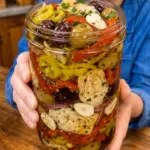
Pepperoncini & Roasted Red Pepper Antipasto Jar
Description
- Prep time: About 20 minutes
- Cook time: None
- Marinating time: At least 4 hours, or overnight
- Total time: About 4 hours 20 minutes with minimum marinating
- Servings: 8 small appetizer or side portions
- Method: No-cook, refrigerated marinating
- Flavor: Briny, tangy, garlicky, mildly spicy
Allow extra time if you need to pit olives or roast fresh peppers. The stated preparation time assumes commercially roasted peppers and prepared marinated artichokes.
Ingredients
For the Antipasto
- 1 cup sliced pepperoncini peppers, drained
- 1 cup roasted red peppers, drained and sliced
- ¾ cup pitted Kalamata olives, drained
- ¾ cup pitted green olives, drained
- 1 cup marinated artichoke hearts, drained and quartered
- ½ cup thinly sliced red onion
- 4 garlic cloves, peeled and thinly sliced
- 2 tablespoons chopped fresh parsley
- 1 teaspoon dried oregano
- ½ teaspoon crushed red pepper flakes, or less to taste
- ½ teaspoon freshly ground black pepper
For the Garlic Herb Marinade
- ½ cup extra-virgin olive oil
- ¼ cup red wine vinegar
- 2 tablespoons pepperoncini brine
- 1 teaspoon Dijon mustard
- ½ teaspoon dried Italian seasoning
- Up to ¼ teaspoon salt, only if needed
Reserve the pepperoncini brine before draining the peppers. The black pepper appears once in the ingredient list and goes into the marinade; there is no second half-teaspoon addition.
Instructions
1. Drain the Prepared Vegetables
Reserve two tablespoons of pepperoncini brine, then drain the peppers, roasted red peppers, olives, and artichokes. Measure the drained ingredients. Let visibly wet items sit in the colander briefly and blot the roasted peppers as needed.
Good draining helps the vinaigrette stay flavorful. The goal is to remove loose packing liquid, not dry the vegetables until they become leathery. Handle artichokes carefully to preserve their shape.
2. Cut into Serving Pieces
Slice the roasted peppers into short strips and quarter the artichokes. Halve oversized olives. Thinly slice the red onion and garlic, then chop the parsley.
Keep the pieces large enough to recognize but small enough to spoon onto a cracker or baguette slice. A mixture of long pepper strips and whole oversized olives can be awkward to serve from a narrow opening.
3. Whisk the Marinade
Combine the olive oil, red wine vinegar, reserved pepperoncini brine, Dijon, Italian seasoning, and black pepper in a small bowl. Whisk until the mixture looks blended. Hold back the salt initially.
The olives, pickled peppers, and artichokes may already supply all the salt the dish needs. You can add a small pinch after the antipasto has chilled and been tossed again.
4. Combine Before Packing
Place the drained vegetables, olives, onion, garlic, parsley, oregano, and crushed red pepper flakes in a large bowl. Pour over about three-quarters of the marinade and fold gently with a large spoon.
Add the remaining marinade as needed for an evenly dressed mixture. Depending on how much liquid the vegetables retain, you may prefer to use all of it or leave a little behind. Refrigerate any unused dressing immediately and use within the same short storage window as the antipasto.
5. Transfer to the Jar
Spoon the mixture into your container, alternating colors if you want attractive layers. Pour in the dressing collected at the bottom of the bowl. Keep the ingredients loosely settled rather than firmly compressed.
Coating is the goal. Complete submersion is unnecessary, and adding extra oil to cover everything would change the dish substantially. Stirring during the refrigerated rest redistributes the dressing over the upper pieces.
6. Refrigerate Promptly
Cover and refrigerate at 40°F or below for at least four hours. An overnight rest is convenient for entertaining. If practical, give the mixture one gentle stir during chilling.
Do not leave it on the counter to encourage flavor development. The garlic and herbs can infuse the dressing while refrigerated. Label the container with the preparation date so the storage window is easy to track.
7. Taste and Finish
Stir gently before tasting. Adjust with a small splash of red wine vinegar for brightness or a little parsley for freshness. Add salt only if needed, and remember that a spoonful eaten with bread may taste more balanced than the antipasto alone.
Cold olive oil can cloud or thicken. Transfer the portion you intend to serve to a bowl and allow it a brief few minutes to loosen, then stir. Keep the main container refrigerated.
8. Serve in Small Portions
Spoon onto a platter or into a shallow bowl with a serving spoon. Provide bread, crackers, or another mild accompaniment. For sandwiches, drain each spoonful slightly so the bread does not become saturated.
Return remaining antipasto to the refrigerator promptly. Refill a small serving bowl from the chilled supply when entertaining instead of setting the entire batch out for the whole event.