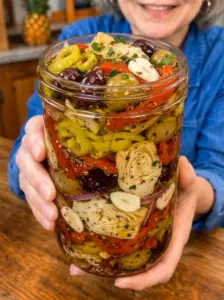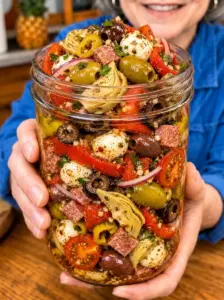
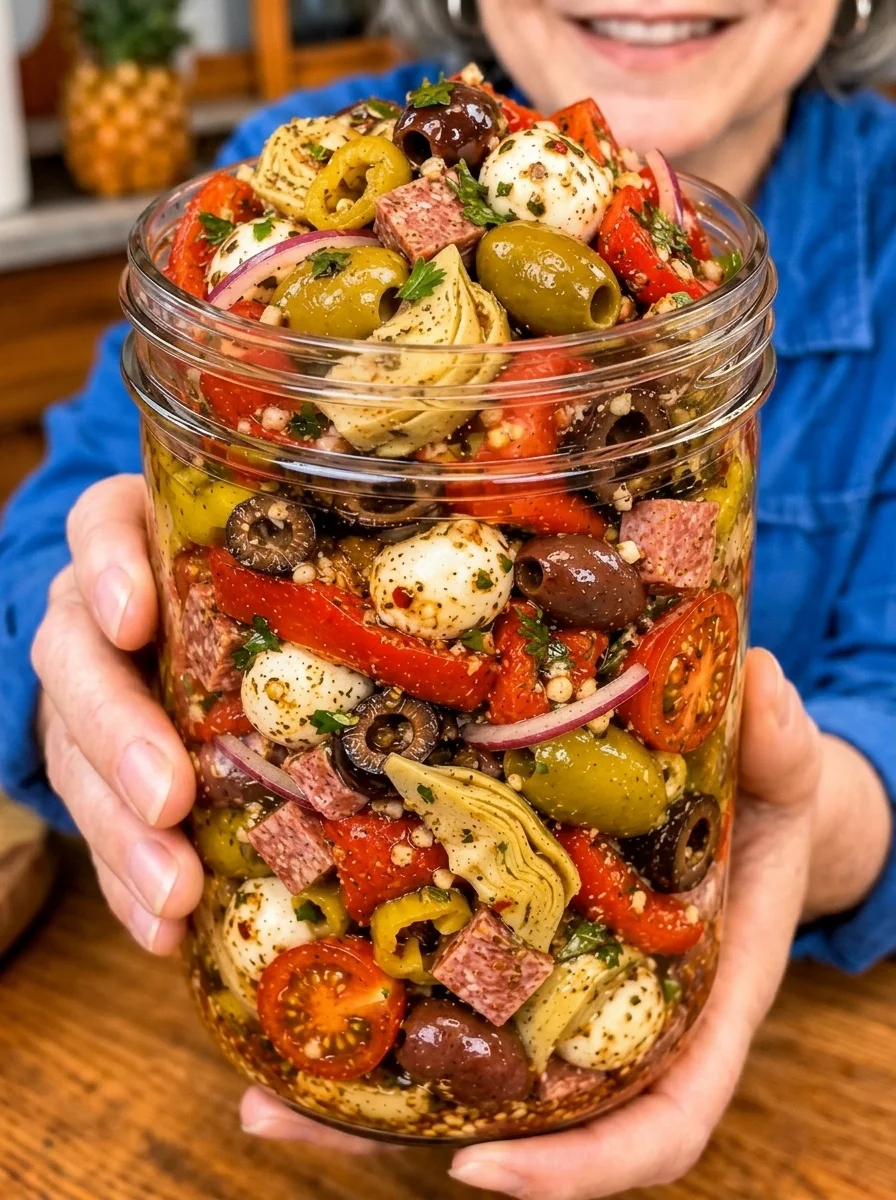
Italian Garlic Olive Antipasto Salad brings olives, artichokes, roasted peppers, fresh mozzarella, and salami together in a garlic-herb vinaigrette. Cherry tomatoes add freshness, red onion contributes a little bite, and parsley brightens the rich, briny ingredients. It is a substantial chopped salad that works particularly well in small portions alongside bread, grilled food, or a larger appetizer spread.
Most of the preparation is draining, slicing, and tossing. There is no cooking stage, and the dressing can be whisked in a bowl while the vegetables drain. A short refrigerator rest lets the garlic and herbs mingle with the olives and marinated ingredients.
Because several ingredients are already salty or dressed, the final seasoning needs a light hand. Drain the antipasto components thoroughly, add the vinegar dressing gradually, and taste before adding all the salt. Those details keep the salad flavorful without becoming overly briny or oily.
This article expands the supplied recipe with preparation and storage guidance. It has not been independently kitchen-tested. Olive varieties, salami, mozzarella, and jarred vegetables vary in salt, moisture, and size, so the final yield and nutrition are estimates.
What to Expect
This is a chunky antipasto salad rather than a leafy green salad. The olives provide much of the volume and flavor, with cheese, meat, and vegetables distributed among them.
The dressing should coat the ingredients lightly. It is normal for some liquid to collect at the bottom as tomatoes release juice, but the salad should not resemble a container of vegetables submerged in oil.
The flavor is briny, tangy, garlicky, and savory. Fresh mozzarella provides a mild creamy contrast, while roasted peppers bring gentle sweetness.
The dish is Italian-inspired and draws on familiar antipasto ingredients. It does not need a claim of regional authenticity to be a useful side or appetizer.
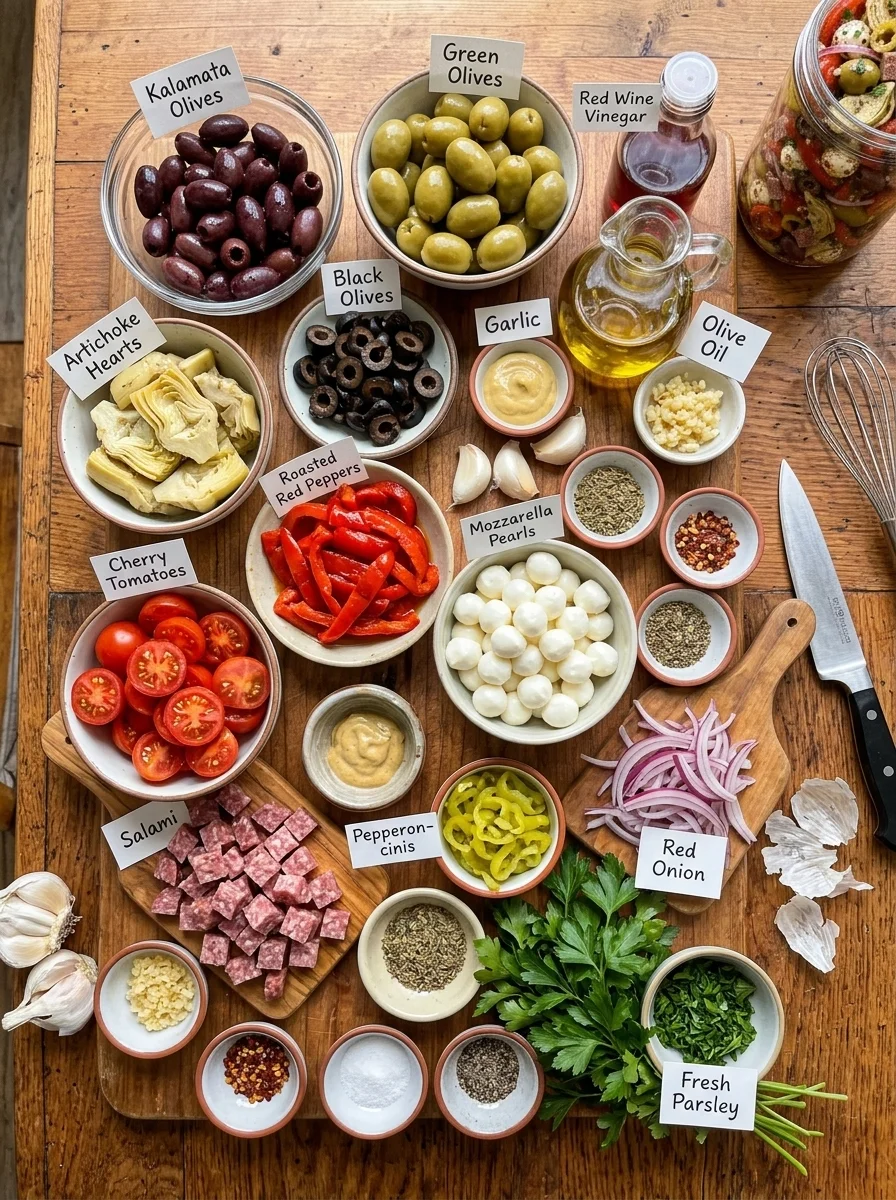
Ingredients
Antipasto Salad
- 1 cup pitted Kalamata olives, drained
- 1 cup large pitted green olives, drained
- 1/2 cup sliced black olives, drained
- 1 cup marinated artichoke hearts, drained and quartered
- 1 cup roasted red peppers, drained and sliced
- 1 cup fresh mozzarella pearls, drained
- 1/2 cup cherry tomatoes, halved
- 1/2 cup diced ready-to-eat salami
- 1/4 cup thinly sliced red onion
- 2 tablespoons chopped fresh parsley
- 2 tablespoons sliced pepperoncini, drained, optional
Italian Garlic Dressing
- 1/3 cup extra-virgin olive oil
- 3 tablespoons red wine vinegar
- 2 garlic cloves, finely minced or grated
- 1 teaspoon Dijon mustard
- 1 teaspoon dried Italian seasoning
- 1/2 teaspoon dried oregano
- Up to 1/2 teaspoon crushed red pepper flakes, optional
- 1/4 teaspoon black pepper
- Up to 1/4 teaspoon salt, only if needed
Servings: Approximately eight side or appetizer portions.
Measure the jarred ingredients after draining. Their packing liquids are not additional dressing ingredients in this version.
The listed olive quantities total 2 1/2 cups. If using different varieties, keep that overall quantity similar rather than adding another full jar on top of the base amounts.
Ingredient Notes
Mix olives for flavor and texture
Kalamata olives provide a pronounced briny flavor, green olives add a different firm bite, and sliced black olives distribute easily through smaller portions.
Halve large olives so they are comfortable to eat and easier to combine with cheese and vegetables on a fork. Check for stray pits even when the label says pitted, particularly before serving guests.
Garlic-stuffed olives can be used as part of the green olive portion. They bring additional garlic and salt, so taste before increasing the dressing garlic or seasoning.
Castelvetrano olives are another possible green olive choice. Their mild character can soften the overall flavor, though product preparation varies.
Drain marinated artichokes
The artichokes already contain seasoning and oil. Drain them well before measuring so their marinade does not overwhelm the new dressing.
Quarter large pieces or cut into smaller bite-sized portions. Remove any tough outer leaf sections that are unpleasant to chew.
Plain canned artichokes can be tried, but they lack the same marinated flavor and may change the balance. Taste after tossing rather than adding extra salt automatically.
Pat peppers gently
Roasted red peppers often carry liquid in their folds. Drain, slice, and blot gently if necessary so they do not introduce a large amount of water.
Use short strips that fit comfortably on a fork. Very long ribbons can tangle around the olives and make the salad harder to portion.
The peppers do not need to be completely dry; the goal is to remove excess packing liquid rather than squeeze them into a paste.
Use fresh mozzarella pearls
Drain the mozzarella before adding. If the pearls are large, halve them so their size is similar to the other ingredients.
Fresh mozzarella has a different texture from shredded low-moisture mozzarella. It remains soft and creamy in this cold salad rather than melting into the dressing.
Use a fresh, properly refrigerated product and follow any shorter package storage instructions. Combining an older cheese with fresh vegetables does not reset its usable life.
Salami is a ready-to-eat ingredient
Use salami suitable for eating without additional cooking. Dice it into small pieces so a modest amount provides flavor throughout the salad.
A spicy salami changes the overall heat level. If using one, begin with less crushed red pepper in the dressing.
For a meat-free version, omit salami and use suitable vegetarian cheese. Do not assume every hard-cheese garnish is vegetarian without checking its rennet source.
Red onion can be mellowed
Slice thinly for a more even bite. Large raw onion pieces can dominate a small serving.
If you prefer a gentler flavor, soak the slices briefly in cold water, then drain and dry thoroughly before adding. This is an optional flavor step, not a preservation treatment.
Salt should come last
Olives, salami, artichokes, pepperoncini, mustard, and cheese all contribute sodium. The listed quarter teaspoon is a maximum starting allowance rather than an instruction to add it automatically.
Mix the dressing without salt first. Toss, taste with a clean utensil, and add only what is needed.
Equipment
Use a large mixing bowl with room for gentle tossing, a small bowl or jar for dressing, a colander or sieve, a cutting board, and a sharp knife.
A flexible spoon or two large serving spoons are gentler than vigorous stirring with a narrow utensil. Fresh mozzarella and tomato halves can break if repeatedly pressed against the bowl.
For storage, use a covered food-safe container. A jar can be a convenient serving container, but it does not make the salad a preserved product.
How to Make the Salad
1. Drain the olives
Place the olives in a sieve or colander and let excess liquid run off. Halve large pieces and check for pits.
If one variety is extremely salty, a brief rinse is an optional taste adjustment, followed by thorough draining. Do not rinse every ingredient automatically, because that also removes some of its intended flavor.
2. Prepare the artichokes and peppers
Drain the artichokes and roasted peppers separately. Cut artichokes into comfortable bite-sized pieces and peppers into short strips.
Blot excess liquid gently. Keep pieces intact rather than squeezing aggressively.
3. Prepare the fresh ingredients
Wash the cherry tomatoes and parsley. Dry them, halve the tomatoes, and chop the parsley.
Thinly slice the onion, drain the mozzarella, and dice the salami. Drain the optional pepperoncini as well.
Keep the cheese and meat refrigerated if preparation will be interrupted. There is no benefit to leaving all the ingredients on the counter while working on other dishes.
4. Whisk the dressing
Combine olive oil, red wine vinegar, garlic, Dijon, Italian seasoning, oregano, black pepper, and optional red pepper flakes. Whisk until blended.
Leave the salt out initially. The mustard helps the oil and vinegar mix, but the dressing may separate as it stands; that is normal and can be corrected with another whisk.
If using a jar, close the lid securely and shake briefly. Use promptly or refrigerate; fresh garlic in oil is not a room-temperature storage preparation.
5. Combine the salad components
Add the olives, artichokes, peppers, mozzarella, tomatoes, salami, onion, parsley, and optional pepperoncini to the large bowl.
Toss once gently before dressing so the larger pieces are distributed. Avoid repeatedly pressing the tomatoes or cheese against the sides.
6. Add dressing gradually
Start with about two-thirds of the dressing and toss gently. Assess whether the ingredients are coated before adding the remainder.
The original quantity may all be useful, but product moisture and personal preference differ. A large pool of dressing is not necessary for good flavor.
Taste a representative bite containing both briny and mild ingredients. Add salt only if needed, and use the remaining dressing if the salad needs more coating or tang.
7. Chill for flavor
Cover and refrigerate for at least thirty minutes. A few hours can deepen the flavor, but the fresh tomatoes and mozzarella will gradually take on dressing and release moisture.
If preparing further ahead, consider holding those two ingredients separately until closer to serving.
8. Toss and serve
Give the salad a gentle toss to redistribute dressing from the bottom. Add a little fresh parsley if desired.
Olive oil can turn cloudy or firm under refrigeration. Let only the portion being served stand briefly at room temperature until the dressing loosens, then toss. Do not invent a special refrigerator serving area or warm the entire batch for a prolonged period.
Serve in a shallow bowl with a spoon that can lift a balanced mix of ingredients. Keep the remaining salad refrigerated.
Balancing the Dressing
The vinaigrette is intentionally tangy because the salad contains rich cheese, meat, and olives. Even so, jarred ingredients bring their own acidity, so taste the complete salad rather than the dressing alone.
If it seems too oily, check whether the artichokes and peppers were fully drained. Adding more oil is rarely necessary when several ingredients arrive packed in marinade.
If the vinegar feels too strong, use less dressing at first and allow the chilled salad a short rest. Do not automatically cover the acidity with large amounts of sugar or cheese.
If it tastes too salty, avoid adding salty garnishes. A little more fresh tomato or another mild ingredient can change the proportion, but it also changes yield and storage texture. More vinegar does not remove sodium.
Make-Ahead Options
For a same-day meal, prepare the salad a few hours ahead and keep it covered in the refrigerator. Toss again just before serving.
For the freshest appearance, combine the drained olives, artichokes, peppers, salami, onion, and dressing first. Add drained mozzarella, halved tomatoes, and parsley closer to serving.
The dressing can also be prepared ahead and refrigerated separately. Whisk again after it loosens enough to mix.
Do not leave garlic dressing on the counter overnight. Vinegar in an untested home mixture should not be assumed to make every garlic piece safely acidified for room-temperature storage.
Serving Ideas
Serve small portions alongside grilled chicken, fish, sandwiches, or warm bread. Because the salad already contains meat, cheese, and oil, it does not need another rich sauce.
For an appetizer board, place it in a bowl rather than spreading oily ingredients directly over crackers. Guests can spoon a little onto bread without soaking the entire board.
It can also be added to a green salad just before serving. Keep the greens separate during storage so they do not wilt in the dressing.
For a more substantial lunch, pair with bread or a simple grain side. Adding cooked pasta directly creates a different salad with different dressing absorption and serving yield.
Storage and Food Safety
Store covered at 40°F or below and use within three to four days, provided the ingredients were fresh and handled properly. Follow any shorter date or after-opening instructions on the cheese and meat packages.
This is a refrigerated salad, not a shelf-stable antipasto preserve. A tight lid, olive oil coating, or added vinegar does not authorize pantry storage or home canning.
Keep room-temperature exposure within two hours, or one hour when temperatures exceed 90°F, following USDA leftover handling guidance.
Use clean serving utensils and avoid returning a platter’s leftovers to the original container. For a long gathering, replenish a small serving bowl from a chilled reserve rather than leaving the whole batch out.
Freezing is not recommended for the intended texture. Mozzarella and tomatoes can release liquid after thawing, while the vegetables may become soft.
Variations
Meat-free: Omit salami and use cheeses appropriate for vegetarian guests. Add a modest amount of extra artichoke if desired, adjusting the dressing and yield.
Pepperoncini-forward: Include the optional two tablespoons for a tangy, mildly spicy note. Drain before adding.
Different olive mix: Replace part of the green olives with Castelvetrano or garlic-stuffed olives. Keep the overall olive amount similar.
Mushroom addition: Use commercially prepared marinated mushrooms, drained, in a modest amount. They add more liquid and seasoning, so reassess the dressing rather than adding a full extra jar without adjustment.
Parmesan finish: Add a few shavings just before serving. This increases salt and richness and is optional rather than necessary.
Spicier salami: Choose a ready-to-eat spicy variety and reduce the red pepper flakes initially.
Troubleshooting
There is too much liquid at the bottom
Jarred ingredients may not have been well drained, or tomatoes may have released juice. Toss gently before serving and use a slotted spoon if desired. Next time, add tomatoes later and dress gradually.
The oil looks cloudy
Olive oil can firm when chilled. Let a serving portion stand briefly, then stir gently. Cloudiness alone does not justify ignoring other changes such as off odor, mold, or poor storage history.
The garlic is too sharp
Raw garlic becomes prominent in a cold dressing. Use small cloves, mince finely, and start with less if you prefer mild flavor. Adding more salt does not soften garlic heat.
The salad is too salty
Check the olive, salami, and artichoke labels. Omit added salt and avoid salty garnish. Draining or briefly rinsing particularly salty olives before assembly can help control the next batch.
The mozzarella breaks apart
Toss gently and avoid repeatedly stirring once everything is combined. Add the pearls later in make-ahead preparation if you want the neatest appearance.
Frequently Asked Questions
Do I use the artichoke marinade?
Not in this version. Drain the artichokes and use the measured garlic dressing. Including the packing marinade can make the result more oily or acidic than intended.
Is it a jar recipe?
It can be portioned into jars for refrigerated serving, but it remains a fresh salad with mozzarella and salami. Jar presentation does not change the storage requirements.
Can I make it without tomatoes?
Yes, as a flavor variation. The salad will be less fresh and juicy, so taste after dressing rather than automatically adding extra vinegar.
Can I use lemon instead of vinegar?
Lemon changes the flavor and acidity profile. It can be explored as a refrigerated dressing variation, but the red wine vinegar version is the stated formula. Neither is a tested preservation method.
Is the nutrition estimate exact?
No. The supplied estimate of about 285 calories and ten grams protein per one-eighth portion depends on olive sizes, salami weight, cheese, and dressing consumed. A broad range around 250–330 calories and 8–12 grams protein may fit some products. Use package weights and labels for a precise calculation and account for any dressing left in the bowl.
Print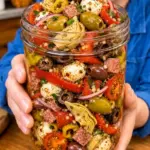
Italian Garlic Olive Antipasto Salad
Description
- Prep time: Approximately 20 minutes
- Cook time: None
- Chill time: At least 30 minutes
- Total: Approximately 50 minutes
- Servings: About 8 side or appetizer portions
- Method: Chopped salad, refrigerated
Ingredients
Antipasto Salad
- 1 cup pitted Kalamata olives, drained
- 1 cup large pitted green olives, drained
- 1/2 cup sliced black olives, drained
- 1 cup marinated artichoke hearts, drained and quartered
- 1 cup roasted red peppers, drained and sliced
- 1 cup fresh mozzarella pearls, drained
- 1/2 cup cherry tomatoes, halved
- 1/2 cup diced ready-to-eat salami
- 1/4 cup thinly sliced red onion
- 2 tablespoons chopped fresh parsley
- 2 tablespoons sliced pepperoncini, drained, optional
Italian Garlic Dressing
- 1/3 cup extra-virgin olive oil
- 3 tablespoons red wine vinegar
- 2 garlic cloves, finely minced or grated
- 1 teaspoon Dijon mustard
- 1 teaspoon dried Italian seasoning
- 1/2 teaspoon dried oregano
- Up to 1/2 teaspoon crushed red pepper flakes, optional
- 1/4 teaspoon black pepper
- Up to 1/4 teaspoon salt, only if needed
Servings: Approximately eight side or appetizer portions.
Measure the jarred ingredients after draining. Their packing liquids are not additional dressing ingredients in this version.
The listed olive quantities total 2 1/2 cups. If using different varieties, keep that overall quantity similar rather than adding another full jar on top of the base amounts.
Instructions
1. Drain the olives
Place the olives in a sieve or colander and let excess liquid run off. Halve large pieces and check for pits.
If one variety is extremely salty, a brief rinse is an optional taste adjustment, followed by thorough draining. Do not rinse every ingredient automatically, because that also removes some of its intended flavor.
2. Prepare the artichokes and peppers
Drain the artichokes and roasted peppers separately. Cut artichokes into comfortable bite-sized pieces and peppers into short strips.
Blot excess liquid gently. Keep pieces intact rather than squeezing aggressively.
3. Prepare the fresh ingredients
Wash the cherry tomatoes and parsley. Dry them, halve the tomatoes, and chop the parsley.
Thinly slice the onion, drain the mozzarella, and dice the salami. Drain the optional pepperoncini as well.
Keep the cheese and meat refrigerated if preparation will be interrupted. There is no benefit to leaving all the ingredients on the counter while working on other dishes.
4. Whisk the dressing
Combine olive oil, red wine vinegar, garlic, Dijon, Italian seasoning, oregano, black pepper, and optional red pepper flakes. Whisk until blended.
Leave the salt out initially. The mustard helps the oil and vinegar mix, but the dressing may separate as it stands; that is normal and can be corrected with another whisk.
If using a jar, close the lid securely and shake briefly. Use promptly or refrigerate; fresh garlic in oil is not a room-temperature storage preparation.
5. Combine the salad components
Add the olives, artichokes, peppers, mozzarella, tomatoes, salami, onion, parsley, and optional pepperoncini to the large bowl.
Toss once gently before dressing so the larger pieces are distributed. Avoid repeatedly pressing the tomatoes or cheese against the sides.
6. Add dressing gradually
Start with about two-thirds of the dressing and toss gently. Assess whether the ingredients are coated before adding the remainder.
The original quantity may all be useful, but product moisture and personal preference differ. A large pool of dressing is not necessary for good flavor.
Taste a representative bite containing both briny and mild ingredients. Add salt only if needed, and use the remaining dressing if the salad needs more coating or tang.
7. Chill for flavor
Cover and refrigerate for at least thirty minutes. A few hours can deepen the flavor, but the fresh tomatoes and mozzarella will gradually take on dressing and release moisture.
If preparing further ahead, consider holding those two ingredients separately until closer to serving.
8. Toss and serve
Give the salad a gentle toss to redistribute dressing from the bottom. Add a little fresh parsley if desired.
Olive oil can turn cloudy or firm under refrigeration. Let only the portion being served stand briefly at room temperature until the dressing loosens, then toss. Do not invent a special refrigerator serving area or warm the entire batch for a prolonged period.
Serve in a shallow bowl with a spoon that can lift a balanced mix of ingredients. Keep the remaining salad refrigerated.