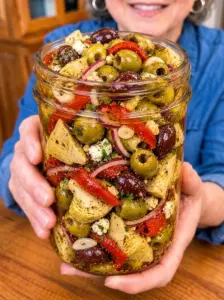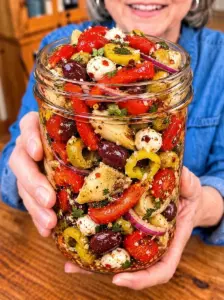
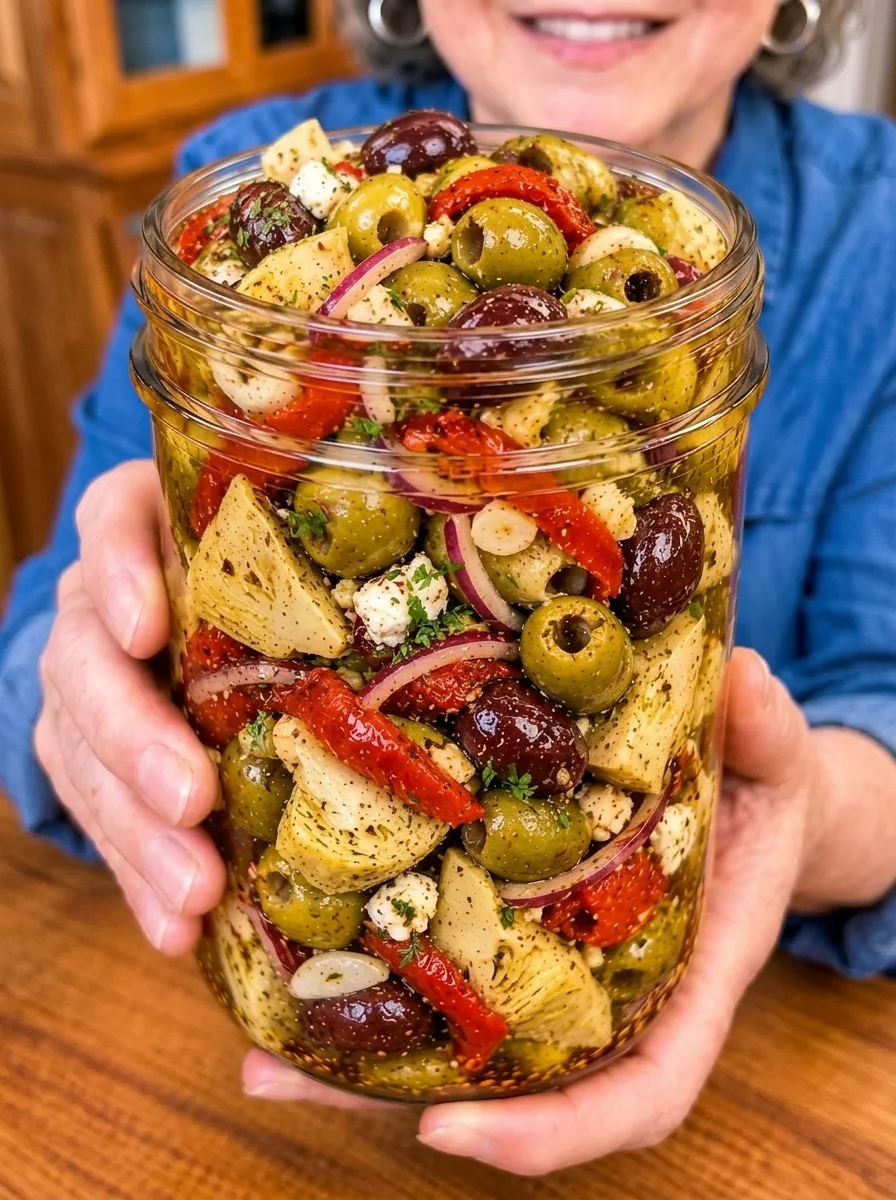
Marinated Garlic Olive & Artichoke Salad combines three kinds of olives, tender artichoke hearts, roasted red peppers, and sliced garlic in a lemon and red wine vinegar dressing. Parsley and basil add freshness, while a little Dijon and dried oregano give the marinade a savory background. It is a bold, briny appetizer that needs only a small serving to bring plenty of flavor to a plate.
The preparation is simple: drain the ingredients, cut larger pieces into manageable bites, whisk the dressing, and refrigerate. A two- to four-hour rest gives the sliced garlic and herbs time to flavor the mixture. Bread, crackers, or a mild main course provides a useful contrast to the concentrated olives and tangy dressing.
This is a refrigerated marinated salad, not an oil-preserved product. It does not require canning equipment, and the ingredients need only an even coating of dressing rather than complete submersion. Keep it chilled throughout marinating and use a clean spoon to serve.
Recipe note: This article expands the supplied recipe with practical preparation guidance. It has not been independently kitchen-tested. Artichoke packing liquid, drained jar yield, olive varieties, and optional feta affect the final flavor, volume, and nutrition.
Recipe at a Glance
- Preparation: About 20 minutes
- Cooking: None, unless using the optional brief garlic blanch
- Marinating: At least 2 hours; 4 hours if convenient
- Total time: About 2 hours 20 minutes to 4 hours 20 minutes
- Servings: 8 small appetizer or side portions
- Method: No-cook mixing and refrigerated marinating
- Storage: Up to 3 days refrigerated, subject to ingredient freshness
An overnight rest is also possible when planning ahead. The flavor may become more integrated, but the herbs will not remain as bright indefinitely. Add some fresh basil near serving if appearance is important.
What to Expect
The olives provide most of the firmness and briny character. Artichoke hearts are already cooked and tender, while roasted red peppers contribute sweetness and a soft texture. Raw onion gives a little bite, and the garlic remains noticeable in thin slices.
This is a chunky antipasto-style salad rather than a large bowl of leafy vegetables. A modest scoop is enough beside grilled chicken, bread, cheese, or a sandwich. The dressing should cling lightly to the ingredients, with a little collecting at the bottom for spooning over a serving.
The marinade does not eliminate the distinctive flavor of each olive. Kalamata olives stay assertive, buttery green olives remain milder, and the artichokes carry some of their original seasoning. Taste the combined salad before deciding whether it needs salt.
Ingredients
For the Olive & Artichoke Salad
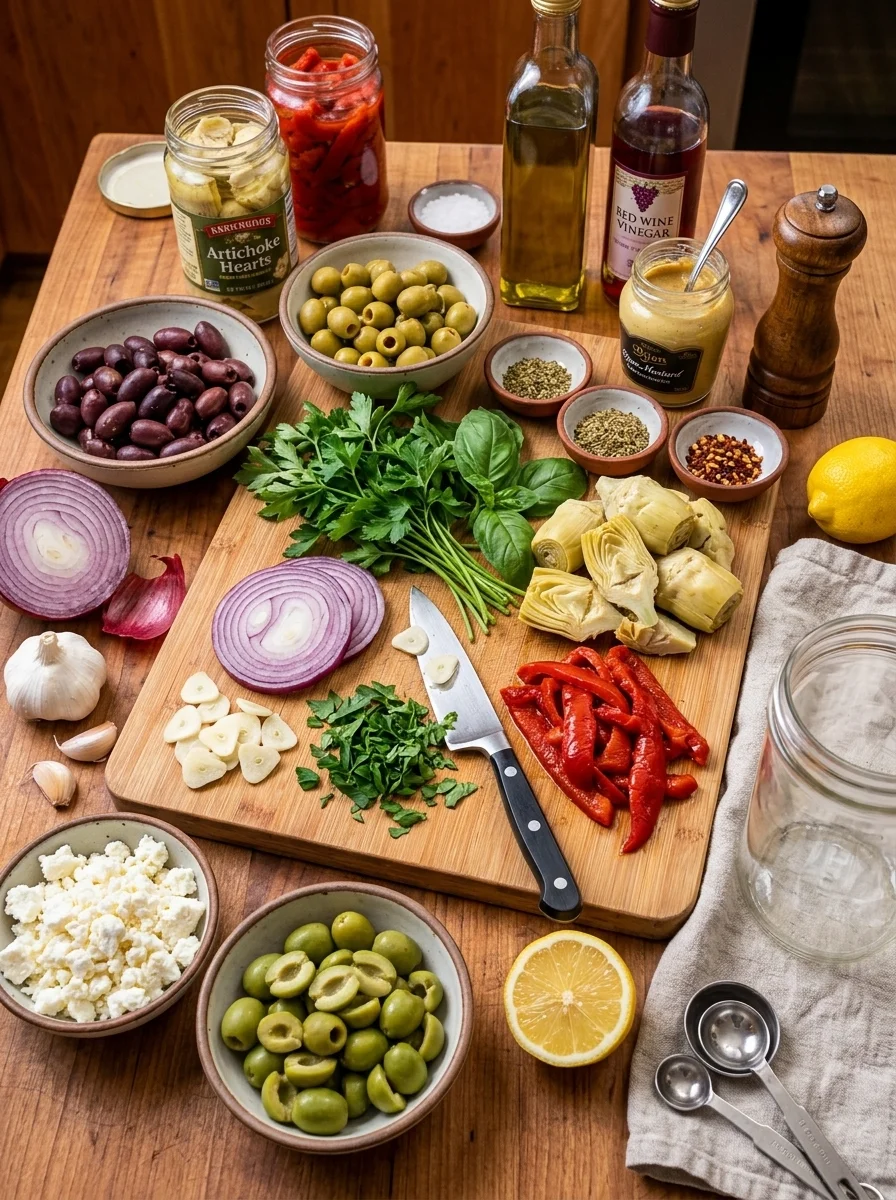
- 1 jar artichoke hearts, about 14 ounces as packaged, marinated or water-packed, drained and quartered
- 1 cup pitted Kalamata olives, drained
- 1 cup pitted green olives, drained
- ½ cup pitted Castelvetrano olives, drained and halved
- ½ cup roasted red peppers, drained and sliced
- ¼ small red onion, thinly sliced
- 3 garlic cloves, peeled and thinly sliced
- ¼ cup chopped fresh parsley
- 2 tablespoons chopped fresh basil
- ¼ cup crumbled feta, optional
For the Garlic Herb Marinade
- ⅓ cup extra-virgin olive oil
- 2 tablespoons red wine vinegar
- 1 tablespoon fresh lemon juice
- 1 teaspoon Dijon mustard
- ½ teaspoon dried oregano
- ½ teaspoon dried Italian seasoning
- ¼ teaspoon crushed red pepper flakes, or less to taste
- ¼ teaspoon freshly ground black pepper
- Salt, only if needed after tasting
The garlic goes into the salad mixture and flavors the dressing as everything rests. There is no additional minced garlic required in the marinade.
The artichoke jar’s labeled weight includes packing liquid unless explicitly stated otherwise. Use the drained contents of the jar rather than trying to obtain fourteen ounces of drained artichokes. The exact solid yield will vary by product.
Choosing the Olives
Kalamata Olives
Kalamata olives contribute a pronounced briny flavor and dark color. Drain well and check for stray pit fragments even when the package says pitted. Halve unusually large olives so they fit comfortably on a cracker or forkful.
Their saltiness varies. If one batch is especially salty, rinse briefly and drain again. Avoid automatically rinsing all the olives, because some briny character is part of the recipe’s appeal.
Green Olives
The one-cup portion of green olives can be a firm, moderately brined variety you enjoy. Pitted plain olives keep the flavor more predictable than heavily stuffed or intensely seasoned products.
Garlic-stuffed olives can be used, but they bring additional garlic and often more salt. Taste before retaining all three fresh cloves. Pimento-stuffed olives also work as a variation, with a different appearance and slightly different flavor.
Castelvetrano Olives
Castelvetrano olives are themselves green olives. The ingredient list calls for a separate half cup to add their buttery character alongside the other green variety. The total olive volume is two and a half cups, not one and a half.
If you cannot find them, substitute another mild green olive and keep the overall measured amount the same. You can also use one and a half cups of a single green variety plus the cup of Kalamata olives. The flavor will be less varied but still fits the salad.
Artichokes and Roasted Peppers
Marinated artichokes contain their own herbs, acid, and oil. Drain the excess marinade before using so it does not make the measured dressing unnecessarily oily or unpredictable. Handle gently because tender leaves can fall apart.
Water-packed artichokes have a milder flavor and generally contribute less oil. Drain and blot them well. They may need a little more seasoning after marinating, but add it only after tasting the full mixture.
Quarter large hearts and trim away any particularly tough pieces. If they are already quartered, use them as they are or cut only oversized sections. Do not shred them finely; recognizable pieces make the salad easier to serve neatly.
Jarred roasted red bell peppers offer a sweet contrast to the olives. Drain, blot lightly, and slice into short strips. Very long ribbons are awkward on bread, while very fine pieces can disappear into the dressing.
Garlic, Onion, and Fresh Herbs
Thin garlic slices distribute through the salad while remaining easy to identify. Slicing does not guarantee mildness: raw garlic flavor depends on the cloves, cut size, and resting time. Use fewer cloves if you prefer a gentler result rather than assuming the slices cannot become strong.
The optional thirty-second blanch can soften some raw sharpness, but it will not fully cook the garlic or extend the salad’s storage life. Drain, cool, and blot the slices before adding. For a much sweeter garlic flavor, a separately prepared roasted-garlic variation would be a different approach.
Thin red onion slices add bite without a large raw wedge dominating each serving. Rinse briefly under cold water if desired, then dry thoroughly. Do not add a puddle of rinse water to the salad.
Parsley holds up reasonably well during the short marinade. Basil is more delicate and may darken in the acidic dressing, so reserve it for serving if preparing the salad the day before. Keep reserved herbs refrigerated.
Understanding the Dressing
The olive oil, vinegar, and lemon make a bright vinaigrette. Dijon helps them combine temporarily, and the dried herbs disperse through the mixture as it rests. Separation is normal; stirring before serving brings the dressing back over the vegetables.
Choose an olive oil you enjoy in a salad. An intensely bitter or peppery oil can dominate the artichokes, while a milder fruity oil leaves more room for the garlic and herbs. You do not need to use an expensive bottle to make a flavorful dressing.
Salt belongs at the end. Olives, marinated artichokes, and optional feta may already provide enough. A small splash of acid or a little fresh parsley can improve a salad that tastes flat even when more salt would make it excessive.
Equipment and Container Size
You will need a colander, paper towels or a clean kitchen towel, knife, cutting board, measuring tools, small bowl, whisk, and a roomy mixing bowl. Broad spoons help fold the artichokes without crushing them.
The finished batch will commonly exceed one quart, depending on the artichoke yield and how the pieces settle. Use a generous covered container or more than one smaller jar. Leave space to stir rather than compressing everything tightly.
Glass is convenient but not essential. Any clean food-safe refrigerator container with a suitable lid works. There is no hot filling step, so special heat-safe glass is unnecessary unless you use it for a separate purpose.
How to Make the Salad
1. Drain the Artichokes
Place the artichokes in a colander and let the loose packing liquid drain away. Quarter whole hearts or trim oversized pieces. Blot gently with paper towels to remove surface moisture.
Do not squeeze the hearts firmly. Their tender leaves should stay attached as much as possible. Transfer to a large bowl with room for the remaining ingredients.
2. Prepare the Olives
Drain and inspect the Kalamata, green, and Castelvetrano olives. Remove any pits or fragments and halve larger pieces. Measure the stated amounts after draining.
Taste one olive from each variety. If a particular product is unusually salty, rinse that portion briefly and drain thoroughly before adding. This is easier than trying to correct an overly salty finished bowl.
3. Slice the Vegetables and Garlic
Drain the roasted peppers, slice into short strips, and add to the bowl. Thinly slice the onion and garlic. Chop the parsley and basil, keeping basil separate if reserving it for later.
If using the optional garlic blanch, place the slices briefly in boiling water for about thirty seconds, then drain, cool, and blot. Keep the salad ingredients chilled while finishing preparation.
4. Whisk the Marinade
Combine olive oil, red wine vinegar, lemon juice, Dijon, oregano, Italian seasoning, red pepper flakes, and black pepper. Whisk until blended, leaving salt out initially.
Taste a little dressing with a piece of artichoke rather than alone. Its balance on the ingredients matters more than whether a spoonful of concentrated vinaigrette tastes sharp by itself.
5. Combine the Main Ingredients
Add the olives, peppers, onion, and sliced garlic to the artichokes. Fold gently with a broad spoon so the components are distributed without breaking the hearts apart.
A few loose artichoke leaves are normal. Avoid vigorous shaking at this stage, especially with very tender jarred artichokes. Gentle folding keeps the presentation clearer.
6. Dress Gradually
Pour about two-thirds of the dressing over the mixture and toss gently. Add the remainder as needed for a well-coated salad. Oil-packed ingredients may leave enough residual oil that you prefer less dressing.
Complete submersion is unnecessary. Do not add extra oil simply to raise the liquid level. If retaining unused fresh-garlic-contact dressing, refrigerate it promptly and use within the same short storage window.
7. Add Herbs and Optional Feta
Fold in the parsley and basil if serving the same day. Add feta gently if using, leaving some visible crumbles rather than stirring until it disappears into the dressing.
Taste a combined bite and add salt only if needed. Feta can make a notable difference, so do not finalize the salt before adding it. Extra black pepper or lemon may be preferable to more salt.
8. Cover and Refrigerate
Transfer to a clean covered container and refrigerate promptly at 40°F or below. Marinate at least two hours, or up to four hours for a convenient serving schedule.
Stir gently once or twice during the rest if practical. The upper pieces do not need to remain submerged; redistributing the dressing is enough for this fresh salad.
9. Finish and Serve
Toss gently before serving and add reserved basil if applicable. Spoon a little dressing from the bottom over the serving portion. Garnish with additional herbs only if desired.
If cold olive oil has clouded or firmed, let the serving portion stand briefly for a few minutes and stir to loosen. Keep the main container refrigerated rather than leaving the whole batch out to warm.
Flavor Adjustments
Too salty: Serve with plain bread or another mild accompaniment. Add some unsalted artichokes or roasted peppers if available. Vinegar does not remove sodium, so avoid making it sharply acidic in an attempt to fix saltiness.
Too acidic: Toss thoroughly first because the vinegar may have settled beneath the oil. A small drizzle of olive oil can soften the impression, but adding a large amount makes the salad heavy. Mild bread or cheese alongside can also balance a serving.
Too garlicky: Use a smaller serving and pair with mild foods. Next time, reduce the cloves or try the brief blanch. Chilling does not guarantee that raw garlic will become mild.
Too bland: Add a few drops of lemon or vinegar, fresh parsley, or black pepper. Check that the ingredients are coated with dressing before adding more seasoning.
Make-Ahead Planning
For next-day serving, prepare the salad with parsley and reserve basil separately. Refrigerate promptly and add basil near serving time. Feta can be added during assembly, but folding it in later keeps the crumbles more distinct.
You can also drain and cut the vegetables in advance, refrigerating them separately from the dressing. This is useful when you want the freshest appearance or need to divide preparation across the day.
Count storage from preparation of the earliest perishable component rather than resetting the clock when everything is mixed. Follow any shorter opened-storage instructions on the ingredients. A half batch may be a better choice if eight appetizer portions will be too much for your household.
Serving Ideas
With Bread or Crackers
Serve with toasted baguette, focaccia, or plain crackers. The bread catches the dressing and balances the briny ingredients. Offer a spoon or small fork so guests can portion the chunky mixture neatly.
On an Antipasto Platter
Place a small bowl beside cheese, cured meats, roasted vegetables, or other appetizers. Keep salty accompaniments in modest quantities because the salad already contains plenty of olives. Add fresh vegetables for contrast if desired.
Beside Dinner
A scoop works alongside grilled chicken, fish, roasted potatoes, or a simple grain dish. Treat it as the bold accent rather than pairing it with several strongly seasoned sauces on the same plate.
In Sandwiches or Pasta Salad
Chop a serving more finely and drain slightly before adding to a sandwich. Alternatively, fold a portion into cooked, cooled pasta with just enough dressing to coat. Keep the new dish refrigerated and use promptly; adding another ingredient does not restart the original storage period.
Variations
Without feta: The salad is flavorful without it. If avoiding dairy entirely, check labels on the marinated ingredients as well as omitting the cheese.
With extra roasted peppers: Add a modest additional amount for more sweetness and less olive concentration per bite. Use reserved dressing only as needed.
With sun-dried tomatoes: Add a few tablespoons of drained, chopped oil-packed tomatoes. Their concentrated flavor changes the balance, so taste before adding more salt or acid.
With capers: Add a small amount for extra briny tang. Since the salad already contains two and a half cups of olives, capers are an optional accent rather than a necessary ingredient.
With lemon zest: A little finely grated zest can strengthen citrus aroma without adding more liquid. Avoid the bitter white pith and wash the lemon before zesting.
With less heat: Omit the crushed red pepper flakes. The garlic still provides some sharpness, so reduce it separately if needed.
Storage and Food Safety
Store covered at 40°F or below and use within three days, or sooner if an ingredient’s freshness or package instructions require it. Remove only the amount you plan to serve and use clean utensils.
Fresh garlic in an oil-based mixture requires prompt refrigeration. The vinegar and lemon in this salad are not a validated preservation process, and a closed jar does not make the contents shelf-stable. Do not can this formulation or store it in the pantry.
Limit time outside refrigeration to two hours, or one hour above 90°F. For a long gathering, set out a small serving bowl and replenish from the chilled supply. Transport in an insulated cooler with ice packs.
Freezing is not recommended for the best finished texture. Artichokes, peppers, and fresh herbs may soften or release moisture after thawing. General handling guidance is available from the USDA Food Safety and Inspection Service.
Nutrition and Dietary Notes
Approximately 230 calories per serving without feta is the supplied estimate for eight portions. Actual calories depend on olive brands, retained artichoke oil, drained yield, and how much dressing is consumed. Bread and crackers are additional.
The optional feta adds dairy and changes calories, protein, and sodium. Without feta, the ingredient list can suit a dairy-free pattern if all packaged products are appropriate. Check mustard and other labels for allergies relevant to your guests.
If you need precise nutrition, use the actual package information and weigh the finished portions. A loosely filled spoonful is not a consistent serving measure for a chunky salad with dressing at the bottom.
Frequently Asked Questions
Can I use only one kind of olive?
Yes. Keep the total drained olive volume around two and a half cups. The flavor will be less varied, so choose an olive you enjoy and check its saltiness before adding other seasoning.
Should I save the artichoke marinade?
It is not required in this recipe. The measured dressing provides a more predictable balance. If you choose to use a little of the original marinade, reduce other dressing as appropriate and taste carefully.
Does blanching garlic make the salad safe for longer storage?
No. The brief blanch is a flavor adjustment, not a preservation step. Keep the same prompt refrigeration and three-day storage guidance.
Can I serve it immediately?
Yes, but the flavors will be less integrated and the raw garlic and onion may stand out more. The two-hour refrigerated rest is recommended for the intended marinated character.
Do I need a glass jar?
No. A clean covered bowl or food-safe refrigerator container works. Choose a container with enough space for gentle stirring rather than a narrow jar that crushes the artichokes.
Quick Recipe Reference
Drain and quarter the contents of one fourteen-ounce jar of artichoke hearts. Combine with one cup Kalamata olives, one cup green olives, half a cup Castelvetrano olives, roasted peppers, onion, and sliced garlic. Whisk olive oil with red wine vinegar, lemon, Dijon, and dried seasonings. Toss gradually with the salad, add parsley, basil, and optional feta, and salt only after tasting. Cover and refrigerate two to four hours, stir gently before serving, and use within three days.
Marinated Garlic Olive & Artichoke Salad
Description
- Preparation: About 20 minutes
- Cooking: None, unless using the optional brief garlic blanch
- Marinating: At least 2 hours; 4 hours if convenient
- Total time: About 2 hours 20 minutes to 4 hours 20 minutes
- Servings: 8 small appetizer or side portions
- Method: No-cook mixing and refrigerated marinating
- Storage: Up to 3 days refrigerated, subject to ingredient freshness
An overnight rest is also possible when planning ahead. The flavor may become more integrated, but the herbs will not remain as bright indefinitely. Add some fresh basil near serving if appearance is important.
Ingredients
For the Olive & Artichoke Salad
- 1 jar artichoke hearts, about 14 ounces as packaged, marinated or water-packed, drained and quartered
- 1 cup pitted Kalamata olives, drained
- 1 cup pitted green olives, drained
- ½ cup pitted Castelvetrano olives, drained and halved
- ½ cup roasted red peppers, drained and sliced
- ¼ small red onion, thinly sliced
- 3 garlic cloves, peeled and thinly sliced
- ¼ cup chopped fresh parsley
- 2 tablespoons chopped fresh basil
- ¼ cup crumbled feta, optional
For the Garlic Herb Marinade
- ⅓ cup extra-virgin olive oil
- 2 tablespoons red wine vinegar
- 1 tablespoon fresh lemon juice
- 1 teaspoon Dijon mustard
- ½ teaspoon dried oregano
- ½ teaspoon dried Italian seasoning
- ¼ teaspoon crushed red pepper flakes, or less to taste
- ¼ teaspoon freshly ground black pepper
- Salt, only if needed after tasting
The garlic goes into the salad mixture and flavors the dressing as everything rests. There is no additional minced garlic required in the marinade.
The artichoke jar’s labeled weight includes packing liquid unless explicitly stated otherwise. Use the drained contents of the jar rather than trying to obtain fourteen ounces of drained artichokes. The exact solid yield will vary by product.
Instructions
1. Drain the Artichokes
Place the artichokes in a colander and let the loose packing liquid drain away. Quarter whole hearts or trim oversized pieces. Blot gently with paper towels to remove surface moisture.
Do not squeeze the hearts firmly. Their tender leaves should stay attached as much as possible. Transfer to a large bowl with room for the remaining ingredients.
2. Prepare the Olives
Drain and inspect the Kalamata, green, and Castelvetrano olives. Remove any pits or fragments and halve larger pieces. Measure the stated amounts after draining.
Taste one olive from each variety. If a particular product is unusually salty, rinse that portion briefly and drain thoroughly before adding. This is easier than trying to correct an overly salty finished bowl.
3. Slice the Vegetables and Garlic
Drain the roasted peppers, slice into short strips, and add to the bowl. Thinly slice the onion and garlic. Chop the parsley and basil, keeping basil separate if reserving it for later.
If using the optional garlic blanch, place the slices briefly in boiling water for about thirty seconds, then drain, cool, and blot. Keep the salad ingredients chilled while finishing preparation.
4. Whisk the Marinade
Combine olive oil, red wine vinegar, lemon juice, Dijon, oregano, Italian seasoning, red pepper flakes, and black pepper. Whisk until blended, leaving salt out initially.
Taste a little dressing with a piece of artichoke rather than alone. Its balance on the ingredients matters more than whether a spoonful of concentrated vinaigrette tastes sharp by itself.
5. Combine the Main Ingredients
Add the olives, peppers, onion, and sliced garlic to the artichokes. Fold gently with a broad spoon so the components are distributed without breaking the hearts apart.
A few loose artichoke leaves are normal. Avoid vigorous shaking at this stage, especially with very tender jarred artichokes. Gentle folding keeps the presentation clearer.
6. Dress Gradually
Pour about two-thirds of the dressing over the mixture and toss gently. Add the remainder as needed for a well-coated salad. Oil-packed ingredients may leave enough residual oil that you prefer less dressing.
Complete submersion is unnecessary. Do not add extra oil simply to raise the liquid level. If retaining unused fresh-garlic-contact dressing, refrigerate it promptly and use within the same short storage window.
7. Add Herbs and Optional Feta
Fold in the parsley and basil if serving the same day. Add feta gently if using, leaving some visible crumbles rather than stirring until it disappears into the dressing.
Taste a combined bite and add salt only if needed. Feta can make a notable difference, so do not finalize the salt before adding it. Extra black pepper or lemon may be preferable to more salt.
8. Cover and Refrigerate
Transfer to a clean covered container and refrigerate promptly at 40°F or below. Marinate at least two hours, or up to four hours for a convenient serving schedule.
Stir gently once or twice during the rest if practical. The upper pieces do not need to remain submerged; redistributing the dressing is enough for this fresh salad.
9. Finish and Serve
Toss gently before serving and add reserved basil if applicable. Spoon a little dressing from the bottom over the serving portion. Garnish with additional herbs only if desired.
If cold olive oil has clouded or firmed, let the serving portion stand briefly for a few minutes and stir to loosen. Keep the main container refrigerated rather than leaving the whole batch out to warm.