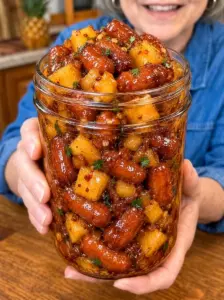
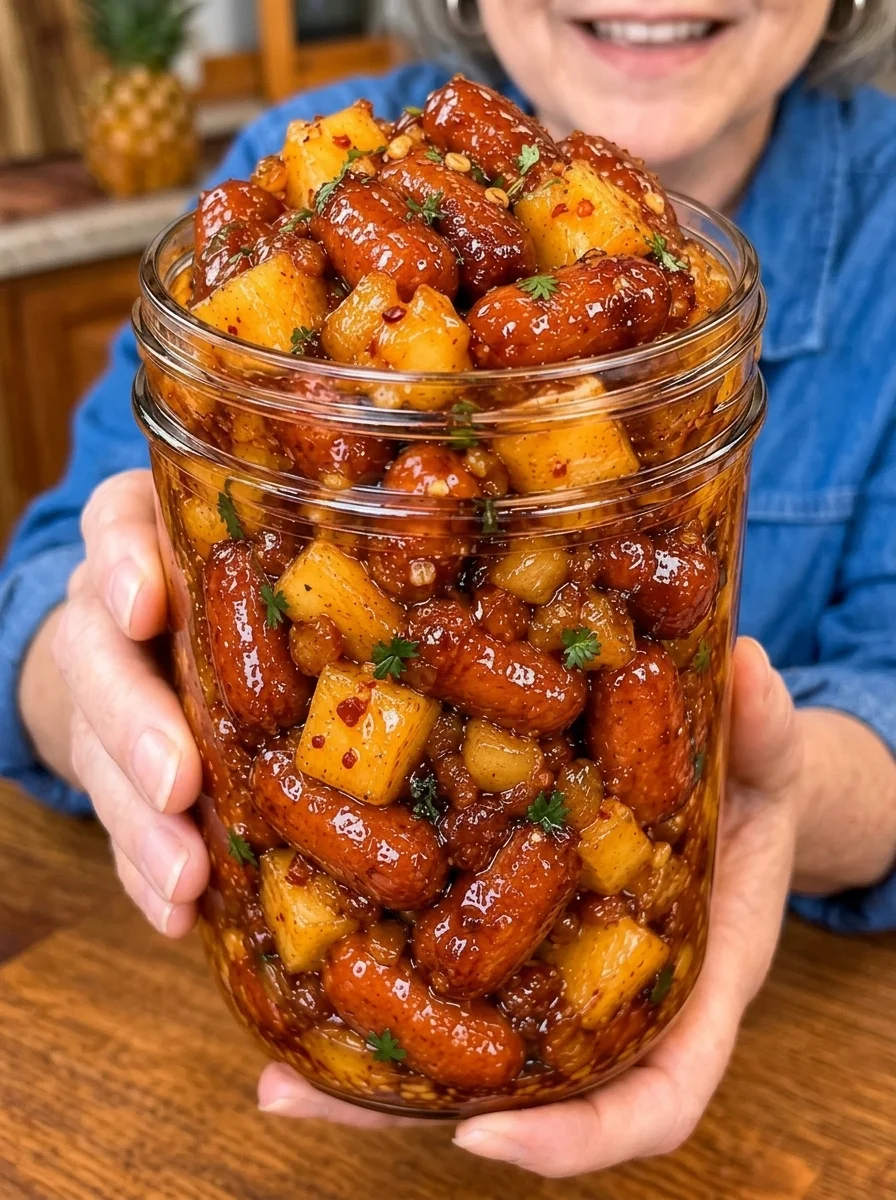
Crushed pineapple, brown sugar, and barbecue sauce give these cocktail sausages a sweet, smoky coating with little pieces of fruit throughout. Dijon mustard and Worcestershire add a savory edge, and an optional splash of cider vinegar balances the sweetness. Serve warm with toothpicks for a straightforward party appetizer that needs little hands-on preparation.
These Pineapple Brown Sugar BBQ Cocktail Sausages work for game days, holiday gatherings, potlucks, or a casual family snack spread. Make them on the stovetop when you want more control over the glaze, or use the slow cooker when a longer cooking window is convenient. Set out toothpicks and serve them warm with a little extra sauce.
Recipe note: This supplied recipe has not been independently tested. The thickness and sweetness of barbecue sauce, the sausage brand, and the cooking vessel affect the final result. Use fully cooked cocktail sausages and follow their package heating instructions. Cooking times below are estimates.
Why You’ll Love This Appetizer
- The glaze uses familiar pantry ingredients.
- Pineapple adds sweetness and a little tartness to the smoky sauce.
- Both stovetop and slow-cooker methods are available.
- The sauce can be mixed ahead for easier party preparation.
- Small sausages are convenient to serve as a warm finger food.
Recipe at a Glance
- Prep time: 10 minutes
- Stovetop cook time: Approximately 25–35 minutes, including final reduction as needed
- Stovetop total time: About 35–45 minutes
- Slow-cooker time: Approximately 2–3 hours on LOW or 1–1 1/2 hours on HIGH
- Yield: Two 14-ounce packages of cocktail sausages, plus pineapple and glaze
- Servings: 8–10 appetizer portions
- Category: Appetizer, party food
Ingredients
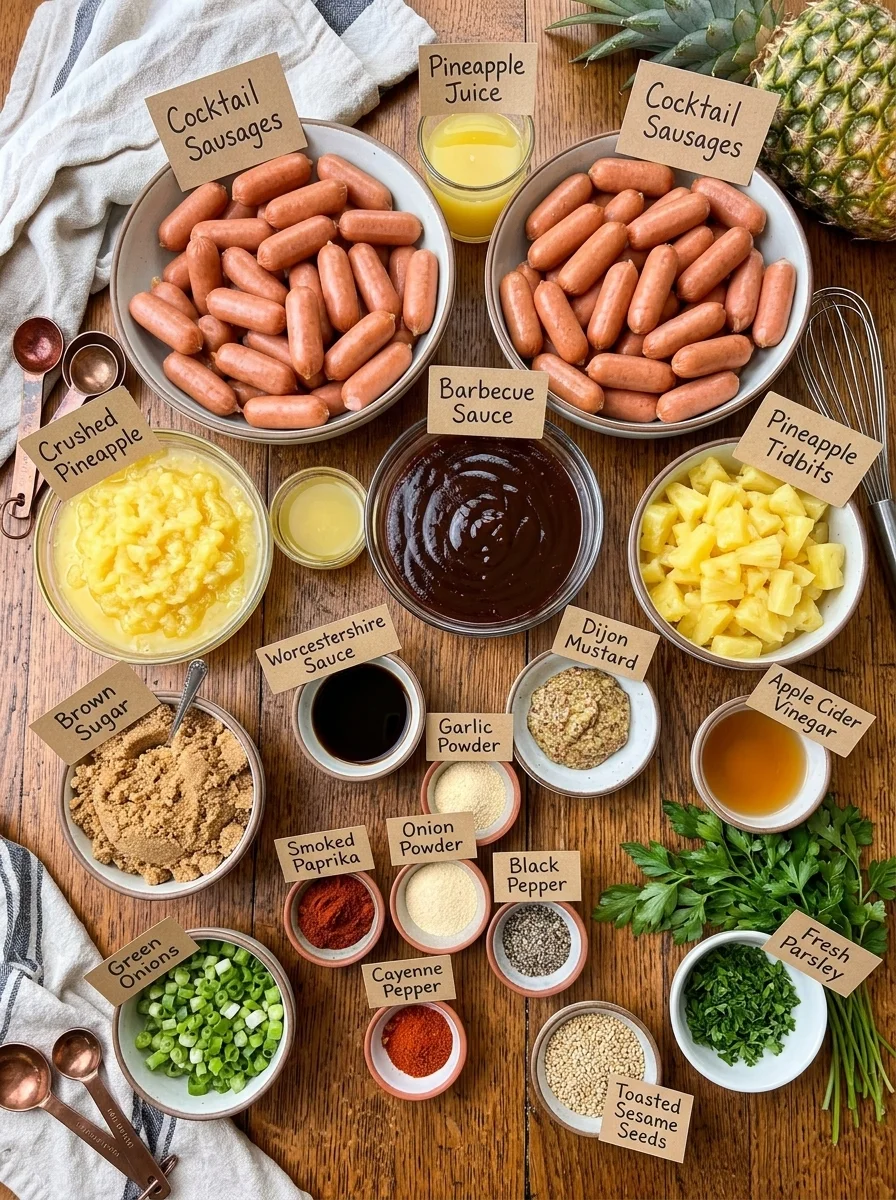
- 2 packages (14 ounces each) fully cooked cocktail sausages
- 1 cup barbecue sauce
- 2 tablespoons pineapple juice
- 1/2 cup packed light brown sugar
- 1 cup crushed pineapple with a little of its juice
- 1 tablespoon Worcestershire sauce
- 1 tablespoon Dijon mustard
- 1 teaspoon smoked paprika
- 1/2 teaspoon garlic powder
- 1/4 teaspoon onion powder
- 1/4 teaspoon black pepper
- A pinch of cayenne pepper, optional
- 1 teaspoon apple cider vinegar, optional
Optional Garnishes
- Chopped fresh parsley
- Sliced green onions
- Extra drained pineapple pieces
- A small pinch of crushed red pepper flakes
Ingredient Notes
Cocktail Sausages
Use fully cooked cocktail sausages. Beef, pork, or blended varieties can work, but the flavor, salt, fat, and nutrition will vary. Drain any packing liquid before adding them so the glaze is not diluted unnecessarily.
Do not substitute raw sausage links and assume the same cooking time is sufficient. Raw sausages need their own safe cooking process and temperature checks. This recipe is intended to heat and glaze a commercially fully cooked product.
Barbecue Sauce
The barbecue sauce shapes much of the finished flavor. A smoky, moderately sweet sauce works well with pineapple and brown sugar. Very sweet sauces may make the full amount of sugar unnecessary; start with less if that suits your preference.
Some sauces are thick and concentrated, while others are thin and vinegar-forward. A thinner sauce usually needs more reduction on the stovetop. A very thick sauce may need a splash of water during reheating.
Crushed Pineapple and Juice
Crushed pineapple gives the glaze fruit flavor and a textured coating rather than distinct large chunks. Measure 1 cup with a little of its packing juice, but do not pour the entire can’s liquid into the pan. Add the separate 2 tablespoons pineapple juice as listed.
Choose pineapple packed in juice for the intended flavor balance. Heavy syrup adds more sweetness. Brands vary in how wet the crushed fruit is, so reduction time may differ. A loose glaze needs more uncovered simmering rather than an automatic large addition of sugar.
The finished sauce will retain bits of pineapple. Glossy does not mean perfectly smooth, and there is no need to blend or strain it. If you want extra fruit pieces, add a few drained pineapple pieces near the end as an optional variation.
Brown Sugar
Light brown sugar gives the glaze sweetness and a rounded flavor. Break up lumps before mixing. Dark brown sugar can be used, but its stronger molasses character changes the sauce slightly.
Because barbecue sauce already contains varying amounts of sugar, taste the glaze before deciding whether you want the full 1/2 cup. Starting with 1/4 cup is a reasonable flavor variation for a less sweet appetizer, though the finished glaze may be a little less sticky.
Worcestershire and Dijon
Worcestershire adds savory depth, and Dijon mustard provides a little sharpness to balance the fruit and sugar. Many Worcestershire sauces contain anchovies; check the label if you need to avoid fish. These ingredients are seasonings, so there is no need to add extra salt without tasting first.
Smoked Paprika and Other Spices
Smoked paprika emphasizes the barbecue flavor without requiring a smoker. Garlic powder and onion powder blend easily into the glaze. Cayenne is optional and can be added gradually. If your barbecue sauce is spicy, you may not need any extra heat.
Stovetop Instructions
1. Mix the Glaze
Whisk the barbecue sauce, crushed pineapple, pineapple juice, brown sugar, Worcestershire sauce, and Dijon mustard in a medium bowl. Stir until the sugar begins to dissolve and there are no large lumps.
Add the smoked paprika, garlic powder, onion powder, black pepper, optional cayenne, and optional vinegar. Mix thoroughly. Taste with a clean spoon before combining with the sausages, then adjust the sweetness or tang if desired.
2. Combine With the Sausages
Place the drained cocktail sausages in a large skillet or wide, heavy-bottomed saucepan. Pour the prepared glaze over them and turn gently to coat. The crushed pineapple is already included in the glaze.
A wide pan helps water evaporate and gives you more control over the consistency. A deeper pot also works, but the sauce may take longer to reduce. Leave enough room to stir without splashing.
3. Bring to a Gentle Simmer
Warm over medium heat, stirring occasionally, until the sauce begins to bubble gently. Reduce the heat to low. Avoid a vigorous boil, which can make the sugary sauce catch on the bottom and can split some sausage casings.
4. Heat and Reduce
Simmer partially covered for approximately 20–25 minutes, stirring occasionally and more frequently as the sauce thickens. Heat the sausages thoroughly according to the package instructions. The glaze should become glossy and coat the sausages rather than run off immediately.
Remove the lid for a final 5–10 minutes of reduction if the sauce needs it. This is additional time when the glaze remains loose after the initial simmer. Uncovered cooking is what allows excess liquid to evaporate. The exact time depends on the pan and barbecue sauce, so continue in short increments if the glaze remains too thin.
5. Adjust and Serve
Let a spoonful cool before tasting. Add a little vinegar if the sauce is too sweet, or a small splash of water if it is overly thick. Transfer to a serving dish, spoon some glaze over the top, and add optional garnishes.
Serve warm with toothpicks. If using a slow cooker for holding, preheat it and verify that the food stays at 140°F or above rather than relying only on the name of the setting.
Slow-Cooker Instructions
Mix the glaze as directed, then combine it with the drained sausages in a slow cooker. Use a cooker size appropriate for the quantity and follow the manufacturer’s guidance on filling. Stir to coat, cover, and cook on LOW for approximately 2–3 hours or HIGH for about 1–1 1/2 hours, until hot throughout and heated according to the sausage package directions.
Slow cookers retain moisture, so the sauce may stay thinner than a stovetop glaze. If it needs thickening, transfer the sauce to a saucepan and simmer uncovered, stirring frequently. Return the thickened sauce to the hot sausages and mix gently.
Do not assume that leaving a slow-cooker lid off briefly will produce the same reduction as a wide skillet. For a predictable glossy finish, the saucepan step is the more controllable option. Once everything is hot, use the WARM setting only for holding, checking that the food remains at least 140°F.
How to Get a Sticky Glaze
Choose a Wide Pan
More exposed surface allows water to evaporate faster. A deep pot can keep the sauce loose longer. If the sausages are already hot but the glaze is thin, remove them temporarily and reduce the sauce separately, then return them to the pan.
Keep the Heat Gentle
Higher heat is not always faster in a useful way. Brown sugar and barbecue sauce can scorch before enough liquid has evaporated. Maintain a gentle simmer and stir along the bottom and edges.
Give It Time
Crushed pineapple brings moisture as well as fruit solids, so the glaze may need uncovered reduction. The listed cooking time is a starting point, not a guarantee of thickness. Stop when the sauce coats the sausages pleasantly; it does not need to become candy-like.
Remember That Cooling Thickens It
Hot sauce looks thinner than warm sauce. Let a small spoonful cool to judge its consistency. Over-reducing can create a heavy, overly concentrated glaze that becomes stiff as it sits.
Add Liquid Sparingly
If the glaze becomes too thick, add water or pineapple juice a tablespoon at a time. Stir and warm briefly before adding more. A large pour can undo the reduction and require another long simmer.
Tips for the Best Flavor
Taste the barbecue sauce before starting. If it is already sweet and smoky, use a little less sugar and avoid adding more smoke flavor until the glaze has cooked. The optional apple cider vinegar is useful for bringing back some brightness after reduction.
Drain the sausages, but keep a little juice with the measured crushed pineapple. Avoid pouring in all the remaining liquid from the can. Use the separate 2 tablespoons juice for a repeatable starting point.
Stir gently to preserve the sausages and pineapple pieces. A silicone spatula is useful for moving sauce from the edges back into the center without scraping the pan harshly.
Add fresh garnishes just before serving so they look bright. A little parsley or green onion is enough; too much can distract from the glaze. Extra pineapple is optional, and should be drained before adding to the platter.
Flavor Variations
Sweet and Spicy
Add a small extra pinch of cayenne or crushed red pepper flakes. Taste after simmering before adding another pinch. The glaze concentrates as it reduces, including its heat.
Chipotle Pineapple
Add a small pinch of chipotle powder for a smoky chile note. It can be stronger than smoked paprika and contributes heat, so start modestly. If using a spicy barbecue sauce, you may need little or none.
Less Sweet
Begin with 1/4 cup brown sugar and a barbecue sauce that is not especially sweet. Taste the finished glaze and add more sugar only if needed. This changes both flavor and texture, so allow the sauce to reduce until it coats the sausages as desired.
Extra Tangy
Increase the apple cider vinegar slightly, adding it a teaspoon at a time. Dijon mustard also contributes sharpness, but large additions can dominate the sauce. Make small adjustments after cooking.
Different Cocktail Sausages
Use beef, pork, turkey, or another fully cooked cocktail sausage you enjoy. Their saltiness and fat content vary, so the final flavor and calorie estimate will change. Follow the product’s heating instructions.
Extra Pineapple Pieces
Add a few drained pineapple tidbits during the final 10 minutes if you enjoy distinct fruit bites. Keep them small for easy serving and avoid adding a large amount of extra liquid.
Serving Ideas
These sausages pair well with simple appetizers that provide different textures. Offer crisp vegetables, crackers, deviled eggs, or a cheese platter alongside. Potato bites and coleslaw also fit naturally with the barbecue flavor.
For a casual dinner, serve modest portions with rice and a crisp salad or steamed vegetables. The glaze is concentrated and sweet, so plain sides help balance the plate. You can also spoon a few sausages into small rolls for a snack-sized sandwich.
At a party, use sturdy toothpicks or small forks and provide napkins. Place the serving dish on a stable surface where guests can reach it without leaning over a hot appliance. Keep electrical cords away from the edge of the table.
If holding in a slow cooker, stir occasionally so the sauce does not concentrate around the edges. Add a small splash of water if necessary, and keep the lid on between servings when practical.
Make-Ahead, Storage, and Reheating
Prepare the glaze ahead: Whisk the sauce a day in advance and refrigerate it in a covered container. Stir before combining it with the sausages. Keep the sausages refrigerated until cooking.
Refrigerator: Transfer leftovers to shallow containers and refrigerate within 2 hours, or within 1 hour when the surrounding temperature is above 90°F. Store at 40°F or below for 3–4 days.
Freezer: Freeze cooled portions in freezer-safe containers for up to 2 months for best quality. Leave room for expansion. Thaw in the refrigerator; pineapple and sausage texture may change slightly.
Reheating: Warm in a saucepan over low to medium-low heat, stirring often, until leftovers reach 165°F. Add a small splash of water or pineapple juice if the sauce has thickened. Heat gently to avoid scorching.
Party holding: After heating, maintain the food at 140°F or above. A WARM setting is intended to hold hot food, not reheat cold leftovers. Reheat leftovers separately to 165°F before transferring to a preheated holding appliance.
Troubleshooting
Why Is My Sauce Thin?
The barbecue sauce may be loose, the ingredients may have carried extra liquid into the pan, or the cooking vessel may retain moisture. Simmer uncovered in a wide pan. If needed, reduce the sauce separately so the sausages do not continue cooking unnecessarily.
Why Is the Glaze Too Thick?
It may have reduced too far or concentrated during warm holding. Stir in a tablespoon of water at a time until it becomes spoonable. Keep the heat gentle and check the edges of the pan regularly.
Why Does the Sauce Taste Too Sweet?
Barbecue sauce, pineapple juice, and brown sugar all contribute sweetness. A little cider vinegar or Dijon can help balance the flavor. For the next batch, start with less sugar. Avoid trying to fix sweetness by adding large amounts of salt.
Why Did the Sauce Scorch?
The heat may have been too high, especially after the glaze thickened. Do not scrape a burnt layer into the rest of the sauce. Transfer the unscorched portion to a clean pan and taste after cooling a sample. A thoroughly burnt flavor is difficult to correct.
Why Are Some Sausage Casings Split?
A hard boil or extended cooking can split casings. Use a gentle simmer and heat according to the package instructions. If the sauce needs more reduction after the sausages are ready, take them out and reduce it separately.
Frequently Asked Questions
Can I Use Fresh Pineapple?
Yes, as a variation. Chop or crush it finely and use the listed pineapple juice. Fresh fruit may differ in sweetness and firmness, so the flavor and texture can change. Cook until the pieces are pleasantly tender and the sausages are properly heated.
Can I Skip the Crushed Pineapple?
Omitting it changes both the flavor and the volume of this recipe. The small quantity of juice alone will not give the same fruit-forward coating. Use a plain barbecue cocktail sausage recipe if you prefer a smooth, fruit-free sauce.
Can I Brown the Sausages First?
You can briefly brown fully cooked sausages in the pan before adding the sauce if desired. Drain excess fat and continue with the glaze. Browning is optional and does not replace following the product’s heating instructions.
Can I Double the Recipe?
Yes, but use a large enough cooking vessel and allow extra time for heating and reduction. Two pans may be easier than one crowded pot. A doubled slow-cooker batch also needs a cooker size that fits the manufacturer’s filling guidance.
How Many Sausages Are in a Serving?
Package counts differ by brand and sausage size. Divide the cooked batch into eight to ten portions if you want the listed appetizer servings. The number of pieces per person depends on how many other foods you are serving.
Are These About 280 Calories Per Serving?
That may be plausible for some brands and portion sizes, but it is not a verified figure. Two packages of sausages plus barbecue sauce and brown sugar can produce a substantial calorie range. Use your exact labels, include the glaze and pineapple, and divide by the chosen number of servings. The amount of sauce left in the dish also affects what is actually eaten.
Print
Description
Prep time: 10 minutes
Stovetop cook time: Approximately 25–35 minutes, or as needed for heating and reduction
Servings: 8–10 appetizer portions
Ingredients
- 2 packages (14 ounces each) fully cooked cocktail sausages
- 1 cup barbecue sauce
- 2 tablespoons pineapple juice
- 1/2 cup packed light brown sugar
- 1 cup crushed pineapple with a little of its juice
- 1 tablespoon Worcestershire sauce
- 1 tablespoon Dijon mustard
- 1 teaspoon smoked paprika
- 1/2 teaspoon garlic powder
- 1/4 teaspoon onion powder
- 1/4 teaspoon black pepper
- A pinch of cayenne, optional
- 1 teaspoon apple cider vinegar, optional
- Parsley or green onions, optional garnish
Instructions
- Whisk the barbecue sauce, crushed pineapple, pineapple juice, brown sugar, Worcestershire, Dijon, spices, and optional vinegar together.
- Combine with drained sausages in a large skillet or wide saucepan.
- Bring to a gentle simmer over medium heat, then reduce to low. Cook partially covered for 20–25 minutes, stirring occasionally, until heated according to the sausage package. Uncover for a further 5–10 minutes if needed to reduce the sauce, stirring frequently.
- Thin with a little water if too thick, or reduce the sauce separately if it remains thin after the sausages are hot.
- Serve warm, garnished if desired.
Slow cooker: Combine all ingredients, cover, and cook approximately 2–3 hours on LOW or 1–1 1/2 hours on HIGH, until hot throughout according to the sausage package instructions. Reduce thin sauce separately in a saucepan if needed. Hold hot at 140°F or above.
Storage: Refrigerate promptly in shallow containers for 3–4 days or freeze for up to 2 months for quality. Reheat leftovers to 165°F before serving or hot holding.