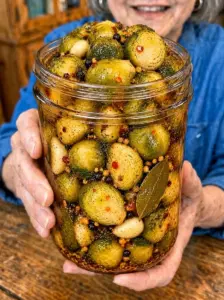
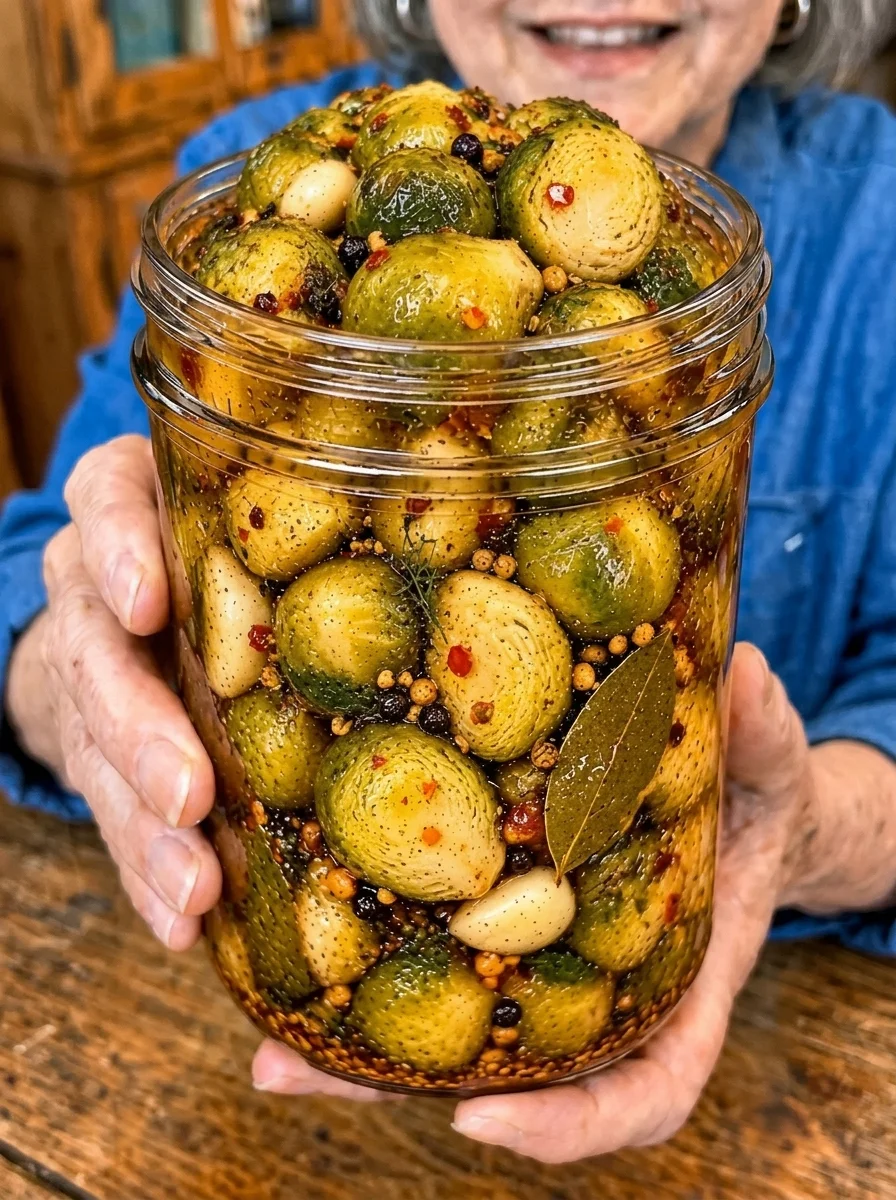
Frog Balls are pickled Brussels sprouts with a playful name and a bold, tangy flavor. A garlic-and-spice brine gives the little green sprouts a savory bite, while a small amount of sugar rounds out the vinegar. Serve them cold with cheese, sandwiches, burgers, or an appetizer board when you want something different from a cucumber pickle.
This version uses briefly blanched sprouts, which makes them easier to bite without cooking them until soft. Mustard seeds, peppercorns, garlic, and bay leaves season the brine, and optional red pepper flakes add warmth. The finished texture should be firm and tender-crisp rather than raw-crunchy or completely soft.
The main preparation takes about 25 minutes, followed by a refrigerated rest. Use small sprouts or halve larger ones so they can pick up flavor within a short storage period. This is a refrigerator recipe, not a shelf-stable canning method.
Recipe note: This supplied recipe has not been independently tested for acidity or shelf life. Follow the stated short refrigerated storage period of 3–4 days from preparation, including the marinating time. The original suggestion to wait 3–5 days for large whole sprouts conflicts with that limit, so this article recommends smaller pieces and a 24–48-hour flavor rest instead.
Why You’ll Love This Recipe
- Brussels sprouts provide a different texture from familiar cucumber pickles.
- Garlic, mustard seeds, and peppercorns add savory flavor.
- The heat is easy to adjust with pepper flakes.
- Small chilled portions pair well with rich foods and cheese.
- No canning equipment or fermentation stage is required.
Recipe at a Glance
- Prep time: About 15 minutes
- Cooking time: About 10–15 minutes, depending on heating and blanching
- Flavor rest: 24–48 hours refrigerated
- Total time: About 24–48 hours plus 25–30 minutes
- Servings: Approximately 6
- Yield: 1 pound sprouts plus brine; container volume varies
- Storage: Refrigerated at 40°F or below for 3–4 days from preparation
Ingredients
For the Sprouts and Brine
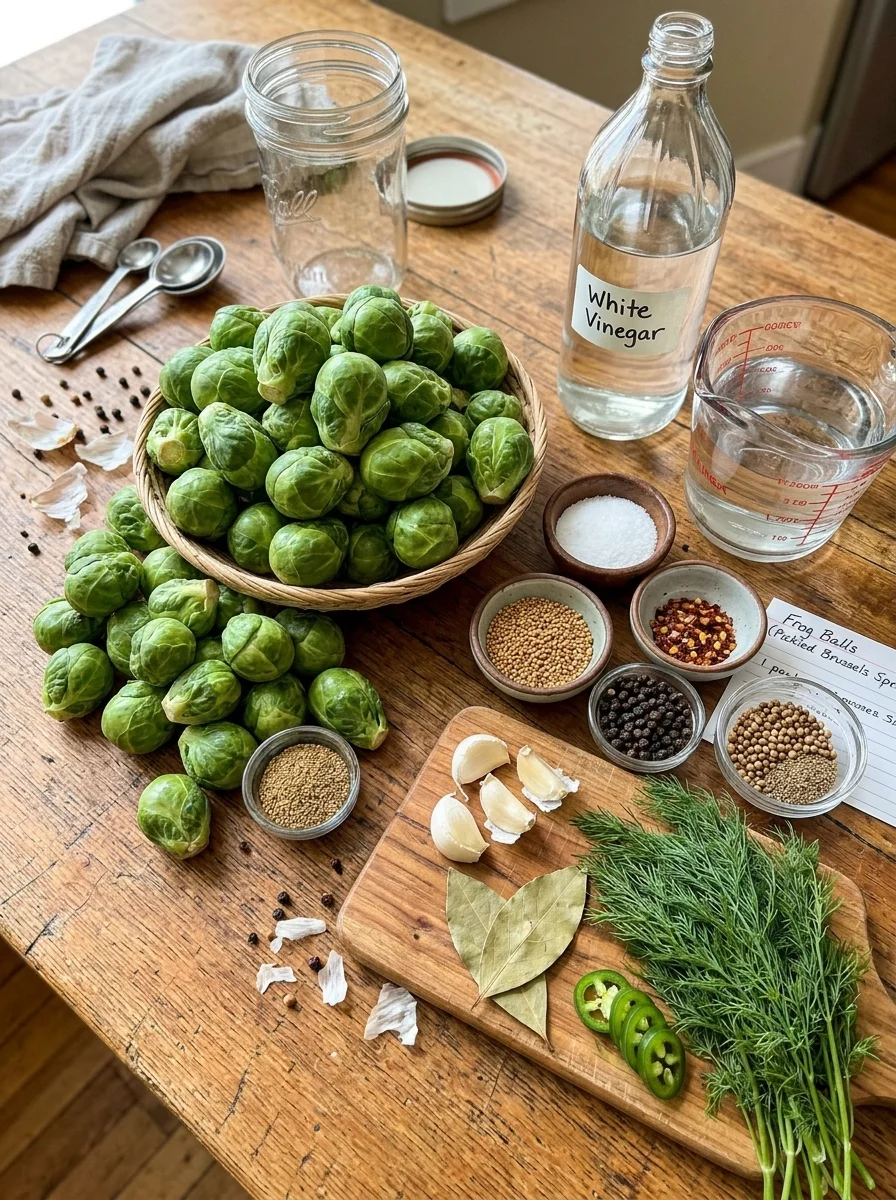
- 1 pound fresh Brussels sprouts
- 1 1/2 cups distilled white vinegar labeled 5% acidity
- 1 1/2 cups water
- 3 garlic cloves, peeled and lightly crushed
- 1 tablespoon kosher salt
- 1 tablespoon granulated sugar
- 1 teaspoon mustard seeds
- 1 teaspoon whole black peppercorns
- 1/2 teaspoon red pepper flakes, optional
- 2 bay leaves
- 1/2 teaspoon dried dill, optional
Optional Flavor Additions
- 1/2 teaspoon coriander seeds
- 1/4 teaspoon celery seeds
- 2–3 thin jalapeño slices
- A few fresh dill sprigs
Optional additions change the flavor but do not extend the storage period or turn this into a tested canning recipe.
Ingredient Notes
Brussels Sprouts
Choose small, firm sprouts with tightly packed leaves. Avoid sprouts with extensive yellowing, soft spots, mold, or deep damage. Smaller sprouts tend to have a more even texture and are easier to serve as a bite-sized condiment.
Trim only the dry stem ends, leaving enough base to hold the leaves together. Remove damaged or loose outer leaves. Halve larger sprouts through the stem so their centers are more exposed to the brine.
The nickname does not require every sprout to remain whole. Consistent size and a pleasant bite are more useful than preserving a round shape at the expense of even preparation.
White Vinegar
Use commercial distilled white vinegar with 5% acidity on the label. Do not use homemade vinegar or a low-acidity drinking product. White vinegar gives a direct tang without competing strongly with the garlic and spices.
The listed vinegar and water proportions are part of the supplied refrigerator formula. They do not establish a validated canning process. Do not dilute the jar with extra water to soften the flavor.
Water
Measure the water carefully. If you need more liquid to cover the vegetables, first try a better-fitting container or divide the batch. If additional brine is necessary, prepare it in the same proportions rather than adding water alone.
Kosher Salt
Kosher salt varies in crystal size and density. A tablespoon of one brand can taste saltier than a tablespoon of another. Use a familiar product consistently and avoid packing loose flakes tightly into the spoon.
This is not a salt-fermented recipe. The salt seasons the sprouts, while refrigeration and limited storage remain essential. Do not interpret its presence as a way to keep the jar at room temperature.
Sugar
One tablespoon adds balance without making the sprouts taste like a sweet relish. Sugar softens the impression of acidity but does not remove the vinegar. The brine may still taste sharp on its own, especially compared with a drained sprout served alongside food.
Garlic and Bay Leaves
Lightly crushed garlic releases flavor into the warm brine. Choose firm, sound cloves and peel fully. The bay leaves add background aroma but are not intended to be eaten; remove them when serving portions.
No oil is needed. Do not add an oil layer to the storage container as a preservation measure.
Whole Spices and Dill
Mustard seeds and peppercorns remain visible in the liquid. Optional coriander adds a citrus-like spice note, while celery seeds bring a concentrated savory flavor. Start with modest amounts so the brine does not become crowded with competing seasonings.
Dried dill can be heated with the brine. Wash and dry fresh dill before adding it to the container. Either gives a different herbal character, so use whichever you prefer rather than assuming they taste identical.
Equipment and Container Size
Use a pot for blanching, a bowl of ice water, a colander, a nonreactive saucepan, and clean heat-safe food containers. Stainless steel is useful for the acidic brine. Avoid reactive copper, brass, or uncoated iron cookware.
A pound of sprouts and three cups of liquid may need more space than a single quart jar, depending on size and packing. Have a larger container or two smaller jars ready. Do not force the sprouts into a tight pack that prevents liquid from flowing between them.
Choose glass designed for hot food and follow the manufacturer’s temperature guidance. Avoid pouring very hot liquid into ordinary cold glass. Clean equipment helps prevent contamination, but it does not make the filled jars shelf-stable.
How to Make Frog Balls
1. Wash and Trim
Rinse the sprouts under running water. Trim dry stem ends and remove damaged leaves. Halve larger sprouts, aiming for similar-sized pieces across the batch.
Prepare an ice-water bath before you begin blanching so the sprouts can be cooled immediately afterward. This helps stop continued cooking from retained heat.
2. Blanch Briefly
Bring a pot of water to a boil. Add the sprouts and blanch for approximately 3–5 minutes, checking smaller or halved pieces early. They should begin to soften but remain firm.
This is a texture step, not a sterilization or canning process. Do not boil until the leaves are limp or the centers are falling apart. The sprouts will also encounter warm brine afterward.
3. Cool and Drain
Drain immediately and transfer to the ice-water bath. Once cooled, drain thoroughly. Shake away water caught between leaves and pat gently if necessary.
Excess blanching water can dilute the brine. Avoid squeezing hard enough to crush the sprouts, but give them time to drain while you prepare the liquid.
4. Make the Brine
Combine vinegar, measured water, salt, and sugar in a nonreactive saucepan. Add garlic, mustard seeds, peppercorns, optional pepper flakes, bay leaves, and any dried dill or whole-spice additions.
Bring to a boil, stirring until salt and sugar dissolve. Reduce heat and simmer gently for 2–3 minutes. Remove from heat rather than boiling long enough to reduce the volume significantly.
5. Pack the Containers
Arrange the drained sprouts in clean heat-safe containers without crushing them. Add any fresh dill or jalapeño slices, if using. Distribute the garlic and bay leaves from the brine among the containers.
Leave enough room for liquid to surround the pieces. Two smaller containers can be easier to pack and cool than one tightly filled large jar.
6. Add the Brine
Pour carefully over the sprouts, respecting the container’s temperature limits. Stir or move the pieces gently with a clean utensil to release trapped air and help liquid settle.
Keep the vegetables covered by brine. Use a suitable food-safe weight if needed. Do not use improvised objects that are not intended for contact with acidic food.
7. Refrigerate Promptly
Let active steaming subside briefly, then cover appropriately and refrigerate promptly at 40°F or below. Do not wait for a large jar to cool completely on the counter.
Label the preparation date. The storage period starts now, not after the sprouts finish marinating.
8. Rest and Serve
Allow 24 hours before tasting for flavor. A 48-hour rest may give a more developed taste while remaining within the stated short storage period.
Serve cold with a clean fork or tongs. Remove bay leaves and unwanted whole spices from individual portions. Return the main container promptly to the refrigerator.
Getting the Texture Right
Blanching makes these sprouts tender-crisp, not as crunchy as a cucumber pickle. Their layered structure holds moisture, and their centers can stay firm even when the outer leaves soften. Choosing similar sizes gives the best chance of an even result.
A large whole sprout may stay relatively plain in the center after a short rest. Halving solves that more reliably than extending storage beyond the recipe’s limit. Smaller pieces have more exposed surface for the brine to contact.
If your sprouts are already tender after blanching, avoid leaving them in very hot brine for a long counter rest. Brief cooling and prompt refrigeration help limit continued softening.
Tips for Better Flavor
Keep the Garlic Noticeable but Balanced
Three lightly crushed cloves give a savory note without turning the entire jar into chopped garlic. If you prefer less raw-garlic character, use fewer cloves in the next batch rather than storing longer to mellow it.
Adjust Heat With Pepper Flakes
Pepper flakes vary in strength. Start with the listed amount or less, then add a small pinch to a serving if needed. Jalapeño adds a fresh chile flavor but also varies in heat.
Taste a Drained Sprout
The brine is more concentrated than the condiment as served. Taste a properly chilled sprout alongside the food you plan to pair it with before deciding the whole batch is too sharp.
Don’t Add Extra Water
Diluting the storage liquid changes the formula. For a gentler eating experience, drain a serving and pair with cheese, bread, or a mild sandwich rather than altering the entire jar.
Use a Small Batch
The short storage period suits a party or a few meals. If you do not expect to finish a pound of sprouts, halve all ingredients and use an appropriately sized container.
Serving Ideas
Serve Frog Balls with cheese, crackers, olives, and fresh vegetables. The vinegar tang complements rich cheese and savory meats, while the small green pieces add a different shape and texture to a snack board.
Halved sprouts can be served beside a burger, grilled sausage, or a sandwich. For easier eating, chop a few into smaller pieces and use immediately as a tangy garnish. Keep the rest in the original brine.
For a gathering, offer a small bowl with a serving fork and replenish from the refrigerator. Transport the batch chilled with ice packs if taking it elsewhere. A tightly closed jar is not a substitute for cold transport.
Flavor Variations
Dill and Garlic
Use the optional dill and leave out the pepper flakes for a gentler herbal version. Keep the brine proportions and storage guidance unchanged.
Coriander and Mustard
Add the optional coriander seeds for another aromatic layer. A little is enough; too many whole spices can make the brine taste harsh and clutter each serving.
Spicy Serving
Add a few pepper flakes or a thin jalapeño slice to an individual portion. This is useful when some guests prefer mild food and others enjoy heat.
Chopped Relish-Style Garnish
Chop a drained serving and add to a sandwich or bowl immediately. Do not return chopped leftovers from the table to the main jar.
Smaller Batch
Halve every ingredient, including the measured liquids, for a smaller amount. Use a container that keeps the sprouts covered without requiring extra plain water.
Make-Ahead and Storage
Make ahead: Prepare 1–2 days before serving. This allows flavor development while leaving time within the 3–4 day storage period. Avoid waiting 3–5 days to start eating the batch.
Refrigerator: Keep covered at 40°F or below and use within 3–4 days of preparation, including the resting time. This is a conservative short-term approach for an untested recipe, not a validated long-term pickle shelf life.
Freezer: Freezing is not recommended for the intended texture. Thawed sprouts may become soft or watery.
Handling: Use clean utensils and keep the vegetables covered by brine. Do not add new sprouts to used liquid. Discard questionable food rather than tasting to determine safety; not every hazard has a visible sign or detectable odor.
Serving: Keep the main batch chilled. Do not leave perishable portions out for more than 2 hours, or more than 1 hour above 90°F.
Canning: Do not water-bath can or store this formula in the pantry. For shelf-stable Brussels sprouts, use a specifically tested preservation recipe and its processing directions rather than improvising from this refrigerator method.
Troubleshooting
The Sprouts Are Mushy
They may have been blanched too long, cut very small, or left warm for an extended period. Check early during blanching and transfer immediately to ice water. Soft sprouts cannot be made crisp again by adding more vinegar.
The Centers Are Too Firm
The sprouts may have been large or unevenly sized. Halve larger pieces before blanching in the next batch. Do not extend storage beyond the stated limit just to wait for whole centers to season.
There Isn’t Enough Brine
The container may be too wide or awkwardly packed. Divide the batch differently or prepare additional brine in the same proportions. Never top up with plain water.
The Flavor Is Too Strong
Serve smaller drained portions with mild foods. Reduce optional chile or aromatic spices next time. Changing the brine’s liquid balance is not the best way to correct intensity.
Spices Have Settled
Mustard seeds, peppercorns, and herbs naturally settle. Gently redistribute if desired. New bubbling, mold, or concerning texture changes are not the same as ordinary spice sediment.
Frequently Asked Questions
Why Are They Called Frog Balls?
It is a playful nickname used for pickled Brussels sprouts. The recipe contains Brussels sprouts, not animal ingredients implied by the name.
Do I Have to Blanch Them?
The supplied method includes blanching for a more manageable bite. Raw sprouts would have a different texture and flavor-development pattern. Do not assume the same timing applies if you omit that step.
Should I Keep Them Whole?
Small sprouts can remain whole, but halve larger ones for more even blanching and seasoning. The nickname does not require a completely round shape.
Can I Use Frozen Brussels Sprouts?
They have already undergone processing and may soften differently. Fresh sprouts are preferred for the intended firm texture. Frozen ones are not a reliable direct substitute for a crunchy result.
Can I Use Apple Cider Vinegar?
It changes the flavor and color. If experimenting, use a commercial product labeled 5% acidity and keep the short-term refrigerated handling. This does not establish a canning formula.
Can I Keep Them Longer Than Four Days?
This exact recipe has not been validated for a longer shelf life. Follow the short storage period or use a tested recipe with documented instructions. The presence of vinegar alone does not justify extending storage indefinitely.
How Accurate Is the Calorie Estimate?
The supplied 45–65 calories per serving is approximate and depends on portion size and brine consumption. A sixth of a pound of sprouts plus a little sweetened liquid may differ from a larger portion. Use actual ingredient labels and measured servings for a closer estimate.
Print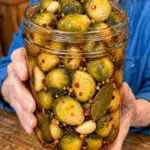
Frog Balls (Pickled Brussels Sprouts)
Description
Prep time: About 15 minutes
Cooking: Approximately 10–15 minutes
Flavor rest: 24–48 hours refrigerated
Servings: About 6
Ingredients
- 1 pound fresh Brussels sprouts
- 1 1/2 cups white vinegar, 5% acidity
- 1 1/2 cups water
- 3 garlic cloves, lightly crushed
- 1 tablespoon kosher salt
- 1 tablespoon sugar
- 1 teaspoon mustard seeds
- 1 teaspoon black peppercorns
- 1/2 teaspoon red pepper flakes, optional
- 2 bay leaves
- 1/2 teaspoon dried dill, optional
- Optional: 1/2 teaspoon coriander seeds, 1/4 teaspoon celery seeds, a few jalapeño slices, or fresh dill
Instructions
- Wash sprouts, trim dry stem ends, and remove damaged leaves. Halve larger sprouts for a consistent size.
- Blanch in boiling water for about 3–5 minutes, checking early, until slightly softened but firm. Transfer immediately to ice water, then drain thoroughly.
- Combine vinegar, measured water, salt, sugar, garlic, and dry spices in a nonreactive saucepan. Bring to a boil, reduce heat, and simmer gently 2–3 minutes.
- Pack sprouts into clean heat-safe containers. Add optional fresh dill or jalapeño. Pour brine over to cover, distributing garlic and spices. Do not top up with plain water.
- Cool briefly and refrigerate promptly at 40°F or below. Label the preparation date.
- Rest 24–48 hours, then serve chilled with clean utensils. Remove bay leaves from serving portions.
Storage: Use within 3–4 days of preparation, including marinating time. Do not wait 3–5 days before beginning to eat the batch. This is an untested refrigerator recipe, not a shelf-stable preserve. Freezing is not recommended for texture.