Peach Jalapeño Cowboy Candy: Sweet, Spicy, Sticky, and Absolutely Irresistible
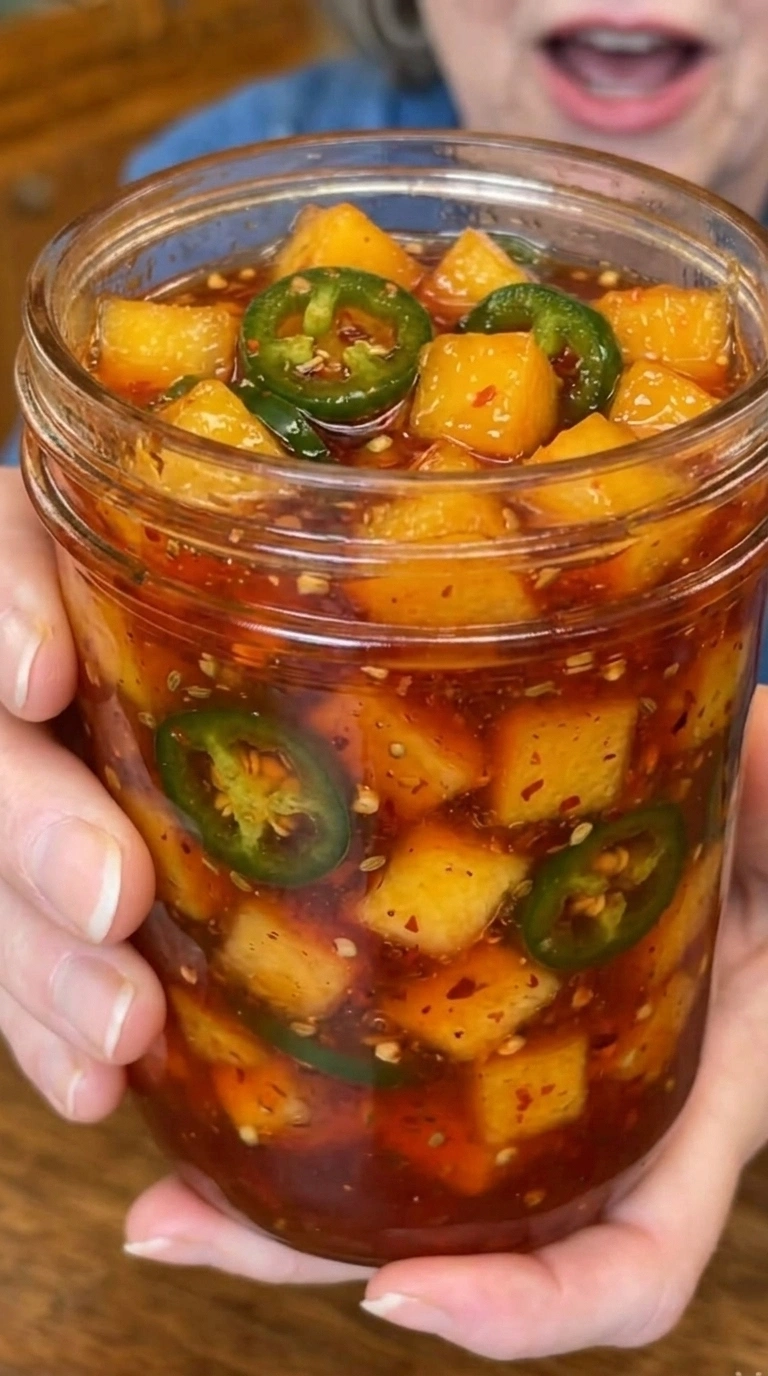
There are condiments. There are preserves. There are toppings and spreads and jams. And then there is Cowboy Candy — a category unto itself, and one of the most addictive things you will ever spoon out of a jar. The original version is made with jalapeños alone, candied in a sweet, spiced syrup until they become something otherworldly: fiery and sugary simultaneously, sticky and glossy, impossible to stop eating. This version takes that already extraordinary concept and adds fresh summer peaches to the equation. The result is something that stops people mid-conversation. Juicy, caramelized peaches. Fiery jalapeño slices. A sticky, amber syrup flavored with apple cider vinegar, garlic, turmeric, and celery seed. Sweet, spicy, tangy, and deeply complex — all at once, in every bite.
Spoon it over a block of cream cheese with crackers and it becomes the most talked-about appetizer at any party. Put it on a burger and every other burger you’ve ever made immediately feels incomplete. Serve it alongside grilled chicken or pork and dinner feels restaurant-worthy. Give a jar as a gift and become the most beloved person in the recipient’s life.
And the most remarkable part is how fast and simple it is. Twenty-five minutes of active cooking. One saucepan. A handful of ingredients. The kind of result that looks and tastes like something that required considerably more effort than it did.
This guide covers everything: the fascinating origin story of Cowboy Candy, why the sweet-spicy combination is so addictive, a complete ingredient breakdown, step-by-step instructions, tips for the best texture and flavor, and every possible way to use a jar once it’s made.
What Is Cowboy Candy — and Where Did It Come From?
Cowboy Candy is the colloquial name for candied jalapeños: jalapeño slices slow-simmered in a sweet, spiced syrup until they become tender, glossy, and simultaneously fiery and sweet. The name is colorful and fitting — there’s something unabashedly bold and characteristically Texan about the concept of making candy out of hot peppers.
The exact origin of Cowboy Candy is somewhat disputed, but the dish is most commonly associated with Texas and the broader American Southwest, where jalapeños grow abundantly and food culture has never been shy about bold flavor combinations. The technique of candying hot peppers — preserving them in high-sugar syrup — likely evolved from the broader tradition of making jalapeño jelly and other pepper preserves that have been staples of Southern and Southwestern pantries for generations.
The commercial version, sold under brand names like Kountry Kitchen and available at Southern grocery stores and farmers markets for decades, introduced the concept to a wider audience. But the homemade version — particularly when made with fresh summer produce rather than jarred jalapeños — is in a different league entirely.
Adding peaches to the equation is a natural evolution that reflects the deep culinary relationship between peaches and jalapeños in Southern and Southwestern cooking. Peach jalapeño jam, peach habanero hot sauce, peach salsa with serranos — this flavor pairing appears throughout the regional culinary tradition because it’s simply one of the great combinations: the floral, fruity sweetness of a ripe peach against the vegetal, building heat of a fresh pepper.
In this recipe, that partnership is concentrated into a syrup-drenched preserve that captures the best of both ingredients at once.
The Science of Sweet and Spicy: Why This Combination Is So Addictive
The sweet-spicy flavor combination isn’t just popular — it’s neurologically compelling in a way that food scientists have studied extensively. Understanding why helps explain why a jar of Peach Jalapeño Cowboy Candy tends to disappear so quickly.
Capsaicin triggers the body’s natural reward system. When capsaicin — the compound responsible for jalapeño’s heat — activates the TRPV1 receptors in your mouth, your brain responds by releasing endorphins and dopamine. These are the same neurotransmitters associated with pleasure, reward, and mild euphoria. Spicy food, in moderation, actually makes you feel good at a neurochemical level.
Sweetness amplifies and extends the spice experience. Sugar doesn’t neutralize capsaicin — contrary to popular belief, it won’t put out the fire. What it does is create a contrast that makes the heat more pleasurable. The sweetness hits first, inviting and familiar, lowering your guard. Then the heat builds slowly beneath it, and the contrast between the two sensations is what makes the combination so compelling and so difficult to stop eating. Each bite restarts the cycle.
The syrup itself becomes addictive. The cooking process in this recipe does something remarkable to the syrup: the sugar caramelizes slightly, the apple cider vinegar reduces and mellows, the capsaicin from the jalapeños infuses the entire liquid, and the peach juice bleeds into everything, creating a syrup that’s sweet, tangy, spicy, and fruity all at once. It coats every piece of jalapeño and peach and becomes almost as valuable as the solids themselves — people spoon it directly over cream cheese, drizzle it over ice cream, stir it into cocktails.
Choosing the Best Peaches and Jalapeños
The quality of your two primary ingredients determines the quality of the finished Cowboy Candy more than anything else. Here’s what to look for.
Peaches
Ripe but firm is the target. You want peaches that are fully ripe — fragrant, sweet, and at peak flavor — but still firm enough to hold their shape during the brief cooking time. Overripe peaches will turn mushy and fall apart in the syrup. Underripe peaches will remain hard and won’t absorb the syrup properly or contribute their full sweetness.
The test: a ripe peach should yield slightly to gentle pressure at the stem end and smell deeply fragrant. It should not be rock hard or squishy.
Freestone peaches are significantly easier to work with than clingstone varieties. In a freestone peach, the flesh separates cleanly from the pit. In clingstone, the flesh clings stubbornly and dicing becomes a frustrating process. Yellow peaches are most commonly available and have the classic sweet-tart flavor that pairs best with jalapeño heat. White peaches are sweeter and less acidic — they work beautifully but produce a slightly different, more delicate result.
Fresh is best, but frozen works. At peak summer season, nothing beats fresh peaches. Out of season, frozen peach slices (thawed and drained of excess liquid) produce an excellent result. The texture will be slightly softer, but the flavor is remarkably good.
How to peel peaches quickly: Score an X in the bottom of each peach, drop into boiling water for 30 to 60 seconds, then transfer immediately to ice water. The skins slip off effortlessly. This blanching method is dramatically faster than peeling with a knife and doesn’t waste any flesh.
Jalapeños
Fresh jalapeños are essential. Don’t substitute pickled or canned jalapeños — they’ve already been processed and will turn mushy in the syrup, and their flavor is flatter and more acidic than fresh.
Choose firm, bright jalapeños without soft spots or wrinkling. The stems should look fresh. Size matters for this recipe: medium-sized jalapeños produce slices of a good, bite-sized diameter. Very large jalapeños can be cut in half lengthwise before slicing if you want smaller pieces.
Slice uniformly. Consistent slice thickness — about ¼ inch — means the jalapeños cook evenly and every jar gets a consistent amount of pepper in each spoonful. A mandoline makes this easy if you have one; a sharp knife and patience work equally well.
Heat level varies significantly between individual jalapeños. A jalapeño that looks identical to the one next to it can be two to three times hotter or milder — this is a quirk of the species and largely unpredictable. Taste a tiny bit of the flesh (not the seeds) before you start cooking to get a sense of the batch’s heat level, and adjust the optional cayenne accordingly.
Ingredient Breakdown: What Every Element Contributes
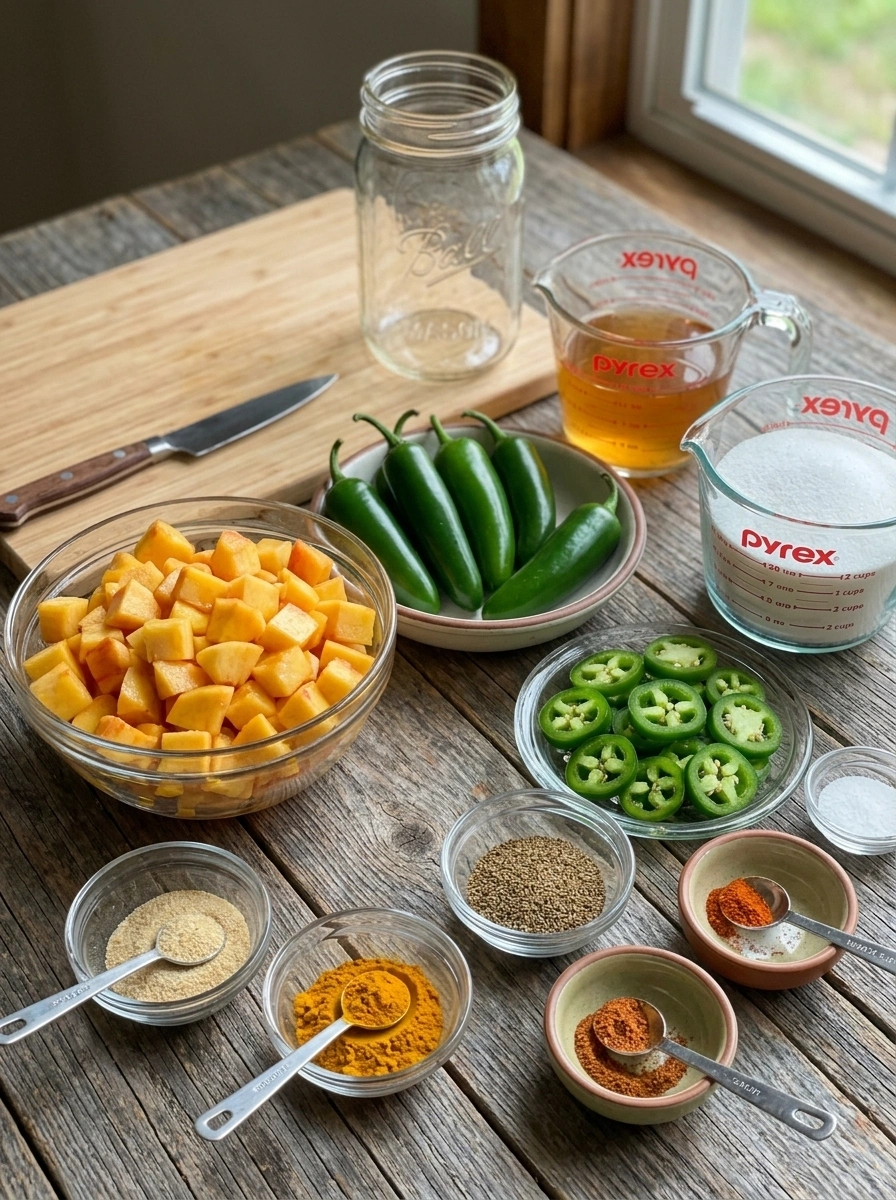
Fresh Peaches (3 cups, peeled and diced)
The sweet, fruity heart of the recipe. Peaches contribute natural sugar, floral aromatic compounds, and juice that bleeds into the syrup during cooking, adding a stone-fruit depth that apple cider vinegar and sugar alone can’t produce. Their brief cooking time — just 3 to 4 minutes — keeps them tender but intact, with enough structure to provide satisfying texture in every bite.
Jalapeños (6, thinly sliced)
The fire. Six jalapeños is a substantial amount, and the finished Cowboy Candy has genuine heat — building, sustained, and deeply satisfying. The jalapeños simmer in the syrup for slightly longer than the peaches, which softens them from crisp and raw to tender and glossy while allowing their capsaicin to diffuse into the surrounding liquid. By the time the jar is jarred and refrigerated, the syrup itself is spicy — which is most of the point.
Apple Cider Vinegar (1½ cups)
The acid backbone that makes this a preserve rather than just a candy. Apple cider vinegar’s mild, fruity tang is the perfect foil for the sweetness of the sugar and peaches — it prevents the syrup from tasting cloying and adds a brightness that makes every element more vivid. It also acts as a mild preservative, extending the refrigerator life of the finished product. Apple cider vinegar specifically is the right choice here because its fruitiness complements rather than competes with the peaches; white vinegar would be too harsh and wine vinegar too subtle.
Granulated Sugar (2 cups)
Two cups sounds like a lot — and it is, by everyday cooking standards. But this is a preserve, and sugar serves as both flavoring and preservation agent. It draws moisture from the jalapeños and peaches through osmosis, creating the characteristic sticky syrup, and it prevents microbial growth during storage. The sugar also caramelizes very slightly during the cook, adding depth and a subtle toffee note to the syrup that plain sweetness can’t achieve.
Garlic Powder (1 tsp)
A savory undercurrent that keeps the sweetness from becoming one-dimensional. Garlic powder integrates more smoothly than fresh garlic here — it distributes evenly through the syrup without producing the sharp, raw-garlic notes that fresh cloves can contribute in a quick-cooked preparation. It’s the ingredient that makes this a condiment rather than a dessert.
Ground Turmeric (½ tsp)
Adds a warm, golden color and an earthy, slightly bitter note that adds complexity to the syrup without being identifiable. Turmeric is used at this quantity primarily as a color and depth ingredient rather than a flavor driver — it’s part of what gives the syrup its gorgeous amber appearance and makes the finished jars look so beautiful. It also contains curcumin, a compound with well-documented anti-inflammatory properties.
Celery Seed (½ tsp)
One of the most underrated spices in preserving. Celery seed has an herbal, slightly bitter, faintly vegetal character that adds the kind of complexity that distinguishes a well-spiced preserve from a simple one. It’s not a flavor most people can identify, but it’s one they’d miss — the jar without celery seed tastes slightly less interesting, slightly less complete. It also has a long tradition in pickling and preserving recipes across American food history.
Cayenne Pepper (¼ tsp, optional)
Additional, different heat. The cayenne is optional but recommended. While jalapeños provide fresh, building pepper heat, cayenne adds a sharper, more immediate heat that sits on top of the jalapeño’s slower burn. Together they create a more complex, more interesting heat profile than either would produce alone. If you’re cooking for people who love heat, include it. If you want something more approachable, leave it out — the jalapeños provide plenty of heat on their own.
Salt (¼ tsp)
A small amount, but essential. Salt makes sweet things taste more themselves — it heightens the perception of sweetness rather than making things taste salty. A quarter teaspoon distributed across 16 servings is imperceptible as saltiness but makes the whole composition noticeably more vibrant and complete.
How to Make Peach Jalapeño Cowboy Candy: Step-by-Step
Step 1: Build the Syrup
Combine the apple cider vinegar, granulated sugar, garlic powder, turmeric, celery seed, cayenne (if using), and salt in a medium saucepan. Stir to combine — the mixture will look like slightly tinted sugar water at this point. Set over medium heat and bring to a gentle boil, stirring occasionally. Once boiling, stir until every grain of sugar is completely dissolved. The syrup will turn a gorgeous golden-amber color from the turmeric and begin to smell sweet and slightly spiced.
Step 2: Simmer the Jalapeños
Add the sliced jalapeños to the boiling syrup. Stir to coat every slice completely. Reduce heat to a gentle simmer and cook for 4 to 5 minutes, stirring occasionally. During this time, the jalapeños will begin to soften slightly and their color will shift from bright green to a deeper, more olive green. They’ll remain glossy and somewhat firm — they should not be mushy. The syrup will begin to take on heat from the peppers during this step.
Step 3: Add the Peaches
Stir in the diced peaches and cook for an additional 3 to 4 minutes. The peaches need very little time — just enough to warm through and become tender, absorbing the spiced syrup without losing their shape. Stir gently during this step to avoid breaking the peach pieces. At the end of 3 to 4 minutes, the peaches should be tender but intact, and the syrup will have taken on a beautiful stone-fruit quality from the peach juice that’s been released during cooking.
Watch carefully here. Overcooked peaches will turn to mush and the texture of the finished Cowboy Candy will suffer. It’s better to pull the pan a minute early than a minute late.
Step 4: Cool Slightly and Transfer
Remove the saucepan from the heat and let the mixture cool for 5 to 10 minutes — just enough that it won’t crack glass jars when transferred. Using a ladle or large spoon, distribute the peaches, jalapeños, and syrup evenly among clean glass jars. Make sure every jar gets a good proportion of both solids and liquid.
Step 5: Refrigerate Overnight
Let the jars cool completely to room temperature before sealing, then refrigerate overnight. The overnight rest is genuinely important here — it’s not just a recommendation. During those hours in the cold, the peaches and jalapeños continue to absorb the syrup, the flavors integrate and deepen, and the syrup thickens slightly as it chills. Cowboy Candy tasted immediately after making is good. Cowboy Candy after an overnight rest is the version worth making.
Every Way to Use Peach Jalapeño Cowboy Candy
Over cream cheese with crackers. This is the classic Cowboy Candy application and the one that converts the most skeptics. Spoon a generous amount — both the solids and the syrup — over a block of softened cream cheese and serve with buttery crackers or crostini. The combination of creamy, cool cheese against the sweet-spicy, syrup-drenched peaches and jalapeños is one of the great easy appetizers in existence. It takes 30 seconds to assemble and always disappears first.
On burgers. A spoonful of Cowboy Candy on a burger — ideally a beef patty with sharp cheddar, on a brioche bun — is an experience. The sweet-spicy syrup drips into the beef and the jalapeño slices add heat and texture to every bite. It’s one of those burger variations that’s hard to go back from.
Alongside grilled meats. Serve as a condiment alongside grilled chicken breasts, pork chops, or pork tenderloin. The sweet-fruit-heat combination is a classic pairing for pork in particular — something about the sweetness of peach against the richness of pork has been a staple of American cooking for generations.
On a charcuterie board. A small bowl or ramekin of Peach Jalapeño Cowboy Candy on a charcuterie board is an instant focal point. It pairs beautifully with aged cheddar, brie, prosciutto, and crackers. People eat it directly from the spoon.
Over vanilla ice cream. Pour the warm or room-temperature syrup over vanilla ice cream for a sweet-spicy-fruity dessert that surprises people and consistently wins them over. This is a particular hit at summer cookouts.
On hot dogs and bratwurst. In place of or alongside standard condiments — the Cowboy Candy adds sweetness, heat, and a glossy richness that ketchup and mustard simply can’t match.
Stirred into cocktails. A spoonful of the syrup stirred into a margarita, bourbon sour, or sparkling water makes an instant peach-jalapeño cocktail or mocktail. The syrup is perfectly balanced for this application and takes a drink from interesting to spectacular.
As a glaze for chicken wings. Toss hot wings in the syrup during the last few minutes of baking or grilling for a sweet-spicy, sticky glaze that caramelizes beautifully under heat.
On breakfast biscuits. Spoon over buttered biscuits the same way you’d use jam. The sweetness works, the heat wakes you up, and the combination with a flaky, buttery biscuit is outstanding.
Refrigerator Storage vs. Water-Bath Canning
This recipe offers two storage approaches, and the right choice depends on how you plan to use it.
Refrigerator storage is the simpler, faster approach. Once cooled and sealed, the jars keep in the refrigerator for up to 3 weeks. For most households making a batch or two to use over the course of a few weeks, this is the right approach. No special equipment required — just clean jars and a cold fridge.
Water-bath canning produces shelf-stable jars that can be stored in a cool, dark pantry for up to one year. This is the approach for larger batches, for giving as gifts, and for stocking the pantry through seasons when fresh peaches aren’t available. Canning requires proper equipment — a large water-bath canning pot, rack, tongs, and properly sterilized jars and new lids — and the process must be followed precisely to ensure safety.
The high sugar and apple cider vinegar content of this recipe make it well-suited for water-bath canning from an acidity standpoint, but always consult USDA-approved canning guidelines or the National Center for Home Food Preservation for tested recipes and processing times before canning any preserve at home.
Variations to Try
Mango Jalapeño Cowboy Candy: Replace the peaches with an equal amount of diced ripe mango. The tropical sweetness of mango against jalapeño heat is extraordinary — particularly good on fish tacos and with grilled shrimp.
Peach Habanero: Replace two of the jalapeños with one seeded habanero for a significantly more intense, fruity heat. The habanero’s tropical flavor profile complements the peach beautifully and takes the heat to another level entirely.
Cinnamon Spiced Version: Add ½ teaspoon of ground cinnamon and a small pinch of clove to the syrup. The warm spices give the Cowboy Candy an almost mulled-wine quality that’s incredible over brie and alongside a cheese board in fall and winter.
Nectarine Version: Substitute nectarines for peaches — no peeling required, as nectarine skins are tender and pleasant in the finished preserve. Slightly more tart than peaches, they add a bright counterpoint to the sweet syrup.
Ginger Peach: Add one tablespoon of freshly grated ginger to the syrup along with the other spices for a warming, aromatic heat that layers beautifully with the jalapeño fire and peach sweetness.
Frequently Asked Questions
How spicy is this recipe? With six jalapeños, it has genuine, building heat — noticeable but not overwhelming for most people who enjoy spicy food. The two cups of sugar temper the heat significantly, so the overall experience is more sweet-spicy than fiery. Adding the cayenne increases the heat level noticeably.
Can I use frozen peaches? Yes. Thaw completely and drain any excess liquid before using. The texture will be slightly softer than fresh but the flavor is excellent, making frozen peaches a good year-round option.
Why did my syrup turn thin after refrigerating? The syrup thickens as it cools and then loosens slightly when brought back to room temperature — this is normal behavior for a high-sugar syrup. If the syrup seems very thin even when cold, you can return it to the saucepan and simmer for a few additional minutes to reduce it further before re-jarring.
Can I make this without the cayenne? Absolutely. The cayenne is optional and the recipe is well-balanced and genuinely spicy without it. Omitting it gives a slightly milder overall heat with more focus on the jalapeño’s fresh, building burn.
The peaches turned mushy — what went wrong? Overripe peaches or too long in the pan. Use firm-ripe peaches and keep the cooking time to no more than 4 minutes once the peaches are added. They should be just tender, not falling apart.
Recipe at a Glance
| Detail | Info |
|---|---|
| Prep Time | 15 minutes |
| Cook Time | 10 minutes |
| Total Time | 25 minutes (plus overnight rest) |
| Servings | 16 |
| Calories | ~70 per serving |
| Refrigerator Storage | Up to 3 weeks |
| Canned Storage | Up to 1 year (unopened) |
Final Thoughts
Peach Jalapeño Cowboy Candy is one of those recipes that transcends the jar. It’s a conversation piece, a party trick, a gift that gets remembered, and a condiment that changes how people think about sweet-spicy flavor combinations. Twenty-five minutes of cooking, one night of patience, and you have something genuinely extraordinary — a jar of summer heat and sweetness that goes on everything and disappears before you’re ready for it to be gone.
Make a batch at peak peach season. Make extra for gifts. Make it in winter with frozen peaches when you need a reminder that summer exists.
One spoonful over cream cheese with a cracker, and you’ll understand why this one earns a permanent spot in the kitchen.
Print
Peach Jalapeño Cowboy Candy
- Total Time: 25 minutes (plus overnight rest)
Ingredients
Fresh Peaches (3 cups, peeled and diced)
The sweet, fruity heart of the recipe. Peaches contribute natural sugar, floral aromatic compounds, and juice that bleeds into the syrup during cooking, adding a stone-fruit depth that apple cider vinegar and sugar alone can’t produce. Their brief cooking time — just 3 to 4 minutes — keeps them tender but intact, with enough structure to provide satisfying texture in every bite.
Jalapeños (6, thinly sliced)
The fire. Six jalapeños is a substantial amount, and the finished Cowboy Candy has genuine heat — building, sustained, and deeply satisfying. The jalapeños simmer in the syrup for slightly longer than the peaches, which softens them from crisp and raw to tender and glossy while allowing their capsaicin to diffuse into the surrounding liquid. By the time the jar is jarred and refrigerated, the syrup itself is spicy — which is most of the point.
Apple Cider Vinegar (1½ cups)
The acid backbone that makes this a preserve rather than just a candy. Apple cider vinegar’s mild, fruity tang is the perfect foil for the sweetness of the sugar and peaches — it prevents the syrup from tasting cloying and adds a brightness that makes every element more vivid. It also acts as a mild preservative, extending the refrigerator life of the finished product. Apple cider vinegar specifically is the right choice here because its fruitiness complements rather than competes with the peaches; white vinegar would be too harsh and wine vinegar too subtle.
Granulated Sugar (2 cups)
Two cups sounds like a lot — and it is, by everyday cooking standards. But this is a preserve, and sugar serves as both flavoring and preservation agent. It draws moisture from the jalapeños and peaches through osmosis, creating the characteristic sticky syrup, and it prevents microbial growth during storage. The sugar also caramelizes very slightly during the cook, adding depth and a subtle toffee note to the syrup that plain sweetness can’t achieve.
Garlic Powder (1 tsp)
A savory undercurrent that keeps the sweetness from becoming one-dimensional. Garlic powder integrates more smoothly than fresh garlic here — it distributes evenly through the syrup without producing the sharp, raw-garlic notes that fresh cloves can contribute in a quick-cooked preparation. It’s the ingredient that makes this a condiment rather than a dessert.
Ground Turmeric (½ tsp)
Adds a warm, golden color and an earthy, slightly bitter note that adds complexity to the syrup without being identifiable. Turmeric is used at this quantity primarily as a color and depth ingredient rather than a flavor driver — it’s part of what gives the syrup its gorgeous amber appearance and makes the finished jars look so beautiful. It also contains curcumin, a compound with well-documented anti-inflammatory properties.
Celery Seed (½ tsp)
One of the most underrated spices in preserving. Celery seed has an herbal, slightly bitter, faintly vegetal character that adds the kind of complexity that distinguishes a well-spiced preserve from a simple one. It’s not a flavor most people can identify, but it’s one they’d miss — the jar without celery seed tastes slightly less interesting, slightly less complete. It also has a long tradition in pickling and preserving recipes across American food history.
Cayenne Pepper (¼ tsp, optional)
Additional, different heat. The cayenne is optional but recommended. While jalapeños provide fresh, building pepper heat, cayenne adds a sharper, more immediate heat that sits on top of the jalapeño’s slower burn. Together they create a more complex, more interesting heat profile than either would produce alone. If you’re cooking for people who love heat, include it. If you want something more approachable, leave it out — the jalapeños provide plenty of heat on their own.
Salt (¼ tsp)
A small amount, but essential. Salt makes sweet things taste more themselves — it heightens the perception of sweetness rather than making things taste salty. A quarter teaspoon distributed across 16 servings is imperceptible as saltiness but makes the whole composition noticeably more vibrant and complete.
Instructions
Combine the apple cider vinegar, granulated sugar, garlic powder, turmeric, celery seed, cayenne (if using), and salt in a medium saucepan. Stir to combine — the mixture will look like slightly tinted sugar water at this point. Set over medium heat and bring to a gentle boil, stirring occasionally. Once boiling, stir until every grain of sugar is completely dissolved. The syrup will turn a gorgeous golden-amber color from the turmeric and begin to smell sweet and slightly spiced.
Add the sliced jalapeños to the boiling syrup. Stir to coat every slice completely. Reduce heat to a gentle simmer and cook for 4 to 5 minutes, stirring occasionally. During this time, the jalapeños will begin to soften slightly and their color will shift from bright green to a deeper, more olive green. They’ll remain glossy and somewhat firm — they should not be mushy. The syrup will begin to take on heat from the peppers during this step.
Stir in the diced peaches and cook for an additional 3 to 4 minutes. The peaches need very little time — just enough to warm through and become tender, absorbing the spiced syrup without losing their shape. Stir gently during this step to avoid breaking the peach pieces. At the end of 3 to 4 minutes, the peaches should be tender but intact, and the syrup will have taken on a beautiful stone-fruit quality from the peach juice that’s been released during cooking.
Watch carefully here. Overcooked peaches will turn to mush and the texture of the finished Cowboy Candy will suffer. It’s better to pull the pan a minute early than a minute late.
Remove the saucepan from the heat and let the mixture cool for 5 to 10 minutes — just enough that it won’t crack glass jars when transferred. Using a ladle or large spoon, distribute the peaches, jalapeños, and syrup evenly among clean glass jars. Make sure every jar gets a good proportion of both solids and liquid.
Let the jars cool completely to room temperature before sealing, then refrigerate overnight. The overnight rest is genuinely important here — it’s not just a recommendation. During those hours in the cold, the peaches and jalapeños continue to absorb the syrup, the flavors integrate and deepen, and the syrup thickens slightly as it chills. Cowboy Candy tasted immediately after making is good. Cowboy Candy after an overnight rest is the version worth making.
- Prep Time: 15 minutes
- Cook Time: 10 minutes
Nutrition
- Serving Size: 16
- Calories: 70 per serving