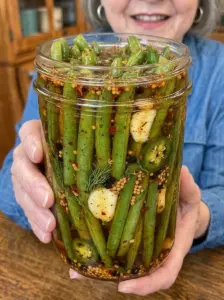
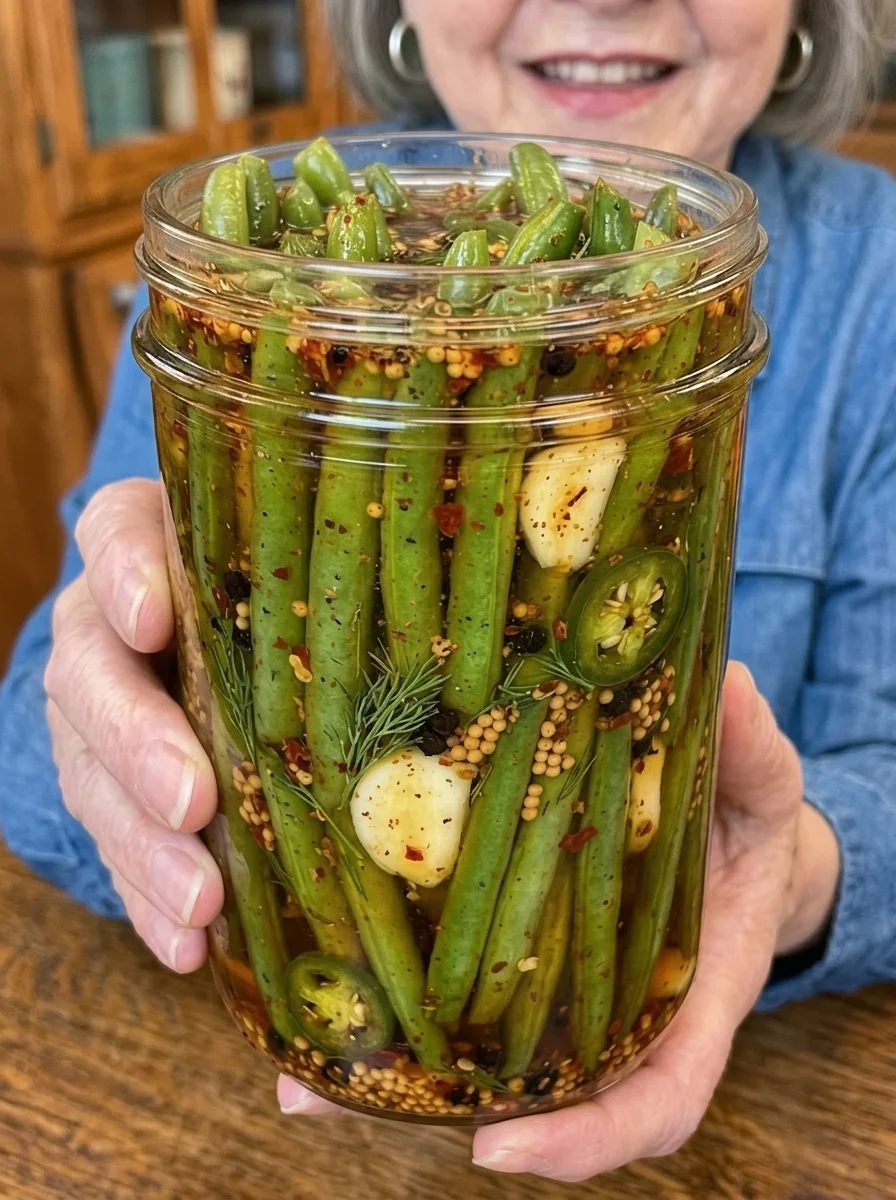
Hot Honey Cajun Pickled Green Beans bring together bright vinegar tang, gentle honey sweetness, garlic, and a peppery Cajun finish. The beans stay firm and refreshing while mustard seeds, dill, and red pepper flakes add layers of flavor. They are an easy addition to a barbecue plate, a sandwich lunch, or a snack board.
This is a refrigerator pickle: fresh vegetables are covered with a heated vinegar brine, then chilled while the flavors develop. There is no fermentation stage and no shelf-stable canning process. The jars belong in the refrigerator from preparation through storage.
Most of the work takes place in the first twenty minutes. Trim the beans, divide the seasonings, dissolve the honey and salt in the brine, and cover the vegetables. After at least a day in the refrigerator, the beans begin developing their sweet, spicy, tangy character. Another day or two gives the garlic and seasoning more time to blend.
This article expands the supplied recipe with preparation and storage guidance. The exact formula has not been independently kitchen-tested or validated as a preservation recipe. The two-week window below is a short refrigerated quality target, not a guarantee of safety or a basis for pantry storage.
Flavor and Texture
The vinegar provides a sharp, clean tang. Honey rounds out that acidity without making the brine syrupy, while Cajun seasoning contributes a mixture of savory spices whose exact balance depends on the brand.
Red pepper flakes and optional jalapeño add heat. Garlic supplies a savory background, and dill keeps the flavor connected to familiar refrigerator pickles. Mustard seeds and peppercorns remain visible in the jar and contribute aroma as the beans chill.
Raw green beans produce a firm, distinctly vegetable-like crunch. They will not have the same tender texture as canned dilly beans. If you prefer a slightly softer bite, a short blanch is an optional preparation step, discussed below.
The brine can look cloudy or reddish because of the ground spices. That appearance alone is different from new gas production, mold, or a marked change during storage. Do not use visual inspection as the only food-safety measure; clean handling, refrigeration, and a short storage period still matter.
Ingredients
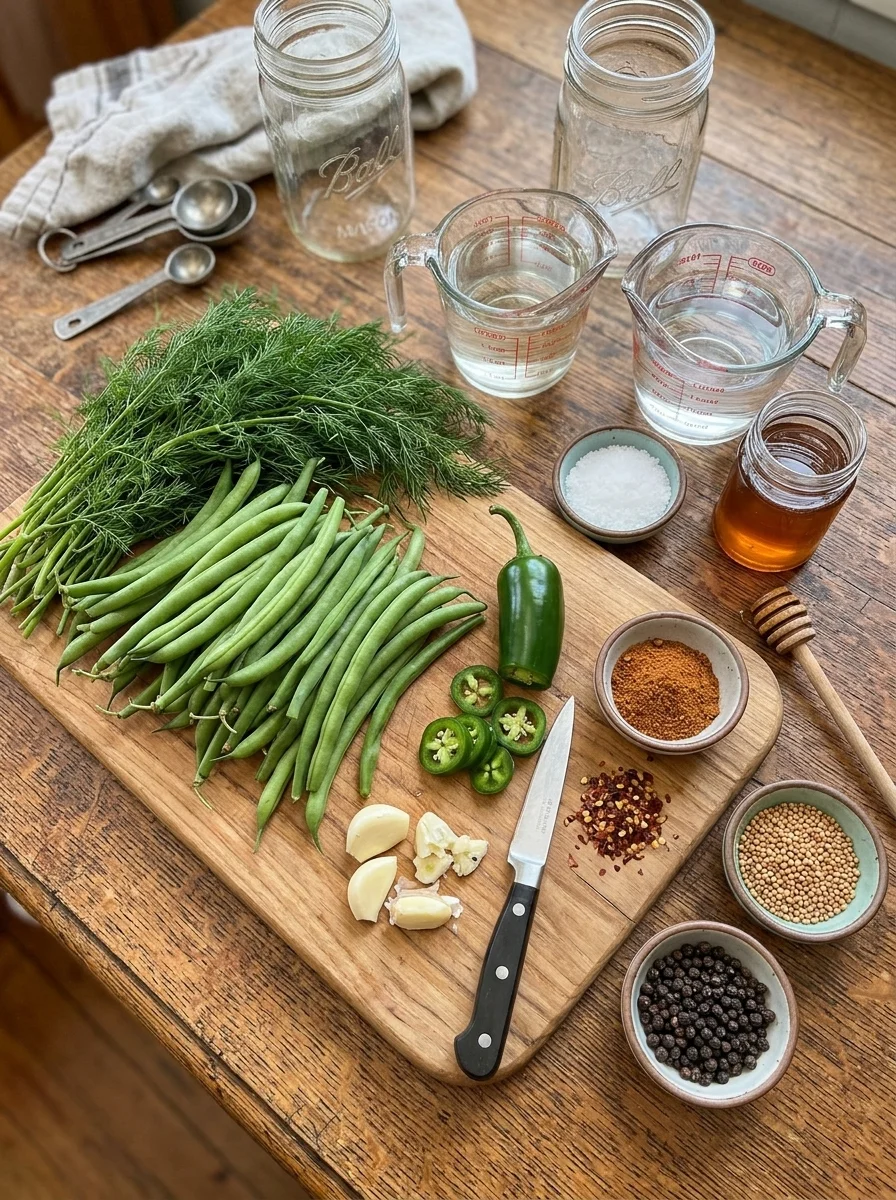
- 1 pound fresh green beans, washed and trimmed
- 1 cup distilled white vinegar labeled 5% acidity
- 1 cup water
- 1 tablespoon kosher salt, with the seasoning salt level checked first
- 2 tablespoons honey
- 1 tablespoon Cajun seasoning, preferably salt-free for better control
- 4 garlic cloves, peeled and lightly crushed
- 1 teaspoon red pepper flakes
- 1 teaspoon mustard seeds
- 1/2 teaspoon whole black peppercorns
- 2 fresh dill sprigs
- 1 small fresh jalapeño, sliced, optional
Containers: About two clean, heat-safe pint jars, with an additional small container available if the beans do not fit comfortably.
Jar yield depends on bean length, thickness, and packing. Do not force vegetables into a jar so tightly that the brine cannot move around them. A larger refrigerator-safe container is also suitable if the beans remain covered.
Ingredient Notes
Fresh, slender beans give a pleasant crunch
Choose firm green beans without slimy areas, soft spots, or substantial shriveling. Slender beans are generally easier to pack and more pleasant to eat whole than large, fibrous beans.
Wash thoroughly under running water and trim the stem ends. Cut the beans to fit the containers while leaving space for the brine above them.
A pickle does not improve the quality of tired produce. Start with beans you would be happy to cook and serve fresh.
Use vinegar with a stated acidity
Choose commercially bottled white vinegar labeled 5% acidity. Homemade vinegar and products with an unknown acid strength are not appropriate substitutes for this formula.
Do not reduce the vinegar or add extra water to make the pickles milder. Adjust perceived heat and sweetness through the optional chile and a modest amount of honey instead of diluting the brine.
The stated vinegar ratio does not turn this recipe into a tested canning formula. Vegetable density, packing, ingredients, and processing all matter in preservation.
Check the Cajun seasoning for salt
Cajun seasoning blends vary widely. Some contain a substantial amount of salt, while others are entirely salt-free. A full tablespoon of a salty blend combined with a tablespoon of kosher salt can create an unnecessarily salty pickle.
A salt-free blend is the easiest starting point because it lets the listed salt be measured separately. If using a salted blend, reduce the added kosher salt to suit the product rather than automatically adding both full amounts.
This is a quick refrigerated pickle, not a salt-dependent fermentation. The salt discussion concerns flavor within this refrigerated method; it is not permission to change the recipe for canning or fermentation.
Kosher salt brands are not identical
Different crystal sizes mean one tablespoon can contain different weights of salt. Use the same brand while learning the recipe and note any adjustment you prefer.
Fine table salt is more compact by volume and should not be substituted automatically in the same spoon measure. Pickling salt can also be measured differently. If changing products, consult the package conversion rather than assuming equal volumes.
Honey adds balance
Two tablespoons honey provide a modest sweet counterpoint to the vinegar. Stir it into the warm brine so it disperses evenly rather than collecting at the bottom of the jar.
For a sweeter batch, a small additional amount is an optional flavor adjustment. Do not treat honey as a preservation step. In this recipe it is primarily a sweetener, not a substitute for acidity or refrigeration.
Build heat deliberately
The combination of Cajun seasoning and one teaspoon red pepper flakes may already be spicy. The optional jalapeño adds another source of heat, and the intensity can become more noticeable after chilling.
For a milder batch, start with less red pepper and omit the jalapeño. For more heat, add a few slices rather than a large amount of extra fresh vegetables that changes the packing and brine needs.
Equipment
Use two clean heat-safe pint jars or an equivalent food-safe container, clean lids, a small saucepan, measuring cups and spoons, tongs, and a ladle. A wide-mouth funnel can make filling easier.
Jars must tolerate warm liquid. Do not pour hot brine into cold, ordinary decorative glass or a container with chips or cracks. Prepare heat-safe jars according to their manufacturer’s guidance and avoid sudden temperature changes.
These jars do not need to be processed for shelf stability because the recipe is refrigerated throughout. A lid drawing down as the contents cool does not establish a safe pantry seal.
How to Make the Pickled Beans
1. Wash, trim, and size the beans
Rinse the beans thoroughly and remove damaged pieces. Trim the stem ends and cut the beans to fit upright in the jars.
Leave enough room above the beans for liquid to cover them. Short trimmings can be packed in a small separate container rather than squeezed across the top where they may float above the brine.
Drain the beans before packing so wash water does not unnecessarily dilute the mixture.
2. Choose raw or briefly blanched beans
For the supplied firm refrigerator-pickle texture, use the beans raw. They will retain a noticeable fresh-bean bite.
If you prefer slightly more tenderness, blanch them in boiling water for about one to two minutes, then transfer promptly to ice water. Drain thoroughly before packing. This is an optional texture adaptation, not a canning or sterilization step.
Do not cook until fully soft. Beans that begin soft are unlikely to develop a crisp texture after soaking.
3. Divide the jar seasonings
Divide the garlic, dill, mustard seeds, peppercorns, red pepper flakes, and optional jalapeño between the jars.
Lightly crush the garlic rather than mincing it into a paste. This distributes its flavor while keeping the pieces easy to see and remove.
Wash the dill and jalapeño before use. Handle the pepper carefully and wash your hands after slicing, especially before touching your eyes.
4. Pack the beans
Arrange the beans upright among the seasonings. Pack snugly but leave enough gaps for the brine to circulate.
Check that no bean extends above the intended liquid level. If the jars are too full, move some beans into another container rather than leaving them exposed or packing them under excessive pressure.
A pound of beans does not fit identically into every pair of pint jars. The finished yield is an estimate.
5. Heat the honey-Cajun brine
Combine the vinegar, water, honey, Cajun seasoning, and measured salt in a saucepan. If the seasoning contains salt, use the adjusted added-salt amount discussed above.
Heat over medium heat, stirring until the honey and salt dissolve. Bring to a gentle boil, then remove from the heat. Prolonged reduction is unnecessary and changes the amount of liquid available for the jars.
Ground spices may settle between stirring and pouring. Give the brine another gentle stir before dividing it.
6. Cover the beans
Pour the hot brine carefully into suitable prepared heat-safe jars, covering the beans and leaving about 1/2 inch of headspace.
Use a clean utensil to release trapped air and reposition any floating pieces. Add enough of the prepared brine to keep the vegetables submerged.
If you need more liquid, make another batch at the same one-to-one ratio of 5% vinegar and water, with proportionate seasoning. Do not top off the jar with plain water.
If the jars cannot tolerate hot liquid, let the brine cool until safely warm before filling, following the container manufacturer’s instructions.
7. Refrigerate promptly
Cover with clean lids and refrigerate promptly. You do not need to wait for the jars to cool completely on the counter. Warm refrigerator-pickle preparations can be chilled in suitably sized heat-safe containers; avoid thermal shock to the glass.
Do not leave the jars out for hours while waiting for them to reach room temperature. If using a large container, divide into smaller suitable containers so cooling is easier.
Label with the preparation date. Keep the refrigerator at 40°F or below.
8. Let the flavor develop
Wait at least 24 hours before tasting. For a stronger garlic and Cajun flavor, allow 48–72 hours in the refrigerator.
Gently turn or stir the closed container occasionally if the spices settle. Do not shake so vigorously that the beans break or the lid leaks.
Use clean utensils for tasting and return the container to the refrigerator promptly. Chilling time is part of flavor development, not a substitute for safe handling.
9. Serve cold
Remove a small portion with a clean fork or tongs. Serve as a snack or beside sandwiches, burgers, barbecue, or a cheese board.
Leave most of the batch refrigerated while serving a small bowl. Do not return beans that have been sitting on a communal platter to the original jar.
Tips for Better Crunch
Freshness matters more than trying to rescue older beans with extra spices. Firm, slender beans produce the most appealing starting texture.
Do not overcook if choosing the blanching option. A brief dip followed by an ice bath is intended to soften the raw edge slightly, not cook the beans as a vegetable side dish.
Keep the beans cold after preparation. The refrigerator is both the storage location and the place where the flavors develop.
Pack without crushing. Broken or badly bruised beans can lose their clean texture more quickly.
Expect some softening over time. A refrigerator pickle is not frozen in its first-day condition, so make a batch you can enjoy within a short period.
Serving Ideas
Add a few chilled beans beside pulled pork, grilled chicken, or a burger. Their vinegar tang provides a useful contrast to rich or smoky foods.
Cut them into bite-sized pieces for a sandwich or relish plate. A small amount can also add crunch to a prepared salad just before serving.
For a snack board, pair with cheese, crackers, and fresh vegetables. Drain lightly so the brine does not soak the crackers.
Use a bean as a garnish for a savory tomato mocktail if desired. Serve with the drink rather than leaving the whole jar on the counter throughout a gathering.
A little brine can flavor a dressing for immediate use, but it should not be reused as a preservation liquid for a new batch of vegetables.
Make-Ahead and Scaling
Preparing the beans two days ahead gives the seasonings time to develop. The recipe is practical for a gathering because most of the work is complete before serving day.
For a larger batch, multiply the ingredients evenly and use enough containers to keep everything covered. Preserve the vinegar-to-water ratio rather than increasing only the water to stretch the liquid.
Heat manageable quantities of brine and stir before filling each set of jars. Ground Cajun seasoning can settle, creating a very spicy first or last jar if it is not redistributed.
Leave refrigerator space before starting. A refrigerator-pickle project should not depend on finding cold storage after the jars have been filled.
Storage Information
Keep the beans covered with brine in clean, closed containers at 40°F or below. Use clean utensils and return the jar to the refrigerator promptly after serving.
Aim to use within two weeks for best quality, as in the supplied recipe. Because this specific honey-Cajun formula has not been validated, do not treat that interval as a guarantee. For a validated preparation and its storage instructions, use a university-extension refrigerator-pickle recipe exactly as written.
Do not store these jars in the pantry. Hot brine, a tight lid, or a vacuum that forms during cooling does not make this a shelf-stable canned food. University of Minnesota Extension distinguishes refrigerator pickles from processed shelf-stable products in its pickling guidance.
Discard the entire contents if you find mold, unexplained gas production, unusual slime, or an off odor. Do not taste suspect pickles to decide whether they are safe. Conversely, a normal smell does not replace proper refrigeration and handling.
Freezing is not recommended for the intended crisp texture. The beans may become softer and release liquid after thawing.
Variations
Milder Cajun beans: Use a mild, preferably salt-free Cajun blend, reduce the red pepper flakes, and omit jalapeño. Keep the vinegar and water unchanged.
More honey flavor: Add a small additional spoonful of honey to the warm brine and stir until dissolved. This changes sweetness and calories, not the storage method.
Extra garlic: One additional small clove can strengthen the savory flavor. Keep all ingredients submerged and refrigerated.
Dill-forward: Use a little more fresh dill if you enjoy a classic pickle aroma. Avoid packing a large mass of herbs that displaces too much brine.
Smokier seasoning: Choose a blend containing smoked paprika or add a small pinch. Check salt and heat before adding several extra spices.
These are flavor adaptations for refrigerated use. They do not create a safe canning formula.
Troubleshooting
The beans are too salty
The Cajun blend may contain substantial salt, or the kosher salt brand may be more compact by volume. Use a salt-free seasoning next time and adjust the added salt before making the brine. Do not dilute an already packed jar with plain water.
They are too spicy
Heat from flakes, Cajun seasoning, and jalapeño adds up. Serve smaller portions with mild foods and reduce the optional heat in the next batch. More honey can balance perception but does not remove capsaicin.
The beans float above the brine
Repack gently or use a clean food-safe pickling weight that fits the container. Do not use an improvised metal object that may react with the acidic liquid.
The brine is cloudy immediately
Ground spices can make it cloudy from the beginning. A known initial spice haze is different from unexplained changes during storage. If you are unsure about a new change or see gas, mold, slime, or other spoilage signs, discard rather than tasting.
There is not enough brine
Container shape and packing determine the liquid requirement. Prepare additional brine at the same ratio instead of adding water alone. Use a small extra jar if the vegetables are crowded.
Frequently Asked Questions
Can I water-bath can this recipe?
No tested canning procedure is provided for this formula. Use a current tested dilly-bean canning recipe from a reliable preservation source if you want pantry storage, and follow its ingredients and processing instructions.
Do I need to sterilize the jars?
Use thoroughly washed, clean, suitable containers and clean lids for this refrigerated preparation. This is not a shelf-stable canning process. Follow your container manufacturer’s care instructions and avoid damaged jars.
Can I reuse the brine for another batch?
Not as a preservation liquid. Once it has contacted vegetables, its composition and cleanliness have changed. Make fresh brine for each new batch. Minnesota Extension’s pickling guidance notes that unused brine is distinct from brine that has already contacted produce.
Can I use apple cider vinegar?
For refrigerated flavor variation, a commercially bottled product labeled 5% acidity can provide a different taste and color. Do not use vinegar of unknown strength or change the water ratio. This substitution still does not authorize canning.
How many calories are in a serving?
The supplied estimate of about 45 calories depends strongly on how much honey-containing brine is consumed. The beans themselves contribute relatively few calories. Divide the batch into eight portions and calculate from the actual ingredients if a precise value is needed; sodium is also highly dependent on the seasoning and brine consumed.
Print
Hot Honey Cajun Pickled Green Beans
Description
- Prep time: About 15 minutes
- Brine heating: About 5 minutes
- Active time: Approximately 20 minutes
- Refrigerated flavor development: At least 24 hours, preferably 48–72 hours
- Yield: About two pint jars, with capacity varying by packing
- Servings: Approximately 8 side or snack portions
- Method: Refrigerator pickling
Ingredients
- 1 pound fresh green beans, washed and trimmed
- 1 cup distilled white vinegar labeled 5% acidity
- 1 cup water
- 1 tablespoon kosher salt, with the seasoning salt level checked first
- 2 tablespoons honey
- 1 tablespoon Cajun seasoning, preferably salt-free for better control
- 4 garlic cloves, peeled and lightly crushed
- 1 teaspoon red pepper flakes
- 1 teaspoon mustard seeds
- 1/2 teaspoon whole black peppercorns
- 2 fresh dill sprigs
- 1 small fresh jalapeño, sliced, optional
Containers: About two clean, heat-safe pint jars, with an additional small container available if the beans do not fit comfortably.
Jar yield depends on bean length, thickness, and packing. Do not force vegetables into a jar so tightly that the brine cannot move around them. A larger refrigerator-safe container is also suitable if the beans remain covered.
Instructions
1. Wash, trim, and size the beans
Rinse the beans thoroughly and remove damaged pieces. Trim the stem ends and cut the beans to fit upright in the jars.
Leave enough room above the beans for liquid to cover them. Short trimmings can be packed in a small separate container rather than squeezed across the top where they may float above the brine.
Drain the beans before packing so wash water does not unnecessarily dilute the mixture.
2. Choose raw or briefly blanched beans
For the supplied firm refrigerator-pickle texture, use the beans raw. They will retain a noticeable fresh-bean bite.
If you prefer slightly more tenderness, blanch them in boiling water for about one to two minutes, then transfer promptly to ice water. Drain thoroughly before packing. This is an optional texture adaptation, not a canning or sterilization step.
Do not cook until fully soft. Beans that begin soft are unlikely to develop a crisp texture after soaking.
3. Divide the jar seasonings
Divide the garlic, dill, mustard seeds, peppercorns, red pepper flakes, and optional jalapeño between the jars.
Lightly crush the garlic rather than mincing it into a paste. This distributes its flavor while keeping the pieces easy to see and remove.
Wash the dill and jalapeño before use. Handle the pepper carefully and wash your hands after slicing, especially before touching your eyes.
4. Pack the beans
Arrange the beans upright among the seasonings. Pack snugly but leave enough gaps for the brine to circulate.
Check that no bean extends above the intended liquid level. If the jars are too full, move some beans into another container rather than leaving them exposed or packing them under excessive pressure.
A pound of beans does not fit identically into every pair of pint jars. The finished yield is an estimate.
5. Heat the honey-Cajun brine
Combine the vinegar, water, honey, Cajun seasoning, and measured salt in a saucepan. If the seasoning contains salt, use the adjusted added-salt amount discussed above.
Heat over medium heat, stirring until the honey and salt dissolve. Bring to a gentle boil, then remove from the heat. Prolonged reduction is unnecessary and changes the amount of liquid available for the jars.
Ground spices may settle between stirring and pouring. Give the brine another gentle stir before dividing it.
6. Cover the beans
Pour the hot brine carefully into suitable prepared heat-safe jars, covering the beans and leaving about 1/2 inch of headspace.
Use a clean utensil to release trapped air and reposition any floating pieces. Add enough of the prepared brine to keep the vegetables submerged.
If you need more liquid, make another batch at the same one-to-one ratio of 5% vinegar and water, with proportionate seasoning. Do not top off the jar with plain water.
If the jars cannot tolerate hot liquid, let the brine cool until safely warm before filling, following the container manufacturer’s instructions.
7. Refrigerate promptly
Cover with clean lids and refrigerate promptly. You do not need to wait for the jars to cool completely on the counter. Warm refrigerator-pickle preparations can be chilled in suitably sized heat-safe containers; avoid thermal shock to the glass.
Do not leave the jars out for hours while waiting for them to reach room temperature. If using a large container, divide into smaller suitable containers so cooling is easier.
Label with the preparation date. Keep the refrigerator at 40°F or below.
8. Let the flavor develop
Wait at least 24 hours before tasting. For a stronger garlic and Cajun flavor, allow 48–72 hours in the refrigerator.
Gently turn or stir the closed container occasionally if the spices settle. Do not shake so vigorously that the beans break or the lid leaks.
Use clean utensils for tasting and return the container to the refrigerator promptly. Chilling time is part of flavor development, not a substitute for safe handling.
9. Serve cold
Remove a small portion with a clean fork or tongs. Serve as a snack or beside sandwiches, burgers, barbecue, or a cheese board.
Leave most of the batch refrigerated while serving a small bowl. Do not return beans that have been sitting on a communal platter to the original jar.