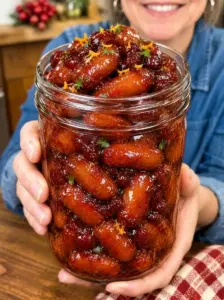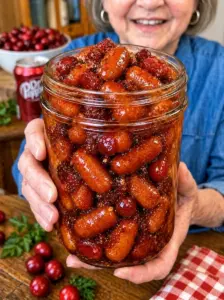
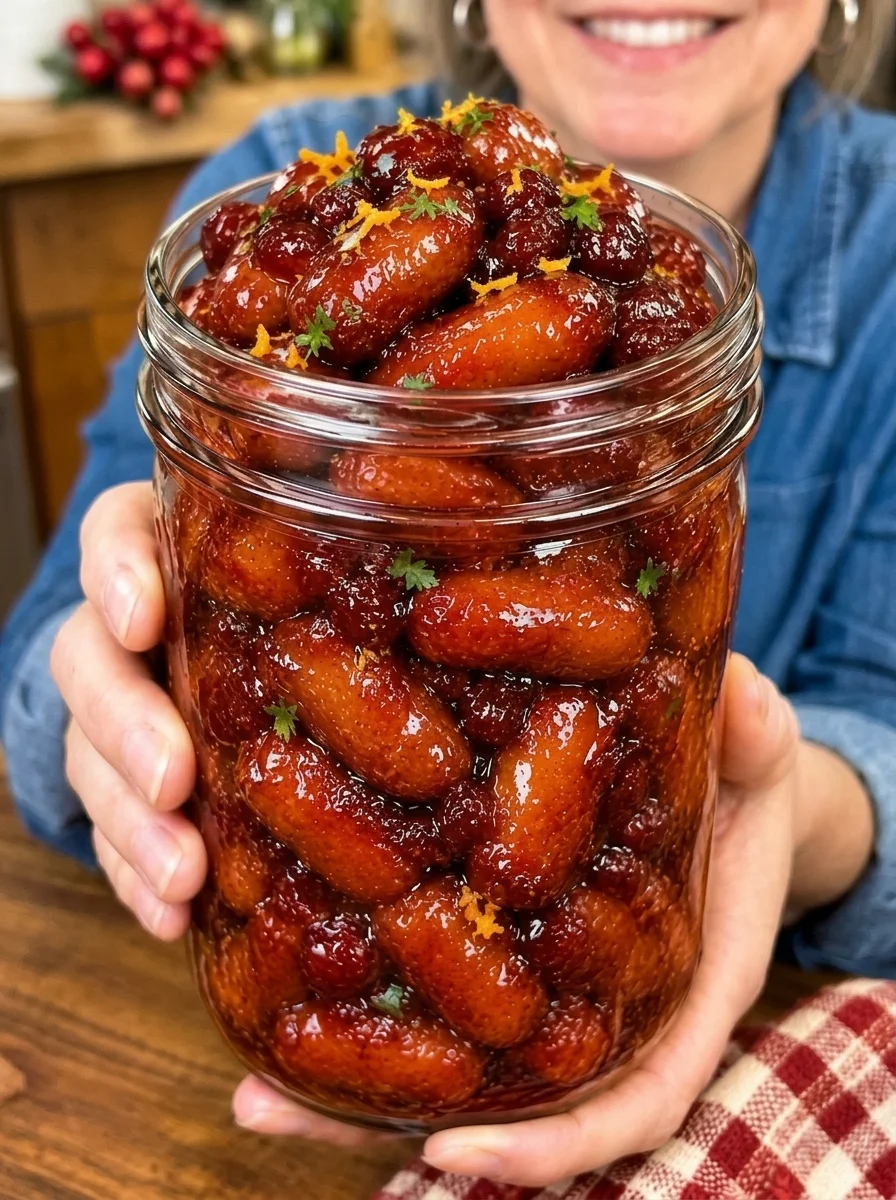
Cranberry Brown Sugar Dr Pepper Lil’ Smokies combine fully cooked cocktail sausages with a fruity barbecue glaze made from cranberry sauce, soda, brown sugar, and savory seasonings. Dijon mustard and apple cider vinegar add tang, while Worcestershire sauce and smoked paprika keep the fruit from tasting disconnected from the sausages.
The result is a sweet, savory appetizer with tender cranberry pieces and a glossy coating. It fits naturally into a holiday spread, but it is just as useful for game day, potlucks, or a casual gathering where guests want small portions they can serve themselves.
A slow cooker makes heating and holding convenient, but it does not automatically create a thick glaze. Covered cookers retain moisture, so a separate saucepan reduction is the most reliable option when you want the sauce to cling rather than pool. The article below includes that finishing step and a stovetop alternative.
Recipe note: This expands the supplied recipe, which has not been kitchen-tested here. Heating times, sauce thickness, and nutrition depend on the sausages, sauces, and appliance. Follow the sausage package’s heating instructions and check the finished food rather than treating a time range as a guarantee.
Flavor and Texture
This is a sweet barbecue appetizer, not a tart cranberry relish. Whole-berry cranberry sauce contributes fruit and acidity, but the brown sugar, barbecue sauce, ketchup, and soda all bring sweetness.
The vinegar and mustard help balance that sweetness. Taste only after the ingredients have heated and combined, since the sauce can seem different before the cranberry gel and brown sugar dissolve.
The sauce will have small fruit pieces rather than a perfectly smooth texture. As it reduces, the color deepens and the coating becomes more noticeable. Keep it fluid enough to spoon: a glaze that seems ideal while bubbling can become overly sticky as it cools.
Ingredients
Cocktail Sausages and Glaze
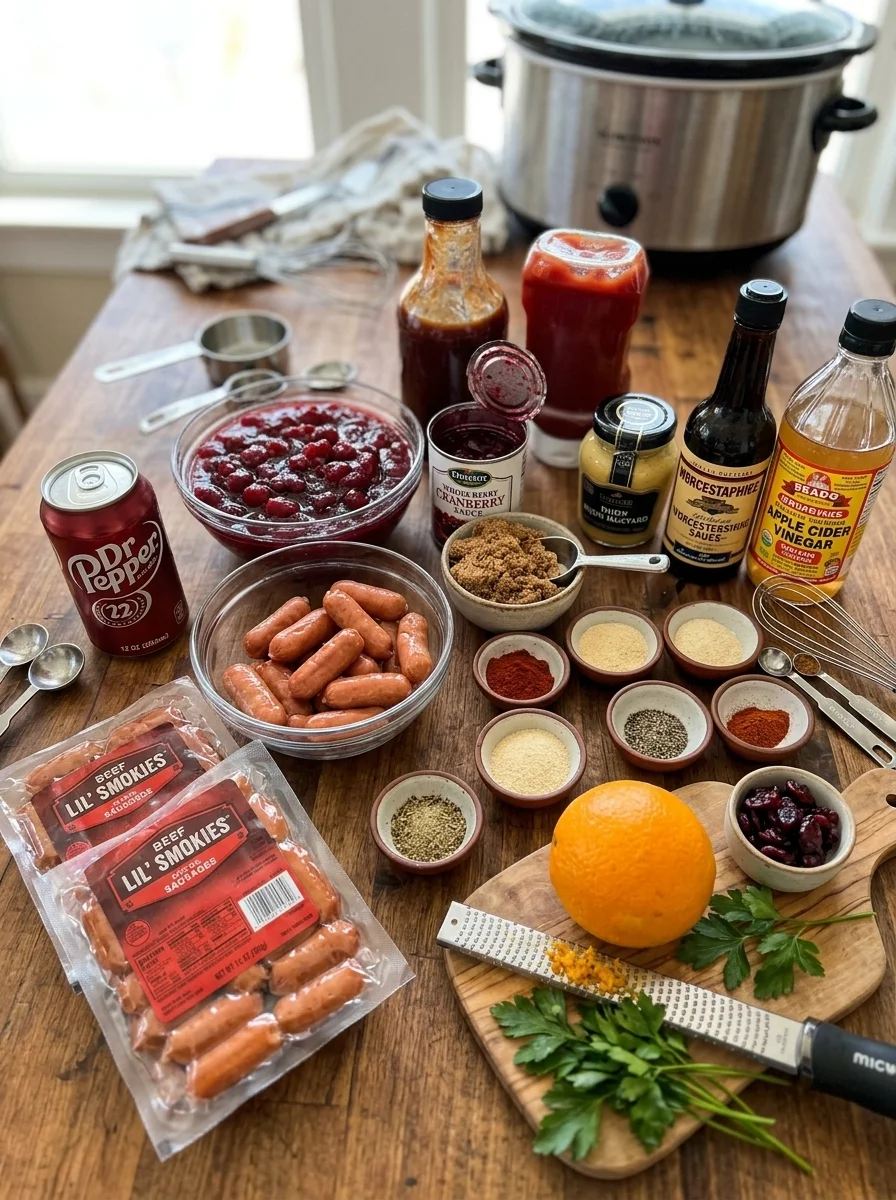
- 2 packages fully cooked beef Lil’ Smokies cocktail sausages, 14 ounces each
- 3/4 cup regular Dr Pepper
- 1 cup whole-berry cranberry sauce
- 1/2 cup barbecue sauce
- 1/3 cup packed brown sugar
- 2 tablespoons ketchup
- 1 tablespoon Dijon mustard
- 1 tablespoon Worcestershire sauce
- 1 tablespoon apple cider vinegar
- 1/2 teaspoon smoked paprika
- 1/2 teaspoon garlic powder
- 1/4 teaspoon onion powder
- 1/4 teaspoon ground black pepper
- A small pinch of cayenne pepper, optional
Optional Garnishes
- 2 tablespoons chopped dried cranberries
- 1 tablespoon chopped fresh parsley
- A little finely grated orange zest
Yield: Approximately 10 to 12 appetizer servings. Package counts vary, so determine the number of sausages in a portion from the actual packages rather than assuming a universal piece count.
A light coating of cooking spray may be used in the slow cooker if needed. It is not necessary to add butter or oil to the sauce.
Ingredient Notes
Fully Cooked Cocktail Sausages
Check the package before beginning. The recipe uses fully cooked sausages that need heating, not raw miniature sausages that require a different cooking method.
If frozen, thaw them in the refrigerator before slow cooking. Drain any loose package liquid so it does not unnecessarily thin the glaze.
Beef sausages match the supplied recipe, but fully cooked pork or blended varieties can be a flavor variation. Their fat, salt, calories, size, and package counts differ, so the nutrition and serving estimate must change accordingly.
Dr Pepper
Regular Dr Pepper supplies sweetness and its characteristic soda flavor. Three-quarters of a cup also adds a meaningful amount of liquid, which is why reduction may be necessary for a sticky finish.
A zero-sugar soda changes the sweetener and how the sauce behaves during reduction. It does not make the entire recipe sugar-free, because the cranberry sauce, brown sugar, ketchup, and barbecue sauce may still contain sugar.
Measure the soda rather than pouring an entire can into the cooker. A larger amount would require additional evaporation and change the sauce balance.
Whole-Berry Cranberry Sauce
Use one measured cup, not automatically one entire can. Stir the opened sauce to distribute the berries and gel before measuring.
Whole-berry sauce gives the finished glaze small cranberry pieces. Jellied cranberry sauce can be used as a smoother variation, but the texture will differ.
Homemade cranberry sauce may vary in sweetness, tartness, and moisture. If using it, expect to reassess the finished flavor rather than assuming identical results.
Barbecue Sauce and Ketchup
Choose a barbecue sauce you already enjoy. A moderately smoky, tangy sauce gives a useful contrast to the brown sugar and fruit.
Very sweet barbecue sauces can make the mixture feel more dessert-like, while a hot sauce can increase the heat before cayenne is added. Read the label and taste the sauce on its own before deciding how much optional spice to use.
The ketchup adds another layer of tomato sweetness and tang. Keep the measured amount modest; it is a supporting ingredient rather than the main sauce.
Brown Sugar
Pack the brown sugar into the measuring cup, then break up any firm lumps while whisking. It should dissolve fully during heating.
The supplied third cup makes this a fairly sweet glaze. For a less sweet future batch, you can test a reduced quantity, but it will also change body and browning. Begin with the stated formula if you want to assess it before adjusting.
Mustard, Worcestershire, and Vinegar
Dijon contributes tang and a savory mustard note. Worcestershire provides depth and may contain fish or other allergens, depending on the product.
Apple cider vinegar balances sweetness without making the glaze taste like a pickle brine. Use the listed tablespoon, then make any extra adjustment gradually after reduction.
There is no need to add salt at the beginning. Sausages, barbecue sauce, ketchup, mustard, and Worcestershire already contribute it.
Orange Zest and Garnishes
Orange zest can brighten the cranberry flavor. Grate only the colored surface, avoiding the bitter white pith.
Use a little on top just before serving, or test up to a teaspoon in the sauce if you want a stronger citrus variation. Garnish quantity is a flavor choice, not a reason to add large strips that are awkward to eat.
Dried cranberries add more sweetness and chew. Fresh parsley provides color with less additional sweetness. Neither is required for the recipe to work.
Equipment
Use a slow cooker suited to this relatively modest batch. A 3- to 4-quart model may be more practical than a very large one; if using a 4- to 6-quart cooker, follow its minimum-fill guidance and watch the edges.
Have a mixing bowl, whisk, flexible spoon, slotted spoon or tongs, and an instant-read thermometer available. A wide saucepan is useful for reducing the glaze.
Do not place a ceramic slow-cooker insert directly on a stovetop unless its manufacturer specifically allows it. Transfer sauce to an appropriate saucepan for reduction.
Slow Cooker Instructions
1. Prepare the Sausages and Cooker
Drain the fully cooked, thawed cocktail sausages. Place them in the slow cooker, using a light coating of cooking spray first if desired.
Keep the food refrigerated until preparation. Do not start with a frozen block or rely on WARM to bring cold ingredients up to temperature.
2. Whisk the Sauce
Combine the Dr Pepper, cranberry sauce, barbecue sauce, brown sugar, ketchup, Dijon, Worcestershire, and vinegar in the bowl.
Whisk gently so the soda does not foam over the sides. The mixture does not need to become completely smooth; the cranberry pieces belong in the finished sauce.
3. Add the Seasonings
Stir in smoked paprika, garlic powder, onion powder, black pepper, and optional cayenne. Break apart visible brown sugar lumps.
If your barbecue sauce is already spicy, consider leaving out the cayenne for the first batch. Heat can become more noticeable as the sauce concentrates.
4. Coat the Sausages
Pour the sauce over the sausages and stir gently. Some liquid will pool below them, which is normal.
Do not add more preserves or sugar because the cold mixture looks thin. The ingredients need to heat and dissolve before the final texture can be assessed.
5. Cook Until Thoroughly Hot
Cover and cook on LOW for approximately 3 to 4 hours or HIGH for approximately 1 1/2 to 2 hours, following the sausage package’s heating directions and checking earlier if your cooker runs hot.
These are planning ranges from the supplied recipe, not required minimum times once the food is properly heated. Stir once or twice if convenient, keeping lid openings brief.
Check that the center of the batch is hot as well as the edges. If it is not thoroughly heated by the expected time, continue on a cooking setting and check again. Do not switch to WARM yet.
6. Assess the Glaze
Stir, then lift a little sauce on a spoon. It may look glossy but still run off quickly. That is especially likely in a covered cooker, which retains steam.
An uncovered finish can release some moisture, but removing the lid for 20 to 30 minutes may not produce a sticky coating. Some cookers lose substantial heat with the lid open. Use the saucepan method below when thickness matters.
7. Taste After Thickening
Once the sauce is at its final consistency, taste a small cooled spoonful. Add vinegar a teaspoon at a time if it needs more tang.
Be restrained with extra brown sugar. The sauce already contains several sweet ingredients, and more sugar does not solve excess water as directly as reduction does.
8. Hold Hot and Serve
Switch to WARM only after the food is thoroughly hot and only if that setting maintains at least 140°F. Verify with a thermometer rather than assuming the setting name guarantees a safe temperature.
Stir occasionally to distribute heat and sauce. Keep the lid on between serving periods where practical, and provide clean utensils or toothpicks for guests.
Add parsley, chopped dried cranberries, or a little orange zest near serving time.
A Reliable Way to Thicken the Glaze
Remove the hot sausages with a slotted spoon to a covered heat-safe dish. Transfer the sauce to a wide saucepan.
Bring to a gentle simmer and cook uncovered, stirring often, until it coats a spoon more noticeably. Depending on the pan and amount of liquid, allow roughly 5 to 15 minutes or longer.
Reduce the heat as it thickens. Sugar and fruit can catch on the bottom, especially if the sauce is left unattended during the final minutes.
Check a little on a cool spoon before continuing. The glaze thickens as it cools, so it should remain fluid in the hot pan.
Return the sausages and warm through, then serve or transfer everything to a preheated holding cooker. If the sauce becomes too thick, add plain water a tablespoon at a time. More soda also adds sweetness, so water is often the simpler correction.
Stovetop-Only Option
Combine the sauce ingredients in a wide saucepan or deep skillet. Heat gently, stirring until the cranberry sauce loosens and the sugar dissolves.
Add the thawed, fully cooked sausages and bring to a gentle simmer. Cook uncovered, stirring regularly, until heated according to the package directions and the glaze reaches the desired consistency. Approximately 20 to 30 minutes is a useful initial guide, but pan size and burner heat affect timing.
If the sausages are ready before the sauce is thick enough, remove them temporarily and reduce the sauce separately. Return to coat and serve hot.
The stovetop method is convenient when you want more direct control over evaporation or do not need a slow cooker for serving.
Tips for Better Results
Measure the cranberry sauce and soda. Using entire containers changes the sauce volume and sweetness.
Drain the sausages. Extra package liquid is unnecessary in an already generous glaze.
Match the cooker to the batch. An oversized appliance can leave a shallow sugary layer that scorches at the edges.
Keep the simmer gentle. Vigorous boiling can split sausage skins and concentrate the sauce too quickly.
Reduce before adding more sugar. A thin sauce needs less water, not necessarily more sweetness.
Garnish selectively. A little orange zest and parsley can be enough without adding several sweet toppings.
Serving Ideas
Serve from a properly heated slow cooker with a small ladle or slotted spoon. Set toothpicks nearby so guests can take their portion without reaching into the sauce.
For a holiday appetizer table, pair the sausages with a crisp vegetable platter, deviled eggs, cheese, or savory crackers. Less-sweet accompaniments help balance the fruity glaze.
For game day, serve alongside potato bites or a simple dip. Avoid putting the serving cooker where its cord can be pulled by guests moving around the table.
You can also use a small portion in a dinner bowl beside rice and vegetables. That changes the serving role: an appetizer yield of 10 to 12 does not automatically mean the recipe feeds that many as a main course.
Make-Ahead and Transport
Whisk the sauce up to two days ahead and refrigerate it in a covered container, respecting the freshness and opened-storage limits of the ingredients. Stir before combining with the sausages.
Alternatively, cook the complete recipe, cool promptly in shallow containers, and refrigerate. Reheat on the stove or in the microwave before transferring to a preheated slow cooker for hot holding.
Do not use WARM or a slow cooker to reheat cold leftovers. Heating and holding are different tasks, and a holding setting can warm food too slowly.
For transport, keep the food either properly chilled or maintained hot with suitable equipment. A switched-off cooker in a car is not automatically temperature-controlled. Include travel and setup time when planning safe service.
Storage and Reheating
Refrigerate perishable leftovers within two hours unless they have remained under proper hot holding. Use a one-hour limit when the surrounding temperature is above 90°F.
Divide the food into shallow containers so it cools efficiently. Store covered at 40°F or below for three to four days. Do not leave a full deep cooker on the counter waiting to become completely cold.
For longer storage, freeze portions in freezer-safe containers for up to two months for best quality. Leave a little expansion space and label the date. Thaw overnight in the refrigerator.
Reheat leftovers to 165°F throughout in a saucepan or microwave-safe dish, stirring to eliminate cold pockets. Add a little water if the chilled sauce is too thick.
Once reheated, hot food can be moved to a suitable preheated cooker and held at 140°F or above. Reheating does not restart the original storage clock.
Use clean utensils and do not return food from individual plates to the stored batch.
Variations
Orange Cranberry
Add a small amount of finely grated orange zest for a brighter aroma. Start modestly so it does not overpower the smoky sauce.
Spicy Cranberry BBQ
Include the cayenne or use a familiar spicy barbecue sauce. Taste after reduction before increasing the heat.
Tangier Finish
Choose a less-sweet barbecue sauce and adjust the vinegar gradually at the end. This changes balance without introducing a different fruit preserve.
Smaller Batch
Halve all ingredients and use a suitably sized saucepan or cooker. A small stovetop batch may be easier to manage than a shallow layer in a large slow cooker.
Different Fully Cooked Sausages
Use another fully cooked cocktail sausage if desired, following its heating directions. Expect changes in saltiness, fat, size, and nutrition.
Troubleshooting
The Sauce Stays Thin
Covered slow cookers retain moisture. Reduce the sauce separately rather than repeatedly adding more sugar or leaving the sausages cooking for hours longer.
The Glaze Scorches
The heat may be too high, the cooker too large, or the sauce too concentrated. Stir regularly and watch the edges during holding. Do not scrape burnt residue into the rest of the batch.
The Flavor Is Too Sweet
A small amount of vinegar can improve balance. Serve a modest coating rather than a large pool, and choose a tangier barbecue sauce in the next batch.
The Sausages Split
They may have boiled vigorously or stayed cooking after they were hot. Use gentle heat and remove them while reducing the sauce if necessary.
The Glaze Becomes Too Thick
Add water by the tablespoon, stirring over gentle heat. Stop once it flows easily around the sausages again.
Nutrition Notes
The supplied figures are estimates rather than a verified analysis. Sausage labels vary considerably, and dividing the batch into 10 servings makes each portion larger than dividing it into 12.
A planning range of approximately 260 to 340 calories per serving may fit some combinations, but products can fall outside that range. The proportion of sauce actually eaten also matters.
The original protein, carbohydrate, and fat figures should be checked against the same serving count and ingredients. They do not have to match every brand, and optional dried cranberries add more carbohydrate.
Replacing the soda with a zero-sugar version alone does not make the appetizer sugar-free. Check every sauce and the brown sugar before describing the complete recipe with a dietary claim.
Frequently Asked Questions
Does This Use Raw Sausage?
No. Use fully cooked cocktail sausages. Raw sausages need a separately developed cooking method.
Can I Start With Frozen Sausages?
Thaw them in the refrigerator first for the stated method. A frozen block changes heating and is not the intended starting point.
Can I Use Jellied Cranberry Sauce?
It can produce a smoother variation. Measure the same cup quantity and assess the final consistency rather than assuming identical texture.
Can I Leave It on WARM for a Party?
Only after the food is fully heated and if the appliance maintains at least 140°F. Monitor temperature and quality rather than relying on the dial label alone.
Can I Double It?
Use equipment with suitable capacity and follow manufacturer fill limits. Heating time can change, so check the center carefully.
Print
Cranberry Brown Sugar Dr Pepper Lil’ Smokies
Description
Yield: 10–12 appetizer servings
Prep time: Approximately 10 minutes
Slow cooker: Approximately 3–4 hours on LOW or 1 1/2–2 hours on HIGH, subject to package and appliance guidance
Optional reduction: Approximately 5–15 minutes or as needed
Total on LOW: Approximately 3 hours 10 minutes to 4 hours 10 minutes, plus any reduction
Ingredients
Cocktail Sausages and Glaze
- 2 packages fully cooked beef Lil’ Smokies cocktail sausages, 14 ounces each
- 3/4 cup regular Dr Pepper
- 1 cup whole-berry cranberry sauce
- 1/2 cup barbecue sauce
- 1/3 cup packed brown sugar
- 2 tablespoons ketchup
- 1 tablespoon Dijon mustard
- 1 tablespoon Worcestershire sauce
- 1 tablespoon apple cider vinegar
- 1/2 teaspoon smoked paprika
- 1/2 teaspoon garlic powder
- 1/4 teaspoon onion powder
- 1/4 teaspoon ground black pepper
- A small pinch of cayenne pepper, optional
Optional Garnishes
- 2 tablespoons chopped dried cranberries
- 1 tablespoon chopped fresh parsley
- A little finely grated orange zest
Yield: Approximately 10 to 12 appetizer servings. Package counts vary, so determine the number of sausages in a portion from the actual packages rather than assuming a universal piece count.
A light coating of cooking spray may be used in the slow cooker if needed. It is not necessary to add butter or oil to the sauce.
Instructions
- Place two 14-ounce packages thawed, fully cooked beef cocktail sausages in a suitable slow cooker.
- Whisk 3/4 cup Dr Pepper, 1 cup whole-berry cranberry sauce, 1/2 cup barbecue sauce, 1/3 cup brown sugar, 2 tablespoons ketchup, and 1 tablespoon each Dijon, Worcestershire, and cider vinegar.
- Add 1/2 teaspoon each smoked paprika and garlic powder, 1/4 teaspoon each onion powder and black pepper, and optional cayenne.
- Pour over the sausages and stir. Cover and cook until thoroughly hot according to the package, using the listed times as estimates.
- For a stickier glaze, remove the sausages temporarily and reduce the sauce in a saucepan, stirring. Return to coat and warm.
- Taste, garnish if desired, and serve hot. Hold at 140°F or above in appropriate equipment.
Storage: Refrigerate promptly at 40°F or below for 3–4 days. Freeze up to two months for best quality. Reheat leftovers to 165°F before hot holding.
Little tip: Glossiness does not prove that enough liquid has evaporated. A wide saucepan gives more reliable control over a sticky cranberry glaze than a short uncovered slow-cooker finish.