
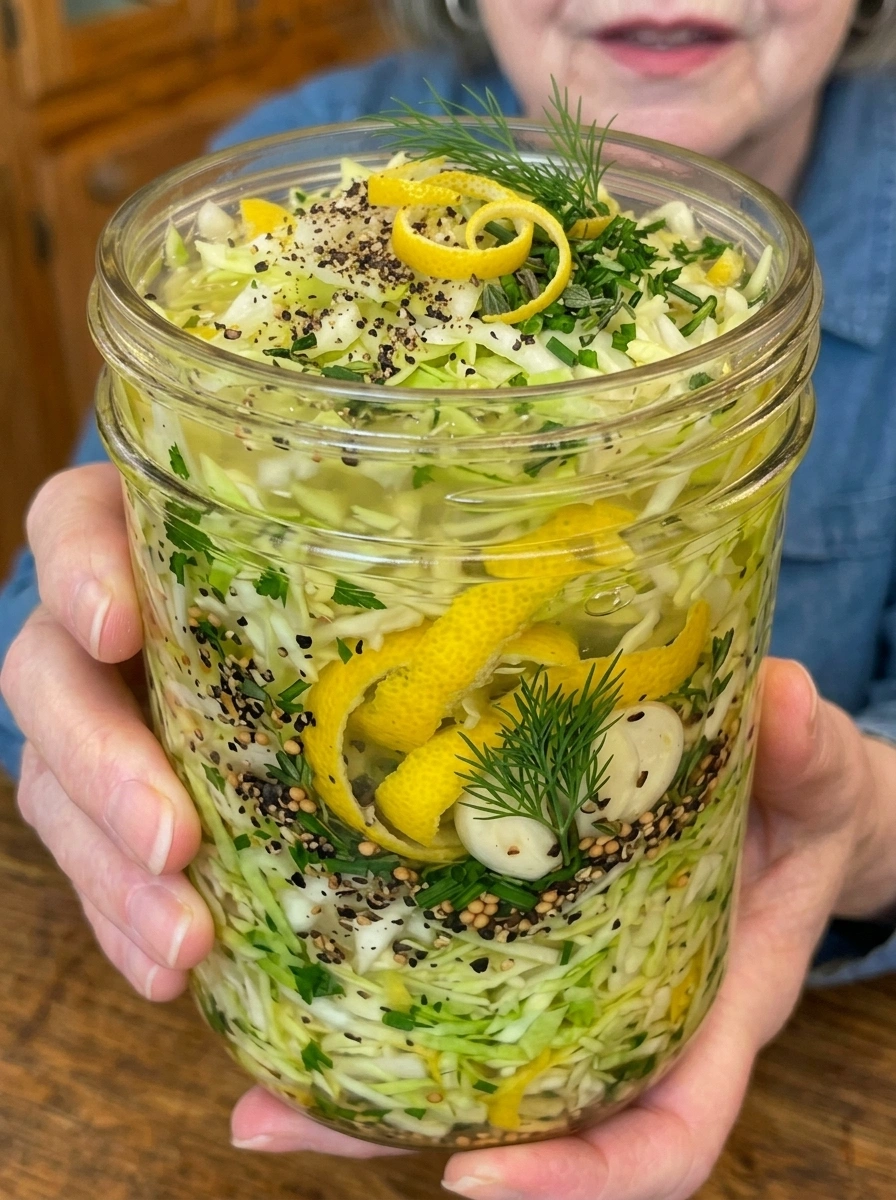
Traditional sauerkraut has earned its place as a pantry staple for good reason — it’s crunchy, tangy, probiotic-rich, and endlessly versatile. But this Herbed Lemon Sauerkraut with Black Pepper takes that classic fermented cabbage and elevates it into something brighter, more aromatic, and downright addictive. Fresh lemon zest and juice bring a lively citrus lift, a mix of fresh herbs like parsley, dill, chives, and thyme add a garden-fresh dimension, and freshly cracked black pepper delivers a warm, savory bite that ties everything together.
This isn’t your average grocery store sauerkraut sitting in a jar of plain brine. It’s a naturally fermented condiment built entirely from whole ingredients — cabbage, salt, lemon, herbs, and a few optional extras — that ferments right on your counter using nothing more than time, salt, and the natural bacteria already present on the cabbage. No special equipment is strictly required, though a fermentation jar and weight make the process even easier.
Whether you’re an experienced fermenter looking to put a fresh spin on a familiar recipe, or you’re making your very first batch of homemade sauerkraut, this Herbed Lemon Sauerkraut with Black Pepper is an approachable, rewarding project. The result is a crisp, tangy, herby condiment that instantly elevates bratwurst, burgers, sandwiches, grain bowls, and so much more.
What Is Herbed Lemon Sauerkraut?
Herbed Lemon Sauerkraut is a naturally fermented cabbage condiment made using the same basic lacto-fermentation process as traditional sauerkraut, but flavored with fresh lemon zest, lemon juice, a blend of fresh herbs, cracked black pepper, and a hint of garlic. The cabbage is finely shredded, salted, and massaged until it releases its own natural brine, then packed tightly into a jar where it ferments at room temperature for several days before being refrigerated to slow the process and lock in flavor.
Lacto-fermentation relies on naturally occurring lactic acid bacteria present on cabbage and other vegetables. When the cabbage is salted and submerged in its own liquid, these beneficial bacteria multiply, converting natural sugars into lactic acid. This process is what gives fermented foods their distinctive tangy flavor, along with a boost of naturally occurring probiotics.
What sets this version apart from plain sauerkraut is the addition of bright lemon and fresh herbs, which infuse the cabbage as it ferments, resulting in a more complex, aromatic, herbaceous flavor rather than a straightforward sour cabbage taste. It’s a fantastic way to add both bold flavor and gut-friendly fermentation benefits to your regular meal rotation.
Why You’ll Love This Recipe
It’s brighter and more aromatic than traditional sauerkraut. The combination of fresh lemon and herbs transforms a familiar condiment into something that tastes fresh, vibrant, and a little more special.
It’s made with simple, whole ingredients. Just cabbage, salt, lemon, fresh herbs, and a few optional extras — no preservatives, no vinegar shortcuts, just natural fermentation.
It’s naturally probiotic. Like traditional sauerkraut, this recipe relies on lacto-fermentation, which can support a healthy gut microbiome through naturally occurring beneficial bacteria.
It’s incredibly versatile. From bratwurst and burgers to grain bowls and avocado toast, this sauerkraut adds bold, tangy flavor to an enormous range of dishes.
It’s a rewarding kitchen project. There’s something deeply satisfying about watching cabbage transform into a tangy, crunchy condiment using nothing but salt, time, and patience.
It keeps for weeks. Once refrigerated, this sauerkraut stays fresh for an extended period, making one batch go a long way.
Ingredient Breakdown: Why Each One Matters
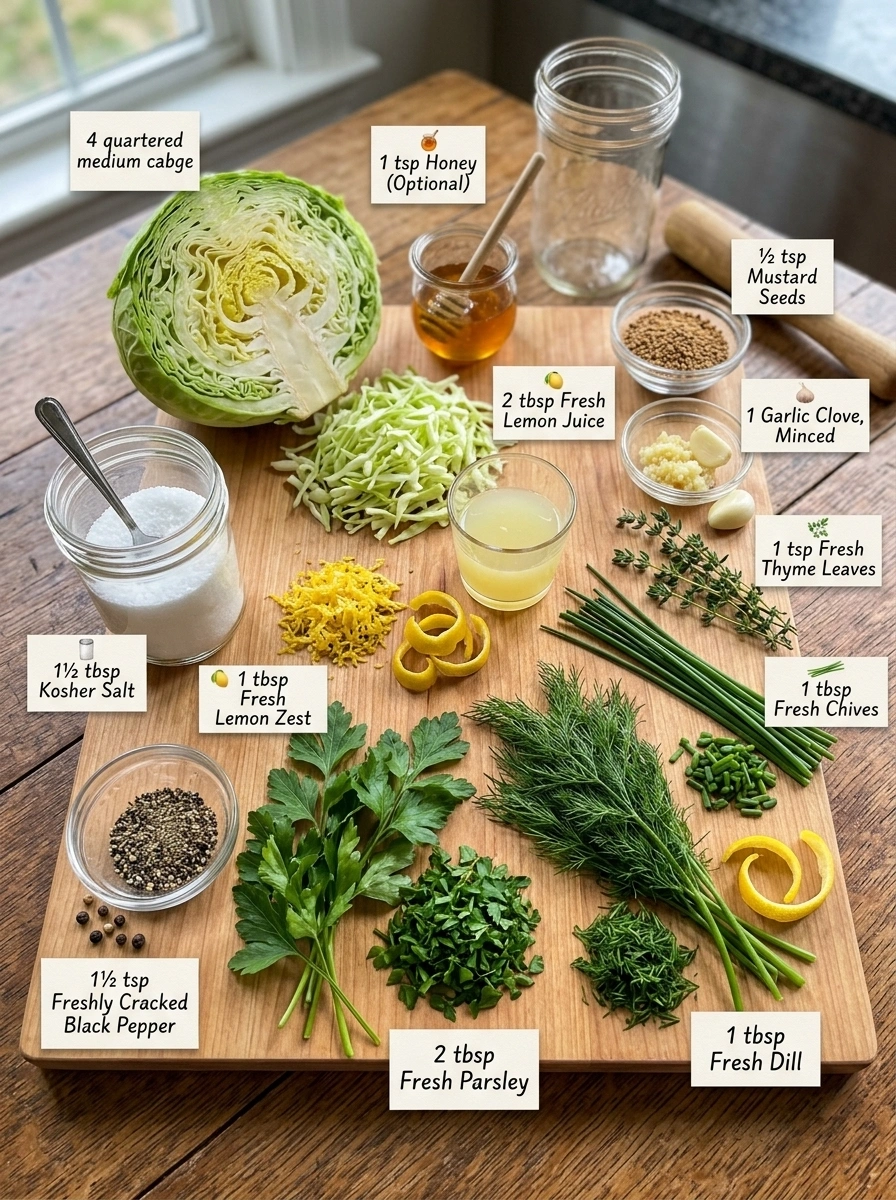
Green cabbage (1 medium head, finely shredded): Cabbage is the star of this recipe, providing the crunchy texture and natural sugars that fuel the fermentation process. Finely shredding it helps it release brine more easily and ferment evenly.
Kosher salt (1½ tbsp): Salt draws liquid out of the cabbage to create the natural fermentation brine, while also controlling which bacteria thrive during the process, favoring the beneficial lactic acid bacteria responsible for that classic tangy flavor.
Fresh lemon zest (1 tbsp) and lemon juice (2 tbsp): Lemon zest adds a fragrant, aromatic citrus note, while the juice contributes brightness and a subtle acidity that complements the natural tang of fermentation.
Freshly cracked black pepper (1½ tsp): Black pepper adds warmth and a bold, peppery bite that balances the bright citrus and herbs.
Fresh parsley (2 tbsp), dill (1 tbsp), chives (1 tbsp), and thyme (1 tsp): This blend of fresh herbs infuses the sauerkraut with a garden-fresh, aromatic quality that sets it apart from plain fermented cabbage. Fresh herbs, rather than dried, are key to achieving the brightest flavor.
Mustard seeds (½ tsp, optional): Mustard seeds add a subtle tangy, slightly spicy note and a bit of texture, echoing the flavor profile of classic pickle brines.
Minced garlic (1 clove): A single clove of garlic adds a savory depth that rounds out the bright citrus and herb flavors without overpowering them.
Honey or sugar (1 tsp, optional): A touch of sweetness can help balance the tanginess of the fermented cabbage and the acidity of the lemon, though it’s entirely optional depending on your flavor preference.
Step-by-Step Instructions
Step 1: Prepare the cabbage. Remove any damaged outer leaves from the cabbage. Quarter the cabbage, remove the core, and finely shred the leaves. Place the shredded cabbage into a large, clean bowl.
Step 2: Salt and massage. Sprinkle the kosher salt evenly over the cabbage. Using clean hands, massage and squeeze the cabbage for 5 to 10 minutes. The cabbage will gradually soften and begin releasing plenty of liquid. Continue massaging until the cabbage is noticeably tender and juicy, sitting in its own natural brine.
Step 3: Add the lemon and herbs. Add the lemon zest, lemon juice, cracked black pepper, parsley, dill, chives, thyme, mustard seeds, and minced garlic to the bowl. If you prefer a slightly sweeter balance, stir in the optional honey or sugar. Mix thoroughly until the herbs and seasonings are evenly distributed throughout the cabbage.
Step 4: Pack the jar. Transfer the cabbage mixture into a clean fermentation jar. Pack it down firmly using a clean utensil or fermentation tamper, pressing the cabbage below its natural brine and removing as many air pockets as possible. Leave approximately 1 to 2 inches of headspace at the top of the jar. If you have a fermentation weight, use it to help keep the cabbage fully submerged.
Step 5: Ferment. Cover the jar with an appropriate fermentation lid or a loose-fitting cover that allows gases to escape during fermentation. Leave the jar at room temperature, away from direct sunlight, for approximately 5 to 10 days. Start tasting around day 5, and continue fermenting until the sauerkraut reaches your preferred level of tanginess, acidity, and crunch.
Step 6: Refrigerate. Once you’re happy with the flavor, secure the jar with a tight-fitting lid and transfer it to the refrigerator. Cold storage significantly slows down the fermentation process, helping to maintain the finished texture and flavor.
Helpful Tips for the Best Results
- Use fresh herbs rather than dried whenever possible — fresh parsley, dill, chives, and thyme give this sauerkraut a much brighter, more vibrant flavor.
- Don’t rush the massaging step. Thoroughly working the cabbage with salt is essential for releasing enough natural brine to fully submerge it during fermentation.
- Keep the cabbage fully submerged below the brine throughout fermentation to prevent spoilage and encourage even fermentation.
- Let the flavors develop over time — the herbs and lemon become more integrated and complex as fermentation progresses.
- Taste along the way rather than relying strictly on a set number of days, since fermentation speed varies depending on the temperature of your kitchen.
Fun Variations to Try
Garlic Herb: Add 2 to 3 garlic cloves instead of one for a noticeably stronger, more savory flavor throughout.
Lemon Dill: Increase the amount of dill and add extra lemon zest for a bright, pickle-inspired flavor profile.
Spicy Herb: Add sliced jalapeño, serrano pepper, or a pinch of red pepper flakes for a spicy kick.
Mediterranean: Add oregano, extra parsley, additional lemon zest, and a small amount of crushed coriander seed for a Mediterranean-inspired twist.
Rosemary Lemon: Add a small amount of finely chopped fresh rosemary for an extra fragrant, herbaceous variation.
Honey Herb: Add a touch more honey for a subtle sweet-and-tangy finish that balances the acidity beautifully.
Pepper Lover’s: Increase the amount of freshly cracked black pepper for a bolder, more peppery bite throughout the sauerkraut.
Serving Ideas
This bright, tangy sauerkraut pairs wonderfully with:
- Bratwurst and grilled sausages
- Burgers
- Reuben sandwiches
- Grilled chicken
- Roast pork
- Steak
- Roasted potatoes
- Grain bowls
- Salads
- Avocado toast
It’s especially good alongside rich, creamy, or grilled foods, where the bright lemon and fresh herbs provide a refreshing, cutting contrast to heavier flavors.
Storage Instructions
Store the finished sauerkraut in a clean, airtight jar in the refrigerator. Always use a clean utensil when serving to avoid introducing contaminants that could cause spoilage.
Discard the sauerkraut immediately if you notice any fuzzy mold, a rotten smell, sliminess, or other clear signs of spoilage. A well-made batch stored properly in the refrigerator should keep well for several weeks, with flavor continuing to mellow and develop slightly over time.
❓ Frequently Asked Questions
Do I need special equipment to make this sauerkraut? No special equipment is strictly required, though a fermentation jar with an airlock lid and a fermentation weight can make the process easier by helping release gas and keep the cabbage submerged. A regular clean jar with a loose-fitting lid works as well.
How do I know if my sauerkraut has gone bad? Signs of spoilage include fuzzy mold, a foul or rotten smell, sliminess, or unusual discoloration beyond the normal slight color changes from fermentation. A tangy, sour smell and some cloudiness in the brine are completely normal; anything resembling mold or a truly putrid smell means it should be discarded.
Why does the recipe use fresh herbs instead of dried? Fresh herbs provide a much brighter, more vibrant flavor that holds up well through the fermentation process. Dried herbs can be used in a pinch, but the finished sauerkraut won’t have quite the same fresh, garden-like quality.
Can I use a different type of cabbage? Green cabbage is traditional and works best for this recipe due to its texture and moisture content, but you can experiment with other cabbage varieties. Keep in mind that different cabbages may ferment at slightly different rates or produce a different texture.
How long does fermentation take? This recipe typically ferments for 5 to 10 days at room temperature, though the exact timing depends on the temperature of your kitchen. Warmer environments speed up fermentation, while cooler environments slow it down. Taste your sauerkraut starting around day 5 to find your preferred level of tanginess.
Is it safe to ferment cabbage at room temperature? Yes, lacto-fermentation at room temperature is a traditional and safe method for making sauerkraut, as long as the cabbage stays fully submerged in its brine and basic cleanliness is maintained throughout the process. The salt and resulting acidity create an environment that discourages harmful bacteria while allowing beneficial lactic acid bacteria to thrive.
Can I add other vegetables to this recipe? Yes, some fermenters like to add shredded carrots, thinly sliced radishes, or other vegetables alongside the cabbage. Keep in mind that adding other vegetables may slightly change the fermentation time and flavor balance.
Why is my cabbage not releasing enough liquid? This can happen if the cabbage wasn’t massaged long enough, or if the cabbage itself is on the drier side. Continue massaging until you see a noticeable amount of liquid pooling in the bowl, and if needed, let the salted cabbage sit for an additional 10 to 15 minutes before packing it into the jar.
How long does the finished sauerkraut last in the refrigerator? Once refrigerated, this sauerkraut typically keeps well for several weeks, with the flavor continuing to mellow and develop slightly over time. Always use a clean utensil when serving to help extend its shelf life.
Final Thoughts
This Herbed Lemon Sauerkraut with Black Pepper proves that a simple fermentation project can produce something truly special. Bright citrus, fresh herbs, and bold pepper transform ordinary cabbage into a crunchy, tangy, aromatic condiment that instantly elevates everything from grilled sausages to grain bowls. Give this one some time on your counter, taste along the way, and enjoy the deeply satisfying reward of turning a humble head of cabbage into a batch of homemade, naturally fermented goodness.
Print
Herbed Lemon Sauerkraut with Black Pepper
Ingredients
- 1 medium head green cabbage, finely shredded
- 1½ tbsp kosher salt
- 1 tbsp fresh lemon zest
- 2 tbsp fresh lemon juice
- 1½ tsp freshly cracked black pepper
- 2 tbsp fresh parsley, finely chopped
- 1 tbsp fresh dill, finely chopped
- 1 tbsp fresh chives, finely chopped
- 1 tsp fresh thyme leaves
- ½ tsp mustard seeds, optional
- 1 garlic clove, finely minced
- 1 tsp honey or sugar, optional
Instructions
- Remove damaged outer leaves, quarter, core, and finely shred the cabbage into a large bowl.
- Sprinkle with kosher salt and massage for 5–10 minutes until tender and juicy.
- Add lemon zest, lemon juice, black pepper, herbs, mustard seeds, garlic, and optional honey or sugar; mix thoroughly.
- Pack tightly into a clean fermentation jar, pressing below the brine and leaving 1–2 inches of headspace.
- Cover with a fermentation lid or loose cover; ferment at room temperature, away from sunlight, for 5–10 days, tasting from day 5.
- Once at your preferred flavor, seal and refrigerate.