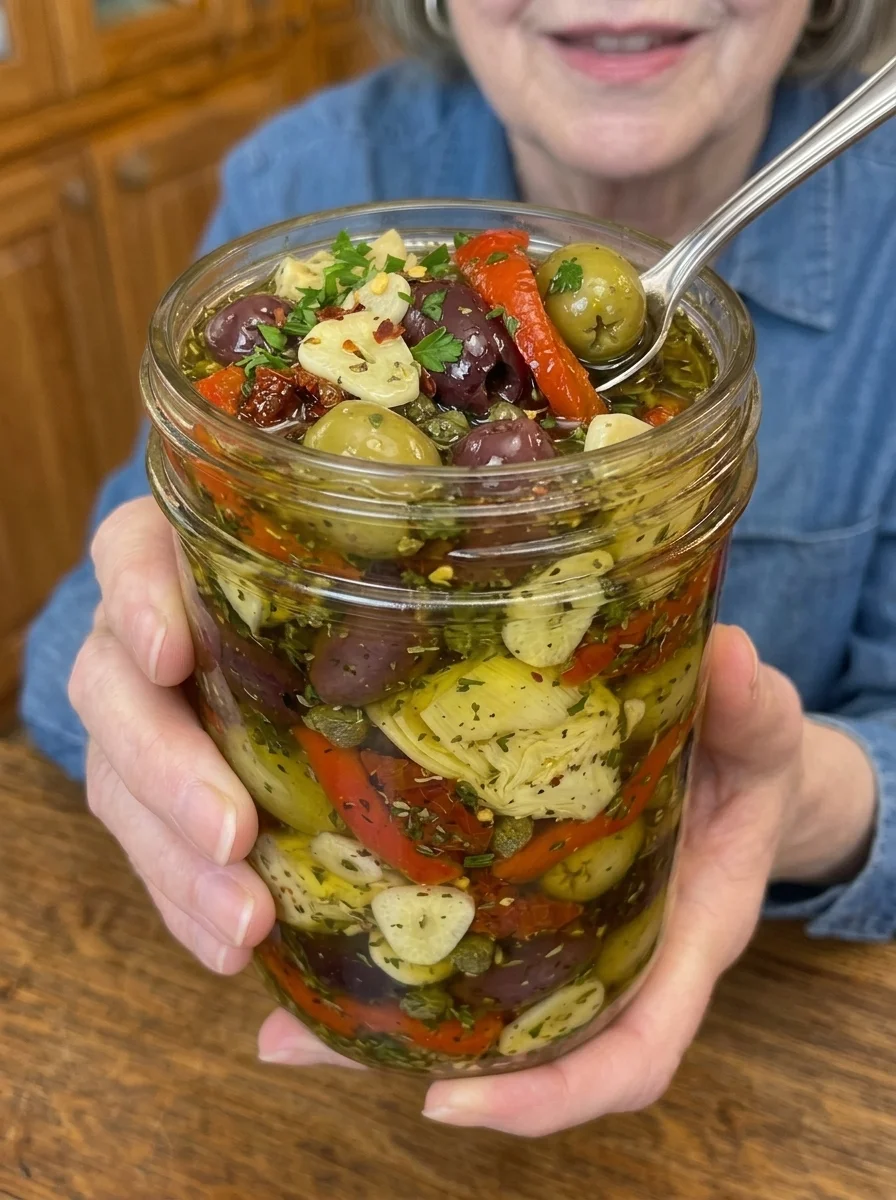
Briny olives, sweet roasted peppers, tender artichokes, and sun-dried tomatoes make this Garlic Herb Olive & Roasted Pepper Antipasto Jar a colorful addition to a simple meal. Sliced garlic and parsley mingle with olive oil, red wine vinegar, and dried herbs for a savory coating that brings the ingredients together without much preparation.
Spoon a portion onto a snack platter, tuck it into a sandwich, or scatter it over a bowl of greens. The contrast between salty olives and sweet peppers is the main attraction, while capers add little bursts of tang. A short refrigerated rest helps the garlic and herbs flavor the vegetables.
The jar is a convenient serving and storage container, not a preserving method. This is a fresh refrigerated antipasto with a short storage period, especially because it contains fresh garlic and herbs in an oil-based marinade.
Recipe note: This supplied recipe has not been independently tested. Saltiness, acidity, and oil content vary among the prepared ingredients. Refrigerate promptly at 40°F or below and use within 3–4 days of preparation, or sooner if an ingredient’s remaining storage period requires it. The vinegar does not make this a shelf-stable preserve.
Why You’ll Love This Recipe
- It requires no cooking when made with prepared roasted peppers and artichokes.
- The ingredients offer a mix of firm, tender, briny, and sweet textures.
- The marinade is simple to whisk together.
- A small serving adds flavor to sandwiches, salads, and appetizer boards.
- It can be made earlier in the day or the evening before serving.
Recipe at a Glance
- Prep time: Approximately 15 minutes
- Marinating time: At least 2 hours
- Total time: About 2 hours 15 minutes
- Servings: 6–8 appetizer portions
- Cooking: None with prepared ingredients
- Storage: Refrigerated only, up to 3–4 days
Ingredients
For the Antipasto
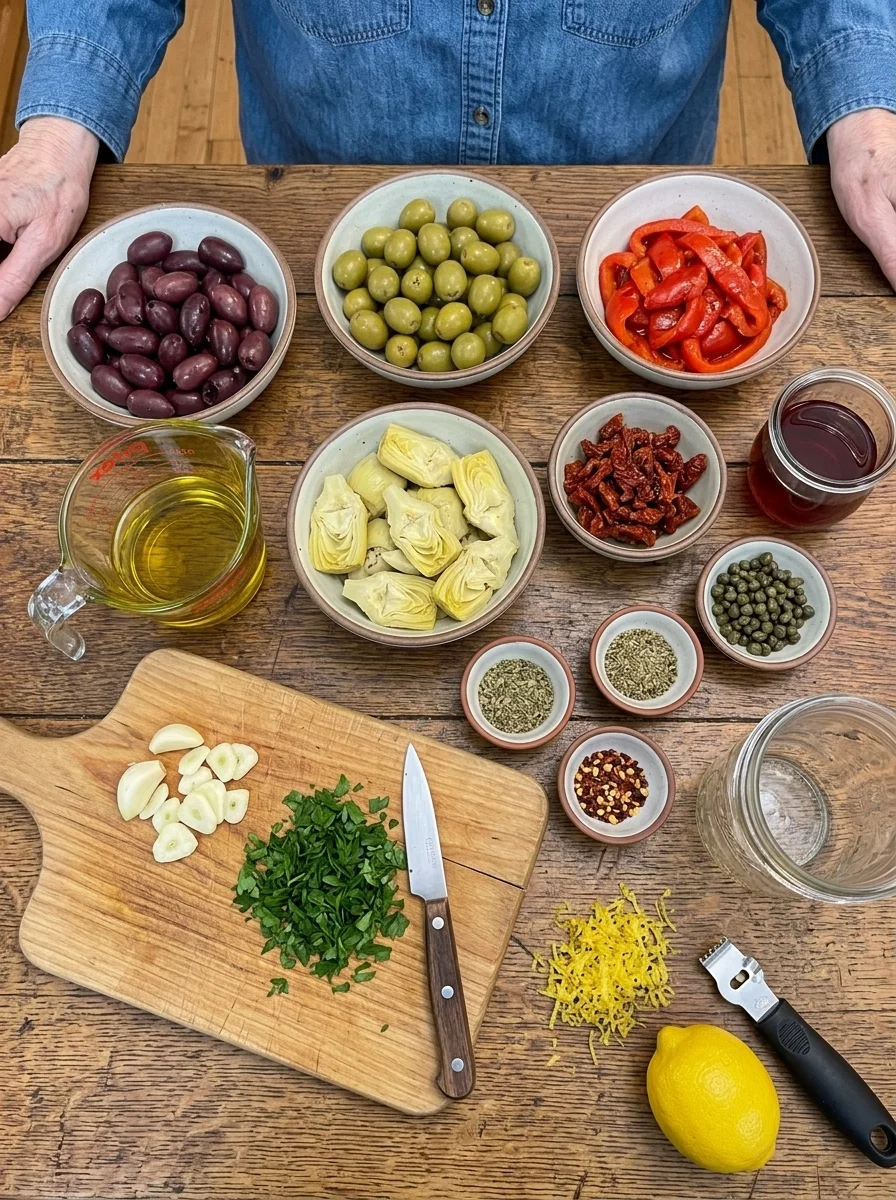
- 1 cup pitted Kalamata olives
- 1 cup pitted green olives
- 1 cup roasted red bell peppers, drained and sliced
- 1/2 cup marinated artichoke hearts, drained and quartered
- 1/4 cup oil-packed sun-dried tomatoes, drained and chopped
- 2 tablespoons capers, drained
- 3 garlic cloves, thinly sliced
- 2 tablespoons chopped fresh parsley
For the Marinade
- 1/3 cup extra-virgin olive oil
- 2 tablespoons red wine vinegar
- 1 teaspoon dried oregano
- 1 teaspoon dried Italian seasoning
- 1/2 teaspoon crushed red pepper flakes, optional
- 1/2 teaspoon freshly ground black pepper
- 1 teaspoon finely grated lemon zest, optional
Ingredient Notes
Kalamata and Green Olives
Two kinds of olives make the jar more varied in color and flavor. Kalamata olives bring a distinctive savory taste, while green olives can be firmer and sharper. Choose varieties you enjoy eating on their own, since the marinade will complement rather than hide their flavor.
Drain the olives before measuring. Pitted olives are easiest to serve, but check as you prepare them because occasional pit fragments can remain. Large olives can be halved for sandwiches or salads; leave smaller ones whole for an appetizer platter.
The recipe does not need added salt at the start. Olives, capers, artichokes, and sun-dried tomatoes may already supply plenty. Taste after marinating before deciding whether anything is missing.
Roasted Red Peppers
Jarred roasted red bell peppers make this a no-cook preparation. Drain them well and pat gently with paper towels so excess packing liquid does not water down the coating. Cut into short strips that are easy to pick up with a fork.
Home-roasted peppers can also be used after they have been peeled, seeded, cooled, and handled appropriately. Their flavor and moisture may differ from commercial jarred peppers, so the finished texture will vary. Keep the same short refrigerated storage approach.
Marinated Artichoke Hearts
Drained marinated artichokes add tenderness and a tangy flavor. Quarter any large pieces so the portions are easy to serve. Their existing marinade already contains seasoning, which is another reason to avoid adding salt automatically.
Plain canned artichokes can be used as a flavor variation, but they will contribute less tang and herb flavor. Drain them carefully and taste the finished mixture before making small seasoning adjustments.
Sun-Dried Tomatoes
Use oil-packed tomatoes for the tender texture intended here. Drain and chop them so their concentrated flavor is distributed through the jar. Dry-packed tomatoes are firmer and may need separate softening according to their package directions; they are not always a simple measure-for-measure replacement.
Capers
Capers add salty, tangy accents. Drain them and use the measured amount rather than adding their brine to the jar. If they are especially salty, a quick rinse followed by thorough draining can soften their impact, though it will change the flavor slightly.
Fresh Garlic
Thinly sliced garlic provides an assertive savory note. Three cloves can be noticeable in a small batch, especially after an overnight rest. Use one or two if you prefer a milder result.
Fresh garlic in oil requires careful refrigerated handling. The small amount of vinegar here should not be treated as a tested acidification procedure. Start the storage clock when the mixture is prepared, including the marinating period.
Parsley and Dried Herbs
Wash and dry parsley well before chopping. Too much surface water can loosen the marinade. Dried oregano and Italian seasoning give the coating an herb-forward flavor; check whether your Italian seasoning contains salt before making any adjustments.
Olive Oil and Vinegar
Use an olive oil whose flavor you enjoy because it remains prominent in a no-cook dish. Red wine vinegar adds tang and balances the richness of the oil. Whisk them together just before pouring; the mixture will separate naturally as it sits.
This quantity makes a coating, not enough liquid to submerge several cups of vegetables. The ingredients need to be evenly coated and gently turned during chilling, not covered by an extra layer of oil.
Optional Lemon Zest and Pepper Flakes
Lemon zest adds aroma without much extra liquid. Wash the lemon before zesting and avoid the bitter white pith. Pepper flakes provide warmth; start with less if the prepared artichokes or tomatoes are already spicy.
Equipment and Container Size
Use a mixing bowl, a small bowl for the marinade, a spoon, and a clean food-safe storage container. A wide-mouth jar is convenient, but a rectangular container can be easier to stir.
The recipe contains more than four cups of solid ingredients before adding marinade. Have a container larger than a quart available, or divide the batch between two smaller jars. Do not force everything into a jar that leaves no room for gentle mixing.
A jar is for convenience and presentation. A tight lid does not establish preservation, and no sterilizing or hot-filling step turns this recipe into a pantry product.
How to Make the Antipasto Jar
1. Drain and Prepare the Ingredients
Drain the olives, peppers, artichokes, tomatoes, and capers. Pat the peppers and artichokes gently to remove loose liquid. Slice the peppers, quarter large artichokes, chop the tomatoes, and inspect the olives for pit fragments.
Keep the pieces large enough to have distinct texture, but small enough to serve easily. Short pepper strips and bite-sized artichokes distribute more evenly than long, tangled pieces.
2. Whisk the Marinade
Combine the olive oil, red wine vinegar, oregano, Italian seasoning, black pepper, optional red pepper flakes, and optional lemon zest. Whisk briefly until the vinegar is dispersed through the oil.
The mixture does not need to remain permanently emulsified. Stir it again if it separates before you pour. Taste a small amount with a clean spoon, remembering that the olives and capers will bring salt.
3. Combine in a Bowl or Jar
For the most even coating, place the prepared ingredients in a bowl and add the garlic and parsley. Pour over the marinade and fold gently until everything is coated. Transfer to the storage container, scraping in the dressing.
If you prefer layering directly in a jar, distribute garlic and herbs throughout, pour over the marinade, and turn gently with a clean spoon. Leave enough space to move the ingredients without crushing the peppers and artichokes.
4. Refrigerate Promptly
Cover and refrigerate at 40°F or below for at least 2 hours. An overnight rest gives the garlic and dried herbs more time to mingle with the other flavors.
Gently turn or stir once or twice during marinating. If inverting a jar, make sure it is securely sealed and leakproof. Do not leave it on the counter to speed flavor development.
5. Stir and Serve
Stir before serving to redistribute the oil and vinegar. Lift out a portion with a clean spoon and serve with bread, crackers, vegetables, or other accompaniments. Let excess marinade drain if using the antipasto in a sandwich.
If the oil is firm from refrigeration, allow only the serving portion to stand briefly until spoonable. Return the main container promptly to the refrigerator.
Tips for the Best Texture and Flavor
Drain Thoroughly
Prepared vegetables carry different amounts of packing liquid. Draining prevents a watery layer from diluting the marinade. Pat gently rather than squeezing hard enough to damage the peppers or artichokes.
Skip Automatic Salting
Taste after the rest, when the flavors have mingled. Brined ingredients are already salty, and adding extra salt early can make the finished dish harsh. A little zest or vinegar may be what it needs instead, but adjust only a serving first if uncertain.
Use Thin Garlic Slices
Thin slices distribute the flavor and are easier to avoid if a guest does not want a direct bite of garlic. They remain raw and can be strong. Reduce the quantity for a milder jar rather than relying on storage to mellow it for a week.
Don’t Top Up With Oil
The recipe is a coated antipasto, not a submerged preserve. More oil changes richness and nutrition without extending storage. Gentle turning is enough to redistribute the existing dressing.
Keep Portions Manageable
A large jar may look attractive, but two smaller containers can be easier to handle and serve. Put out one portion at a time for a gathering and leave the remainder cold.
Serving Ideas
Spoon the antipasto onto a platter with crusty bread, crackers, sliced cucumbers, and cheese. Its briny, tangy flavor complements mild mozzarella, ricotta, or provolone. Add fresh cheese to the serving platter rather than mixing it into the entire stored batch.
For sandwiches, chop a portion more finely and let excess marinade drain. Layer it with roasted vegetables, cooked chicken, turkey, or cheese. Toasting the bread can help it hold up to the oil and vinegar, though it will still soften if assembled far ahead.
For a salad, scatter a few spoonfuls over greens and add only as much additional dressing as needed. The marinade already contains oil, vinegar, and seasoning. Cooked grains or beans can make the serving more substantial, but adding them creates a new mixed dish with its own handling needs.
For pasta, add a drained portion to a freshly prepared serving. A little of the marinade can flavor the pasta, but start sparingly so it does not become oily. Fresh parsley or lemon zest can brighten the plate at the end.
Flavor Variations
Add Mozzarella at Serving
Toss fresh mozzarella pearls with an individual portion just before serving. Keep the cheese cold beforehand and avoid returning leftover served cheese to the main jar. The mozzarella gives a mild contrast to the olives.
Milder Garlic
Use one clove instead of three. The herbs, tomatoes, and artichokes still provide plenty of flavor. This can be useful for a lunch sandwich or for guests who prefer less raw garlic.
Spicy Antipasto
Use the optional pepper flakes or add a few drained pepperoncini slices to a serving. Start small because some marinated vegetables are already spicy. Adding extra vegetables to the stored batch changes the recipe and does not extend its shelf life.
Lemon-Herb Finish
Use the optional zest and add a little extra parsley to a serving. Zest offers citrus aroma without adding a large amount of juice. Avoid thick white pith, which can taste bitter.
Different Olive Mix
Use two cups of a mixed pitted olive selection if preferred. Varying size, firmness, and saltiness will change the result. Cut very large olives into halves for easier serving.
Chopped Sandwich Relish
Finely chop a drained serving and use immediately as a sandwich spread. This gives more even coverage than whole olives and artichokes. Keep the remaining batch in larger pieces for versatility.
Make-Ahead and Storage
Marinating: Prepare at least 2 hours before serving, or the evening before. Count that time as part of the total storage period, not an extra period before it begins.
Refrigerator: Store covered at 40°F or below and use within 3–4 days from preparation. Use sooner if any opened ingredient is already near the end of its usable storage period. Mixing it with new ingredients does not reset that clock.
Oil changes: Olive oil may become cloudy or partly firm in the refrigerator. This can be normal for the oil and is not a reason to leave the jar warm for hours. Take out a small serving briefly and stir as it softens.
Serving: Use a clean utensil and do not return food from a serving platter to the jar. Keep the main batch refrigerated. Discard perishable portions left at room temperature for more than 2 hours, or 1 hour above 90°F.
Freezer: Freezing is not recommended for the intended texture. Peppers and artichokes may soften and the marinade may separate. A small fresh batch is usually preferable.
Preservation: This is not shelf-stable and is not suitable for canning as written. Fresh garlic and herbs in oil need refrigerated handling; a splash of vinegar does not make the mixture a validated acidified preserve.
Troubleshooting
Why Is There Watery Liquid at the Bottom?
The prepared vegetables may have carried extra brine, and some ingredients release moisture during resting. Stir gently before serving. Next time, drain and pat the peppers and artichokes more thoroughly.
Why Has the Oil Turned Cloudy?
Olive oil can cloud or firm at refrigerator temperatures. Let an individual serving stand briefly and stir. This oil behavior does not prove the entire dish is safe; continue to follow the storage period and handling guidance.
Why Does It Taste Too Salty?
The olives, capers, and marinated vegetables may all be strongly salted. Serve smaller amounts with unsalted bread, plain beans, or fresh vegetables. For a future batch, choose less salty ingredients and avoid added salt.
Why Is the Garlic So Strong?
Raw garlic varies in intensity, and three cloves can be bold. Use less next time or remove some visible slices before serving. Do not keep the jar beyond the storage limit in an attempt to mellow the garlic.
Why Are the Vegetables Breaking Apart?
They may have been stirred too vigorously or packed too tightly. Fold gently with a spoon and leave space in the container. Soft jarred peppers need less handling than firm olives.
Frequently Asked Questions
Does Everything Need to Be Submerged?
No. The listed marinade coats the ingredients rather than covering them completely. Turn gently during chilling. Adding more oil to cover the solids does not preserve them or lengthen their storage period.
Can I Use Fresh Raw Bell Peppers?
They would make a different, crunchier dish and would not provide the sweetness and tenderness of roasted peppers. Use prepared roasted peppers for the intended result, or roast and cool fresh peppers separately.
Can I Leave Out the Artichokes?
Yes. The yield will be smaller and the marinade more abundant relative to the solids. Use less dressing on individual servings if needed. Do not extend storage because an ingredient was omitted.
Can I Add Meat to the Jar?
It is better to add cooked meat or cured meats to the serving platter rather than the stored batch. This keeps the base versatile and avoids treating a mixed meat appetizer as though it has the same handling needs as the original vegetables.
Is It Vegetarian or Vegan?
The listed plant ingredients can make a vegan dish, but check the labels of prepared olives, vegetables, and seasonings. Adding cheese changes that status. Ingredient brands and preparation methods can vary.
Can I Store It in the Pantry?
No. This is a refrigerated antipasto. Neither commercial ingredients nor a tightly sealed jar make the homemade mixture shelf-stable after fresh garlic and herbs are added.
How Accurate Is the Calorie Estimate?
The supplied estimate of 180–250 calories per portion depends on whether the batch is divided into six or eight servings and how much oil is consumed. Olives, oil-packed tomatoes, and marinade vary by product. Calculate from your labels and actual portion sizes; leaving dressing in the jar changes how much is eaten.
Print
Garlic Herb Olive & Roasted Pepper Antipasto Jar
Description
Prep time: 15 minutes
Marinating time: At least 2 hours
Total time: About 2 hours 15 minutes
Servings: 6–8 appetizer portions
Ingredients
Antipasto
- 1 cup pitted Kalamata olives
- 1 cup pitted green olives
- 1 cup roasted red peppers, drained and sliced
- 1/2 cup marinated artichoke hearts, drained and quartered
- 1/4 cup oil-packed sun-dried tomatoes, drained and chopped
- 2 tablespoons capers, drained
- 3 garlic cloves, thinly sliced
- 2 tablespoons chopped fresh parsley
Marinade
- 1/3 cup extra-virgin olive oil
- 2 tablespoons red wine vinegar
- 1 teaspoon dried oregano
- 1 teaspoon dried Italian seasoning
- 1/2 teaspoon red pepper flakes, optional
- 1/2 teaspoon black pepper
- 1 teaspoon lemon zest, optional
Instructions
- Drain the prepared vegetables well. Pat peppers and artichokes gently and cut into easy-to-serve pieces.
- Whisk the marinade ingredients together.
- Combine vegetables, garlic, and parsley in a bowl. Fold gently with the marinade until coated.
- Transfer to a clean food-safe container with room to stir. Cover and refrigerate promptly at 40°F or below for at least 2 hours, or overnight.
- Turn gently once or twice during chilling. Stir before serving and lift out portions with a clean utensil.
- Serve with bread, crackers, vegetables, or cheese added separately at the table.
Storage: Use within 3–4 days of preparation, or sooner if an ingredient’s remaining storage period requires it. Keep refrigerated. This is not a shelf-stable preserve, and the ingredients do not need an extra layer of oil.