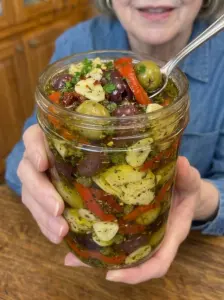
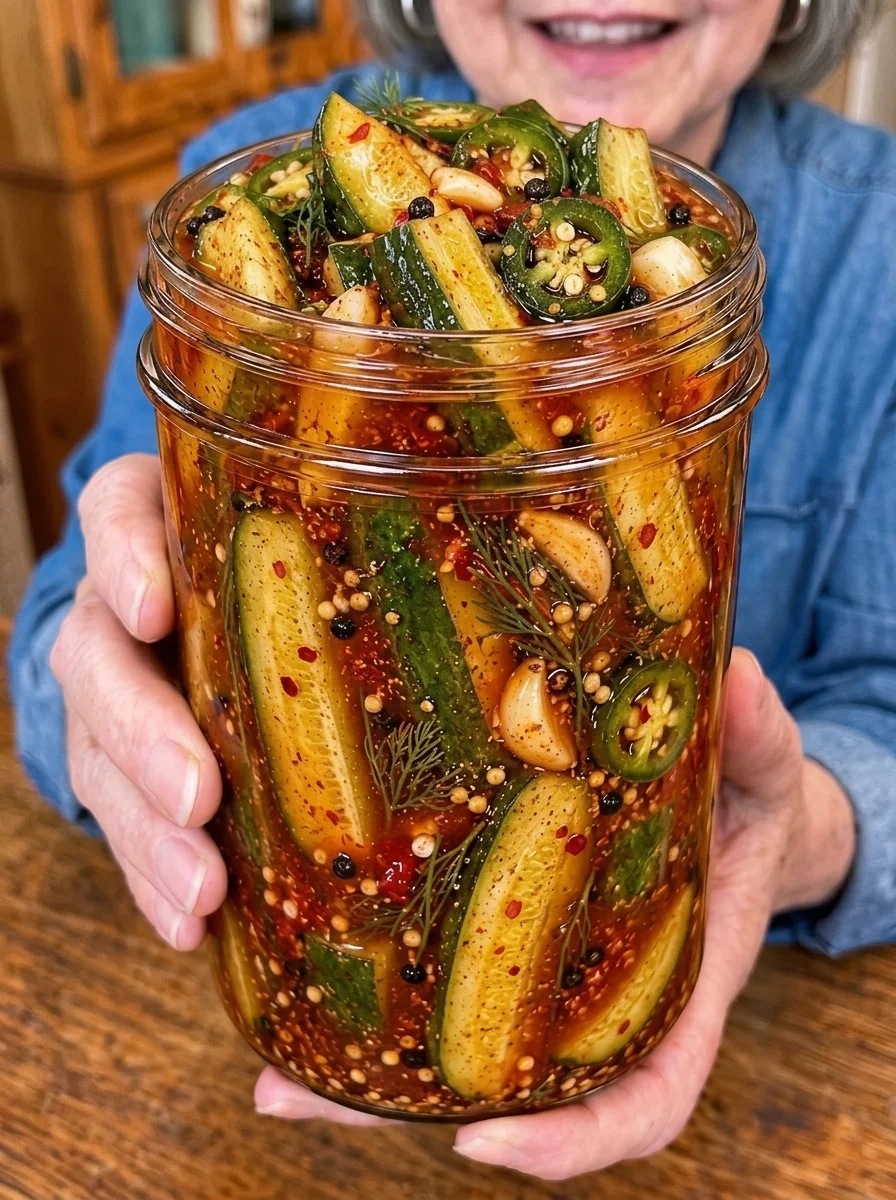
Firecracker Bloody Mary Pickles combine crisp cucumber spears with a savory tomato brine flavored with horseradish, garlic, Worcestershire sauce, celery, and hot peppers. They bring the familiar seasoning of a Bloody Mary to a chilled, alcohol-free condiment. Serve them beside a burger, tuck slices into a sandwich, or add a small bowl to a weekend snack platter.
The flavor is layered rather than simply hot. Tomato juice gives the liquid body, vinegar supplies tang, and horseradish adds a different kind of sharpness from the jalapeños. Dill and celery seeds make the mixture taste unmistakably pickle-like, while smoked paprika adds a gentle smoky note.
These are intended as a refrigerated, short-term preparation. There is no fermentation stage or canning process, and the jars must not be stored in the pantry.
Recipe note: This supplied recipe has not been independently tested for acidity or shelf life. Tomato juice, fresh vegetables, and seasonings make this different from a plain vinegar pickle. The original 1–2 week storage claim is not validated for this specific formula. This article treats it as a short-term refrigerated marinated vegetable dish, using a conservative 3–4 day limit from preparation rather than presenting it as a proven preservation recipe. For longer storage, follow a tested recipe designed for that purpose.
Why You’ll Love These Pickles
- A savory tomato brine gives cucumber pickles a different flavor.
- Horseradish, jalapeño, and hot sauce provide adjustable heat.
- The recipe contains no alcohol.
- Spears or rounds work for different serving styles.
- A small portion adds a bold contrast to rich sandwiches and grilled foods.
Recipe at a Glance
- Prep time: About 15 minutes
- Brine heating: About 5–10 minutes
- Cooling: Brief cooling before packing; refrigerate promptly
- Flavor rest: At least 24 hours in the refrigerator
- Yield: Approximately 8 servings, depending on portion size
- Storage: Refrigerate at 40°F or below; use within 3–4 days as a conservative short-term limit
Ingredients
- 1 1/2 pounds small pickling cucumbers
- 1 cup tomato juice
- 1 cup distilled white vinegar labeled 5% acidity
- 1/2 cup water
- 1 tablespoon kosher salt
- 1 tablespoon Worcestershire sauce
- 1 tablespoon prepared horseradish
- 2 teaspoons hot sauce, plus more for individual servings if desired
- 1 teaspoon celery salt
- 1 teaspoon smoked paprika
- 1 teaspoon black peppercorns
- 4 garlic cloves, peeled and lightly crushed
- 1 teaspoon mustard seeds
- 1/2 teaspoon celery seeds
- 1–2 fresh jalapeños, sliced
- 1/2 teaspoon red pepper flakes, optional
- 1 teaspoon sugar, optional
- 2 tablespoons chopped fresh dill
Ingredient Notes
Pickling Cucumbers
Choose small, firm pickling cucumbers with sound skins. Their texture is better suited to this recipe than large, watery slicing cucumbers. Avoid produce with soft spots, deep bruises, or signs of decay.
Wash well and trim a thin slice from the blossom end, opposite the stem. That end can contain enzymes associated with softening. Cut into similarly sized spears or thick rounds so the pieces fit comfortably and have a reasonably consistent texture.
Freshness matters more than a promise of “extra crunch.” A soft cucumber will not become crisp simply by sitting in a flavorful brine. Keep the prepared pieces cold while you finish the liquid.
Tomato Juice
Plain tomato juice gives the brine its savory base. Salt levels vary, so use a lower-sodium product if you prefer more control. A heavily seasoned vegetable juice will change the flavor and can make the mixture salty before the celery salt is added.
Tomato juice is not being used as a substitute for vinegar. Its acidity varies, and its presence does not establish a tested storage life. Keep the listed vinegar and water amounts rather than adding more tomato juice to dilute a sharp-tasting brine.
White Vinegar
Use commercial distilled white vinegar labeled 5% acidity. Do not use homemade vinegar or a lower-acidity specialty vinegar. The vinegar gives the clean tang expected in a pickle, but this entire formula has not been tested as a preservation process.
Do not top up a partially filled container with plain water. Choose a container that fits the batch, divide between smaller containers, or prepare additional brine in the same proportions if necessary.
Worcestershire Sauce
Worcestershire adds a deep savory note. Many versions contain anchovies, so check the label if you need to avoid fish or want a vegetarian version. Use a suitable alternative if necessary, recognizing that the flavor may differ.
Prepared Horseradish
Use prepared horseradish rather than creamy horseradish sauce. The prepared version usually contains grated horseradish and vinegar, while creamy sauces introduce other ingredients and a different texture.
Horseradish delivers a sharp, nose-clearing heat that differs from chile burn. Heating can mellow some of that punch, so the finished flavor may be gentler than a spoonful straight from the jar.
Salt and Celery Seasonings
Kosher salt crystals vary by brand, making a tablespoon an imprecise measure of saltiness. Celery salt, tomato juice, hot sauce, and Worcestershire also contribute salt. If you are sensitive to salt, choose lower-sodium packaged products and taste a cooled brine sample before adding extra seasoning.
Celery seeds give a concentrated celery flavor and remain visible in the liquid. They are small and can collect on cucumber surfaces; a quick shake of the serving fork removes excess seeds if desired.
Garlic, Dill, and Peppers
Lightly crushed garlic releases flavor without creating a paste. Wash and dry dill before chopping. Jalapeños vary in heat, so begin with one if you prefer a gentler result.
Remove the pale inner ribs and seeds for less heat. Wear gloves if helpful, wash your hands and tools after handling peppers, and avoid touching your eyes. Red pepper flakes are optional and can be omitted without losing the savory base flavor.
Equipment and Container Choice
Use a nonreactive saucepan, clean food-safe containers, a knife, a cutting board, and a clean serving utensil. Stainless steel is a practical choice for heating acidic brine. Avoid reactive copper, brass, or uncoated iron cookware.
Have a large jar or two smaller containers ready. The cucumbers and approximately 2 1/2 cups of liquid may not fit a single small jar. Do not force the pieces into a tight pack that prevents liquid from moving between them.
For glass, use containers intended for the temperature of the liquid and follow their manufacturer’s guidance. Never pour boiling brine into an ordinary cold glass jar. Clean containers reduce contamination but do not make the finished pickles shelf-stable.
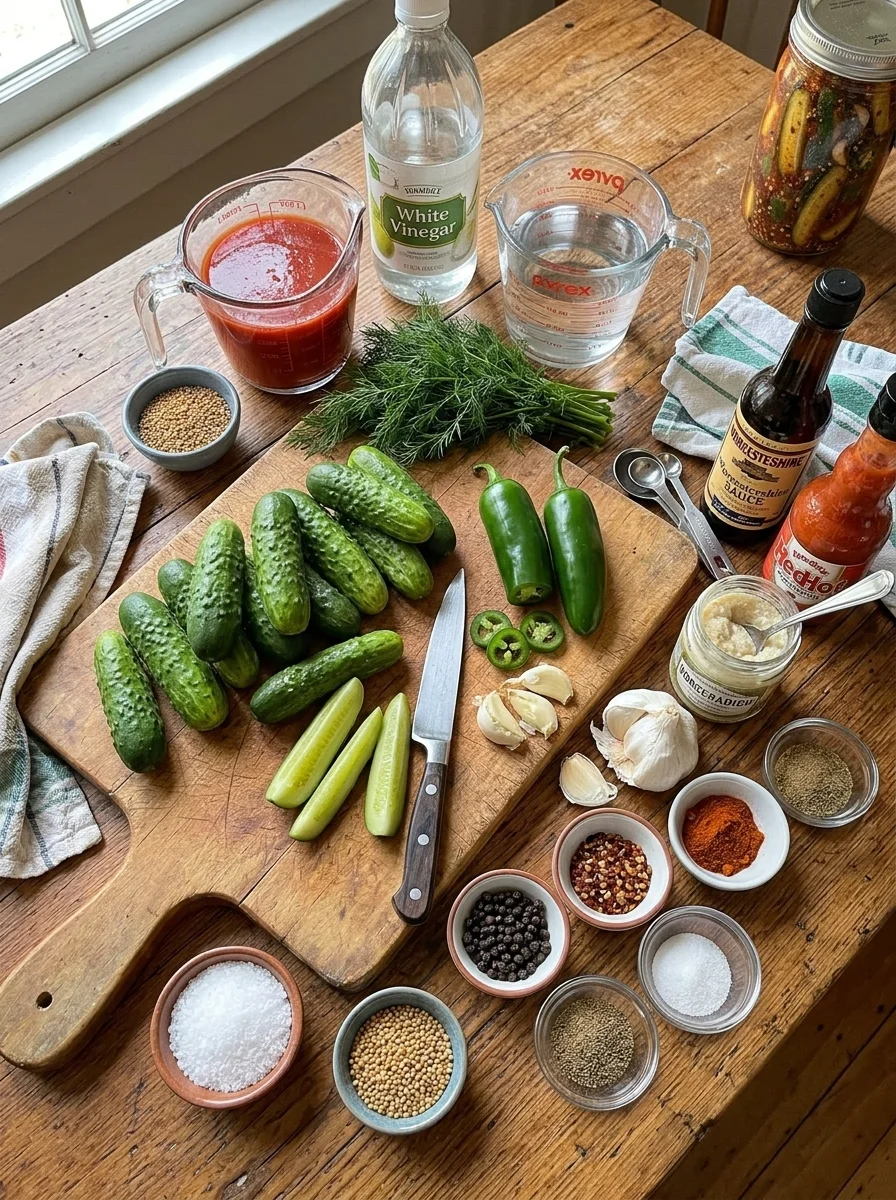
How to Make Firecracker Bloody Mary Pickles
1. Prepare the Cucumbers
Wash the cucumbers thoroughly. Trim the blossom ends and slice into spears or thick rounds. Place them in the prepared container, leaving enough space for the garlic, peppers, and brine.
Keep the pieces reasonably uniform. Spears are easy to serve as a snack, while rounds are useful on burgers and sandwiches. Thin rounds will taste coated more quickly but may lose their firm bite sooner.
2. Mix the Brine
Combine the tomato juice, vinegar, water, kosher salt, Worcestershire, horseradish, hot sauce, celery salt, paprika, peppercorns, mustard seeds, celery seeds, and optional sugar in a saucepan.
Stir well so the seasonings are dispersed. The tomato juice makes an opaque liquid; a clear brine is not the goal for this recipe.
3. Heat Gently
Bring the mixture to a gentle simmer over medium heat, stirring until the salt and sugar dissolve. Remove from the heat rather than boiling for a long time, which could reduce the liquid and concentrate the salt.
Let the brine cool briefly until it is no longer steaming strongly and is suitable for the container you are using. An ice-water bath around the saucepan can speed cooling; keep bath water out of the brine. Do not leave the mixture on the counter for hours.
4. Add Garlic, Peppers, and Dill
Tuck the crushed garlic and jalapeño slices among the cucumbers. Add the optional red pepper flakes and chopped dill. Distribute them rather than leaving all the seasonings at the top.
5. Cover With Brine
Pour the cooled brine over the cucumbers, stirring the liquid first so settled spices are distributed. Keep the cucumber pieces covered. If using a weight, choose one intended for food use and suitable for the container.
Do not add plain water to make the liquid reach the top. A smaller container or divided batch is preferable to diluting the formula. Leave enough room to stir or turn the pieces gently later.
6. Refrigerate Immediately
Cover and refrigerate at 40°F or below. Label the preparation date. Let the cucumbers rest for at least 24 hours before tasting for flavor.
Gently turn the container or stir with a clean utensil once during chilling to redistribute the spices. Check that any lid is leakproof before inverting; tomato brine can be messy.
7. Serve Cold
Lift out a portion with a clean fork or tongs. Let excess liquid drain if using the pickles on bread. Return the main batch to the refrigerator promptly.
The short-term storage period includes the first day of marinating. A 24-hour rest does not start a new storage clock afterward. Plan a batch size you can finish within 3–4 days of preparation.
Tips for Crunch and Balanced Flavor
Start With Firm Cucumbers
Fresh pickling cucumbers give the best chance of a crisp result. Cut away the blossom ends and avoid hot, prolonged soaking. Refrigerate promptly after packing.
Keep the Brine From Over-Reducing
A brief simmer dissolves the seasonings. Extended boiling changes the concentration and can leave too little liquid to cover the vegetables. Use a gentle heat and remove the pan once the salt is dissolved.
Taste Small Samples Safely
Taste a cooled spoonful of freshly prepared brine with a clean utensil to judge flavor. Do not taste a questionable stored batch to decide whether it is safe. Smell and appearance cannot rule out all hazards.
Don’t Dilute to Fix Heat
If a serving is too spicy, pair a smaller amount with unseasoned food. For the next batch, reduce hot sauce or peppers. Adding water to the whole jar changes the recipe rather than simply adjusting flavor.
Expect Sediment
Paprika, mustard seeds, peppercorns, and horseradish can settle. Stir gently before serving. Normal spice sediment is different from new bubbling, mold, or an unusual change in texture, but the lack of visible spoilage does not justify extending storage.
Flavor Variations
Milder Version
Use one prepared jalapeño, omit red pepper flakes, and choose a mild hot sauce. Keep the vinegar and water amounts unchanged. A smaller serving also reduces how much heat reaches each bite of a meal.
Extra Horseradish at the Table
Add a tiny amount of prepared horseradish to an individual serving immediately before eating if you want a sharper flavor. This avoids repeatedly opening and adjusting the whole storage container.
Smoky Finish
Use the listed smoked paprika and taste before adding more. Too much paprika can dominate the tomato and dill. A pinch on a serving is easier to control than adding another large spoonful to the jar.
Vegetarian Worcestershire
Choose a vegetarian or vegan Worcestershire alternative if needed. Check other sauces as well, and do not assume an ingredient swap addresses every allergen or dietary restriction.
Dill-Forward Serving
Scatter a little fresh chopped dill over a portion just before serving. This adds a fresh aroma without changing the liquid balance of the stored batch.
Serving Ideas
Serve chilled spears beside burgers, grilled sandwiches, or deviled eggs. Their tomato, celery, and horseradish flavor complements rich foods. Thick rounds can be added to a cheeseburger or chopped into a small amount of relish for immediate use.
On a snack board, offer a small bowl with a fork rather than pouring brine across the platter. Cheese, crackers, and fresh vegetables provide milder bites alongside the spicy cucumbers. Keep perishable accompaniments chilled as appropriate.
For a gathering, bring out smaller portions and replenish from the refrigerator. Transport the batch cold with ice packs if taking it elsewhere. Do not treat a sealed jar as shelf-stable during travel.
Make-Ahead and Storage
Make ahead: Prepare one day before serving. The 24-hour rest gives flavor time to develop while leaving time within the conservative short storage period. Avoid planning a long marinating period followed by several more days of storage.
Refrigerator: Store covered at 40°F or below and use within 3–4 days of preparation as a cautious short-term approach for this untested mixture. That is not a validated pickle shelf life. The original 1–2 week claim should not be presented as established for this formula.
Freezer: Freezing is not recommended for the intended crunch. Cucumbers can become soft and watery after thawing.
Handling: Use clean utensils and do not return served pickles to the jar. Do not add another batch of fresh cucumbers to used brine. Discard food left unrefrigerated beyond ordinary perishable-food limits, or any batch with mold, unusual bubbling, or spoilage. Do not taste suspect food.
Canning: This is not a shelf-stable recipe. A hot fill, a tight lid, or a vacuum-like seal does not make it safe for pantry storage. Follow a tested preservation recipe if long-term storage is your goal.
Troubleshooting
The Pickles Are Soft
The cucumbers may have been old, cut thinly, exposed to too much heat, or stored too long. Start with fresh pickling cucumbers and cool the brine promptly. This marinade cannot restore firmness to soft produce.
The Brine Is Too Salty
Celery salt and packaged sauces can add more salt than expected. Choose lower-sodium tomato juice next time and avoid extra celery salt at serving. Do not dilute the whole storage jar with water to correct it.
The Flavor Is Too Hot
Use a smaller amount as a condiment rather than eating a large portion. Pair with mild foods. Reduce peppers or hot sauce in the next batch rather than changing the vinegar-to-liquid balance.
The Brine Has Separated
Tomato solids and spices may settle naturally. Gently stir before serving. Separation alone does not establish spoilage or safety; follow the storage period and discard if other concerning changes occur.
There Isn’t Enough Brine
The container may be too wide or the cucumber pieces may be loosely arranged. Divide into smaller containers or prepare more brine in the same proportions. Never top up with plain water.
Frequently Asked Questions
Do These Contain Alcohol?
No alcohol is listed in the recipe. The name refers to the tomato, celery, Worcestershire, horseradish, and chile flavor combination. Check packaged ingredients if you have specific dietary requirements.
Can I Use Store-Bought Bloody Mary Mix?
It is not a direct equivalent to plain tomato juice. Mixes vary in acidity, salt, sweetener, and spices. Substituting changes the formula and does not establish a tested storage period.
Can I Use Ordinary Slicing Cucumbers?
They may be used as a short-term marinated cucumber variation, but their higher water content and larger seeds can give a softer result. Small pickling cucumbers are the better choice for the intended crunch.
Can I Use Creamy Horseradish Sauce?
Prepared horseradish is preferred. Creamy sauce adds other ingredients and changes the brine’s texture and handling. Use the listed style for the intended result.
Can I Keep Them for Two Weeks?
A two-week limit has not been validated for this particular tomato-based formula. Treat it as a short-term refrigerated marinated dish or use a tested recipe for longer storage. Refrigeration alone does not prove every improvised pickle formula has the same shelf life.
Can I Reuse the Brine?
Do not use vegetable-exposed brine to start a new batch. The vegetables exchange water and acid with the liquid, changing its composition. Make fresh brine for each new batch.
Are They About 25 Calories Per Serving?
That may be plausible for a modest cucumber portion with little brine, but the amount actually eaten varies. Tomato juice, sauces, and optional sugar contribute calories, while much liquid may remain in the jar. Use your product labels and measured portions for a closer estimate.
Print
Firecracker Bloody Mary Pickles
Description
Prep time: 15 minutes
Brine heating: About 5–10 minutes
Flavor rest: At least 24 hours refrigerated
Servings: Approximately 8
Ingredients
- 1 1/2 pounds small pickling cucumbers
- 1 cup tomato juice
- 1 cup distilled white vinegar, 5% acidity
- 1/2 cup water
- 1 tablespoon kosher salt
- 1 tablespoon Worcestershire sauce
- 1 tablespoon prepared horseradish
- 2 teaspoons hot sauce
- 1 teaspoon celery salt
- 1 teaspoon smoked paprika
- 1 teaspoon black peppercorns
- 4 garlic cloves, lightly crushed
- 1 teaspoon mustard seeds
- 1/2 teaspoon celery seeds
- 1–2 jalapeños, sliced
- 1/2 teaspoon red pepper flakes, optional
- 1 teaspoon sugar, optional
- 2 tablespoons chopped fresh dill
Instructions
- Wash cucumbers, trim blossom ends, and cut into spears or thick rounds. Place in clean, suitable food-safe containers.
- Combine tomato juice, vinegar, water, salt, Worcestershire, horseradish, hot sauce, celery salt, paprika, peppercorns, mustard seeds, celery seeds, and optional sugar in a nonreactive saucepan.
- Bring to a gentle simmer, stirring until salt dissolves. Remove from heat and cool briefly to a temperature suitable for the container. Avoid prolonged counter cooling.
- Add garlic, jalapeños, optional flakes, and dill among the cucumbers. Pour over brine to cover; do not top up with plain water.
- Cover and refrigerate immediately at 40°F or below. Allow 24 hours for flavor, gently turning once during chilling.
- Serve cold with clean utensils and return the main batch promptly to the refrigerator.
Storage: Use within 3–4 days of preparation as a conservative limit for this untested mixture. The resting day counts toward that period. Do not can or store at room temperature. Freezing is not recommended for texture.