
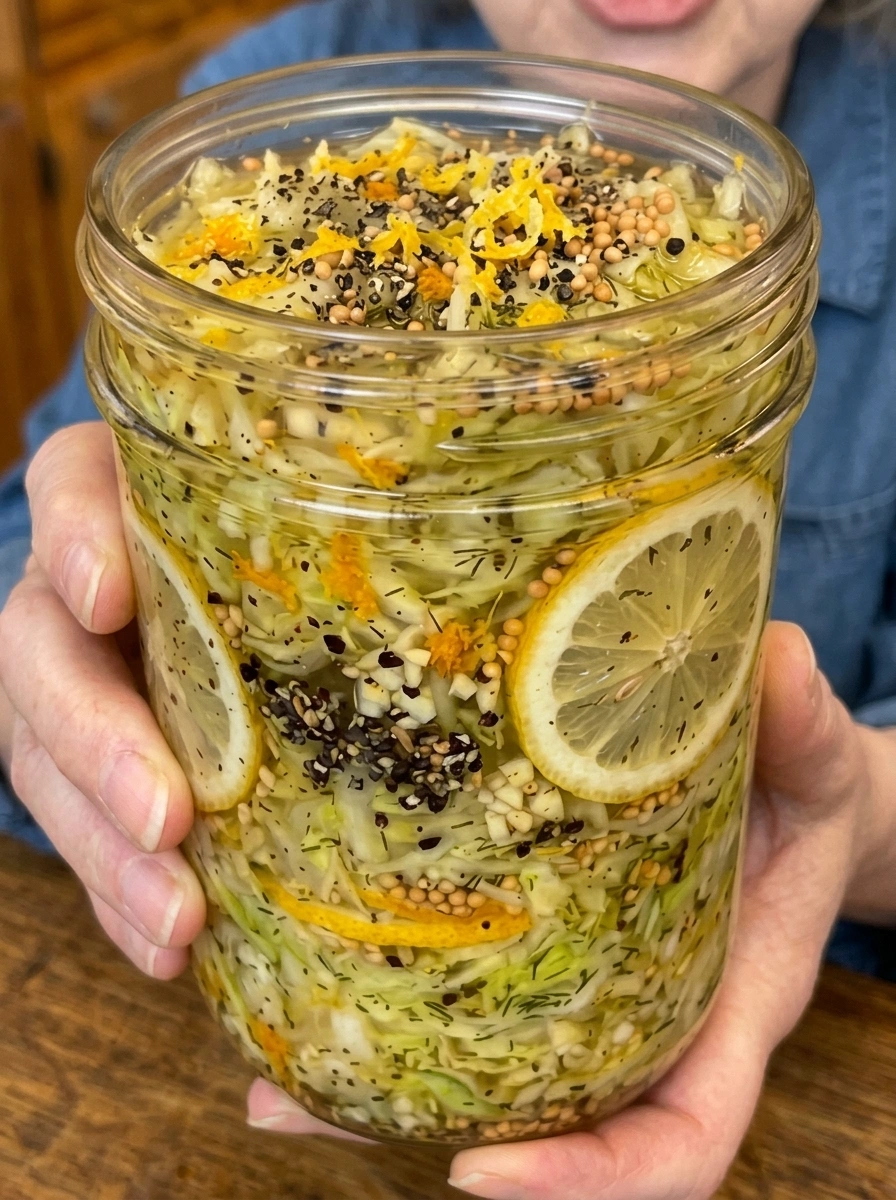
This Garlic Lemon Pepper Sauerkraut is tangy, crunchy, and packed with savory garlic and zesty lemon flavor. An easy flavor upgrade for classic homemade sauerkraut!
If you love the tangy crunch of classic sauerkraut but want something with a savory, garlicky punch, this Garlic Lemon Pepper Sauerkraut delivers exactly that. Finely shredded green cabbage is massaged with salt until it releases its own natural brine, then combined with a generous amount of minced garlic, bright lemon zest, fresh lemon juice, and freshly cracked black pepper. The result is a naturally fermented condiment with a bold, savory garlic flavor balanced by vibrant citrus and a warm, peppery bite.
Like all naturally fermented sauerkraut, this recipe relies on beneficial bacteria rather than vinegar to develop its signature tang, transforming over the course of five to ten days into a probiotic-rich, deeply flavorful condiment. The combination of garlic and lemon makes this an especially versatile ferment, easy to fold into savory dishes without overwhelming their existing flavors.
Let’s dive into everything you need to know to make this savory, zesty, garlic lemon pepper sauerkraut at home.
Why You’ll Love This Garlic Lemon Pepper Sauerkraut
There’s a lot to love about this bold, versatile homemade ferment:
Naturally probiotic. Like traditional sauerkraut, this recipe relies on natural fermentation, which produces beneficial bacteria that support gut health.
Bold, savory garlic flavor. A generous amount of fresh garlic gives this sauerkraut a distinctly savory, pungent character.
Bright, zesty lemon finish. Fresh lemon zest and juice add a lively citrus aroma that balances the savory garlic beautifully.
Minimal ingredients required. With just cabbage, salt, garlic, lemon, and pepper, this recipe uses simple, easy-to-find ingredients.
An easy upgrade to classic sauerkraut. This recipe transforms plain fermented cabbage into something far more dynamic and flavorful.
Incredibly versatile. This tangy, garlicky condiment pairs beautifully with sausages, sandwiches, grain bowls, and so much more.
Ingredients You’ll Need
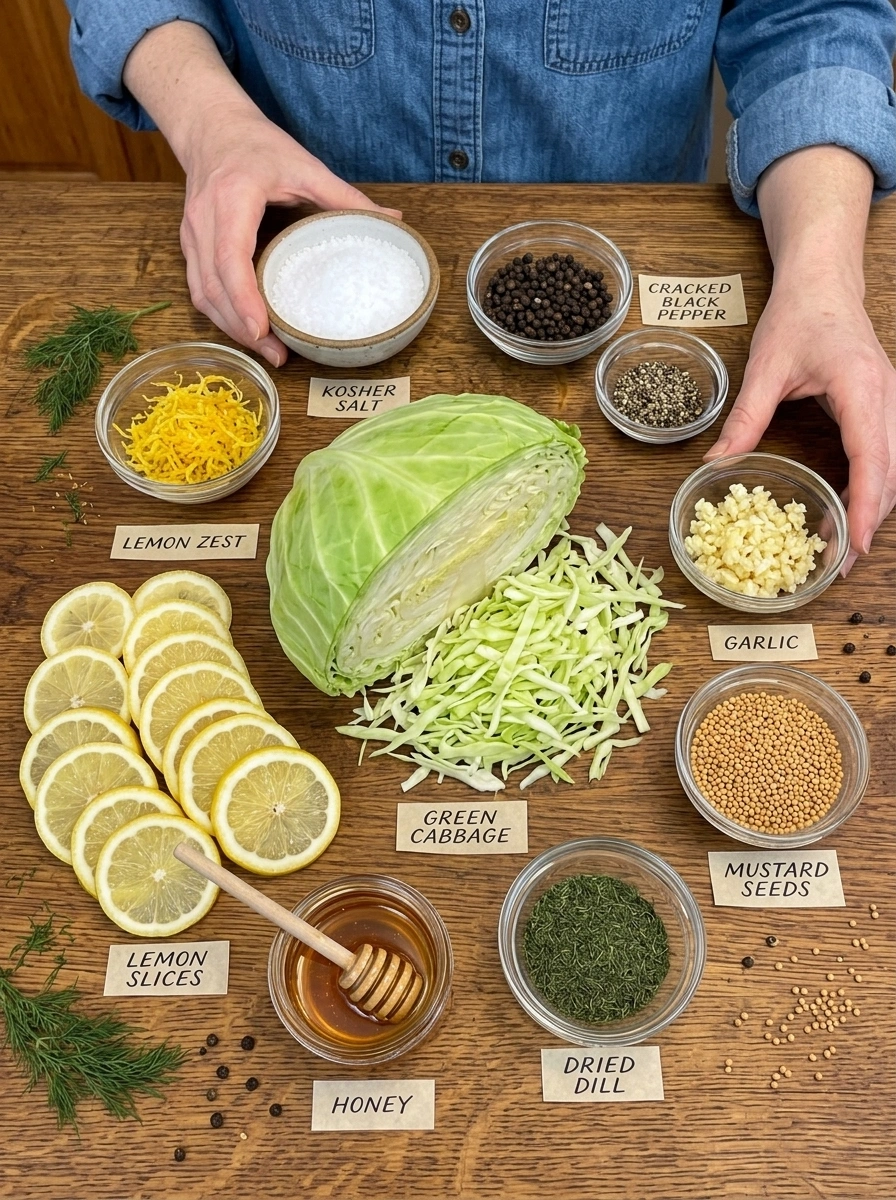
Here’s a breakdown of what goes into this savory, zesty fermented sauerkraut and why each ingredient matters.
- 1 medium head green cabbage, finely shredded — The base of the recipe, providing the classic texture and flavor that transforms through fermentation.
- 1½ tbsp kosher salt — Essential for the fermentation process, salt draws out moisture from the cabbage and creates an environment where beneficial bacteria can thrive while inhibiting harmful bacteria.
- 3 garlic cloves, finely minced — The star aromatic, providing a bold, savory punch throughout the ferment.
- 1 tbsp fresh lemon zest — Adds bright, aromatic citrus flavor; most of the fragrant citrus aroma comes from the zest rather than the juice.
- 2 tbsp fresh lemon juice — Reinforces the citrus flavor with additional brightness and acidity.
- 1½ tsp freshly cracked black pepper — Adds a warm, peppery bite throughout the ferment.
- ½ tsp mustard seeds, optional — Adds a classic pickling spice flavor with a subtle, tangy bite.
- ½ tsp dried dill, optional — Adds a pickle-inspired herb flavor.
- 1 tsp honey or sugar, optional — Adds a subtle touch of sweetness to balance the tanginess, garlic, and pepper.
How to Make Garlic Lemon Pepper Sauerkraut
This recipe involves an active prep stage followed by a natural fermentation period. Here’s exactly how to make it.
Step 1: Shred the Cabbage
Remove the outer leaves from the cabbage. Quarter the cabbage, remove the core, and finely shred the leaves. Place the cabbage in a large clean bowl.
Step 2: Massage with Salt
Sprinkle the salt evenly over the shredded cabbage. Using clean hands, massage and squeeze the cabbage for 5–10 minutes. The cabbage will soften and release enough liquid to create its own natural brine. Continue until the cabbage feels tender and there is visible liquid collecting in the bowl.
Step 3: Add the Flavor
Add the minced garlic, lemon zest, lemon juice, and freshly cracked black pepper. If using them, add the mustard seeds, dill, and honey. Mix everything thoroughly so the seasonings are evenly distributed.
Step 4: Pack the Jar
Transfer the cabbage mixture to a clean fermentation jar. Pack it down firmly using a clean utensil or fermentation tamper. Press the cabbage beneath the liquid and remove as many air pockets as possible. Leave approximately 1–2 inches of headspace. If available, use a fermentation weight to keep the cabbage submerged.
Step 5: Ferment
Cover the jar with an appropriate fermentation lid or loose-fitting cover that allows gases to escape. Leave at room temperature and away from direct sunlight for approximately 5–10 days. Begin tasting around day 5. When the sauerkraut reaches your preferred balance of tanginess and crunch, it’s ready to refrigerate.
Step 6: Refrigerate
Secure the jar and transfer it to the refrigerator. Chilling slows the fermentation process while helping preserve the flavor and texture.
Serving Ideas for Garlic Lemon Pepper Sauerkraut
This garlic lemon pepper sauerkraut is delicious with:
- Grilled sausages
- Bratwurst
- Hot dogs
- Burgers
- Reuben sandwiches
- Pulled pork
- Grilled chicken
- Steak
- Roasted potatoes
- Grain bowls
- Tacos
- Breakfast sandwiches
It also makes a fantastic bright topping for avocado toast or crispy roasted vegetables.
Flavor Variations
Extra Garlic: Add another clove or two of fresh garlic for a stronger savory flavor.
Spicy Garlic Lemon: Add thinly sliced jalapeños or red pepper flakes for a kick of heat.
Dill & Garlic: Add fresh dill and mustard seeds for a pickle-inspired variation.
Ginger Lemon: Add 1 tsp freshly grated ginger for a bright, aromatic twist.
Herb Garden: Add fresh parsley, dill, or thyme for extra herbal complexity.
Honey Lemon Pepper: Add a small amount of honey for a subtle sweet-and-tangy contrast.
Extra Peppery: Increase the cracked black pepper for a stronger pepper-forward flavor.
Pro Tips for the Best Garlic Lemon Pepper Sauerkraut
Massage the cabbage well. This releases the liquid needed to create the natural fermentation brine, so don’t rush this step.
Keep everything submerged. Cabbage exposed above the brine is more likely to develop unwanted mold or spoilage.
Use lemon zest for aroma. Most of the bright citrus fragrance comes from the zest, while the juice adds acidity and freshness.
Taste during fermentation. Fermentation time varies depending on temperature and other factors, so use the flavor and texture as your guide.
Don’t overpower the cabbage. Garlic and lemon are both powerful flavors. Start with moderate amounts and adjust in future batches to suit your taste.
Storage Information
Store the finished sauerkraut in a clean, airtight jar in the refrigerator. Always use a clean utensil when serving. Discard the sauerkraut if you see fuzzy mold or notice a clearly rotten or otherwise abnormal smell.
Frequently Asked Questions
How strong is the garlic flavor in this sauerkraut? This recipe delivers a distinctly savory, garlicky flavor. If you’re new to garlic-forward ferments, start with the recommended amount, then increase it in future batches if you’d like a bolder flavor.
How long does homemade sauerkraut last? Once fermented to your liking and refrigerated, this sauerkraut will keep for an extended period, provided it stays submerged in its brine and you always use a clean utensil when serving.
Why do I need to massage the cabbage so thoroughly? Massaging the cabbage with salt helps draw out its natural liquid, which becomes the brine that submerges the cabbage during fermentation.
How do I know if my sauerkraut has gone bad? Signs of a properly fermenting batch include small bubbles and a pleasantly tangy smell. If you see fuzzy mold or notice a clearly rotten or otherwise abnormal smell, the batch should be discarded.
Can I ferment this sauerkraut for longer than 10 days? Yes, some people prefer a more tangy, well-developed sauerkraut and choose to ferment for longer than 10 days. Simply continue tasting periodically until the sauerkraut reaches your desired level of tanginess.
Why does the cabbage need to stay submerged in the brine? Keeping the cabbage submerged prevents exposure to air, which can lead to mold growth. A fermentation weight helps keep everything below the surface of the brine throughout the fermentation process.
Recipe Summary
Prep Time: Approximately 20 minutes Fermentation Time: 5–10 days Total Time: 5–10 days plus prep
This Garlic Lemon Pepper Sauerkraut brings a bold, savory twist to the classic fermented cabbage tradition. With plenty of fresh garlic, bright lemon zest, and cracked black pepper, this homemade ferment delivers punchy, versatile flavor along with the natural probiotic benefits of traditional sauerkraut. Whether served alongside sausages, tucked into sandwiches, or added to grain bowls, this savory condiment is a wonderful way to explore the rewarding process of home fermentation.
Make a batch today, and get ready for this savory, zesty sauerkraut to become a new staple in your kitchen!

Garlic Lemon Pepper Sauerkraut
Ingredients
Here’s a breakdown of what goes into this savory, zesty fermented sauerkraut and why each ingredient matters.
- 1 medium head green cabbage, finely shredded — The base of the recipe, providing the classic texture and flavor that transforms through fermentation.
- 1½ tbsp kosher salt — Essential for the fermentation process, salt draws out moisture from the cabbage and creates an environment where beneficial bacteria can thrive while inhibiting harmful bacteria.
- 3 garlic cloves, finely minced — The star aromatic, providing a bold, savory punch throughout the ferment.
- 1 tbsp fresh lemon zest — Adds bright, aromatic citrus flavor; most of the fragrant citrus aroma comes from the zest rather than the juice.
- 2 tbsp fresh lemon juice — Reinforces the citrus flavor with additional brightness and acidity.
- 1½ tsp freshly cracked black pepper — Adds a warm, peppery bite throughout the ferment.
- ½ tsp mustard seeds, optional — Adds a classic pickling spice flavor with a subtle, tangy bite.
- ½ tsp dried dill, optional — Adds a pickle-inspired herb flavor.
- 1 tsp honey or sugar, optional — Adds a subtle touch of sweetness to balance the tanginess, garlic, and pepper.
Instructions
This recipe involves an active prep stage followed by a natural fermentation period. Here’s exactly how to make it.
Remove the outer leaves from the cabbage. Quarter the cabbage, remove the core, and finely shred the leaves. Place the cabbage in a large clean bowl.
Sprinkle the salt evenly over the shredded cabbage. Using clean hands, massage and squeeze the cabbage for 5–10 minutes. The cabbage will soften and release enough liquid to create its own natural brine. Continue until the cabbage feels tender and there is visible liquid collecting in the bowl.
Add the minced garlic, lemon zest, lemon juice, and freshly cracked black pepper. If using them, add the mustard seeds, dill, and honey. Mix everything thoroughly so the seasonings are evenly distributed.
Transfer the cabbage mixture to a clean fermentation jar. Pack it down firmly using a clean utensil or fermentation tamper. Press the cabbage beneath the liquid and remove as many air pockets as possible. Leave approximately 1–2 inches of headspace. If available, use a fermentation weight to keep the cabbage submerged.
Cover the jar with an appropriate fermentation lid or loose-fitting cover that allows gases to escape. Leave at room temperature and away from direct sunlight for approximately 5–10 days. Begin tasting around day 5. When the sauerkraut reaches your preferred balance of tanginess and crunch, it’s ready to refrigerate.
Secure the jar and transfer it to the refrigerator. Chilling slows the fermentation process while helping preserve the flavor and texture.