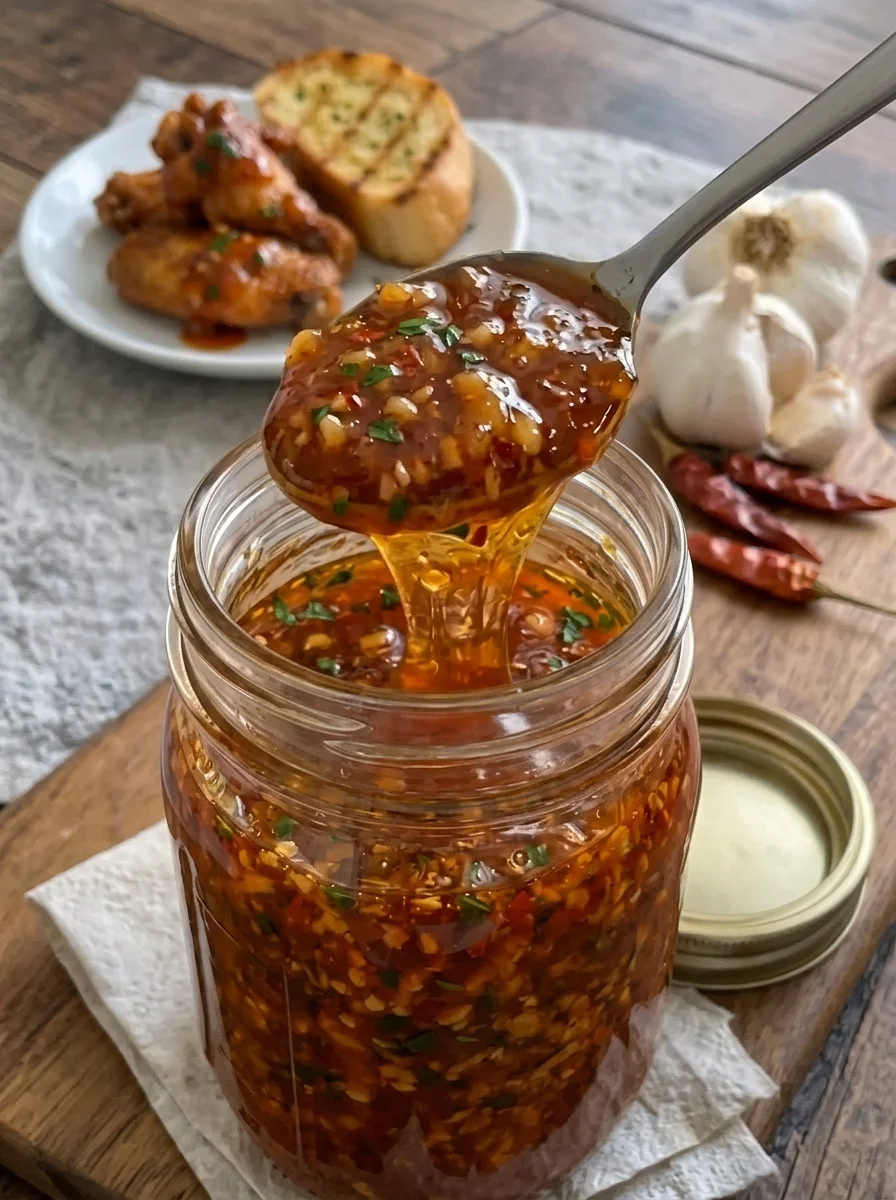
Butter, garlic, hot sauce, and smoky spices make this a bold finishing sauce for wings, shrimp, grilled meats, potatoes, and corn. Honey and brown sugar round out the heat, while vinegar and Dijon add a tangy edge that keeps the butter from tasting flat.
The name suggests intensity, but you can control the heat. The base recipe already contains two pepper sauces, cayenne, chili powder, and red pepper flakes. Optional fresh peppers are additions rather than requirements, and there is no need to include every extra ingredient to make a flavorful sauce.
This is a homemade spicy garlic butter sauce, not a recreation of a particular restaurant or commercial product. The method below expands the supplied recipe and has not been independently kitchen-tested. Hot sauce brands vary in heat, salt, acidity, and thickness, so tasting and gradual seasoning matter.
Flavor and Texture
Expect a rich, buttery sauce with small pieces of garlic and visible spice flecks. It will coat food most readily while warm, but it is not a thick barbecue glaze or a permanently emulsified cream sauce.
Butter contains both fat and water. Added vinegar and pepper sauces introduce more liquid, so some separation is normal, especially after standing or reheating. Gentle whisking helps bring it together for serving.
The sauce firms in the refrigerator as the butter chills. This does not mean it has spoiled or turned into a different preparation. Warm it gently and whisk before use.
Recipe Overview
| Detail | Guide |
|---|---|
| Prep time | About 10 minutes |
| Cooking | About 10–15 minutes |
| Total | Approximately 20–25 minutes |
| Yield | Roughly 1½–1¾ cups, depending on reduction |
| Portions | 12 sauce portions |
| Serving amount | Approximately 2–2⅓ tablespoons if divided evenly |
| Texture | Pourable when warm, firm when chilled |
| Storage | Refrigerated promptly; use within 4 days or freeze |
Ingredients
Sauce
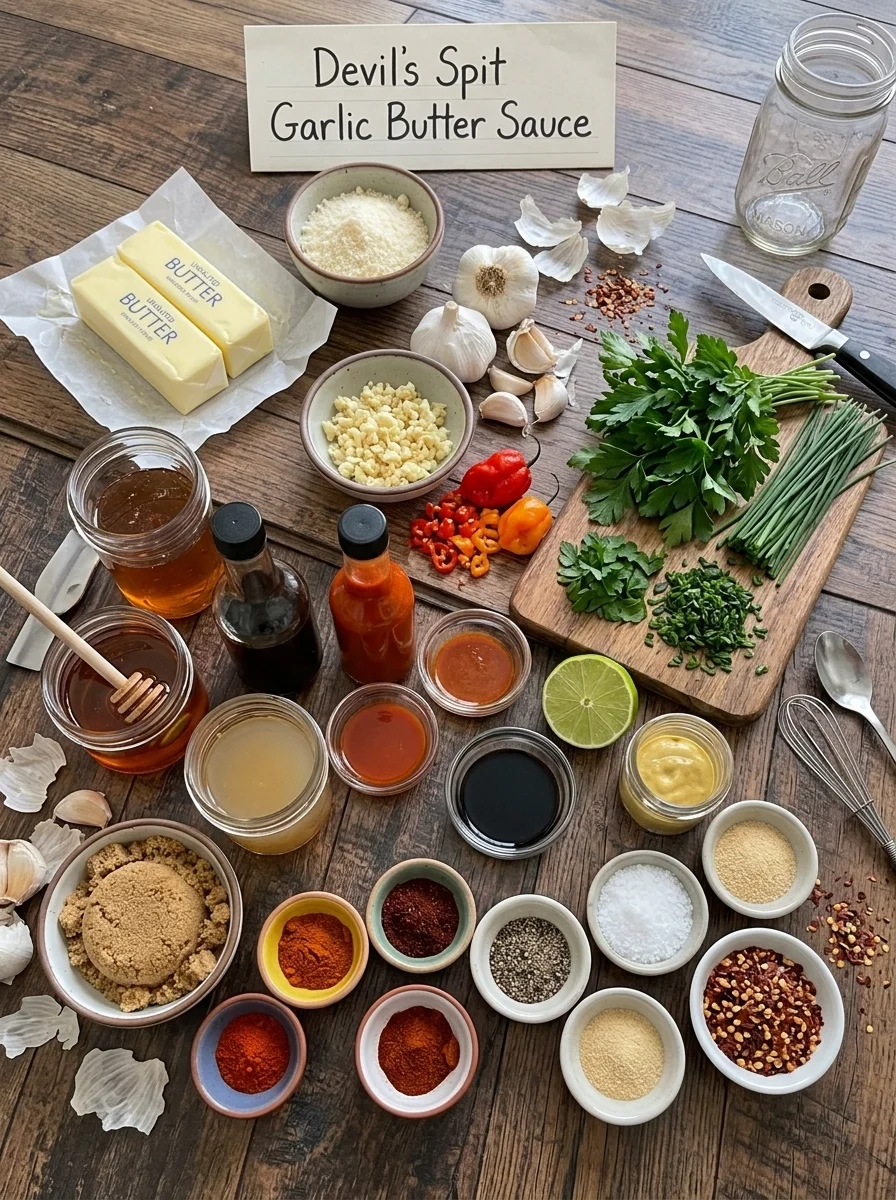
- 1 cup unsalted butter
- 8 garlic cloves, finely minced
- 2 tablespoons hot sauce
- 1 tablespoon cayenne pepper sauce
- 1 tablespoon Worcestershire sauce
- 1 tablespoon honey
- 1 tablespoon packed brown sugar
- 1 tablespoon apple cider vinegar
- 1 teaspoon Dijon mustard
- 1 teaspoon smoked paprika
- 1 teaspoon chili powder
- ½ teaspoon cayenne pepper, or less for a gentler sauce
- ½ teaspoon crushed red pepper flakes, or less to taste
- ½ teaspoon garlic powder
- ½ teaspoon onion powder
- Up to ½ teaspoon kosher salt, added to taste
- ¼ teaspoon freshly ground black pepper
Fresh finish
- 2 tablespoons chopped fresh parsley
- Chopped fresh chives, to taste
- Additional red pepper flakes, optional
Optional additions
- A small amount of finely minced habanero
- A very small amount of finely minced ghost pepper, only if desired
- Up to 1 teaspoon chipotle powder
- 1 teaspoon fresh lime juice
- Up to 1 teaspoon soy sauce
- 2 tablespoons finely grated Parmesan
- A light hot honey drizzle
Treat the additions as separate choices, not a checklist. Adding all of them can overpower the garlic and make the sauce excessively salty, sweet, or hot.
Ingredient Notes
Butter
Unsalted butter gives you control over the seasoning. If using salted butter, omit the added salt initially and taste after all the bottled sauces are mixed in.
Use ordinary butter rather than assuming clarified butter will behave identically. Clarified butter contains less water and fewer milk solids, changing the texture and flavor.
Garlic
Eight cloves make the garlic prominent, but clove sizes vary. Mince finely so the pieces soften evenly and distribute through the sauce.
Cook over moderate-low heat and watch carefully. Garlic should become fragrant without dark browning. Burnt garlic can make the entire batch bitter, and extra honey will not reliably hide that flavor.
Pepper sauces
A general hot sauce and a cayenne pepper sauce can overlap in flavor. You may use the same familiar cayenne-style sauce for the combined 3 tablespoons, understanding that different products change the final balance.
Avoid substituting a concentrated superhot sauce tablespoon for tablespoon without considering its strength. The listed volume assumes a conventional table-style pepper sauce, not a pepper extract concentrate.
Sweeteners
Honey adds a rounded sweetness and brown sugar contributes a light molasses note. They balance the heat rather than turning the sauce into candy.
If your hot sauce is already sweet, you may prefer less added sweetener in a future batch. Taste after the ingredients have warmed and the sugar has dissolved.
Spices and salt
Chili powder may be a seasoning blend rather than pure ground chile. Check the label because it can contain salt, garlic, cumin, or other ingredients already present in the recipe.
Kosher salt varies by brand and crystal size. The full ½ teaspoon is a maximum starting suggestion rather than an instruction to add it before tasting. Worcestershire, hot sauce, Dijon, optional soy sauce, and Parmesan all contribute seasoning.
Fresh peppers
The base recipe is already spicy. A whole ghost pepper can overwhelm a small batch, so do not treat one pepper as a standard addition.
If experimenting with very hot peppers, use a tiny amount first, wear gloves, avoid touching your eyes, and work with ventilation. Stirring peppers into warm fat can release irritating fumes. Keep your face away from the pan and wash tools carefully afterward.
Equipment
Use a medium heavy-bottomed saucepan, whisk, flexible spatula, measuring spoons, and a heat-safe serving bowl. A small saucepan can make whisking awkward once the hot liquids are added, so leave room to stir without splashing.
Have all the ingredients measured before melting the butter. Garlic can move quickly from fragrant to browned while you search for another spice jar.
How to Make the Sauce
1. Prepare the ingredients
Mince the garlic, chop the herbs, and measure the sauces and spices. Keep the fresh herbs separate for the finish.
If using fresh hot pepper, decide on a conservative amount before starting. You can increase heat later more easily than remove it.
2. Melt the butter gently
Place the butter in the saucepan over medium-low heat. Let it melt without developing dark brown solids.
A little foam is normal. If the butter is sizzling aggressively or browning rapidly, reduce the heat before adding garlic.
3. Soften the garlic
Add the minced garlic and cook for about 2–3 minutes, stirring frequently, until fragrant and slightly softened.
Do not wait for deep color. The garlic will spend more time in the sauce during the next stage.
If using a small amount of fresh pepper, add it with the garlic for a more integrated flavor, or during the final minutes for a sharper character. Either way, avoid leaning over the pan.
4. Whisk in sauces and sweeteners
Add hot sauce, cayenne pepper sauce, Worcestershire, honey, brown sugar, vinegar, and Dijon. Whisk gently until the sugar dissolves and the ingredients are distributed.
Keep the heat controlled. You want a warm sauce with a few small bubbles, not a hard boil.
5. Add spices
Stir in smoked paprika, chili powder, cayenne, red pepper flakes, garlic powder, onion powder, and black pepper. Hold back the added salt until you taste the warmed mixture.
For a gentler batch, begin with half the cayenne and flakes. The flavor can be increased later with small additions.
6. Warm to develop flavor
Reduce heat to low and cook gently for approximately 5–7 minutes, whisking occasionally. It may thicken slightly as some water evaporates, but do not expect a heavy glaze.
Aggressive reduction can make the butter separate and concentrate salt and pepper. Stop when the garlic is tender and the flavors are combined.
7. Finish off the heat
Remove from the burner and stir in parsley and chives. If using Parmesan, add it gradually while the sauce is warm rather than bubbling, stirring to distribute. Some texture is expected; Parmesan does not guarantee a smooth emulsion.
Taste a small cooled spoonful. Adjust salt, acidity, or sweetness in small amounts. Avoid tasting sauce directly from a hot spoon at the stove.
8. Serve warm
Whisk just before pouring. Serve in a heat-safe bowl or toss a measured portion with freshly cooked food.
Use only as much as needed to coat the food. A heavy layer can make fried foods less crisp and obscure the flavor of delicate seafood.
Heat Adjustment Guide
| Preference | Adjustment |
|---|---|
| Gentler | Use a familiar mild hot sauce, halve cayenne and flakes, omit fresh peppers |
| Medium-hot | Make the base with conventional table-style sauces and no superhot additions |
| Smoky | Add a small amount of chipotle powder, considering its heat |
| Very hot | Add a tiny amount of minced habanero, then assess a cooled sample |
| Extreme | Use a very small amount of ghost pepper only if you know its strength |
Butter and sugar can soften the perception of heat, but they do not make a very hot pepper mild. Start low when using unfamiliar sauces or peppers.
Tips and Troubleshooting
Sauce separates
Take it off the heat and whisk gently. If necessary, whisk in a teaspoon of warm water at a time to help the liquid and fat come together temporarily. Serve warm and stir again as needed.
This is a practical texture adjustment, not a way to create a permanently stable bottled sauce.
Garlic tastes bitter
It may have browned too far. Start again if the bitterness is pronounced; adding more spices often makes the sauce more complicated without removing the burnt flavor.
Sauce tastes salty
The bottled ingredients may have supplied enough salt already. Use unsalted butter and hold back added salt. Making additional unsalted base can dilute an overly salty batch, but a small splash of water alone will not meaningfully solve a large seasoning imbalance.
Sauce is too thin
Let a small serving cool slightly. Butter sauces naturally coat more thickly as they lose heat. Avoid boiling hard simply to force a thick consistency.
Sauce is too hot
Serve less of it or combine a portion with additional gently melted unsalted butter. This changes the recipe and yields more sauce. Extra sugar may change perceived balance but will not reliably remove the heat.
Ways to Serve It
Toss a small amount with cooked wings immediately before serving. Add more gradually so the coating stays balanced and the wings do not sit in a pool of butter.
Brush onto grilled corn, roasted potatoes, or cooked shrimp. With shrimp, a light coating usually gives enough flavor without overwhelming the seafood.
Use as a warm dip for breadsticks, crusty bread, or pizza crust. Stir occasionally so each serving contains both the seasoned liquid and butter.
For grilled meat, reserve a clean portion for the table before basting. Keep sauce and utensils that contact raw meat separate from ready-to-eat sauce. A used basting bowl should not become a dipping bowl.
Butter, garlic, and sugar can scorch over intense direct heat. Brush near the end of grilling or use the sauce after cooking rather than repeatedly coating food over flames.
Make-Ahead Plan
Prepare the sauce ahead and refrigerate promptly in small covered containers. Reheat only the portion you plan to serve, then whisk to redistribute the ingredients.
For longer storage, freeze small portions early rather than keeping the entire batch refrigerated for a week. Small containers make gentle reheating easier and reduce repeated handling.
Add a little fresh parsley after reheating if you want a brighter appearance. Count the original preparation date when tracking storage; reheating does not reset the clock.
Storage and Reheating
Refrigerator
Refrigerate promptly, within 2 hours of preparation, or within 1 hour when the surrounding temperature exceeds 90°F. Use shallow, clean containers and keep at 40°F or below.
For this custom fresh-garlic-and-fat sauce, use a conservative maximum of 4 refrigerated days rather than the supplied one-week period. This is a precautionary handling choice based on guidance for homemade garlic-and-herb mixtures in oil, not a validated shelf-life study of this butter sauce. The small amounts of vinegar and hot sauce do not establish safe shelf stability.
Oregon State University Extension recommends refrigeration for no more than four days, or freezing, for homemade garlic and herb oil mixtures. See its herbs and vegetables in oil guidance for the underlying storage advice.
Freezer
Freeze in small freezer-safe containers for up to 2 months for best quality. Leave a little space for expansion and label with the preparation date.
Thaw overnight in the refrigerator. Whisk after gentle reheating, since separation is possible.
Reheating
Warm slowly in a saucepan, stirring frequently. For refrigerated leftovers, heat throughout to 165°F without prolonged vigorous boiling. A small portion is easier to heat evenly than a large cold block.
Microwave in a suitable covered, vented container in short intervals, stirring between them. Butter can splatter and heat unevenly, so use caution when removing the cover.
Jars and pantry storage
A sealed glass jar is a container, not a preservation process. Do not store this sauce in the pantry or attempt to can it using these directions. Do not rely on smell or appearance alone to judge a mishandled garlic sauce.
Nutrition Notes
One cup of butter supplies most of the calories. With honey, sugar, sauces, and seasonings, the batch may contain approximately 1,800–2,000 calories before optional Parmesan, additional oil, or hot honey.
Divided into 12 portions, a practical estimate is about 150–170 calories each. The actual tablespoon serving depends on the final yield, so measure the finished sauce if you want to portion it consistently.
This is a rich condiment. A smaller amount may be enough for potatoes or seafood, while tossing a large batch of wings may use several portions. Count sauce actually eaten rather than assuming every diner consumes an equal amount.
Worcestershire sauce may contain fish, butter contains dairy, and optional soy sauce introduces soy and possibly wheat. Check labels when serving someone with dietary restrictions.
Frequently Asked Questions
Is this a commercial sauce copycat?
No specific product match is claimed. It is a homemade spicy garlic butter sauce using the supplied ingredient list.
Do I need both hot sauces?
They can be different sauces or a combined 3 tablespoons of a familiar table-style cayenne sauce. Concentrated extracts are not equivalent.
Can I omit the sugar?
You can reduce sweetness, but it changes the intended sweet-hot balance. Start with a small reduction and assess a cooled sample.
Will it thicken like barbecue sauce?
Not usually. It is butter-based and remains relatively fluid while hot, becoming thicker as it cools.
Can I use it as a marinade?
It is more convenient as a finishing or basting sauce. Butter firms when cold, and prolonged exposure to direct heat can scorch the garlic and sugar.
Can I leave it on a party table?
Bring out small portions and manage temperature and time. Do not treat a butter sauce containing fresh garlic and herbs as a shelf-stable bottled condiment.
Can I use salted butter?
Yes, but hold back all added salt and taste after including the bottled ingredients.
Recipe Card
Devil’s Spit Garlic Butter Sauce
A rich, spicy finishing sauce with garlic, smoky seasonings, honey, and a tangy pepper-sauce base.
Prep: 10 minutes
Cook: 10–15 minutes
Total: 20–25 minutes
Yield: Roughly 1½–1¾ cups
Servings: 12
Ingredients
- 1 cup unsalted butter
- 8 garlic cloves, minced
- 2 tablespoons hot sauce
- 1 tablespoon cayenne pepper sauce
- 1 tablespoon Worcestershire sauce
- 1 tablespoon honey
- 1 tablespoon brown sugar
- 1 tablespoon apple cider vinegar
- 1 teaspoon Dijon mustard
- 1 teaspoon smoked paprika
- 1 teaspoon chili powder
- Up to ½ teaspoon cayenne
- Up to ½ teaspoon red pepper flakes
- ½ teaspoon garlic powder
- ½ teaspoon onion powder
- Up to ½ teaspoon kosher salt, to taste
- ¼ teaspoon black pepper
- 2 tablespoons chopped parsley
- Chopped chives, to taste
Instructions
- Melt butter over medium-low heat without browning.
- Add garlic and cook gently for 2–3 minutes, stirring, until fragrant and softened.
- Whisk in hot sauces, Worcestershire, honey, sugar, vinegar, and Dijon.
- Add dried spices and black pepper. Hold salt until tasting.
- Cook over low heat for 5–7 minutes, stirring occasionally. Avoid a hard boil.
- Remove from heat and add parsley and chives. Taste a cooled spoonful and adjust salt or heat gradually.
- Whisk and serve warm with cooked food. Reserve clean sauce separately from raw-meat basting portions.
Storage: Refrigerate promptly at 40°F or below and use within 4 days as a conservative limit. Freeze up to 2 months for quality. Reheat gently and whisk. Not for pantry storage or canning.
Estimated calories: Approximately 150–170 per portion when divided into 12, before optional additions.
Little tip: Control the garlic heat before adjusting the pepper heat. Pale, gently softened garlic gives the sauce a better foundation than dark garlic hidden beneath extra sugar and spice.
Print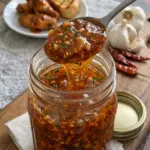
Devil’s Spit Garlic Butter Sauce
Description
A rich, spicy finishing sauce with garlic, smoky seasonings, honey, and a tangy pepper-sauce base.
Prep: 10 minutes
Cook: 10–15 minutes
Total: 20–25 minutes
Yield: Roughly 1½–1¾ cups
Servings: 12
Ingredients
- 1 cup unsalted butter
- 8 garlic cloves, minced
- 2 tablespoons hot sauce
- 1 tablespoon cayenne pepper sauce
- 1 tablespoon Worcestershire sauce
- 1 tablespoon honey
- 1 tablespoon brown sugar
- 1 tablespoon apple cider vinegar
- 1 teaspoon Dijon mustard
- 1 teaspoon smoked paprika
- 1 teaspoon chili powder
- Up to ½ teaspoon cayenne
- Up to ½ teaspoon red pepper flakes
- ½ teaspoon garlic powder
- ½ teaspoon onion powder
- Up to ½ teaspoon kosher salt, to taste
- ¼ teaspoon black pepper
- 2 tablespoons chopped parsley
- Chopped chives, to taste
Instructions
- Melt butter over medium-low heat without browning.
- Add garlic and cook gently for 2–3 minutes, stirring, until fragrant and softened.
- Whisk in hot sauces, Worcestershire, honey, sugar, vinegar, and Dijon.
- Add dried spices and black pepper. Hold salt until tasting.
- Cook over low heat for 5–7 minutes, stirring occasionally. Avoid a hard boil.
- Remove from heat and add parsley and chives. Taste a cooled spoonful and adjust salt or heat gradually.
- Whisk and serve warm with cooked food. Reserve clean sauce separately from raw-meat basting portions.
Storage: Refrigerate promptly at 40°F or below and use within 4 days as a conservative limit. Freeze up to 2 months for quality. Reheat gently and whisk. Not for pantry storage or canning.
Estimated calories: Approximately 150–170 per portion when divided into 12, before optional additions.
Little tip: Control the garlic heat before adjusting the pepper heat. Pale, gently softened garlic gives the sauce a better foundation than dark garlic hidden beneath extra sugar and spice.