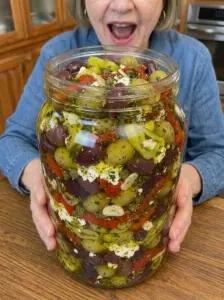
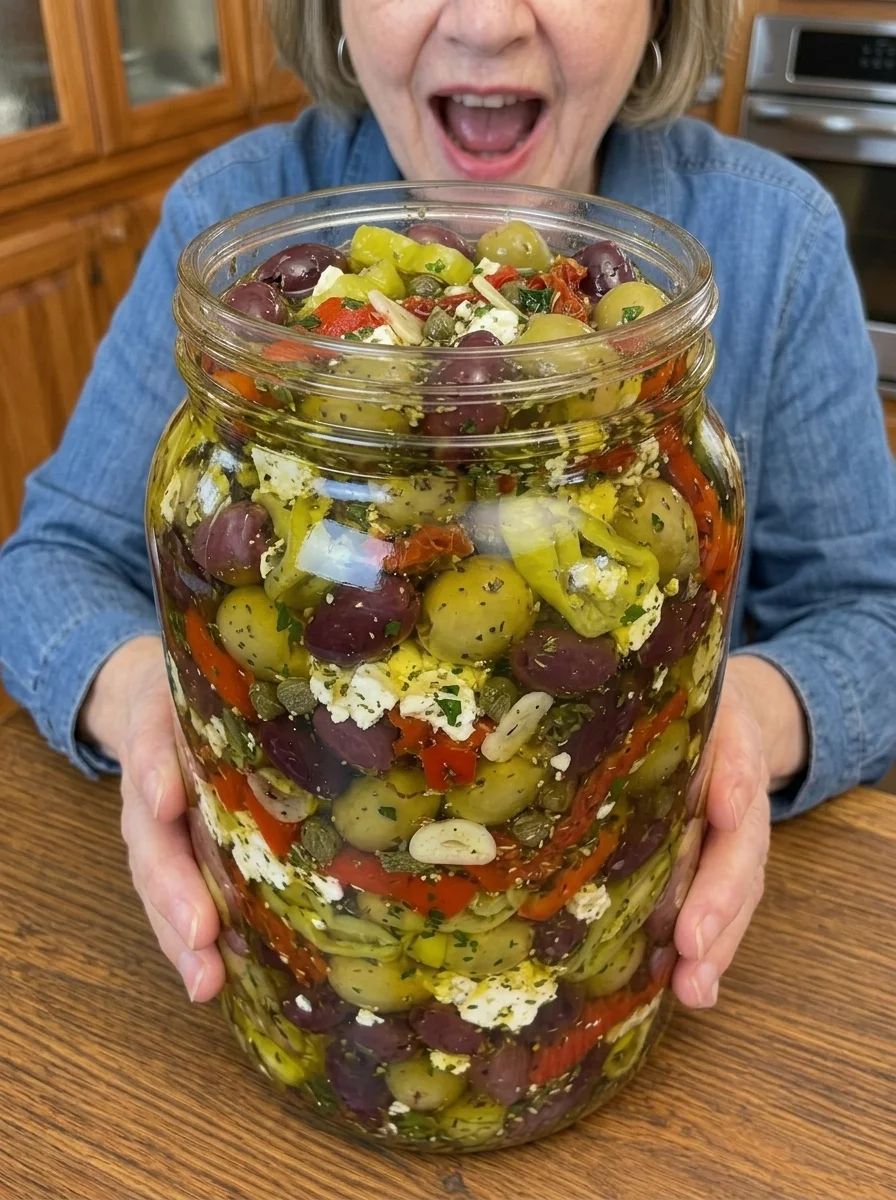
Briny olives, tangy pepperoncini, roasted red peppers, and creamy feta make this colorful antipasto jar an easy appetizer to keep chilled for a gathering or a few meals. Sun-dried tomatoes add a concentrated savory sweetness, while capers and a simple garlic-herb dressing give each spoonful plenty of flavor.
There is no cooking required. Drain the ingredients, whisk the dressing, and toss everything together before folding in the feta. A short rest in the refrigerator helps the garlic and herbs flavor the mixture without requiring a complicated marinade.
Serve with toasted baguette, crackers, grilled chicken, or a crisp salad. The dressing is intended to coat the ingredients, not fill the jar or submerge everything in oil.
Recipe at a Glance
- Prep time: About 15 minutes
- Chilling time: 1–2 hours
- Cook time: None
- Total time: About 1 hour 15 minutes–2 hours 15 minutes
- Servings: 6–8 appetizer portions
- Yield: Approximately 4½–5 cups, depending on cutting and packing
- Container: One container holding at least 6 cups, or two smaller jars with mixing room
- Equipment: Colander, knife, mixing bowl, spatula, and covered storage container
Why You’ll Love This Antipasto
- No cooking: Prepared olives and marinated vegetables make assembly quick.
- Several textures: Firm olives, tender peppers, and soft feta give the mixture variety.
- A small amount of dressing: Olive oil and vinegar coat rather than overwhelm the ingredients.
- Convenient preparation: Make it a few hours ahead and serve chilled or briefly tempered.
- Flexible uses: Spoon over salad, serve with bread, or add to a sandwich.
- Easy portions: Serve a small bowl and keep the remaining batch refrigerated.
What Is an Antipasto Jar?
Antipasto refers to an appetizer course, and this jar brings together several ingredients associated with a savory appetizer platter. Packing them together makes serving and refrigerated storage convenient.
This particular combination is Italian-inspired with a broader Mediterranean influence; feta is a Greek cheese rather than a traditional Italian ingredient. The name describes the flavor direction, not a claim that this is a single traditional regional recipe.
It is a dressed appetizer salad, not a canning preparation or a method for extending the storage life of opened ingredients. Fresh garlic, herbs, and feta keep it firmly in the refrigerated-food category.
Ingredients
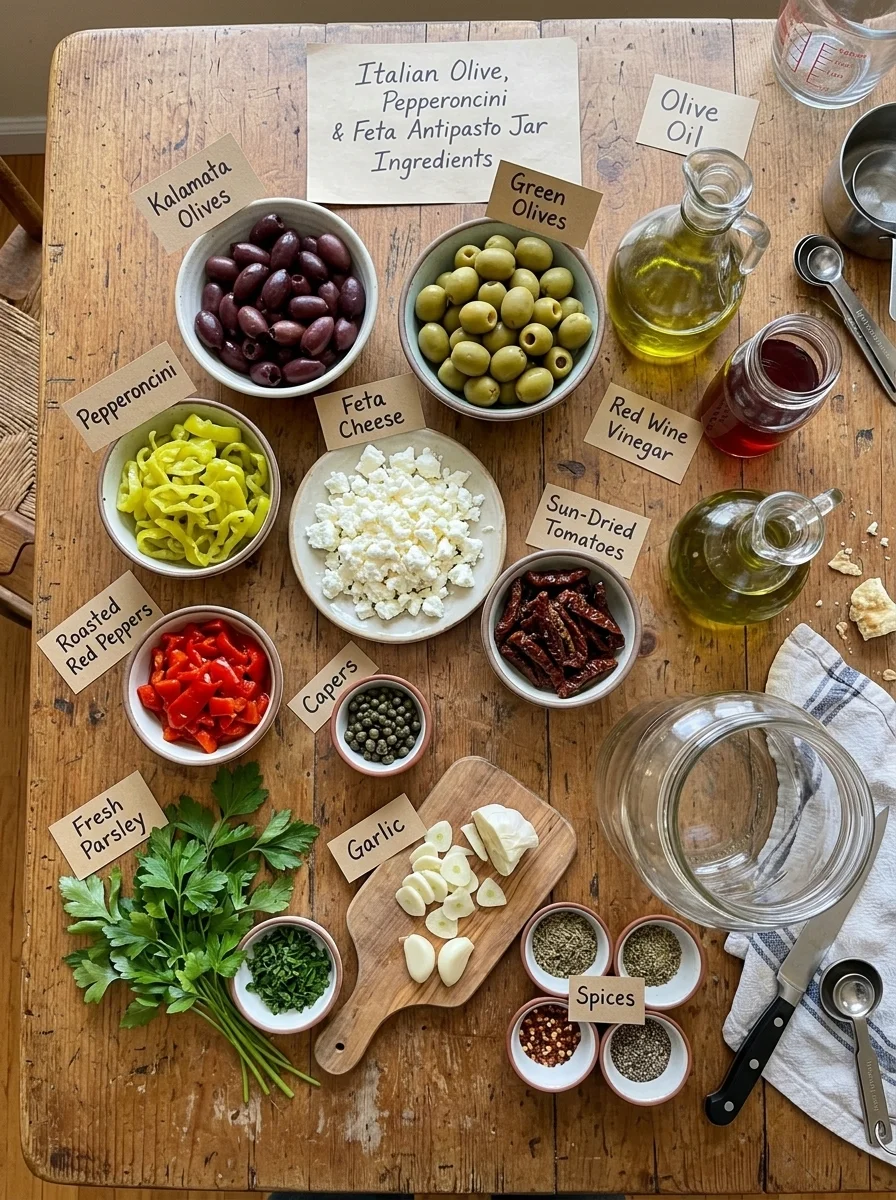
- 1 cup Kalamata olives, pitted and drained
- 1 cup green olives, pitted and drained
- 1 cup pepperoncini peppers, drained and sliced
- ¾ cup crumbled feta
- ½ cup roasted red peppers, drained and chopped
- ¼ cup oil-packed sun-dried tomatoes, drained and sliced
- 2 tablespoons capers, drained
- 2 garlic cloves, thinly sliced
- 2 tablespoons chopped fresh parsley
- ½ teaspoon dried oregano
- ½ teaspoon Italian seasoning
- ¼ teaspoon red pepper flakes, optional
- 3 tablespoons extra-virgin olive oil
- 1 tablespoon red wine vinegar
- Freshly ground black pepper, to taste
No additional salt is needed initially. Olives, feta, pepperoncini, capers, and sun-dried tomatoes can already contribute considerable salt.
Ingredient Notes
Kalamata olives: These bring a distinct briny flavor and darker color. Check for stray pits or pit fragments even when using pitted products. Leave whole or halve for easier spooning.
Green olives: A buttery variety such as Castelvetrano gives contrast to Kalamata olives. Other green olives work, but some are sharper or more heavily salted. Avoid assuming different products will give identical seasoning.
Pepperoncini: Drain well before measuring. Sliced peppers distribute easily through the mixture. If using whole peppers, remove stems and slice as desired. Their heat is usually gentle, but products vary.
Feta: Block feta can be broken into generous crumbles that hold together better than very fine pieces. Drain any brine and blot excess moisture. Fold in last to avoid turning the dressing into a creamy coating of crushed cheese.
Roasted red peppers: Drain and pat away surface liquid before chopping. Long wet strips are harder to distribute and can dilute the dressing.
Sun-dried tomatoes: The listed amount assumes tender, oil-packed tomatoes. Drain them before slicing. Dry-packed tomatoes may need rehydration according to their package directions, followed by thorough draining, and give a different texture.
Capers: These add concentrated salty tang. Draining is important; a brief rinse is optional if they taste too salty for your preference.
Garlic: Thin slices infuse the dressing but can still taste sharp when eaten. Use a small clove or reduce the amount if you prefer a milder raw-garlic flavor.
Herbs: Fresh parsley brings brightness. Oregano and Italian seasoning overlap somewhat, so keep the measured amounts modest rather than adding large handfuls of dried herbs.
Oil and vinegar: The three-to-one ratio gives a coating dressing. Brine remaining on the drained ingredients adds more acidity, so taste before adding extra vinegar.
How to Make the Antipasto Jar
1. Drain and Prepare
Drain the olives, pepperoncini, roasted peppers, sun-dried tomatoes, and capers separately or together in a colander where practical. Blot wetter ingredients before measuring.
Slice peppers and tomatoes into manageable pieces. Thinly slice garlic, chop dry parsley, and crumble the feta into small but recognizable pieces.
2. Whisk the Dressing
In a small bowl, whisk the olive oil, red wine vinegar, oregano, Italian seasoning, optional pepper flakes, and black pepper.
The mixture does not need to become permanently emulsified. Stir again just before pouring if the oil separates.
3. Toss the Firm Ingredients
Place olives, pepperoncini, roasted peppers, tomatoes, capers, and garlic in a large bowl. Add the dressing and toss gently until coated.
Mixing in a bowl is easier than trying to stir a tightly packed jar. It also makes it easier to distribute the garlic and dried herbs evenly.
4. Fold in Feta and Parsley
Add feta and parsley. Use a spatula to lift the mixture from underneath and fold over gently. Stop once distributed rather than repeatedly stirring the cheese into smaller pieces.
Some feta will soften into the dressing; that is normal. The aim is to preserve enough pieces for contrast.
5. Transfer and Chill
Spoon into a clean container with at least 6 cups capacity, or divide among smaller jars. Leave room to stir gently. Do not compress the ingredients into a jar too small for the batch.
Pour any dressing remaining in the mixing bowl over the top. Cover and refrigerate for 1–2 hours. You do not need to top up with oil or keep the contents submerged.
6. Stir and Serve
Remove only the portion you plan to serve. If the olive oil has thickened, let that portion stand for about 10–15 minutes, then stir gently to redistribute the dressing.
Serve with clean utensils and keep the rest of the batch chilled. The brief tempering period helps the oil loosen and the flavors become more noticeable without requiring the whole jar to sit out.
Tips for the Best Flavor
Drain before measuring. This keeps the dressing from becoming diluted by an unpredictable amount of packing liquid.
Taste before salting. Most batches will not need additional salt, especially alongside salty crackers or cured meats.
Keep feta pieces substantial. Folding it in last preserves texture and avoids an overly cloudy dressing.
Use a roomy container. The listed ingredients exceed the capacity of a single quart jar in many batches. A 6-cup container or two smaller jars is more practical.
Do not add oil to imitate a preserve. The mixture only needs a light coating and remains a short-term refrigerated appetizer.
Account for ingredient age. Mixing older opened ingredients into a fresh jar does not reset their usable life. Follow any shorter package guidance.
Troubleshooting
| Problem | Likely cause | Helpful adjustment |
|---|---|---|
| Dressing is watery | Wet peppers or packing liquid carried into the bowl | Drain and blot thoroughly next time. |
| Mixture tastes too salty | Several brined ingredients combined | Serve smaller amounts with unsalted bread or fresh vegetables; rinse selected brined ingredients next time. |
| Feta disappears into dressing | Fine crumbles or aggressive mixing | Use larger pieces and fold in last. |
| Oil becomes cloudy or firm | Refrigeration changes olive oil’s appearance | Let a serving portion stand briefly and stir. |
| Garlic tastes too sharp | Large cloves or slices eaten directly | Use less or smaller cloves in a future batch. |
| Ingredients will not fit | Jar is too small | Divide into two containers rather than forcing them down. |
| Flavor is too acidic | Tangy ingredients plus extra vinegar | Add vinegar cautiously and serve with mild accompaniments. |
Variations
Artichoke Addition
Fold in a small amount of drained, chopped prepared artichoke hearts. This increases yield, so use a larger container and check seasoning before adding more dressing.
Milder Garlic Version
Reduce to one small garlic clove. The mixture remains flavorful from herbs, olives, and peppers without a strong raw-garlic bite.
Extra Heat
Add a small pinch of pepper flakes or a few drained slices of hot cherry pepper. Taste before combining several spicy ingredients.
Different Cheese
Use a firm cheese cut into small cubes for a different texture. This changes the feta character and may alter saltiness. Continue treating the mixture as a short-term refrigerated appetizer.
Fresh Salad Serving
Spoon a drained portion over romaine, cucumber, and tomatoes just before eating. Keep the lettuce separate during storage so it stays crisp.
Serving Ideas
Toasted baguette and plain crackers offer a mild base for the briny mixture. Serve it as part of a cheese board, or spoon a small amount alongside grilled chicken, fish, or steak.
For sandwiches, chop a serving a little more finely and drain briefly before adding to bread. Keep dressing modest to prevent soggy rolls.
You can toss a portion with freshly cooked pasta for a quick serving variation. Do not return warm pasta or used serving utensils to the refrigerated jar. Store any mixed leftovers according to the ingredients in the complete dish.
Make-Ahead and Refrigerated Storage
Prepare a few hours ahead or the day before serving. Keep tightly covered at 40°F or below and use within 3–4 days, subject to the freshness and remaining usable life of every ingredient.
The oil, vinegar, and salty components do not make this a shelf-stable product. Do not water-bath-can it or leave it on the counter to marinate. Use clean utensils and return the storage container promptly to the refrigerator.
Limit time outside refrigeration to 2 hours total, or 1 hour when temperatures exceed 90°F. The short softening period before serving counts toward that limit.
Freezing is not recommended for preserving the intended texture. Feta can become more crumbly, and the peppers may soften or release liquid after thawing.
Discard a batch with mold, unexpected gas, slime, or other spoilage, and never taste questionable food to assess safety. Proper preparation and temperature control matter even when the mixture looks normal.
Frequently Asked Questions
Do the ingredients need to be submerged?
No. This is a dressed antipasto mixture, not a preserved pickle. Toss to coat, store chilled, and stir before serving. Adding enough oil to cover everything is unnecessary.
Can I use the liquid from the pepperoncini jar?
The base recipe uses drained ingredients and measured vinegar. A small splash of brine changes both salt and acidity, so taste first rather than automatically adding it.
Can I use dry-packed sun-dried tomatoes?
Prepare them according to their package directions if they need softening, then drain well. The stated ingredient assumes tender oil-packed tomatoes, so expect a different texture.
Is cloudy oil a sign of spoilage?
Olive oil can turn cloudy or partly solid in the refrigerator. That change alone is normal. It does not establish that the rest of the mixture is safe; still follow the storage time, temperature, and handling guidance.
Can I make it without feta?
Yes, though the flavor, texture, and nutrition change. Keep the same short refrigerated handling because fresh garlic and herbs remain in the mixture.
Can I double the batch?
Yes. Use enough containers and scale the measured ingredients consistently. For a gathering, serve smaller bowls and keep backup portions chilled.
How much is one serving?
With a roughly 4½–5-cup yield, dividing into eight gives about ½ cup or a little more per person. Six portions are larger. Actual volume varies with cutting and packing.
Are the calories 180–230 per serving?
That may fit some combinations, but olive brands, feta amounts, oil left on tomatoes, and portion size matter. Add the nutrition from the measured ingredients and divide by six or eight as served. Bread, crackers, and other accompaniments are additional.
Recipe Card
Italian Olive, Pepperoncini & Feta Antipasto Jar
A chilled olive-and-pepper appetizer with feta, roasted peppers, sun-dried tomatoes, capers, and a garlic-herb dressing.
Prep: 15 minutes | Chill: 1–2 hours | Total: 1 hour 15 minutes–2 hours 15 minutes
Yield: Approximately 4½–5 cups | Servings: 6–8
Ingredients
- 1 cup pitted Kalamata olives, drained
- 1 cup pitted green olives, drained
- 1 cup drained sliced pepperoncini
- ¾ cup crumbled feta
- ½ cup drained chopped roasted red peppers
- ¼ cup drained sliced oil-packed sun-dried tomatoes
- 2 tablespoons drained capers
- 2 garlic cloves, thinly sliced
- 2 tablespoons chopped parsley
- ½ teaspoon dried oregano
- ½ teaspoon Italian seasoning
- ¼ teaspoon pepper flakes, optional
- 3 tablespoons extra-virgin olive oil
- 1 tablespoon red wine vinegar
- Black pepper, to taste
Instructions
- Drain ingredients thoroughly, blot wet peppers, and prepare garlic, parsley, and feta.
- Whisk oil, vinegar, dried herbs, optional flakes, and black pepper.
- Toss olives, pepperoncini, roasted peppers, tomatoes, capers, and garlic with the dressing in a large bowl.
- Gently fold in feta and parsley.
- Transfer to a covered container holding at least 6 cups, or divide between smaller jars. Refrigerate for 1–2 hours.
- Stir gently before serving. Let only the serving portion stand briefly if the oil needs to loosen.
Notes
- The dressing coats; it does not need to submerge the ingredients.
- Additional salt is usually unnecessary.
- Keep refrigerated at 40°F or below and use within 3–4 days, following any shorter ingredient guidance.
- This is not shelf-stable or suitable for canning using these directions.
- Nutrition depends on brands, drained amounts, dressing consumed, and whether the batch serves six or eight. Calculate using the actual ingredients.
Final Thoughts
Thorough draining, gentle folding, and a roomy container make this antipasto easy to prepare and serve. Keep the dressing light, let the mixture chill, and pair a small portion with mild bread or fresh vegetables. The olives, feta, and peppers bring plenty of flavor without complicated preparation.
Italian Olive, Pepperoncini & Feta Antipasto Jar
- Total Time: 1 hour 15 minutes–2 hours 15 minutes
Ingredients
- 1 cup pitted Kalamata olives, drained
- 1 cup pitted green olives, drained
- 1 cup drained sliced pepperoncini
- ¾ cup crumbled feta
- ½ cup drained chopped roasted red peppers
- ¼ cup drained sliced oil-packed sun-dried tomatoes
- 2 tablespoons drained capers
- 2 garlic cloves, thinly sliced
- 2 tablespoons chopped parsley
- ½ teaspoon dried oregano
- ½ teaspoon Italian seasoning
- ¼ teaspoon pepper flakes, optional
- 3 tablespoons extra-virgin olive oil
- 1 tablespoon red wine vinegar
- Black pepper, to taste
Instructions
- Drain ingredients thoroughly, blot wet peppers, and prepare garlic, parsley, and feta.
- Whisk oil, vinegar, dried herbs, optional flakes, and black pepper.
- Toss olives, pepperoncini, roasted peppers, tomatoes, capers, and garlic with the dressing in a large bowl.
- Gently fold in feta and parsley.
- Transfer to a covered container holding at least 6 cups, or divide between smaller jars. Refrigerate for 1–2 hours.
- Stir gently before serving. Let only the serving portion stand briefly if the oil needs to loosen.
- Prep Time: 15 minutes
- Cook Time: 1–2 hours