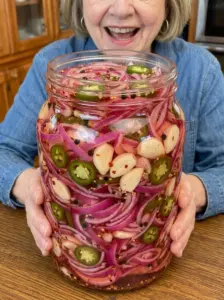
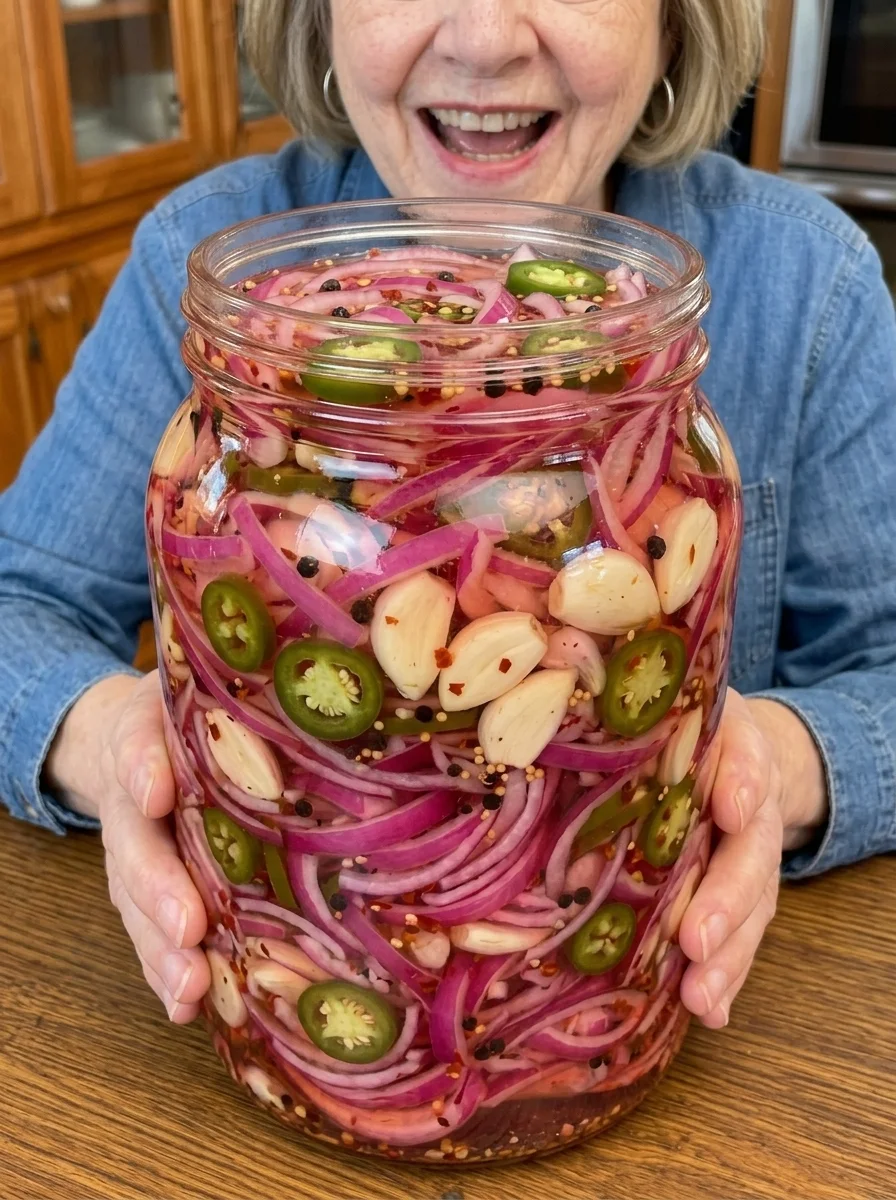
Thinly sliced red onions, crushed garlic, and a peppery vinegar brine make these refrigerator pickles a bold finishing touch for tacos, burgers, sandwiches, and grain bowls. The onions soften slightly while keeping a pleasant bite, and their color develops into a vivid pink as they sit in the brine.
A little sugar balances the sharp vinegar without making the batch noticeably sweet. Red pepper flakes supply warmth, whole peppercorns add a savory background, and an optional jalapeño brings fresh chile flavor. Six garlic cloves give the jar an assertive aroma, especially after an overnight rest.
The preparation is simple: slice, pack, heat the brine, and refrigerate. These are quick refrigerator pickles, so there is no water-bath processing or pantry storage. Make a batch to brighten everyday meals, keeping the jars chilled between servings.
Recipe at a Glance
- Prep time: About 10 minutes
- Brine heating time: About 5 minutes
- Minimum chilling: 4 hours
- Preferred flavor rest: 12–24 hours
- Total time: About 4 hours 15 minutes with minimum chilling
- Yield: Approximately two pint jars; onion size and packing affect the final amount
- Equipment: Sharp knife or mandoline, nonreactive saucepan, two heat-safe pint canning jars or suitable containers, and clean utensils
Why You’ll Love These Pickled Onions
- Bold garlic flavor: Lightly crushed cloves infuse the brine without requiring finely minced garlic in every bite.
- Adjustable heat: Use the listed flakes or add the optional jalapeño for a stronger chile flavor.
- Simple ingredients: Onions, vinegar, water, salt, and spices form the base.
- A colorful finishing touch: Pink onions add contrast to rich or savory meals.
- Convenient preparation: A short stovetop step replaces a long cooking process.
- Flexible serving: Add a few drained slices to meals rather than preparing a separate side dish.
What Are Spicy Garlic & Red Onion Pickles?
These are raw sliced onions covered with a hot vinegar brine and stored in the refrigerator. The heat slightly softens the slices, while the acidic liquid changes their flavor and color as they rest.
They are not fermented onions. There is no room-temperature fermentation stage, and the jars should not be left on the counter to develop flavor. They are also not a validated canning recipe, even when packed into canning jars.
Expect a tangy, garlic-forward topping with some crunch, not the firm snap of a cucumber pickle. Very thin slices soften faster; slightly thicker slices hold more bite and may need a longer chilled rest to taste balanced.
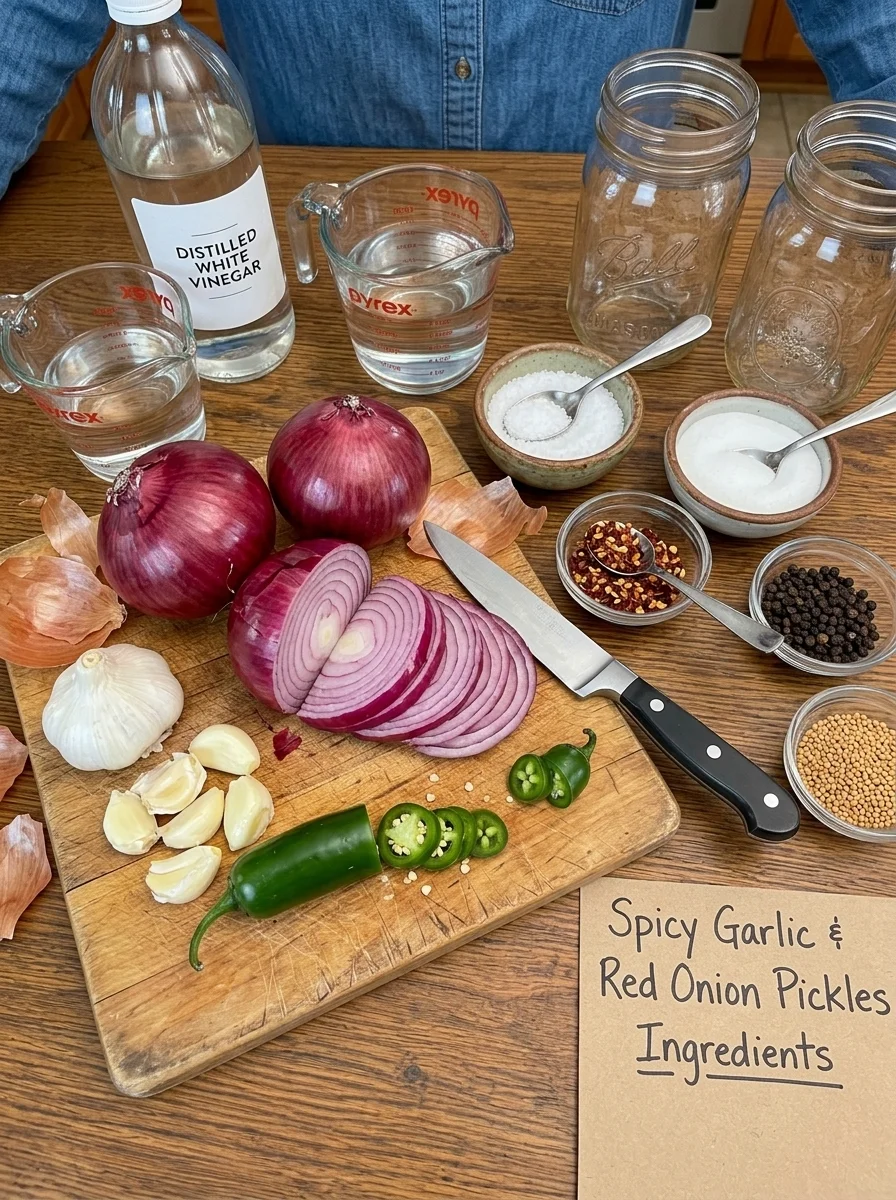
Ingredients
- 2 medium red onions, peeled and thinly sliced
- 6 garlic cloves, peeled and lightly crushed
- 1 cup distilled white vinegar labeled 5% acidity
- 1 cup water
- 1 tablespoon kosher salt, with brand differences considered as explained below
- 1 tablespoon granulated sugar, optional
- 1 teaspoon red pepper flakes, or less initially for a mild batch
- 1 teaspoon whole black peppercorns
- ½ teaspoon mustard seeds, optional
- 1 small fresh jalapeño, thinly sliced, optional
Ingredient Notes
Red onions: Use firm onions without soft or spoiled areas. Medium is an approximate size, so have an extra suitable container available if necessary. Halve the onions through the root end and slice into thin half-moons, or cut rings if you prefer. Even slices pickle more consistently than a mixture of very thick and paper-thin pieces.
Garlic: Lightly crush each peeled clove with the flat side of a knife, using care with the blade. The clove should crack without turning into a paste. Garlic will remain firmer and more pungent than the thin onions after a short rest; it is primarily included to flavor the brine, not to promise fully mellow pickled cloves overnight.
Vinegar: Use a commercially prepared product labeled 5% acidity. Do not substitute a vinegar of unknown strength. White vinegar gives a clean, sharp flavor. Avoid adding extra water to tame its bite; drain the serving portion or balance it with the rest of the meal instead.
Water: Measure the cup rather than topping up the saucepan by eye. If you need more brine, prepare another batch using the same proportions instead of adding plain water to the jars.
Kosher salt: Brands differ substantially in crystal size and saltiness per tablespoon. Use the same brand for repeatable batches. If you prefer a mildly salted result or are using a denser kosher salt, begin with 2 teaspoons, dissolve it, and taste a cooled spoonful of brine before increasing. Fine table salt is not a direct equal-volume replacement for every kosher salt.
Sugar: The optional tablespoon rounds out the acidity. It does not establish shelf stability. Omitting it gives a sharper-tasting pickle.
Pepper flakes: Strength varies with the product and its age. Begin with less if your flakes are particularly hot, then adjust future batches after tasting the chilled onions.
Mustard seeds: These provide a gentle aromatic note and visible texture. They are optional; the pickles still have plenty of flavor without them.
Jalapeño: Wash before slicing and wear gloves if sensitive to chile oils. Removing some pale interior membrane reduces the heat, though individual peppers still vary.
How to Make the Pickles
1. Prepare the Jars
Wash jars, lids, utensils, and work surfaces thoroughly. Use heat-safe containers suitable for hot brine and follow their manufacturer’s heat-handling directions. Warm glass helps avoid a sudden temperature change when the brine is added.
There is no processing step to make the jars shelf-stable. A tightly fitting lid is for convenient refrigerated storage.
2. Slice the Onions
Remove the skins and trim the ends. Slice into even rings or half-moons, about ⅛ inch thick as a starting point. If using a mandoline, use its guard or a suitable cut-resistant glove.
Separate the layers gently. This makes them easier to distribute through the jars and exposes their surfaces to the brine.
3. Pack with Garlic and Spices
Divide the onions between the jars, layering in garlic, pepper flakes, peppercorns, optional mustard seeds, and optional jalapeño.
Pack firmly enough to use the space but do not crush the slices into a dense mass. Leave room for liquid to circulate. If the jars are overcrowded, move some ingredients to another container rather than forcing everything beneath the lid.
4. Heat the Brine
Combine the vinegar, water, salt, and optional sugar in a small nonreactive saucepan. Heat to a gentle simmer, stirring until the crystals dissolve.
Remove from the heat. Avoid leaning over the vinegar steam, especially if you are sensitive to strong aromas. Taste only a cooled spoonful if checking the salt level.
5. Add the Hot Brine
Carefully pour the brine over the onions and garlic, covering the solids. Use a clean spoon to gently settle the onions and release trapped air pockets.
Leave a little room beneath the lid. If you have more ingredients than brine can cover, use a better-fitting container or make additional brine in the same proportions. Do not top off with plain water.
6. Refrigerate Promptly
Let the jars stand only briefly while handling them safely, then cover and refrigerate promptly. Follow the container’s instructions for hot filling and temperature changes; do not leave the batch on the counter for hours waiting for it to become completely cold.
Label the jars with the preparation date and store at 40°F or below. Keep the onions covered with brine during storage.
7. Chill and Taste
Allow at least 4 hours before serving. An overnight rest generally gives a more integrated garlic and pepper flavor.
Remove a small portion with a clean utensil, drain lightly, and taste with the food you plan to serve. A pickle can taste sharply acidic by itself and balanced on a rich burger or taco.
Tips for Better Texture and Flavor
Slice evenly. The goal is consistent texture, not necessarily the thinnest possible onion. Paper-thin slices soften quickly.
Do not boil the onions. Pouring hot brine over raw slices softens them more gently than simmering them in the pan.
Recognize the effect of heat. Hot brine encourages faster softening and flavor development. The finished onions will keep a bite, but they will not remain identical to raw slices.
Leave space for brine. Very tightly packed jars can trap pockets of air and make coverage difficult.
Keep the garlic in perspective. A clove flavors the jar well before its center becomes mellow. Finely chopping a firm clove into a serving produces much stronger garlic flavor than eating a few onion slices.
Drain before adding to bread. A brief drain helps keep buns, toast, and wraps from becoming soggy.
Troubleshooting
| Problem | Likely cause | Helpful adjustment |
|---|---|---|
| Onions taste harsh after a short rest | Thick slices or limited marinating | Give them an overnight rest in the refrigerator. |
| Pickles taste too salty | Dense salt crystals or a salty preference mismatch | Drain serving portions; use less measured salt in the next refrigerated batch. |
| Onions are too soft | Very thin slices or excessive heating | Slice a little thicker and avoid boiling them next time. |
| Brine does not cover everything | Oversized onions or loose packing | Use another suitable container or prepare more brine at the same ratio. |
| Garlic remains strong | Whole cloves season more slowly than onion slices | Use the cloves mainly for infusion or chop a small amount into a serving. |
| Pickles are too spicy | Hot flakes plus jalapeño | Serve smaller amounts with mild food; reduce chile in the next batch. |
| Sandwich gets soggy | Excess brine carried with the topping | Drain the onions before assembling. |
Flavor Variations
Milder Garlic Onion Pickles
Omit the jalapeño and begin with ½ teaspoon pepper flakes. Keep the measured vinegar and water unchanged.
More Mustard Aroma
Use the optional mustard seeds for a more aromatic background. A small amount is enough; adding large quantities of spices can make the brine taste crowded.
Sweeter Tang
Include the tablespoon of sugar. If you prefer a much sweeter onion condiment, use a formula developed for that flavor rather than repeatedly adding large amounts to this batch.
Fresh Citrus at Serving
Add a little finely grated lime zest to a drained portion just before serving. This provides citrus aroma without changing the stored brine’s proportions.
Smaller Batch
Halve every ingredient and use a suitable smaller container. Keep enough brine to cover the onions and label with the preparation date.
Serving Ideas
Pile drained slices onto smash burgers, pulled pork sandwiches, chicken wraps, or hot dogs. Their acidity contrasts with rich meat and creamy sauces.
For tacos, use a few slices alongside beans, grilled chicken, or roasted vegetables. Add them after cooking so the onions keep more texture and their bright color.
They also work in cheeseburger bowls, rice bowls, and chopped salads. Start with a small portion because the brine flavor is concentrated. You may need less salt or acid in the rest of the dressing.
For an appetizer plate, serve a small bowl beside cheese, crackers, and vegetables. Keep the main jar refrigerated rather than leaving it on the table throughout a gathering.
Storage and Make-Ahead
Keep the pickles tightly covered in the refrigerator at 40°F or below. For this homemade, nonvalidated formula, use within 2 weeks as a conservative household limit, provided preparation and refrigeration have been appropriate. This is not a laboratory-established shelf-life claim or a guarantee based solely on the vinegar ratio.
An overnight rest is useful for flavor, so making the batch a day ahead is convenient. Use clean utensils, keep the ingredients covered with brine, and return the jar promptly to the refrigerator.
Do not reuse the liquid for another batch of raw onions or garlic. Start with fresh brine and a clean container. Freezing is not recommended for preserving the intended texture because thawed onions soften considerably.
Discard a batch showing mold, unexpected gas, slime, or other spoilage, and never taste it to investigate. Appearance or smell alone cannot establish that improperly stored food is safe. Do not treat the pickles as shelf-stable, water-bath-can them using these directions, or leave them on the counter to marinate.
Frequently Asked Questions
Can I use white or yellow onions?
They can be prepared as refrigerator onion pickles, but the flavor and color differ. Red onions provide the pink appearance described here.
Do I need to cook the onions first?
No. The hot brine is poured over raw slices. Cooking the onions separately would make them softer and is not part of this method.
Why did the garlic change color?
Garlic can sometimes develop blue or green tones in acidic preparations. Color change alone does not establish spoilage or safety. Consider the batch’s preparation and storage history, and discard anything questionable without tasting.
Can I use apple cider vinegar?
A commercially prepared 5% acidity product can change the flavor toward a fruitier tang. Maintain the measured vinegar and water proportions and the same refrigerated handling. This does not make the formula validated for canning.
Can I leave out the sugar?
Yes. It is optional for flavor balance. The result will taste sharper; the refrigerator storage requirements remain the same.
Can I add more water if the onions are too sour?
Do not dilute the stored brine. Drain the portion you are serving and combine it with richer or milder foods. Use a tested recipe designed for a different flavor balance if needed.
Are the garlic cloves ready to eat overnight?
They may still taste sharp and feel quite firm. The recipe primarily uses them to flavor the onions and brine. It does not promise fully mellow cloves after the same short time needed for thin onion slices.
How many servings does this make?
The jar yield depends on onion size. A practical topping portion is a couple of tablespoons of drained onions, but the total number of portions varies. Avoid publishing a precise calorie count without a defined serving size and ingredient calculation.
Recipe Card
Spicy Garlic & Red Onion Pickles
Quick refrigerator onions with crushed garlic, pepper flakes, and a tangy vinegar brine. Serve drained on tacos, burgers, sandwiches, and bowls.
Prep: 10 minutes | Heat brine: 5 minutes | Chill: At least 4 hours
Total: About 4 hours 15 minutes
Yield: Approximately two pint jars
Ingredients
- 2 medium red onions, thinly sliced
- 6 garlic cloves, peeled and lightly crushed
- 1 cup distilled white vinegar, 5% acidity
- 1 cup water
- 1 tablespoon kosher salt, adjusted for brand and preference
- 1 tablespoon granulated sugar, optional
- 1 teaspoon red pepper flakes, or less to taste
- 1 teaspoon whole black peppercorns
- ½ teaspoon mustard seeds, optional
- 1 small jalapeño, thinly sliced, optional
Instructions
- Prepare clean, warm, heat-safe jars suitable for hot liquid. Divide onions, garlic, and spices between them without crushing or overpacking.
- Heat vinegar, water, salt, and optional sugar in a nonreactive saucepan to a gentle simmer, stirring until dissolved.
- Pour hot brine over the ingredients to cover. Settle gently with a clean utensil, releasing air pockets and leaving space beneath the lids.
- Cover and refrigerate promptly, following the containers’ heat-handling instructions. Label with the preparation date.
- Chill at least 4 hours, preferably overnight. Remove portions with clean utensils and drain before serving.
Notes
- Kosher salt brands differ: for a milder starting point, use 2 teaspoons and taste a cooled spoonful of brine before increasing.
- If more liquid is needed, make extra brine in the same proportions; do not top up with plain water.
- Keep refrigerated at 40°F or below and use within 2 weeks under appropriate handling. This is a short household guideline, not a validated shelf life.
- This is not a shelf-stable canning recipe. Do not pickle or store at room temperature.
- Whole garlic remains stronger and firmer than the thin onions during a short chilled rest.
- Nutrition depends on portion size and how much brine is consumed. Calculate using the actual ingredients and a defined drained serving.
Final Thoughts
Even onion slices, measured brine, and an overnight refrigerator rest give these pickles their bright flavor and useful texture. Keep the jars chilled, drain each serving, and use a little at a time to balance rich or savory food. They are an easy way to bring garlic, heat, and tang to everyday meals.
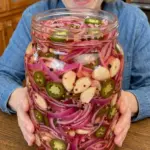
Spicy Garlic & Red Onion Pickles
- Total Time: About 4 hours 15 minutes
Ingredients
- 2 medium red onions, thinly sliced
- 6 garlic cloves, peeled and lightly crushed
- 1 cup distilled white vinegar, 5% acidity
- 1 cup water
- 1 tablespoon kosher salt, adjusted for brand and preference
- 1 tablespoon granulated sugar, optional
- 1 teaspoon red pepper flakes, or less to taste
- 1 teaspoon whole black peppercorns
- ½ teaspoon mustard seeds, optional
- 1 small jalapeño, thinly sliced, optional
Instructions
- Prepare clean, warm, heat-safe jars suitable for hot liquid. Divide onions, garlic, and spices between them without crushing or overpacking.
- Heat vinegar, water, salt, and optional sugar in a nonreactive saucepan to a gentle simmer, stirring until dissolved.
- Pour hot brine over the ingredients to cover. Settle gently with a clean utensil, releasing air pockets and leaving space beneath the lids.
- Cover and refrigerate promptly, following the containers’ heat-handling instructions. Label with the preparation date.
- Chill at least 4 hours, preferably overnight. Remove portions with clean utensils and drain before serving.
- Prep Time: 10 minutes | Heat brine: 5 minutes | Chill: At least 4 hours