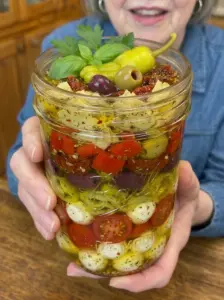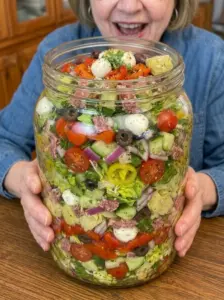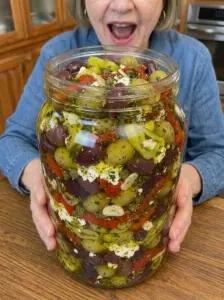
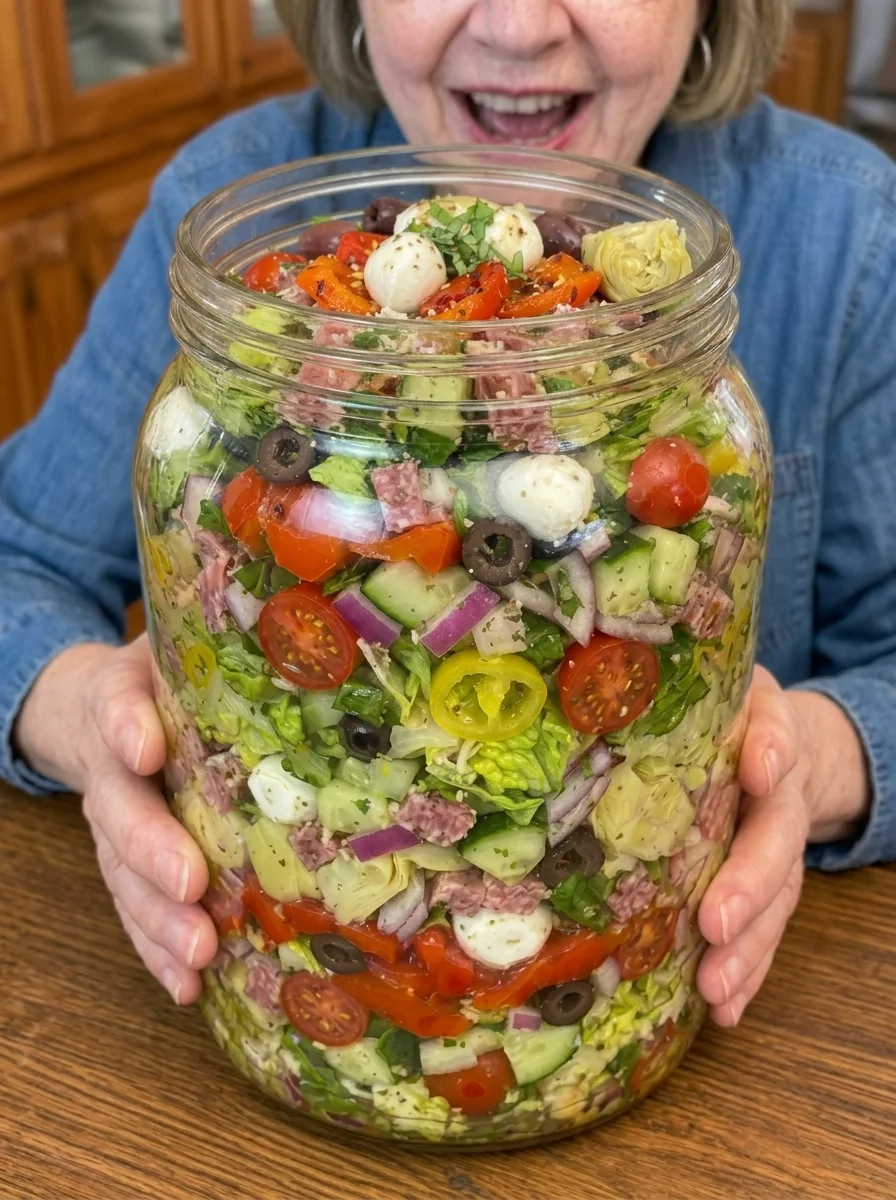
Italian Antipasto Chopped Salad brings the variety of an antipasto platter into a fresh, colorful bowl. Crisp romaine, juicy tomatoes, cucumber, and red onion balance savory salami, creamy mozzarella, briny olives, and tangy pepperoncini. Roasted red peppers and marinated artichokes add depth, while a homemade red wine vinaigrette ties everything together.
Chopping the ingredients into manageable pieces gives each forkful a mix of vegetables, cheese, and savory extras. It is a useful side dish for pizza or pasta, and it can become a more substantial lunch with chicken, chickpeas, or a piece of crusty bread.
The most important preparation steps are simple: dry the lettuce, drain the marinated ingredients, and dress the salad shortly before serving. Those details help preserve the contrast between crisp greens and rich antipasto ingredients.
Recipe at a Glance
- Preparation: Approximately 20–25 minutes
- Cooking: None
- Total time: Approximately 20–25 minutes
- Servings: 6 side-dish portions or approximately 3–4 larger portions
- Dressing yield: Approximately ⅔ cup
- Best served: Freshly tossed
Why You’ll Love This Salad
- Plenty of variety: Fresh vegetables, cured meat, cheese, and marinated ingredients provide contrasting flavors and textures.
- No cooking required: Most of the work is washing, draining, and chopping.
- Flexible portions: Serve smaller bowls with dinner or larger portions for lunch.
- Easy to adapt: Change the cheese, olives, or protein to suit what you have.
- Useful for preparing ahead: Store the components separately and assemble when ready.
What Is an Antipasto Chopped Salad?
Antipasto refers to the course traditionally served before a meal in Italian dining. An antipasto selection may include cured meats, cheeses, olives, and vegetables. This salad borrows those flavors and combines them with chopped lettuce and vinaigrette.
It is an Italian-inspired chopped salad rather than a claim to one fixed traditional recipe. The ingredients can vary, but the balance matters: fresh, crisp vegetables offset the salt and richness of the meats, cheeses, and brined additions.
Unlike a pasta salad, there is no cooked starch in the base. Unlike an antipasto platter, everything is combined into one bowl for easy serving.
Ingredients
For the Salad
- 6 cups chopped romaine lettuce
- 1 cup cherry tomatoes, halved
- ½ cup sliced pepperoncini, drained
- ½ cup sliced Kalamata or black olives, drained
- ½ cup roasted red peppers, drained and sliced
- ½ cup chopped cucumber
- ¼ cup thinly sliced red onion
- ½ cup marinated artichoke hearts, drained and chopped
- 4 ounces salami, chopped
- 4 ounces mozzarella pearls, drained and halved if large
- ¼ cup shredded Parmesan cheese
- 2 tablespoons chopped fresh parsley
- 1 tablespoon chopped fresh basil
For the Italian Dressing
- ⅓ cup extra-virgin olive oil
- 3 tablespoons red wine vinegar
- 1 tablespoon fresh lemon juice
- 1 teaspoon Dijon mustard
- 1 teaspoon Italian seasoning
- ½ teaspoon garlic powder
- ½ teaspoon dried oregano
- ½ teaspoon honey or granulated sugar
- ¼ teaspoon black pepper
- Up to ¼ teaspoon salt, to taste
- ¼ teaspoon red pepper flakes, optional
The salad already contains several salty ingredients. Begin with a small pinch of salt in the dressing, then adjust after tasting a dressed bite.
Ingredient Notes
Romaine Lettuce
Romaine provides a crisp base that stands up to the heavier additions. Wash it thoroughly and dry it well with a salad spinner or clean towels before chopping.
Cut it into fork-friendly pieces rather than long strips. Wet lettuce dilutes the vinaigrette and encourages liquid to collect at the bottom of the bowl.
Tomatoes and Cucumber
Cherry tomatoes hold their shape well and add sweetness. Halve larger ones, or quarter them if needed so they fit comfortably on a fork.
English or Persian cucumbers have relatively thin skins and small seeds. If using a large garden cucumber with a watery seed cavity, scoop out the soft center before chopping.
Pepperoncini and Olives
Drain both well. Pepperoncini add tang and mild heat, although brands vary. Kalamata olives bring a stronger, brinier flavor, while canned black olives are usually milder.
Use pitted olives and check for stray pits before adding them to the bowl. If the olives taste exceptionally salty, a brief rinse followed by thorough draining is an option.
Roasted Peppers and Artichokes
Jarred roasted peppers are convenient. Pat them dry enough that they will not drip into the lettuce.
Marinated artichokes contribute their own oil and seasoning. Drain them before measuring and chop large pieces. Plain canned artichokes can be used for a milder result, but they will not have the same seasoned flavor.
Salami
Genoa salami or another ready-to-eat salami works well. Cut slices into small strips or dice a thicker piece into manageable cubes. Soppressata or pepperoni changes the flavor and can increase the heat or saltiness.
Use a ready-to-eat product; uncooked sausage is not a direct substitution.
Mozzarella and Parmesan
Mozzarella pearls provide a soft, creamy contrast. Drain thoroughly and halve any pieces that are too large for a comfortable bite.
Parmesan adds a more concentrated savory flavor. Freshly shredded cheese gives distinct pieces, while finely grated Parmesan distributes more evenly throughout the salad.
Fresh Herbs
Parsley adds freshness, and basil gives a fragrant finish. Chop basil close to serving to limit darkening. If you do not have fresh herbs, the dressing still supplies dried-herb flavor; avoid replacing the fresh amounts with equal quantities of dried herbs.
About the Dressing
Olive oil, red wine vinegar, and lemon juice make a tangy vinaigrette. Dijon helps the mixture hold together temporarily, while a little honey or sugar softens the acidity without making it noticeably sweet.
The supplied combination of Italian seasoning and oregano creates a pronounced herb flavor. If your Italian seasoning already contains plenty of oregano, you can reduce the separate oregano to suit your preference.
Start by using about half the dressing. The drained ingredients may still contribute some moisture and oil, so the salad may need less than the full batch. You can always add more after tossing.
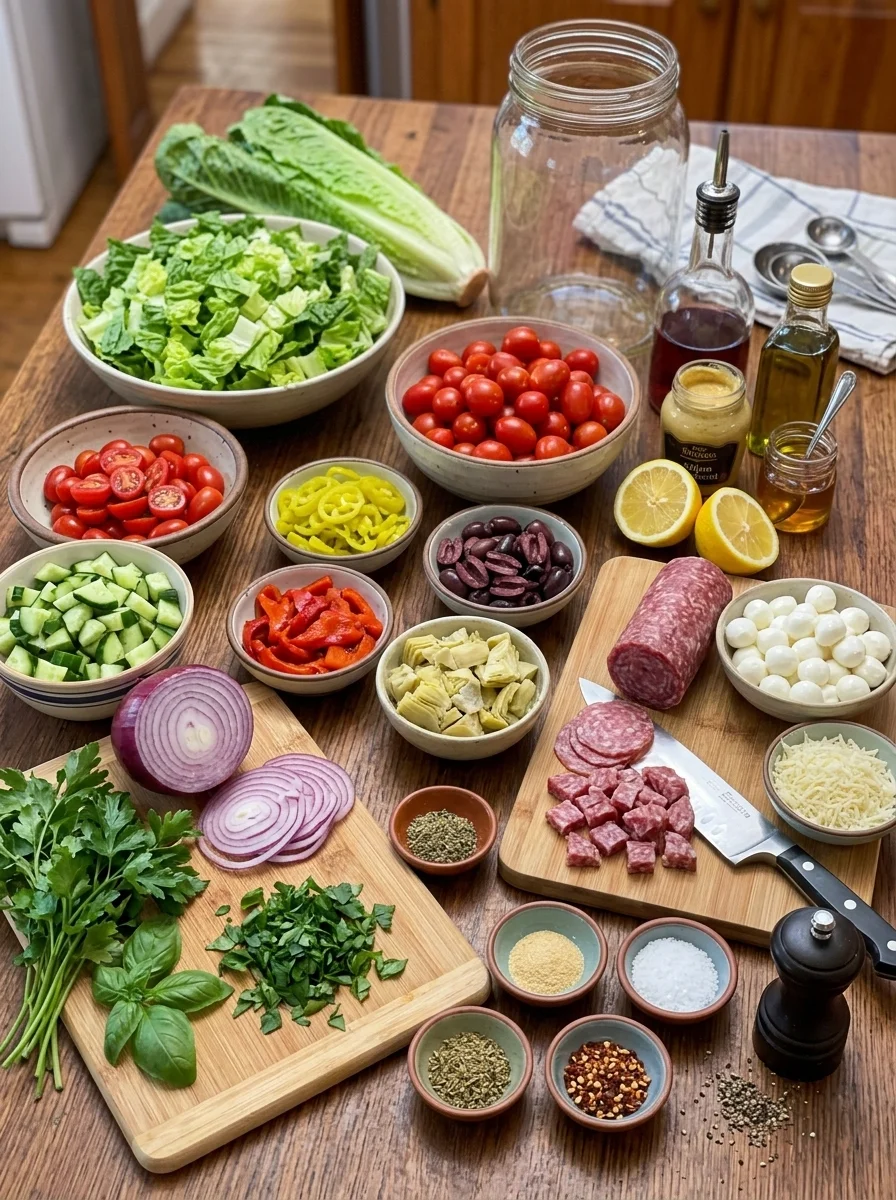
How to Make Italian Antipasto Chopped Salad
1. Make the Vinaigrette
Add the olive oil, red wine vinegar, lemon juice, Dijon, Italian seasoning, garlic powder, oregano, honey, pepper, optional red pepper flakes, and a small pinch of salt to a jar.
Seal and shake vigorously, or whisk in a small bowl, until the mixture looks evenly combined. Let it stand while preparing the salad so the dried herbs have time to hydrate. Shake again before pouring.
2. Wash and Dry the Fresh Vegetables
Wash the romaine and dry it thoroughly. Chop into bite-sized pieces. Halve the tomatoes, chop the cucumber, and thinly slice the onion.
For a milder onion flavor, soak the sliced onion in cold water for about 10 minutes, then drain and dry it before using. This optional step adds a little preparation time.
3. Drain the Antipasto Ingredients
Drain the pepperoncini, olives, roasted peppers, artichokes, and mozzarella. Use a paper towel or clean kitchen towel to blot particularly wet peppers or cheese.
Chop the artichokes and peppers, slice the olives if necessary, and halve larger mozzarella pearls. Keep the pieces roughly similar in size without trying to make them identical.
4. Build the Salad
Place the romaine in a large, wide serving bowl. Add the tomatoes, cucumber, onion, pepperoncini, olives, roasted peppers, artichokes, salami, and mozzarella.
Choose a bowl with enough extra space to toss without crushing the greens or spilling ingredients over the edge.
5. Add Parmesan and Herbs
Scatter the Parmesan, parsley, and basil over the salad. Gently lift and turn the ingredients to distribute them before adding dressing.
6. Dress Gradually
Shake the dressing again. Drizzle approximately half over the salad, then toss gently, reaching to the bottom of the bowl.
Taste a forkful that includes lettuce and a few antipasto ingredients. Add more dressing if needed. Adjust salt only after tasting the combined salad, since the olives, meat, cheese, and brined vegetables already provide plenty of seasoning.
7. Serve Promptly
Serve shortly after tossing for the crispest lettuce. A brief 5-minute rest is optional, but the salad does not need to sit to develop flavor.
For a potluck or meal made in advance, keep the greens and dressing separate until serving. If you want the antipasto ingredients to marinate, toss those with a little dressing in a separate bowl and add them to the lettuce later.
Tips for the Best Salad
Drying matters as much as chopping. Water on lettuce and jarred vegetables can make even a good dressing taste diluted.
Choose a consistent bite size. Small salami pieces, halved mozzarella, and chopped artichokes distribute more evenly than oversized chunks.
Balance salt at the end. Taste the dressed salad before adding additional salt or Parmesan.
Keep the dressing flexible. You do not need to use the full batch simply because it is prepared.
Add crisp extras just before serving. Croutons, nuts, or toasted seeds soften once they sit in dressing.
Avoid a long dressed rest. Lettuce will gradually wilt, even when the rest of the ingredients still taste good.
Troubleshooting
| Problem | Likely cause | What to try |
|---|---|---|
| Liquid pools in the bowl | Wet lettuce or poorly drained ingredients | Dry and drain thoroughly; add dressing gradually. |
| Salad tastes too salty | Combined salt from meat, olives, cheese, and dressing | Add more plain lettuce or cucumber; reduce added salt next time. |
| Dressing tastes too sharp | Strong vinegar or personal preference | Whisk a little extra oil into the dressing, then retaste. |
| Lettuce becomes limp | Dressed too early or stored with wet ingredients | Keep components separate and toss close to serving. |
| Onion dominates | Strong raw onion or thick slices | Slice finely, use less, or briefly soak and dry it. |
| Dressing separates | Normal vinaigrette separation | Shake or whisk immediately before use. |
Variations and Additions
Chicken Antipasto Salad
Add cooked, cooled, chopped chicken for a more substantial meal. Keep the salad chilled until serving and account for the chicken’s existing storage time.
Chickpea Version
Add drained and rinsed chickpeas, or use them in place of the salami. They bring substance and a mild flavor that works with the briny ingredients.
Vegetarian Version
Omit the salami and add chickpeas, extra artichokes, or marinated mushrooms. If strict vegetarian suitability matters, check how the Parmesan or alternative cheese is made.
Different Cheeses
Cubed provolone, fontina, or Asiago can replace mozzarella. These cheeses have different salt levels, so retaste before adjusting seasoning.
Extra Crunch
Add croutons, toasted pine nuts, or chopped roasted almonds just before serving. These additions change the nutrition and may introduce allergens.
More Heat
Use hot pepperoncini, a few chopped hot cherry peppers, or extra red pepper flakes. Add gradually so the heat does not overwhelm the fresh vegetables.
Antipasto Pasta Salad
Cooked, cooled pasta can turn the dish into a different style of salad, but it increases the volume and may require additional dressing. Keep the lettuce separate until serving if you want it crisp.
Serving Suggestions
Serve six side portions alongside pizza, baked pasta, grilled chicken, or Italian-style sandwiches. Crusty bread is useful for a larger lunch, while a bowl of soup makes a good partner in cooler weather.
For an appetizer spread, offer the salad with bread, roasted vegetables, and a separate platter of cheese. Since the salad already includes salami and two cheeses, it does not need many additional rich components.
For a larger lunch portion, divide between three or four bowls. Portion size matters: the listed six servings are side-dish portions, not six large entrée salads.
Make-Ahead and Storage
Prepare Components Separately
Wash and dry the lettuce, then refrigerate in a container lined with a clean paper towel. Store chopped vegetables, drained antipasto ingredients, and cheese separately when practical. Keep everything chilled and assemble near serving time.
Tomatoes and cucumbers release liquid after cutting, so prepare them closer to serving if you want the freshest texture.
Dressing
Refrigerate the dressing in a sealed jar for up to 5 days. It contains garlic powder rather than fresh garlic. Shake well before using. Olive oil may turn cloudy or firm in the refrigerator; let the jar stand briefly and shake again to recombine.
Undressed Salad
Use prepared undressed components within approximately 2–3 days, or sooner if an ingredient’s label or prior storage time requires it. Keeping lettuce away from wet ingredients usually gives better texture than storing the entire assembled bowl.
Dressed Leftovers
Refrigerate promptly and enjoy by the next day for the best texture. The lettuce will soften, so the leftovers will not have the same crunch as a freshly tossed salad.
Picnics and Potlucks
Transport chilled in a cooler with ice packs and keep refrigerated until serving whenever possible. This salad contains perishable ingredients; do not leave it out for more than 2 hours, or 1 hour above 90°F. For extended gatherings, serve a smaller bowl and replenish from a chilled supply.
Freezing
Freezing is not recommended for the assembled salad. Lettuce, cucumber, and fresh tomatoes lose their crisp texture after thawing.
Frequently Asked Questions
Can I use iceberg instead of romaine?
Yes. Iceberg provides plenty of crunch but a milder flavor. A mixture of the two also works. Dry it well before adding dressing.
Can I use bottled Italian dressing?
Yes. Start with a small amount and add gradually. Bottled dressings vary in salt, sweetness, and acidity, so taste the salad before adding extra seasoning.
Do I need all the dressing?
No. Start with approximately half and add according to taste. Store any unused dressing separately.
Should I marinate the lettuce?
No extended marinating is needed. If you want deeper flavor, marinate the salami, cheese, and drained vegetables separately, then combine with the lettuce shortly before serving.
Is this low-carb?
The base has no pasta or croutons, but exact carbohydrates depend on the marinated vegetables, salami, dressing ingredients, and portions. Calculate using your labels if you are tracking closely.
Can I leave out the salami?
Yes. Use extra vegetables or add chickpeas. The flavor will be lighter and less meaty; adjust seasoning after tossing.
Can I use fresh mozzarella from a large ball?
Yes. Drain and cut it into small cubes. Pat away excess moisture so it does not dilute the dressing.
Why is there only a little honey in the dressing?
Its purpose is to soften the sharpness of the vinegar and lemon, not make a sweet dressing. Omit it if you prefer a sharper vinaigrette.
Recipe Card: Italian Antipasto Chopped Salad
Servings: 6 side portions or 3–4 larger portions
Preparation: Approximately 20–25 minutes
Cooking: None
Total: Approximately 20–25 minutes
Salad Ingredients
- 6 cups chopped romaine
- 1 cup halved cherry tomatoes
- ½ cup drained sliced pepperoncini
- ½ cup drained sliced Kalamata or black olives
- ½ cup drained sliced roasted red peppers
- ½ cup chopped cucumber
- ¼ cup thinly sliced red onion
- ½ cup drained chopped marinated artichokes
- 4 ounces chopped ready-to-eat salami
- 4 ounces drained mozzarella pearls, halved if large
- ¼ cup shredded Parmesan
- 2 tablespoons chopped parsley
- 1 tablespoon chopped basil
Dressing Ingredients
- ⅓ cup extra-virgin olive oil
- 3 tablespoons red wine vinegar
- 1 tablespoon lemon juice
- 1 teaspoon Dijon mustard
- 1 teaspoon Italian seasoning
- ½ teaspoon garlic powder
- ½ teaspoon dried oregano
- ½ teaspoon honey or sugar
- ¼ teaspoon black pepper
- Up to ¼ teaspoon salt, to taste
- ¼ teaspoon red pepper flakes, optional
Instructions
- Shake or whisk the dressing ingredients together, starting with only a small pinch of salt.
- Wash, dry, and chop the romaine. Prepare the tomatoes, cucumber, onion, and herbs.
- Drain the jarred vegetables, olives, and mozzarella thoroughly. Chop larger pieces.
- Combine the salad ingredients in a large bowl.
- Shake the dressing again. Add approximately half and toss gently. Taste and add more dressing or seasoning as needed.
- Serve promptly. Keep any unused dressing refrigerated separately.
Approximate Nutrition
For six side portions, estimate 280–330 calories and 10–13 grams of protein per serving when using the full dressing batch. Using less dressing lowers the calories. Salami, cheese, olives, and marinated artichokes vary considerably by brand, so these are estimates rather than verified values. Bread, croutons, nuts, and other additions are extra.
Notes
- Dry lettuce and drained ingredients are essential for avoiding a watery salad.
- Taste before adding salt; several ingredients are already salty.
- Keep dressing separate for meal prep.
- The expanded guidance and nutrition estimates have not been independently kitchen-tested.
Final Thoughts
The appeal of Italian Antipasto Chopped Salad comes from its balance of crisp vegetables, creamy cheese, savory salami, and tangy dressing. Drain carefully, chop into manageable pieces, and toss just before serving so each bowl keeps that fresh contrast of flavors and textures.
Print
Italian Antipasto Chopped Salad
Description
Servings: 6 side portions or 3–4 larger portions
Preparation: Approximately 20–25 minutes
Cooking: None
Total: Approximately 20–25 minutes
Ingredients
- 6 cups chopped romaine
- 1 cup halved cherry tomatoes
- ½ cup drained sliced pepperoncini
- ½ cup drained sliced Kalamata or black olives
- ½ cup drained sliced roasted red peppers
- ½ cup chopped cucumber
- ¼ cup thinly sliced red onion
- ½ cup drained chopped marinated artichokes
- 4 ounces chopped ready-to-eat salami
- 4 ounces drained mozzarella pearls, halved if large
- ¼ cup shredded Parmesan
- 2 tablespoons chopped parsley
- 1 tablespoon chopped basil
Dressing Ingredients
- ⅓ cup extra-virgin olive oil
- 3 tablespoons red wine vinegar
- 1 tablespoon lemon juice
- 1 teaspoon Dijon mustard
- 1 teaspoon Italian seasoning
- ½ teaspoon garlic powder
- ½ teaspoon dried oregano
- ½ teaspoon honey or sugar
- ¼ teaspoon black pepper
- Up to ¼ teaspoon salt, to taste
- ¼ teaspoon red pepper flakes, optional
Instructions
- Shake or whisk the dressing ingredients together, starting with only a small pinch of salt.
- Wash, dry, and chop the romaine. Prepare the tomatoes, cucumber, onion, and herbs.
- Drain the jarred vegetables, olives, and mozzarella thoroughly. Chop larger pieces.
- Combine the salad ingredients in a large bowl.
- Shake the dressing again. Add approximately half and toss gently. Taste and add more dressing or seasoning as needed.
- Serve promptly. Keep any unused dressing refrigerated separately.