
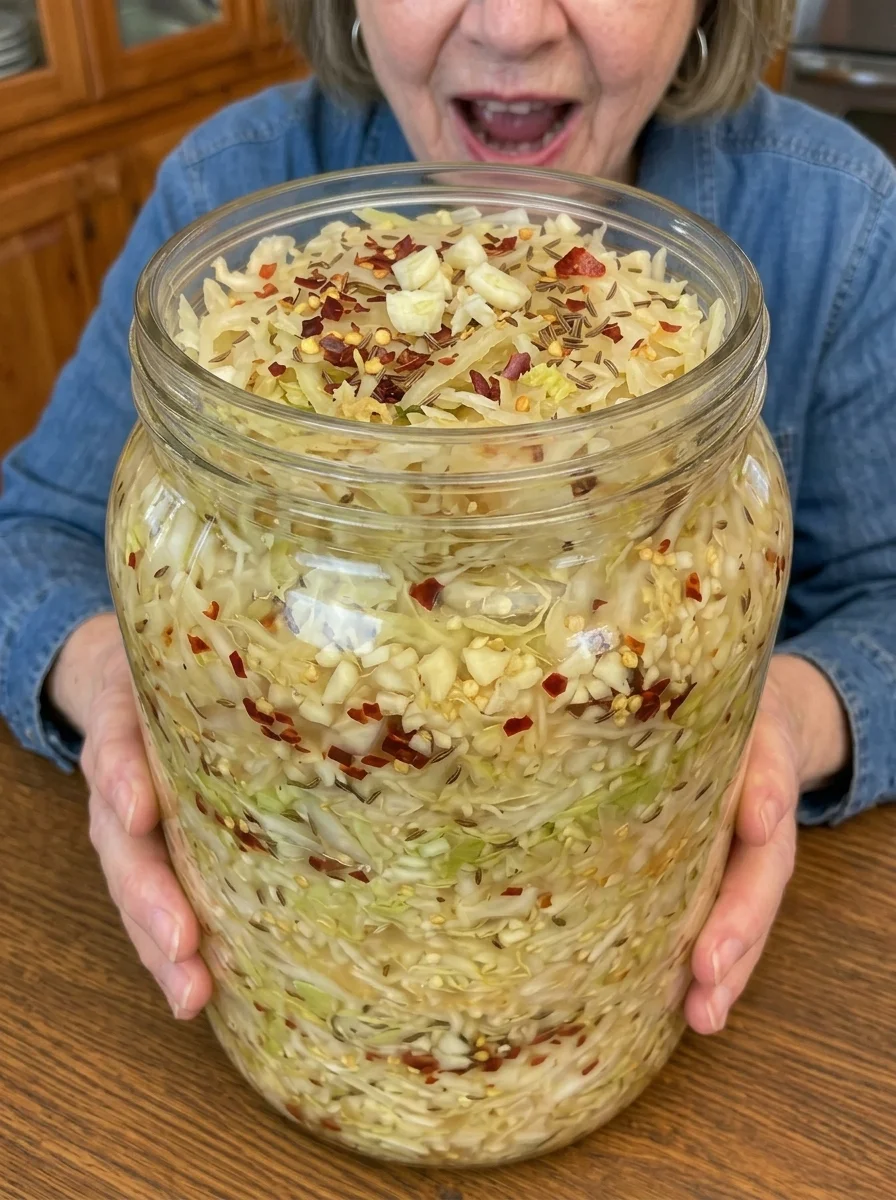
Tangy, crunchy, garlicky, and pleasantly spicy, this Spicy Garlic Sauerkraut transforms simple green cabbage into a bold fermented condiment packed with savory flavor.
Fresh cabbage is massaged with kosher salt until it releases its natural juices, then mixed with plenty of fresh garlic, caraway seeds, crushed red pepper flakes, and black pepper. Optional smoked paprika adds another savory dimension, while fresh ginger can bring a bright, aromatic kick.
Unlike vinegar-based pickled cabbage, traditional sauerkraut develops its characteristic sour flavor through lacto-fermentation. Once the salted cabbage is packed beneath its own brine, naturally occurring lactic acid bacteria gradually transform it into the pleasantly tart, complex sauerkraut we know and love.
Serve it alongside sausages, burgers, sandwiches, grilled meats, roasted potatoes, grain bowls, or your favorite savory comfort foods.
Why You’ll Love This Spicy Garlic Sauerkraut
Bold garlic flavor. Four fresh garlic cloves give the cabbage plenty of savory character.
Adjustable heat. Crushed red pepper flakes provide a noticeable kick without requiring fresh hot peppers.
Naturally fermented. The cabbage develops its tangy flavor through fermentation rather than added vinegar.
Crunchy texture. Properly fermented cabbage maintains a satisfying crisp-tender bite.
Simple ingredients. Cabbage, salt, garlic, and spices are all you need.
Easy to customize. Ginger and smoked paprika can be included or omitted depending on the flavor you want.
Great condiment for savory meals. A small spoonful adds acidity, crunch, garlic, and spice to rich dishes.
Make-ahead friendly. Once fermented to your preferred tanginess, the sauerkraut can be refrigerated for longer storage.
What Makes Sauerkraut Ferment?
Sauerkraut fermentation begins when cabbage is combined with the right amount of salt and packed beneath its own liquid.
Massaging shredded cabbage with salt draws water from the vegetable through osmosis. As you continue squeezing and massaging, the cabbage softens and releases enough liquid to create a natural brine.
Keeping the cabbage submerged beneath that brine creates the environment needed for successful fermentation.
Naturally occurring lactic acid bacteria then convert sugars in the cabbage into lactic acid.
As fermentation progresses, the cabbage becomes increasingly sour and develops the distinctive flavor associated with sauerkraut.
This process is different from quick pickling, where vinegar provides immediate acidity.
Ingredients for Spicy Garlic Sauerkraut
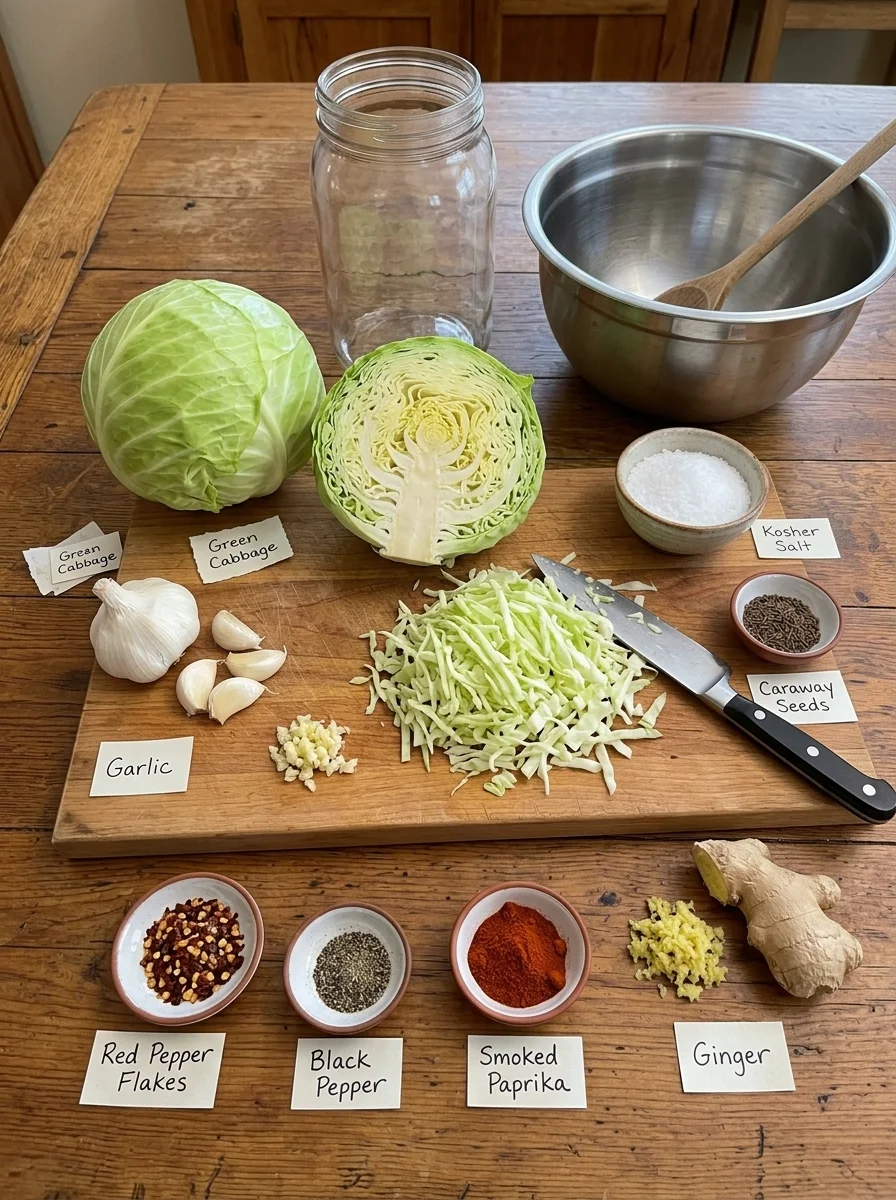
- 1 medium green cabbage, about 2 1/2 lbs, finely shredded
- 4 cloves garlic, finely minced
- 1 1/2 tbsp kosher salt
- 1 tbsp caraway seeds
- 1 tsp crushed red pepper flakes
- 1/2 tsp black pepper
- 1 tsp smoked paprika, optional
- 1 tbsp grated fresh ginger, optional
Ingredient Notes
Green cabbage: The foundation of traditional sauerkraut. Choose a firm, fresh head with tightly packed leaves.
Kosher salt: Draws moisture from the cabbage and creates the brine needed for fermentation. For fermentation recipes, using salt without additives is preferable.
Fresh garlic: Four cloves create the pronounced garlic flavor that distinguishes this recipe from basic sauerkraut.
Caraway seeds: A classic sauerkraut seasoning with an earthy, aromatic flavor that pairs especially well with cabbage.
Crushed red pepper flakes: Supply the heat. The spice becomes distributed throughout the cabbage as it ferments.
Black pepper: Adds subtle savory warmth behind the stronger garlic and chile flavors.
Smoked paprika: Optional, but adds smoky depth and a little extra color.
Fresh ginger: Another optional addition. It contributes fresh aromatic warmth and works particularly well with garlic and chile.
How to Make Spicy Garlic Sauerkraut
Step 1: Prepare the Cabbage 🥬
Remove any damaged or wilted outer leaves from the cabbage.
Reserve one clean cabbage leaf for covering the shredded cabbage later.
Cut the cabbage into quarters.
Remove the tough core from each quarter, then finely shred the cabbage using a sharp knife, mandoline, or cabbage slicer.
Try to keep the pieces reasonably uniform so they pack tightly into the fermentation jar.
Step 2: Add the Salt
Transfer the shredded cabbage to a large, clean mixing bowl.
Sprinkle 1 1/2 tablespoons kosher salt evenly over the cabbage.
Toss briefly to distribute the salt before beginning to massage it.
Step 3: Massage the Cabbage
Using thoroughly clean hands, massage, squeeze, and gently crush the cabbage for approximately 5 to 8 minutes.
At first, the cabbage will feel relatively dry and bulky.
As you continue working it, the salt will draw out moisture.
The cabbage should gradually become:
- Softer
- More flexible
- Reduced in volume
- Glossy with moisture
Liquid should begin collecting at the bottom of the bowl.
Don’t discard this liquid—it will become your fermentation brine.
Step 4: Add the Garlic and Spices 🧄🌶️
Add:
- 4 finely minced garlic cloves
- 1 tablespoon caraway seeds
- 1 teaspoon crushed red pepper flakes
- 1/2 teaspoon black pepper
- 1 teaspoon smoked paprika, if using
- 1 tablespoon grated fresh ginger, if using
Toss and massage briefly until the garlic and spices are evenly distributed throughout the cabbage.
Step 5: Pack the Fermentation Jar
Transfer a handful of seasoned cabbage to a clean 1-quart glass fermentation jar.
Press it down firmly with a clean spoon, fermentation tamper, or similar utensil.
Add another handful and press again.
Continue working in layers.
Firm packing removes trapped air pockets and encourages the cabbage’s liquid to rise above the solids.
Pour any remaining liquid from the mixing bowl into the jar.
Step 6: Keep the Cabbage Submerged
Once the cabbage is tightly packed, the brine should rise above the shredded cabbage.
Take the reserved whole cabbage leaf and place it over the shredded cabbage.
Press it down beneath the brine.
If using a fermentation weight, place it over the cabbage leaf to help keep everything submerged.
The important goal is simple: the shredded cabbage should remain below the brine rather than floating at the surface.
Step 7: Leave Headspace
Leave approximately 1 to 2 inches of headspace at the top of the jar.
Fermentation creates gases and can cause the liquid level to rise, so don’t pack the jar completely to the rim.
Place the jar on a plate or shallow tray to catch any brine that may bubble out.
Step 8: Cover the Jar
Fit the jar with a fermentation lid or another suitable lid setup that allows fermentation gases to escape.
If your setup requires manual venting, follow the instructions appropriate to that lid.
Step 9: Ferment at Room Temperature
Keep the jar at room temperature and away from direct sunlight.
Allow it to ferment for approximately 5 to 14 days.
Check the jar regularly.
During active fermentation, you may notice:
- Small bubbles
- Brine movement
- A gradually more sour aroma
- Changes in cabbage color
- Increasingly tangy flavor
These changes can be part of normal fermentation.
Step 10: Keep Everything Beneath the Brine
During fermentation, check that the cabbage remains submerged.
If pieces rise above the liquid, gently press them back beneath the brine using a clean utensil.
Keeping the vegetables submerged is one of the most important practices for successful sauerkraut fermentation.
Step 11: Begin Tasting
Begin tasting the sauerkraut at approximately day 5 using a clean utensil.
At this stage, the cabbage may still taste relatively fresh and mildly sour.
Continue fermenting if you want a stronger tang.
Taste periodically until the sauerkraut reaches the balance of acidity, crunch, garlic, and spice you prefer.
Step 12: Refrigerate
Once you’re happy with the flavor, seal the jar and transfer it to the refrigerator.
Cold temperatures dramatically slow fermentation, although the flavor may continue developing gradually during storage.
Keep the cabbage beneath the brine as much as possible.
Time and Yield
Prep time: approximately 20 minutes
Fermentation time: approximately 5 to 14 days
Total time: approximately 5 to 14 days
Servings: approximately 12
Estimated calories: approximately 20 calories per serving
Because fermentation varies with temperature and other conditions, the flavor of the sauerkraut is a better guide than the calendar alone.
Tips for Successful Homemade Sauerkraut
Start with fresh cabbage. Firm, fresh cabbage generally releases plenty of liquid and maintains better texture.
Keep everything clean. Wash your hands, jar, utensils, fermentation equipment, and work surfaces thoroughly.
Use appropriate salt. Avoid heavily additive-containing salts when possible.
Massage thoroughly. The cabbage needs to release enough natural liquid to create its brine.
Pack firmly. Compressing the cabbage removes trapped air and helps raise the brine.
Keep the cabbage submerged. This is one of the most important fermentation rules.
Leave headspace. Fermenting cabbage can expand and push brine upward.
Use a fermentation weight if available. It makes keeping the cabbage submerged much easier.
Protect the jar from direct sunlight. Keep it in a stable room-temperature location.
Taste as it ferments. There isn’t one perfect fermentation duration for everyone.
Refrigerate when you like the flavor. Cold storage slows the fermentation considerably.
A Note About Salt and Cabbage Weight
For fermented vegetables, salt is ideally measured relative to the actual weight of the prepared cabbage rather than relying only on tablespoons.
Cabbage heads vary in size, and different types and brands of salt can also vary in density.
A common approach for sauerkraut is approximately 2% salt by weight.
For example, if your prepared shredded cabbage weighs 1,000 grams, approximately 20 grams of salt represents 2%.
Because the recipe starts with a cabbage estimated at about 2 1/2 pounds, weighing the trimmed and shredded cabbage and calculating the salt accordingly can provide more consistent fermentation from batch to batch.
Why Keeping Sauerkraut Under the Brine Matters
Submersion is one of the most important parts of vegetable fermentation.
The fermentation process you want occurs best when the cabbage remains beneath the salty liquid.
Cabbage floating above the brine is exposed to oxygen, which can encourage unwanted surface growth.
Several techniques help:
- Pack the cabbage very firmly.
- Use the reserved cabbage leaf as a barrier.
- Add a fermentation weight.
- Leave enough brine above the solids.
- Check the jar regularly.
- Press floating cabbage back down with a clean utensil when necessary.
A fermentation weight is particularly convenient because it provides constant downward pressure without requiring frequent adjustment.
How Long Should You Ferment Sauerkraut?
This recipe provides a range of approximately 5 to 14 days, but fermentation isn’t controlled by time alone.
Temperature makes a major difference.
A warmer environment generally speeds fermentation, while a cooler environment slows it.
Flavor also changes over time.
Around Day 5
The cabbage may taste mildly tangy while retaining plenty of fresh cabbage character and crunch.
Around One Week
The sour flavor generally becomes more pronounced and integrated with the garlic and spices.
Longer Fermentation
The flavor can continue becoming increasingly sour and complex.
The best stopping point is ultimately determined by the flavor and texture you enjoy.
Once you’re satisfied, move the jar into the refrigerator.
How to Know When Sauerkraut Is Ready
There’s no single flavor that defines perfectly finished sauerkraut.
Look for a combination of:
- Pleasant sourness
- Noticeable garlic flavor
- Balanced chile heat
- Fermented aroma
- Crisp-tender cabbage
- Brine surrounding the cabbage
Taste with a clean utensil as fermentation progresses.
When the acidity and texture suit your preference, refrigeration can slow the process.
Important Fermentation Safety
Homemade fermentation requires good sanitation and careful observation.
Always begin with clean hands, clean utensils, a clean jar, and fresh ingredients.
Keep the cabbage submerged beneath the brine throughout fermentation.
If you observe fuzzy mold, distinctly rotten or putrid odors, unusual discoloration associated with spoilage, or other clear signs that the batch has spoiled, discard the batch rather than tasting it.
When you’re uncertain whether a fermented food is safe, the safest choice is to discard it.
Do not rely on appearance alone to guarantee food safety.
Serving Ideas 🌭🥪
With Sausages
Sauerkraut’s acidity is an excellent contrast to rich grilled or pan-seared sausages.
On Burgers
Add a small pile to burgers for crunch, acidity, garlic, and heat.
Sandwiches
Use it as a tangy topping for hearty meat or vegetable sandwiches.
Hot Dogs
Add spicy garlic sauerkraut instead of plain sauerkraut for more flavor.
Grilled Meats
Serve alongside pork, chicken, steak, or other grilled dishes.
Grain Bowls
Add a small spoonful to savory grain bowls for an acidic, crunchy component.
Roasted Potatoes
Serve it alongside crispy roasted potatoes and sausages for a comforting meal.
Avocado Toast
Add a small amount over avocado toast for a tangy, spicy contrast.
Flavor Variations
Extra-Spicy Garlic Sauerkraut
Increase the crushed red pepper flakes slightly if you prefer more heat.
Ginger Garlic Sauerkraut
Include the optional 1 tablespoon grated fresh ginger for extra aromatic warmth.
Smoky Garlic Sauerkraut
Add the optional 1 teaspoon smoked paprika for a deeper smoky character.
Caraway Garlic Sauerkraut
Increase the emphasis on the classic sauerkraut flavor by keeping caraway as the dominant seasoning.
Garlic-Forward Sauerkraut
For garlic lovers, the four cloves in the original recipe already create a noticeable savory flavor. Finely mincing them ensures they distribute evenly throughout the jar.
Troubleshooting Common Fermentation Problems
Why isn’t my cabbage producing enough liquid?
Continue massaging it for several additional minutes.
Fresh cabbage usually releases significant moisture after being thoroughly salted and worked.
The amount of liquid can vary depending on the cabbage.
Why is the brine overflowing?
Active fermentation can create gas that pushes the brine upward.
This is why leaving headspace and placing the jar on a plate or tray is useful.
Why are bubbles appearing?
Bubbling can be a normal sign of active fermentation as gases are produced.
Why is the cabbage floating?
Small pieces naturally try to rise.
A reserved cabbage leaf and fermentation weight can help keep the shredded cabbage beneath the brine.
Why doesn’t my sauerkraut taste sour after five days?
Fermentation may simply be progressing more slowly, particularly in a cooler environment.
If the batch otherwise appears and smells normal, additional fermentation time may produce a stronger sour flavor.
Why is my sauerkraut becoming more sour?
Lactic acid accumulates as fermentation progresses, producing the increasingly tangy flavor.
Refrigerating the finished sauerkraut slows this process considerably.
Why is the cabbage getting softer?
The texture naturally changes somewhat during fermentation.
Very warm conditions or extended fermentation can produce softer cabbage than a shorter, cooler fermentation.
Storage Information 🧊
Once the sauerkraut reaches your preferred flavor, seal the jar and transfer it to the refrigerator.
Keep the cabbage submerged beneath its brine as much as possible.
Always use a clean utensil when removing sauerkraut from the jar.
Properly fermented and refrigerated sauerkraut can remain usable for several weeks and potentially a few months, but quality and storage conditions vary.
Always inspect the sauerkraut before serving and discard it if you notice clear signs of spoilage.
Cold storage doesn’t completely stop fermentation, so the sauerkraut’s flavor may gradually become more developed over time.
Frequently Asked Questions
Does sauerkraut need vinegar?
No. Traditional sauerkraut develops acidity through lactic acid fermentation rather than added vinegar.
How long does Spicy Garlic Sauerkraut take to ferment?
This recipe uses approximately 5 to 14 days at room temperature, although temperature and personal taste influence the ideal duration.
Can I eat it after five days?
Begin tasting around day 5. If it has developed a pleasantly tangy flavor and the fermentation appears normal, you can refrigerate it when you’re satisfied with the taste.
Why do I need to massage the cabbage?
Salt draws moisture from the cabbage, and massaging helps release enough liquid to form the natural fermentation brine.
Do I need a fermentation weight?
It’s not absolutely required, but a proper fermentation weight can make it considerably easier to keep the cabbage submerged.
Why should I reserve a whole cabbage leaf?
The leaf creates a barrier over the shredded cabbage and helps prevent small pieces from floating above the brine.
Should the cabbage always stay below the liquid?
Yes. Keeping the cabbage submerged is an important part of the fermentation process.
What does the caraway add?
Caraway provides the distinctive earthy, aromatic flavor commonly associated with traditional sauerkraut.
Is smoked paprika required?
No. It’s optional and can be added when you want an extra smoky dimension.
Is fresh ginger required?
No. It’s another optional ingredient that adds aromatic warmth.
How do I know when fermentation is finished?
Taste the sauerkraut periodically. Once it reaches your preferred combination of sourness, crunch, garlic, and spice, transfer it to the refrigerator.
How should I store homemade sauerkraut?
Keep it sealed and refrigerated with the cabbage submerged beneath the brine as much as possible. Always serve it with a clean utensil.
Final Thoughts
This Spicy Garlic Sauerkraut takes the familiar tang and crunch of traditional fermented cabbage and adds bold layers of fresh garlic, red pepper, caraway, and black pepper.
The preparation itself is simple: salt and massage fresh cabbage until it releases its natural liquid, mix in the garlic and spices, pack everything firmly into a clean jar, and keep the cabbage submerged while fermentation develops its characteristic sour flavor.
Start tasting after about five days and let the sauerkraut continue fermenting until it reaches the level of tanginess you enjoy. Then move it to the refrigerator, where the flavor can continue developing more slowly.
Serve it with sausages, burgers, sandwiches, grilled meats, roasted potatoes, or other savory dishes whenever you want a crunchy, garlicky, spicy burst of fermented flavor.
Print
Spicy Garlic Sauerkraut
Ingredients
- 1 medium green cabbage, about 2 1/2 lbs, finely shredded
- 4 cloves garlic, finely minced
- 1 1/2 tbsp kosher salt
- 1 tbsp caraway seeds
- 1 tsp crushed red pepper flakes
- 1/2 tsp black pepper
- 1 tsp smoked paprika, optional
- 1 tbsp grated fresh ginger, optional
Instructions
Step 1: Prepare the Cabbage 🥬
Remove any damaged or wilted outer leaves from the cabbage.
Reserve one clean cabbage leaf for covering the shredded cabbage later.
Cut the cabbage into quarters.
Remove the tough core from each quarter, then finely shred the cabbage using a sharp knife, mandoline, or cabbage slicer.
Try to keep the pieces reasonably uniform so they pack tightly into the fermentation jar.
Step 2: Add the Salt
Transfer the shredded cabbage to a large, clean mixing bowl.
Sprinkle 1 1/2 tablespoons kosher salt evenly over the cabbage.
Toss briefly to distribute the salt before beginning to massage it.
Step 3: Massage the Cabbage
Using thoroughly clean hands, massage, squeeze, and gently crush the cabbage for approximately 5 to 8 minutes.
At first, the cabbage will feel relatively dry and bulky.
As you continue working it, the salt will draw out moisture.
The cabbage should gradually become:
- Softer
- More flexible
- Reduced in volume
- Glossy with moisture
Liquid should begin collecting at the bottom of the bowl.
Don’t discard this liquid—it will become your fermentation brine.
Step 4: Add the Garlic and Spices 🧄🌶️
Add:
- 4 finely minced garlic cloves
- 1 tablespoon caraway seeds
- 1 teaspoon crushed red pepper flakes
- 1/2 teaspoon black pepper
- 1 teaspoon smoked paprika, if using
- 1 tablespoon grated fresh ginger, if using
Toss and massage briefly until the garlic and spices are evenly distributed throughout the cabbage.
Step 5: Pack the Fermentation Jar
Transfer a handful of seasoned cabbage to a clean 1-quart glass fermentation jar.
Press it down firmly with a clean spoon, fermentation tamper, or similar utensil.
Add another handful and press again.
Continue working in layers.
Firm packing removes trapped air pockets and encourages the cabbage’s liquid to rise above the solids.
Pour any remaining liquid from the mixing bowl into the jar.
Step 6: Keep the Cabbage Submerged
Once the cabbage is tightly packed, the brine should rise above the shredded cabbage.
Take the reserved whole cabbage leaf and place it over the shredded cabbage.
Press it down beneath the brine.
If using a fermentation weight, place it over the cabbage leaf to help keep everything submerged.
The important goal is simple: the shredded cabbage should remain below the brine rather than floating at the surface.
Step 7: Leave Headspace
Leave approximately 1 to 2 inches of headspace at the top of the jar.
Fermentation creates gases and can cause the liquid level to rise, so don’t pack the jar completely to the rim.
Place the jar on a plate or shallow tray to catch any brine that may bubble out.
Step 8: Cover the Jar
Fit the jar with a fermentation lid or another suitable lid setup that allows fermentation gases to escape.
If your setup requires manual venting, follow the instructions appropriate to that lid.
Step 9: Ferment at Room Temperature
Keep the jar at room temperature and away from direct sunlight.
Allow it to ferment for approximately 5 to 14 days.
Check the jar regularly.
During active fermentation, you may notice:
- Small bubbles
- Brine movement
- A gradually more sour aroma
- Changes in cabbage color
- Increasingly tangy flavor
These changes can be part of normal fermentation.
Step 10: Keep Everything Beneath the Brine
During fermentation, check that the cabbage remains submerged.
If pieces rise above the liquid, gently press them back beneath the brine using a clean utensil.
Keeping the vegetables submerged is one of the most important practices for successful sauerkraut fermentation.
Step 11: Begin Tasting
Begin tasting the sauerkraut at approximately day 5 using a clean utensil.
At this stage, the cabbage may still taste relatively fresh and mildly sour.
Continue fermenting if you want a stronger tang.
Taste periodically until the sauerkraut reaches the balance of acidity, crunch, garlic, and spice you prefer.
Step 12: Refrigerate
Once you’re happy with the flavor, seal the jar and transfer it to the refrigerator.
Cold temperatures dramatically slow fermentation, although the flavor may continue developing gradually during storage.
Keep the cabbage beneath the brine as much as possible.