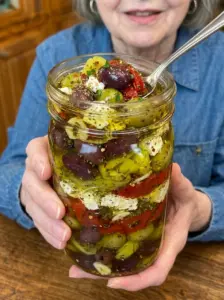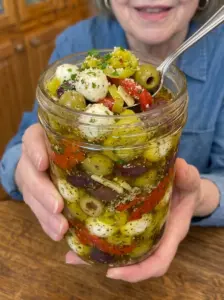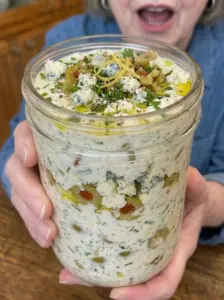
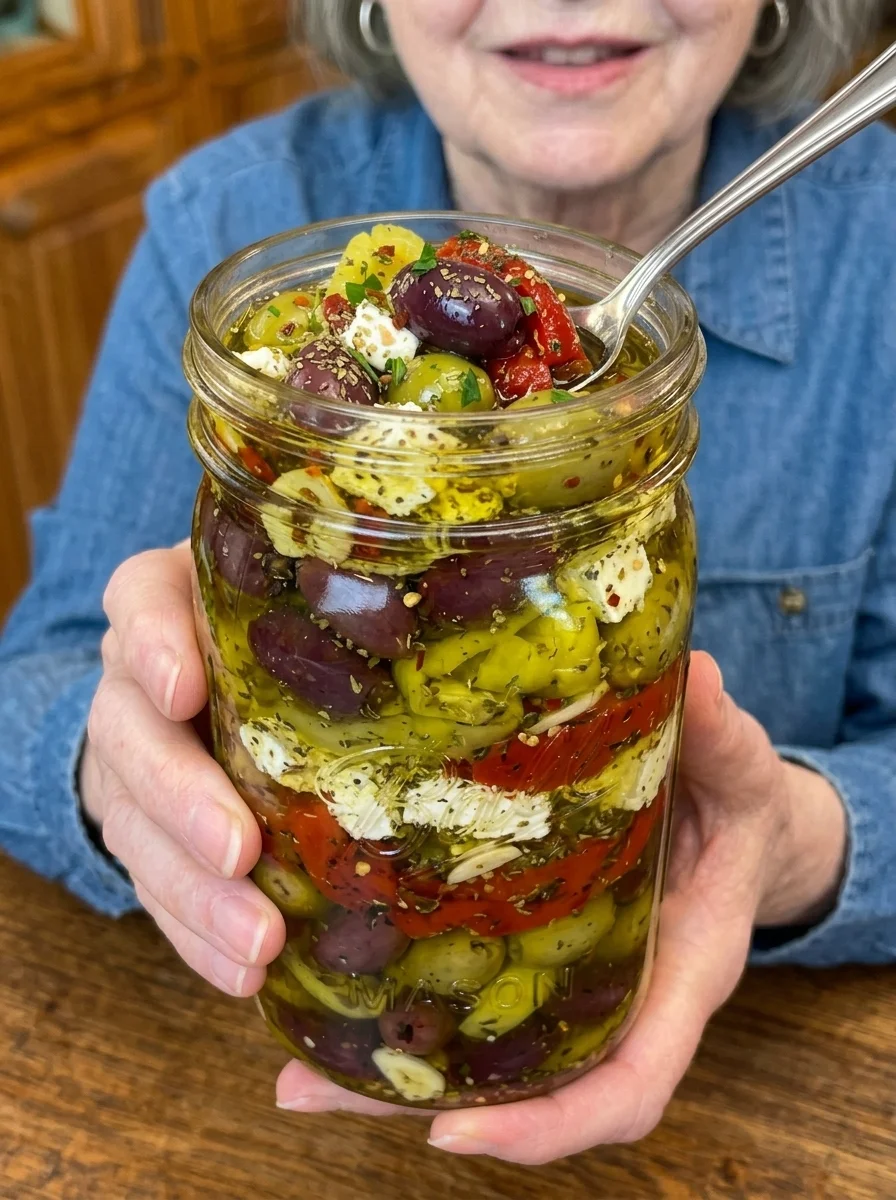
Italian Pepperoncini, Feta & Olive Antipasto Jar combines tangy peppers, briny olives, creamy feta, and sweet roasted red peppers in a bright garlic-herb dressing. Olive oil softens the sharpness of red wine vinegar, while oregano, parsley, and lemon zest give the mixture a fragrant finish.
There is no cooking required. Drain the ingredients, whisk the dressing, gently combine, and refrigerate before serving. Spoon it onto an appetizer platter, add a portion to a fresh salad, or serve with cucumber rounds and crusty bread.
Feta brings a different texture from mozzarella: it is firmer, more tangy, and more likely to crumble. Using block feta and mixing gently keeps attractive pieces throughout the jar while allowing a little cheese to mingle with the dressing.
Recipe at a Glance
- Preparation: Approximately 15 minutes
- Chilling: 30–60 minutes
- Cooking: None
- Total: Approximately 45–75 minutes
- Yield: Approximately 4½–5 cups, depending on ingredient size and packing
- Servings: 6 generous appetizer portions or 8 smaller portions
- Container: A wide-mouth jar or airtight container with approximately 6 cups capacity, or two smaller containers
Use a container with room for gentle stirring. A standard quart jar may be too small for the full batch, especially with whole peppers.
Why You’ll Love This Antipasto
- Bold flavor with little work: Olives, feta, and peppers already bring plenty of character.
- No cooking: A practical option when you want an appetizer without heating the kitchen.
- A colorful presentation: Green and purple olives contrast with pale feta and red peppers.
- Easy preparation ahead: Chill while preparing the rest of your meal.
- Flexible serving: Enjoy as an appetizer, salad addition, or side for grilled food.
What Is an Antipasto Jar?
This is an Italian-inspired appetizer mixture with Mediterranean ingredients, including feta. It borrows the variety of an antipasto platter and combines the ingredients in a seasoned dressing.
The jar is a convenient container, not a preservation method. The ingredients are coated in dressing and kept refrigerated for short-term use. They do not need to be covered by a deep layer of oil.
A brief rest seasons the surfaces and brings the flavors together. Since olives and pepperoncini are already brined, do not expect them to absorb dressing in the same way as a dry ingredient. Gentle tossing and serving a little dressing with each portion give the most even flavor.
Ingredients
For the Antipasto
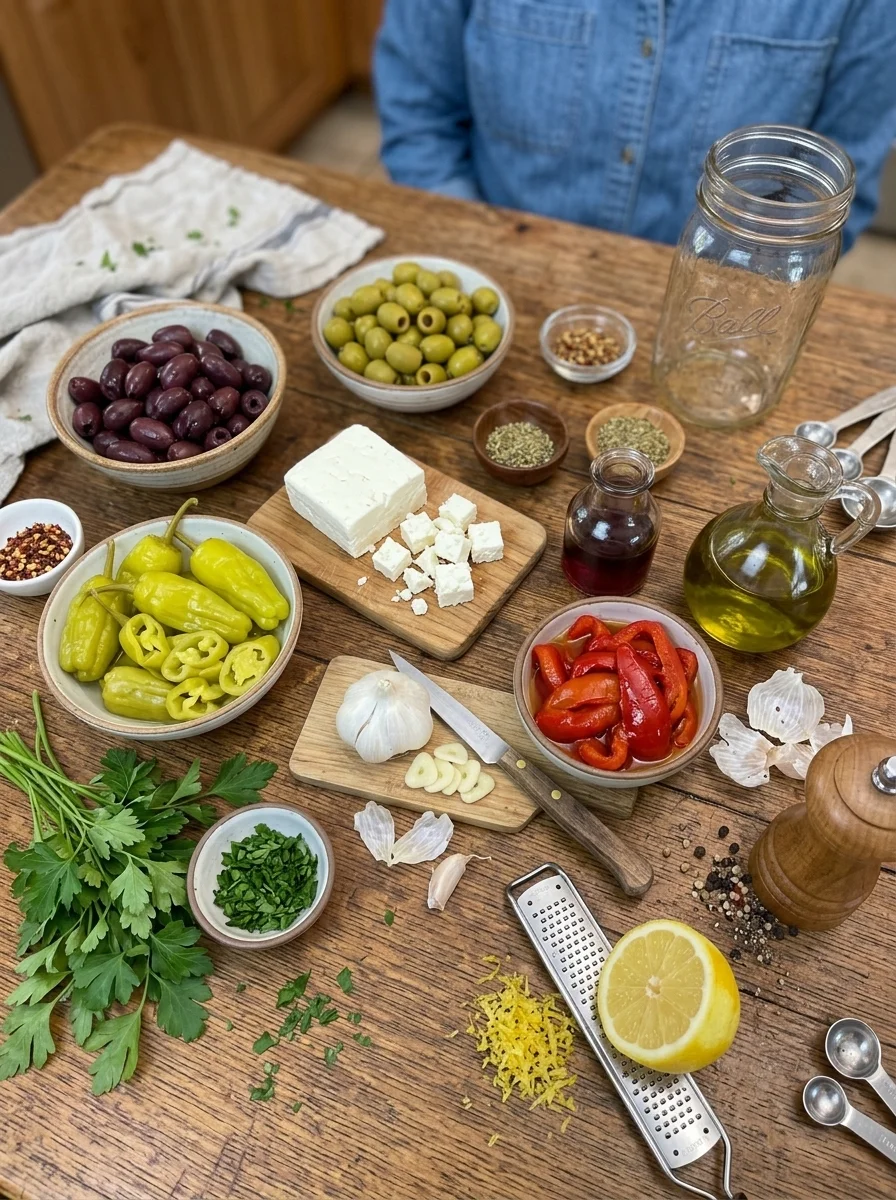
- 1 cup pitted Kalamata olives, drained
- 1 cup pitted green olives, drained
- 1 cup whole or sliced pepperoncini, drained
- 6 ounces feta cheese, cut into bite-sized cubes
- ½ cup roasted red peppers, drained and sliced
For the Garlic-Herb Dressing
- 2 garlic cloves, thinly sliced
- ¼ cup extra-virgin olive oil
- 2 tablespoons red wine vinegar
- 1 teaspoon dried oregano
- ½ teaspoon dried Italian seasoning
- ¼ teaspoon crushed red pepper flakes, optional
- 1 tablespoon chopped fresh parsley
- ½ teaspoon finely grated lemon zest
- Freshly ground black pepper, to taste
No additional salt is included. Feta, olives, and pepperoncini already supply salt; taste the combined mixture before deciding whether it needs any more.
Ingredient Notes
Feta
Choose block feta and cut it into approximately ½–¾-inch cubes. Very small pieces break more easily when stirred.
Drain and gently blot the block before cutting. Feta packed in brine often has a creamy texture, but brands vary in firmness and saltiness. Handle a softer block especially carefully.
Precrumbled feta can be used if distinct cubes are not important, but it gives a more scattered cheese coating throughout the mixture. If strict vegetarian suitability matters, check the cheese’s coagulant or vegetarian labeling rather than assuming every feta qualifies.
Kalamata and Green Olives
Use pitted olives and check for stray pits. Whole olives keep the mixture visually distinct; halved olives make smaller, easier bites.
Green olive varieties range from buttery and mild to sharply briny. Choose ones you enjoy on their own. If an olive is exceptionally salty, you can rinse it briefly, then drain and dry thoroughly, recognizing that this removes some of its briny flavor.
Pepperoncini
Whole peppers look attractive, while sliced peppers distribute more evenly and are easier to add to salads or sandwiches. If using whole peppers, remove stems before eating and consider cutting larger ones into manageable pieces for serving.
Mild and hot pepperoncini vary, so taste before adding red pepper flakes. Drain well; the dressing quantities assume you are not pouring in the jar’s packing liquid.
Roasted Red Peppers
Drain and blot before slicing. Cut into short strips so they are easy to scoop alongside cheese and olives. Excess liquid can pool in the container and weaken the dressing.
Garlic
Thin slices provide distinct bites of garlic. For a more evenly distributed flavor, mince finely instead. Raw garlic can become more noticeable during chilling, so begin with smaller cloves if you prefer a gentler appetizer.
Roasted garlic gives a sweeter, mellower variation, but it does not change the need for refrigerated storage.
Herbs and Lemon Zest
Oregano adds the main dried-herb note. Italian seasoning often contains oregano too, so reduce one slightly if you prefer a milder flavor.
Use the colored part of the lemon peel and avoid the white pith. Zest adds aroma without increasing liquid or acidity as much as lemon juice would.
Equipment
Use a large mixing bowl, small bowl or jar for the dressing, whisk, flexible spatula, and a clean storage container. A wide opening makes scooping easier and reduces the risk of crushing feta against the sides.
Mixing in a bowl before transferring to the jar gives more control than trying to stir a tightly packed container.
How to Make the Antipasto Jar
1. Drain the Ingredients
Drain the olives, pepperoncini, and roasted peppers thoroughly. Gently blot particularly wet ingredients with a clean towel.
Drain the feta separately, pat dry, and cut into cubes. Keep it aside while combining the sturdier ingredients.
2. Prepare the Dressing
Whisk the olive oil, red wine vinegar, oregano, Italian seasoning, optional pepper flakes, lemon zest, and black pepper together.
Stir in the garlic and parsley. The dressing will separate as it stands; whisk or shake again immediately before using.
3. Coat the Olives and Peppers
Place the olives, pepperoncini, and roasted peppers in the large bowl. Add most of the dressing and toss gently until coated.
This step lets you distribute the garlic and herbs before adding the more fragile cheese.
4. Fold in the Feta
Add the feta and the remaining dressing. Use a broad spatula to lift from the bottom and turn the mixture a few times.
Avoid vigorous stirring or shaking. A few crumbles are normal, but the aim is to preserve most of the cubes.
5. Transfer to a Container
Spoon into a roomy jar or airtight container, distributing the cheese and vegetables as you go. Pour over any dressing left in the bowl.
Do not press down firmly to force everything into a smaller jar. Divide into two containers if necessary. The ingredients need coating rather than complete submersion.
6. Refrigerate
Cover and refrigerate for 30–60 minutes. Several hours of chilling is also convenient for preparing ahead.
Keep it refrigerated throughout this rest. The vinegar and oil are flavoring ingredients, not a method for making the cheese shelf-stable.
7. Taste and Serve
Gently turn the mixture with a clean spoon before serving. Taste a bite that includes both feta and vegetables before adjusting anything.
If you want more tang, add a small splash of vinegar. If it is already salty, avoid extra brine or salt. More plain peppers or cheese can change the balance, but choose additions carefully since feta itself is salty.
Spoon into a shallow serving bowl and finish with a little extra parsley or lemon zest if desired. Keep the unused portion chilled.
Tips for a Balanced Jar
Mix the sturdy ingredients first. Olives and peppers tolerate tossing better than feta cubes.
Use block feta. It gives more control over piece size than precrumbled cheese.
Dry before dressing. Water from packing liquids dilutes the flavor.
Season the combined bite. The dressing alone will taste sharper than it does with the cheese and olives.
Leave space in the jar. A roomy container makes it easier to redistribute dressing without crushing the cheese.
Keep the garnish simple. The mixture already has plenty of salt, acid, and herbs.
Troubleshooting
| Problem | Possible cause | What to try |
|---|---|---|
| Feta breaks apart | Soft cheese, tiny cubes, or rough stirring | Use larger cubes and fold in last. |
| Dressing tastes diluted | Poorly drained ingredients | Drain and blot carefully; lift portions from excess liquid if needed. |
| Antipasto is too salty | Combined brined ingredients | Avoid added salt and brine; serve with unsalted vegetables or bread. |
| Garlic dominates | Large raw cloves or extended resting | Use less next time; add more plain components if available. |
| Oil looks cloudy or firm | Refrigerated olive oil | Allow a brief rest and gently stir; avoid extended counter storage. |
| Jar is difficult to stir | Container too small | Transfer to a larger bowl or divide between containers. |
Variations
Pepperoncini Brine Dressing
Replace 1 tablespoon of the red wine vinegar with 1 tablespoon pepperoncini brine. This changes both acidity and saltiness, so taste before adding any extra seasoning. It is a flavor option, not a preservation adjustment.
Artichoke Addition
Add drained, chopped marinated artichoke hearts. They bring extra oil and seasoning, so begin with a modest amount and reassess the dressing.
Fresh Tomato Finish
Fold in halved cherry tomatoes shortly before serving. Tomatoes release liquid during storage, so adding them late preserves the dressing’s concentration.
Spicier Jar
Use hot pepperoncini or add an extra small pinch of pepper flakes. Let the flavors mingle before deciding whether to increase the heat again.
Meatier Antipasto
Add chopped ready-to-eat salami or folded prosciutto for a different version. This changes the vegetarian suitability, nutrition, and salt level.
Milder Cheese Version
Replace some of the feta with drained fresh mozzarella. The result is less tangy and more softly creamy. Keep the same refrigerated handling.
These are suggested variations and have not been independently kitchen-tested.
Serving Suggestions
Serve in a small bowl on an appetizer board with cucumber slices, cherry tomatoes, and bread. Unsalted or lightly salted accompaniments help balance the briny ingredients.
For a lunch salad, spoon a portion over dry romaine with fresh cucumber and tomato. Use some of the jar’s dressing first, then add more only if the greens need it.
The mixture also works beside grilled chicken, fish, steak, or roasted vegetables. Chop a small portion more finely for adding to sandwiches or wraps.
For guests, offer a serving spoon and small forks so nobody needs to reach directly into the storage jar.
Make-Ahead and Storage
Preparing Ahead
Prepare several hours before serving or the day before. Keep fresh garnish separate if you want the parsley to look brighter.
If adding fresh tomatoes or other watery vegetables, wait until closer to serving.
Refrigerator
Store sealed at 40°F or below and use within 3–4 days, or sooner if an ingredient’s package guidance or prior storage time requires it. Combining previously opened cheese and vegetables does not reset their storage life.
Use a clean utensil and return the main container to the refrigerator promptly. Keep portions that have been on the serving table separate from the unused chilled supply.
Serving Time
Do not leave out for more than 2 hours, or 1 hour when the temperature exceeds 90°F. For a longer gathering, replenish a small serving bowl from a chilled container.
Freezing
Freezing is not recommended for the assembled antipasto. Feta and peppers can change texture, and the dressing may separate.
No Pantry Storage
This is a fresh refrigerated appetizer, not a tested canning recipe. The oil and vinegar do not make it safe for pantry storage, and adding more vinegar by taste does not validate a preservation process.
Frequently Asked Questions
Do the ingredients need to be covered with oil?
No. A light coating is enough. Gently stir before serving instead of adding oil until the jar is full.
Can I use crumbled feta?
Yes, but the result will look more like a mixed antipasto salad than a jar with distinct cubes. Fold gently and expect the cheese to coat more of the ingredients.
Can I use only one type of olive?
Yes. Use a combined 2 cups of an olive you enjoy, adjusting for saltiness and size.
Should I use whole or sliced pepperoncini?
Sliced peppers are easier for salads, sandwiches, and small bites. Whole peppers give a different presentation but may need trimming before serving.
Is this vegetarian?
It can be, provided the feta and other ingredients meet your requirements. Some cheeses use animal-derived coagulants, so check labeling when that distinction matters.
Is it low-carb?
The base has no pasta or bread, but exact carbohydrates depend on the products and portions. Crackers, bread, sweetened marinated vegetables, and other additions change the total.
Is it gluten-free?
The base ingredients can be gluten-free. Check packaged seasonings and marinated products, and serve with suitable accompaniments if needed.
Can I use lemon juice instead of zest?
Juice adds acidity and liquid, while zest adds aroma. They are not identical substitutions. If adding juice, start with a little and taste alongside the vinegar already present.
Recipe Card: Italian Pepperoncini, Feta & Olive Antipasto Jar
Yield: Approximately 4½–5 cups
Servings: 6 generous or 8 smaller appetizer portions
Preparation: 15 minutes
Chilling: 30–60 minutes
Total: 45–75 minutes
Cooking: None
Ingredients
- 1 cup drained pitted Kalamata olives
- 1 cup drained pitted green olives
- 1 cup drained whole or sliced pepperoncini
- 6 ounces feta, cut into bite-sized cubes
- ½ cup drained sliced roasted red peppers
- 2 thinly sliced garlic cloves
- ¼ cup extra-virgin olive oil
- 2 tablespoons red wine vinegar
- 1 teaspoon dried oregano
- ½ teaspoon Italian seasoning
- ¼ teaspoon red pepper flakes, optional
- 1 tablespoon chopped parsley
- ½ teaspoon lemon zest
- Black pepper, to taste
Instructions
- Drain the olives, peppers, and feta. Blot excess moisture and cube the cheese.
- Whisk oil, vinegar, herbs, pepper flakes, zest, and black pepper. Stir in garlic and parsley.
- Toss olives and peppers with most of the dressing in a bowl.
- Gently fold in feta and the remaining dressing.
- Transfer to a roomy 6-cup container or two smaller jars. Cover and refrigerate for 30–60 minutes.
- Gently stir, taste, and serve with a clean utensil. Keep unused portions chilled.
Approximate Nutrition
For six equal portions with all the dressing included, estimate 220–280 calories and 4–6 grams of protein per serving. Eight smaller portions contain less per serving. Olive varieties, feta brands, and the amount of dressing consumed affect the total. These are approximate ingredient-based estimates before bread, crackers, or other accompaniments.
Notes
- No added salt is included; taste first.
- A roomy container protects the feta during stirring.
- Coat rather than submerge the ingredients.
- Refrigerate and use within 3–4 days, subject to ingredient guidance.
- The expanded method and estimates have not been independently kitchen-tested.
Final Thoughts
Olives, pepperoncini, and feta bring plenty of flavor before the dressing is added. Drain them well, coat the sturdier ingredients first, and fold the cheese in gently. A short refrigerated rest makes this a convenient appetizer to spoon onto a platter or add to a fresh meal.
Italian Pepperoncini, Feta & Olive Antipasto Jar
Description
Yield: Approximately 4½–5 cups
Servings: 6 generous or 8 smaller appetizer portions
Preparation: 15 minutes
Chilling: 30–60 minutes
Total: 45–75 minutes
Cooking: None
Ingredients
- 1 cup drained pitted Kalamata olives
- 1 cup drained pitted green olives
- 1 cup drained whole or sliced pepperoncini
- 6 ounces feta, cut into bite-sized cubes
- ½ cup drained sliced roasted red peppers
- 2 thinly sliced garlic cloves
- ¼ cup extra-virgin olive oil
- 2 tablespoons red wine vinegar
- 1 teaspoon dried oregano
- ½ teaspoon Italian seasoning
- ¼ teaspoon red pepper flakes, optional
- 1 tablespoon chopped parsley
- ½ teaspoon lemon zest
- Black pepper, to taste
Instructions
- Drain the olives, peppers, and feta. Blot excess moisture and cube the cheese.
- Whisk oil, vinegar, herbs, pepper flakes, zest, and black pepper. Stir in garlic and parsley.
- Toss olives and peppers with most of the dressing in a bowl.
- Gently fold in feta and the remaining dressing.
- Transfer to a roomy 6-cup container or two smaller jars. Cover and refrigerate for 30–60 minutes.
- Gently stir, taste, and serve with a clean utensil. Keep unused portions chilled.