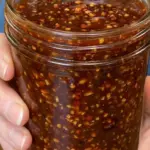
Ingredients
Great sauce is about balance, and every ingredient in this recipe plays a specific role. Understanding what each one does will help you make confident adjustments and substitutions.
Low-Sodium Soy Sauce (½ cup)
Soy sauce is the backbone of General Tso Sauce — the primary source of salt, depth, and umami. Low-sodium soy sauce is strongly recommended here because the sauce reduces and concentrates as it thickens. Regular soy sauce can make the finished result aggressively salty. Low-sodium gives you the same rich flavor with far better control. If you only have regular soy sauce, reduce the quantity slightly and taste as you go.
Chicken Broth or Water (¼ cup)
Liquid is needed to balance the concentration of soy sauce, vinegar, and hoisin and to create the right consistency before the cornstarch slurry tightens everything up. Chicken broth adds a subtle savory depth that water can’t offer. For a fully plant-based version, vegetable broth works beautifully.
Brown Sugar (3 tbsp)
This is what gives General Tso Sauce its characteristic sweetness — and what separates it from a plain stir-fry sauce. Brown sugar is used instead of white because the molasses it contains adds a caramel-like richness that complements the soy sauce and hoisin beautifully. You can adjust the amount up or down depending on how sweet you like your sauce.
Rice Vinegar (2 tbsp)
Acidity is the key to preventing any sauce from tasting flat or one-dimensional. Rice vinegar is mild, slightly sweet, and much gentler than distilled white vinegar or apple cider vinegar. It lifts the whole sauce without making it taste sour, and it balances the sweetness of the brown sugar and hoisin perfectly.
Hoisin Sauce (2 tbsp)
Hoisin is sometimes called Chinese barbecue sauce, and it brings extraordinary complexity to this recipe. It’s thick, deeply sweet-savory, with notes of five spice, garlic, and fermented soybean. It adds body to the sauce and reinforces the umami without the need for any additional seasoning. Don’t skip it and don’t substitute ketchup — the flavor difference is significant.
Cornstarch Slurry (1 tbsp cornstarch + 1 tbsp water)
The slurry is what transforms the sauce from a thin liquid into the glossy, coating, restaurant-style sauce you’re after. Cornstarch must always be dissolved in cold water before being added to a hot liquid — adding dry cornstarch directly to the pan creates lumps. Whisk it in slowly and keep stirring as the sauce heats up. Within 2 to 3 minutes it will thicken noticeably and develop that beautiful, lacquered shine.
Sesame Oil (1 tbsp)
Toasted sesame oil is one of the most aromatic ingredients in Chinese cooking. It has a rich, nutty, deeply fragrant quality that immediately evokes Asian cuisine. It’s used here to sauté the garlic and ginger, which allows its flavor to bloom into the base of the sauce. A small amount goes a long way — sesame oil is a finishing flavor, not a cooking fat.
Garlic (4 cloves, minced)
Four cloves may sound like a lot, but the garlic mellows and sweetens as it cooks in the sesame oil. It forms the aromatic foundation of the sauce — you’ll smell it blooming in the pan and it will make everyone in the house wander into the kitchen asking what’s cooking. Don’t use garlic powder as a substitute; fresh garlic makes a noticeable difference here.
Fresh Ginger (1 tbsp, minced)
Ginger adds warmth, brightness, and a gentle spice that’s distinct from the heat of the red pepper flakes. Fresh ginger is significantly more vibrant than ground ginger — it has a floral, almost citrusy quality that ground ginger can’t replicate. If you cook with ginger regularly, keep a knob in your freezer and grate it straight from frozen when you need it.
Crushed Red Pepper Flakes (1–2 tsp)
This is where the heat comes from. One teaspoon gives you a mild, noticeable warmth. Two teaspoons delivers a genuine kick. You can go even higher if you love heat, or reduce to half a teaspoon for a mild family-friendly version. The red pepper flakes are added after the garlic and ginger have sautéed so they don’t burn in the pan.
Tomato Paste (1 tbsp, optional)
This is a small but impactful optional addition. Tomato paste contributes a deep, concentrated savory richness — almost meaty in quality — that makes the sauce taste more complex and rounded. It doesn’t make the sauce taste like tomatoes; it makes it taste more like itself. Highly recommended if you have it on hand.
Instructions
In a small bowl, whisk together the soy sauce, chicken broth, brown sugar, rice vinegar, and hoisin sauce until the sugar is fully dissolved and the mixture is smooth. Having this ready before you start cooking is key — the sauté step moves quickly and you don’t want to be measuring while garlic is browning.
In a separate small bowl, whisk the cornstarch and one tablespoon of cold water together until completely smooth. Set aside near the stove — you’ll need it ready to go.
Heat the sesame oil in a medium saucepan over medium heat. Add the minced garlic and ginger and sauté for 30 to 60 seconds, stirring constantly. You’re looking for the aromatics to become fragrant and just barely golden — not brown. Browned garlic turns bitter, so stay attentive during this brief window.
Pour the soy sauce mixture into the pan with the aromatics. Stir to combine. Add the crushed red pepper flakes and tomato paste if using, and stir again. Bring the mixture to a gentle simmer over medium heat.
Give the cornstarch slurry a quick re-whisk (it settles quickly), then pour it into the simmering sauce while whisking constantly. Continue to stir and cook for 2 to 3 minutes. You’ll watch the sauce transform in real time — it will go from thin and opaque to thick and glossy. Once it coats the back of a spoon and holds a line when you drag your finger through it, it’s done.
Take the pan off the heat and let the sauce cool for a couple of minutes before using. It will thicken slightly more as it cools. Toss it immediately with your protein or vegetables, or transfer to a jar for storage.
The cornstarch slurry is where most home cooks run into trouble. Here’s how to nail it every time:
Always mix cornstarch with cold water. Hot water causes the starch granules to seize up immediately, creating lumps before they can dissolve into the sauce.
Add the slurry to a simmering sauce, not a boiling one. If the heat is too high, the slurry will thicken too fast and unevenly. Medium heat is ideal.
Keep stirring. Once the slurry goes in, constant stirring prevents lumps and ensures even thickening across the entire sauce.
If it gets too thick, add liquid. A splash of water, broth, or even a bit more vinegar will loosen the sauce back to the right consistency. This is also how to reheat it after storage — it thickens in the fridge, so always add a little liquid when reheating.
If it doesn’t thicken enough, make more slurry. Mix an additional half teaspoon of cornstarch with half a teaspoon of water and whisk it in. Give it another minute of cooking before deciding if you need more.
- Prep Time: 10 minutes
- Cook Time: 10 minutes
Nutrition
- Calories: 70 per serving