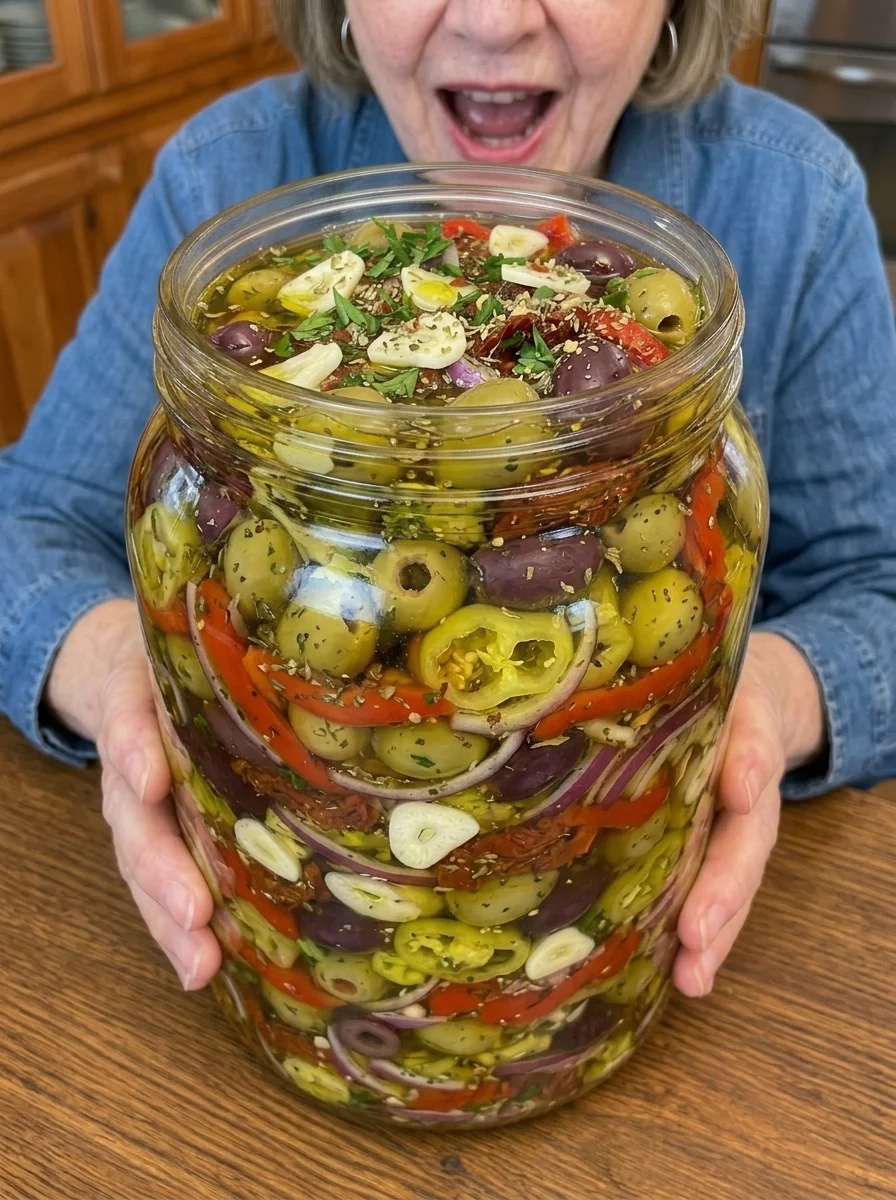
Tangy, garlicky, briny, and packed with bold Italian-inspired flavors, this Garlic Olive & Pepperoncini Antipasto Jar is an easy make-ahead appetizer loaded with green olives, Kalamata olives, pepperoncini, roasted red peppers, sun-dried tomatoes, red onion, and plenty of fresh garlic. 🧄🫒🌶️
Everything gets tossed in a simple marinade made with extra-virgin olive oil, red wine vinegar, fresh lemon juice, Italian herbs, and optional crushed red pepper flakes. After several hours in the refrigerator, the flavors mingle and intensify, creating a colorful antipasto mixture that’s perfect for entertaining.
Serve it as part of an antipasto platter or charcuterie board, pile it onto crusty bread, spoon it over salads, tuck it into sandwiches, or serve it alongside grilled meats.
It takes only about 15 minutes of active preparation, and because the flavor improves as it rests, it’s an excellent appetizer to prepare ahead of time.
Why You’ll Love This Antipasto Jar
Packed with bold flavor. Olives, pepperoncini, garlic, roasted peppers, and sun-dried tomatoes create a savory, tangy combination.
No cooking required. Drain, slice, mix, and refrigerate.
Perfect for entertaining. The colorful ingredients look beautiful served from a jar or arranged on a platter.
Make-ahead friendly. The mixture actually benefits from several hours in the refrigerator.
Two kinds of olives. Green and Kalamata olives provide contrasting flavors and colors.
Garlic-forward. Four thinly sliced garlic cloves infuse the marinade as it rests.
Bright and tangy. Red wine vinegar, lemon, and pepperoncini balance the richness of the olive oil.
Easy to customize. Add cheese, artichokes, herbs, or extra chile according to your preferences.
Versatile. Serve it as an appetizer, snack, sandwich topping, salad addition, or side dish.
What Is an Antipasto Jar?
Antipasto traditionally refers to foods served before an Italian meal and can include items such as olives, cheeses, cured meats, marinated vegetables, peppers, and other savory bites.
This recipe focuses on the marinated vegetable and olive side of an antipasto spread.
Rather than arranging each ingredient separately, green olives, Kalamata olives, pepperoncini, roasted peppers, onion, sun-dried tomatoes, and garlic are combined in one jar with an herby vinaigrette-style marinade.
As the jar rests, the garlic, herbs, vinegar, lemon, and olive oil season everything together.
The result is convenient enough for everyday snacking but attractive enough for a party platter.
Ingredients 🧄🫒
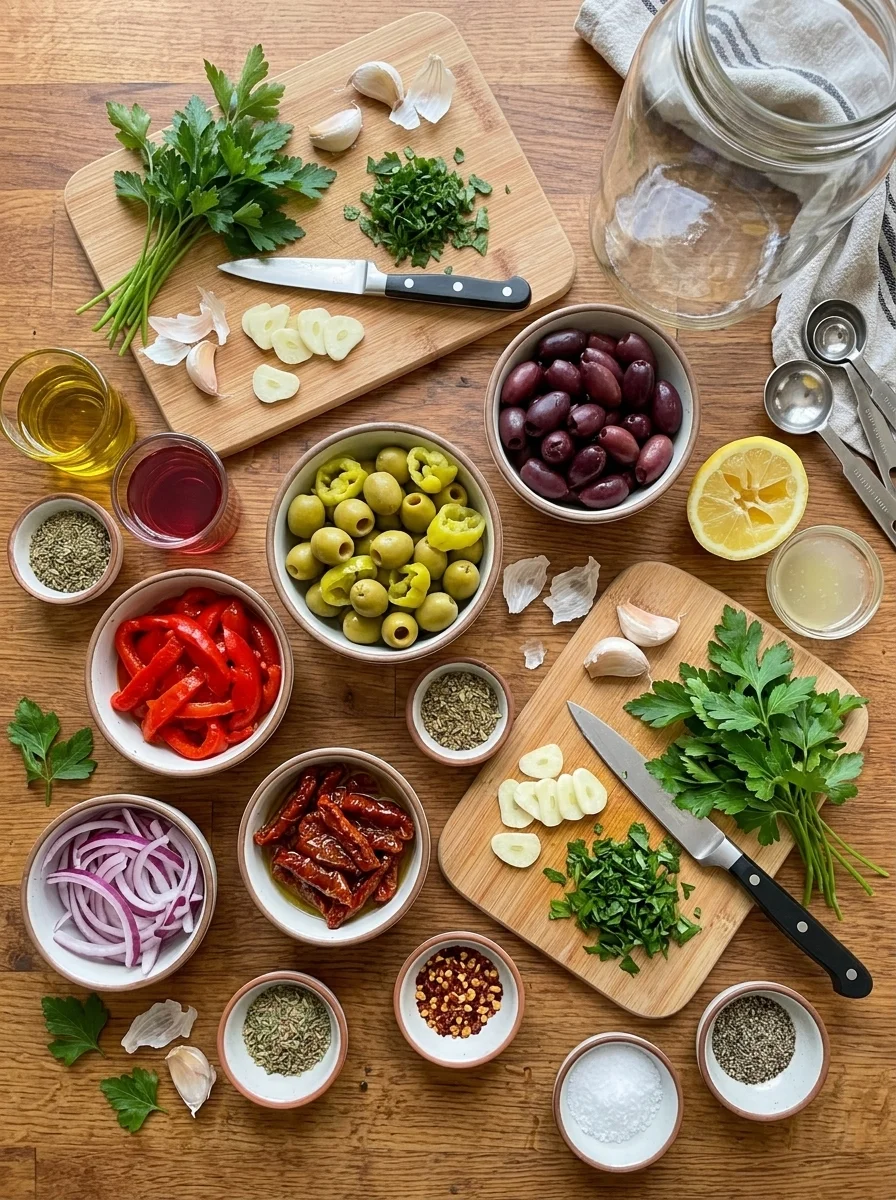
- 1 cup green olives, pitted and drained
- 1 cup Kalamata olives, pitted and drained
- 1 cup sliced pepperoncini, drained
- 1/2 cup roasted red peppers, drained and sliced
- 1/4 cup red onion, thinly sliced
- 4 cloves garlic, thinly sliced
- 1/4 cup sun-dried tomatoes, drained and sliced
- 1/3 cup extra-virgin olive oil
- 2 tbsp red wine vinegar
- 1 tbsp fresh lemon juice
- 1 tsp Italian seasoning
- 1/2 tsp dried oregano
- 1/4 tsp crushed red pepper flakes, optional
- 1/4 tsp black pepper
- 1/4 tsp salt, or to taste
- 2 tbsp fresh parsley, chopped
Ingredient Notes
Green Olives 🫒
Green olives provide a firm texture and bright, briny flavor.
Use pitted olives so the finished antipasto is easy to spoon directly onto a plate or piece of bread.
Drain them thoroughly before mixing.
Kalamata Olives
Kalamata olives bring a deeper, fruitier flavor and dark purple color that contrasts beautifully with the green olives and red peppers.
Because olives can already be quite salty, taste the finished mixture before adding additional salt.
Pepperoncini 🌶️
Pepperoncini contribute tanginess, mild chile flavor, and a pleasant bite.
Drain them well so their packing liquid doesn’t excessively dilute the marinade.
Roasted Red Peppers
Roasted red peppers provide sweetness, soft texture, and vibrant color.
Jarred roasted peppers work perfectly here.
Drain them before slicing.
Red Onion 🧅
Thinly sliced red onion adds crispness and a sharper savory note.
Keeping the slices thin prevents the raw onion from overpowering the other ingredients.
Fresh Garlic 🧄
Four cloves give this antipasto a noticeable garlic flavor.
Thin slices work particularly well because they become seasoned by the acidic marinade while also flavoring the surrounding oil.
Sun-Dried Tomatoes 🍅
Sun-dried tomatoes contribute concentrated tomato flavor and a slightly chewy texture.
If you’re using oil-packed sun-dried tomatoes, drain them before slicing.
Extra-Virgin Olive Oil
Olive oil forms the rich base of the marinade and carries the flavors of the garlic and herbs throughout the jar.
Choose an extra-virgin olive oil whose flavor you enjoy.
Red Wine Vinegar
Red wine vinegar provides the characteristic tang that keeps the olive-oil marinade from feeling heavy.
Fresh Lemon Juice 🍋
Fresh lemon gives the marinade additional brightness.
It complements the briny olives and pepperoncini especially well.
Italian Seasoning
Italian seasoning provides an easy mixture of dried herbs that fits naturally with the olives, garlic, and roasted peppers.
Dried Oregano
Extra oregano reinforces the Italian-inspired flavor.
Crushed Red Pepper Flakes
These are optional.
Add them when you want a little extra heat beyond the pepperoncini.
Black Pepper
Black pepper adds subtle warmth without significantly increasing the chile heat.
Fresh Parsley 🌿
Parsley gives the finished antipasto a fresh herbal note and adds another pop of color.
How to Make Garlic Olive & Pepperoncini Antipasto Jar
Step 1: Drain the Jarred Ingredients
Drain the:
- Green olives
- Kalamata olives
- Pepperoncini
- Roasted red peppers
- Sun-dried tomatoes, if packed in oil
Allow excess liquid to drain away.
This is important because too much packing liquid can weaken the flavor of the homemade marinade.
Step 2: Prepare the Vegetables
Thinly slice the red onion.
Slice the roasted red peppers into strips if necessary.
Slice the sun-dried tomatoes.
Thinly slice 4 cloves of fresh garlic.
The goal is to keep the pieces small enough that you can get several different ingredients in each spoonful.
Step 3: Combine the Main Ingredients
In a large mixing bowl, combine:
- 1 cup green olives
- 1 cup Kalamata olives
- 1 cup sliced pepperoncini
- 1/2 cup roasted red peppers
- 1/4 cup thinly sliced red onion
- 1/4 cup sliced sun-dried tomatoes
Gently toss them together.
Step 4: Add the Garlic 🧄
Add the thinly sliced garlic.
Separate any slices that are sticking together so the garlic gets distributed throughout the mixture rather than concentrated in one spot.
Why Thinly Sliced Garlic Works So Well
Raw garlic can be quite assertive.
Thin slicing gives you smaller pieces while also exposing plenty of surface area to the marinade.
As the mixture rests, the garlic flavors the oil and vinegar while the acidic ingredients season the garlic itself.
The garlic will still have a noticeable bite, particularly during the first day, so avoid adding substantially more unless you specifically want an intense raw-garlic flavor.
Step 5: Add the Marinade
Pour in:
- 1/3 cup extra-virgin olive oil
- 2 tablespoons red wine vinegar
- 1 tablespoon fresh lemon juice
Add:
- 1 teaspoon Italian seasoning
- 1/2 teaspoon dried oregano
- 1/4 teaspoon crushed red pepper flakes, if using
- 1/4 teaspoon black pepper
- 1/4 teaspoon salt, or to taste
Step 6: Toss Gently
Use a large spoon or spatula to gently toss everything together.
Make sure the herbs and garlic are evenly distributed and the vegetables are coated in the oil-and-vinegar marinade.
Avoid aggressive mixing that could break apart the softer roasted peppers.
Step 7: Add the Fresh Parsley 🌿
Add 2 tablespoons chopped fresh parsley.
Gently toss again.
Step 8: Taste Before Adding More Salt
Taste one of the olives together with a little pepperoncini and marinade.
You may find that the mixture needs very little additional salt.
Olives, pepperoncini, roasted peppers, and sun-dried tomatoes can all contribute sodium depending on how they’re packaged.
It’s much easier to add more salt later than to correct an overly salty antipasto.
Step 9: Transfer to a Jar
Transfer everything into a clean quart-size glass jar.
Layer the mixture loosely rather than packing it tightly.
Try to distribute the garlic, olives, peppers, and onion throughout the jar.
Step 10: Add the Remaining Marinade
Pour any marinade remaining in the mixing bowl into the jar.
The ingredients should be thoroughly coated.
If needed, add a small amount of additional olive oil.
This is a refrigerated marinated antipasto, not a shelf-stable preserved product.
Step 11: Refrigerate
Seal the jar tightly.
Refrigerate for at least 4 hours.
For a deeper, more integrated flavor, refrigerate the antipasto overnight before serving.
Why Overnight Marinating Works So Well
You can serve the antipasto after four hours, but an overnight rest gives the dried herbs time to hydrate and allows the garlic, onion, chile, vinegar, lemon, and olive oil flavors to mingle.
The olives and vegetables also become coated in the seasoned marinade.
If you’re preparing this for a party, making it the evening before is an easy option.
Step 12: Bring It Slightly Toward Room Temperature
Before serving, remove the jar from the refrigerator and let it sit for approximately 10–15 minutes.
Extra-virgin olive oil can become cloudy or partially firm when chilled.
A brief rest allows the oil to loosen.
Step 13: Mix Before Serving
Gently shake the sealed jar or stir the mixture with a clean spoon.
This redistributes the marinade, herbs, and garlic.
Step 14: Serve
Spoon the antipasto into a shallow serving bowl or arrange it on a platter.
Serve with:
- Crusty bread
- Crostini
- Crackers
- Cheese
- Sandwiches
- Grilled meats
- Pasta salad
- Your favorite antipasto spread
Recipe Information ⏱️
Prep Time: 15 minutes
Marinating Time: 4 hours
Total Time: approximately 4 hours 15 minutes
Servings: 8
Estimated Calories: approximately 175 calories per serving
The calorie estimate can vary significantly depending on the specific olives, sun-dried tomatoes, roasted peppers, amount of marinade consumed, olive oil, and serving size.
Tips for the Best Antipasto Jar
Drain everything well. Excess packing liquid can dilute your marinade.
Use pitted olives. They’re much easier to serve and eat.
Slice the garlic thinly. This helps distribute its flavor.
Keep the onion thin. Thick raw onion can overwhelm the other ingredients.
Use good olive oil. It’s a major component of the marinade.
Taste before adding salt. Several ingredients are naturally salty or packed in salty brine.
Don’t skip the marinating time. Four hours is good; overnight is even better.
Mix before serving. The marinade naturally settles toward the bottom.
Let chilled olive oil loosen. Ten to fifteen minutes out of the refrigerator usually improves the texture.
Always use a clean utensil. This is particularly important when serving directly from a jar that will return to the refrigerator.
How to Prevent an Overly Salty Antipasto
The biggest seasoning challenge with an olive-based antipasto is salt.
Green olives, Kalamata olives, pepperoncini, roasted peppers, and sun-dried tomatoes may all contain varying amounts of sodium.
Start with the listed 1/4 teaspoon salt or less, then taste.
Depending on the brands you’re using, you may not need the full amount.
If your olives are particularly salty, you can drain them thoroughly before using them.
The lemon juice and vinegar also provide brightness, which can reduce the need for additional salt.
How Tangy Should the Marinade Be?
The marinade should taste bright and tangy without overwhelming the olive oil.
Red wine vinegar provides the main acidic note, while lemon juice adds freshness.
Remember that you’re tasting a concentrated marinade intended to coat strongly flavored ingredients.
After several hours, the overall mixture should taste more integrated than it does immediately after mixing.
How Spicy Is This Antipasto? 🌶️
Pepperoncini are generally used here more for their tangy pepper flavor than intense heat.
The optional crushed red pepper flakes are what give you more control over spiciness.
For a mild antipasto, omit them.
For gentle heat, use the listed 1/4 teaspoon.
For something hotter, increase gradually after tasting.
What to Serve with Garlic Olive & Pepperoncini Antipasto
Crusty Italian Bread 🥖
Serve thick slices alongside the antipasto so guests can soak up some of the seasoned olive oil.
Crostini
Small toasted baguette slices make this mixture especially easy to serve at parties.
Spoon a little antipasto over each piece immediately before eating.
Crackers
Simple crackers provide a crisp, neutral base for the strongly flavored olives and peppers.
Cheese 🧀
Pair with mozzarella, provolone, Parmesan, goat cheese, feta, or other cheeses you enjoy.
Charcuterie
Add the jar to a larger board with cured meats, cheeses, bread, crackers, nuts, and fresh vegetables.
Grilled Chicken
The tangy olive-and-pepper mixture can be spooned alongside grilled chicken.
Grilled Beef
Serve as a bright, acidic accompaniment to rich grilled meat.
Pasta Salad
Drain a spoonful lightly and mix it into cold pasta salad for instant Mediterranean-inspired flavor.
Ways to Use Leftover Antipasto
Sandwich Topping 🥪
Chop the mixture slightly and add it to Italian-style sandwiches.
Salad Addition 🥗
Spoon olives, peppers, and onions over mixed greens.
A little of the marinade can also contribute flavor to the salad.
Flatbread Topping
Chop the mixture and scatter it over warm flatbread.
Add cheese if desired.
Pasta
Toss chopped antipasto with warm or chilled pasta.
Grain Bowls
Add a spoonful to rice, farro, couscous, or other grain bowls.
Chicken Wraps
Combine with chicken, greens, and cheese inside a wrap.
Eggs
A small amount can add tangy flavor to scrambled eggs or an omelet.
Easy Variations
Artichoke Antipasto Jar
Add drained and quartered artichoke hearts.
They pair naturally with olives, peppers, garlic, and Italian herbs.
Mozzarella Antipasto Jar 🧀
Add small mozzarella pearls for a creamy contrast.
If adding fresh cheese, keep the mixture refrigerated and consider preparing smaller batches for prompt consumption.
Spicy Antipasto Jar 🌶️
Increase the crushed red pepper flakes or add sliced hot cherry peppers.
Extra-Garlic Antipasto 🧄
Increase the garlic slightly if you specifically want a stronger raw-garlic profile.
Remember that the garlic flavor intensifies as the mixture rests.
Herb-Lovers Antipasto
Add additional parsley plus fresh basil immediately before serving.
Lemon Herb Antipasto 🍋
Add extra fresh lemon zest for more citrus aroma without substantially increasing the liquid.
Olive-Lovers Antipasto
Use three varieties of olives for additional flavor and color.
Castelvetrano-style olives can provide a buttery contrast to the stronger Kalamata flavor.
Roasted Pepper Antipasto
Increase the roasted red peppers for a sweeter, softer variation.
Can I Add Cheese?
Yes.
Mozzarella pearls, cubed provolone, or chunks of feta can work particularly well.
However, once fresh cheese is added, storage considerations change.
If you’re planning to keep the original mixture for several days, you can also store the cheese separately and combine it only when serving.
This preserves flexibility and prevents the cheese from absorbing too much marinade.
Can I Add Cured Meat?
For serving, absolutely.
Salami, soppressata, or prosciutto can complement the olive mixture on an antipasto platter.
For convenient storage and better texture, keep cured meats separate and arrange them alongside the marinated vegetables when serving rather than storing everything together in the jar.
Can I Use Different Olives?
Yes.
The green olive and Kalamata combination provides excellent contrast, but you can customize the mixture.
Try combinations of:
- Castelvetrano-style olives
- Kalamata olives
- Manzanilla olives
- Black olives
- Mixed Mediterranean olives
Choose pitted varieties whenever possible.
Can I Use Fresh Bell Pepper Instead of Roasted Red Pepper?
You can, but the texture and flavor will change.
Fresh bell pepper provides more crunch and grassy sweetness.
Roasted pepper is softer, sweeter, and better integrated with the olive-oil marinade.
For the intended antipasto texture, roasted red peppers are preferable.
Make-Ahead Instructions
This recipe is particularly well suited to making ahead.
Prepare the entire mixture, transfer it to the jar, cover, and refrigerate.
A 4-hour marinating period is enough to develop good flavor.
For entertaining, preparing it the night before is even more convenient.
Before serving, let the jar sit for 10–15 minutes, then stir or gently shake to redistribute the marinade.
If desired, add a little fresh parsley immediately before placing it on the table for brighter color.
Storage Information 🧊
Keep the antipasto covered and refrigerated for up to 7 days.
Always use a clean utensil when removing portions from the jar.
Return the jar promptly to the refrigerator after serving.
Because this recipe contains fresh garlic, vegetables, herbs, acid, and oil, treat it strictly as a refrigerated preparation.
It is not a shelf-stable canning recipe, and the jar should not be stored at room temperature.
Discard the mixture if you notice mold, an unusual odor, unexpected fermentation, or other signs of spoilage.
Why Does the Olive Oil Turn Cloudy in the Refrigerator?
This can happen naturally.
Extra-virgin olive oil may become cloudy or partially solidify at refrigerator temperatures.
That doesn’t necessarily mean anything is wrong with the antipasto.
Let the portion you’re serving sit at room temperature for approximately 10–15 minutes, then stir.
The oil should begin returning to a more fluid consistency.
Can I Freeze Antipasto?
Freezing isn’t recommended for this recipe.
The olives themselves may tolerate freezing reasonably well, but the onions, peppers, parsley, and other vegetables can lose their desirable texture after thawing.
Since this recipe stores well in the refrigerator and requires only about 15 minutes of preparation, refrigeration is the better option.
Troubleshooting
Why is my antipasto too salty?
The olives and pepperoncini may already contain significant salt.
Avoid adding extra salt until you’ve tasted the combined mixture.
Why does it taste too acidic?
Your particular vinegar or pepperoncini may be especially sharp.
A little additional olive oil can soften the acidity.
Why does it taste too oily?
Add a small amount of red wine vinegar or lemon juice and toss again.
Make adjustments gradually.
Why is the garlic too strong?
Raw garlic intensifies as it rests.
If you prefer a milder result, use fewer cloves in the next batch or slice them very thinly.
Why did my olive oil become thick?
Cold temperatures can cause olive oil to become cloudy or firm.
Allow the serving portion to sit briefly at room temperature.
Why does my mixture look dry?
The marinade may have settled at the bottom.
Stir or gently shake the jar.
If needed, add a small amount of extra olive oil.
Why did the red onion become softer?
The acidic marinade naturally softens raw onion as it sits.
That’s expected and helps integrate its sharp flavor into the antipasto.
Why are the roasted peppers falling apart?
Roasted peppers are softer than olives.
Toss gently rather than aggressively stirring.
Frequently Asked Questions
What is in a Garlic Olive & Pepperoncini Antipasto Jar?
This version contains green olives, Kalamata olives, pepperoncini, roasted red peppers, red onion, garlic, sun-dried tomatoes, parsley, olive oil, red wine vinegar, lemon juice, and Italian seasonings.
Does this recipe require cooking?
No. It’s completely no-cook.
How long should the antipasto marinate?
At least 4 hours. Overnight marinating produces an even more developed flavor.
Can I make it the night before?
Yes. It’s an excellent make-ahead appetizer.
Is this antipasto spicy?
It’s mildly peppery as written. The optional crushed red pepper flakes can be omitted or adjusted.
Can I add mozzarella?
Yes. Mozzarella pearls are a delicious addition, although adding fresh cheese can affect how you choose to store and serve the mixture.
Can I add artichokes?
Yes. Drained artichoke hearts are one of the easiest additions.
Can I use only one type of olive?
Yes, although using two varieties creates more interesting flavor and color.
Do I need to rinse the olives?
Not necessarily. Drain them well. If a particular brand is exceptionally salty, you can adjust accordingly.
Why should I taste before adding salt?
Olives, pepperoncini, roasted peppers, and sun-dried tomatoes may already contain substantial salt from their packing liquids.
Why is my olive oil cloudy?
Olive oil can become cloudy or partially firm when refrigerated.
Can this jar sit on the counter?
Only briefly for serving. Keep it refrigerated for storage.
Is this a canning recipe?
No. This is a refrigerator antipasto recipe, not a shelf-stable preservation method.
How long does it last in the refrigerator?
Store it covered in the refrigerator for up to 7 days, using clean utensils when serving.
What should I serve with it?
Crusty bread, crostini, crackers, cheese, cured meats, sandwiches, grilled meats, pasta salads, and charcuterie boards are all excellent choices.
Final Thoughts
This Garlic Olive & Pepperoncini Antipasto Jar is an easy way to turn a handful of pantry and refrigerator staples into a colorful, flavor-packed appetizer. 🧄🫒🌶️✨
Briny green and Kalamata olives, tangy pepperoncini, sweet roasted red peppers, chewy sun-dried tomatoes, red onion, and thinly sliced garlic soak in a bright marinade of extra-virgin olive oil, red wine vinegar, lemon, oregano, and Italian herbs.
The most important ingredient is a little patience. Give the jar at least 4 hours to marinate, or prepare it the night before for an even deeper flavor.
When you’re ready to serve, let it sit briefly so the chilled olive oil loosens, give everything a gentle stir, and spoon it onto an antipasto platter with crusty bread, crackers, cheeses, and your favorite charcuterie accompaniments.
Simple, colorful, garlicky, and wonderfully briny, it’s an especially useful make-ahead recipe for parties, holiday boards, casual gatherings, or anytime you want an Italian-inspired snack waiting in the refrigerator.
Print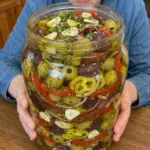
Garlic Olive & Pepperoncini Antipasto Jar
- Total Time: approximately 4 hours 15 minutes
Ingredients
- 1 cup green olives, pitted and drained
- 1 cup Kalamata olives, pitted and drained
- 1 cup sliced pepperoncini, drained
- 1/2 cup roasted red peppers, drained and sliced
- 1/4 cup red onion, thinly sliced
- 4 cloves garlic, thinly sliced
- 1/4 cup sun-dried tomatoes, drained and sliced
- 1/3 cup extra-virgin olive oil
- 2 tbsp red wine vinegar
- 1 tbsp fresh lemon juice
- 1 tsp Italian seasoning
- 1/2 tsp dried oregano
- 1/4 tsp crushed red pepper flakes, optional
- 1/4 tsp black pepper
- 1/4 tsp salt, or to taste
- 2 tbsp fresh parsley, chopped
Instructions
Step 1: Drain the Jarred Ingredients
Drain the:
- Green olives
- Kalamata olives
- Pepperoncini
- Roasted red peppers
- Sun-dried tomatoes, if packed in oil
Allow excess liquid to drain away.
This is important because too much packing liquid can weaken the flavor of the homemade marinade.
Step 2: Prepare the Vegetables
Thinly slice the red onion.
Slice the roasted red peppers into strips if necessary.
Slice the sun-dried tomatoes.
Thinly slice 4 cloves of fresh garlic.
The goal is to keep the pieces small enough that you can get several different ingredients in each spoonful.
Step 3: Combine the Main Ingredients
In a large mixing bowl, combine:
- 1 cup green olives
- 1 cup Kalamata olives
- 1 cup sliced pepperoncini
- 1/2 cup roasted red peppers
- 1/4 cup thinly sliced red onion
- 1/4 cup sliced sun-dried tomatoes
Gently toss them together.
Step 4: Add the Garlic 🧄
Add the thinly sliced garlic.
Separate any slices that are sticking together so the garlic gets distributed throughout the mixture rather than concentrated in one spot.
Why Thinly Sliced Garlic Works So Well
Raw garlic can be quite assertive.
Thin slicing gives you smaller pieces while also exposing plenty of surface area to the marinade.
As the mixture rests, the garlic flavors the oil and vinegar while the acidic ingredients season the garlic itself.
The garlic will still have a noticeable bite, particularly during the first day, so avoid adding substantially more unless you specifically want an intense raw-garlic flavor.
Step 5: Add the Marinade
Pour in:
- 1/3 cup extra-virgin olive oil
- 2 tablespoons red wine vinegar
- 1 tablespoon fresh lemon juice
Add:
- 1 teaspoon Italian seasoning
- 1/2 teaspoon dried oregano
- 1/4 teaspoon crushed red pepper flakes, if using
- 1/4 teaspoon black pepper
- 1/4 teaspoon salt, or to taste
Step 6: Toss Gently
Use a large spoon or spatula to gently toss everything together.
Make sure the herbs and garlic are evenly distributed and the vegetables are coated in the oil-and-vinegar marinade.
Avoid aggressive mixing that could break apart the softer roasted peppers.
Step 7: Add the Fresh Parsley 🌿
Add 2 tablespoons chopped fresh parsley.
Gently toss again.
Step 8: Taste Before Adding More Salt
Taste one of the olives together with a little pepperoncini and marinade.
You may find that the mixture needs very little additional salt.
Olives, pepperoncini, roasted peppers, and sun-dried tomatoes can all contribute sodium depending on how they’re packaged.
It’s much easier to add more salt later than to correct an overly salty antipasto.
Step 9: Transfer to a Jar
Transfer everything into a clean quart-size glass jar.
Layer the mixture loosely rather than packing it tightly.
Try to distribute the garlic, olives, peppers, and onion throughout the jar.
Step 10: Add the Remaining Marinade
Pour any marinade remaining in the mixing bowl into the jar.
The ingredients should be thoroughly coated.
If needed, add a small amount of additional olive oil.
This is a refrigerated marinated antipasto, not a shelf-stable preserved product.
Step 11: Refrigerate
Seal the jar tightly.
Refrigerate for at least 4 hours.
For a deeper, more integrated flavor, refrigerate the antipasto overnight before serving.
Why Overnight Marinating Works So Well
You can serve the antipasto after four hours, but an overnight rest gives the dried herbs time to hydrate and allows the garlic, onion, chile, vinegar, lemon, and olive oil flavors to mingle.
The olives and vegetables also become coated in the seasoned marinade.
If you’re preparing this for a party, making it the evening before is an easy option.
Step 12: Bring It Slightly Toward Room Temperature
Before serving, remove the jar from the refrigerator and let it sit for approximately 10–15 minutes.
Extra-virgin olive oil can become cloudy or partially firm when chilled.
A brief rest allows the oil to loosen.
Step 13: Mix Before Serving
Gently shake the sealed jar or stir the mixture with a clean spoon.
This redistributes the marinade, herbs, and garlic.
Step 14: Serve
Spoon the antipasto into a shallow serving bowl or arrange it on a platter.
Serve with:
- Crusty bread
- Crostini
- Crackers
- Cheese
- Sandwiches
- Grilled meats
- Pasta salad
- Your favorite antipasto spread
- Prep Time: 15 minutes
- Cook Time: 4 hours
Nutrition
- Serving Size: 8
- Calories: approximately 175 calories per serving