Ingredients
Cauliflower (1 medium head, cut into bite-sized florets)
The star, as discussed above — dense, structurally sound, and an excellent vehicle for bold brine flavors. One medium head typically yields enough florets to fill a quart jar comfortably, with some room for the garlic and peppers tucked throughout.
White Vinegar (1 cup)
The acidic backbone of the brine. White vinegar’s clean, sharp flavor doesn’t compete with the layered heat and herbal notes in this recipe — it provides pure pickling tang and keeps the brine visually clear, which lets the colors of the peppers, garlic, and (if using purple cauliflower) the floret itself show through beautifully.
Water (1 cup)
Balances the vinegar to a level of acidity that’s potent enough to preserve and flavor without being overwhelming. The standard 1:1 ratio used across most quick-pickling recipes.
Pickling Salt or Kosher Salt (1 tbsp)
Seasons the brine and assists with moisture exchange that helps maintain the cauliflower’s firm texture. Always use pickling salt or kosher salt rather than iodized table salt, which can cloud the brine and introduce off flavors.
Sugar (1 tbsp)
A modest amount that balances the sharpness of the vinegar without making the cauliflower taste sweet. It’s a supporting ingredient here — present enough to round the brine’s edges, subtle enough that you won’t identify it as sweetness in the finished pickle.
Garlic (4 cloves, smashed)
Smashed rather than sliced for maximum, rapid flavor release. Smashing ruptures the garlic’s cell walls completely, releasing its aromatic compounds quickly and thoroughly into the hot brine. Four cloves produces a brine — and ultimately, cauliflower — with real, present garlic flavor that complements the heat without being subtle about it.
Jalapeños (2, thinly sliced)
The foundational fresh pepper heat. Bright, green, and vegetal, jalapeños provide a building warmth that most people who enjoy spicy food find immediately satisfying. Thinly sliced for maximum brine infusion and to distribute evenly throughout the jar.
Serrano Pepper (1, optional)
The upgrade for serious heat lovers. Serranos run roughly two to four times hotter than jalapeños, with a sharper, cleaner bite. Including one takes this recipe from “pleasantly spicy” to genuinely firecracker territory — which, given the name, is exactly the point. Leave it out for a milder, still well-spiced result; include it for real heat.
Crushed Red Pepper Flakes (1 tsp)
A different category of heat from the fresh peppers — drier, more concentrated, slower to build. Red pepper flakes infuse into the brine during heating and continue to develop their heat throughout the pickling period, contributing a sustained warmth that complements the brighter, more immediate heat of the jalapeño and serrano.
Black Peppercorns (1 tsp)
Aromatic, warming, and complex without contributing capsaicin heat. Whole peppercorns release their flavor gradually and add a classic spiced depth that’s present in nearly every serious pickling brine for good reason — they round out the overall profile and prevent the heat from feeling one-dimensional.
Mustard Seeds (1 tsp)
A pickling tradition staple. Mustard seeds contribute a mild, earthy bite and a satisfying pop of texture, and after several days in the brine they soften enough to bite into directly, releasing a small burst of warm, tangy flavor.
Dill Seeds (1 tsp, or 2 sprigs fresh dill)
The herbal signature of this recipe. Dill seeds have a more concentrated, slightly more bitter and aromatic flavor than fresh dill fronds — think of them as the more intense, longer-lasting cousin. They infuse the brine with the bright, grassy, slightly anise-like quality that makes pickled vegetables taste unmistakably like pickles. If you have access to fresh dill, two sprigs provide a brighter, fresher herbal note; dill seeds provide a more robust, longer-lasting infusion that holds up particularly well over the full three-week storage window.
Bay Leaf (1)
A quiet, essential background note. One bay leaf adds a faintly floral, herbal complexity to the brine that makes it taste complete and intentional. You won’t identify it directly, but the brine would taste noticeably flatter without it.
Instructions
Step 1: Wash and Cut the Cauliflower
Rinse the cauliflower head thoroughly under cold water, paying particular attention to the crevices between florets where dirt and debris can collect. Pat dry with a clean towel. Following the technique described above, cut the head into bite-sized florets, aiming for consistency in size.
Step 2: Pack the Jar
Use a wide-mouth quart jar for the easiest packing and easiest access later. Place the smashed garlic at the bottom of the jar, then begin layering in the cauliflower florets, tucking jalapeño and serrano slices throughout as you go. Pack firmly — cauliflower’s irregular shape means there’s naturally some air space between pieces, and a tightly packed jar helps minimize floating and ensures more even brine contact.
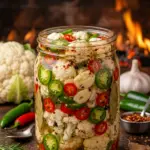
Visual tip: Position a few pepper slices and a garlic clove or two along the visible side of the jar. Once the brine is poured and the jar sits in your fridge, the bright red-orange of the jalapeño and serrano against the white (or purple, if using colored cauliflower) florets makes for a genuinely beautiful presentation.
Step 3: Make the Brine
Combine the white vinegar, water, salt, sugar, crushed red pepper flakes, black peppercorns, mustard seeds, dill seeds, and bay leaf in a small saucepan. Heat over medium heat, stirring occasionally, until the salt and sugar dissolve completely — about 3 to 4 minutes. A gentle simmer is sufficient; you don’t need a rolling boil.
Step 4: Pour the Hot Brine
Carefully pour the hot brine over the packed cauliflower, making sure every floret is fully submerged. Cauliflower’s irregular shape means some pieces may want to float — press them down gently with a clean spoon or, if needed, wedge in a few smaller pieces to weigh things down. Full submersion is essential for even pickling and proper preservation.
Step 5: Cool, Seal, and Refrigerate
Let the jar cool uncovered at room temperature until comfortable to handle, roughly 30 to 45 minutes. Seal tightly and transfer to the refrigerator.
Step 6: The Wait
24 hours: The minimum. The cauliflower has absorbed enough brine to taste distinctly pickled — tangy, lightly spiced, with the beginning of the garlic and heat coming through.
3 to 5 days: The target. By this point, the brine has fully penetrated the dense floret structure, the heat from the jalapeño and serrano has built and integrated, the garlic flavor is pronounced throughout, and the dill has infused its full aromatic character. This is when Firecracker Pickled Cauliflower is at its most exciting.
Beyond 5 days, up to 3 weeks: The flavor continues to deepen and the heat continues to build slightly as capsaicin keeps diffusing through the brine. Many dedicated heat lovers prefer the cauliflower at the two-week mark, when it’s developed its fullest, boldest flavor.
- Prep Time: 15 minutes
- Cook Time: 5 minutes
Nutrition
- Serving Size: 8
- Calories: 30 per serving