
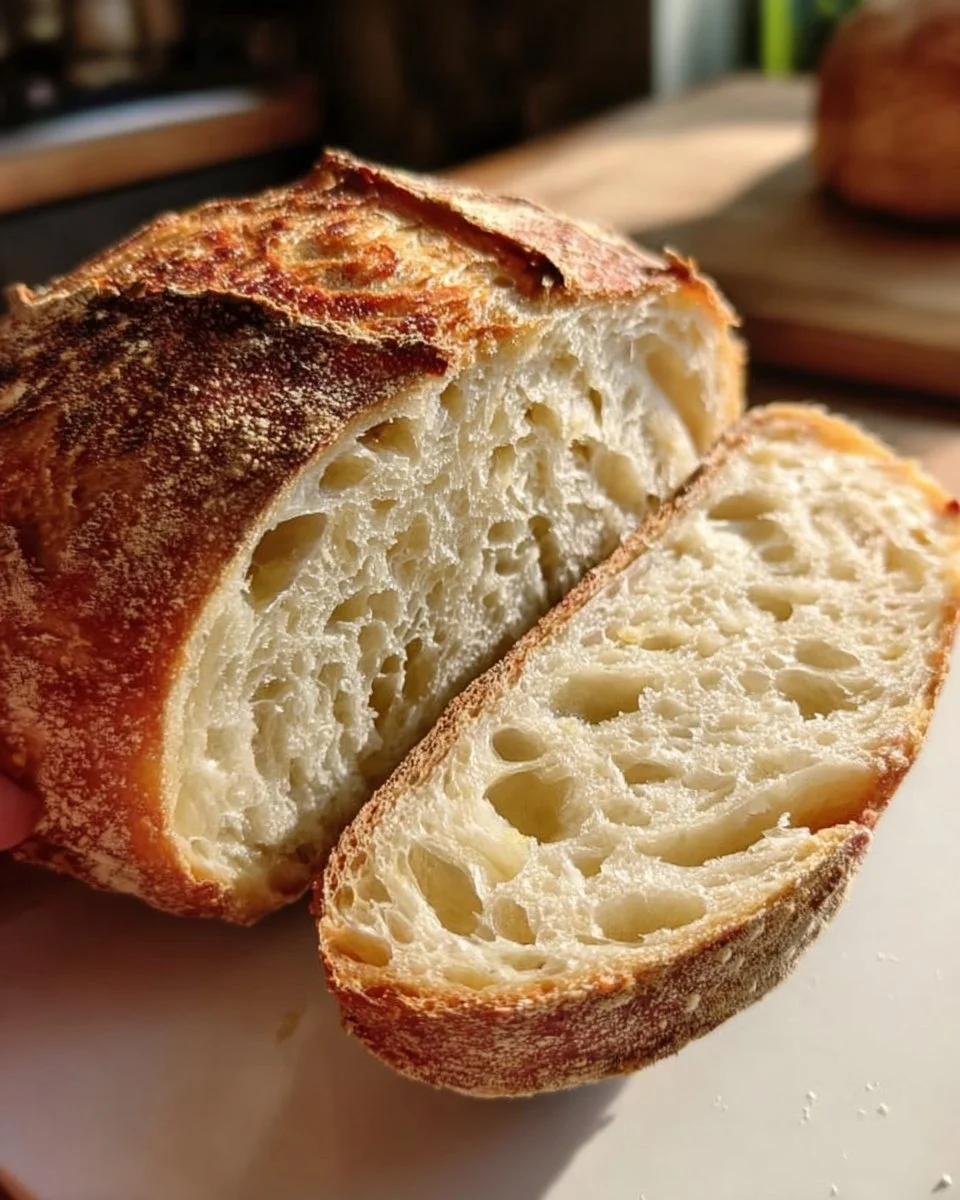
There’s an enchanting ritual that unfolds in the heart of a bustling kitchen, a dance between flour, water, and time. The air fills with a warm and inviting aroma as the oven hums softly, promising golden crusts and airy goodness. A loaf of No-Bulk-Fermentation Sourdough Bread rises to life, its surface crackling and crisp, hinting at the treasure inside—a soft, chewy crumb that bears the nuanced flavors only a sourdough starter can impart. Each slice reveals an intricate web of air pockets, inviting you to indulge in its rustic charm.
Picture breaking off a chunk of this freshly baked bread. Your fingertips feel the slight warmth and texture of the crust as you bring it closer. The first bite manifests a perfect balance of crunch and tenderness, a symphony for your taste buds. Notes of tanginess dance upon your palate, mingling harmoniously with the subtle sweetness of the bread. Slather on a bit of butter, and you experience an unctuous creaminess that makes your heart sing. This is more than bread; it’s an experience—a journey from simple ingredients to a beautifully crafted loaf that elevates any meal.
Why You’ll Love This No-Bulk-Fermentation Sourdough Bread
This No-Bulk-Fermentation Sourdough Bread dazzles for myriad reasons, making it the star of any culinary gathering. Imagine serving this masterpiece at your next brunch, everyone gathering to marvel at the beautiful crust and the rich, tangy aroma wafting through the air. It warms not just the stomach but also the spirit, invoking cozy memories of meals shared with loved ones.
You’ll appreciate the time you save with this no-bulk method, allowing you to enjoy freshly baked bread without extensive waiting periods. The crust develops a gorgeous color, while the crumb remains delightfully chewy and moist. Whether you enjoy it with a simple smear of butter, as a base for an unforgettable sandwich, or paired with your favorite soup, this bread shines in so many settings. It effortlessly stands apart from commercial loaves—the layers of flavor and texture speak to the love and effort you’ve placed in each step.
Preparation Phase & Tools to Use
Creating the perfect loaf requires just a few essential tools that make the process both effortless and enjoyable. Equip yourself with the following:
-
Large Mixing Bowl: This is where the magic begins, giving you ample space for your dough to come together without overflowing.
-
Dutch Oven: A chef’s best friend for baking sourdough, providing consistent heat and steam that help develop that perfect crust.
-
Parchment Paper: Lining the Dutch oven with parchment prevents sticking and makes transfer easier, resulting in flawless loaves.
-
Lame or Sharp Knife: For scoring your dough before baking, this tool allows you to create beautiful designs while ensuring your bread rises properly.
Practical preparation tips enhance your experience. Measure ingredients accurately for the best results. Ensure your sourdough starter bubbles with life for a robust flavor that infuses the bread.
Ingredients for No-Bulk-Fermentation Sourdough Bread
-
500g Bread Flour: A high-protein flour provides strength and structure. Feel free to substitute with whole wheat flour or a gluten-free blend for a unique twist.
-
350g Water: Room temperature water helps activate the starter without cooling it down. Experiment with higher hydration for an airier crumb.
-
100g Active Sourdough Starter: Make sure yours is bubbly and pliable for optimal results. A tip: feed your starter the night before to ensure it’s at its peak.
-
10g Salt: Essential for flavor and strength, salt not only elevates taste but also controls fermentation.
How to Make No-Bulk-Fermentation Sourdough Bread
-
In a large mixing bowl, combine the bread flour and water. Mix until no dry flour remains, creating a shaggy dough. Let it rest for 30 minutes to allow the flour to fully hydrate (this step is called autolyse).
-
Add the sourdough starter and salt to the dough. Mix until everything is fully incorporated, and the dough is smooth.
-
Here’s the game changer: shape the dough immediately rather than letting it bulk ferment. This simple technique lends itself to a different texture and flavor.
-
Shape the dough into a ball and let it rest on a floured surface, covering it with a damp cloth for 30-45 minutes to prevent drying.
-
Preheat your oven to 450°F (232°C) with the Dutch oven inside. This ensures a hot environment for your bread to rise.
-
Once the oven reaches temperature, carefully transfer the dough into the hot Dutch oven. Cover it, and bake for 30 minutes.
-
After 30 minutes, remove the lid and bake for an additional 15-20 minutes, or until the crust turns a beautiful golden brown.
-
Let the bread cool completely on a wire rack before slicing. Patience rewards you with optimal texture and flavor.
Chef’s Notes & Helpful Tips
-
Make-ahead tips: If you anticipate a busy weekend brunch, prepare your dough the night before and let it rest in the refrigerator for a slower ferment, enhancing flavor.
-
Cooking alternatives: If you don’t have a Dutch oven, use a baking stone or even an air fryer (check guidelines for similar temperatures and times) to achieve a crispy crust.
-
Customization ideas: Add herbs, spices, or seeds to create a loaf unique to your taste. Consider mixing in olives, sun-dried tomatoes, or even nuts for delightful variations.
Common Mistakes to Avoid
-
Skipping the autolyse: This crucial step allows the flour to absorb water fully, leading to better dough development. Don’t rush; let it rest properly.
-
Incorrect dough hydration: Too little water will yield a dense loaf; too much will make the dough unwieldy. Adjust based on the type of flour used and the humidity of your environment.
-
Neglecting the shaping process: Proper shaping creates surface tension that helps the dough rise beautifully. Don’t skip this vital step; take your time to tuck and fold the dough.
What to Serve With No-Bulk-Fermentation Sourdough Bread
This flavorful loaf pairs beautifully with countless delights. Here are some tasty pairing ideas:
-
Creamy Avocado Toast: Top your slice with mashed avocado, a sprinkle of salt, and a drizzle of olive oil for a heart-healthy treat.
-
Savory Sandwiches: Layer with your favorite deli meats, cheese, and crisp veggies for a gourmet experience.
-
Homemade Garlic Butter: Mix softened butter with minced garlic and herbs, then spread it thickly on warm slices for pure decadence.
-
Soups and Stews: Serve alongside hearty soups like minestrone or a rich beef stew, perfect for dipping.
-
Cheese Platter: Pair with a selection of cheeses—sharp cheddar, creamy brie, or tangy goat cheese—for an elegant appetizer.
-
Eggs Benedict: Use it as a base for luxurious poached eggs and hollandaise sauce, adding a gourmet touch to a classic breakfast.
Storage & Reheating Instructions
To reserve the freshness of your No-Bulk-Fermentation Sourdough Bread, store it in a paper bag at room temperature for up to three days. For longer storage, slice and freeze it in an airtight bag for up to three months. When the craving hits, simply pop slices in the toaster or warm them in the oven for about 10 minutes at 350°F (175°C) until heated through.
Estimated Nutrition Information
This delightful loaf is an excellent source of carbohydrates and provides a balanced approach to your meals. An approximate serving (1 slice, 50g) contains:
- Calories: 160
- Protein: 4g
- Carbohydrates: 32g
- Fat: 1g
- Fiber: 1g
(Nutrition values vary based on specific ingredients and quantities used.)
FAQs
What if my sourdough starter isn’t active?
Ensure your starter is bubbly and has been fed within the last 6-8 hours. If it isn’t rising, go ahead and feed it again before using.
Can I use all-purpose flour instead of bread flour?
Yes, you can! However, the resulting loaf may have a slightly different texture. Bread flour contains more protein, providing better structure.
How can I tell when my bread is done baking?
The bread should sound hollow when tapped on the bottom and have a beautifully golden-brown crust. You can also use a thermometer; the internal temperature should reach around 200°F (93°C).
Can I add ingredients like olives or cheese?
Absolutely! Feel free to fold in your favorite ingredients after mixing in the salt and starter. Just remember to adjust hydration if necessary.
Why is my bread too dense?
A dense loaf can result from a few factors: insufficient hydration, an inactive starter, or neglecting the shaping process. Troubleshoot each step for best results.
Conclusion
Baking No-Bulk-Fermentation Sourdough Bread not only fills your home with irresistible aromas but also creates a connection to the delightful art of bread-making. With each loaf, you tap into a world of flavors, textures, and memories waiting to surface. So roll up your sleeves, embrace the process, and prepare to fall in love with the simple joy of freshly baked bread. Don’t just make a loaf; craft an experience that leaves every bite satisfying, inviting, and inspiring.
Print
No-Bulk-Fermentation Sourdough Bread
- Total Time: 75 minutes
- Yield: 1 loaf 1x
- Diet: Vegetarian
Description
A delightful sourdough bread that requires no bulk fermentation, resulting in a crusty exterior and a chewy, flavorful crumb.
Ingredients
- 500g Bread Flour
- 350g Water
- 100g Active Sourdough Starter
- 10g Salt
Instructions
- In a large mixing bowl, combine the bread flour and water. Mix until no dry flour remains, creating a shaggy dough. Let it rest for 30 minutes to allow the flour to fully hydrate (this step is called autolyse).
- Add the sourdough starter and salt to the dough. Mix until everything is fully incorporated, and the dough is smooth.
- Shape the dough immediately rather than letting it bulk ferment. This simple technique lends itself to a different texture and flavor.
- Cover the dough with a damp cloth for 30-45 minutes to prevent drying.
- Preheat your oven to 450°F (232°C) with the Dutch oven inside.
- Carefully transfer the dough into the hot Dutch oven. Cover it, and bake for 30 minutes.
- Remove the lid and bake for an additional 15-20 minutes, or until the crust turns a beautiful golden brown.
- Let the bread cool completely on a wire rack before slicing.
Notes
For enhanced flavor, consider preparing your dough the night before and letting it rest in the refrigerator. Customize by adding herbs or seeds to your preference.
- Prep Time: 30 minutes
- Cook Time: 45 minutes
- Category: Baking
- Method: Baking
- Cuisine: Bread
Nutrition
- Serving Size: 1 slice
- Calories: 160
- Sugar: 0g
- Sodium: 400mg
- Fat: 1g
- Saturated Fat: 0g
- Unsaturated Fat: 0g
- Trans Fat: 0g
- Carbohydrates: 32g
- Fiber: 1g
- Protein: 4g
- Cholesterol: 0mg
Keywords: sourdough, bread, baking, no-bulk, homemade bread