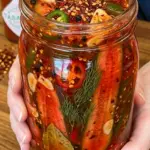
Ingredients
White Vinegar (1 cup)
The acidic backbone of the brine. White vinegar is sharp, clean, and colorless — it delivers the pickling tang without adding competing flavors or turning the brine amber. At a 1:1 ratio with water, it creates a brine that’s acidic enough to preserve and flavor the cucumbers without being so sharp it overpowers everything else.
Water (1 cup)
Dilutes the vinegar to a balanced, approachable level of acidity. The ratio of vinegar to water is one of the most important decisions in any pickle recipe. Too much vinegar and the pickles taste harsh and one-dimensional. Too much water and they lack the tang that makes pickles exciting.
Hot Sauce (2 tbsp)
This is the secret ingredient that elevates these pickles from “spicy pickles” to something genuinely atomic. Hot sauce does triple duty here: it adds heat, it adds vinegar (most hot sauces are vinegar-based, which reinforces the brine), and it adds the complex fermented pepper flavor that you can’t get from dried spices alone.
Choosing your hot sauce matters. A Louisiana-style hot sauce like Frank’s RedHot or Crystal adds bright, tangy heat without too much smokiness. Tabasco adds intensity and a slightly more complex fermented flavor. A habanero-based hot sauce dramatically increases the heat level and adds a fruity depth. Sriracha adds garlicky sweetness. Choose based on how atomic you want to go — and don’t be afraid to increase the quantity beyond 2 tablespoons if you’re cooking for heat lovers.
Pickling Salt or Kosher Salt (1 tbsp)
Seasons the brine and draws moisture from the cucumbers, which concentrates their flavor and helps maintain their crunch. Always use pickling salt or kosher salt — never iodized table salt, which makes brine cloudy and can leave a slightly off flavor.
Sugar (1 tbsp)
Just one tablespoon — enough to round the sharp edges of the vinegar and the aggressive heat without making these pickles sweet. This is a balancing ingredient, not a flavor driver. It makes the heat more approachable and the overall pickle more complex without you necessarily being able to identify it.
Garlic (5 cloves, sliced)
Five cloves is a lot — and that’s entirely the point. Sliced garlic infuses the brine with deep, savory, pungent flavor that gets into every cucumber slice and becomes the savory counterweight to all the heat. As the pickles rest in the refrigerator, the garlic mellows from sharp and raw to something roasted-adjacent: sweet, complex, and intensely savory. Garlic lovers will reach for these pickles every single time.
Jalapeños (2, thinly sliced)
The foundational fresh pepper heat in this recipe. Two jalapeños deliver genuine warmth without being show-stoppingly hot on their own — they work in concert with the other heat sources. Slice them thin for even distribution and faster brine absorption. Leaving the seeds and membranes intact maximizes heat; removing them gives you more of the jalapeño’s bright, vegetal flavor with less fire.
Serrano Pepper (1, optional but strongly recommended)
Serranos are significantly hotter than jalapeños — typically in the 10,000 to 23,000 Scoville unit range compared to jalapeño’s 2,500 to 8,000. They have a similar fresh, green flavor but with sharper, more intense heat. Adding one serrano to this recipe takes the pickles from “spicy” to legitimately “atomic.” If you’re making these for someone who questions whether anything is truly hot enough, include the serrano. If you’re making them for mixed company, use your judgment.
Crushed Red Pepper Flakes (1 tsp)
A different kind of heat from the fresh peppers — drier, smokier, more concentrated. Red pepper flakes are made from dried and crushed cayenne-type peppers, which means their heat profile is distinct from fresh jalapeño and serrano. They add a slow-building warmth that lingers and keeps the heat interesting rather than delivering one sharp hit and fading.
Black Peppercorns (1 tsp)
Provide aromatic warmth and complexity rather than sharp heat. Whole peppercorns release their flavor gradually into the brine, adding a spiced depth that supports all the other heat sources without competing with them.
Mustard Seeds (1 tsp)
A classic pickling spice that adds a subtle earthiness and a satisfying little pop of texture. They look beautiful suspended in the brine, visible through the glass, and they deepen in flavor over the days the pickles rest.
Fresh Dill (2 sprigs)
The herbal anchor that keeps these pickles recognizable as pickles rather than just spicy vegetables in vinegar. Fresh dill has a grassy, slightly anise-like quality that pairs perfectly with cucumber, garlic, and vinegar. It softens the aggression of all the heat sources and gives each bite a clean, bright finish.
Bay Leaf (1)
Subtle but important — a bay leaf contributes a quiet herbal complexity that makes the brine taste more complete. It’s the kind of ingredient that you don’t consciously notice but would notice the absence of.
Instructions
Step 1: Slice Your Cucumbers
Choose your cut: rounds for burgers, sandwiches, and charcuterie boards, or spears for snacking straight from the jar and serving alongside meals. For rounds, aim for ¼-inch thickness. For spears, quarter the cucumbers lengthwise.
Whatever you choose, keep the cuts consistent — even slices mean even pickling and even texture throughout the jar.
Optional but worth it: Soak your sliced cucumbers in a bowl of ice water for 30 minutes before packing the jar. This firms up the flesh significantly and produces a noticeably crunchier finished pickle. Drain well before packing.
Step 2: Pack the Jar Strategically
Place the sliced garlic and dill sprigs in the bottom of a clean, dry quart-sized glass jar. Begin packing in the cucumbers tightly. As you layer, tuck jalapeño and serrano slices throughout and along the visible sides of the jar — this makes the finished product look incredible and ensures every cucumber is surrounded by heat sources.
Pack firmly but without crushing. You want the jar full enough that the cucumbers stay submerged once the brine is poured in.
Step 3: Make the Brine
Combine the white vinegar, water, hot sauce, salt, sugar, red pepper flakes, black peppercorns, mustard seeds, and bay leaf in a small saucepan. Heat over medium heat, stirring occasionally, until the sugar and salt are completely dissolved — about 3 to 4 minutes. The brine will turn a slightly orange-red hue from the hot sauce, which is exactly what you want.
Step 4: Pour the Hot Brine
Carefully pour the hot brine over the packed cucumbers, covering every piece completely. Pour slowly to avoid cracking cold glass. Press the cucumbers down gently if any float above the brine line. Every exposed surface will pickle unevenly and soften faster, so full submersion is important.
Step 5: Cool, Seal, Refrigerate
Leave the jar uncovered on the counter until it cools to room temperature — 30 to 45 minutes. Then seal tightly and move to the refrigerator.
Step 6: The Wait
After 24 hours, the pickles have soaked up enough brine to be worth tasting. After 3 to 5 days, they reach their full atomic potential: deeply infused with heat, loaded with garlic flavor, with a tangy brightness that ties everything together. The heat actually intensifies over the first few days as the peppers continue to release capsaicin into the brine. Be warned.
Tips for Maximum Crunch
The crunchier the pickle, the better the eating experience. Here’s how to stack the odds in your favor:
Trim the blossom end. The blossom end of the cucumber (opposite the stem) contains enzymes that cause softening. Trim a thin slice off that end before packing your jar and your pickles will stay firmer longer.
Ice bath before packing. As mentioned above — 30 minutes in ice water before the brine goes on makes a real, noticeable difference in the final crunch.
Use the freshest cucumbers you can find. Same-day-from-the-farmers-market fresh beats three-days-in-the-crisper drawer every time.
Pack tightly. Cucumbers that have room to float and jostle in the jar get knocked around and bruised, which accelerates softening.
Don’t skip the salt. Salt draws moisture from the cucumber and firms it up. Reducing or omitting salt to cut sodium will compromise both flavor and texture.
Eat within two weeks. These pickles are at their crunchiest in the first week to ten days. They remain good through three weeks, but the texture softens gradually over time.
How to Use Atomic Fire Pickles
Straight from the jar. The most common fate of these pickles, and the most honest one. Cold, crunchy, atomic — they need nothing else.
On burgers. Replace standard pickle chips with these and your burger immediately levels up. The heat cuts through the richness of the beef and cheese and makes every bite more interesting.
On Nashville hot chicken sandwiches. Hot chicken and atomic pickles is one of the great flavor pairings in American food. The cooling tang of the pickle against the heat of the chicken is extraordinary.
In a spicy Bloody Mary. Use the brine as part of your Bloody Mary base and spear a pickle round for a garnish. The brine alone is worth the price of admission.
On tacos. Fish tacos, carne asada, al pastor — Atomic Fire Pickles work on all of them. The acid and heat act like a condiment and a garnish in one.
Alongside BBQ. The acidity cuts straight through the fat and smoke of pulled pork, brisket, or ribs in a way that refreshes the palate between bites.
Chopped into deviled eggs. Finely chop a few rounds and fold them into your deviled egg filling for a spicy, tangy variation that consistently surprises people at potlucks.
On a spicy charcuterie board. Build a heat-focused board with these pickles, spicy salami, pepper jack, pickled jalapeños, and hot honey. These are the anchor.
In grilled cheese. Tuck a few pickle rounds inside your next grilled cheese sandwich. The heat and tang against melted cheese is one of those combinations that seems obvious in retrospect.
- Prep Time: 10 minutes
- Cook Time: 5 minutes
Nutrition
- Calories: 20 per serving